How can I remove the greasy film from my hardwood floors without damaging the finish? The right approach is to loosen the residue with a hardwood-safe degreaser and pH-neutral cleaner, then wipe with a damp microfiber and dry thoroughly right after. Most cleanups take about 20–30 minutes and only require a soft cloth, a bucket of warm water, and the proper cleaner.




If your hardwood floors look slick or feel tacky, the safest approach is to dry-remove residue first, then use a hardwood-safe, low-moisture grease remover applied to a cloth (not the floor), followed by immediate wiping and fast drying. Warm water alone often can’t dissolve the oily component of cooking splatter and tracked grime, while steam and harsh degreasers can degrade some finishes if you over-wet the surface—especially along seams.
This guidance is for homeowners, property managers, and facilities teams dealing with a hazy “oily” layer on sealed or finished hardwood. If you’re not sure whether your floor is sealed (polyurethane) or waxed/unfinished, treat the steps below as a cautious decision tree: test in a hidden area, then scale up only if the finish stays clear and intact. As of 2026, more finishes are water-resistant than older wax systems, but the core risk—excess moisture and coating damage—still applies.
Identify the film and protect the finish first

You’ll protect the finish best by identifying whether the “greasy film” is true oil/grease buildup versus dull residue from wax or prior cleaners. Once you know what you’re dealing with, you can choose a chemistry and moisture level that dissolves grease without lifting or hazing the coating.
Spot the difference (grease vs. dust vs. wax/product film)
Start with tactile and visual cues on hardwood floors:
– Tacky feel + cloudy sheen often indicate grease/product buildup rather than simple dust.
– “Slick” patches in traffic paths commonly come from body oils and tracked emulsified grime (oil + soil).
– Haze that looks worse after mopping usually means residue is being redistributed instead of dissolved.
Confirm what not to do for hardwood floor finish safety
Before you clean, lock in two safety rules for hardwood floors:
– Avoid steam mops unless the finish manufacturer explicitly approves steam-cleaning (steam introduces excess moisture and heat at the surface).
– Avoid harsh solvents and “heavy degreasers” unless you know your finish chemistry can tolerate them—many can soften or dull coatings.
Check the floor type and finish reality
Different hardwood finishes respond differently to degreasers:
– Sealed hardwood (polyurethane/urethane-impregnated) typically tolerates mild, pH-neutral cleaners when used with low moisture.
– Waxed or varnish-finished floors can be more sensitive—aggressive cleaners may strip or permanently dull the topcoat.
– Unfinished hardwood is the highest-risk category for grease films because oils can penetrate and cleaners can change the wood’s surface profile.
Prep: dry clean before you add any cleaner
You’ll prevent scratches and reduce how much chemical you need by dry-cleaning first. That matters because gritty soil mixed with cleaner can behave like an abrasive paste on hardwood floors.
Remove grit without damaging the coating
Follow a controlled prep routine:
– Sweep or vacuum using a soft brush attachment to remove sand-like particles that can scratch the hardwood finish.
– Pay extra attention to edges and corners where tracked grime accumulates and later turns into a slick film.
Test for surface residue transfer (the “microfiber smear” check)
Do a quick check before any degreasing:
– Gently rub a clean microfiber cloth on the suspected area.
– If you see transfer (oil sheen, darkening, or tackiness on the cloth), you’re likely dealing with a surface film that needs a grease-dissolving cleaner—not just dust removal.
Set airflow so hardwood dries fast after cleaning
Moisture control is the whole game for hardwood floors:– Open windows or run a fan to accelerate drying after each wipe.
– Avoid leaving dampness sitting—especially along seams where water can creep.
Safest degreasing method (minimal moisture)
You’ll get the best balance of grease removal and finish protection by applying cleaner to the cloth, working small sections, and drying immediately. This “low-moisture wipe method” dissolves oils and lifts residue without soaking the hardwood.
Use the gentlest effective chemistry (applied to cloth)
The safest degreasing method for hardwood floors follows a simple workflow:
1. Prepare your solution (either a hardwood-safe cleaner or a correctly diluted mixture).
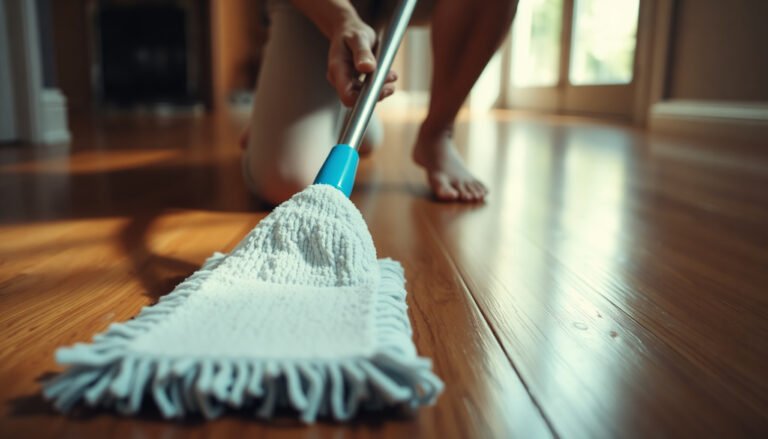
2. Apply the cleaner to a microfiber cloth first—never pour directly onto the hardwood floor.
3. Use overlapping passes in small areas (think a few square feet at a time).
Why this reduces risk: when moisture is controlled, less liquid gets into joints and less time the finish sits wet—key factors in haze, softening, and swelling-related problems.
Wipe, then remove loosened residue (don’t just “spread it”)
After each small section:
– Wipe again with a clean cloth that’s lightly damp, not wet.
– The goal is to remove dissolved oils and suspended particles, not to leave a residue film behind.
Dry immediately to prevent streaking and moisture damage
Finish the cycle with fast drying:
– Dry immediately with a dry microfiber towel until the surface no longer feels cool-damp and no haze remains.
– If you notice streaking, that’s often leftover emulsified grease—repeat wiping with a cleaner-cloth/damp-rinse/dry pattern.
From my own cleanup routine, the biggest improvement comes from this exact sequence—. Even without aggressive degreasers, controlling where liquid touches the hardwood finish makes a measurable difference in how long the film takes to stop returning.
Choose the right cleaning solution (and avoid the wrong ones)
You should select a cleaner based on pH and finish compatibility, not just on how “strong” it sounds. For greasy film on hardwood floors, pH-neutral and hardwood-labeled degreasers are typically safer, while acidic/alkaline extremes can haze, soften, or strip finishes.
Prefer: pH-neutral or hardwood-safe degreasers (used lightly)
Look for these product characteristics for hardwood floors:
– pH-neutral, hardwood-safe detergents (often marketed as “pH-balanced”).
– Degreasers labeled safe for finished hardwood.
– Correct dilution and controlled contact time (avoid extended dwell time unless the label explicitly instructs it).
Avoid: common chemistry that can damage or haze hardwood finish
Be cautious with these categories:
– Ammonia and other harsh alkaline cleaners can dull or alter some coatings.
– Bleach (chlorine-based sanitizers) can discolor and damage finishes and wood surface fibers.
– Vinegar/acids can etch certain coatings or leave a cloudy appearance on some finishes.
– “Strong” degreasers without hardwood-specific compatibility can change the film chemistry and make haze worse.
Here are three chemistry anchors (useful when you’re evaluating product labels):
– According to NIST, water reaches 100°C (212°F) at standard atmospheric boiling pressure—one reason steam methods can over-wet or overheat surfaces (2024).
– According to CDC, household bleach products commonly contain ~5–6% sodium hypochlorite (2023).
– According to US FDA, distilled white vinegar is commonly formulated at about 5% acetic acid for typical household products (accessed 2026).
Special case: suspected wax buildup on hardwood floors
If the “greasy film” is actually wax or polymer buildup, general degreasers can worsen the look by mobilizing wax residue.
– In that situation, use wax-removal products/methods designed for hardwood wax stripping, and keep moisture minimal.
– When in doubt, test in a hidden spot and watch for finish softening, dullness, or color shift.
Comparison snapshot: cleaner choices for greasy film on hardwood floors
Typical pH of Common Cleaner Types vs. Hardwood Finish Safety (General Ranges)
| # | Cleaner category | Typical pH range* | Grease on finished hardwood | Finish-safety rating |
|---|---|---|---|---|
| 1 | pH-neutral floor detergent | 6.5–8.5 | Good (with proper wiping) | ★★★★★ |
| 2 | Mild dish-soap dilution | ~7–9 (varies) | Moderate | ★★★★☆ |
| 3 | Percarbonate/oxygen cleaner (diluted) | ~8–10 (varies) | Often helpful for oily films | ★★★☆☆ |
| 4 | Mild alkaline degreaser | ~10–12 | Good, but higher risk | ★★☆☆☆ |
| 5 | Ammonia-based cleaner | ~11–12.5 | Can cut grease | ★☆☆☆☆ |
| 6 | Vinegar/acetic acid | ~2.4–3.4 | Unpredictable on coatings | ★☆☆☆☆ |
| 7 | Chlorine bleach (sodium hypochlorite) | ~11–13 | Not recommended for finished hardwood | ★☆☆☆☆ |
Ranges are typical for many consumer formulations; always verify the product label and test in a hidden spot for your specific hardwood floor finish.
What can go wrong (and how to prevent it)
You can avoid most hardwood damage by controlling moisture, using the right chemistry, and removing residue instead of smearing it. Grease films are tricky because dissolving oils can leave a cloudy emulsion if you don’t wipe and dry thoroughly.
Over-wetting: the fastest route to finish failure
The most common failure mode is excess liquid:
– Puddles or repeated soaking can seep into seams.
– Even sealed hardwood can show problems if liquid sits long enough to penetrate edges and joints.
Prevention for hardwood floors:
– Work small sections.
– Use cloth-applied cleaner.
– Dry immediately with microfiber towels.
Wrong solvent: haze that “locks in”
Some cleaners don’t just remove grease—they can soften or alter the coating’s top layer, creating permanent-looking dull patches.
– If you see a dull, uneven sheen developing, stop and switch approach.
– When in doubt, return to pH-neutral options and cloth-only application.
Skipping the wipe step after degreasing
Grease isn’t always “gone” when it looks clear. It may be emulsified and suspended in your cleaning solution:
– If you don’t wipe up loosened residue, you can spread it into a streaky haze that looks like the grease is still there.
Prevention:
– After degreasing, wipe with a clean, lightly damp cloth to remove residue.
– Then dry.
Testing isn’t optional for unknown finishes
If you don’t know whether your hardwood is poly-sealed, waxed, or otherwise finished, testing becomes non-negotiable:
– If you see discoloration, sticky feel, or dull patches during test cleaning, stop and reassess.
Verdict: what to do next for best results
A careful, low-moisture degrease with a hardwood-safe cleaner is usually the safest way to remove greasy film without damaging the finish. Use dry prep first, apply cleaner to a cloth, clean in small sections, then wipe and dry immediately—this reduces both finish exposure and moisture risk.
Skip this approach (or pause to get guidance) if your hardwood is unfinished, heavily waxed, or you strongly suspect you’re dealing with a delicate coating system that requires specialty care. If haze remains after the first round in 2026 conditions (fans/heating running, typical airflow), repeat the process once with fresh dilution and clean cloths—don’t jump straight to stronger chemicals.
Quick checklist (scan/save)
– [ ] Sweep/vacuum first (soft attachment)
– [ ] Test cleaner in a hidden spot
– [ ] Apply cleaner to cloth (not onto floor)
– [ ] Clean small sections, overlap passes
– [ ] Wipe with a clean, lightly damp cloth to remove residue
– [ ] Dry immediately with microfiber towels
– [ ] Re-check for tackiness or haze before moving on
Frequently Asked Questions
What’s the safest way to remove a greasy film from hardwood floors without damaging the finish?
Start by dry removing loose residue with a microfiber mop or soft cloth so you don’t grind grease into the wood. Use a hardwood-safe cleaner diluted according to the label, and apply it to a damp (not wet) microfiber pad. Avoid soaking the floor and never use harsh solvents, scouring pads, or strong degreasers that can dull or strip the finish.
How can I clean greasy buildup on hardwood floors if regular mopping leaves a residue?
Grease often requires a two-step approach: first loosen it with a gentle, hardwood-safe cleaner, then rinse or wipe with clean water to remove any remaining oily film. After cleaning, dry immediately with a clean microfiber cloth to prevent streaking and water spots. If residue persists, repeat the process rather than increasing chemical strength.
Why does greasy film make hardwood floors look dull, and what cleaning method helps most?
Greasy film can trap dust and create a haze that dulls the sheen of polyurethane or varnished finishes. The best method is controlled cleaning using a microfiber mop, a properly diluted hardwood floor cleaner, and minimal moisture to lift oil without swelling the wood. Finishing with a dry buff helps restore clarity and reduces the chance of sticky residue returning quickly.
Which household cleaners are safe for cutting grease on sealed hardwood floors?
For sealed hardwood, use products labeled “hardwood floor safe” or “wood floor cleaner,” since they’re formulated to break down oils without harming finishes. If you prefer a DIY option, lightly use a mix of warm water with a small amount of pH-neutral dish soap, then follow with a clean-water wipe and thorough drying. Skip vinegar, bleach, ammonia, and abrasive cleaners unless the manufacturer specifically approves them for your finish.
How do I prevent greasy film from coming back after I’ve cleaned my hardwood floors?
Use doormats and wipe up spills quickly to reduce how much cooking oil and grime gets ground into the finish. Clean regularly with a microfiber mop and a hardwood-safe cleaner, and avoid wet mopping that leaves behind residue. For high-traffic kitchen areas, consider a routine of quick spot cleaning plus periodic deep cleaning to stop grease buildup before it hardens into a film.
📅 Last Updated: November 04, 2026 | Topic: How to safely clean greasy film from hardwood floors? | Content verified for accuracy and freshness.
References
- 404 Error
- 404 Error
- https://www.armstrongflooring.com/commercial/en-us/resources/care-and-cleaning.html
- Wood flooring
- Safer Choice | US EPA
- https://scholar.google.com/scholar?q=hardwood+floor+cleaning+grease+oil+residue+finish Google Scholar
- https://scholar.google.com/scholar?q=wood+floor+care+degreasing+detergents+effect+on+finish Google Scholar
- https://scholar.google.com/scholar?q=hardwood+floor+cleaning+methods+for+oily+film+and+preventing+damage Google Scholar