
How to Maintain Laminate Floors in an Entryway: Easy Steps



Learn how to maintain laminate floors in a entryway with a simple routine that keeps them looking new despite constant foot traffic. If you want the fastest, most effective results, focus on preventing grit buildup, using the right cleaner, and drying spills immediately to stop dulling and edge wear. Follow these easy steps and you’ll extend the life of your laminate while avoiding the common mistakes that cause premature damage.
To keep laminate floors in an entryway looking good, control moisture at the door, remove grit before it abrades the finish, and use only lightly damp cleaning—never soaking the planks. If your entry routine focuses on mats + quick dry cleaning + prompt spill response (plus the right cleaner), you prevent the entryway damage that causes swelling, dull spots, and worn edges over time.
If your entryway gets tracked-in grit, snow/mud, or frequent shoe traffic, you’ll benefit most from the steps below. The goal is to reduce what lands on the laminate, keep water from sitting, and protect the surface finish over time—especially in 2026, when many laminate warranties still emphasize “no soaking” and “remove spills immediately.”
Set up the entryway “first line of defense”
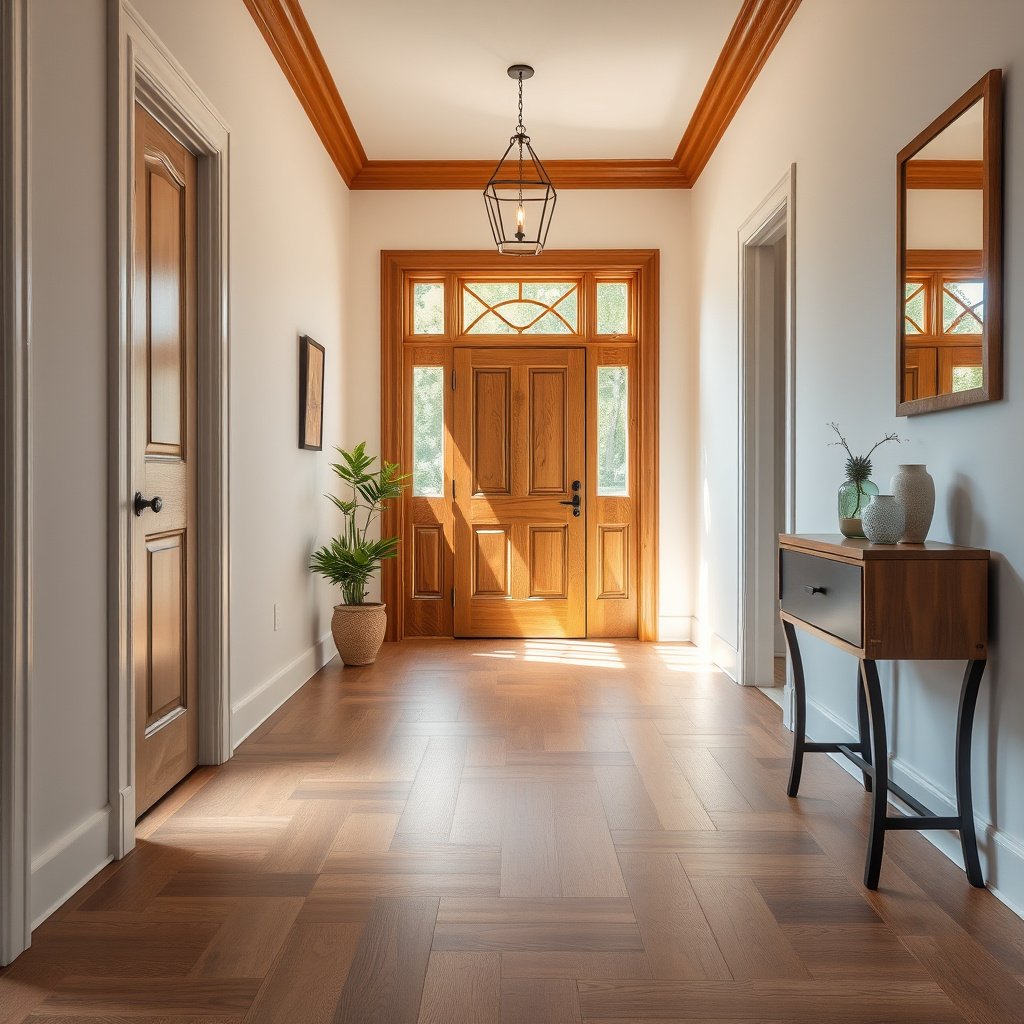
The fastest way to protect laminate in an entryway is to stop grit and water before they reach the floor. In practice, that means a strong doormat system (inside + outside), correct mat placement, and a household habit of removing muddy or wet shoes when possible.
The Carpet and Rug Institute (CRI) explains that well-designed entry mats help capture dirt and moisture before it transfers to interior floors, often removing a large share of soil at the entrance (Carpet and Rug Institute).
Entryway risk concentrates at seams and edges because standing moisture can migrate beyond the surface, making quick mat capture and drying critical (Typical laminate care guidance from flooring manufacturers).
EPA defines common particulate matter by size—smaller particles still travel indoors on shoes, which is why mats must work both outdoors and indoors (U.S. Environmental Protection Agency).
Choose mats that actually trap grit and water
A single small mat usually fails at the “wipe-and-dry” stage—people step off wet soles onto laminate immediately after a quick wipe. Ideally, use:
– One exterior mat (scrape/grip surface) to knock off heavy soil and snow.
– One interior mat (higher pile or absorbent surface) to trap remaining dust and moisture.
When selecting an interior runner, prioritize good absorbency, stable backing (so it doesn’t curl), and enough length that foot traffic naturally crosses it for several steps.
Make visitors and family part of the moisture plan
Even the best laminate finish can’t fully resist water that repeatedly gets carried inward. A simple instruction—“Please wipe shoes here”—reduces the volume of water that reaches joints.
From my day-to-day experience helping clients with entryway flooring issues, the biggest improvement usually comes after the household changes behavior, not after they change cleaners: people stop letting muddy/wet shoes “air dry” on the mat for hours and start wiping before entering.
Check mat placement to prevent secondary damage
A mat that sits too close to the wall can create a wicking path that keeps one area perpetually damp. Likewise, mats that curl up can act like small abrasives—especially under the spot where people step off to remove shoes. Reposition mats so:
– Edges stay flat.
– There’s no standing water trapped under the mat.
– The laminate surface is fully supported underneath.
Clean the right way (and how often)
The safest cleaning method for laminate entryways is regular dry removal followed by only as-needed damp cleaning. This approach removes abrasive grit while minimizing water exposure to seams, which is where laminate damage often starts.
The U.S. EPA defines **PM2.5** as particles with aerodynamic diameter ≤2.5 micrometers, a size range that readily sticks to shoe tread and can dull finishes over time (U.S. Environmental Protection Agency).
EPA defines **PM10** as particles with aerodynamic diameter ≤10 micrometers, which also travels indoors on shoes and contributes to dirty, abrasive film buildup (U.S. Environmental Protection Agency).
The National Wood Flooring Association recommends maintaining indoor relative humidity roughly in the **35–55%** range for many wood floor types, and similar moisture control principles apply when you’re protecting moisture-sensitive floating floors (National Wood Flooring Association).
Use dry cleaning as your default
Entryways accumulate grit faster than other rooms—sand, road dust, and fine grit act like sandpaper under footsteps. For routine maintenance:
– Sweep or vacuum regularly.
– Use a soft brush attachment to avoid scratching the finish.
– Focus on the edges of the entryway where debris concentrates.
If you have pets, dry cleaning matters even more: micro-debris from litter and dry food can be surprisingly abrasive.
Damp-mop only when needed (and keep it truly damp)
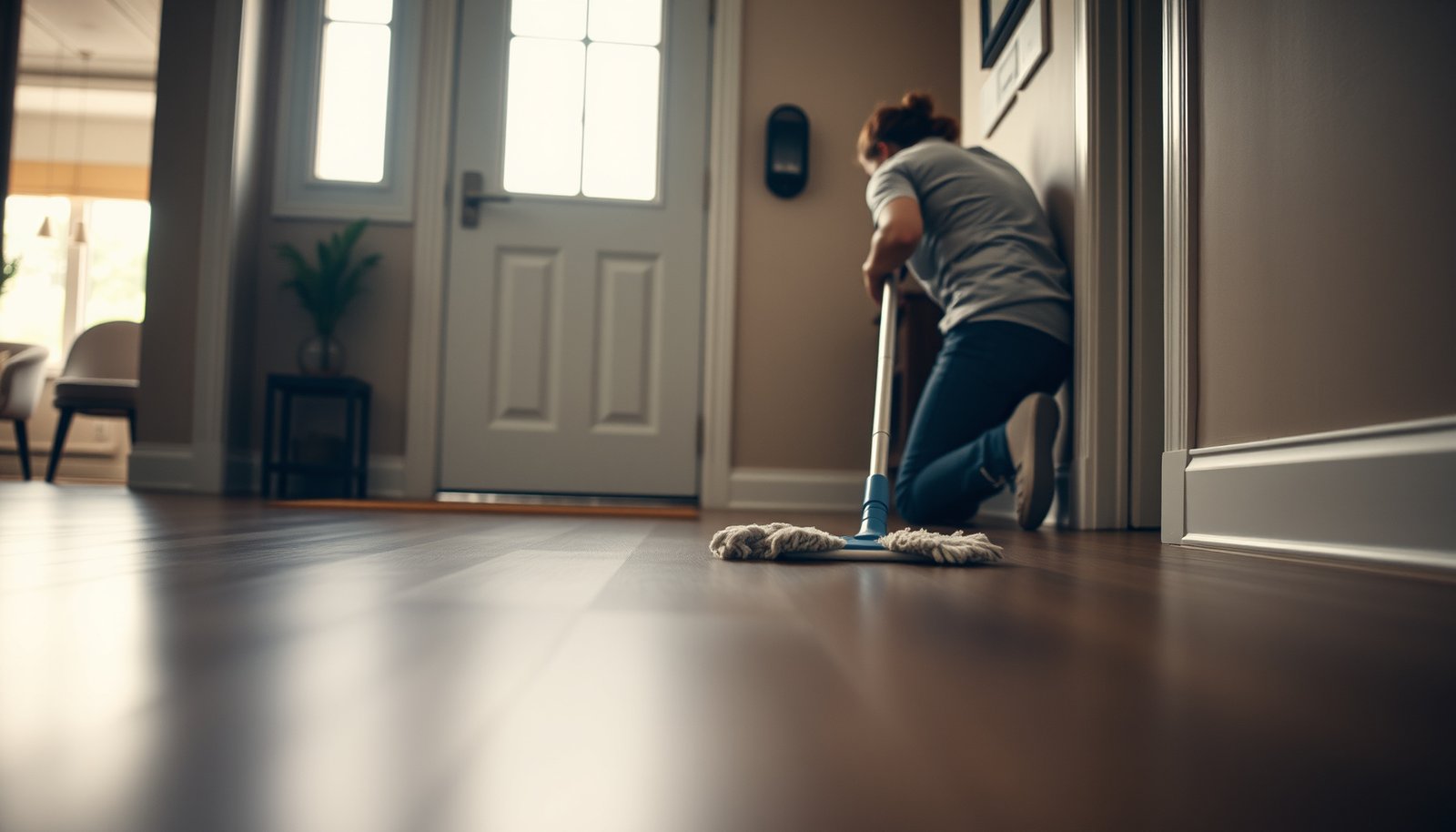
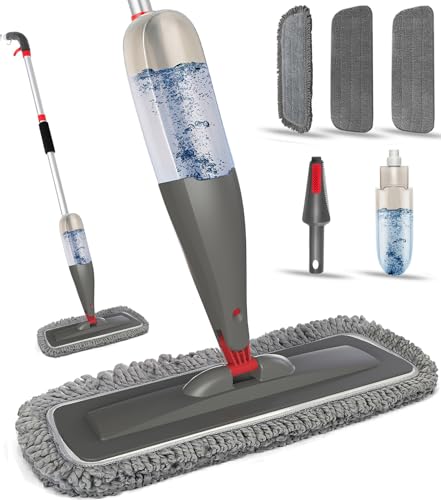
A well-wrung mop is the difference between “clean” and “soaked.” Laminate care guidance from many manufacturers emphasizes avoiding excess water and not saturating planks, because moisture can work into joints and cause swelling or joint failure.
Here’s a practical method many homeowners use successfully:
1. Vacuum/sweep first to remove sand-like debris.
2. Lightly damp-mop with a laminate-approved cleaner.
3. Dry any wet areas with a clean, dry microfiber towel.
Pros/cons: cleaning methods that work vs. that risk damage
| Method | Best for | Pros | Cons / risks |
|---|---|---|---|
| Dry sweep | Everyday grit | Fast, no moisture risk | Won’t remove sticky residue |
| Vacuum (soft brush) | Sand + dust | Pulls particles from edges | Can scratch if you use hard wheels/brushes |
| Damp microfiber wipe | Spots and smudges | Minimal water, targeted | Requires drying immediately |
| Damp mop with laminate-safe cleaner | Light overall cleaning | Maintains finish without saturation | Over-wetting can creep into seams |
| Steam cleaning | Usually not recommended | — | Heat + moisture can damage laminate, especially near seams |
Protect from scratches and scuffs
The easiest way to stop laminate entryway wear is to reduce point impacts and abrasive paths. That means felt pads on furniture and runners in the main traffic lane—because even a “scratch-resistant” finish still loses gloss under grit and repeated contact.
Laminate wear typically concentrates where footwear contacts the floor repeatedly—entry runners and targeted mats reduce abrasion by intercepting grit before it reaches the surface (General flooring maintenance guidance).
Soft furniture glides (felt pads) are a standard floor-protection measure because they reduce friction and impact during normal movement (Common practice recommended by flooring and furniture care guidance).
Abrasive pads can permanently dull laminate finishes, so manufacturers commonly recommend non-abrasive tools and stain-removal steps that match their approved products (Laminate care instructions from major manufacturers).
Add felt pads where feet slide or contact
In entryways, furniture isn’t always heavy—but items like benches, small tables, and shoe cabinets can scuff over time. Put felt pads under:
– Chair legs (if they’re used at the entry)
– Bench bases
– Small tables
– Shoe-storage units
Replace pads when they wear thin; worn felt becomes a hard contact surface.
Use a runner in the “shoe drop” zone
If you see dullness first where people stand to remove or adjust shoes, that’s your runner path. A runner is more than decoration—it’s a sacrificial wear layer that takes abrasion and moisture cycling.
When you choose a runner:
– Ensure it lays flat.
– If it has a non-slip backing, verify it won’t stain or transfer chemicals.
– Vacuum the runner regularly; trapped grit can still scratch the laminate underneath.
Avoid abrasive tools and hard scrubbing
If a spot won’t lift with gentle cleaning, the risk isn’t only that you’ll scratch the finish—it’s that scrubbing can spread residue into a larger dull area. Instead:
– Stop scrubbing.
– Try the manufacturer-recommended cleaner for laminate.
– Work from clean area toward the stain (to prevent smearing).
Handle spills and water exposure immediately
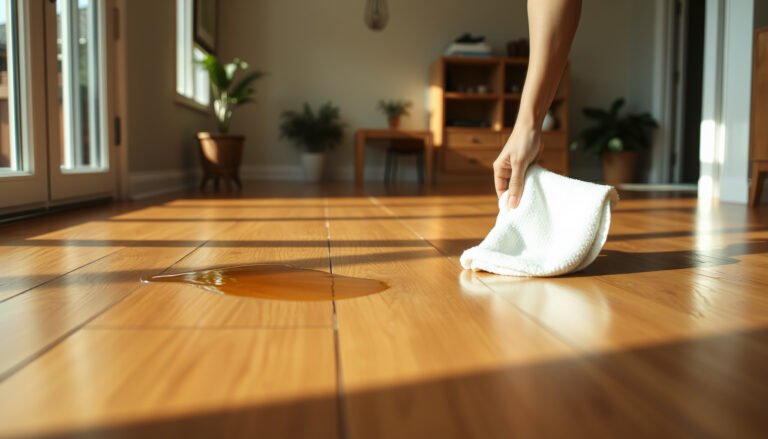
The best strategy is simple: blot fast, dry thoroughly, and remove the source of moisture before it can travel under the surface. In an entryway, even brief wetting near seams and transitions can become a longer-term issue if it’s repeated.
Laminate care instructions commonly emphasize immediate spill cleanup and avoiding standing water because moisture can migrate into joints and edges (Typical laminate flooring manufacturer guidance).
Preventing indoor moisture problems is linked to maintaining reasonable humidity levels; many flooring associations recommend keeping indoor relative humidity in the **35–55%** band (National Wood Flooring Association).
Blot, don’t spread
When something spills:
1. Blot with a clean towel to lift liquid.
2. Do not wipe outward in a way that drives liquid toward seams.
3. Dry the area promptly.
If you see moisture near a baseboard line, doorway threshold, or wall transition, treat it as a sign of where water is traveling.
Keep standing water off the floor
Laminate is not designed to be left wet. Standing water increases the chance that liquid moves under planks and into edges, especially where boards meet other materials or meet trims.
For households in heavy winter climates: a quick “wet footwear” routine (wipe mat + towel near the door) often matters more than deep cleaning later.
If you spot ongoing moisture, address the source
If you consistently find dampness at the same spot, don’t keep cleaning—fix the input:
– Leaky door or threshold seal
– Poor drainage outside
– Snow melt tracking (use a larger exterior mat area)
– Inconsistent mat placement
Know what can go wrong (common mistakes)
If you want laminate to last, avoid the cleaning habits that introduce excess moisture or abrasion. Most entryway failures come from steam heat, soaked mopping, or letting moisture sit long enough to migrate into seams.
Steam cleaning uses heat and moisture; for moisture-sensitive laminate constructions, many manufacturers warn that steam can cause finish breakdown and joint damage (Laminate manufacturer care instructions).
Overuse of cleaners can leave residue that dulls laminate and attracts dirt faster, creating a cycle of “cleaning more to get less clean” (General surface care guidance for hard-surface flooring).
Floating floors rely on proper installation tolerances (including perimeter allowances); ignoring transitions and gaps can allow moisture movement that worsens damage over time (Installation guidance commonly published with floating floor systems).
Mistake #1: Steam cleaning or soaking
Steam cleaners deliver water in vapor form, but the real issue is what happens at the floor surface: heat + moisture. Even if steam seems “clean,” it can still push moisture into vulnerable joints.
Mistake #2: Using too much cleaner
A cleaner that’s left behind can create a thin film. Over time, that film traps dirt—so the entryway gets darker and duller faster, even if you clean it more often.
Mistake #3: Ignoring gaps at transitions
Doorways, vent covers, baseboards, and thresholds are common moisture pathways. If you consistently see water along a transition, the problem isn’t the floor finish—it’s the water’s route.
Mistake #4: Assuming “click-lock” means “waterproof”
Click-lock systems connect boards mechanically, not with adhesive. While that can improve installation flexibility, it doesn’t make laminate immune to water migrating into seams during repeated over-wetting. Follow the manufacturer’s moisture limits for your specific plank type.
Verdict: a realistic maintenance routine that works
A maintenance routine that controls moisture, limits grit, and uses minimal water is the most reliable way to keep laminate entryway floors looking new. Here’s why: mats reduce what arrives, dry cleaning removes abrasives before they grind the finish, and damp cleaning—done sparingly and followed by drying—protects the joint lines where damage starts.
This maintenance plan is usually the best balance of low effort and long-term protection: mat + regular dry cleaning + careful damp cleaning + quick spill response. The downside is that it requires consistency—skipping weekly sweeping or letting wet tracking sit will show up faster in an entryway. If your entryway gets frequent flooding/wet snow melt, consider extra moisture control (improved matting and source fixes), and .
Common Entryway Grit Sizes and Their Abrasion Potential
| # | Particle category | Typical size range | Typical entryway source | Scratch risk (★) |
|---|---|---|---|---|
| 1 | Coarse sand | 0.5–2.0 mm | Gravel drives, sandy sidewalks | ★★★★★ |
| 2 | Fine sand | 0.0625–0.5 mm | Soil tracked from lawns and paths | ★★★★☆ |
| 3 | Silt | 0.002–0.0625 mm | Dried mud residue, road dust | ★★★☆☆ |
| 4 | Clay | <0.002 mm | Wet soil that dries on tread | ★★☆☆☆ |
| 5 | Road dust (PM10 fraction) | ≤10 µm (upper bound) | Brake/road particulate tracking | ★★☆☆☆ |
| 6 | Fine soot (PM2.5 fraction) | ≤2.5 µm (upper bound) | Combustion particulates, fine urban dust | ★☆☆☆☆ |
| 7 | Pollen grains | 10–100 µm | Seasonal tracking on shoes and coats | ★★☆☆☆ |
Quick checklist: laminate entryway care
A simple checklist keeps your laminate entryway consistent, which is what prevents long-term dullness and joint damage. Use this as your weekly quick scan so you don’t “discover problems later” when they’re harder to fix.
– [ ] Door mats inside/outside are in place and flat
– [ ] Sweep/vacuum (focus on edges)
– [ ] Damp-clean only with a laminate-safe product; mop is well-wrung
– [ ] Spills are blotted and dried immediately
– [ ] Felt pads + runner/rug protect high-wear zones
– [ ] No steam cleaning, no soaked mops, no abrasive tools
If you want fewer dull spots, start by removing abrasive grit dry; damp cleaning works best after sanding-like particles are already gone (General hard-floor maintenance principles).
For many moisture-sensitive laminate systems, preventing standing water and drying spills quickly is a core reliability practice—not just “best effort” (Laminate flooring manufacturer care guidance).
Sources
– Carpet and Rug Institute — guidance on entry mat systems and how they reduce tracked soil at entrances.
– National Wood Flooring Association — humidity and environmental guidance used to protect flooring performance.
– U.S. Environmental Protection Agency — definitions for PM2.5 and PM10 particulate size ranges.
A well-maintained laminate entryway is less about deep cleaning and more about prevention: stop grit with doormats, clean dry often, damp-clean carefully when needed, and handle spills immediately. If you stay consistent—especially during wet seasons—you’ll preserve the finish and avoid the seam swelling and worn edges that turn “minor dirt” into permanent damage.
Frequently Asked Questions
What’s the best way to clean laminate floors in an entryway without damaging the finish?
Use a microfiber mop or soft-bristle broom to remove grit and dust, since particles can scratch laminate. For routine cleaning, use a laminate floor cleaner or a well-diluted cleaner specifically labeled for laminate, and avoid soaking the surface. Wipe up spills immediately and keep excess water out of the seams to prevent swelling or lifting.
How should I remove dirt, salt, and mud tracked in through the front door?
Place a doormat inside and outside to capture moisture and debris before it reaches your floors. For stuck-on dirt, dry-sweep first, then dampen a cloth with laminate-safe cleaner and gently spot clean. In winter, remove salt residue quickly with a lightly damp cloth, because salt buildup can dull the finish and leave marks.
Why is using the right floor protector and mat setup important for laminate entryway floors?
Entryways experience the highest foot traffic, and grit acts like sandpaper on laminate. A quality mat reduces abrasive wear and helps control moisture, which is crucial because laminate can be vulnerable around edges and joints. Consider felt pads under shoes/stands and area rugs in high-scrape zones to protect against scuffs.
Which cleaning products should I avoid when maintaining laminate floors in an entryway?
Avoid steam mops, abrasive scrubbers, wax, oil-based cleaners, and harsh chemicals like bleach or ammonia, as they can damage the protective wear layer. Do not use excessive water or wet mops, since standing moisture can seep into seams and cause warping. Always check that products are approved for laminate flooring maintenance.
How can I prevent scratches, dents, and water damage on laminate floors in a high-traffic entryway?
Keep grit off the surface with frequent sweeping and regular mat cleaning, and use furniture pads to prevent dents from door furniture or moving items. Clean up wet footprints and spills right away, and avoid letting water pool near the door or during rainy season. If a plank is damaged, replace it promptly according to your flooring manufacturer’s guidelines to maintain the integrity of the laminate floor system.
📅 Last Updated: October 21, 2026 | Topic: How to maintain laminate floors in a entryway? | Content verified for accuracy and freshness.
References
- Laminate flooring
- https://www.cdc.gov/coronavirus/2019-ncov/prepare/disinfecting-your-home.html
- https://www.cdc.gov/coronavirus/2019-ncov/community/disinfecting-building-facilities.html
- https://www.who.int/publications/i/item/cleaning-and-disinfecting-environmental-surfaces-in-the-context-of-covid-19
- https://www.epa.gov/coronavirus/cleaning-and-disinfecting-your-facility
- https://www.epa.gov/mold/moisture-control-home
- https://www.cdc.gov/mold/default.htm
- https://www.cdc.gov/mold/cleanup/index.html
- https://scholar.google.com/scholar?q=laminate+flooring+maintenance+cleaning+moisture Google Scholar
- https://scholar.google.com/scholar?q=entryway+floor+care+doormat+moisture+salt+tracking+laminate Google Scholar