
Wondering how to maintain hardwood floors in a mudroom? Hardwood can stay looking great with the right routine—daily grit control, fast spill cleanup, and a schedule for cleaning and re-oiling. If you follow these easy care tips, you’ll prevent the warping, dulling, and scratching that mudroom traffic usually causes.




Hardwood in a mudroom stays looking new when you (1) block moisture and grit before they reach the boards and (2) clean using a barely-damp, finish-safe routine. The difference between “fine after a season” and “warped or permanently spotted” usually comes down to mats, fast spill response, and avoiding over-wetting.
Hardwood in a mudroom needs extra protection against moisture and grit—so focus on preventing wet tracking and keeping the surface sealed and clean. In this guide, you’ll learn the daily habits and deeper maintenance steps that help hardwood stay stable and look good even with heavy entryway traffic.
If your mudroom sees shoes, wet umbrellas, snow, or muddy boots, this is for you. It’s also useful if you already notice dulling, small gaps, or water spotting and want a practical routine to reduce damage going forward.
Protect the finish: stop water and dirt at the door
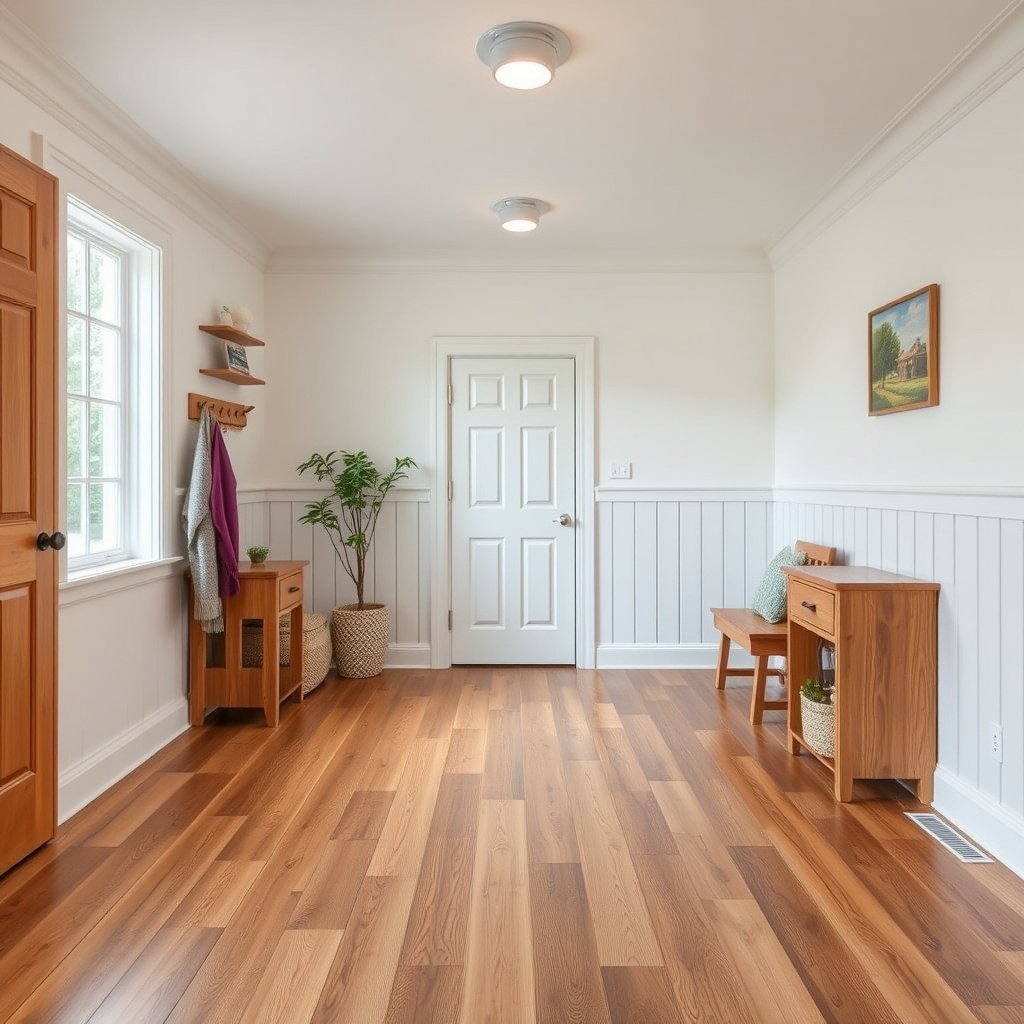
To protect mudroom hardwood floors, you need a layered “filter” that traps water and grit at the entry—before it reaches the wood finish. Here’s why: every wet boot carries both liquid (which can drive swelling and spotting) and abrasive particles (which wear the finish faster than normal room traffic).
For mudroom hardwood floors, the goal is prevention, not heroics—keep the floor surface dry and debris-light throughout the day, and you reduce the need for aggressive cleaning.
According to the National Wood Flooring Association (NWFA), maintaining indoor relative humidity within about 35%–55% helps reduce hardwood movement and finish stress. National Wood Flooring Association (NWFA) humidity guidance
According to the U.S. Geological Survey (USGS), quartz (a common component of sand) scores about 7 on the Mohs hardness scale—hard enough to abrade many wood finishes. USGS Mohs hardness references
A no-slip mat system works because mats prevent tracked moisture from staying in contact with hardwood long enough to create visible spotting and finish breakdown.
– Use a no-slip mat system (one outside, one inside) to catch moisture and grit before it reaches the floor.
Treat the “two-mat strategy” as part of your mudroom hardwood maintenance plan:
– Outside mat: captures bulk dirt, sand, and snow melt.
– Inside mat: handles what’s left—water droplets, mud crumbs, and fine grit.
Practical approach: shake/clean the outside mat routinely (especially in muddy months), and vacuum the inside mat frequently so it doesn’t become a grit source itself.
– Keep a “wet shoe” routine: wipe boots and remove them when they’re saturated, instead of letting water drip across boards.
This matters more than most people expect. Even if your mudroom hardwood floors have a durable topcoat, repeated puddling around the entry path can force moisture into seams and under-finish edges.
Make it easy: place a boot tray or towel zone on the mat area so the “wet shoe” action takes seconds—not minutes—twice a day.
Pros/cons snapshot for the mat strategy (mudroom hardwood floors):
| Option | What it does well | Trade-offs |
|---|---|---|
| Outside + inside mats | Captures moisture and grit at the source; reduces abrasive wear | Requires upkeep (vacuuming/cleaning mats) |
| Inside mat only | Helps, but still lets grit enter | More water reaches the floor during heavy storms |
Clean the floor the safe way (and avoid common damage)
To keep mudroom hardwood floors from dulling or developing cloudy spots, clean frequently—but clean gently. Safe cleaning is less about what cleaner you use and more about how much water you introduce and whether grit is left to grind underfoot.
For mudroom hardwood floors, the highest risk in routine cleaning isn’t “soap”—it’s sand + moisture paired together. The finish can look fine right after cleaning, yet degrade over weeks as fine particles repeatedly abrade the coating.
According to NWFA guidance, excess water (or soaking) during cleaning can contribute to finish failure and moisture-related movement in hardwood flooring. National Wood Flooring Association (NWFA) cleaning/moisture guidance
Using a soft-brush vacuum attachment reduces the chance of dragging abrasive grit across a hardwood finish compared with a stiff brush or dry sweeping alone.
Barely-damp mopping minimizes liquid exposure—important because hardwood reacts to humidity and moisture content changes over time. U.S. Forest Service/Forest Products Laboratory wood moisture principles
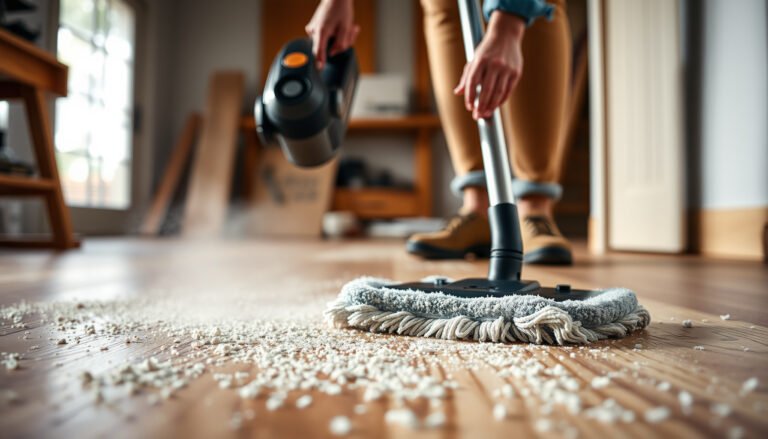
– Sweep or vacuum with a soft-brush attachment regularly so sand and dust don’t act like sandpaper.
For a mudroom, schedule this based on what you actually track in:
– During wet/muddy seasons: more frequent is better because grit builds quickly and damage is cumulative.
– Between deeper cleans: quick vacuuming prevents micro-scratches that later make the finish look dull.
Detail: focus on the “traffic lane”—usually the area that sees direct boot contact and heel turns.
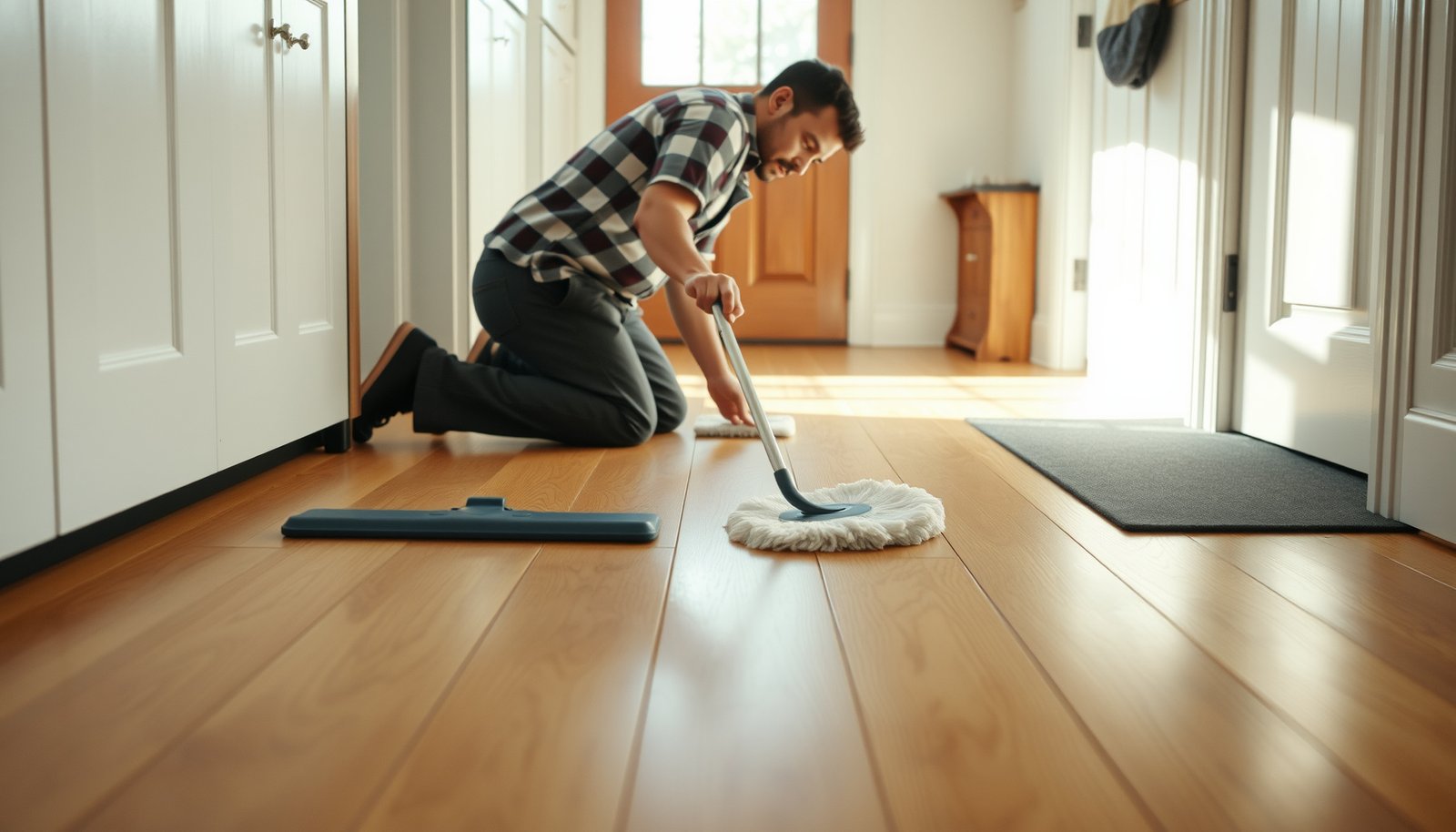
– For mopping, use a barely-damp method only (think wrung-out cloth or mop) and avoid soaking—standing water is the quickest route to cupping or dull spots.
With mudroom hardwood floors, the safest mopping method follows two rules:
1. No puddles. If you can see water sitting, you’ve already crossed the line.
2. No “wet spreading.” A mop that leaves droplets behind will keep moisture in contact with the wood long enough to cause issues, especially at seams and along the baseboard edge.
Drying and spill response: act fast, every time
To prevent water damage on mudroom hardwood floors, treat spills like an emergency: stop spread immediately and dry quickly. Most spotting and edge problems begin from delayed attention—liquid sits, penetrates the finish edges, or migrates toward seams.
When mudroom hardwood floors get wet, you’re not just dealing with a surface stain; you’re dealing with moisture dynamics. Wood absorbs moisture until it reaches equilibrium, and that equilibrium depends on indoor humidity.
Wood reaches moisture equilibrium based on ambient conditions; equilibrium moisture content (EMC) changes as relative humidity changes, which is why preventing wetting matters in entryways. U.S. Forest Service/Forest Products Laboratory EMC fundamentals
Forest Products Laboratory moisture data shows EMC varies with relative humidity (for example, EMC is roughly in the high-7% to ~9% range around mid-conditions near room temperature). U.S. Forest Service/Forest Products Laboratory EMC tables
Quick blotting is more protective than wiping—because wiping can spread the liquid and widen the affected area on mudroom hardwood floors.
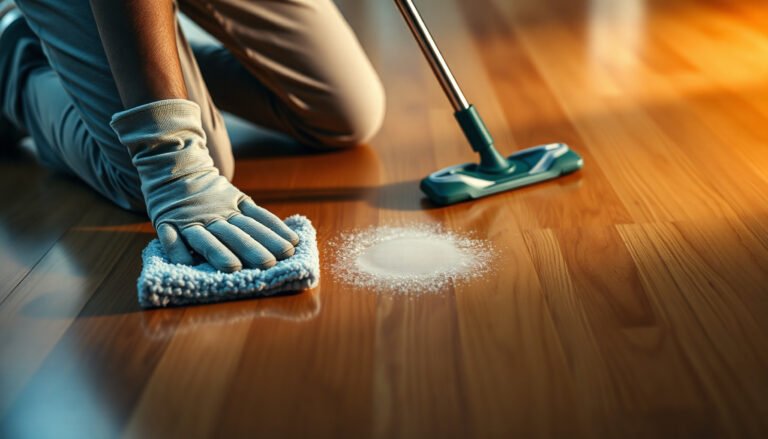
– Blot spills immediately; don’t spread the liquid by dragging a wet towel across the surface.
Use an absorbent cloth or paper towels and press, lift, repeat. The goal is to remove liquid without smearing it across boards (which can spread water marks and grit).
– If water gets underneath or pooling occurs, dry the area promptly and check around baseboards—problems can start out of sight.
Mudroom setups often hide early trouble:
– Under a mat that stays slightly damp
– At door thresholds where water gathers
– Near baseboards where mopped water migrates
If you ever notice a persistent cloudy patch or a soft feeling underfoot, treat that as a “check underneath” moment—because continuing foot traffic can spread moisture-driven damage.
Use the right products for hardwood in high-traffic zones
To keep mudroom hardwood floors safe, use finish-compatible cleaners and avoid anything that strips or leaves residue. High-traffic entryways turn everyday residue into a dirt magnet, and the dirt magnet turns into extra abrasion.
In 2026, this approach matters even more because many households use “quick clean” products that are designed for floors that can tolerate residue and stronger chemistry. Hardwood finishes often cannot.
Many hardwood flooring associations recommend using cleaners specifically labeled for hardwood and following label dilution and application instructions to avoid finish degradation. National Wood Flooring Association (NWFA) cleaning guidance
If a cleaner is not labeled for your hardwood finish type, it can leave a haze or film that increases dirt adhesion and can make dulling worse over time.
Finish compatibility is crucial because different systems (urethane topcoats, penetrating oils, and waxes) respond differently to maintenance products.
– Choose cleaners specifically labeled for hardwood floors (and follow the label instructions exactly).
“Hardwood-safe” is not a vibe—it’s a compatibility promise. For mudroom hardwood floors, look for:
– A label that explicitly says hardwood floor or finished wood floors
– Clear dilution instructions (if the product is concentrated)
– Guidance on whether it’s meant for routine cleaning vs. periodic maintenance
– For periodic care, use maintenance products that match your floor’s finish (e.g., some finishes respond differently to waxes, oils, or “enhancing” polishes).
Two common failure modes in mudrooms:
1. Applying a product designed for one finish type to a different finish system
2. Overusing “enhancers,” which can build residue faster where grit and moisture are most concentrated
Mudroom Hardwood Maintenance Cadence (Practical Targets for 2026)
| # | Mudroom action | Target frequency | Primary problem prevented | Priority |
|---|---|---|---|---|
| 1 | Vacuum/sweep mud and grit lane | 1–5×/week | Finish dulling from abrasion | ★★★★☆ |
| 2 | Shake/clean inside mat surface | 1×/week | Grit re-tracking | ★★★☆☆ |
| 3 | Wipe/wet-shoe routine (boots off when saturated) | Daily | Water spotting + swelling risk | ★★★★★ |
| 4 | Barely-damp clean (spot or light mop) | 1×/2–4 weeks | Residue build-up haze | ★★★☆☆ |
| 5 | Blot spills immediately and dry the area | As needed (immediate) | Stains + edge lifting | ★★★★★ |
| 6 | Check mat edges + thresholds for moisture | 1×/week (storm weeks: 2×) | Hidden pooling at seams | ★★★☆☆ |
| 7 | Screen/refinish when top layer fails | Every 3–10 years* | Deep wear in the traffic path | ★☆☆☆☆ |
Range depends on wear rate, finish system, and how quickly you reduce moisture/abrasion in mudroom hardwood floors.
Maintain the floor’s condition: humidity, refinishing, and prevention
To maintain mudroom hardwood floors long-term, control indoor humidity and only refinish when the floor’s wear stage calls for it. This matters because wood movement (expansion/contraction) is driven by moisture content, and mudroom exposure amplifies the cycle.
As of 2026, the most effective prevention strategy is boring: keep conditions stable, keep grit out, and let your refinishing schedule match reality—not guesswork.
According to NWFA humidity guidance, indoor relative humidity around 35%–55% supports more stable hardwood flooring dimensions over the year. National Wood Flooring Association (NWFA)
According to U.S. Forest Service/Forest Products Laboratory EMC tables, equilibrium moisture content changes with relative humidity, which is why seasonal swings can drive expansion and contraction in hardwood. U.S. Forest Service/Forest Products Laboratory (EMC resources)
Mudroom traffic typically wears the top finish first; addressing surface damage early can help prevent deeper penetration into the finish system.
– Keep indoor humidity in a comfortable range for hardwood stability (use a hygrometer if you’re unsure) and avoid extreme seasonal swings.
Practical setup for mudroom hardwood floors:
– Use a hygrometer to measure actual indoor RH (not just what you “feel”).
– In winter or summer extremes, adjust HVAC or use humidification/dehumidification to prevent large RH swings.
– If you see gaps widening in dry seasons, that’s often a humidity/conditions signal—not a “failed floor” signal.
– Plan for screening/refinishing only when needed—mudrooms often wear the top layer first, so address surface damage before it penetrates deeper.
The refinishing decision should be based on observable symptoms in mudroom hardwood floors:
– Loss of gloss/finish uniformity
– Finish breakdown at the traffic lane
– Persistent dull patches despite proper cleaning
Important: the right maintenance product and the right refinishing approach depend on whether the floor is solid vs. engineered and what finish system it has (urethane topcoat vs. penetrating oil, etc.).
What can go wrong (and how to avoid it)
To avoid damage on mudroom hardwood floors, the big risks are over-wetting, chemical mismatch, and letting abrasive grit accumulate underfoot. These issues don’t always show immediately, which is why they keep coming up in real-world entryway maintenance.
If your mudroom has frequent storms, pet traffic, or recurring wet floor episodes, you’ll need stricter prevention habits than you would in a living room.
Even when a cleaner is marketed as “safe,” leaving the floor too wet during mopping can increase moisture exposure and contribute to finish or dimensional issues in hardwood. National Wood Flooring Association (NWFA) cleaning/moisture guidance
Using all-purpose cleaners that leave residues can make mudroom hardwood floors look hazy and can attract more dirt, increasing abrasion over time.
Skipping protective mats can turn tracked sand into a repeated abrasive event—quartz at Mohs hardness ~7 is abrasive enough to wear finishes over repeated traffic. USGS Mohs hardness references
– Over-wetting during cleaning: even “safe” mops can damage floors if the cloth stays too wet or you leave puddles.
If the floor dries slowly, you’ve likely introduced too much liquid. For mudroom hardwood floors, prefer spot cleaning with a dampened cloth and controlled rinsing steps only if your cleaner instructions call for it.
– Using the wrong cleaners: harsh chemicals or all-purpose products can break down finish or leave residue that attracts more dirt.
If you notice tackiness or a cloudy film after cleaning, stop and switch to an explicitly hardwood-labeled method. Residue buildup often shows up first around the entry path on mudroom hardwood floors.
– Skipping protective mats: sand and water trapped under shoes accelerate wear and can create permanent dull patches.
When mats are absent or neglected, grit becomes embedded in the finish microtexture. Eventually, the floor can’t “clean itself back” to uniform appearance.
Verdict: a simple mudroom routine that’s worth it
If you want the lowest-effort routine with the highest payoff, keep a mat system down, blot spills immediately, and clean using a barely-damp, hardwood-labeled approach. That combination reduces moisture exposure and prevents grit from grinding your finish down—two drivers of warping and permanent spotting.
The downside is that mudrooms demand more attention than normal rooms—so if you can’t manage daily entryway habits (or you often have deep standing water), you may need stronger protective barriers or to reconsider flooring choices for the space.
Quick checklist: mudroom hardwood maintenance
– Mat system down (and cleaned) every week
– Shoes wiped/blotted before they enter
– Sweep/vacuum regularly to remove grit
– Mop only with a barely-damp approach (no puddles)
– Blot spills immediately; dry fast
– Use hardwood-approved cleaners only
– Monitor humidity; avoid extreme swings
Sources
In short, the best mudroom hardwood strategy is prevention-first: keep moisture and grit off the boards, clean with minimal water, and maintain stable indoor humidity. When you do that consistently in 2026 and beyond, your entryway floor is far less likely to warp, spot, or permanently dull.
Frequently Asked Questions
How do I protect hardwood floors in a mudroom from dirt and moisture?
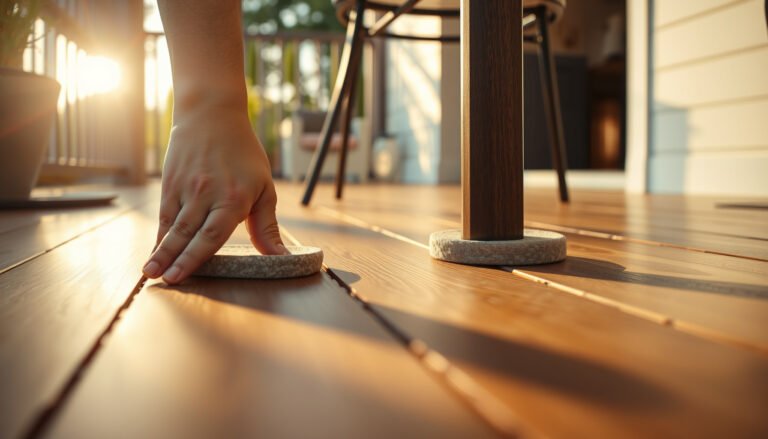
Use a high-quality entryway mat system with both a doormat and a larger rug to trap grit and absorb water before it reaches the hardwood. Wipe up spills immediately and keep a “remove shoes” rule to prevent tracked-in sand from scratching the finish. For ongoing protection, consider adding felt pads under benches and shoe racks, and avoid wet mopping that can drive moisture into the wood.
What’s the best way to clean hardwood floors in a mudroom without damaging the finish?
Sweep or vacuum with a hardwood-safe attachment to remove abrasive dirt and debris daily or as needed. Clean with a manufacturer-recommended hardwood floor cleaner that’s designed to be low-moisture, and damp-mop only if your floor’s finish and care instructions allow it. Never use harsh chemicals, steam cleaners, or soaking methods, since excess moisture and abrasive cleaners can dull the finish and lead to warping.
How do I prevent scratching and scuff marks from shoes, salt, and grit?
Keep doormats in good condition and replace them when they stop trapping debris effectively, since sand and grit act like sandpaper. Add protective floor mats at high-traffic “landing zones” near the entry, and use furniture pads under storage units and benches. If your mudroom sees heavy salt exposure, rinse lightly with a well-wrung damp cloth right after storms (avoid pooling water), then dry the area thoroughly.
Why do hardwood floors buckle or cup in mudrooms, and how can I stop it?
Hardwood can cup or buckle when moisture levels swing—often from wet boots, tracked-in snow, or wet mopping that doesn’t dry properly. Control humidity with proper ventilation and a dehumidifier or humidifier as needed to keep indoor moisture stable. After any spill or snow melt, dry the floor quickly with a clean, absorbent towel to reduce the time the hardwood is exposed to water.
Which maintenance routine should I follow seasonally for hardwood floors in a mudroom?
In winter and rainy seasons, focus on quick cleanup: sweep frequently, blot spills right away, and ensure mats are not saturated. In spring and summer, deep-clean with a gentle hardwood floor cleaner, then inspect for finish wear and address small issues early. Recoat or refinish only when necessary—typically after noticeable dullness, scuffs through the topcoat, or when spot repairs no longer blend well—so your hardwood floor stays protected year-round.
📅 Last Updated: October 16, 2026 | Topic: How to maintain hardwood floors in a mudroom? | Content verified for accuracy and freshness.