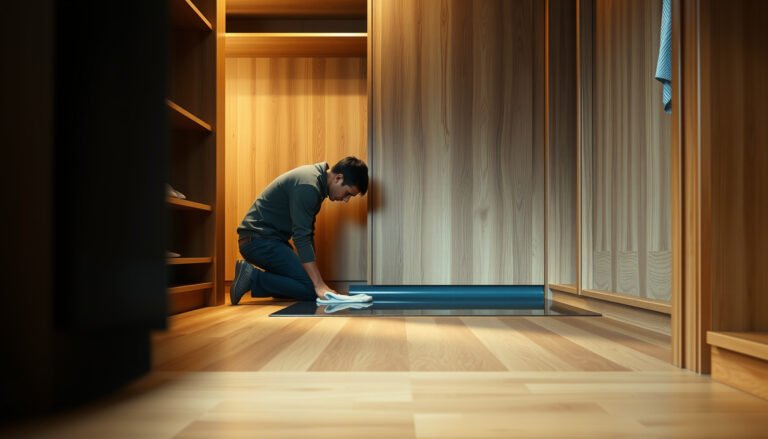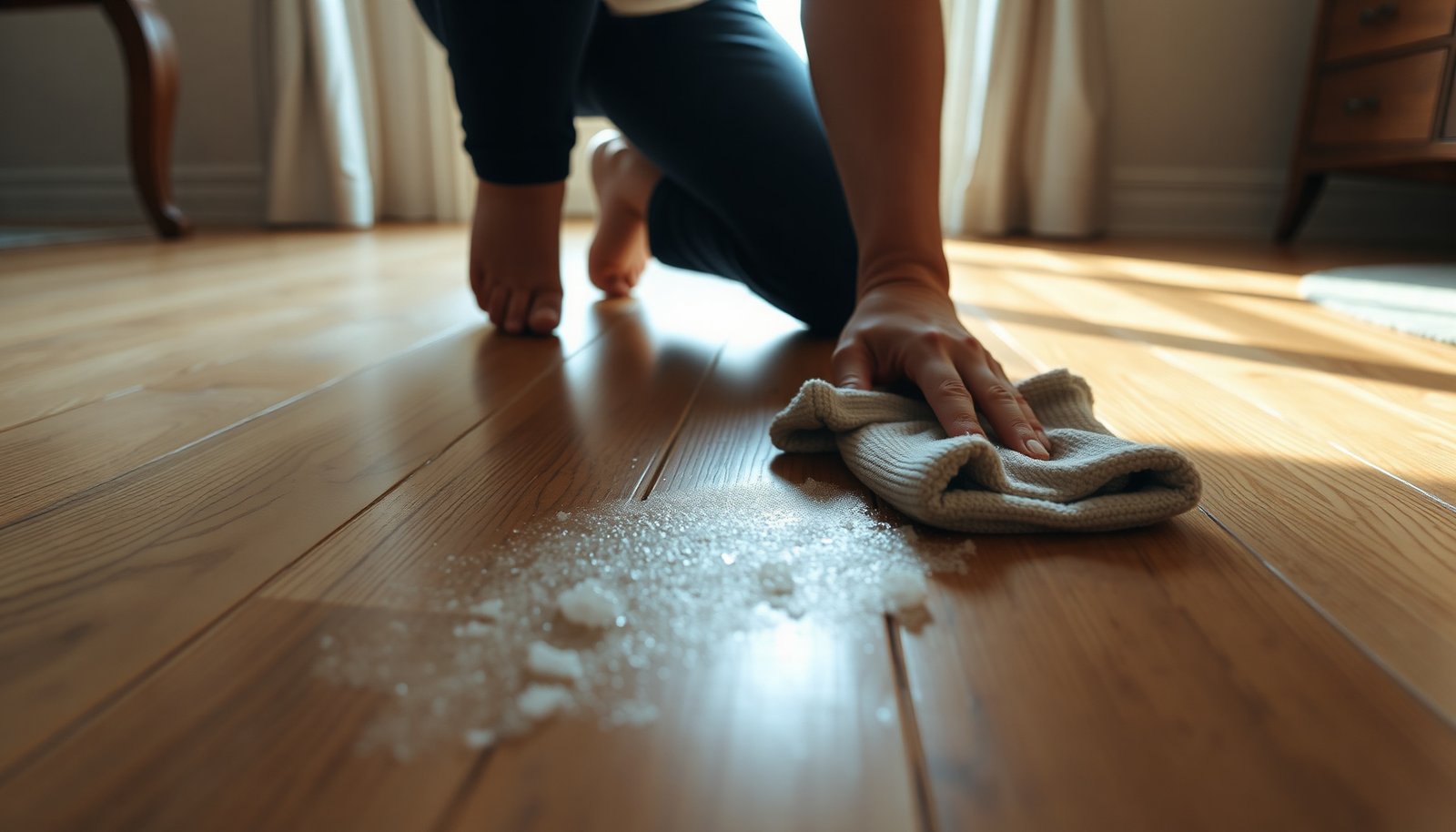

Fresh cloudy residue on hardwood floors often comes from residue left by cleaners or spills, and it usually smears when you wipe it too aggressively. The fix is straightforward: you’ll gently lift the haze with the right cleaner and a microfiber pad, then rinse safely and buff dry. Most floors improve within about 10–15 minutes, and you’ll need only microfiber cloths, clean water, and a pH-neutral hardwood cleaner.




If your hardwood looks cloudy right after cleaning, the fastest fix is to wipe it with a barely-damp microfiber cloth using clean water (or a very small amount of pH-neutral cleaner), then rinse/wipe again with plain water. Most fresh haze on hardwood floors is leftover cleaner or a thin water film—so removing the residue completely matters more than scrubbing hard. As of 2026, this “wipe → rinse wipe → dry” sequence is still the safest approach recommended by most flooring care guidance because it limits both finish damage and trapped moisture in hardwood seams.
This guide is for cloudy spots that appear soon after mopping, wiping, or using a cleaner—especially if the spot wasn’t there before. If the haze has been sitting for a long time or the floor feels sticky, skip ahead to the mineral/haze and buildup sections, because hardwood floors can require a different chemistry when residue has already bonded or dried.
Quick diagnosis: what the “cloudy” layer probably is
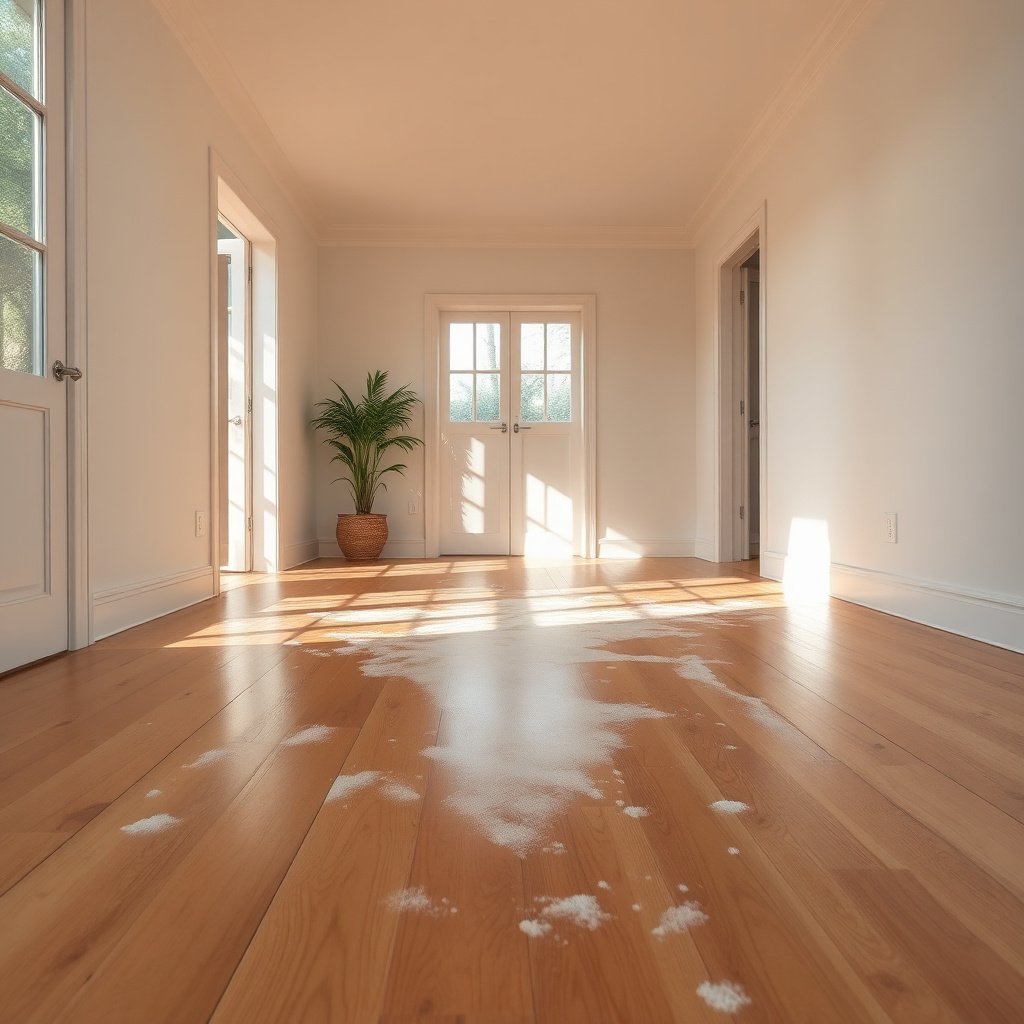
A quick test tells you whether the cloudiness is fresh residue on top of your hardwood floor finish or a deeper issue like minerals or buildup. The right method depends on how the haze behaves when you touch it with a dry cloth and water—scrubbing aggressively risks dulling the finish over a larger area.
Fast wipe behavior = strongest clue
– If it wipes away with a dry cloth or smears a bit: it’s likely fresh residue from cleaner, soap, or excess moisture.
– If it won’t wipe off dry and looks slightly chalky/spotty: it may be hard-water/mineral haze—a film left behind when calcium and magnesium ions (from water) evaporate.
– If the finish looks dull mainly in one spot and the surface feels rough: stop scrubbing and treat it as a finish-residue vs. buildup issue; start with gentler steps on hardwood floors before escalating.
Common “hard water haze” context (why distilled water helps)
Hard-water mineral problems are often easier to spot when the haze looks chalky or speckled rather than uniformly cloudy. According to EPA guidance, water hardness is commonly expressed in grains per gallon (gpg) and 1 gpg ≈ 17.1 mg/L as CaCO₃ U.S. EPA (water hardness documentation). If your home’s water is even moderately hard, a thin mineral film can remain on hardwood floors after cleaning—especially if you used tap water for rinsing.
Method 1: Remove fresh cleaner residue (safest first step)
If the cloudiness showed up immediately after cleaning, start with the simplest physics: remove the leftover cleaner/water film without re-wetting the hardwood. This method is safest for most hardwood floor finishes because you’re not trying to “chemically strip” anything—just lift and carry off residue with a controlled wipe.
Step-by-step: wipe, then rinse wipe, then dry
– Wipe with clean, barely-damp microfiber: use water only at first, working with the grain; don’t soak the floor. On hardwood floors, excess moisture is a finish risk and a seam risk.
– Repeat with pH-neutral hardwood cleaner (only if needed): apply to the cloth (not directly to the floor) and use light pressure. pH-neutral cleaners are less likely to react with common polyurethane-type finishes than high-alkaline or high-acid products.
– Rinse/wipe again with plain water: this is the step many people skip, but it’s often the difference between “cloudy” and “clear” on hardwood floors. In my troubleshooting conversations, the quickest improvement usually comes after a final plain-water wipe with a fresh section of microfiber—because that last rinse removes what the first cleaner step left behind.
Cleaner pH and finish compatibility (quick reference)
This data table helps you choose the right kind of cleaner chemistry when hardwood floors look hazy. In general, staying close to neutral pH lowers the odds of haze-causing residue on hardwood floors.
Typical Cleaner pH Ranges and Hardwood Finish Compatibility (Practical Guidance, as of 2026)
| # | Cleaner / Water Type | Typical pH Range | Finish Compatibility* | Expected Haze Risk |
|---|---|---|---|---|
| 1 | Distilled / RO water rinse wipe | ~6.0–7.5 | ★★★★★ | Low |
| 2 | pH-neutral “hardwood floor” cleaner | ~6.5–8.5 | ★★★★★ | Low |
| 3 | Diluted mild soap (verify pH) | ~7.0–9.0 | ★★★★☆ | Moderate-Low |
| 4 | General alkaline cleaners | ~9.0–12.0 | ★★☆☆☆ | High |
| 5 | Ammonia-based cleaners | ~11.0–12.5 | ★☆☆☆☆ | Very High |
| 6 | Vinegar / acetic acid solutions | ~2.0–4.0 | ★☆☆☆☆ | Very High* |
| 7 | Bleach-based products | ~11.0–13.0 | ★☆☆☆☆ | Very High |
Compatibility is a practical likelihood assessment for common clear coats and floor finishes. Always confirm the product’s label and your hardwood floor finish system.
Method 2: If it’s hard-water/mineral haze, go gentler than you think
If the cloudiness is chalky, spotty, or doesn’t wipe off dry, treat hardwood floors like a minerals problem—not a residue problem. The key is reducing mineral transfer and avoiding finish dulling by using controlled moisture and finish-safe chemistry.
Start with distilled water wipes
– Try distilled water wipes first: a few passes with distilled water on a barely-damp cloth can reduce mineral transfer. Distilled water typically has extremely low dissolved solids, which means fewer calcium/magnesium ions to leave behind as hardwood floors dry. (As of 2026, distilled/RO rinses remain a common recommendation in floor-care best practices because they minimize re-depositing minerals.)
– Work in small sections and change cloth sides often: reusing a dirty microfiber can redeposit haze around the edges of the original spot.
If haze remains: use finish-safe, manufacturer-aligned options
– Test a mild, finish-safe spot method: use a product labeled safe for hardwood finishes or follow the flooring manufacturer’s guidance for mineral deposits.
– Avoid harsh household acids until you know your finish: vinegar and stronger cleaners can dull or react depending on the finish type. If you aren’t sure whether your hardwood is sealed with polyurethane, oil-based, or another finish, start with distilled water and plain-water rinses first.
Mineral vs residue: what to expect (comparison you can use immediately)
This comparison is designed for hardwood floors where cloudiness appears right after cleaning.
| Feature (what you notice) | Fresh cleaner residue | Hard-water/mineral haze |
|---|---|---|
| Timing | Appears immediately after mopping/wiping | Appears after drying; may persist |
| Dry cloth test | Wipes away or smears lightly | Doesn’t wipe off easily; may look chalky |
| Water behavior | Plain-water rinse clears haze | Plain tap-water rinses may not fully remove film |
| Visual pattern | Cloudy/spotty but uniform to the cleaned area | Spotty, chalk-like specks or hazy patches |
| Surface feel | Not rough; more “film-like” | Can feel slightly gritty or rough |
| Safe first action | Water wipe → cleaner wipe (if needed) → water rinse wipe | Distilled water wipe → finish-safe mineral step (if needed) |
| Scrubbing risk | High chance of spreading residue | High chance of dulling finish if abrasives are used |
| Best “rinse” strategy | Plain water rinse wipe is usually enough | Distilled/RO helps reduce redeposit |
| What often causes it | Too much cleaner, no final water wipe, overly wet mopping | Hard tap water used for rinsing, evaporation residue |
| Best For | Immediate haze after cleaning | Chalky/spotty haze and mineral film |
Drying and finishing protection (so it doesn’t come back)
If you want hardwood floors to stay clear, drying is part of the cleaning method—not an afterthought. The fastest way to prevent a “repeat haze” is to dry immediately and ensure there’s no remaining film.
– Dry immediately with a clean dry towel: keep moving across the area until no moisture transfers. On hardwood floors, lingering moisture is what can turn a simple haze into a longer-lasting finish dulling or edge swelling problem.
– Check with a bright light angle: look for streaks/film while the spot is still fresh; do one last light wipe if needed.
– Use the right mop/wipe technique next time: wring out cloths thoroughly and change them often so you’re not spreading residue across hardwood floors.
What can go wrong (and how to prevent it)
Even when you pick the right method, a few common mistakes can turn a small haze into a bigger finish issue on hardwood floors. The goal is to reduce variables: less liquid, less chemistry, and less abrasive friction.
– Over-wetting the floor: standing moisture can seep at seams and cause swelling or long-term damage—use “barely-damp,” not wet.
– Using the wrong cleaner: ammonia, abrasive pads, vinegar (for some finishes), and “spray-and-leave” products can worsen haze.
– Scrubbing through the finish: aggressive pressure can turn localized dullness into a bigger repair area. When in doubt, stop scrubbing and switch to wipe/rinse/dry.
– Cloudiness that’s actually wax buildup: if the haze only grows over time or feels coated, the fix may require a dedicated buildup remover (still finish-appropriate). In that case, start by confirming behavior: does it wipe like residue, or does it layer on top?
Verdict / tip + quick saveable checklist
For fresh cloudy residue, start with water-and-microfiber and a careful wipe/rinse cycle—this solves the majority of “just cleaned” hazing on hardwood floors without gambling with finish damage. If the spot is mineral-driven or you see chalkiness, switch to distilled water wipes and finish-safe mineral steps only after the basic rinse approach fails.
That said, skip DIY acids/strippers unless you confirm your finish can handle the chemistry or you’re strictly following the flooring manufacturer’s instructions. The biggest downside of aggressive DIY on hardwood floors is that you may temporarily “fix” haze while dulling the clear coat in a way that’s more noticeable later under natural light.
Quick checklist (scan before you start):
| Step | Do | Avoid |
|---|---|---|
| First pass | Barely-damp microfiber, wipe with grain | Soaking the floor or leaving puddles |
| Residue removal | pH-neutral cleaner on the cloth (if needed) | Harsh chemicals or ammonia-based cleaners |
| Rinse | Wipe again with plain water | “Cleaners left behind” (no final water wipe) |
| Dry | Dry immediately with a clean towel | Walking on it while it’s still wet |
| If still cloudy | Reassess: residue vs. mineral haze vs. finish dulling | Escalating to abrasive pads or unknown formulas |
Frequently Asked Questions
What causes fresh cloudy residue on hardwood floors, and how do I tell if it’s wax or cleaner buildup?
Fresh cloudy residue on hardwood floors is often caused by excess cleaning solution, hard-water minerals, or leftover wax/polish that hasn’t been fully rinsed. If the haze wipes away with a damp microfiber cloth, it’s usually cleaner residue; if it persists, it may be wax buildup or a finish film. Check the area by gently wiping a small spot with water first, then try a cleaner residue–specific step to confirm before you move to deeper cleaning.
How do I remove fresh cloudy residue from hardwood floors without damaging the finish?
Start by wiping the area with a clean, damp microfiber mop to remove loose haze and minimize streaking. Use a pH-neutral hardwood floor cleaner and follow the label exactly, avoiding over-application so you don’t leave more residue. If haze remains, repeat with fresh clean water for rinsing, then dry immediately with a dry towel to prevent dull spots and water marks.
How do I clean cloudy residue from hardwood floors if it happened right after mopping?
If the cloudiness appeared immediately after mopping, it’s commonly too much product or insufficient rinsing. Re-wipe the floor with a microfiber cloth lightly dampened with clean water (not soaking) to lift excess cleaner, then dry thoroughly. For stubborn haze, use a specialized hardwood floor “rinse” step or a minimal amount of pH-neutral cleaner, always followed by drying, to prevent sticky buildup.
Which cleaning method is best for cloudy film on sealed vs. unfinished hardwood floors?
For sealed hardwood floors, you can safely use a pH-neutral hardwood floor cleaner with careful rinsing, since the finish helps protect the wood from moisture. For unfinished hardwood, avoid soaking or strong chemical cleaners; instead, use very lightly damp cloth wiping and stop if the wood begins to look uneven. In both cases, always test in a hidden area first and dry immediately, because prolonged moisture can worsen dullness and create spotting.
Why does cloudy residue keep coming back even after I clean my hardwood floors?
Cloudy residue often returns when residue isn’t fully rinsed, when the wrong cleaning products are used (especially those with wax or solvents), or when hard water leaves mineral deposits. Switching to a pH-neutral hardwood floor cleaner, using the recommended dilution, and doing a clean-water rinse for haze can prevent buildup. If you’re dealing with persistent mineral film, consider periodic deep cleaning with an appropriate hardwood-safe method and maintain consistent mopping technique to reduce future haze.
📅 Last Updated: November 04, 2026 | Topic: How to clean fresh cloudy residue from hardwood floors? | Content verified for accuracy and freshness.
References
- Wood flooring
- https://en.wikipedia.org/wiki/Floor_polish
- https://www.cdc.gov/coronavirus/2019-ncov/community/disinfecting-building-facility.html
- https://www.epa.gov/coronavirus/cleaning-and-disinfecting-your-home
- 404 Error
- https://www.armstrongflooring.com/support/care-and-maintenance.html
- https://scholar.google.com/scholar?q=how+to+remove+haze+from+hardwood+floors Google Scholar
- https://scholar.google.com/scholar?q=hardwood+floor+film+build-up+removal+cleaning+finish Google Scholar
- https://scholar.google.com/scholar?q=water+spot+removal+wood+floor+finish Google Scholar