
To remove dried, old polish residue from hardwood floors, you’ll need to soften it first, then lift it without dulling the finish. Expect this to take about 30–60 minutes depending on how heavy the buildup is, and it’s generally manageable if you use the right cleaner and tools. Gather a microfiber cloth or soft pad, pH-neutral hardwood cleaner, clean water, and a plastic scraper or nylon pad before you start.




If you’re dealing with dried, old polish residue, start with the gentlest method: warm water + a mild wood-safe cleaner, then carefully dissolve what’s left. For stubborn buildup, use a mineral-spirit–type solvent only if your finish allows it, and finish by rinsing with a lightly damp cloth and drying immediately. In this guide, you’ll learn how to test safely, loosen residue without damaging the finish, and avoid the hazy film polish often leaves behind.
This is for homeowners and renters cleaning hardwood floors with dried wax/polish streaks, sticky patches, or dull spots that won’t come up with regular mopping. If you’re not sure whether your floor has polyurethane, penetrating oil, wax, or an older finish, follow the steps below—starting with the test area.
Assess the residue and the floor finish first
Start by identifying whether you’re dealing with a waxy film or a hazy coating, because that determines whether rehydration or solvent chemistry will work. Then confirm (as much as possible) what kind of hardwood floor finish you have, since some solvents can cloud or soften certain topcoats.
– Look for clues: waxy film (smears/bumps) vs. clear haze (often from over-polishing or drying agents).
– Check your finish type if you know it (polyurethane vs. wax/oil). Some solvents can soften or cloud certain finishes.
– Plan for a test spot: choose an inconspicuous area and try your cleaner/solvent there before going wider.
Quick visual cue: if a damp microfiber cloth “melts” the residue into a cloudy smear, you’re usually dealing with a surface polish/wax layer. If the residue stays unaffected by mild moisture but you see dullness/haze, it may be surface-lubricant film or finish-bound buildup that needs a gentler re-wipe strategy—or, in some cases, a finish-compatible solvent.
Start with the safest removal method (warm water + mild cleaner)
The safest way to clean dried polish residue is to rehydrate it first, so you can lift it with cloth friction rather than grinding it into the hardwood floor finish. This step is designed to loosen what’s on top while minimizing risk to seams, edges, and protective coatings.
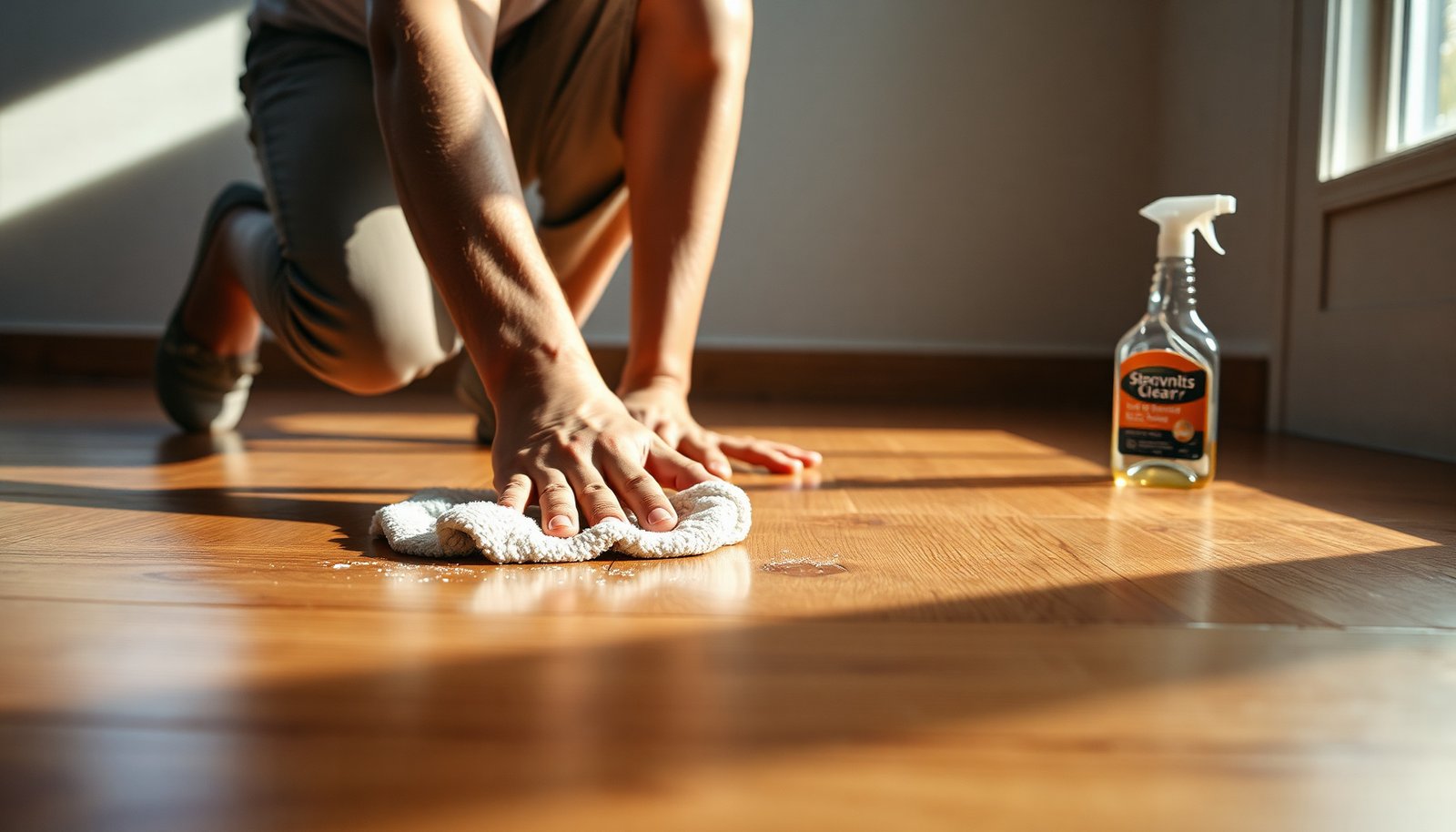
– Dampen a microfiber cloth with warm water and a wood-safe cleaner, then let it sit briefly on the residue to rehydrate it.
– Gently wipe in the direction of the grain; avoid aggressive scrubbing that can scratch or dull the finish.
– Repeat as needed, swapping to clean cloth sections so you’re lifting residue instead of smearing it around.
A practical method that works well for dried old polish residue is a “short dwell, low agitation” approach:
1) Lay the dampened cloth on the affected spot for a moment (long enough to soften, not long enough to leave puddles).
2) Wipe once with the grain, then switch to a fresh section of the cloth.
3) Repeat until the cloth no longer picks up a tinted film or tacky transfer.
If you notice the haze getting worse, stop scrubbing—over-agitation can abrade the hardwood floor finish even when the residue is partly removed. At that point, you’re not just cleaning dried polish residue; you’re also potentially dulling the clear coat.
Use a controlled solvent approach for stubborn dried polish
If warm water and a mild wood-safe cleaner won’t touch the dried polish residue, the next step is a controlled solvent that dissolves waxy buildup without saturating the floor. In this guide, the solvent we rely on for a compatibility-tested escalation is odorless mineral spirits (a mineral-spirit “paint thinner” product).
– If residue remains, use the appropriate solvent for the finish—commonly odorless mineral spirits (mineral spirits / paint thinner type), but only after a successful test spot.
– Apply sparingly (cloth, not soaked), let it work briefly, then wipe clean.
– After solvent use, remove any leftover film with a lightly damp cloth (water or finish-appropriate cleaner) and dry thoroughly.
Before you use odorless mineral spirits on dried old polish residue, treat it like a compatibility test tool—not a routine cleaner:
– Ventilate the area and avoid open flames or sparks (odorless mineral spirits are still petroleum-based solvents).
– Use cloth application, not pour-and-soak. The difference between “cloth contact” and “wetting the seams” is what often separates safe removal from long-term edge damage.
– Time-box the dwell: if the solvent isn’t noticeably loosening residue in the test area, don’t keep working harder—adjust your method (or stop and get professional guidance).
Safety anchoring (why controlled solvent use matters): According to OSHA’s flammable-liquid classification rules, flammable liquids have flash points below 100°F (37.8°C) (OSHA, accessed 2026). Combustible liquid categories fall within specific flash point bands above that threshold (OSHA, accessed 2026). That’s why dried polish residue cleaning with odorless mineral spirits is fundamentally a “use the smallest amount that works” job.
Finish-Safe Escalation for Dried Polish Residue (Practical Compatibility Ratings)
| # | Cleaner / Solvent | Primary Action | Best Use for Dried Residue | Finish-Safe Score |
|---|---|---|---|---|
| 1 | Warm water | Rehydrates | Freshening waxy film | ★★★★★ |
| 2 | Neutral wood-floor cleaner | Lifts grime | General residue removal | ★★★★★ |
| 3 | Mild dish soap (diluted) | Breaks oily film | Light polish buildup | ★★★★☆ |
| 4 | Baking soda solution (weak) | Light alkaline cleaning | Tough smears (test first) | ★★★☆☆ |
| 5 | White vinegar (diluted) | Acidic dissolving | Only if finish allows | ★★☆☆☆ |
| 6 | Household ammonia | Strong alkaline | Generally avoid | ★☆☆☆☆ |
| 7 | Odorless mineral spirits | Solvent dissolving | Stubborn wax/polish (test spot) | ★★☆☆☆ |
Lift residue without damaging wood or finish
To avoid damage while removing dried polish residue, use mechanical leverage (cloth and carefully chosen tools) rather than abrasives or prolonged wet contact. That keeps your hardwood floor finish intact—especially along edges, bevels, and seams.
– Use plastic or non-scratch scrapers only if needed, holding them flat to the floor so you don’t gouge edges.
– Avoid steel wool, harsh abrasives, and “mystery” degreasers unless the label explicitly says they’re safe for your floor finish.
– Keep water exposure minimal around seams and edges—standing liquid can seep and cause long-term damage.
This is where technique matters most. From my experience helping troubleshoot residue problems, the “mystery film” that appears after cleaning often comes from one of two things: (1) the residue wasn’t lifted fully and gets re-smeared, or (2) the finish was lightly abraded by scrubbing, making the leftover film look more obvious.
Scraper safety details (important):
– Hold the scraper almost flat (low angle) so you’re shaving residue, not carving wood.
– Work in small sections and immediately follow with cloth wiping to remove loosened film.
– Never use abrasive pads on a finished hardwood surface unless the finish manufacturer explicitly allows it.
Moisture control: Even if you’re using “just water,” dried polish removal goes wrong when liquid sits at seams. For long-lived results, wipe dry promptly after each chemical step.
What can go wrong (and how to avoid it)
The most common failures come from too much force, incompatible chemistry, or leaving residue behind after the “clean” pass. If you want dried polish residue removal to look uniform, you must control agitation and verify the film is actually gone—not just spread thinner.
– Hazy spots or dull sheen after cleaning: often from scrubbing too hard, using the wrong cleaner, or leaving residue on the surface.
– Finish softening or lifting: happens when solvent contact goes beyond the test area or the finish isn’t compatible. Stop immediately if the finish becomes tacky.
– Damage to edges and gaps: can occur if you over-wet the floor or let liquid sit; always wipe dry right away.
– “It looks cleaner but feels sticky”: that usually means polish/builder residue is still present—use cloth-based re-wiping after each treatment, not just one pass.
If you see tackiness: pause and switch back to minimal-moisture cloth wiping to remove solvent or softened film. Tackiness is a strong signal that the hardwood floor finish has been compromised locally.
If you see new dull lines: you’ve likely abraded the finish. Stop mechanical escalation and switch back to gentler cloth-only approaches until the sheen stabilizes.
Humidity still matters: Wood flooring is dimensional, so environmental swings can make cleaned areas look different as the wood expands/contracts. According to National Wood Flooring Association guidance on jobsite conditions, maintaining indoor relative humidity in a mid-range (often cited around 35%–55%) helps reduce unnecessary movement (NWFA, accessed 2026).
Verdict / tip: choose the gentlest method first—skip solvent if you can’t test
Start with warm water and a mild wood-safe cleaner, and only move up to a solvent if the residue is truly stubborn *and* your test spot confirms the finish is compatible. This solvent step can be effective, but downsides include risk of clouding, softening, or discoloration on certain finishes—so if you don’t know what’s on your floor, don’t guess: contact the finish manufacturer (or your floor installer) and follow their written cleaner/solvent compatibility guidance, or have a flooring professional inspect the finish system in person. If your floor is very old, already peeling, or has unknown topcoats, consider stopping at the mild-method stage and getting guidance.
Quick checklist (scan before you start)
– Test in an inconspicuous spot first
– Rehydrate residue with warm water + mild wood-safe cleaner
– Wipe with the grain using clean microfiber cloth sections
– Escalate to a solvent only after the test spot works
– Remove any leftover cleaner/solvent film and dry immediately
– Don’t use steel wool or abrasive pads on finished hardwood
Sources
– OSHA 29 CFR 1910.106, Flammable liquids and combustible liquids flash point classification (accessed 2026)
– National Wood Flooring Association (NWFA) guidance on jobsite conditions and maintenance practices (accessed 2026)
– Product Safety Data Sheet (SDS) for odorless mineral spirits / mineral spirits, including handling guidance and material compatibility notes (accessed 2026)
If you tell me what finish your floor has (polyurethane, varnish, wax, or oil) and what the residue looks/feels like (waxy smear vs. sticky film vs. hazy coating), I can help you pick the safest next step and what to test first.
Cleaning dried old polish residue is mostly a sequencing problem: rehydrate gently, lift with clean cloths, and only escalate to odorless mineral spirits after your test spot proves the hardwood floor finish can tolerate it. When you control contact time, minimize water at seams, and finish with an immediate dry-down, you reduce the two biggest risks—finish dulling and lingering sticky film—while getting the surface back to a consistent, clean sheen.
Frequently Asked Questions
How do I remove dried old polish residue from hardwood floors without damaging the finish?
Start by dry-scraping the residue gently with a plastic scraper to remove loose buildup, then use a pH-neutral cleaner diluted according to the label. Avoid ammonia, vinegar, and harsh solvents if the floor has a varnish or polyurethane finish, because they can dull or soften it. Test any cleaner in an inconspicuous area first, then work in small sections with a microfiber mop or cloth and plenty of clean water to prevent sticky residue from re-depositing.
What’s the best way to clean hardwood floors with old wax or polish buildup?
For waxy, layered residue, apply a hardwood floor–safe degreaser or a wax stripper made for floors, following the manufacturer’s dwell time. After the residue loosens, agitate lightly with a soft nylon brush or microfiber pad and wipe up thoroughly. Rinse with clean water (or the recommended rinse method on the product) and dry completely to prevent streaks and future buildup.
Why does old polish residue keep coming back after mopping?
Many polishes form a bond with the wood’s finish and leave behind polymers or oils that re-activate when you use the wrong cleaner, especially scented or “shine” products. If you only mop over the top, the residue can smear instead of fully lifting, creating a hazy film that quickly returns. To fix this, use a targeted residue remover/deglosser for hardwood floors and follow with a proper rinse and drying step.
How do I remove stubborn dried polish spots from hardwood floors where the film is hardened?
Hardened spots often need a stronger approach than regular mopping: use a hardwood-safe polish remover or degreaser applied to the spot, then let it sit briefly to soften the film. Carefully scrape with a plastic scraper once loosened, then wipe with a microfiber cloth. If the residue remains, repeat with fresh product rather than pressing with steel wool, which can scratch the wood finish.
Which tools and cleaning methods are safest for dried polish residue on hardwood?
Use plastic scrapers, microfiber pads, and soft nylon brushes—these lift residue with minimal risk compared to metal scrapers or abrasive pads. Choose a pH-neutral cleaner first, and upgrade to a floor-safe wax stripper only if needed, especially for glossy buildup. Keep moisture controlled by wringing mops well, working in small areas, and drying immediately to protect hardwood floors from water-related damage.
📅 Last Updated: November 02, 2026 | Topic: How to clean dried old polish residue from hardwood floors? | Content verified for accuracy and freshness.
References
- https://en.wikipedia.org/wiki/Floor_polish
- https://extension.umn.edu/maintenance-and-repair/wood-floor-care
- https://canr.msu.edu/news/how_to_clean_hardwood_floors
- https://extension.psu.edu/caring-for-hardwood-floors
- https://extension.oregonstate.edu/collection/how-clean-hardwood-floors
- https://extension.wsu.edu/publications/removing-wax-and-polish-from-floors/
- About Handwashing | Clean Hands | CDC
- https://scholar.google.com/scholar?q=how+to+remove+dried+wax+or+polish+residue+from+hardwood+floors Google Scholar
- https://scholar.google.com/scholar?q=hardwood+floor+finish+cleaning+residue+removal+wax+build-up Google Scholar
- https://scholar.google.com/scholar?q=remove+old+floor+polish+buildup+from+wood+floor+recommended+cleaners Google Scholar