
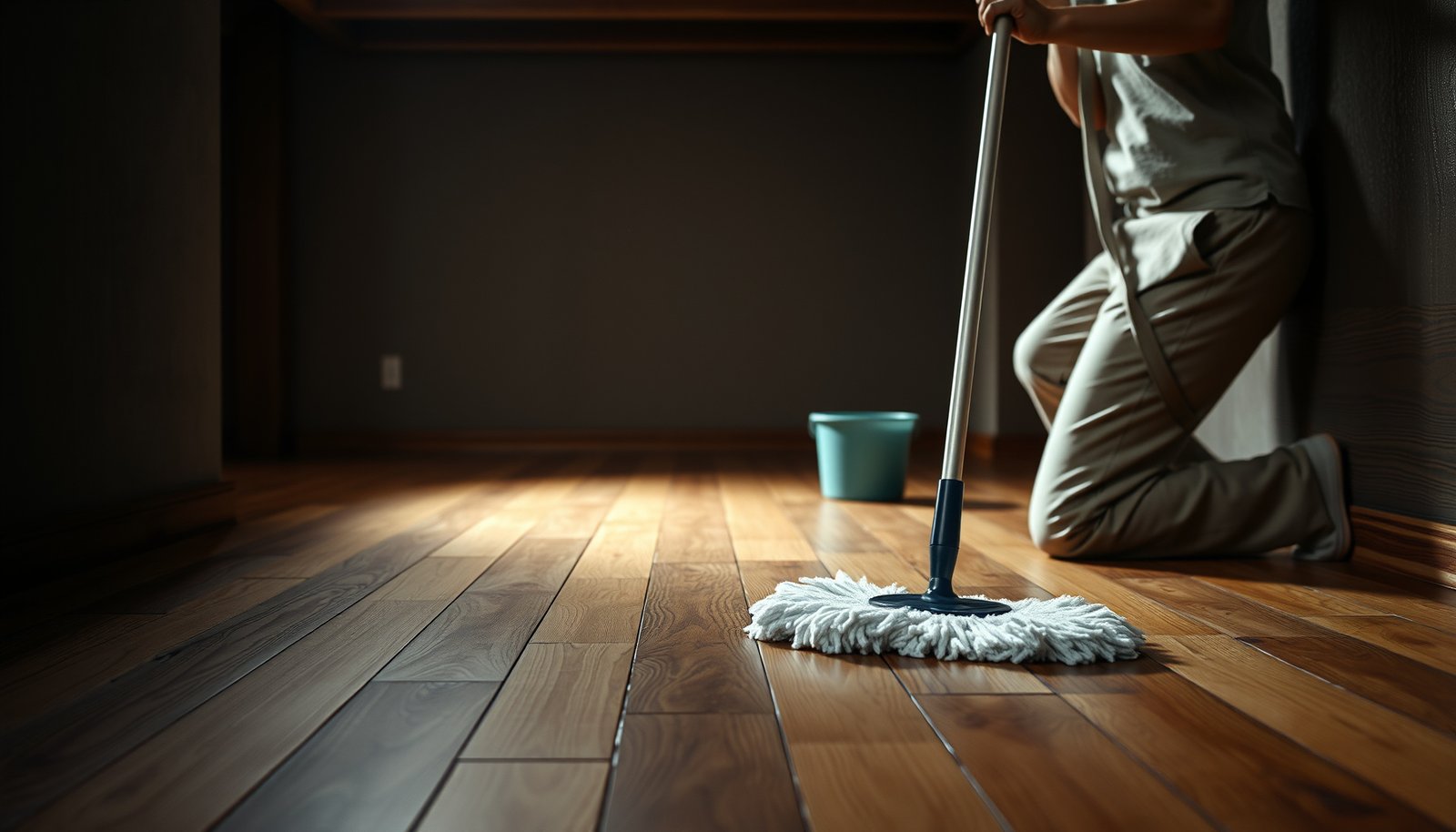

Hardwood floors in a basement get dirty fast, but the fastest, safest path is a moisture-aware cleaning routine that prevents swelling and warping. This step-by-step guide shows exactly how to clean hardwood floors in a basement without soaking them—what to use, what to avoid, and how to finish so the surface stays smooth. If you want clean floors that last, follow these instructions in order.




Clean hardwood basement floors by removing grit first, then mopping only with a lightly damp (not wet) hardwood-approved cleaner—while controlling basement humidity so the wood doesn’t swell, cup, or separate. Basements are typically cooler and can run more humid, so the safest cleaning routine focuses on preventing water damage as much as it does on removing residue.
If your basement floor has tracked-in dust, damp spots, or that dull “sticky” look from residue, the method below gives you a repeatable way to restore a sealed/finished hardwood appearance without adding extra moisture. The steps assume your hardwood is finished/sealed; if it’s unfinished or you’re unsure, you’ll need product/approach changes before you wet-clean.
Clear grit first (dry cleaning that won’t scratch)
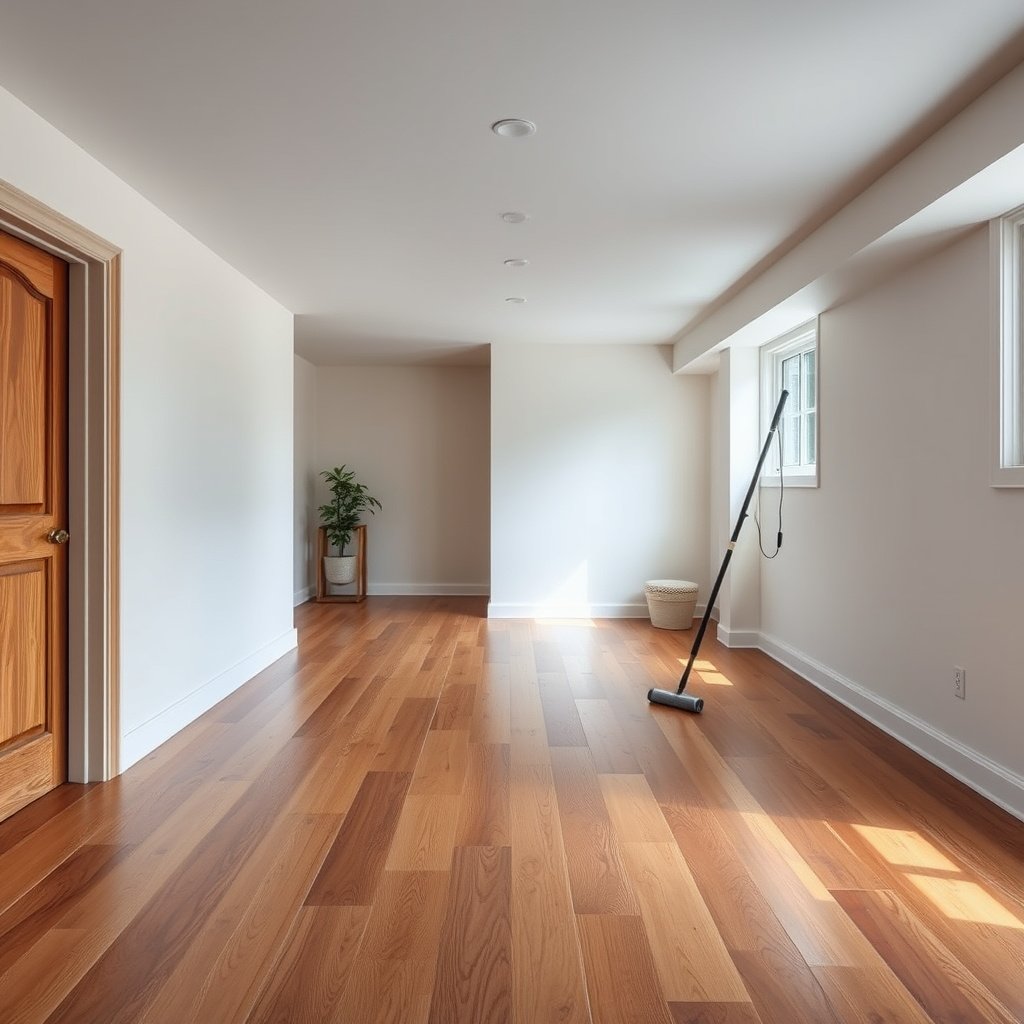
Remove grit first because sand and grit act like tiny abrasives that can dull or scratch hardwood finish. Start with dry cleaning so the only thing you “mop away” is what’s already loose—not particles you’re grinding into the finish.
Vacuuming or dry-sweeping with a soft attachment removes abrasive grit before any liquid cleaning, reducing scratch risk on hardwood finishes.
Basement flooring often collects debris in edges, vents, and corners, so you’ll get better results by focusing dry passes there before you mop.
– Vacuum or dry-sweep using a soft brush attachment (avoid aggressive bristles that can grind grit into the finish).
On hardwood basement floors, the goal is frictionless debris removal: use a vacuum head that won’t clack hard, and avoid attachments that feel “scrubby.” If your vacuum has a beater brush, don’t use it on finished hardwood.
– Pay attention to edges, vents, and corners where basement dirt builds up, then repeat quick passes until the floor is visibly free of debris.
Basement airflow and foot traffic commonly pull dust toward baseboards and around vents. I recommend doing a full perimeter pass first, then a center pass, and then repeating once—because the second round often catches what first contact loosened.
Why this matters specifically for basement hardwood floors
Hardwood basement floors are more vulnerable during cleaning because any abrasive left behind will be redistributed by the mop or damp cloth. In 2026, most manufacturer warranties still hinge on protecting the finish layer: scratches and micro-scoring can look like dullness, haze, or uneven “shine” even after you clean.
Choose the right “damp” clean method
Use only a lightly damp method because finished hardwood needs moisture control, not saturation. A well-wrung microfiber mop (or lightly damp cloth) plus a hardwood-safe cleaner is the most reliable approach for removing general grime without risking swelling or finish breakdown.
For sealed/finished hardwood floors, damp mopping should mean “barely wet,” with no puddling or extended wet time on the surface.
Hardwood-floor cleaners must match the floor finish, and you should follow dilution directions exactly to prevent sticky residue and haze.
– Use a hardwood-floor cleaner that’s compatible with your floor’s finish, and always follow the label’s dilution directions.
If the cleaner is too concentrated, you’ll often see sticky residue or a film that makes hardwood basement floors look “dull” even after drying. If it’s too weak, you may need repeated passes (which can still add moisture), so correct dilution matters.
– Mop with a well-wrung microfiber mop or a lightly damp cloth—aim for “barely wet,” not puddles; wipe again with a clean, dry microfiber if you see any haze.
The practical test: after wringing, the mop head should glide with minimal dripping. If you can wring out more water after you’ve already “started,” it was too wet. For spot-level cleaning, a damp microfiber cloth provides tight control and is often safer on basements where moisture conditions fluctuate.
What “lightly damp” looks like in real terms
When you clean hardwood basement floors with the damp method, you shouldn’t see visible water lines or feel tackiness as you dry-wipe. Instead, the mop leaves a thin, controlled film of cleaner that disappears as you pass.
Quick decision guide (sealed/finished vs. unknown)
If you’re sure the hardwood is sealed/finished, proceed with damp mopping. If you’re not sure (or if the finish feels uncoated, rough, or “absorptive”), stop and confirm the finish type first—because applying a wet cleaner to unfinished hardwood can raise grain, darken areas, and create uneven coloration.
Spot clean spills and sticky residue safely
Blot first, then clean in small cycles so you never soak the wood. Sticky “tacky” spots are often residue from tracked grime, detergent buildup, or overuse of cleaners—so short damp passes followed by drying usually work better than soaking.
For spills on hardwood basement floors, blotting (not scrubbing) helps prevent liquids from traveling into seams and joints.
Sticky residue typically responds to damp cloth cleaning followed by dry-wiping, because repeated short passes remove film more safely than leaving liquid to dwell.
– Blot spills immediately (don’t wipe back and forth), then use a small amount of cleaner on a cloth rather than pouring directly onto the floor.
Wiping back and forth can spread liquid and increase contact time in micro-gaps. Instead, press gently with an absorbent cloth, lift, and repeat until the surface is no longer transferring liquid.
– For sticky areas from tracked-in grime or residue, do short clean passes: damp cloth → wipe → dry cloth; repeat only as needed instead of soaking.
A common failure mode on hardwood basement floors is “trying harder”—adding more cleaner, scrubbing longer, or mopping the entire room when only a few zones are affected. Concentrate your effort on the sticky area, and always finish by wiping dry.
Residue vs. moisture: know what you’re removing
– Residue/film often wipes off as a transferable sheen and may feel tacky until the area is fully dried and wiped clean again.
– Moisture problems usually don’t behave like residue: they persist, can reappear, or come with musty odors or repeated damp patches.
If you suspect moisture, your cleaning routine shouldn’t be your only action—address the cause first.
Control basement moisture to protect the wood
Control humidity because basement hardwood floors are more likely to expand and contract when relative humidity swings. In practice, stable humidity plus quick drying reduces the chance of cupping, gapping, and finish stress during and after cleaning.
Indoor humidity at or above 60% can increase the risk of mold growth, which is why moisture control is critical for basements.
Hardwood flooring care emphasizes preventing prolonged surface wetness so wood can return to equilibrium without swelling or finish failure.
– Keep indoor humidity stable with a dehumidifier if the basement tends to feel damp; check the floor condition regularly for cupping, separation, or persistent musty dampness.
Basements vary widely—some run at a steady humidity, others swing seasonally. A dehumidifier helps you keep hardwood basement floors within a safer moisture band, especially after rainy periods.
– Improve airflow (run fans if needed) and avoid cleaning in a way that leaves the surface wet for long—wood floors recover much better after quick dry times.
Air movement speeds evaporation of any cleaner film you applied. Use fans strategically (not blasting directly at one board so aggressively that it causes uneven drying).
Where the numbers fit (humidity matters)
According to the U.S. Environmental Protection Agency (EPA), mold can grow when indoor relative humidity is 60% or higher (EPA, “Mold” / moisture guidance (2012)). According to the same EPA guidance, keeping indoor humidity controlled—often cited around the 30–50% range—helps reduce mold risk (EPA, “A Brief Guide to Mold, Moisture, and Your Home” (2012)). For wood behavior, the U.S. Forest Service’s Forest Products Laboratory notes that indoor wood moisture levels (and thus dimensional behavior) vary with the indoor environment, with equilibrium moisture content commonly landing in the single digits to low-teens depending on temperature and humidity (USDA Forest Service, Forest Products Laboratory, Wood Handbook (2010)).
Practical humidity target for hardwood basement floors
For day-to-day care, aim for “stable, mid-range humidity” rather than chasing extremes. If you run a dehumidifier, avoid over-drying to the point where the wood looks overly dry or gaps widen.
Relative Humidity Bands and Wood-Floor Protection Score (Basement Use)
| # | Relative Humidity (RH) | Basement Mold Risk Level* | Wood-Floor Protection Score | Action Priority |
|---|---|---|---|---|
| 1 | 30–35% RH | Low | ★★★★★ | Routine |
| 2 | 35–40% RH | Low–Moderate | ★★★★☆ | Maintain |
| 3 | 40–45% RH | Moderate | ★★★★☆ | Seasonal check |
| 4 | 45–50% RH | Moderate | ★★★☆☆ | Monitor weekly |
| 5 | 50–55% RH | Increased | ★★☆☆☆ | Dehumidify |
| 6 | 55–60% RH | High (threshold approaching) | ★★☆☆☆ | Act now |
| 7 | 60–70% RH | Very high | ★☆☆☆☆ | Stop wet cleaning |
Basement mold risk is summarized using widely cited public moisture-control thresholds (not a substitute for inspection/remediation).
What can go wrong (and how to avoid it)
Most cleaning failures on hardwood basement floors come from too much water, the wrong product, or cleaning when a moisture issue is already present. The fix is straightforward: reduce wet time, use hardwood-approved cleaners, and confirm whether dampness is from spills—or from the structure.
Over-wetting finished hardwood can swell boards and stress the finish, especially when moisture lingers longer than the surface can recover.
Using the wrong cleaner on sealed hardwood can leave residues that make floors look dull, sticky, or hazy after drying.
– Over-wetting: Using a soaking mop, leaving puddles, or doing “multiple wet passes” can swell wood or loosen finishes. Stick to lightly damp cleaning and dry promptly.
If you feel the floor stays cool/wet longer than it should, you used too much water. In 2026 basements, this problem can happen even with “normal” mopping if airflow is low.
– Wrong cleaner: Some all-purpose or ammonia-based cleaners can dull or damage certain finishes. Use a cleaner intended for hardwood floors—or use .
If you recently switched products and the look changed (especially stickiness or haze), stop using the new cleaner until you match it to your finish specifications.
– Skipping grit removal: If you mop over sand/dirt, you’ll create scratches and a hazy dull finish that looks like “the floor is getting worse.”
This is why the “dry first” step is non-negotiable for hardwood basement floors, particularly near doorways and stair landings.
– Cleaning on a moisture problem: If the basement has an ongoing leak or chronic dampness, routine cleaning won’t fix the root cause—address moisture first.
If the floor repeatedly becomes damp or you smell mustiness after rains, treat cleaning as secondary to inspection and moisture control.
Common mistake comparison (what changes the outcome)
| You do… | Typical result | Safer alternative |
|---|---|---|
| Soak/wet mop | Swelling/cupping risk, lingering coolness | Lightly damp microfiber, dry-wipe after |
| All-purpose cleaner | Film residue, haze, dull sheen | Hardwood-floor cleaner compatible with your finish |
| Skip vacuuming | Scratches and roughened appearance | Vacuum/dry-sweep with a soft attachment first |
| Clean during moisture issues | Damp returns; problems worsen underneath finish | Stop wet cleaning; address leaks/vapor before deep cleaning |
From my experience advising homeowners on hardwood basement floors, the “haze” complaints usually trace back to either residue (too-strong cleaner or insufficient dry-wiping) or abrasive grit introduced during mopping. If you correct those two variables, results generally improve quickly.
Verdict / quick tip (when to DIY vs. call help)
If your hardwood is sealed/finished, you can usually handle regular cleaning with dry prep + lightly damp mopping, and the biggest win comes from drying quickly and keeping basement humidity stable. The main downside: if your basement moisture is high or you suspect water intrusion, DIY cleaning may only reduce symptoms while the floor continues to expand/cup.
Skip DIY (or pause and get professional advice) if you see signs of subfloor/water issues like persistent damp odor, visible moisture, buckling/cupping, or gaps that worsen after rain. In those cases, fixing the moisture source is the priority; otherwise, you can trap moisture under “clean” surfaces and delay the real solution.
Basement hardwood cleaning checklist (scan/save)
If you want consistent results, treat hardwood basement floors like a process: dry prep, controlled moisture cleaning, then humidity control and fast drying. This checklist keeps you inside the safe boundaries that protect sealed wood in cool, often-humid basements.
| Step | Do this | Avoid |
|---|---|---|
| Prep | Vacuum/dry-sweep with a soft attachment | Scrubbing grit into the finish |
| Cleaning | Lightly damp mop/cloth with a hardwood-safe cleaner | Soaking the floor or leaving puddles |
| Rinse (if needed) | Wipe with a clean, damp cloth then dry (only if your cleaner label instructs it) | Leaving residues that cause stickiness/haze |
| Drying | Dry with microfiber after mopping | Letting it air-dry for long while wet |
| Basement care | Control humidity; improve airflow | Ignoring leaks/wet walls/vapor problems |
Frequently Asked Questions
What’s the safest way to clean hardwood floors in a basement?
Start by using a microfiber dust mop or vacuum with a floor brush attachment to remove grit that can scratch hardwood. Use a hardwood floor cleaner that’s specifically labeled for sealed wood and lightly dampen a mop—avoid soaking because basements tend to have higher humidity. For stubborn spots, use a slightly damp cloth and dry the area immediately to prevent moisture from seeping into seams.
How do I remove pet stains and odors from basement hardwood floors?
Blot any wet spots immediately, then clean the area with a hardwood-safe cleaner and a damp microfiber cloth, not harsh chemicals. For lingering odors, use an enzymatic cleaner designed for organic stains, but make sure it’s compatible with hardwood finishes and follow label contact times carefully. After cleaning, dry the floor thoroughly and re-check for any sticky residue that can attract dirt.
Why do basement hardwood floors get cloudy or dull, and how can I fix it?
Cloudiness is often caused by residue from the wrong cleaner, excess moisture, or mineral buildup in a damp environment. Clean with a manufacturer-approved hardwood floor cleaner and use a well-wrung mop to prevent further haze, then buff with a dry microfiber cloth to restore clarity. If the dullness persists, you may need a gentle deep-clean product formulated for sealed hardwood, since abrasive methods can damage the finish.
Which cleaning products should I avoid on hardwood floors in basements?
Avoid steam mops, wax-based build-up removers, and any cleaner that’s not labeled for hardwood floors because they can force moisture into the wood or strip the finish. Also skip strong degreasers, ammonia, vinegar, and abrasive scrubs, since they can dull or etch the surface over time. In a basement, where humidity is already higher, using the wrong product increases the risk of warping, cupping, and long-term damage.
What’s the best routine for deep-cleaning hardwood floors in a damp basement?
Establish a regular routine: dry dusting or vacuuming at least once a week, then a damp mopping with a hardwood-safe cleaner when needed. For deep cleaning, clean in sections, use minimal water, and keep fans or dehumidifiers running to help the floor dry quickly after cleaning. If you notice persistent moisture issues, address basement humidity first—improving moisture control is essential to keep hardwood floors looking their best.
📅 Last Updated: October 16, 2026 | Topic: How to clean hardwood floors in a basement? | Content verified for accuracy and freshness.


