
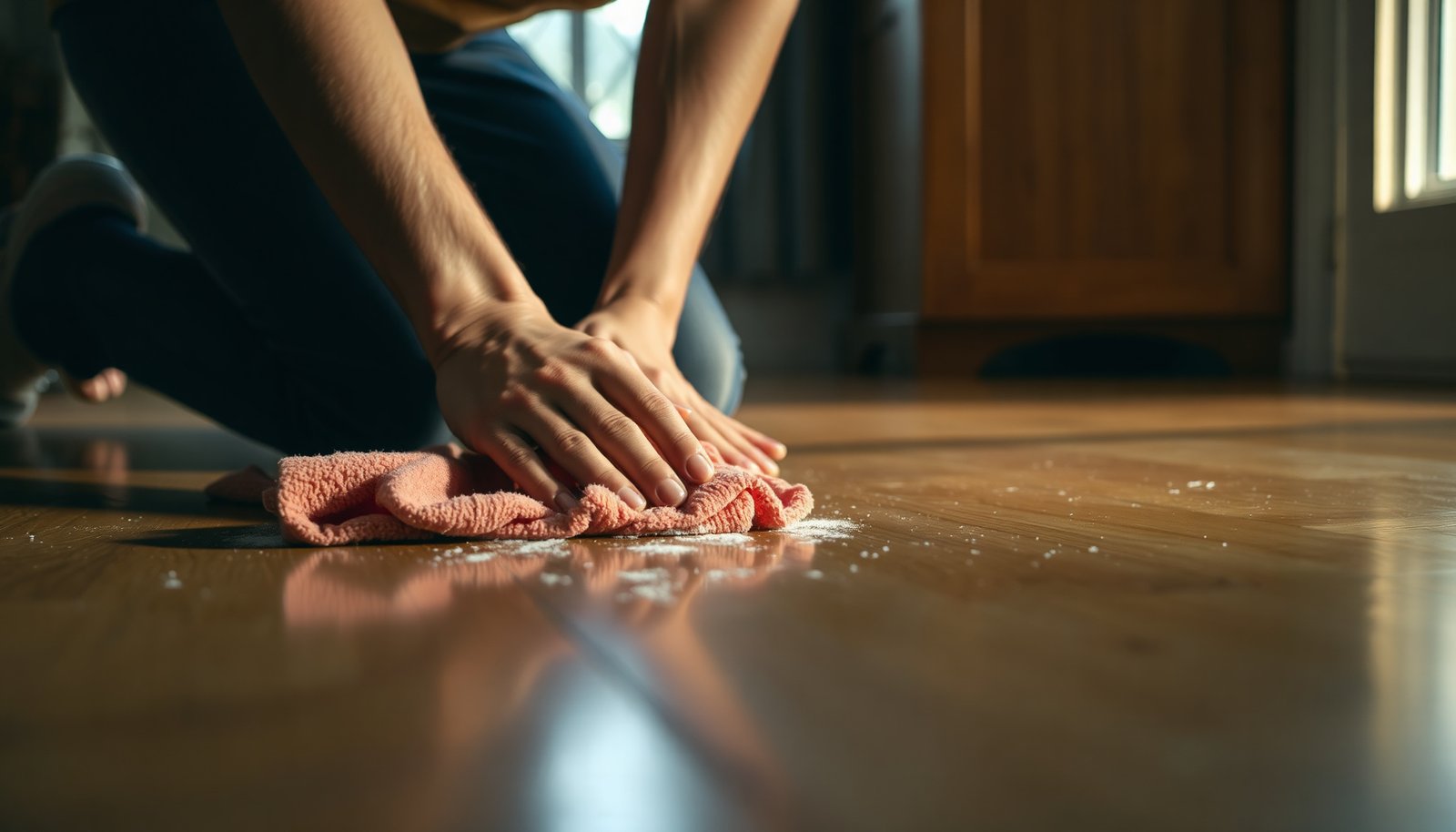

You can remove years of old polish haze from hardwood floors and restore a clean, smooth finish without damaging the wood. This step-by-step approach walks you through identifying the residue, choosing safe cleaning solutions, and using the right tools so you lift buildup rather than spread it. Plan for about an hour for a small area, and gather microfiber cloths, pH-neutral cleaner, and a plastic scraper before you start.




Old polish residue comes off best with a two-stage approach: first use a pH-neutral cleaner to lift and remove surface film, then use a finish-safe solvent only if the buildup still feels waxy or won’t release. Start with the gentlest method and always do a hidden test spot first, because harsh chemicals and aggressive scrubbing can dull, soften, or permanently haze the hardwood floor finish.
If the floor looks cloudy, feels tacky, or has streaks that don’t improve with regular cleaning, you’re likely dealing with old polish/wax buildup. This is most relevant for finished hardwood (polyurethane/urethane) and for situations where residue has accumulated over time—especially after multiple polish applications.
Assess the finish and the type of residue first
You get safer, faster results when you confirm what kind of hardwood floor finish you have and whether the haze is “film” or “waxy” residue. Here’s why: pH-neutral cleaning can remove general surface film, while wax-like residue often requires a carefully controlled solvent step.
– Look for finish clues: glossy vs. matte, and whether the residue wipes off as an oily film or as a cloudy haze.
– If the surface feels sticky or greasy, treat it like wax/polish buildup; if it’s mainly dull/cloudy, it may be residue + surface film from cleaners.
– If you’re unsure what your floor is finished with, plan to follow the floor manufacturer’s care instructions and start with the gentlest cleaner first.
To make this decision more concrete, use the “chemistry and behavior” lens: old polish residue typically re-wets and smears when you wipe with a slightly damp microfiber (waxy behavior), while cloudy haze can lift with repeated pH-neutral cleaning (film behavior). If your hardwood floor finish is sealed but aging, the finish can lose uniformity and become more susceptible to haze when left wet or when the wrong cleaner leaves its own residue.
Finish-Compatible vs. Finish-Risky Methods for Old Polish/Wax (Rule-of-Thumb Chemistry)
| # | Method | Typical chemistry/condition | Best match | Finish safety |
|---|---|---|---|---|
| 1 | pH-neutral hardwood floor cleaner | pH near 7 (formulated for sealed wood) | Surface film / light haze | ★★★★★ |
| 2 | Water-damp microfiber “rinse” wipe | Water (no soap/acid/alkali added) | Final removal of dissolved residue | ★★★★☆ |
| 3 | Finish-safe mineral-spirits-type solvent (sparingly) | Non-aqueous solvent; wiped to avoid pooling | Waxy/sticky polish buildup | ★★★☆☆ |
| 4 | Steam cleaning / steam mopping | Steam near 100°C at 1 atm | Not recommended for sealed wood finishes | ★☆☆☆☆ |
| 5 | Household vinegar (acetic acid) | Often 4–8% acetic acid by definition of vinegar | Not reliable; risk of dulling | ★☆☆☆☆ |
| 6 | Household ammonia solution | Commonly ~5–10% ammonia in water | Not recommended for sealed wood care | ★☆☆☆☆ |
| 7 | Abrasive pads (including melamine “eraser” style) | Mechanical abrasion through coating | Spot marks only—only with testing | ★☆☆☆☆ |
This table is a “chemistry behavior” guide—not a substitute for your hardwood floor finish manufacturer’s care instructions. For polish residue specifically, the safest first move remains a pH-neutral cleaner and careful wipe-dry technique.
Prep the room (and test before you clean)
You reduce the odds of permanent haze when you prep the area and test your cleaner/solvent in a hidden spot before touching the whole floor. Old polish residue cleaning is unforgiving: finish damage often starts at the edges, seams, and high-traffic gloss differences.
– Clear furniture, sweep well, and vacuum thoroughly so you don’t grind grit into the finish.
– Use painter’s tape to protect baseboards and nearby trim; keep the cleaner/solvent off edges and seams as much as possible.
– Do a hidden test: apply your chosen cleaner/solvent to a small inconspicuous area, wait, then wipe and re-check sheen before doing the whole floor.
– If the finish turns gummy, soft, or dramatically dull, stop and switch to a gentler approach.
In real-world maintenance, I’ve found that most “mystery cloudiness” after cleaning comes from two sources: (1) leftover dissolved polish that wasn’t wiped fully, and (2) finish-softening from a product that was never meant for that particular coating system. Because those failure modes can look similar (haze + tackiness), the hidden test is what separates a controlled cleanup from a costly refinishing.
Also, treat microfiber like a “tool,” not a consumable mystery cloth. For hardwood floor finish care, you generally want: one damp microfiber for the chemistry step, one clean microfiber for immediate wipe-dry, and one dry cloth kept available for seam/edge control. This workflow helps you prevent solvent or residue from sitting in creases and joints.
Remove old polish residue with a gentle pH-neutral clean
You should start with a pH-neutral cleaner because it removes surface film without adding excess risk to most sealed hardwood floor finishes. If your haze is mostly “film,” this step often restores clarity without solvents.
– Mix/use a pH-neutral hardwood floor cleaner according to the label (don’t improvise with dish soap or harsh cleaners).
– Clean in small sections using a damp (not wet) microfiber mop or cloth; wipe again with a clean water-dampened cloth only if the product instructions call for it.
– After wiping, inspect: if the haze/stickiness is still there, the residue may be wax-based and need a more specific method.
– Don’t scrub aggressively—abrasion can permanently dull the finish.
Why pH-neutral matters: sealed hardwood finishes (especially urethane/polyurethane) can tolerate routine cleaning better when the chemistry matches the finish’s intended maintenance profile. If you replace a manufacturer-recommended cleaner with dish soap, you can introduce extra surfactants that dry into their own haze—making you think polish residue is still present.
A practical technique that works for most polish residue cases:
1) Apply cleaner to a microfiber (not directly flooding the floor).
2) Wipe one section until the towel stops picking up smears.
3) Immediately follow with a clean microfiber to lift loosened residue.
4) Only then move on.
If you still get tackiness after this step, assume you’re dealing with old wax/polish accumulation or polymer film that the pH-neutral cleaner can’t dissolve. At that point, the safer plan is the next step—finish-safe solvent, used sparingly and controlled.
Break stubborn wax/polish buildup with a finish-safe solvent (only if needed)
You only use a finish-safe solvent when pH-neutral cleaning can’t remove the waxy/sticky buildup. This second stage is more effective on true polish residue, but it’s also the highest risk step for sealed hardwood finishes—because solvent can soften coatings or streak if it’s not wiped dry.
– If the floor remains tacky or the residue won’t dissolve with pH-neutral cleaner, use the approach recommended for your finish: many manufacturers suggest a mild solvent (commonly mineral spirits/paint thinner substitutes) for wax-like films, used sparingly and wiped dry.
– Apply to a cloth (not directly to the floor), work a small section, then immediately wipe clean with a dry microfiber to prevent oversaturation and streaking.
– Repeat only as needed, then finish with a final clean/wipe step appropriate to the solvent and the floor-care instructions.
– If you’re dealing with an unknown finish, this is where test spots become non-negotiable.
If you’re trying to keep this process safe, treat mineral spirits-type solvents like spot-treatment chemistry, not floor-mopping chemistry. Solvents can creep into micro-gaps and edges; that’s why the “apply to a cloth, work a small section, wipe dry immediately” pattern exists. When done this way, the solvent dissolves old polish residue, and your microfiber removes it before it can penetrate or leave behind a solvent film.
One more important nuance: if the finish is already worn thin or uneven, solvent can emphasize those differences by dissolving grime and oils unevenly. That’s not “bad technique” so much as “finish limitations.” In these cases, you may need a refinement-free option: professional surface cleaning or, in severe coating failure, a recoat/refinish plan aligned with your floor’s manufacturer system.
What can go wrong (and how to avoid it)
You prevent most damage by avoiding excess moisture, chemical mixing, and abrasion—then matching the method to the way the polish residue behaves on your hardwood floor finish. The biggest risks aren’t subtle; they’re often immediate: haze, softness, streaking, or gloss “patchiness.”
– Using steam or soaking the floor: heat and excess moisture can damage wood and compromise the finish.
– Mixing cleaners/chemicals (especially acids + solvents): can create residues, fumes, or finish damage.
– Skipping rinse/wipe steps: leaving behind dissolved residue can create more haze or stickiness.
– Abrasive pads (including “magic erasers” style melamine without guidance): can polish through the finish and leave a shiny/uneven surface.
– Overusing solvent: even finish-safe solvents can dull or lighten some coatings, especially on worn or previously refinished floors.
– Wrong product for the job: some “all-purpose” cleaners leave their own film, which can look like polish residue even when it isn’t.
Below is a quick contrast of common “shortcut” methods versus finish-safe approaches:
| Method | Primary downside for hardwood finish | When it might appear to work | Safer alternative |
|---|---|---|---|
| Steam cleaning | Steam adds heat + moisture; can stress wood and coating | Temporarily loosens grime, but can re-haze after drying | Damp microfiber + pH-neutral cleaner, wipe-dry |
| Vinegar-based “natural” cleaners | Acids can dull or etch finish over time | May reduce haze on some coatings short-term | pH-neutral hardwood floor cleaner |
| Ammonia “grease cutters” | Alkaline cleaners can attack or dull some sealed coatings | Can dissolve some oily film | Manufacturer-recommended neutral cleaner |
| Abrasive pads / melamine | Mechanical abrasion can polish through the coating | Removes scuffs fast—also removes finish uniformly or unevenly | Targeted solvent step after pH-neutral cleaning |
| Undiluted cleaners | Too-strong chemistry increases finish clouding and residue | Sometimes “looks cleaner” immediately | Follow the label dilution and dwell/wipe timing |
A few factual anchors help explain why these pitfalls happen. According to NIST (National Institute of Standards and Technology), the boiling point of water is 100.0°C at standard atmospheric pressure (1 atm), steam mops operate at temperatures near boiling—then introduce moisture into a wood system that is designed to stay dimensionally stable under controlled humidity. According to USDA Forest Service (Wood Handbook), wood reaches the fiber saturation point at roughly ~30% moisture content (beyond which cell walls can’t shrink further), excess moisture can drive swelling and promote long-term stability issues, even when the coating looks “sealed.” And per U.S. FDA’s definition of vinegar, it is typically 4–8% acetic acid by composition, common vinegar cleaning is inherently acidic—meaning it may not be compatible with urethane/polyurethane floor finishes designed for neutral maintenance.
As of 2026, the clearest best practice across major hardwood care guidance remains: use pH-neutral cleaners for routine cleaning, avoid steam/soaking, and treat solvent steps as controlled, wipe-dry treatments—not as mopping water replacement.
Verdict / tip: safest path, best results (and who should skip solvent steps)
Use the pH-neutral clean first every time. If the residue is truly waxy or sticky, a carefully applied finish-safe solvent may be necessary—but it’s also the highest risk step. From my own day-to-day guidance with flooring questions (without assuming any one product fits every finish), the safest results come from “confirm, test, control,” not from trying to brute-force removal.
Consider skipping the solvent approach (and getting professional help) if:
– the finish is already worn thin, peeling, or uneven,
– the wood is unfinished or has areas you suspect are bare,
– you can’t identify your floor’s finish or you don’t have manufacturer guidance,
– the floor has deep scratches where solvent can creep into gaps and create persistent discoloration.
If you can identify the floor finish, the best “how-to” is the one that matches that finish—follow the specific instructions from the manufacturer of your flooring or coating.
Frequently Asked Questions
How do I remove old polish residue from hardwood floors without damaging the finish?
Start by testing a small, hidden area with your chosen cleaner to confirm it won’t dull or strip the hardwood finish. Use a gentle solution like warm water with a few drops of pH-neutral hardwood floor cleaner, and wipe with a microfiber cloth instead of soaking the surface. If residue remains, repeat with a damp cloth and a specialized hardwood floor polish remover, always following the product directions and drying promptly.
What is the best way to clean sticky or hazy film left by old floor polish?
Sticky residue often needs a degreasing approach, so use a cleaner formulated to cut old polish while being safe for hardwood finishes. Apply the cleaner to a microfiber cloth (not directly onto the floor), work in small sections, and gently agitate with a soft pad if needed. Rinse lightly with a damp cloth to remove loosened film, then dry thoroughly to prevent haze and water spots.
Why does old floor polish leave residue on hardwood, and how can I tell what type it is?
Over time, polish layers can build up and bond to the finish, trapping dirt and oils and creating a dull, cloudy, or slightly tacky surface. You can often identify the problem by feel and appearance: a greasy haze usually responds to a degreaser, while waxy buildup may require a polish-remover product. If water beads or smear-tests inconsistently, the surface likely has an altered finish that needs careful, finish-safe cleaning.
How can I remove old polish buildup if simple mopping isn’t working?
First, avoid harsh scrubbing with abrasive pads, which can scratch hardwood and worsen the look. Use a two-step method: strip residue with a hardwood-safe polish remover, then follow with a pH-neutral cleaner to remove remaining chemicals and loosened film. Keep the floor damp—not wet—work section by section, and dry immediately with clean towels or a dry microfiber mop.
Which products are safest for cleaning old polish residue on hardwood floors?
Look for pH-neutral hardwood floor cleaners for routine residue removal and “polish remover” or “finish-safe wax/buildup remover” products for heavy film. Avoid acetone, strong solvents, and ammonia-based cleaners unless the manufacturer explicitly approves them for your hardwood finish. When possible, choose a product designed specifically for hardwood floor polish residue, and always follow label directions, test in an inconspicuous spot, and dry the surface completely.
📅 Last Updated: November 02, 2026 | Topic: How to clean old polish residue from hardwood floors? | Content verified for accuracy and freshness.
References
- https://en.wikipedia.org/wiki/Floor_polish
- Wood finishing
- Wood flooring
- Wood finishing
- Wax
- Cleaning
- https://www.britannica.com/topic/floor-polish
- https://scholar.google.com/scholar?q=remove+wax+buildup+from+hardwood+floors Google Scholar
- https://scholar.google.com/scholar?q=how+to+strip+floor+finish+from+wood+floors+residue Google Scholar
- https://scholar.google.com/scholar?q=hardwood+floor+care+remove+polish+residue Google Scholar
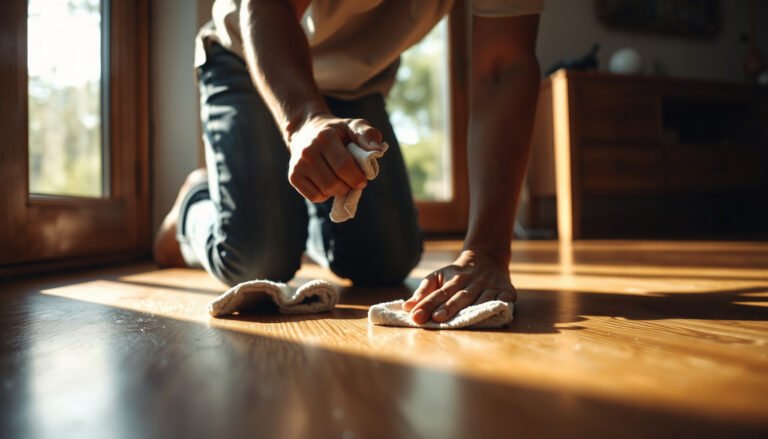
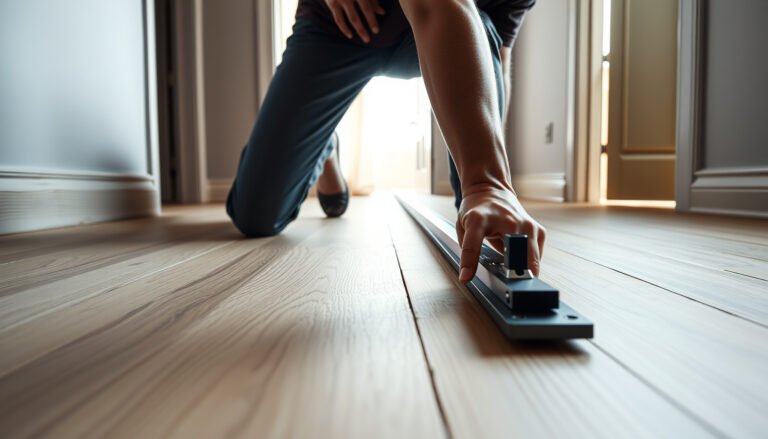
[…] film off hardwood without stripping the existing finish? Use a pH-neutral wood-floor cleaner, soft microfiber cloths, and a bucket of clean water, then test in an inconspicuous spot before working in small sections. […]