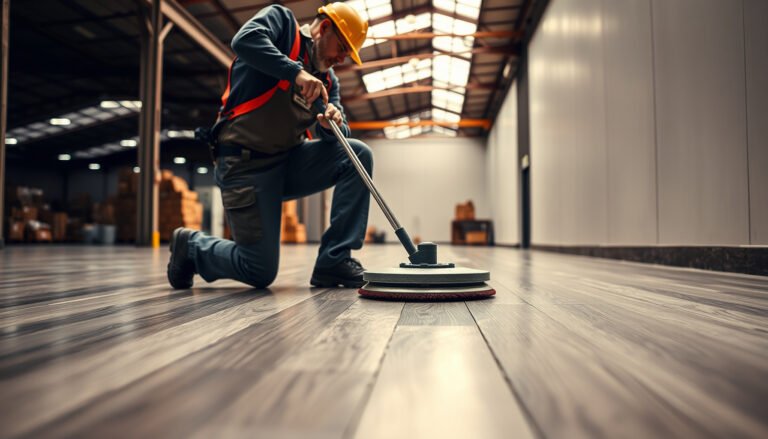
How do you get floor polish buildup off hardwood without leaving streaks or dull patches? Work in stages with a pH-neutral hardwood cleaner and soft microfiber cloths: remove loose residue first, then loosen the film and wipe until the surface is clear. Most rooms take about 20–40 minutes, and once the haze is gone you can let the floor dry completely before walking on it.




If floor polish buildup has made your hardwood look cloudy, sticky, or streaky, the fix is to remove the film with a finish-safe method first, then rinse and dry thoroughly. Start with a pH-neutral hardwood floor cleaner and microfiber, and only move to a dedicated polish remover/stripper if the residue won’t lift. This article will walk you through safer step-by-step cleaning so you don’t damage the wood finish.
This is for homeowners dealing with waxy or cloudy polish buildup on finished (polyurethane/sealed) hardwood floors—especially after mopping with polish or using the wrong cleaner. If your floor is bare/unfinished or you’re unsure what finish you have, follow the “Who this is for/limits” guidance and consider checking your floor/finish manufacturer instructions first.
Assess the polish buildup and your floor finish

If you can identify what the buildup “acts like” (sticky film vs. normal dust), you can choose the safest removal method right away. The goal is to treat hardwood floor polish buildup as a residue problem—not a general dirt problem—while confirming your floor has a sealed finish.
Spot the difference: haze, tackiness, and streaking
Hardwood floor polish buildup usually shows up as:
– Cloudy haze that makes the sheen look dull, even when the floor looks “clean.”
– Streaks that appear after mopping, especially if polish or cleaner wasn’t compatible.
– Sticky or gummy spots you can feel with your palm—often concentrated around high-traffic areas and along baseboards where product accumulates.
Normal dirt, by contrast, wipes away with minimal effort and doesn’t leave a tacky feel.
Confirm the finish type (sealed vs. bare/unfinished)
This step matters because “polish removal” chemistry can be unsafe for bare wood.
– Sealed/finished hardwood (most common): polyurethane, sealed, or factory-finished—generally the right candidates for finish-safe polish film removal.
– Bare/unfinished wood: typically oil-waxed or unsealed—much more vulnerable to water penetration and solvent softening.
If you’re unsure, follow your floor manufacturer’s care instructions first, because hardwood floor polish buildup cleanup methods vary by finish system.
Do one quick compatibility test
Use your planned cleaner (the pH-neutral hardwood cleaner) on an inconspicuous spot and evaluate:
– Does the haze smear or increase?
– Does the finish look duller right after drying?
– Does the residue loosen rather than harden?
As of 2026, many manufacturers still emphasize that sealed wood floors require cleaner labels that specifically state they’re safe for finished hardwood—so a quick test prevents you from enlarging the problem.
Gather finish-safe supplies (skip the risky stuff)
You can usually remove hardwood floor polish buildup without harsh chemicals if you use microfiber and a true pH-neutral hardwood cleaner. Before you start, set up tools that lift and trap residue rather than grinding it into the finish.
Use microfiber + pH-neutral hardwood cleaner (damp, not wet)
For safest results on finished floors:
– Microfiber mop head or microfiber pads (the fibers grab film; they also reduce scratching risk).
– A pH-neutral hardwood floor cleaner labeled safe for sealed/hard-surface wood floors.
– Soft cloths for edges, corners, and around vent registers.
– Clean water for rinsing, plus plenty of dry microfiber towels.
“P-H-neutral” typically means the cleaner stays close to neutral pH. According to NIST, pH is defined on a scale where 7.0 is neutral (https://physics.nist.gov/cuu/Constants/definition.html, referenced in NIST pH definition materials).
Avoid heat and aggressive moisture
Skip:
– Steam mops (steam adds heat and can drive moisture into seams). Steam is typically produced at 100°C / 212°F at 1 atm, per water phase behavior (https://www.iapws.org/ for water/steam thermophysical frameworks).
– Soaking methods (flood-mopping or leaving liquid puddles).
– Steel wool or abrasive scrub pads (they can dull sealed finishes and make future buildup more visible).
Prep your “rinsing + drying” workflow
Hardwood floor polish buildup cleanup often fails because people remove film but don’t remove what’s left behind.
Have ready:
– 2–3 buckets or at least two stages: cleaning water and rinsing water
– extra dry microfiber towels
– good ventilation (fans if you need them)
Extra moisture can trigger spotting even when the chemicals are “wood-safe,” so microfiber should be well wrung—damp is the target.
Remove floor polish buildup safely (start gentle)
Most hardwood floor polish buildup lifts safely with repeated damp microfiber cleaning; only escalate to a polish remover/stripper if film stays behind. This staged approach reduces the risk of softening the finish or widening the haze.
Clean first: lift loose residue with a damp microfiber pass
Start with the gentlest method:
1. Damp-mop with your pH-neutral hardwood floor cleaner.
2. Wring the microfiber extremely well—the pad should feel damp, not dripping.
3. Work in small sections and keep the wet time short.
This first pass addresses loose film, dust-laced residue, and streak-producing deposits before you apply any stronger chemistry.
Agitate second: light pressure with microfiber (no soaking)
If haze or streaking remains:
– Use light pressure with a microfiber pad.
– Re-clean the affected sections with a few controlled passes.
– Replace the pad when it becomes saturated with buildup film.
From a wood-finish protection perspective, excessive scrubbing can create micro-scratches that make glossy polish buildup easier to see in the future—so the focus is removal, not abrasion.
Escalate only if residue is still clearly “stuck-on”
If you still have persistent sticky spots or cloudy film after microfiber + pH-neutral cleaner, use a polish buildup remover/stripper designed for finished hardwood.
Follow the product label exactly:
– Dilution (if concentrated)
– Contact time/dwell time
– How to wipe/rinse after dwell
If the label instructs a specific technique (for example, applying, allowing dwell, then agitating with a pad), follow it precisely—polish removers work by dissolving film, and incorrect dwell can leave residue behind.
Quick decision guide (method selection)
The cleanest way to choose between “microfiber cleaning” and “polish remover/stripper” is to compare what each method is best at:
| Approach | Best for | Pros | Watch-outs |
|---|---|---|---|
| Microfiber + pH-neutral hardwood cleaner | Mild to moderate haze, light residue, streaks | Lower finish risk; minimal chemical residue if rinsed well | May not dissolve heavy, “bonded” polish film |
| Manufacturer-approved polish remover/stripper | Sticky film and clearly stuck-on haze | More effective at dissolving buildup that cleaning won’t lift | Can temporarily dull the finish; label-following and thorough rinsing are critical |
Rinse, dry, and restore the surface
Removal isn’t finished until you rinse and dry, because leftover cleaner or remover can create new haze or stickiness. Once your hardwood floor polish buildup is dissolved, the final steps determine whether the floor feels “like new” or still tacky.
Rinse after any remover step
If you used a dedicated polish remover/stripper, rinse according to label guidance. In general terms:
– Use clean water.
– Use well-wrung microfiber to avoid pooling.
– Rinse the same sections you treated so you don’t leave a chemical film.
This matters because “works in the moment” and “works after drying” are different outcomes on sealed hardwood.
Dry immediately (and don’t trap residue with quick repolishing)
Drying should start right after rinsing:
– Wipe dry with clean, dry microfiber towels.
– Continue drying until the surface is no longer slick.
– Allow air-drying with good ventilation.
Then wait before applying any new polish or reconditioning. Re-polishing while residue or moisture remains can cause new bonding and a faster return of hardwood floor polish buildup.
A practical note on wood moisture risk
Wood damage risk is linked to moisture content changes. According to USDA Forest Products research, wood fibers begin to saturate around ~30% moisture content, which is why keeping moisture exposure controlled matters (https://www.fs.usda.gov/ via USDA Forest Products Laboratory wood moisture fundamentals—see their wood properties/moisture content resources). Even on sealed floors, excess water sitting at seams can increase long-term issues.
Prevent future floor polish buildup
Prevention is easier than removal: match the floor-care products to the routine you actually want to maintain. If you use polish as a maintenance layer, keep your cleaning products compatible so you don’t build up sticky layers that never fully bond right.
Use compatible products (don’t mix “systems”)
A common cause of hardwood floor polish buildup is mixing:
– polish/microfiber regimen + a general cleaner that leaves scum or film
– older polish layers + a cleaner that doesn’t rinse cleanly
If you use a polish, the safest prevention step is to use a maintenance cleaner designed to work with that polish system (or stop polishing and switch to a compatible maintenance approach).
Control water and mopping behavior
Do these consistently:
– Wring microfiber very well before mopping.
– Don’t “back-and-forth” repeatedly in the same puddle zone.
– Keep water off edges long enough to avoid streaking.
Revisit your schedule (especially if you polish often)
As of 2026, many manufacturers still recommend maintaining rather than over-applying. If you polish frequently, consider scaling back and cleaning regularly with a compatible pH-neutral cleaner between polishing sessions.
Chemical/Method “Intensity” Snapshot for Cleaning Sealed Hardwood (Common Real-World Examples)
| # | Cleaner/Method | Typical pH at Use | Water/Heat Load | Finish-Friendliness Score |
|---|---|---|---|---|
| 1 | Distilled water damp-mop | 7.0 | Low (damp, no pooling) | 9★ |
| 2 | pH-neutral hardwood cleaner | 6.5–8.0 | Low (well-wrung microfiber) | 9★ |
| 3 | Mild surfactant floor cleaner (label-safe) | ~7.5 (varies by product) | Low–Moderate | 8★ |
| 4 | White vinegar (5% acetic acid) | ~2.4 | Low (liquid, rinse needed) | 4★ |
| 5 | Ammonia-based household cleaner | ~11.0–12.0 | Low–Moderate | 3★ |
| 6 | Bleach (sodium hypochlorite solutions) | ~11–13 | Low–Moderate | 1★ |
| 7 | Steam mop (at/near saturation) | Neutral (water-based) | High heat (~100°C steam) | 2★ |
What can go wrong (and how to avoid it)
Hardwood floor polish buildup repairs fail most often due to chemical mismatch, excess water, or incomplete rinsing. If you’re careful about the common mistakes below, you’ll avoid the “it looks worse after cleaning” loop.
Using the wrong chemical
Some cleaners can soften or haze polyurethane finishes, increasing stickiness and clouding. To prevent this:
– Follow your floor manufacturer’s guidance for sealed hardwood.
– Use a pH-neutral hardwood floor cleaner labeled safe for finished wood.
– Don’t assume vinegar or all-purpose cleaners are “gentle.”
Soaking the wood (even on sealed floors)
Standing liquid increases the chance of edge swelling, seam issues, and persistent spotting. Avoid:
– over-wetting microfiber
– puddles at corners
– repeated wet passes without rinsing/drying
Abrasive pads that create dull patches
Even on sealed wood, abrasive pads can:
– dull the finish
– create micro-scratches that show haze sooner next season
Use microfiber only, unless your remover product explicitly calls for a specific pad type.
Skipping rinsing after a remover
If you used a dedicated polish remover/stripper, you must rinse out residue. Leftover chemical film can feel sticky or look cloudy even when you think “most of it is gone.”
Verdict / tip (honest recommendation)
If the polish buildup is mild, the safest route is repeated microfiber cleaning with a pH-neutral hardwood cleaner, then thorough drying. If the buildup is clearly stuck-on haze or stickiness, use a manufacturer-recommended polish remover/stripper for finished hardwood—but be prepared for the downside: this can temporarily dull the finish and may require light reconditioning afterward. Skip DIY removal and get professional help if you have bare/unfinished hardwood, extensive damage, or you can’t confirm which finish/chemistry your floor tolerates.
Quick checklist you can save
| Step | What to do | Goal |
|---|---|---|
| 1 | Check for haze/stickiness; test in a hidden spot | Confirm finish compatibility |
| 2 | Microfiber + pH-neutral hardwood cleaner (well-wrung) | Lift loose residue without soaking |
| 3 | Light agitation with microfiber | Remove film without scratching |
| 4 | If needed, use a hardwood-finish polish remover/stripper | Dissolve stuck polish buildup |
| 5 | Rinse with clean water (well-wrung microfiber) | Remove leftover cleaner/remover |
| 6 | Dry immediately | Prevent spotting and new residue bonding |
| 7 | Don’t re-polish until fully dry | Avoid trapping old buildup |
Sources
– NIST: pH definition and neutral point reference materials
– IAPWS: water/steam thermophysical frameworks (steam behavior near saturation conditions)
– USDA Forest Products Laboratory: wood moisture content and fiber saturation fundamentals
Hardwood floor polish buildup isn’t usually a “permanent” problem—most of the time it’s a finish-safe film removal and rinse/dry issue. If you start with microfiber + pH-neutral hardwood cleaner, only escalate to a purpose-made polish remover when needed, and finish with thorough rinsing and drying, you can restore a clear, non-sticky surface without damaging the polyurethane-sealed layer.
Frequently Asked Questions
How do I remove floor polish buildup from hardwood floors without damaging the finish?
Start by testing a small, hidden area with a hardwood-safe cleaner to confirm the polish remover won’t dull or soften the finish. Use a microfiber mop lightly dampened with a wood floor cleaner, and avoid soaking the boards. If buildup is thick, use a manufacturer-approved degreaser or residue remover designed for hardwood floor finish, then rinse with a barely damp cloth and dry immediately.
What is the best way to clean hardwood floors after sticky polish buildup?
Sticky residue usually means wax or polish film has accumulated, so use a cleaner that’s formulated to dissolve floor polish without stripping the entire finish. Apply the cleaner to a small section, gently agitate with a soft microfiber pad or mop, and wipe up loosened residue right away. Finish by wiping with clean, lightly damp water (or a neutral rinse if the product requires it) and dry with a clean towel to prevent streaks.
Which cleaning products are safest for hardwood floors with polish residue?
Look for “hardwood floor cleaner” or “polish buildup remover” products that specify they’re safe for finished wood floors and compatible with your coating. Avoid harsh chemicals like ammonia, abrasive scouring pads, and strong solvents unless the label explicitly says they’re safe for hardwood finish. If you’re unsure, choose a pH-neutral cleaner and follow the product instructions closely.
How do I deep-clean old wax or polish buildup on hardwood floors?
Deep cleaning works best in sections: apply a polish-removal solution to the affected area, let it dwell for the recommended time, then scrub gently with a microfiber pad (not steel wool or abrasive brushes). Remove residue with frequent clean wipes, then neutralize/rinse if the product instructions call for it. Once the floor is fully clean, allow it to dry completely before applying any new hardwood floor polish or wax.
Why does floor polish buildup happen on hardwood, and how can I prevent it?
Buildup forms when polish layers aren’t fully removed during cleaning, leaving a film that attracts dirt and becomes sticky or dull. Prevent this by using a microfiber mop and a hardwood floor cleaner regularly, and avoid over-applying polish. When you do recoat, use thin, even layers and periodically strip only when the manufacturer’s guidance indicates—keeping buildup from returning.
📅 Last Updated: November 02, 2026 | Topic: How to clean hardwood floors after floor polish buildup gets on it? | Content verified for accuracy and freshness.
References
- https://scholar.google.com/scholar?q=how+to+remove+polish+buildup+from+hardwood+floors Google Scholar
- https://scholar.google.com/scholar?q=remove+floor+finish+buildup+from+wood+flooring Google Scholar
- https://scholar.google.com/scholar?q=wood+floor+care+cleaning+residue+wax+build-up Google Scholar
- https://scholar.google.com/scholar?q=chemistry+of+floor+finish+stripping+wax+residue Google Scholar
- https://scholar.google.com/scholar?q=effectiveness+of+cleaning+agents+removing+floor+polish+film Google Scholar
- https://scholar.google.com/scholar?q=hardwood+floor+maintenance+remove+old+finish+before+refinishing Google Scholar
- https://scholar.google.com/scholar?q=polyurethane+floor+finish+removal+and+cleaning+procedures Google Scholar
- https://scholar.google.com/scholar?q=acid+alkaline+cleaners+for+removing+wax+from+wood+surfaces Google Scholar
- https://scholar.google.com/scholar?q=impact+of+cleaning+methods+on+wood+surface+gloss+and+finish Google Scholar
- https://scholar.google.com/scholar?q=best+practices+for+stripping+and+recoating+hardwood+floors+after+buildup Google Scholar