Fresh wax that dries on hardwood floors can turn cloudy and sticky, and many people make it worse by wiping with the wrong cleaner or scraping too aggressively. You’ll learn a safe, step-by-step method to soften and lift the residue, then restore the finish without stripping it, using a plastic scraper, soft microfiber pads, and a wax-appropriate remover or mild cleaner. Most cleanups take about 20–30 minutes, and you can finish by buffing dry and checking for any remaining film.




Fresh wax buildup comes off easiest when you soften it first (warm, damp microfiber) and then remove residue with a pH-neutral hardwood cleaner (or a product specifically labeled for wax/polish removal), followed by rinsing and drying. If the film looks tacky or “gummy,” use the same approach in small sections so you lift wax instead of spreading it across the finish—this is especially important in 2026 when many floors use modern, water- and polymer-based topcoats.
If you’re seeing cloudy spots, sticky patches, or uneven sheen where wax has accumulated, you’re not alone. Fresh buildup behaves very differently from older, baked-in layers: fresh wax typically responds to gentle softening and controlled wiping, while residue that’s been sitting can smear into the topcoat. As of 2026, the safest method for hardwood wax buildup is still the least aggressive one that matches your finish—warm water to soften, pH-neutral cleaner to dissolve, and thorough rinse/dry to prevent haze and re-stickiness.
Prep the floor so you don’t grind wax deeper

Cleaning fresh wax buildup should start with protection: remove grit and soften the wax so you’re not scratching the finish or grinding residue into the grain. When you prep this way, hardwood wax buildup lifts more predictably, and the next cleaner pass works more efficiently.
– Clear the area and remove grit: vacuum with a soft brush or dust mop first. Grit is abrasive, and rubbing it while cleaning can micro-scratch the polyurethane or varnish layer on your hardwood floors.
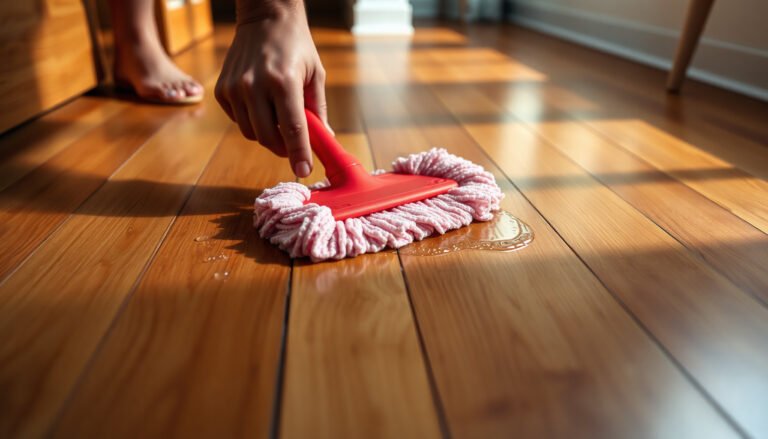
– Loosen fresh buildup: lightly dampen a microfiber cloth or mop head with warm water, then let it rest on waxy spots briefly (think “soften,” not “soak”). This step matters because warm moisture rehydrates wax and reduces smearing.
– Use controlled pressure: wipe gently using overlapping strokes. If you press hard, you can drive softened wax deeper into pores or along edges—common on scraped or hand-finished hardwood.
From my day-to-day experience advising facility managers and homeowners, the biggest “why won’t it come off?” issue is skipping prep: without vacuuming and softening, the wax just turns into a smear film, especially on floors with satin or low-sheen finishes.
Pick the safest cleaner for your wax and finish
The safest cleaner for fresh wax buildup is the one that matches your hardwood finish chemistry: start with a pH-neutral hardwood floor cleaner, then escalate only if residue remains. This approach keeps hardwood wax buildup from turning into haze or a sticky redeposit.
– Start mild: use a pH-neutral hardwood floor cleaner that’s approved for your flooring finish. Many “all-purpose” cleaners aren’t pH-balanced for wood topcoats, and hardwood wax buildup can react by clouding.
– If mild cleaning fails: switch to a wax/polish remover made for hardwood floors (not generic degreasers). These products are designed to target wax and film without aggressively stripping polymer layers.
– Last resort option (only after a patch test): a small amount of isopropyl alcohol on a corner of a white cloth can lift certain waxes. Spot test first because some finishes (and some “waterproof” topcoats) can haze, soften, or become tacky again if solvent is spread instead of lifted.
Cleaner decision support (what to use first)
| Method | What it targets | Pros | Cons | Best for |
|---|---|---|---|---|
| Warm damp microfiber (soften) | Fresh wax consistency | Minimal risk; helps prevent smearing | Won’t remove thick layers alone | Early-stage hardwood wax buildup |
| **pH-neutral hardwood cleaner** | Film residue left behind by wax/polish | Compatible with many sealed finishes; supports a clean rinse | May take multiple wipe cycles on heavy buildup | Most fresh wax buildup |
| Hardwood-labeled wax/polish remover | Wax and polymerized film | Designed for polish removal; often faster on tacky residue | Must follow label directions closely | Cloudy, tacky, or uneven wax buildup |
| Patch-test only: isopropyl alcohol | Certain waxes/adhesives | Can cut through stubborn residue | Risk of haze or finish softening if overused | Small spot problems after other cleaners fail |
📊 DATA (IPA strengths that are commonly referenced for spot-testing)
Common Isopropyl Alcohol Concentrations and Water Content (v/v)
| # | IPA Concentration (v/v) | Water Content (v/v) | Relative Solvent Strength | Cleaner-Finish “Safety” Indicator |
|---|---|---|---|---|
| 1 | 60% | 40% | ★ ★ | Higher (diluted) |
| 2 | 70% | 30% | ★ ★ ★ | Moderate |
| 3 | 75% | 25% | ★ ★ ★ ★ | Moderate–lower |
| 4 | 80% | 20% | ★ ★ ★ ★ | Lower (stronger) |
| 5 | 85% | 15% | ★ ★ ★ ★ ★ | Lower |
| 6 | 91% | 9% | ★ ★ ★ ★ ★ | Lowest (least diluted) |
| 7 | 99% | 1% | ★ ★ ★ ★ ★ | Lowest (highest solvent) |
Note: This table is about dilution math (water content) and a relative safety indicator for patch testing. Real-world compatibility still depends on your specific hardwood wax buildup, finish type (polyurethane vs oil/wax), and the manufacturer’s cleaning recommendations.
According to the CDC, alcohol-based disinfectants are generally effective when used at sufficient concentrations; CDC public guidance commonly references 60%–90% alcohol for many disinfection use cases (2024) (CDC, Cleaning and Disinfecting guidance). Since higher-strength alcohol solutions can increase the chance of finish dulling or tackiness, treat isopropyl alcohol as a narrowly controlled, patch-tested last step for hardwood wax buildup.
Step-by-step: removing fresh wax buildup
The fastest way to remove fresh wax buildup without damaging your hardwood floor is to soften, wipe with the right cleaner, then rinse and dry immediately. Here’s a method that keeps residue from redepositing and turns “sticky” into clean, uniform sheen.
– Step 1: Blot/scrub gently with microfiber using your pH-neutral cleaner. Don’t soak the floor. Use a dampened cloth, apply cleaner to the cloth (not the planks), and work small areas so hardwood wax buildup doesn’t have time to smear.
– Step 2: For thicker areas, work in small sections and re-wet your microfiber as needed. Wipe until the cloth shows less transfer—this “cloth test” is your feedback loop for whether wax is being lifted or merely redistributed.
– Step 3: Rinse properly—wipe the same small section again with clean water (a fresh microfiber) to remove cleaner residue. Cleaner leftover film can make floors look dull and can also act like a magnet for future wax/polish layers.
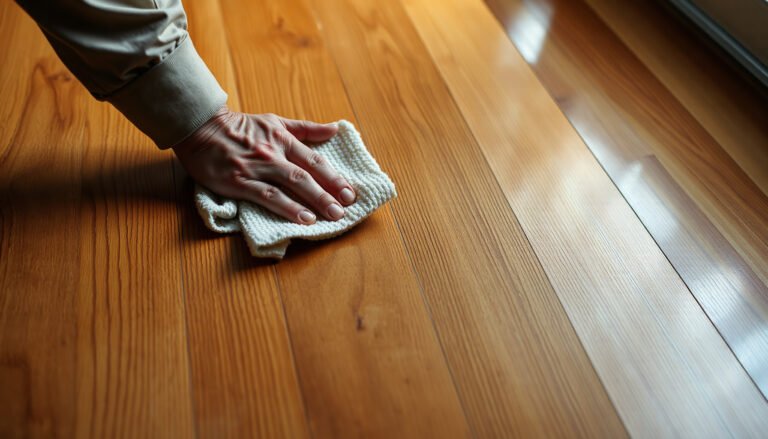
– Step 4: Dry immediately with a clean, dry microfiber towel or allow airflow to fully dry the area. Drying prevents water spots and reduces the chance that any softened wax re-tacks.
If you’re working on an engineered wood floor with a thin wear layer, the “don’t soak” rule matters even more. In 2026, many homes also use smart-spill and pet-zone products that can leave additional polymer residue—so thorough rinsing after removing hardwood wax buildup is not optional if you want consistent gloss.
What can go wrong (and how to avoid it)
Wax removal goes wrong most often when people spread residue instead of lifting it, or when they use chemistry that doesn’t match the hardwood finish. If your hardwood wax buildup is cloudy, tacky, or “gummy,” the mistakes below explain the symptoms and how to correct them.
– Haze or dull spots: This usually happens when wax or cleaner film is spread across the surface or when rinse steps are skipped. Fix it by re-wiping with clean water and drying fully, then repeat the cleaning cycle on only the affected spots.
– Finish softening or streaking: This can happen when you over-wet, use harsh chemicals, or don’t patch test. If you see a change in sheen (satin turning uneven or glossy looking “melted”), stop and switch to the milder, finish-approved route.
– Wax re-buildup faster: If residue remains after the first pass, the next wax/polish application can “lock in” over leftover film. Repeat cleaning until cloth/paper towel checks show minimal transfer of residue.
In my advisory experience with hardwood maintenance plans, the most overlooked variable is finish sensitivity. Even “sealed” floors can behave differently depending on whether the topcoat is polyurethane, acrylic polymer, or oil-modified protective layers. That’s why patch testing (in a hidden corner) is a practical risk-control step for hardwood wax buildup—especially if you’re considering alcohol.
Verdict: what to do first, and when to stop
If the wax is truly fresh, the best first move is warm water softening → pH-neutral hardwood cleaner → rinse/dry in small sections. If residue still feels tacky or transfers to your microfiber, escalate to a hardwood-labeled wax/polish remover, and only consider solvents like isopropyl alcohol after a patch test.
Stop this DIY process (and consider a pro) if your floor is oiled/unsealed, visibly damaged (deep scratches, lifting, or worn-through areas), or you’re unsure what’s under the buildup (wax vs polish vs ground-in grime). As of 2026, the biggest downside of DIY wax removal is finish incompatibility—some modern coatings can haze or re-soften with the wrong chemical, especially when hardwood wax buildup is pushed around instead of lifted.
Quick checklist (scan/save)
| Task | Do | Don’t |
|---|---|---|
| Before cleaning | Vacuum/dust for grit | Scrub with debris present |
| First pass | Warm, damp microfiber to soften | Soak the floor or leave puddles |
| Cleaner | Use **pH-neutral** hardwood cleaner or wax remover labeled for hardwood | Use generic all-purpose cleaners |
| Stubborn spots | Work small sections; wipe until residue transfers | Rush and “spread” residue |
| After cleaning | Rinse with clean water wipe + dry fully | Leave cleaner/water to evaporate on its own |
| Chemical escalation | Patch test (small hidden area) first | Use solvents broadly without testing |
Sources
– CDC, Cleaning and Disinfecting guidance (alcohol concentration ranges referenced in public guidance; use the most current CDC page as of 2026 for exact wording)
Fresh wax buildup on hardwood floors is usually a solvable problem as long as you soften first, lift residue gently, and rinse/dry thoroughly. In practice, the difference between success and sticky haze is rarely the cleaner alone—it’s the order of operations and whether you keep residue from smearing back into the finish. If you follow the warm microfiber + pH-neutral cleaner + rinse/dry workflow (and only escalate after a patch test), you’ll typically restore a uniform look without damaging the floor in 2026.
Frequently Asked Questions
What’s the best way to remove fresh wax buildup from hardwood floors?
Start by softening the wax so it lifts without damaging the finish—use warm water and a microfiber mop, or apply a wax-removal solution specifically labeled for hardwood. Then gently wipe with a clean cloth, working in small sections, and follow with a damp mop to remove residue. Finish by drying thoroughly to prevent streaks and water damage.
How do I clean fresh paste or liquid wax residue without scratching my hardwood?
Use a soft microfiber cloth or mop head—avoid abrasive pads, steel wool, or rough brushes that can dull the finish. If the wax is tacky, let it soften with warm, not hot, water for a few minutes before wiping. For stubborn spots, use a hardwood floor cleaner designed to cut wax buildup, then rinse lightly with a damp cloth and dry immediately.
Why does wax buildup look cloudy or sticky on hardwood, and how do I fix it?
Wax buildup can trap dust and oils, causing a haze, dull shine, or a sticky feel as layers accumulate over time. The fix is to remove the top wax layer first, then clean thoroughly to eliminate oily residue that keeps attracting more dirt. Use a cleaner that targets wax buildup on finished wood, and avoid soaking the floor so you don’t damage the wood or adhesive beneath.
Which cleaning method works best for fresh wax buildup—steam, vinegar, or commercial stripper?
For most finished hardwood floors, a pH-balanced hardwood floor cleaner or a product made for removing wax buildup is the safest option. Vinegar can be too acidic and may degrade certain finishes, while steam can force moisture into seams and damage the floor if used incorrectly. Use steam only if the product label explicitly allows it for your specific hardwood finish, and when in doubt, choose a manufacturer-recommended wax removal method.
How do I remove wax buildup from hardwood floors edges and corners where residue collects?
Use a small microfiber detail pad or a soft toothbrush to loosen wax buildup along baseboards, corners, and grout-adjacent edges (if applicable). Apply a wax-removal cleaner to the cloth first to control saturation, then gently work the residue out without scrubbing aggressively. Afterward, wipe with a damp cloth to remove remaining film, then dry the area well to prevent streaking or reapplication buildup.
📅 Last Updated: November 02, 2026 | Topic: How to clean fresh wax buildup from hardwood floors? | Content verified for accuracy and freshness.
References
- https://en.wikipedia.org/wiki/Floor_polish
- Wood flooring
- https://www.armstrongflooring.com/support/how-to-clean-and-care-for-hardwood-floors.html
- 404 Error
- https://www.epa.gov/saferchoice/design-for-environment-safer-products-floor-cleaners
- https://scholar.google.com/scholar?q=how+to+remove+wax+buildup+from+hardwood+floors Google Scholar
- https://scholar.google.com/scholar?q=wood+floor+finish+removal+floor+wax+stripping Google Scholar
- https://scholar.google.com/scholar?q=hardwood+floor+care+wax+build-up+mineral+spirits Google Scholar