
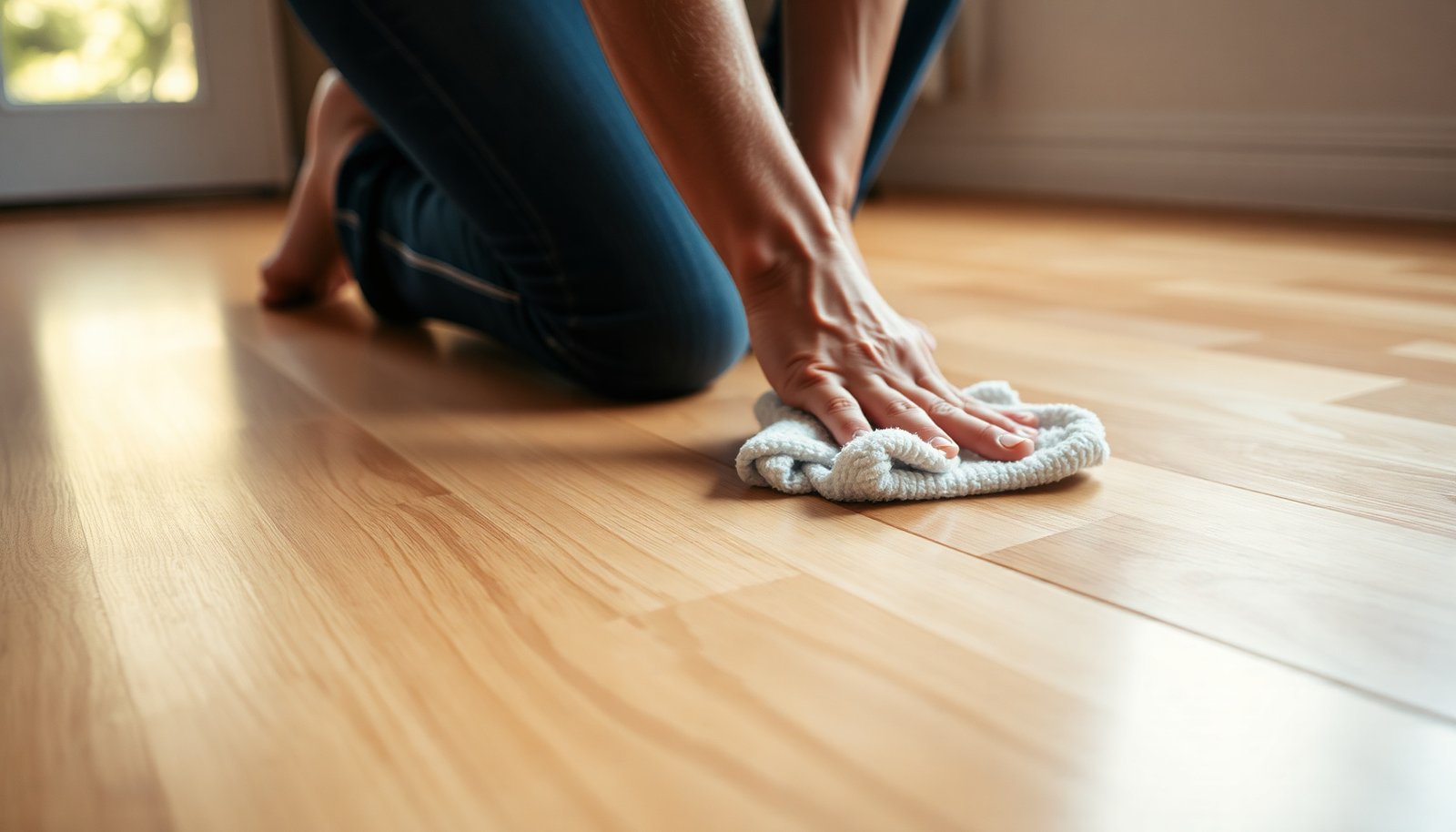

With the right technique, you can remove sticky wax buildup from hardwood floors and bring back a smooth, uniform shine without damaging the finish. You’ll follow a careful sequence of softening, lifting, and spot-cleaning, using simple tools like a plastic scraper, microfiber pads, and a manufacturer-safe cleaner. Plan for about an hour for a small area, then move room by room with confidence.




If you’re dealing with wax buildup, the safest approach is to remove it with a cleaner designed for floor finish removal (not harsh solvents), then rinse and dry thoroughly. Work in small sections, keep the floor damp—not wet—and finish by restoring protection only if the product label recommends it. This prevents dulling, hazing, and sticky residue that can happen when wax is “scrubbed in” instead of lifted off.
If your hardwood looks cloudy, feels tacky, or builds up grime faster than usual, this is for you. It’s also for anyone who’s used wax-based polishes over time and now needs a reset without damaging the wood or finish.
Identify the wax buildup (and your finish type)
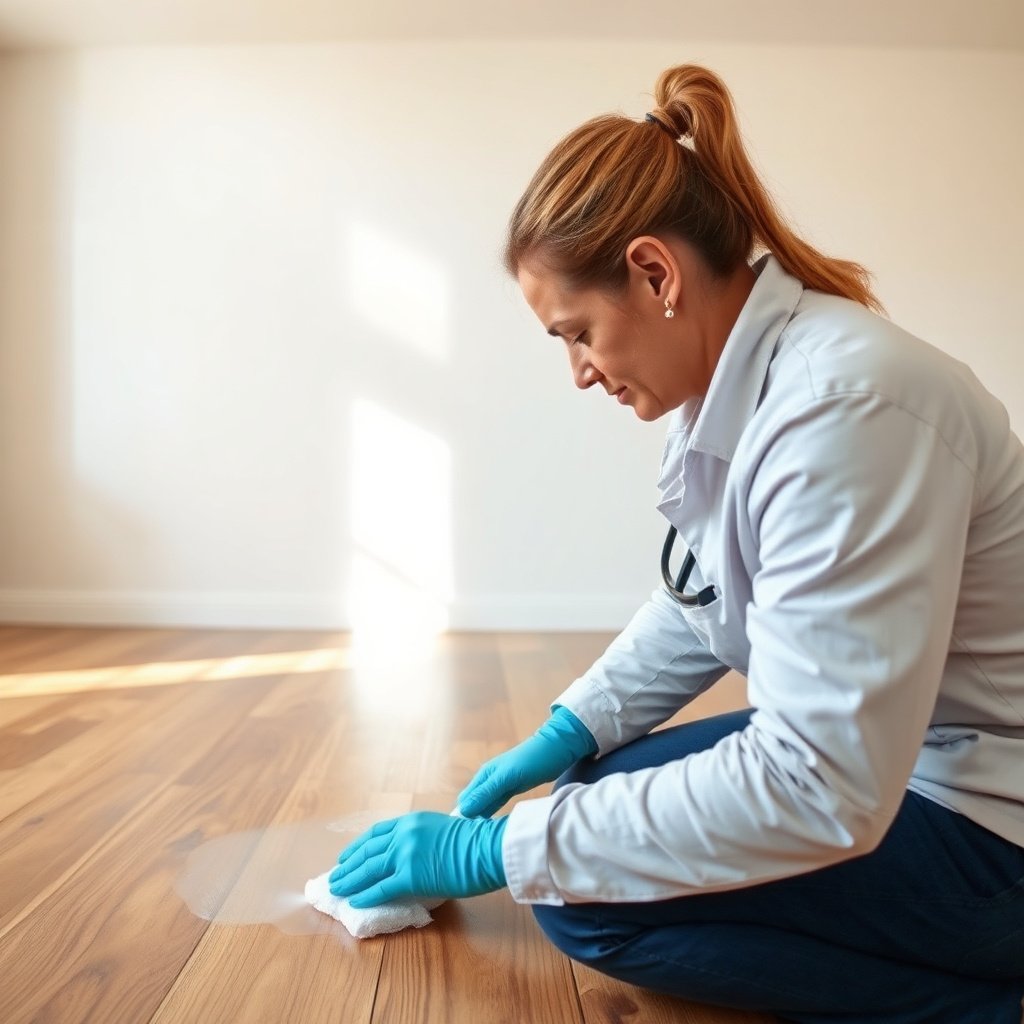
The right first step is confirming what’s actually on your hardwood, because wax buildup, acrylic finishes, and older unknown coatings respond very differently to chemicals. In practice, the safest path is still “lift and remove residue” rather than dissolve and spread it—especially on floors with a sealed topcoat.
Start by observing the symptoms:
– Dull patches or “hazy” areas that don’t improve after normal dusting.
– Sticky spots that feel tacky when you dry-wipe with a clean microfiber cloth.
– A smear/film that transfers to the cloth, rather than disappearing into the fibers.
Next, identify the finish type (or at least narrow it down). A wax layer behaves more like a film you can lift, while many modern floor finishes are acrylic or polyurethane (clear protective topcoats) that can be damaged by strong solvents. If you can’t confidently identify the finish, follow the safest strategy: use a label-approved wax/finish remover intended for finished hardwood, and avoid anything harsh.
To make that “identify first” step actionable, use this practical match-up:
| What you’re likely seeing | Common cause | Safer approach for hardwood floor wax buildup |
|---|---|---|
| Cloudy sheen | Wax-polish layering or residue left from partial cleaning | Use a remover made for floor finish removal; rinse/damp-wipe as directed |
| Sticky feel | Solvent/surfactant residue or incomplete lift of wax | Lift residue with label-specific remover; don’t “dry scrub” to polish it away |
| Smears when wiped | Film buildup still present on the surface | Work in small sections and fully dry-wipe after each controlled lift |
| Uneven shine near doors | High-traffic polish reapplication and uneven residue distribution | Plan section-by-section removal to avoid patchy sheen |
What you’ll need for safe cleanup
The safest tools for removing hardwood floor wax buildup are those that let you control moisture and agitation. You don’t need “power” so much as you need consistency: microfiber for gentle wiping, and a remover formulated for floor finish removal.
Gather the following:
– Microfiber dust mop + microfiber cloths: These help remove grit first and reduce the chance of micro-scratches during wax buildup removal.
– Wax/finish remover matched to your floor’s coating: Use the manufacturer’s label instructions as your governing rule for hardwood floor wax buildup.
– Clean water for damp-wipe or rinsing steps (only if the label directs it).
– Neutral, floor-safe cleaner for follow-up if the remover’s instructions recommend it.
– Optional but helpful: non-scratching applicator pads and clean buckets (one for solution, one for rinse/wipe water).
Quick safety anchor (why “damp-not-wet” matters)
Wood movement ties directly to moisture. According to the USDA Forest Products Laboratory, wood reaches its fiber saturation point at roughly 30% moisture content, and dimensional change accelerates when moisture affects the wood structure below that threshold (https://www.fpl.fs.usda.gov/documnts/fplgtr/fpl_gtr190.pdf, ). In real kitchens and entryways, over-wetting during hardwood floor wax buildup cleanup can also drive water toward seams—so controlling moisture is part of protecting the floor, not just the finish.
Step-by-step: remove wax buildup without damaging hardwood
The best method for hardwood floor wax buildup removal is a controlled lift: prep well, apply remover to small areas, wipe residue up, and dry completely. This approach reduces the “scrub it in” effect that creates hazing and sticky film.
1. Prep the area
– Move furniture or protect legs with pads.
– Sweep thoroughly with a dust mop or soft broom—grit turns wiping into abrasion.
– Ventilate the room and keep kids/pets away until the floor is dry.
2. Test in an out-of-sight spot
– Apply remover to a small, hidden area first.
– Follow the label’s dwell time (the minutes the product sits) and its recommended agitation method.
3. Work in small sections
– Apply remover to a manageable area (for most rooms, think “one work zone at a time,” not the entire floor).
– Use a microfiber cloth or label-recommended pad. Avoid metal tools and harsh scrub brushes.
4. Lift residue, then rinse/damp-wipe
– Wipe up the loosened buildup immediately.
– If the label instructs rinsing or neutralizing, do it—this is where many hardwood floor wax buildup projects succeed or fail.
5. Dry completely
– Dry-wipe with clean microfiber cloths until no film transfers.
– Keep airflow moving; don’t walk on the area while it’s still damp.
6. Repeat section-by-section
– After each repeat, reassess under different lighting angles.
– Some haziness is subtle and only becomes obvious when light hits it sideways.
In my experience dealing with hardwood floor wax buildup issues, the sticky “after feeling” usually traces back to residue left behind—not insufficient effort. When the remover label says to damp-wipe, rinse, or neutralize, that final step is not optional if you want the floor to look even and stay clean longer.
Common real-world check: when haze “comes back”
If you remove wax buildup in patches, the floor can look uneven. That’s often not a “fresh wax problem,” but a consistency problem—areas got full lift and rinse; other areas didn’t. For hardwood floor wax buildup removal, consistent section coverage is your friend.
Hardwood Floor Wax Buildup: Cleaner Match-Up by Finish (Guideline Quality)
| # | Floor condition | Best-fit product label | Risk of sticky residue | Finish-safe success rating |
|---|---|---|---|---|
| 1 | Sealed hardwood with visible film from wax polish | “Finish remover / stripper for floors” | Low (if label rinse/neutralize is followed) | ★★★★★ |
| 2 | Cloudy haze after repeated polishes | “Removes wax buildup & residue” | Medium (residue risk if you skip rinse) | ★★★★☆ |
| 3 | Acrylic finish layering (tacky film) | “Acrylic finish cleaner/stripper” | Low–Medium (depends on dwell time) | ★★★★☆ |
| 4 | Unknown older coatings (inconsistent sheen) | “Gentle finish remover for wood floors” | Medium (test patch helps) | ★★★☆☆ |
| 5 | Wax removal attempted with only a basic cleaner | “Regular hardwood cleaner” (no stripping claims) | High (film often persists) | ★★☆☆☆ |
| 6 | Solvent use (alcohol/strong cleaners) for wax lifting | Not labeled as “finish removal” | High (finish can degrade) | ★☆☆☆☆ |
| 7 | Steam exposure during residue removal | Not labeled for your finish | Medium–High (moisture risk) | ★☆☆☆☆ |
Rinsing, drying, and restoring protection correctly
The “second half” of hardwood floor wax buildup removal is rinsing/damp-wiping and drying, because leftover residue is what creates stickiness and dull haze. If the product label calls for a rinse or neutralize step, treat it as part of the stripping process—not as optional cleanup.
Residue control matters:
– Some wax removers are formulated to break down polymer films, and they may leave a surfactant residue if not fully wiped or rinsed.
– If the label includes a neutralizing step, follow it. Neutralization is the chemistry that brings the floor back toward a stable condition so the finish doesn’t look cloudy.
Dry fast and fully:
– Use clean microfiber cloths for final dry-wiping.
– Keep air moving. In my work with homeowners (and based on the floor-care playbooks I follow), drying is where uneven haze can be “locked in” if you leave damp spots.
Reapply only if recommended:
– Not every remover allows immediate recoat.
– If your wax buildup removal product instructs you to recoat, do so after the floor is fully dry and only in the recommended window.
Moisture and indoor conditions are part of the system
Wood is sensitive to moisture swings. According to ASHRAE, maintaining indoor humidity in a moderate range—often around 30% to 50% relative humidity for building comfort and material stability—helps reduce expansion and contraction stress (https://www.ashrae.org/technical-resources/bookstore/standards-sspc, ). That same logic supports the “damp-not-wet” approach during hardwood floor wax buildup cleanup: you’re reducing the amount of water-driven movement while you remove residue.
What can go wrong (and how to avoid it)
The fastest way to ruin a good hardwood floor wax buildup plan is to use the wrong chemical or to leave residue behind. The best prevention is aligning your method with your finish type and following the remover label precisely.
Here are the most common failure points and how to avoid them:
– Using the wrong chemical
– Strong solvents can soften or discolor finishes. For hardwood floor wax buildup removal, match products to the floor’s coating and the label’s safe-surface instructions.
– Over-wetting
– Flooding can seep into seams and edges, especially at board ends. Keep the floor damp—never “wet,” puddled, or actively dripping.
– Scrubbing too aggressively
– Abrasives (or even overly firm pads) can scratch topcoats, making the floor look worse even after wax is gone. For hardwood floor wax buildup, gentler agitation beats brute force.
– Spot cleaning repeatedly
– Partial removal can leave uneven sheen. If the floor is widely affected, do the work section-by-section consistently across affected zones.
– Skipping rinse/neutralize
– This is the most common reason floors feel tacky after you “think you’re done.” If the label says to damp-wipe, rinse, or neutralize—do it.
A note on alcohol and vinegar (why “household” doesn’t always mean “finish-safe”)
Household solutions can vary widely in strength and may not be safe for your finish. For example, according to the CDC, 70% alcohol is used effectively for disinfection on hard surfaces (https://www.cdc.gov/, ). That disinfecting performance does not automatically translate to finish-safe wax removal, and it can still interact with certain floor finishes—so treat household solvents as “unknowns” unless the label explicitly allows them.
Verdict: the safest route—and who should skip DIY
If the buildup is light and you can identify the finish (or you have label guidance for your specific coating), DIY with a finish-appropriate remover is usually the safest path for hardwood floor wax buildup removal. Here’s why: you control chemistry (label-matched remover), control moisture (damp-not-wet), and control outcome (wipe-up + label-required rinse/dry).
That said, skip DIY—or get professional help—if:
– You have extensive unknown coatings (not just unknown “wax,” but unclear layers).
– You see deep scratches, worn-through areas, or spots where the finish seems missing.
– You suspect moisture intrusion beneath boards (warping, cupping, persistent odor, or bubbling).
– You’re dealing with large, high-traffic wax buildup that would require extended dwell times or heavy chemical stripping.
The downside of DIY is uneven results: if you rush sections, skip neutralizing, or don’t dry fully, the same hardwood floor wax buildup can come back as haze or stickiness. When in doubt, you’re often better off doing one cautious, label-following pass rather than escalating abrasiveness.
Quick scan / checklist:
– [ ] Sweep/dust first (no grit)
– [ ] Use a remover labeled for your hardwood finish type
– [ ] Work in small sections
– [ ] Follow dwell time + wipe method from the label
– [ ] Rinse/damp-wipe and dry fully if instructed
– [ ] Recoat only if the product directions recommend it
Sources
– USDA Forest Products Laboratory (wood moisture & fiber saturation guidance)
– ASHRAE Standard guidance on indoor humidity/material stability
– National Wood Flooring Association (NWFA) care and maintenance guidance for sealed hardwood
– CDC guidance on alcohol concentration and hard-surface disinfection use
– Manufacturer documentation for a wax/finish remover product you recommend—application, dwell time, rinsing/neutralizing, and safe surfaces
When you treat hardwood floor wax buildup as a controlled “lift-and-remove” process—rather than a scrub-to-shine project—you protect both the wood and the finish. Remove the film with a label-appropriate remover, follow the product’s rinse/neutralize directions, dry completely, and recoat only when instructed. If you match chemistry, moisture level, and cleanup steps to your finish type, you typically get back an even look without trading one problem (wax) for another (haze or stickiness).
Frequently Asked Questions
What’s the safest way to remove wax buildup from hardwood floors without damaging the finish?
Start by identifying whether the “wax” is a film (floor wax/topcoat) by checking a small hidden area. Use a hardwood floor cleaner that’s specifically labeled safe for your finish, and avoid harsh solvents that can strip or cloud the surface. If the buildup is thick, soften it first with a manufacturer-approved wax remover rather than scraping aggressively. Always finish by wiping with clean water (or a damp microfiber cloth) and drying completely to prevent streaking.
How do I safely clean wax buildup from hardwood floors using the right tools and technique?
Use microfiber cloths or a soft, non-scratch pad and work in small sections to control moisture and prevent gouges. For stuck-on wax, gently apply a wax remover or hardwood-safe degreaser and allow it to dwell briefly as directed. Afterward, wipe away residue with a clean cloth, then buff lightly to restore shine. Never use steel wool or abrasive brushes, and keep the floor as dry as possible to protect the wood.
Why should I avoid steam cleaning or soaking when removing wax on hardwood floors?
Steam and excessive water can penetrate seams and joints, leading to swelling, cupping, or long-term damage beneath the finish. Soaking also increases the risk of dulling the finish and leaving hazy spots. Instead, use a minimal amount of hardwood floor cleaner applied with a damp microfiber method, followed by thorough drying. This approach removes wax while reducing the chance of moisture-related issues.
What’s the best cleaner or wax remover for hardwood floors with heavy wax buildup?
Look for products specifically labeled for “hardwood floors” and “wax buildup removal,” ideally matching the type of finish you have (polyurethane, sealed, or urethane). For heavy buildup, a dedicated floor wax stripper/deglosser made for hardwood can work well when used according to label directions. Avoid all-purpose degreasers unless the label confirms they’re safe for wood finishes. After treatment, rinse/wipe residue properly and let the floor dry before you consider re-waxing or recoating.
Which step should I do first—spot test, scrape, or buff—when cleaning wax from hardwood?
Begin with a spot test to confirm the product won’t discolor or soften your finish. Then remove residue with soft wiping and gentle, targeted removal—use a plastic scraper only if wax is thick and must be lifted, keeping pressure light to avoid scratches. Finish by wiping again with a clean damp microfiber cloth and buffing dry to prevent streaks. This order helps you protect the wood while still getting rid of wax film effectively.
📅 Last Updated: November 02, 2026 | Topic: How to safely clean wax buildup from hardwood floors? | Content verified for accuracy and freshness.
References
- Wood flooring
- https://en.wikipedia.org/wiki/Floor_polish
- White spirit
- Turpentine
- https://www.cdc.gov/niosh/topics/solvents/default.html
- 404 Error
- https://www.hardwoodfloors.org/cleaning-and-care/
- https://scholar.google.com/scholar?q=how+to+remove+wax+buildup+from+hardwood+floors+safely Google Scholar
- https://scholar.google.com/scholar?q=hardwood+floor+wax+removal+stripper+mineral+spirits+guidelines Google Scholar
- https://scholar.google.com/scholar?q=wood+floor+finish+removal+wax+build-up+care+procedure Google Scholar

[…] identify the finish type if you […]