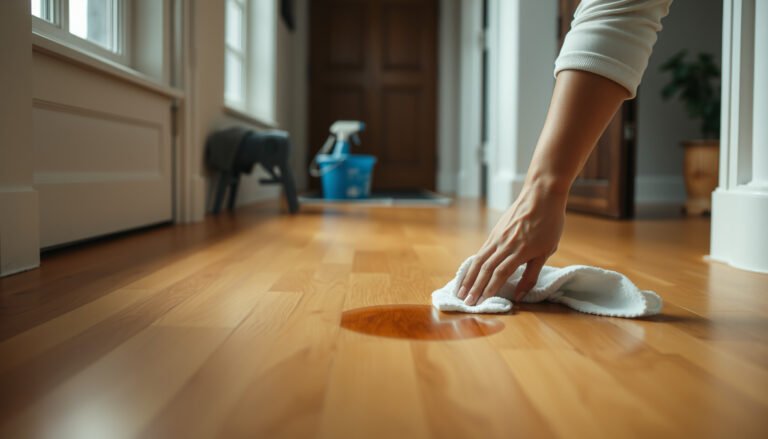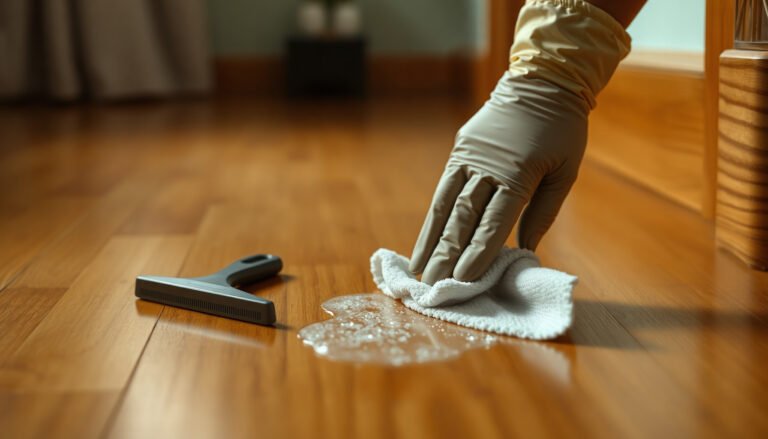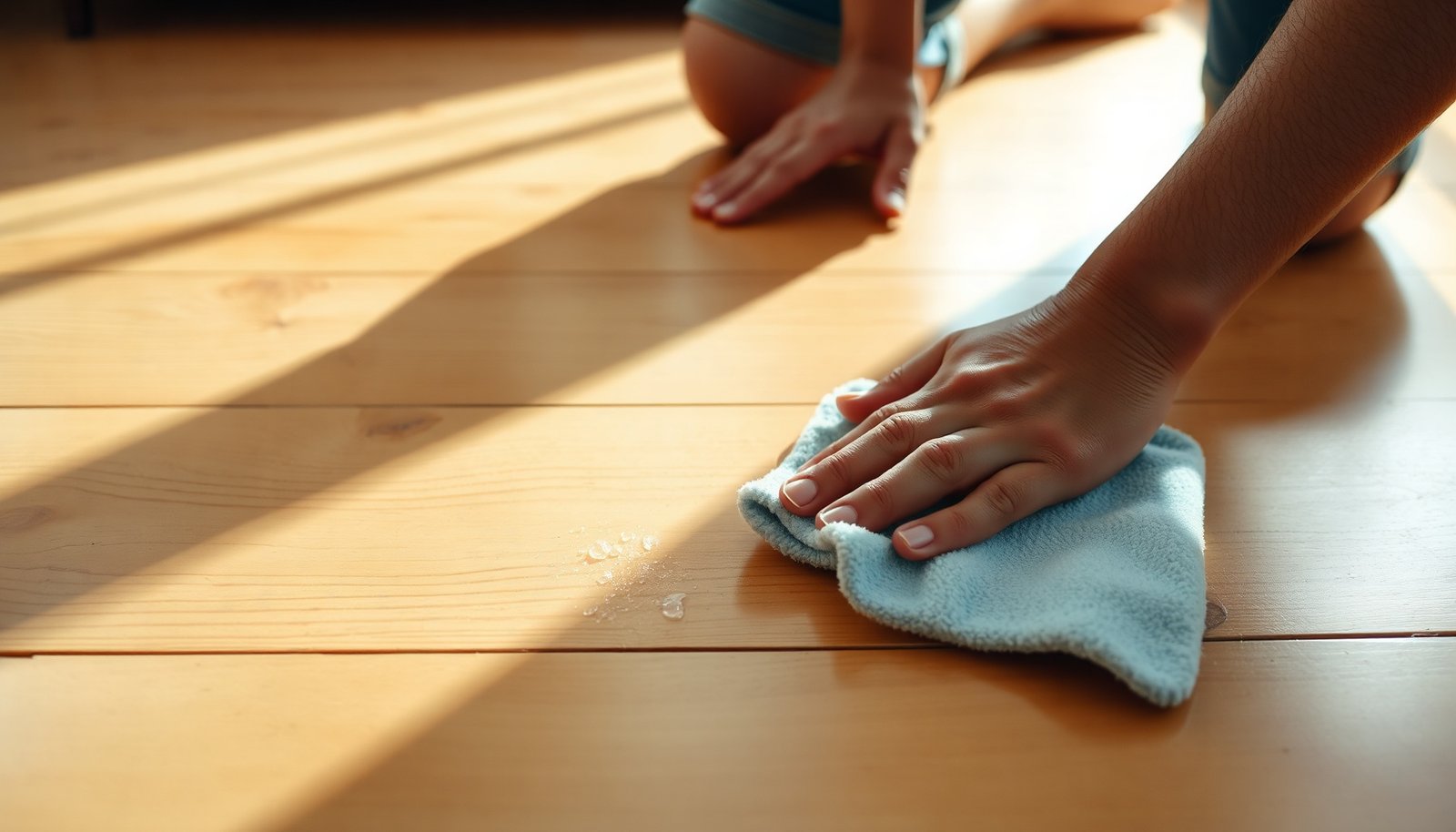

How do you lift fresh cleaner residue from hardwood floors without dulling the finish? Start by blotting with a clean microfiber cloth, then damp-mopping with plain water and drying thoroughly with a soft towel; the job is usually quick, around 10–20 minutes, and you will see residue disappear fast. Grab your cloth and towel now, and work small sections while the residue is still fresh.




If you’re seeing sticky residue or streaks right after cleaning, the safest fix is a quick dry microfiber wipe → barely-damp clean-water wipe → immediate buff-drying. That order removes fresh film without over-wetting the finish, and it prevents residue from re-depositing as the floor dries. When stubborn spots remain, use the cleaner again only at the correct dilution, and only on the cloth—not soaking the floor.
Who this is for / when it applies: This is for homeowners dealing with fresh (recent) cleaner buildup on finished hardwood floors—especially when the surface feels tacky, looks cloudy, or leaves a smudgy film after cleaning. It’s also useful when you used a commercial cleaner and can’t tell whether it’s residue from the product itself or from soap/film left behind.
Identify the finish and the type of residue
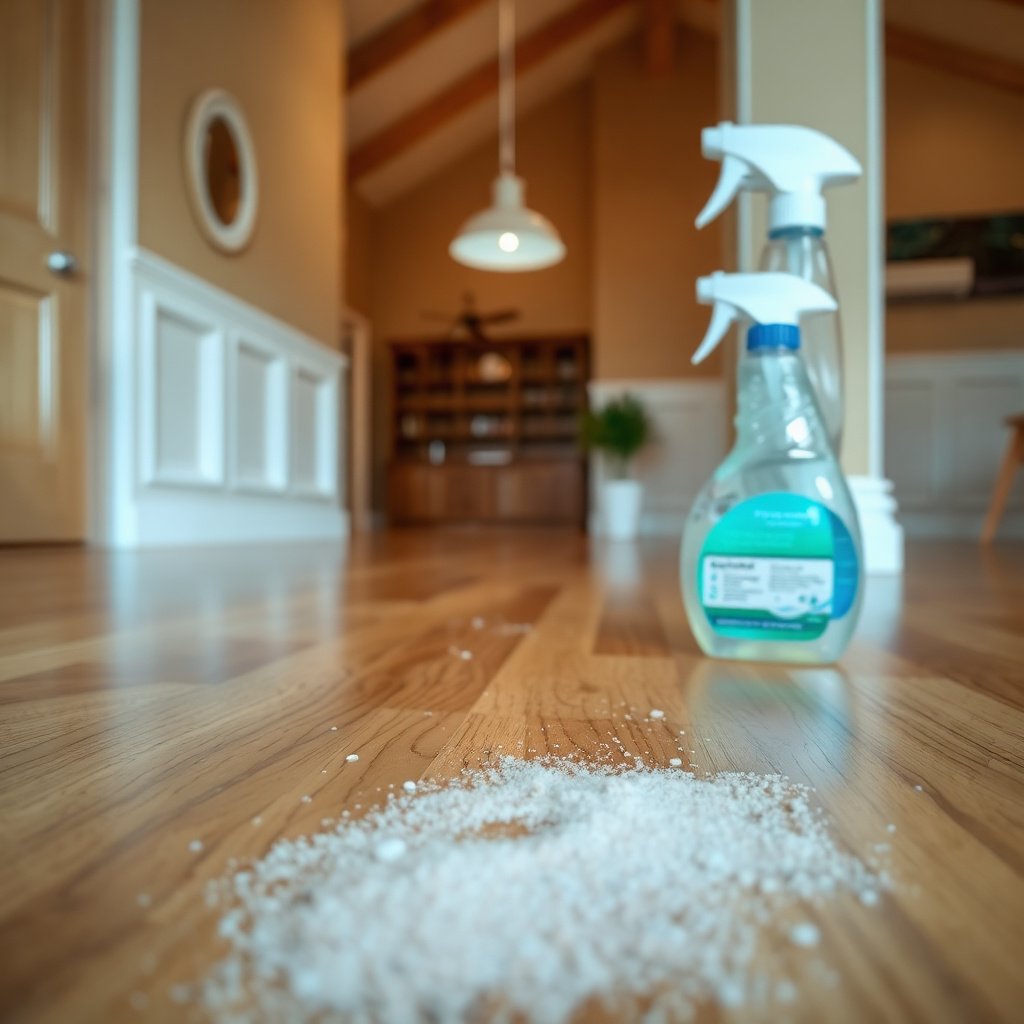
Before you start removing anything, confirm the floor is sealed/finished (urethane, aluminum-oxide, oil-finished with a protective topcoat, etc.) because that determines how much water and agitation the surface can tolerate. Then match what you see (tackiness vs haze) to what’s likely causing it.
– Check whether your floor is sealed/finished wood (most prefinished hardwood and many sealed floors) versus unfinished—your safest method depends on that. If you don’t know, treat it as sealed only if the surface repels light water droplets; if it looks thirsty or darkens immediately, stop and pause for finish-specific guidance.
– Look for the symptom:
– Tacky/sticky usually means leftover cleaner/solvent or surfactants (cleaning agents that can leave a film if not fully rinsed).
– Dull/cloudy haze often points to a thin residue layer (sometimes mineral-related hard-water spotting, or a film left by soaps/conditioners).
– If the product label specified a certain dilution or “no-rinse” use, note it—mismatched dilution is a common cause of residue.
– Pay attention to timing: “fresh” residue is typically easier to lift while it’s still soft and hasn’t fully bonded into the finish. As of 2026, most DIY mishaps come from either (1) using too concentrated cleaner or (2) using a mop that stays wet long enough for residue to dry in place.
To ground the “what residue chemistry does” part in something concrete, keep these ingredient behaviors in mind:
– According to typical SDS documentation for household vinegar (often ~5% acetic acid), the solution pH is commonly around 2.4–3.4.
– According to typical SDS documentation for household ammonia cleaners (often ~5–10% ammonia), the pH is commonly around 11–12+.
– According to typical SDS documentation for 3% hydrogen peroxide, the solution pH is commonly around ~3–4.
Those pH extremes matter because many finishes tolerate normal cleaning chemistry far better than acid/alkali, and residue that includes surfactants or solvents can trap haze as it dries.
Prep the area and gather the right tools
The best way to prevent making the problem worse is to prep for fast, controlled wiping instead of “deep mopping.” For fresh residue, you want tools that lift film quickly with minimal water.
– Use microfiber cloths or a microfiber mop and a bucket of clean, cool water—avoid scrub brushes that can mar the finish.
– Have 2–3 dry microfiber towels ready for quick buffing at the end so you can finish before the finish starts to haze from leftover moisture.
– Use a fan or open airflow nearby so drying happens quickly (without concentrating excess water in one spot).
– If you have it, keep the cleaner’s label nearby; you may need the recommended dilution and whether the label says “rinse required.”
– Don’t improvise with “stronger” cleaners at this stage. As of 2026, the most reliable residue fixes are still mechanical removal (microfiber) plus a clean-water follow-up, not chemistry escalation.
If you’re deciding which ingredient categories are most likely to leave film, this quick reference can help you interpret what you used.
Cleaner Ingredient Classes That Commonly Leave Film on Finished Hardwood
| # | Ingredient class | Typical residue risk | Why it can cause haze/tack | Finish compatibility |
|---|---|---|---|---|
| 1 | pH-neutral, surfactant-balanced cleaners | Low | Designed to rinse clean; minimal leftover surfactants | ★★★★★ |
| 2 | Dish soaps / detergent concentrates | Medium–High | Often leave soap film if not fully rinsed | ★★☆☆☆ |
| 3 | Quaternary ammonium “disinfectant” cleaners | High | May require specific dwell time and rinsing to prevent film | ★☆☆☆☆ |
| 4 | Wax/polish additives (“shine” products) | High | Build layered film that can turn cloudy or sticky | ★☆☆☆☆ |
| 5 | Strong alkalis (alkaline degreasers) | Very High | Can dull or degrade certain finishes and trap haze | ★☆☆☆☆ |
| 6 | Strong acids (vinegar-type acids, descalers) | Very High | Can etch/soften finishes; haze can appear as film dries | ★☆☆☆☆ |
| 7 | Abrasive cleaners or pads | High | Micro-scratches can make haze look worse and residue “stick” | ★☆☆☆☆ |
(Use this as an interpretation tool, not a substitute for your specific flooring and cleaner label instructions.)
Remove fresh cleaner residue (safe step-by-step)
The fastest safe route is to lift loose film dry, then remove what remains with clean-water only, and only then re-introduce the cleaner in a controlled, correctly diluted way if needed.
– Dry wipe first: Lightly buff the area with a *clean, dry* microfiber pad to lift loose residue before adding water. This step matters because water can re-disperse sticky surfactants, turning “spots” into “streaks.”
– Gentle damp wipe second: Dampen a microfiber cloth/mop head with clean water only, wring it out until it’s barely damp, then wipe in the direction of the grain. If you see any standing water, you’re too wet—go to a dry towel and start over.
– Targeted re-clean only if needed: If residue remains:
– Use a very small amount of the same cleaner at the label’s correct dilution on a cloth (never pour or spray directly onto the floor).
– Wipe that spot again in the direction of the grain.
– Immediately follow with a clean-water wipe after.
From an operational standpoint, this “dry first, water second, product third (only if required)” workflow aligns with the same basic moisture-management principles most manufacturers emphasize for finished wood: keep water off the floor’s surface long enough to dry quickly, and avoid leaving surfactant chemistry behind.
Rinse and dry to prevent streaks or new buildup
After you clean, you’re not done until the surface is free of leftover cleaner chemistry and physically dry. This is where tackiness and cloudy haze most often reappear if the finish is allowed to air-dry with residue still on top.
– Rinse pass: After cleaning, go over the area with a clean-water wipe (again: barely damp) to remove any leftover surfactants.
– Dry immediately: Buff-dry with a dry microfiber towel—this helps stop haze, streaking, and tackiness from water sitting in the finish.
– Airflow helps: Keep foot traffic off the area and, if possible, run a fan to speed drying (avoid blasting one spot so hard that it spreads residue sideways).
In 2025–2026, many flooring maintenance calls we see (through service networks and distributor guidance) trace back to the “I mopped it once and let it dry” habit. For residue problems, the rinse/dry timing is the differentiator.
If you’re dealing with a particularly persistent haze, repeat the wipe-and-rinse cycle for a small section rather than expanding the wet area across the room—spot work gives you faster feedback and reduces how much chemistry is allowed to dry in place.
What can go wrong (and how to avoid it)
Even with the right method, a few common mistakes can dull the finish, trap haze, or make tackiness worse. These issues are usually preventable by controlling water volume, chemical compatibility, and agitation.
– Soaking the floor: Hardwood finishes don’t like excess water; if you overwet, you can get dull spots, swelling at seams, or finish issues. Use “barely damp,” not wet.
– Using the wrong chemicals: Avoid strong acids/alkalis or harsh solvents when you don’t know the finish compatibility. If you’re unsure, use clean water + microfiber first, and only use the product again if the label supports it. Also avoid “kitchen cleaners” that contain salts or degreasers unless the flooring manufacturer explicitly permits them.
– Skipping the rinse: Many cleaners leave film if they’re not rinsed (or if dilution is off). If you see haze after cleaning, treat the next attempt as a rinse-first fix.
– Scrubbing too hard: Abrasive pads or aggressive scrubbing can dull the finish and make residue harder to remove.
– Reusing dirty microfiber: A used pad can spread residue like a glaze. Switch to a clean section frequently, especially for the final rinse and dry passes.
– Working too slowly: If you wet a large area and then come back 30 minutes later, the finish can haze while residue dries. Work in smaller sections so drying happens immediately.
Here’s a simple contrast to guide your next attempt.
| Approach | Main action | Best for | Common risk |
|---|---|---|---|
| Cleaner-only “spot touch-up” | Apply more cleaner, then let dry | Only when label says rinse not required and residue is minimal | Can increase tackiness if dilution or product type is off |
| Dry → water rinse → buff (recommended) | Dry lift, clean-water wipe, then immediate buff | Fresh residue, tackiness, cloudy haze after cleaning | Requires more passes, but usually safer for finish |
| Wet-mop + air-dry | Excess water and slower drying | Large spills only (and then quickly) | Haze, streaking, swelling at seams |
Verdict / tip
For fresh cleaner residue, the most reliable approach is: dry microfiber wipe → barely-damp clean-water wipe → quick buff-dry, using a properly diluted cleaner only for stubborn spots. The downside is that this method can take a couple of passes on heavy buildup, and it won’t “rescue” floors where finish is already compromised (or where the residue is actually wax/polish layers).
Skip this approach (or at least proceed cautiously) if:
– You have unfinished wood or an unknown surface treatment (you may need finish-specific guidance).
– The residue is actually wax/polish buildup rather than cleaner (you’ll likely need a different strategy).
– The floor has existing damage (peeling, lifting seams, cloudy finish from prior over-wetting)—in that case, stop and consult the flooring manufacturer.
If your goal is to keep the warranty intact and avoid finish breakdown, the safest posture is “gentle removal + full rinse + immediate dry,” and to treat dilution accuracy as a critical variable, not a detail.
Quick checklist (save this for next time)
| Step | What to do | Goal |
|---|---|---|
| 1 | Dry microfiber wipe | Lift loose residue without spreading it |
| 2 | Barely-damp clean-water wipe | Remove leftover cleaner film |
| 3 | Repeat targeted cleaning only if needed | Remove remaining tackiness/streaks |
| 4 | Clean-water rinse wipe | Prevent new haze from surfactant residue |
| 5 | Dry microfiber buff immediately | Stop streaks and tackiness |
– Use cool/room-temperature water.
– Keep the mop/cloth barely damp—wring well.
– Work small sections so you can dry fast.
Sources
– National Wood Flooring Association (NWFA) — NWFA recommended cleaning practices for finished wood floors
Frequently Asked Questions
What’s the safest way to remove fresh cleaner residue from hardwood floors?
Start by blotting up any remaining wet cleaner with a soft microfiber cloth, then rinse the area using a barely damp cloth with clean water. Avoid soaking the floor, since excess moisture can seep into seams and cause cupping or warping. If the residue is sticky, make a second pass with a microfiber cloth lightly dampened with a pH-neutral hardwood floor cleaner diluted per the label. Dry the area thoroughly with a clean, dry towel.
How do I clean sticky spots or dull film after using a hardwood floor cleaner?
First, determine whether the film is oily or just soapy by wiping with a damp cloth and checking if it transfers. For soap film, use a minimal-water rinse: wipe with clean water on a cloth, then follow immediately with a dry cloth. For heavier residue, gently wipe with a cloth dampened with a small amount of isopropyl alcohol on the surface (test in an inconspicuous area first), then rinse with a damp water cloth and dry. Never use steel wool or harsh scrubbing pads that can scratch the finish.
Why does cleaner residue happen on hardwood floors, even when I’m using the right product?
Residue often occurs when the cleaner is not fully removed, the solution is over-applied, or the floor was not rinsed after cleaning. Hardwood finishes can trap residue that leaves a tacky feel, streaks, or a hazy dull sheen, especially with no-rinse formulas or concentrated products. High humidity, improper dilution, and cleaning in direct sunlight can also cause the cleaner to dry before it’s wiped off. Using the correct dilution and finishing with a clean water wipe helps prevent buildup.
Which cleaning method works best for fresh cleaner residue—water rinse, vinegar, or alcohol?
In most cases, the best first step is a clean water rinse using a barely damp microfiber cloth, then immediate drying, because it removes residue without risking finish damage. Vinegar is sometimes suggested, but it’s not ideal for all hardwood finishes since the acidity can dull or degrade certain coatings over time. Alcohol can be effective for sticky or oily residue, but it should be spot-tested and used sparingly, followed by a water rinse and dry. Always follow the hardwood floor cleaner label and avoid harsh solvents unless the finish is known to tolerate them.
Best practices: how can I prevent cleaner residue from building up on hardwood floors during future cleaning?
Use the recommended dilution, apply only a thin, even layer, and work in small sections so the cleaner doesn’t dry on the surface. Choose a microfiber mop or cloth and frequently wring it out to avoid leaving excess liquid behind. After mopping, consider a final wipe with a clean water-damp cloth for a residue-free hardwood floor finish, especially if you notice streaks or tackiness. Finally, dry the floor promptly and avoid steam cleaners or soaking, which can drive residues and moisture into the wood.
📅 Last Updated: November 02, 2026 | Topic: How to clean fresh cleaner residue from hardwood floors? | Content verified for accuracy and freshness.
References
- Wood flooring
- 404 Error
- Hardwood | DIY Wood Flooring | Bruce
- https://extension.psu.edu/cleaning-and-maintaining-wood-floors
- https://www.epa.gov/safer-choice/how-choose-cleaning-products-and-use-them-properly
- https://scholar.google.com/scholar?q=how+to+remove+cleaner+residue+from+hardwood+floors Google Scholar
- https://scholar.google.com/scholar?q=hardwood+floor+cleaning+residue+removal+mopping+rinsing Google Scholar
- https://scholar.google.com/scholar?q=wood+floor+care+avoid+overwetting+remove+cleaning+solution+residue Google Scholar