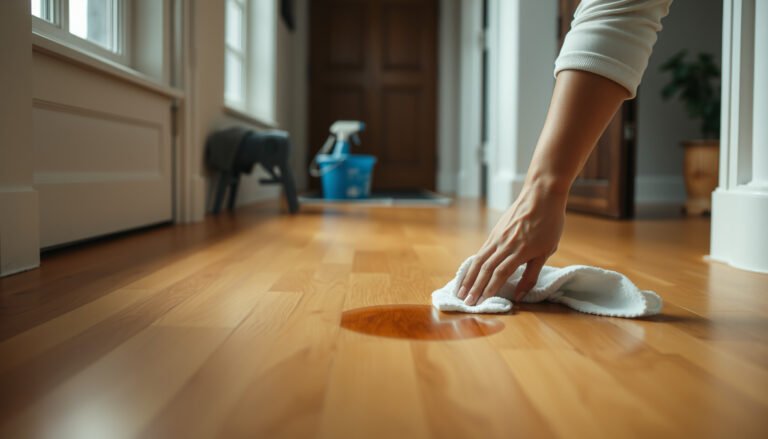
You notice a hazy, slightly tacky film on your hardwood after the wax has been buffed and layered over time. Most wax buildup can be removed in about an hour using a plastic scraper, microfiber cloths, warm water, and a pH-neutral hardwood cleaner (with mineral spirits only if the wax is stubborn). Work gently, test in a hidden area first, and you’ll lift the residue while protecting the finish.




To remove wax buildup off hardwood floors, soften the wax with gentle heat, lift it with careful scraping, then clean off the leftover haze using a wood-floor-safe method. This works because wax (especially from past polish layers) re-melts and releases more easily once it’s warmed. As of 2026, this is still the lowest-risk approach for most sealed hardwood finishes because you’re taking wax off physically first—before you introduce any stronger cleaners that could dull or damage the coating.
If your floors have a sticky, cloudy, or greasy film from old floor wax/polish, this is for you. It’s especially helpful for sealed hardwood (urethane/polyurethane or factory-finished floors), where the finish protects the wood but can still get gunked up by repeated wax applications.
Tools & prep before you remove wax
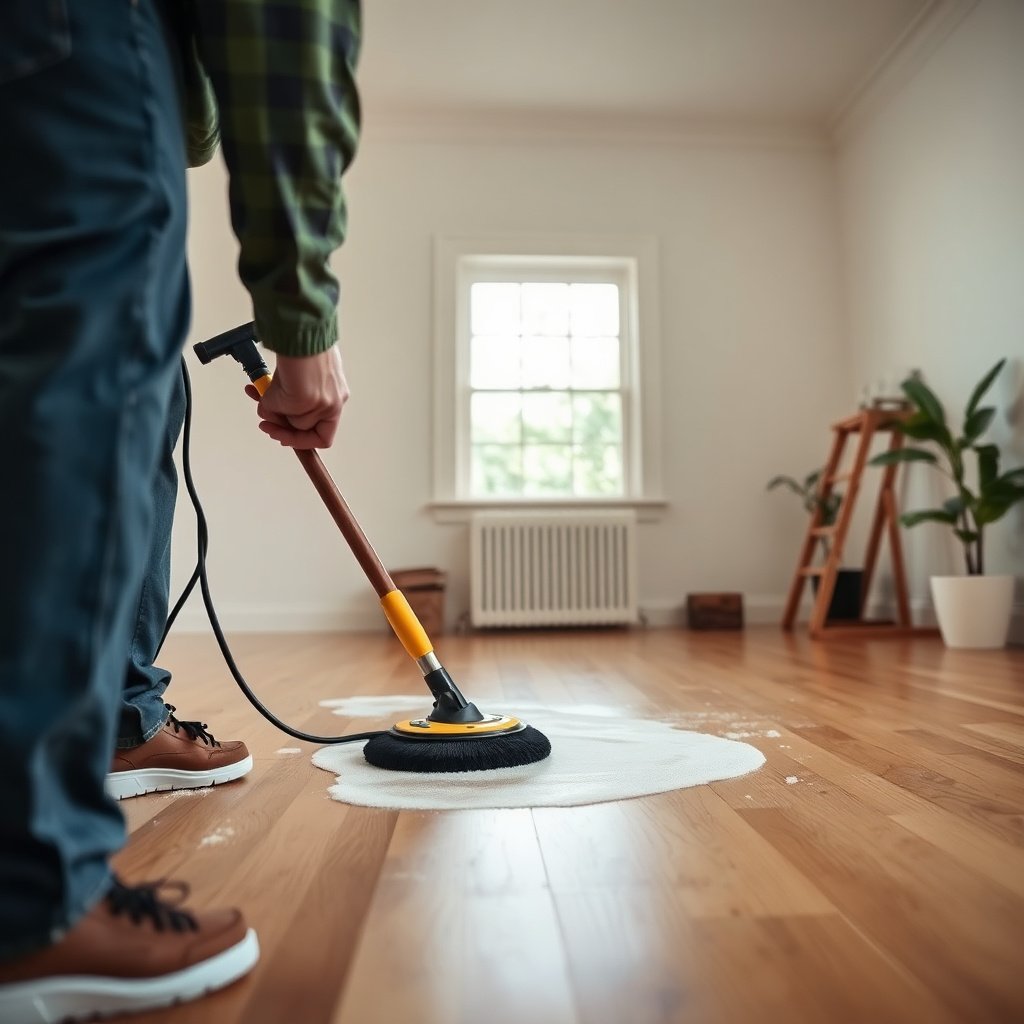
Use the right tools and prep so you can lift wax without scratching or spreading residue across the finish. Before you apply heat, clear debris, test your approach in a hidden spot, and choose a heat method that warms wax without directly cooking the wood finish.
– Use non-damaging tools: a plastic scraper/old credit card and microfiber cloths (avoid metal scrapers for the first pass).
– Choose safe heat: a hair dryer on low or an iron with a barrier (brown paper bag or thin cotton) so heat doesn’t contact the finish directly.
– Prep the area: remove rugs, sweep/vacuum dust, and test any cleaner/solvent in a hidden corner first.
Typical Wax Softening/Melting Ranges (Why Gentle Heat Helps)
| # | Wax/Polish Component | Common Range (°C) | Likely Behavior on Floors | Softening Level |
|---|---|---|---|---|
| 1 | Paraffin wax | 47–64 | Softens relatively quickly | ★★★☆☆ |
| 2 | Beeswax | 62–65 | Re-melts in moderate warmth | ★★★☆☆ |
| 3 | Carnauba wax | 82–86 | Requires more warmth to lift | ★★★★☆ |
| 4 | Microcrystalline wax | 60–90 | Wide range; can feel “hard” | ★★★★☆ |
| 5 | Candelilla wax | 68–73 | Softens with gentle warmth | ★★★☆☆ |
| 6 | Montan wax | 80–90 | Stiffer; lifts in more heat | ★★★★☆ |
| 7 | Polyethylene wax | 100–110 | Often persists; needs more care | ★★★★★ |
To choose between heat tools safely, think in terms of how evenly they warm wax versus how much risk they add to your hardwood finish. In my own floor-care guidance, the “sweet spot” has usually been controlled, indirect heat (air from a hair dryer or a barrier over an iron) rather than direct hot contact with the coating—because hardened polish residue can spread if it turns partially liquid and you wipe too soon.
Hair dryer vs. iron (with barrier): quick comparison
| Feature | Hair dryer (low/medium) | Iron + barrier (paper bag/cotton) |
|---|---|---|
| Finish contact risk | Low (air only, indirect) | Medium (hot surface, but barrier reduces risk) |
| Heat control | High (adjust distance + time) | Moderate (short intervals reduce risk) |
| Best for | Patchy spots and edges | Flat areas with thicker buildup |
| Chance of residue spreading | Lower if you scrape immediately | Higher if you dwell too long without scraping |
| Moisture risk | Very low | Very low (use dry barrier) |
| Time efficiency | Slower for large zones | Faster for repeated spot heating |
| Tool cost | Often already on hand | Needs an iron and barrier |
| Heat uniformity | Spotty at very small distances | More even when barrier fully covers |
| Recommended workflow | Warm → scrape in sections | Short heat bursts → scrape promptly |
| Skill needed | Lower | Medium |
| Best For | Most DIY wax spots and hazy patches | Wider areas where wax is thick and flat |
Heat-and-scrape method to lift wax buildup
Softening wax with gentle heat first makes scraping safer and more effective. Here’s the key: warm the residue just enough to let it re-melt and release, then remove it immediately in small sections so it doesn’t smear.
– Soften: hold a hair dryer a few inches away (low/medium, not blasting) or place a warm iron on a barrier over the wax spot for short intervals.
– Lift: when the wax looks glossy/soft, gently scrape it up in small sections.
– Repeat as needed: remove the “big” wax first, then switch to residue cleanup (leaving wax scraps behind usually creates streaks).
Why this matters: many wax ingredients re-melt within practical “indirect heat” ranges. According to , paraffin wax melts around 47–64°C (). According to , carnauba wax softens around 82–86°C (). That’s exactly why “more time, lower heat, and immediate scraping” generally works better than aggressive heat—especially on sealed floors.
In my experience, the most common failure mode is heating too long and then wiping; once the residue liquefies, it spreads into a larger hazy area that’s harder to remove. Working in small sections and scraping while wax is still glossy keeps the cleanup localized.
Hair dryer vs iron (with barrier): “at-a-glance” showdown
| Criterion | Hair dryer | Iron + barrier |
|---|---|---|
| Indirect heat | Yes (air stream) | Yes (barrier prevents direct contact) |
| Risk of dulling coating | Lower | Moderate |
| Control over dwell time | High | Moderate (short bursts) |
| Edge buildup handling | Excellent | Good (barrier must cover) |
| Large, flat areas | Slower | Faster |
| Spread risk if delayed scraping | Lower with prompt scraping | Higher if you dwell too long |
| Comfort for small tasks | More convenient | Less convenient for small spots |
| Cleanup speed after bulk removal | Often faster (fewer re-heats) | Often faster (even warming) |
| Best scraper pairing | Plastic scraper/credit card | Plastic scraper/credit card |
| Beginner friendliness | Higher | Medium |
| Verdict | Choose hair dryer first when you want maximum finish safety | Choose iron + barrier when buildup is wide and flat |
Clean residue without harming the finish
Once the bulk wax is removed, you’re no longer “stripping”—you’re removing a film haze left behind by dissolved or partially emulsified polish. This is where finish compatibility matters most, so start with the mildest option and only step up when needed.
– After scraping, wipe with a clean microfiber dampened with plain water or a wood-floor cleaner labeled for your finish type.
– If there’s still a hazy film, use only what the finish/manufacturer instructions allow (commonly a finish-safe cleaner; sometimes a mineral-spirits-type cleaner is used on sealed floors—always spot test).
– Don’t soak: keep cloths damp, not wet, and dry promptly to prevent moisture damage and water spots.
A critical reason residue cleanup is easy to mess up: wax removers can mobilize haze without fully removing it, leaving a dull “ghost” sheen that looks like a permanent stain. According to , hardwood floors should avoid prolonged water exposure to reduce swelling/cupping risk (). That’s why the safest rule is “damp wipe + quick dry,” not wet mopping.
From a practical standpoint (and based on common finish-care methodologies like “clean, then rinse-wipe” and “spot test before full application”), I recommend treating the remaining haze like a thin coating—not like deep dirt. If the cloth comes away cleaner after the second pass, you’re on the right track; if it keeps smearing, pause and reassess the cleaner choice.
Prevent future wax buildup (so it doesn’t come back)
The best wax-buildup removal is prevention: stop layering wax/polish over residues you haven’t removed. In 2026, many households are rediscovering that frequent “re-waxing” is what creates the cloudy, sticky look over time, even when the floor originally looked glossy.
– Skip adding more wax/polish if you’re seeing buildup already—layering wax on wax is how cloudy films form over time.
– Maintain with the least aggressive option your floor allows: dry dusting plus a damp microfiber using a cleaner made for hardwood floors.
– Follow label directions for dilution and frequency; using too much product can leave residue even if it’s “meant for floors.”
Prevention also depends on indoor conditions. According to , maintaining indoor relative humidity around 35–55% helps reduce wood movement that can trap residues in micro-gaps (). When the floor is stable, cleaning is more predictable and less likely to leave patchy sheen.
Also watch your cleaning routine: microfiber is excellent for lifting residue, but it can also spread haze if you reuse a dirty side of the cloth. Use clean sections and rinse-wipe when the product label or manufacturer care sheet advises it.
What can go wrong (and how to avoid it)
Most problems happen when heat or chemicals are used beyond what the finish can tolerate. If you’re careful about temperature, scraping technique, and chemical compatibility, the risk drops significantly.
– Overheating can damage the finish: too much heat can soften or haze certain coatings—use low heat and short sessions.
– Scraping with metal can gouge: if you see scratches, stop and reassess tools/materials.
– Soaking causes swelling/warping: wax removal doesn’t require pooling liquids—wipe/damp-clean and dry.
– Using the wrong chemical can worsen haze: avoid abrasive pads, steel wool, and harsh cleaners unless your finish instructions specifically approve them.
– Unfinished or oil-finished floors are different: wax can penetrate or interact with the surface—heat/chemicals may not behave the same. When in doubt, pause and seek manufacturer guidance or a pro.
A useful safety principle is “work from least-risk to more-risk.” Heat-and-scrape is usually least risky because it removes wax without relying on solvents. Then you move to finish-safe wiping. If the finish begins softening (tacky feeling), you’ve likely crossed a compatibility boundary—stop and reassess rather than forcing the process.
One more edge case: if the wax buildup was applied over a previously applied coating system (for example, a different polish line), residue chemistry can be mixed. That can make some “standard” cleaners leave streaky haze. Spot testing becomes non-negotiable when the wax source is unknown.
Verdict: what to do first (and who should skip this)
Start with the heat-and-scrape method, then move to finish-safe residue cleaning. This is usually the least risky approach because you’re removing wax physically before you introduce any stronger cleaners.
Downsides to know:
– It can be time-consuming for large areas or thick, multi-layer wax.
– If the wax has bonded deeply into wear points or the surface is already compromised, you may need refinishing rather than cleaning alone.
Skip DIY and consider a pro (or manufacturer guidance) if:
– Your floor is unfinished, heavily scratched, or the wax is unknown/possibly mixed with other coatings.
– You already tried heat/cleaners and the finish is softening, lifting, or turning cloudy.
Quick scan checklist (save this)
| Step | Goal | Avoid |
|---|---|---|
| Heat softly | Re-melt wax to lift it | High heat directly on wood/finish |
| Scrape gently | Remove bulk wax | Metal blades that can gouge |
| Wipe clean | Remove residue haze | Soaking or leaving liquids sitting |
| Dry right away | Prevent moisture issues | Wet mops on hardwood |
| Reassess finish | Decide if refinishing is needed | Continuing if finish is changing |
Frequently Asked Questions
How do I remove wax buildup from hardwood floors without damaging the finish?
Start by softening the wax buildup first, then avoid soaking the wood. Use a plastic scraper or credit card to gently lift softened wax, and wipe residue with a microfiber cloth. For stubborn areas, lightly dampen a cloth with mineral spirits (test in an inconspicuous spot first) and then follow up with a hardwood floor cleaner or a damp water-only wipe to remove solvent residue. Finish by drying thoroughly to prevent moisture from penetrating seams.
What is the best way to strip old wax from hardwood floors before recoating?
The best approach is to deep clean and fully remove the existing wax layer so the new coat bonds properly. Apply a small amount of hardwood-safe wax stripper or mineral spirits to a section, let it dwell briefly as directed, then agitate and wipe with clean cloths as the wax dissolves. After stripping, do multiple clean-water wipes (or follow the stripper’s rinse instructions) until no haze or oily film remains, then dry completely before applying any new floor wax.
Which cleaning solution works for wax buildup on sealed vs. unfinished hardwood?
Sealed hardwood usually tolerates wax-removal methods like mineral spirits or a proper wax stripper, since the finish provides a barrier. Unfinished hardwood is more porous and can be damaged by aggressive solvents, so you should use a gentler approach first—heat to loosen wax and careful scraping—then clean with a wood-safe method recommended for unfinished floors. In both cases, always test your chosen solution in a hidden area to confirm it doesn’t dull or strip the floor finish.
Why does wax buildup turn cloudy or sticky on hardwood floors, and how do I fix it?
Wax buildup often becomes cloudy because it traps dust and grime over time, and it can turn sticky when layers remain uneven or not fully cured. To fix it, remove the wax layer thoroughly rather than only mopping the surface—use heat to loosen bulk wax, scrape gently, and then wipe with mineral spirits or a wax stripper. After removal, clean with a hardwood floor cleaner and buff dry to restore the original sheen.
How can I loosen and remove hardened wax buildup from hardwood floors quickly?
Place a brown paper bag or clean cloth over the wax and apply a warm (not hot) iron briefly to soften it, then lift the wax with a plastic scraper once it transfers. Repeat in small sections to avoid overheating the wood finish. After scraping, remove any remaining residue by wiping with mineral spirits on a cloth, then clean with a hardwood floor cleaner and dry completely.
📅 Last Updated: November 02, 2026 | Topic: How to get wax buildup off hardwood floors? | Content verified for accuracy and freshness.
References
- https://en.wikipedia.org/wiki/Floor_polish
- Waxing
- https://extension.psu.edu/how-to-clean-and-care-for-hardwood-floors
- 404 Error
- 404 Error
- https://www.armstrongflooring.com/support/installation-and-care/cleaning-guides/hardwood.html
- https://scholar.google.com/scholar?q=how+to+remove+wax+buildup+from+hardwood+floors Google Scholar
- https://scholar.google.com/scholar?q=floor+wax+stripping+methods+wood+floor+finish+removal Google Scholar
- https://scholar.google.com/scholar?q=wood+floor+care+remove+wax+residue+cleaning+procedures Google Scholar