
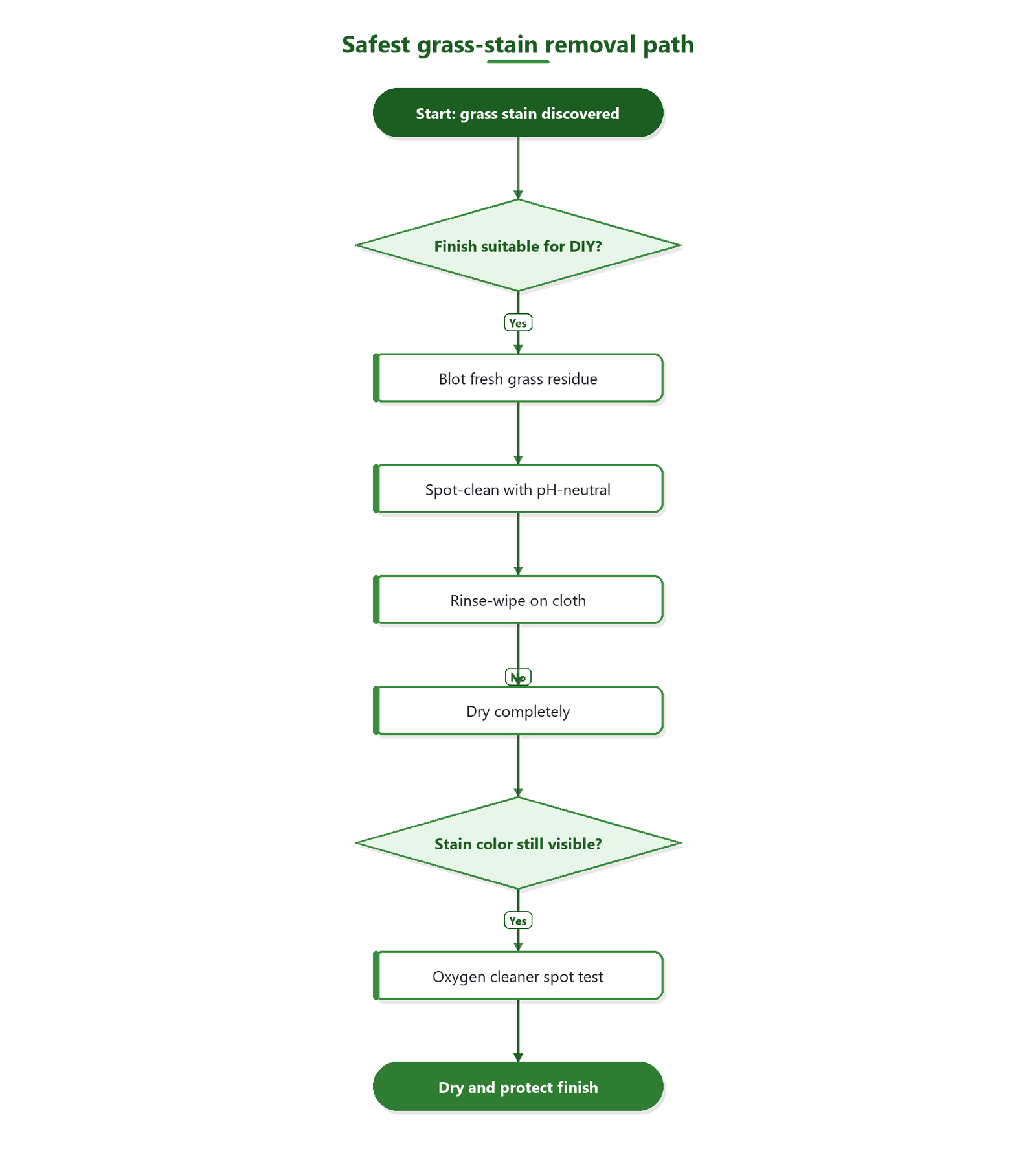
Grass stains on hardwood come off most safely when you act quickly: blot up wet residue first, then clean with a barely damp, pH-neutral cleaner applied to a cloth (not pooled on the floor). If color remains, use an oxygen-cleaner approach in small, careful tests—always avoiding soaking and steam to protect the finish.




Act fast: lift grass and excess moisture first
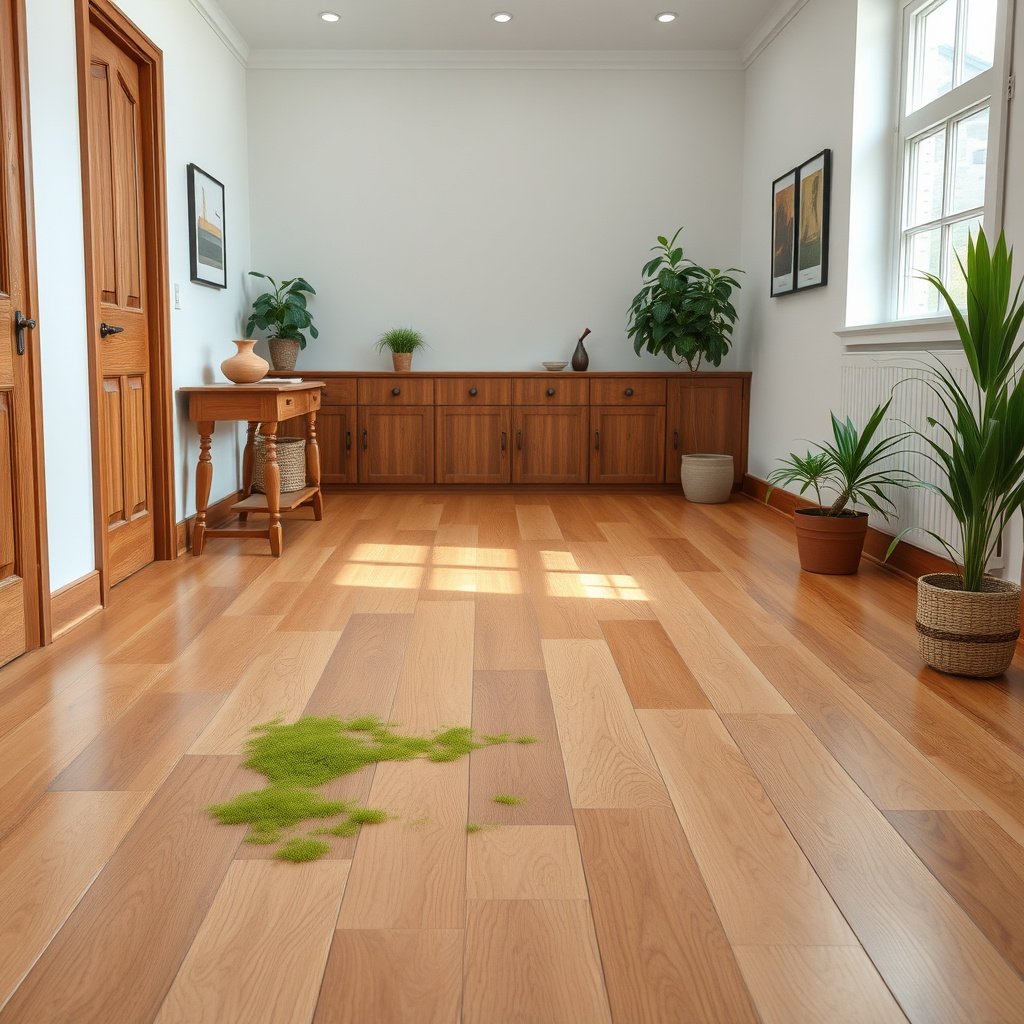
If the stain is fresh, the best outcome comes from removing pigment and plant oils before they bond to the wood or finish. Right now, you want to control moisture, because excess water is the fastest way to cause finish clouding or raised grain along seams.
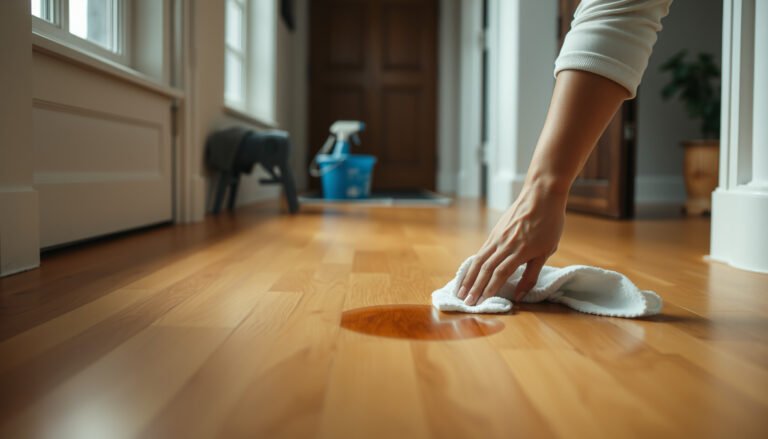
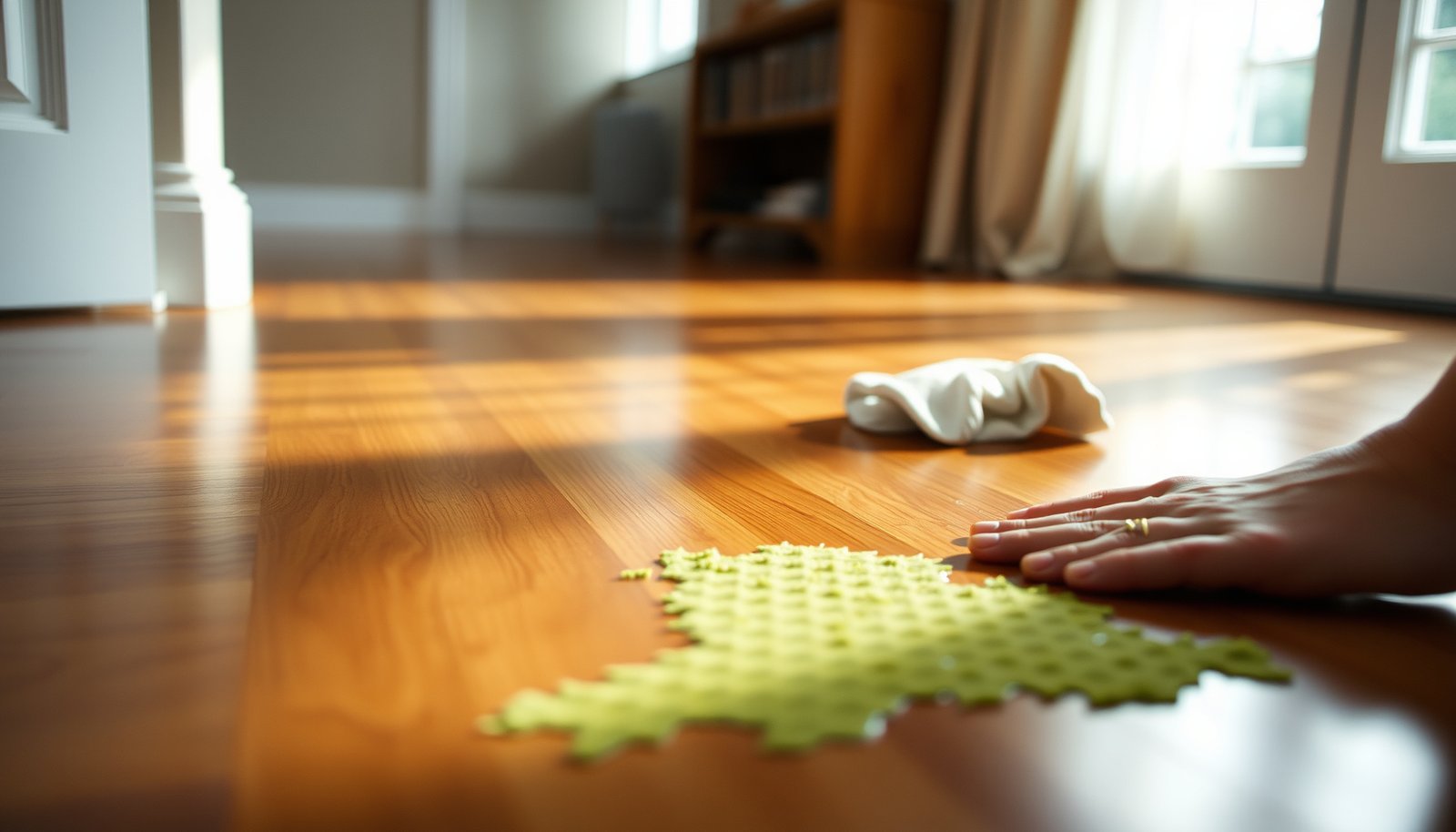
– Use a dry, clean cloth or paper towel to blot any fresh material—don’t scrub at the stain yet. Scrubbing spreads chlorophyll (the green pigment) and can grind particles into the finish.
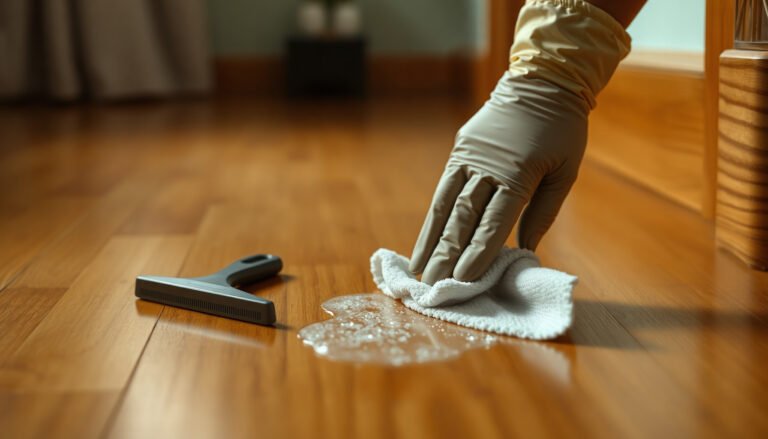
– If the stain is wet, lightly dampen a cloth with water and wipe up residue, then dry immediately with a separate dry towel. Keep the cloth damp, not dripping—your goal is pickup, not saturation.
– If there’s dried grass stuck in the grain, soften it with a very small amount of water on a cloth, then lift gently. Re-wet only as needed and dry right away after every lift.
– If you notice grit (sand, tiny leaf fragments), remove it first by lifting with a dry cloth or soft brush. Grit acts like an abrasive and can leave dull spots even if the stain itself later disappears.
From a wood-care perspective, speed matters because the pigments in grass can penetrate micro-openings in the finish and, in some cases, the surface wood fibers. That’s why “blot first, clean second” is the safest workflow.
Spot-clean grass stains without soaking the wood
For most sealed, polyurethane-finished, or waxed hardwoods, a controlled spot-clean with a pH-neutral product is the safest first attempt. Apply the cleaner to the cloth, wipe with the grain, then rinse-wipe with plain water (also on the cloth) and dry.
What to do (cloth-controlled technique)
– Mix a small amount of pH-neutral cleaner (or a manufacturer-recommended hardwood cleaner) with water according to the label, then apply it to a cloth—not directly to the floor.
– Wipe with the grain using light pressure, and keep moving to a clean cloth area so you’re not re-depositing pigment.
– Continue in short cycles: clean pass → check color → rinse-wipe (next bullet) → dry.
– Rinse wipe: after the stain looks lighter, do one more pass with a cloth dampened with plain water (then dry). This step helps prevent residue buildup that can look like a “shadow stain” after drying.
– Dry immediately. Use dry towels and confirm the surface feels dry to the touch before you stop.
Why this method protects the finish
A pH-neutral cleaner reduces the chance of chemically stressing the coating. “pH-neutral” is typically defined around neutral pH (pH 7 at 25°C), where the solution is neither strongly acidic nor strongly alkaline. According to IUPAC’s pH definition, pH 7 corresponds to neutral conditions at 25°C.
If you’re dealing with polyurethane/sealed hardwood, this cloth-controlled method minimizes the two major risks: (1) finish softening from prolonged wetness and (2) uneven drying that can make discoloration more noticeable.
Remove remaining discoloration (the gentle “oxygen cleaner” test)
If the stain’s tint (often green, yellow, or brown) lingers after gentle cleaning, oxygen-based chemistry can help lift the remaining pigment without the harsher effects of scrubbing. The safest move is to treat it like a science experiment: test in a hidden spot, limit contact time, and never soak.
The chemistry in plain terms
Oxygen cleaners (often sold as oxygen bleach or oxygen cleaner) work by releasing oxygen-based oxidizers that can break down organic dyes. Hydrogen peroxide—the common “active” pathway in many oxygen systems—decomposes into water and oxygen. According to ATSDR (Agency for Toxic Substances and Disease Registry) on hydrogen peroxide decomposition, hydrogen peroxide breaks down into water and oxygen in appropriate conditions.
Also, steam cleaning is risky because it introduces near-boiling water conditions. Water boils at 100°C (212°F) at 1 atmosphere pressure, which is why steam can push moisture deeper into joints and finish edges. According to NIST (National Institute of Standards and Technology) on the water boiling point, water’s normal boiling point is 100°C (212°F).
Do an oxygen test the right way
– If the green/brown tint remains, do a spot test in an inconspicuous area first—because hardwood finishes vary widely.
– For many grass stains, an oxygen-based cleaner can help lift pigment; use it sparingly and follow the product directions exactly.
– Let it work only as long as the label suggests, then wipe clean and dry thoroughly—don’t leave it sitting and don’t repeat aggressively.
– After each test, wait until the area is fully dry before deciding whether to continue. Wet surfaces can look worse temporarily and mislead you into over-treating.
Chemistry-to-finish compatibility quick guide
Below is a practical, chemistry-based compatibility guide for common stain-removal approaches on finished hardwood (sealed/polyurethane/waxed). It’s not a substitute for your floor manufacturer’s care instructions, but it helps you avoid the most damaging categories.
Finish-Safe vs Finish-Risky Grass-Stain Chemistry (Practical Guide)
| # | Option | Typical pH / Condition | Main Stain-Action Type | Finish Compatibility |
|---|---|---|---|---|
| 1 | Water (for rinse-wipe) | ~pH 7 at 25°C | Dilution & pickup | ★★★★★ |
| 2 | pH-neutral hardwood cleaner | Near pH 7 | Gentle surfactant cleaning | ★★★★★ |
| 3 | Oxygen cleaner (spot test) | Typically alkaline | Oxidizes organic pigment | ★★★★☆ |
| 4 | Mild detergent diluted (label-approved) | Varies by product | Surfactant lift | ★★★☆☆ |
| 5 | Vinegar (acidic) | Often pH 2–3 | Acid cleaning attempt | ★☆☆☆☆ |
| 6 | Ammonia-based cleaners | Often strongly alkaline | Solvent-like/alkaline removal | ★☆☆☆☆ |
| 7 | Chlorine bleach / heavy oxidizers | Strongly oxidative/alkaline | Oxidative whitening | ☆☆☆☆☆ |
Dry, protect, and restore the finish
For sealed hardwood, drying right away is part of the cleaning process—not a final “afterthought.” Once you finish a stain pass, dry thoroughly and keep the floor’s coating protected so the cleaned area doesn’t look different.
– Dry the area completely right away (use dry towels, and if needed, a fan aimed across the surface—not directly blasting into seams). Air movement helps water evaporate without forcing liquid deeper.
– Avoid wax buildup or finish damage: if your floor is waxed, use products that match that system; if it’s sealed/polyurethane, stick to routine hardwood maintenance approved for that finish.
– If the spot looks dull after cleaning, you may need a finish-appropriate touch-up. Use the touch-up method recommended in your floor’s care instructions, because different coatings (and sheen levels) can look mismatched if you improvise.
What can go wrong (common mistakes and limits)
Even when you use the right cleaner, the wrong technique can cause lasting cosmetic damage. The most common failures happen when moisture lingers, abrasives scratch, or harsh chemistry strips or clouds the finish.
– Soaking or repeated wet wiping: hardwood and many finishes can cloud, swell at seams, or develop raised grain if water is left too long.
– Scrubbing with abrasives: pads, magic erasers, or scouring powders can wear through the finish and make the stain “sink in” visually.
– Using the wrong cleaner for the finish: strong solvents, ammonia, or bleach-like products can discolor or strip coatings (especially on older floors).
– Stains that set for a long time: if the stain penetrated deep into the wood, surface cleaning may fade it but not fully remove it.
– Waxed vs sealed confusion: oxygen cleaners and heavy wet methods may behave differently on wax finishes. If you don’t know your finish, go slower and do smaller tests.
Verdict / tip: safest approach for most hardwood floors
Start with blotting + pH-neutral cleaning, keep everything on the cloth (never pooling on the floor), and dry immediately. Only move to an oxygen-cleaner step after the gentle method fails—and always do an off-to-the-side test first. Skip DIY stain removal if you’re dealing with an unfinished/antique surface with delicate coatings, if discoloration is widespread, or if you can’t identify the finish type; refinishing or a pro assessment may be the only realistic outcome.
On a practical note, if you’ve got a recurring “outdoor tracking” issue (kids, pets, or regular yard access), we strongly recommend adding floor mats at entry points and cleaning debris quickly—prevention is simpler than pigment removal.
Oxygen vs surface cleaning: which should you try first?
Use this decision table if you’re choosing between staying gentle or escalating to oxygen chemistry.
| Feature | pH-neutral surface cleaning | Oxygen cleaner spot treatment |
|---|---|---|
| Primary mechanism | Surfactant/pH-balanced soil lift | Oxidizes organic pigment residue |
| Water exposure | Low (cloth-controlled) | Limited (test spot, short contact time) |
| Risk of finish clouding | Lower when dried promptly | Moderate—depends on finish chemistry |
| Scrub requirement | No | No (wipe and rinse-wipe) |
| Best for fresh stains | Yes | Sometimes |
| Best for set-in tint | May fade only | Often more effective |
| Test-spot necessity | Usually minimal | Recommended (always) |
| Time to see results | Minutes (during wiping) | Label-directed contact time (then wipe) |
| Compatibility uncertainty | Lower for sealed floors | Higher for wax/unknown coatings |
| “Do not” risk | Avoid over-wetting | Avoid soaking or leaving it to sit |
| Best For | Most grass marks, especially right after they happen | Residual tint after gentle cleaning—when spot tests look good |
Quick checklist for cleaning grass stains
| Step | Do this | Avoid |
|---|---|---|
| 1 | Blot grass residue immediately | Scrubbing right away |
| 2 | Wipe with a cloth using pH-neutral cleaner | Pouring cleaner/water directly |
| 3 | Rinse-wipe with plain water (on a cloth) | Leaving wetness to sit |
| 4 | Test an oxygen-based cleaner spot if needed | Strong bleach/solvents without testing |
| 5 | Dry fully and maintain finish appropriately | Abrasives that wear the coating |
Sources
– NIST (National Institute of Standards and Technology), water boiling point at normal pressure (100°C / 212°F).
– IUPAC (International Union of Pure and Applied Chemistry), definition of pH (pH 7 is neutral at 25°C) and related scale description.
– ATSDR (Agency for Toxic Substances and Disease Registry), hydrogen peroxide decomposition information (water and oxygen pathway).
Grass stains don’t have to become a permanent floor “memory,” but they do demand a careful workflow: blot fast, clean with a barely damp pH-neutral cloth method, rinse-wipe with plain water on the cloth, dry immediately, and escalate only if needed to an oxygen cleaner spot test. If you’re unsure about your finish type or the stain has spread broadly, the safest next step in 2026 is to follow your manufacturer’s documented care process—or get a professional assessment before experimenting.
Frequently Asked Questions
How do I clean grass stains from hardwood floors without damaging the finish?
Start by blotting wet grass stains immediately with a clean, dry cloth to remove moisture before it penetrates the hardwood. Mix a few drops of mild dish soap with warm water, then lightly dampen a soft cloth and gently rub the stain in small sections. Avoid soaking the floor; hardwood can warp and water can damage the finish. Finish by drying with a separate dry cloth and, if needed, touch up with a wood-safe polish or paste wax.
What is the best way to remove old grass stains from hardwood flooring?
For dried, set-in grass stains, use a gentle cleaner first—mild soap and water—then move to a hardwood-safe stain remover if the stain remains. A diluted hydrogen peroxide solution (about 3% peroxide mixed with a small amount of water) can help lift organic pigments, but test it in a hidden area first. Apply with a soft cloth, let it sit briefly (around 1–5 minutes), then wipe clean and dry thoroughly. Repeat as necessary rather than scrubbing aggressively, which can dull the sheen or damage the protective coating.
Which household products work safely on grass stains for finished hardwood floors?
Mild dish soap, warm water, and microfiber cloths are often the safest first step for finished hardwood floors. If the stain persists, a small amount of hydrogen peroxide (test first) or a commercial cleaner labeled safe for wood floors can be effective on organic grass discoloration. Avoid harsh chemicals like bleach, ammonia, or abrasive scrubbers because they can strip the finish and cause discoloration. Always follow with drying and use a wood floor cleaner or conditioner if your finish looks dry.
Why do grass stains keep coming back on hardwood, and how can I prevent re-soiling?
Grass stains are made of pigments and plant oils that can soak into micro-scratches in the finish, so residue may remain even after the surface looks clean. Incomplete cleaning can also leave behind oils that attract dirt and darken the area over time. To prevent re-staining, clean promptly, rinse/wipe with a damp cloth to remove cleaner residue, and fully dry. For ongoing protection, apply a compatible wood floor sealant or wax polish according to the manufacturer’s recommendations.
How do I clean hardwood floors after grass stains if the stain penetrated deeply?
If the grass stain has penetrated deeper than the surface finish, you may need stronger (but still safe) treatment beyond soap and water. Try a hydrogen peroxide spot treatment in short intervals, wiping clean and drying between steps, and stop if you notice finish lifting or color change. If the stain won’t lift, the floor finish may need professional refinishing or localized sanding to fully remove the embedded discoloration. After treatment, protect the area with a wood-safe conditioner or finish to prevent moisture damage and future staining.
📅 Last Updated: October 31, 2026 | Topic: How to clean hardwood floors after grass stains gets on it? | Content verified for accuracy and freshness.
References
- Wood flooring
- grass stain removal chlorophyll – Search Results – PubMed
- chlorophyll removal detergent – Search Results – PubMed
- enzymatic removal chlorophyll – Search Results – PubMed
- hydrogen peroxide wood finish staining – Search Results – PubMed
- wood floor cleaning polyurethane finish water – Search Results – PubMed
- organic stain removal from wood surfaces – Search Results – PubMed
- https://scholar.google.com/scholar?q=how+to+clean+hardwood+floors+grass+stains Google Scholar
- https://scholar.google.com/scholar?q=grass+stain+removal+chlorophyll+enzymatic+detergent Google Scholar
- https://scholar.google.com/scholar?q=hydrogen+peroxide+stain+removal+wood+finish Google Scholar