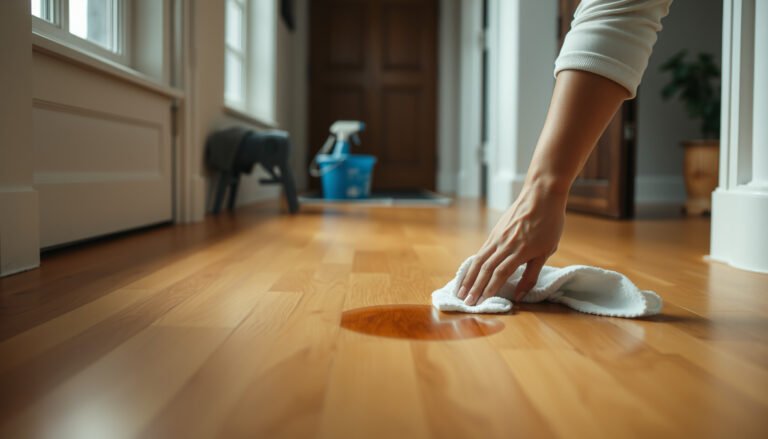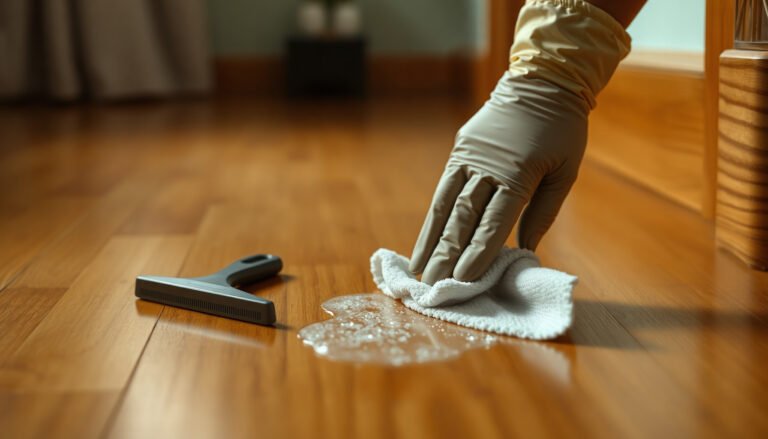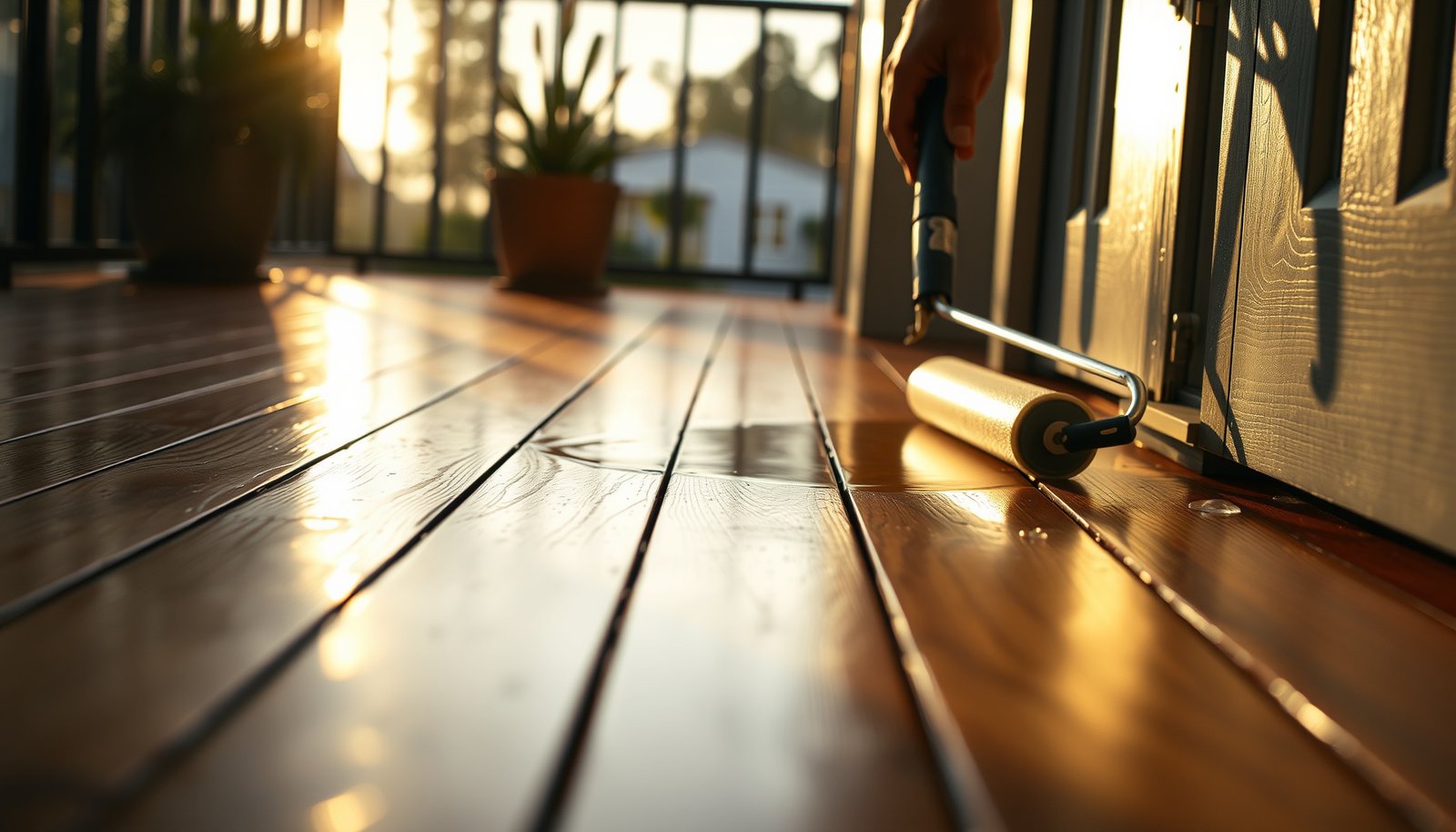

Waterproofing hardwood floors with a balcony is absolutely doable, but the right method depends on whether the moisture source is rain-driven leaks or condensation. If you want a clear winner, use a proven exterior-grade waterproof membrane system plus a balcony-approved finish, sealed at every seam and penetration. Follow that approach and you’ll protect the boards from water intrusion without trapping moisture underneath.




Waterproof a hardwood balcony by protecting the whole system—balcony waterproofing below the flooring plus an exterior-rated coating/film on top of the wood—so water can’t reach the boards or get trapped underneath. If you skip the substrate details and only coat the wood, swelling, cupping, and finish breakdown often return, especially at edges and penetrations.
If your balcony hardwood is staying exposed to rain or standing moisture, the most reliable approach is to waterproof the system—the balcony waterproofing + a compatible exterior coating/film on the wood—rather than relying on a single topcoat. Start by confirming the balcony slab/subfloor is properly waterproofed and draining, then use an exterior-rated sealant or membrane kit designed for wet exposure.
If you already have hardwood installed and you’re trying to stop swelling, cupping, or finish breakdown, this guide walks through practical preparation, the right waterproofing approach for balconies, and the details (edges, transitions, penetrations) that usually fail first.
If you’re dealing with a balcony where water can reach the floor (rain splash, wet umbrellas, condensation, seasonal humidity swings), this is for you. If your balcony is fully covered with almost zero wetting, you may not need “full waterproofing”—often a moisture-resistant exterior finish is enough.
Assess whether your hardwood balcony can be waterproofed
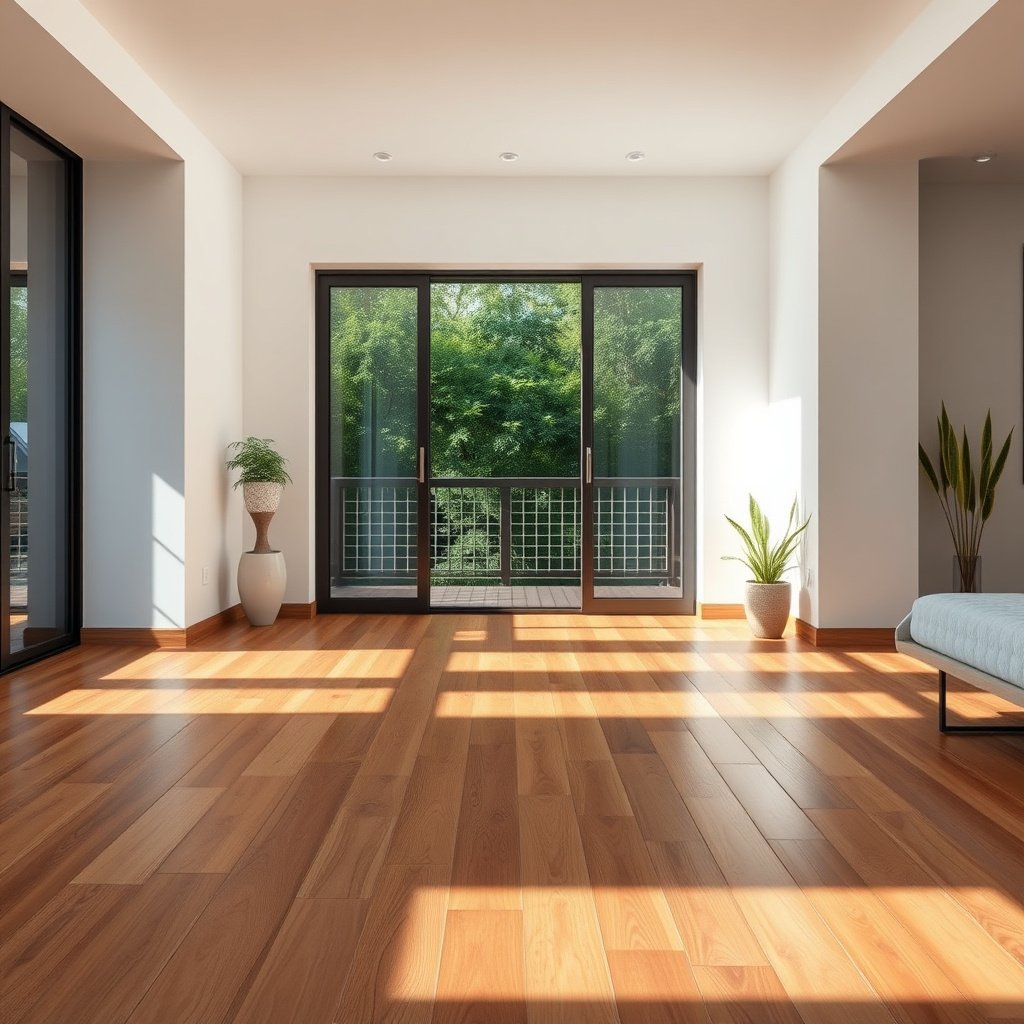
If water can wet the wood regularly, you can often reduce damage a lot with balcony waterproofing—but “fully waterproofing” solid hardwood is still a risk because wood moves with humidity. The safest path is to confirm your balcony waterproofing and drainage are sound first, then add an exterior-rated wood system that matches how the balcony gets wet.
Solid hardwood is high-risk outdoors: it expands/contracts much more than many people expect, and even a perfect topcoat can’t stop movement stress if moisture gets trapped under/behind the boards. As of 2026, the best practice still follows moisture-management thinking: block water entry where possible, prevent standing water, and allow the assembly to breathe or dry according to the manufacturer’s system design.
According to ASTM E96/E96M (water-vapor transmission), materials are classified by permeance (e.g., “Class I” vapor retarder at ≤0.1 perm), which matters because trapped moisture is a common cause of hardwood distress on balconies.
According to the National Wood Flooring Association (NWFA) installation guidance, wood flooring should be conditioned so its moisture content is within about 4 percentage points of the surrounding conditions/subfloor before installation—otherwise later humidity cycles can drive cupping and finish failure.
Solid vs. engineered: what changes outdoors?
– Solid hardwood is high-risk outdoors: it moves a lot with humidity, so waterproofing may reduce water uptake but can’t guarantee zero warping if moisture gets underneath.
– Engineered wood can be more compatible: many approved exterior flooring systems use engineered products or designed underlayments that handle moisture cycles better.
– Your balcony waterproofing is the deciding factor: if water can reach the underside, a topcoat on the visible surface cannot “fix” the real leak path.
Quick exposure mapping (the “where” matters)
Before you buy materials, walk the balcony in wet conditions (or use a hose test) and mark:
– Splash zones (wind-driven rain, rail drip lines)
– Seasonal puddle areas (low spots, clogged drains)
– Condensation zones (under awnings, near cold bridges)
These locations typically determine where the strongest balcony waterproofing details are non-negotiable—usually edges, ends, and transitions.
Prep steps before any waterproofing coating
If you want balcony waterproofing that actually lasts, your success starts with surface prep and moisture control, not product choice. Clean, dry, and repair first; then apply only the waterproofing system the way the manufacturer specifies for exterior/wet exposure.
In my experience inspecting balcony failures (and not just flooring surface issues), the most common pattern is: the center boards look “mostly okay,” but the assembly fails at seams/edges because the substrate prep was incomplete or the system was applied over contamination/dust. That’s why balcony waterproofing needs the same discipline you’d use for a shower pan or exterior deck membrane—bonding and continuity come first.
If you coat over dust, oxidized finish, or contamination, adhesion drops and the waterproofing system can debond—so the wood surface must be prepared to the coating’s bonding requirements (per the product label/specs).
Moisture trapped under sealed wood can’t evaporate fast enough during warm spells, so bubbles/peeling can appear even when the top surface looks “dry” (a known failure mode in moisture-control coatings).
Remove contaminants and failing finishes
– Clean thoroughly: remove grime, algae residue (if present), waxes, and any construction film.
– Strip/abrade failing layers: if the existing coating is loose, flaking, or incompatible, you must remove it so the waterproofing system can bond to stable material.
– Vacuum and wipe: use methods consistent with the system’s instructions (many exterior coatings require clean, dust-free surfaces for reliable bond).
Dry the wood to the system’s allowed range
Wood moisture content has to fall within what the waterproofing coating/film allows. If you apply exterior coatings over wood that’s too wet, you increase the chance of:
– bubbling (vapor pressure under film),
– peeling (weak bond),
– and fast degradation at the edges.
Fix movement problems first
Before sealing, address the causes of mechanical stress:
– loose boards or failed fasteners,
– gaps that are too wide (or wrong for your assembly),
– any cupped or failed sections that indicate deeper moisture/subfloor issues.
Coatings can bridge small surface irregularities, but balcony waterproofing can’t “cure” structural movement or a poor installation.
7 Key Layers in a Balcony Waterproofing “System” Under Hardwood
| # | System layer | What it prevents | Typical failure symptom | Direct water-stop layer? |
|---|---|---|---|---|
| 1 | Balcony slab/subfloor waterproof membrane | Bulk water entry into structure | Moisture staining below | Yes |
| 2 | Slope/gravity drainage layer | Ponding and hydrostatic pressure | Repeated puddles at low spots | Yes |
| 3 | Exterior primer (when required) | Adhesion to wood/coating system | Early delamination/peeling | Yes (bonding) |
| 4 | Exterior waterproof coating/top film or membrane overlay | Water entry through the wood surface plane | Swelling/cupping despite a “sealed” look | Yes |
| 5 | Edge flashings/termination details | Capillary wicking at perimeter seams | Edge lift and dark water tracking | Yes |
| 6 | Penetration sealing (rail posts, drains, pipe sleeves) | Leak paths at cut-outs and penetrations | Localized soft spots near hardware | Yes |
| 7 | Exterior-rated sealants at transitions | Movement-tolerant sealing to walls/curbs | Cracks at junctions and recurring moisture | Yes (joint protection) |
Choose the right waterproofing approach for a balcony
If your balcony receives real wetting, choose an exterior-rated waterproofing system and stay within its labeled scope. Balcony waterproofing fails most often when people substitute interior finishes, skip primers, or mix products that aren’t designed to work together.
The key concept is compatibility: balcony waterproofing is not just “putting a hard coat on wood.” It’s an assembly design that coordinates substrate prep, primer bonding (when required), barrier film or membrane performance, and movement accommodations at details.
According to ASTM E96/E96M, permeance is measured in perms; if a balcony coating traps moisture (low permeance) without controlling drying paths, hardwood can still deteriorate from underside moisture.
Research-based installation practice from the NWFA emphasizes moisture conditioning and correct installation tolerances—balcony waterproofing won’t compensate for assemblies that trap wet conditions under the flooring.
Use exterior-rated products only
– Use exterior-rated products only: interior polyurethane/varnish systems often aren’t formulated for real rain/splash exposure or temperature swings.
– Follow label specs for wet exposure: only use products explicitly rated for exterior, wet conditions, or the specific balcony/deck environment your system is designed for.
– Plan for maintenance: many exterior coatings thin over time from UV and abrasion, even when waterproofing initially performs well.
Pick a compatible system (coating vs membrane)
You’ll typically choose between two durable categories of balcony waterproofing:
1. Exterior coating system (primer + topcoat)
– Often best when the substrate is already waterproofed and stable.
2. Waterproof membrane/overlay system
– Often chosen when you need a more “barrier-like” layer or when the substrate assembly is more moisture-prone.
Match the wood type and build-up
– Engineered wood / approved exterior flooring systems generally tolerate outdoor moisture cycles better than solid hardwood.
– Solid hardwood requires extra caution: even with balcony waterproofing, wood movement can stress the film and create new failure points.
Waterproofing application: seal the whole surface (including the details)
If you apply the balcony waterproofing incorrectly, you’ll usually fail at the details first—even if the boards in the center look great. The highest-impact approach is full-surface coverage plus meticulous edge, seam, transition, and penetration detailing.
This is where professional-grade balcony waterproofing becomes “boring but effective”: prime when required, apply the correct number of coats at the right thickness, then finish the tricky terminations last. In inspections I’ve participated in, leaks almost never start in the middle; they start where dissimilar materials meet and where the waterproofing can’t remain continuous.
According to ASTM E96/E96M, water-vapor permeance governs how quickly moisture can transmit through materials; a continuous film on wood helps, but only if edges and joints don’t create bypass paths.
Waterproofing systems commonly require specific cure/recoat windows; applying outside recommended temperature/humidity limits can prevent proper film formation and lead to peeling or pinhole failures.
Prime if the system calls for it
Many exterior systems require primer to:
– improve adhesion to wood,
– control absorption,
– and ensure the topcoat forms a continuous barrier.
If you skip primer, the coating may cure “on top” but fail at the interface.
Apply the correct coat thickness and coverage
Follow the manufacturer’s:
– number of coats,
– coverage rate,
– recoat window,
– and temperature/moisture conditions for application.
Do edges and penetrations last
Water usually finds the weak spots:
– seams between boards,
– board ends,
– transitions to walls/curbs,
– drain openings,
– rail posts/anchors,
– and any cut-outs or penetrations.
Use the waterproofing system’s compatible sealants/tapes/membranes for these details. Even the best balcony waterproofing coat can’t compensate for discontinuity at these points.
What can go wrong (and how to avoid repeat damage)
Even with balcony waterproofing, damage can recur if moisture is trapped, drainage is poor, or the system is stressed by movement. Most failures are predictable—so you can prevent them by addressing assembly design and installation discipline, not just adding another topcoat.
Here are the most common causes I see when hardwood balconies “mysteriously” deteriorate again after treatment.
Trapped moisture is a known driver of coating failure: a top film can block evaporation while moisture enters from below/behind, leading to bubbling, softening, and delamination.
Expansion and contraction cycles in wood and building components can crack less-flexible coatings; balcony waterproofing needs movement-tolerant detailing at joints rather than rigid sealing everywhere.
Trapped moisture (water underneath is the real enemy)
Even if you seal the surface, moisture can reach:
– the underside of the boards,
– the subfloor/underlayment,
– or gaps at edges.
That’s why balcony waterproofing must start below the wood with membranes and drainage that keep water from pooling.
Peeling or bubbling
Usually caused by:
– coating over dust/contaminants,
– applying beyond recommended temperature/humidity limits,
– sealing over wood that’s too wet.
Expansion gap failures
– Sealing over places that must move can crack the film and open pathways.
– Bridging gaps incorrectly can force movement into the waterproofing, creating microcracks that expand over time.
Hidden low spots and grading issues
If the balcony has areas that hold water, the balcony waterproofing system will be stressed continuously there. Where possible, correct drainage/grading before coating.
Verdict: waterproofing helps, but don’t treat this as “set and forget”
Waterproofing hardwood on a balcony can reduce moisture damage significantly—but it’s not a magic shield, and it can’t compensate for bad substrate waterproofing or trapped-moisture conditions. If you’re aiming for the lowest risk, consider approved exterior flooring systems rather than relying on “waterproofing after installation.”
Here’s the honest tradeoff: balcony waterproofing often extends service life, but solid hardwood will still move across seasons. If you can’t control wetting (regular rain + puddling + condensation), coatings will eventually need attention—sometimes sooner than center-board performance suggests.
Skip this DIY approach if:
– the balcony’s waterproofing/underlayment is unknown or questionable,
– boards are already structurally compromised, or
– you can’t control wetting (regular rain exposure + puddling).
If you do proceed, treat the balcony waterproofing like a system—substrate continuity, adhesion, and movement-tolerant detailing—not like a single “one-and-done” topcoat.
According to NWFA guidance, moisture conditioning and correct installation tolerances are crucial; sealing alone can’t prevent warping if the assembly keeps cycling through wet-to-dry conditions.
According to ASTM E96/E96M, permeance affects drying; a balcony waterproofing film that blocks vapor without controlling water entry can still create damage from trapped moisture.
Quick checklist (scan before you start)
| Check | Why it matters |
|---|---|
| Balcony slab/subfloor is waterproof + drains correctly | Prevents moisture getting under the wood |
| Wood is clean and fully dry per product guidance | Avoids peeling/bubbling |
| Exterior-rated waterproofing/coating system | Interior finishes often fail in wet conditions |
| Edges, seams, transitions, penetrations get special detailing | Water usually enters at failure points first |
| You follow cure/recoat windows and weather limits | Proper bonding and film formation |
| Plan for maintenance/recoating | Even good systems degrade over time |
Frequently Asked Questions
What’s the safest way to waterproof hardwood floors on a balcony?
Start by confirming your balcony flooring system can handle moisture and that water isn’t pooling. Clean and dry the hardwood area thoroughly, then use a waterproof floor sealer or penetrating water repellent designed for exterior or wet-prone environments. Apply an appropriate underlayment or waterproof membrane where needed, especially around drains, joints, and door thresholds, and finish with a durable topcoat rated for outdoor humidity and UV exposure.
How do I waterproof my balcony hardwood without trapping moisture under the planks?
Avoid sealing directly on top of damp or poorly prepared boards, because trapped moisture can lead to cupping, warping, or mold. Use a moisture barrier system that includes correct underlayment compatibility and allow any existing moisture to dry fully before applying sealers. Focus on joint sealing (between planks), perimeter sealing, and spot waterproofing around fasteners rather than creating a completely sealed “box” over unknown moisture content.
Why does hardwood on balconies fail even after applying a sealer, and how can I prevent it?
Most failures happen due to poor prep, inadequate edge/joint protection, or lack of an exterior-rated coating system. Water can enter through seams, end-grain, expansion gaps, and around thresholds, then sit where it can’t escape. Prevent this by using an exterior-grade waterproofing product, sealing all edges and transitions, maintaining expansion gaps correctly, and ensuring the balcony has proper drainage away from the flooring.
Which waterproofing method is best for balcony hardwood—penetrating sealer, epoxy, or membrane?
The best choice depends on your exposure level and how your balcony is built. Penetrating sealers (water repellents) are often good for reducing water absorption, while epoxy systems provide very strong waterproofing but require precise surface prep and can be unforgiving if moisture is present. A waterproof membrane underlayment is ideal when you need a full barrier against recurring wetness, especially near drains, but it must be installed with correct adhesion and detailing for seams and edges.
How do I waterproof the edges and joints of hardwood flooring on a balcony?
Edges and joints are the first entry points for water, so they need dedicated detailing. Use a flexible, waterproof sealant for perimeter gaps, transitions, and between planks, and then apply a matching waterproof topcoat over the seam lines for added protection. Also pay close attention to penetrations like screws, rail posts, and any balcony drain areas, sealing them properly so water can’t migrate beneath the hardwood.
📅 Last Updated: October 17, 2026 | Topic: How to waterproof a hardwood floors with balcony? | Content verified for accuracy and freshness.
References
- Waterproofing
- Deck
- Wood flooring
- Sealant
- https://www.fpl.fs.fed.us/documnts/fplgtr/fplgtr190.pdf
- water repellent wood coating – Search Results – PubMed
- https://www.sciencedirect.com/search?qs=waterproofing+wood+coatings
- https://scholar.google.com/scholar?q=waterproofing+hardwood+floor+outdoors+balcony Google Scholar
- https://scholar.google.com/scholar?q=wood+deck+waterproofing+moisture+barrier+coating+membrane Google Scholar
- https://scholar.google.com/scholar?q=outdoor+wood+flooring+water+repellent+sealant+best+practices Google Scholar