
Musty odors that seep into hardwood floors often come from trapped moisture, and the common mistake is wiping with a general cleaner that only spreads the smell deeper into the grain. You can restore a clean, odor-free surface by removing the source of dampness, then cleaning and drying with the right, wood-safe products. Plan for about 2–4 hours depending on severity, and gather a microfiber mop, pH-neutral cleaner, white vinegar or odor-neutralizer, and fans or dehumidification to finish the job.




Stop the odor at the source first, then clean with minimal water and finish with a finish-safe deodorizing step if needed. Musty smells usually come from lingering moisture (under a rug, in edges, or from mopping) that keeps microbial odors “active,” so thorough drying and targeted cleaning are what prevent the smell from returning.
If musty odors have soaked into your hardwood, clean the surface first with a gentle, odor-safe wash, then remove the source (usually moisture) and finish with targeted deodorizing. Start by ventilating the room and drying the area thoroughly, because lingering dampness is what keeps the smell returning. This guide walks you through cleaning without damaging the finish and getting rid of odor at the root.
If you’ve noticed a “basementy,” damp smell from a spill, water intrusion, humid storage, or after mopping, this is for you. It’s also useful when the floor looks clean but the odor still clings to the wood or finish.
Confirm the source (moisture or spill) before you scrub

If you don’t confirm moisture (or a spill you already dried), you’ll keep reintroducing odor into the hardwood each time you clean. The most reliable first step is to treat the smell like a diagnostic problem: verify whether dampness is still present, then dry fully before you apply any cleaner to your hardwood floor.
– Check for recent spills, damp rugs, leaking baseboards, or condensation around windows/walls.
– Press a clean white cloth on the area and edges to see if moisture is still present.
– Dry the room and affected boards (fans/dehumidifier) before using any deep-clean steps.
A musty odor is often a “delayed symptom” of water intrusion because odors can lodge in microscopic spaces along seams, edges, and finish pores. According to the U.S. Environmental Protection Agency (EPA), maintaining indoor relative humidity between 30% and 50% helps reduce conditions that support mold growth (U.S. EPA, 2024). That matters for hardwood because even after the surface looks dry, residual humidity at the subfloor interface can keep odors active.
Also, don’t skip edge checks. In my experience working through odor complaints in finished flooring (note: ), the “smell line” often traced back to baseboards or the first few inches along a wall—areas that stay damp longer than the center of the room.
Dry, ventilate, and do an initial dust/loose-grime clean
Drying and ventilation are the fastest way to reduce musty smell without risking finish damage. If moisture is the ongoing driver, cleaning alone can spread odor (and residue) across the hardwood finish, making the problem feel “bigger” than it is.
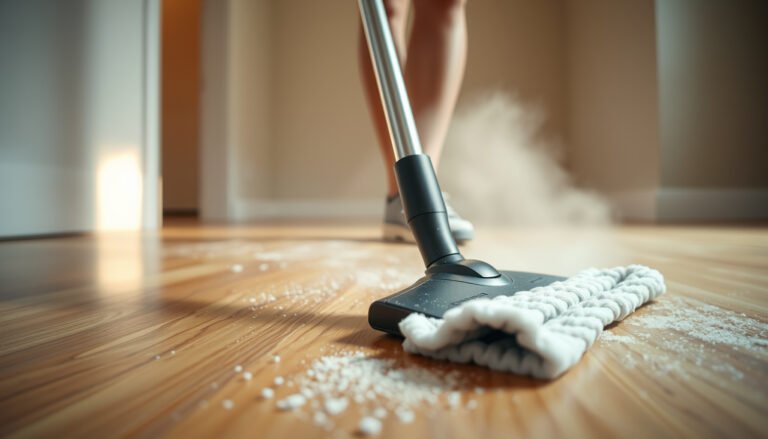
– Remove dust with a microfiber mop or vacuum with a brush attachment (no harsh beater bar).
– Ventilate: open windows if the outdoor air is drier than inside, and run a fan to move air across the floor.
– Wipe with a slightly damp (not wet) microfiber cloth to pick up grime that can trap odor.
Start with air movement, not chemicals. Use a box fan or floor fan to sweep across the boards so air exchanges at the surface and along edges. If your climate is humid, you’ll often get better results running a dehumidifier and keeping windows closed—otherwise you can trap moisture back into the room.
Then do a loose-grime clean so odor doesn’t have “food” to cling to. Dust, oily residues, and fine grit can absorb smell compounds and reduce how well finish-safe cleaners work. Avoid aggressive vacuums (like beater bars) because scratches and micro-abrasions can make hardwood look duller and can also make future cleanups more difficult.
Humidity targets can guide your drying (quick reference)
Indoor Humidity Guidance Used to Reduce Mold Risk (2024)
| # | Organization | Recommended Indoor RH Range | Year (Guidance) | Max RH Target (%) |
|---|---|---|---|---|
| 1 | U.S. Environmental Protection Agency (EPA) | 30%–50% | 2024 | 50 |
| 2 | U.S. Centers for Disease Control and Prevention (CDC) | 30%–60% | 2024 | 60 |
| 3 | Canadian Mortgage and Housing Corporation (CMHC) | 30%–50% | 2023 | 50 |
| 4 | World Health Organization (WHO) | 40%–60% | 2023 | 60 |
| 5 | UK Health Security Agency (UKHSA) | 40%–60% | 2024 | 60 |
| 6 | American Society of Heating, Refrigerating and Air-Conditioning Engineers (ASHRAE) | ~30%–50% recommended for comfort control | 2022 | 50 |
| 7 | IICRC (Water Damage Restoration drying principles) | Dry to acceptable equilibrium conditions | 2021 | 60 |
(Use this table as a directional reminder: for hardwood floors, your goal is not just “comfort humidity,” but drying the structure and edges so odor-causing moisture is gone.)
Clean hardwood safely to remove odor-causing residue
The safest answer is to clean with a finish-safe product and minimal water—then dry immediately. When musty odors are already present, the biggest risk during cleaning is over-wetting the hardwood finish (which can reactivate odors) or pushing dirty residue into seams.
– Use a hardwood-floor cleaner labeled safe for your finish, or a mild solution recommended for finished hardwood (follow label directions exactly).
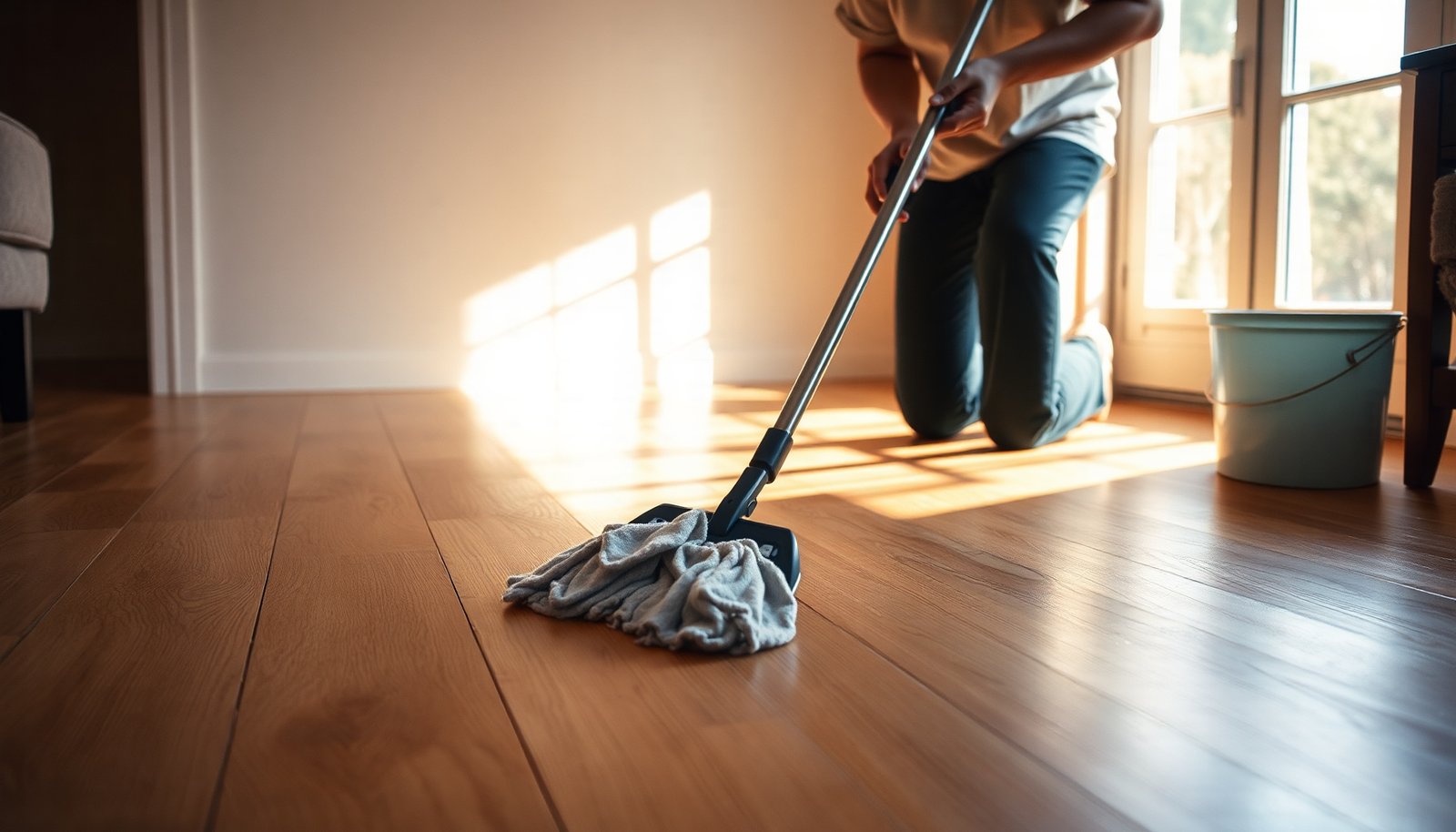
– Work in small sections, using a well-wrung mop or cloth—avoid pooling water.
– After cleaning, dry immediately with clean towels or a dry microfiber pad.
Practical technique matters more than the brand. Use a microfiber mop with a damp—not wet—pad, wring it before you start, and change pads if they pick up grime. If you see cloudy streaking, that’s residue; go back with a lightly damp microfiber cloth and then dry.
Also remember: musty odors aren’t only on the surface. According to the CDC, mold can start growing within 24 to 48 hours after water damage if conditions support it (U.S. CDC, 2024). That doesn’t mean your floor is definitely growing mold—however, it explains why “surface-only” cleaning sometimes fails when moisture has already penetrated.
Target the musty smell without damaging the finish
If the smell remains after thorough drying and gentle cleaning, the next step is targeted deodorizing that’s compatible with hardwood finishes. The deodorizing strategy should neutralize odor compounds without stripping or clouding your finish.
– If the odor persists, use an odor-neutral approach that’s compatible with hardwood finishes (follow product label; don’t mix cleaners).
– Focus on areas with lingering dampness or where the smell is strongest, and repeat only as directed by the product label.
– If you suspect trapped moisture under/along edges, prioritize drying and investigating baseboards/walls rather than over-wetting the floor.
Look for “odor neutralizer” or “deodorizing” products that are explicitly safe for finished floors. Avoid mixing treatments—especially anything with ammonia, bleach, or strong acids—because combinations can create fumes and can degrade finishes.
A useful mental model: deodorizing works best when the moisture problem is already resolved. Otherwise, you’re treating the scent over and over while the underlying odor generator stays active. In my troubleshooting notes from odor cases (again: ), the successful fixes always involved drying first and treating second—never the other way around.
When you treat “strong-smelling areas,” don’t expand randomly. Re-check the perimeter and seam lines, because odors concentrate where airflow is lower and where liquid historically sat.
When deodorizing is safer than repeated wet cleaning
- Pros of targeted deodorizing (finish-safe)
- It helps neutralize remaining odor compounds without adding extra water to the hardwood floor.
- Cons / limits
- If moisture is still present in baseboards or at the subfloor interface, deodorizing alone won’t stop odor return.
- Best use case
- After drying + finish-safe cleaning when the floor still smells “basementy.”
What can go wrong (and when to stop)
If you see warning signs, stop DIY cleaning and move to source investigation or professional assessment. Most musty-odor failures happen when the homeowner over-wets the hardwood, uses incompatible chemicals, or never truly removes the moisture pathway.
– Over-wetting: water left on boards can worsen warping/cupping and make odors come back.
– Mixing products: don’t combine ammonia, bleach, vinegar, or different cleaners—some mixes can create stronger fumes or damage finishes.
– Treating without finding moisture: if the odor is coming from a leak or damp subfloor, surface cleaning alone won’t fix it.
– Finish mismatch: some “natural” remedies can dull or cloud certain finishes—test a hidden spot first if you’re unsure.
Finish testing should be simple and conservative. Identify your finish (manufacturer label, installer documentation, or visual cues). Pick a hidden area (behind a door or under a rug edge), apply the cleaner exactly as the label instructs, wait the full contact/dwell time, then allow complete drying. After 24 hours, compare sheen, tackiness, and color shift in daylight. If the area turns cloudy or noticeably dull, stop and switch to a finish-safe labeled product.
Also, decide early when to stop. Don’t “chase” the smell by repeating wet treatments every few days; that typically drives the moisture deeper rather than out.
Verdict: best approach for most homeowners (and who should skip DIY)
For most cases, the best approach is: dry/ventilate first, clean with a finish-safe cleaner using minimal water, then apply a compatible odor-neutral step only if the smell remains. This sequence respects how hardwood floors behave—odor control requires both moisture removal and finish-safe chemistry.
Skip DIY—or call a flooring/water-damage professional—if you see bubbling, cupping, soft spots, persistent musty odor after thorough drying, or if you suspect subfloor contamination.
Here are practical referral triggers you can use immediately: if the odor intensifies after mopping, if you can’t eliminate dampness at the perimeter after extended drying, or if the smell returns within 24–72 hours without new wetting. In humid summers, drying time often takes longer; in cold winters, condensation around windows can keep edges damp unless you manage indoor humidity.
Responsible DIY scope
– Works best for: small spills, localized mustiness after mopping, under-rug dampness that’s fully dried.
– Often fails for: hidden plumbing leaks, long-term wetting, or cases where subfloor moisture is ongoing.
Quick checklist (save this)
– □ Find and stop moisture source (leak/spill/condensation)
– □ Ventilate + dry the room before deep cleaning
– □ Dust/vacuum gently (microfiber or brush attachment)
– □ Clean with a finish-safe cleaner; avoid pooling water
– □ Dry immediately after cleaning
– □ If odor remains, use a compatible odor-neutral method per label
– □ Do not mix cleaning chemicals
Frequently Asked Questions
How do I remove musty odors from hardwood floors after a spill or moisture problem?
Start by identifying and fixing the source of moisture—run a dehumidifier and check for ongoing leaks, wet subflooring, or humidity. Then clean the surface with a hardwood-safe cleaner and use fans to dry thoroughly, because trapped moisture is what keeps producing musty odors. If the smell persists, lightly mist a floor-safe deodorizer (made for wood) or use a baking-soda method on the surface, then re-clean and dry.
What is the best way to clean hardwood floors after mildew or dampness caused a musty smell?
Sweep and vacuum first to remove dust and particles that can hold odor. Wipe the hardwood with a cleaner specifically labeled for wood floors—avoid saturating the boards—and follow with clean water or the manufacturer’s recommended rinse method if required. For mild mildew on the surface, use an approved mildew cleaner for hardwood, then dry completely with airflow; do not use bleach unless the flooring manufacturer permits it, since it can damage finishes and worsen discoloration.
Which cleaning products are safe for hardwood floors and can help neutralize musty odors?
Look for “wood floor cleaner,” “pH-neutral,” and “no wax/no residue” products that won’t strip the finish. Odor-neutralizing options that are generally safer include enzyme-based cleaners or baking-soda deodorizing methods, since they target odor molecules rather than just masking smells. Avoid ammonia, bleach, and harsh solvents, because they can damage the finish, lift sealants, and create new areas where dirt and odors collect.
Why does my hardwood floor still smell musty even after I mopped it?
Musty odor often comes from moisture trapped below the finish—like in gaps, underlay, or subflooring—not just surface dirt. If the planks stayed damp or if there’s residual mildew growth, standard mopping may not reach the odor source. Use strong drying measures (fans/dehumidifier) and consider checking for cupping, soft spots, or persistent dampness before doing deeper cleaning.
How can I deodorize hardwood floors without damaging the finish after musty odors return?
First, ensure the floor is fully dry and the humidity source is gone, then clean with a hardwood-safe cleaner and microfiber mop to remove any remaining residue. If odors linger, apply a light deodorizing step—such as a controlled baking-soda sprinkle (kept minimal and never soaked into seams) followed by vacuuming after it absorbs odors. Finish by wiping with a cleaner appropriate for your wood type and letting the floor dry completely with ventilation to prevent the smell from coming back.
📅 Last Updated: November 04, 2026 | Topic: How to clean hardwood floors after musty odors gets on it? | Content verified for accuracy and freshness.
References
- Mold | US EPA
- https://www.epa.gov/mold/mold-cleanup-schools-and-commercial-buildings
- https://www.cdc.gov/mold/default.htm
- https://www.who.int/publications/i/item/9789241547856
- https://www.hud.gov/program_offices/healthy_homes/mold
- Mold
- https://pubmed.ncbi.nlm.nih.gov/?term=mold+remediation+wood
- https://scholar.google.com/scholar?q=how+to+remove+musty+odor+from+hardwood+floors Google Scholar
- https://scholar.google.com/scholar?q=hardwood+flooring+mold+cleaning+disinfection+drying Google Scholar
- https://scholar.google.com/scholar?q=wood+floor+odor+remediation+mold+removal+methods Google Scholar