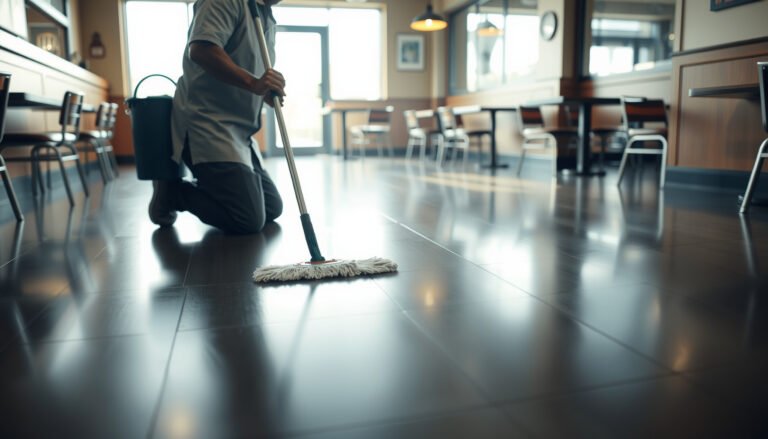
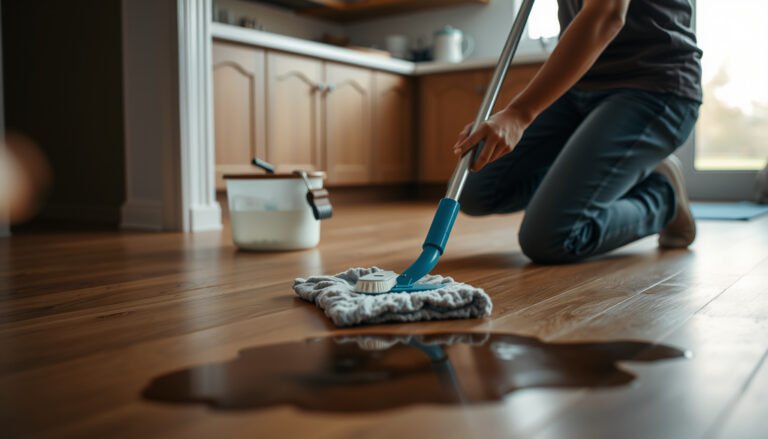
How do you deep clean hardwood floors to remove smoke odors without harming the finish? The right approach is to remove soot and ash first, then neutralize odor-causing residue with a pH-neutral cleaner and clean water, followed by careful drying. Set aside a couple of hours, gather microfiber pads, a soft brush, and the correct cleaner, and you’ll be able to freshen the floor surface effectively.




If your hardwood floors smell like smoke, the fastest path is to remove the oily soot film first, then deep-clean using a wood-safe, pH-neutral cleaner and rinse thoroughly—finally drying completely while you ventilate the room. Don’t “mask” the odor with heavy fragrance; smoke odor often comes from residue that needs to be lifted out of the finish and seams.
If the smell is lingering after normal sweeping and mopping, you’re usually dealing with smoke oils and fine particulates that cling to the protective topcoat and collect along edges, seams, and baseboards. This is common after wildfire smoke exposure and also after persistent cooking smoke, especially in 2026 when many homes are seeing longer periods of indoor air contamination.
This is best for wood floors that have been exposed to wildfire/persistent cooking smoke and now have lingering smells even after normal sweeping and mopping. If you know the wood is waxed, refinished recently, or has an unknown finish, you’ll want to test cleaning in a small hidden area first.
Get the right supplies and prep the room

You’ll remove smoke odors more reliably when you use finish-safe tools, control moisture, and prevent soot from being re-deposited during cleaning. Start with microfiber (for gentle lift), a pH-neutral hardwood cleaner (for residue removal without finish damage), and strong ventilation (so volatile odor compounds can dissipate).
– Use a soft microfiber mop (or microfiber pads), clean buckets, and a pH-neutral floor cleaner labeled safe for hardwood/finished wood.
– Ventilate heavily: open windows if possible, run fans, and keep humidity down; odors cling more when moisture is trapped.
– Clear the surface: remove rugs, furniture legs that scrape, and any loose debris so you can clean evenly (and avoid grinding soot into the finish).
Add filtration and airflow to reduce redeposition
In wildfire and cooking-smoke scenarios, the “odor” is often carried by fine particles and oily combustion byproducts that can re-settle if you dry-dust aggressively. That’s why HEPA filtration (or, at minimum, HEPA-style vacuuming) matters while you clean. According to the U.S. Department of Energy, HEPA filters capture at least 99.97% of particles sized 0.3 microns (DOE, 2019). U.S. Department of Energy (HEPA performance guidance)
If you have a lot of soot on-site, plan to wear proper respiratory protection during dry lifting. According to NIOSH, N95 filtering respirators are designed to filter at least 95% of airborne particles sized 0.3 microns (NIOSH, 2020). NIOSH respirator performance overview
Minimum Particle Capture Ratings Used During Smoke Cleanup (0.3 µm)
| # | Standard | Filter Type | Min. Capture @0.3 µm | Smoke Cleanup Relevance |
|---|---|---|---|---|
| 1 | P100 | Oil-resistant | 99.97% | ★★★★★ |
| 2 | N100 | Not for oil | 99.97% | ★★★★★ |
| 3 | HEPA | HEPA media | 99.97% | ★★★★★ |
| 4 | P99 | Oil-resistant | 99% | ★★★★☆ |
| 5 | N99 | Not for oil | 99% | ★★★★☆ |
| 6 | P95 | Oil-resistant | 95% | ★★★☆☆ |
| 7 | N95 | Not for oil | 95% | ★★★☆☆ |
Remove surface soot and residue before “deep cleaning”
You get better odor results by removing the visible (and invisible) oily soot film before you use any cleaner. Smoke odor frequently clings to a residue layer, and if that layer stays on the finish, the “deep clean” can end up smearing it around instead of lifting it out.
– Dry-sweep or vacuum with a soft brush attachment to lift loose soot; avoid aggressive beater bars that can scratch.
– Use a slightly damp microfiber to pick up remaining haze—think “wiping,” not soaking—especially along edges and high-traffic paths.
– For crevices, work gently with a barely damp microfiber or a manufacturer-recommended wood-safe detail tool; don’t flood gaps.
Why this first step matters (chemistry, not masking)
Smoke residue commonly includes oily compounds that can bond to the clear coat. If you go straight to mopping, those oils may emulsify and spread, leaving a uniform film that can smell even after “cleaning.” In smoke-cleanup terms, you’re targeting the particulate + oil layer first, then addressing any remaining odor compounds using a product that matches finished hardwood.
According to the U.S. EPA, PM2.5 refers to particulate matter with an aerodynamic diameter of 2.5 micrometers or less (EPA, 2024). U.S. Environmental Protection Agency (PM2.5 definition) Those ultra-fine particles can settle into finish texture and seams, which is why a soft vacuum and microfiber lift are more effective than dry dusting.
Pros/cons comparison: what to do first
| Approach | Pros | Cons / When it fails |
|---|---|---|
| Soft vacuum + damp microfibers | Lifts soot without scratching; reduces redeposition; limits how much oily film gets smeared | Requires patience along edges; still needs a proper pH-neutral cleaner after residue removal |
| Dry sweeping with abrasive tools | Fast for large debris | Can grind soot into the finish micro-texture; increases haze and can make odor linger longer |
| Straight-to-mop with strong degreaser | May feel like it’s “working” immediately | Can soften/strip finish or leave residue that later smells worse |
Deep clean with a wood-safe cleaner (not a harsh degreaser)
You remove the odor source most consistently by deep-cleaning with a wood-safe, pH-neutral cleaner and keeping the floor damp—not wet. Finish-safe cleaning works because it lifts remaining residue without damaging the topcoat that protects the wood.
– Mop using a well-wrung microfiber pad so the floor stays damp, not wet; follow the cleaner’s directions exactly.
– Clean in sections, then immediately do a clean-water pass if the product recommends rinsing (many residue problems come from leftover cleaner).
– Pay extra attention to seams, around baseboards, and under where smoke collected—odor can concentrate in these areas.
Choose pH-neutral and follow label math
Most “hardwood-safe” products are designed to be pH-neutral (or very close to neutral) so they don’t aggressively attack finishes, waxes, or sealers. If you dilute a concentrate, measure accurately—guessing dilution strength can turn a gentle cleaner into one that leaves residue or dulls sheen.
Also, stay consistent with your dwell time (how long cleaner contacts the floor). Many pH-neutral cleaners are meant for quick action; letting them dry on the finish can leave a film that later reacts with humidity and makes odor reappear.
Seam cleaning: where smoke hides
Smoke residue often travels with airflow and settles where air movement slows: along wall edges, under vents, and around baseboards. For best results:
– Re-wet only the microfiber (not the floor surface).
– Use a second microfiber for “final wipe” so you aren’t just redistributing loosened residue.
– Don’t flood gaps between boards—water that migrates into seams can trap odor longer than surface residue.
Lift smoke odor without damaging the finish
You’ll reduce lingering smoke smell by rinsing only when the product calls for it, drying aggressively, and then using odor-specific treatments only if they’re confirmed safe for finished hardwood. Smoke odor is stubborn because volatile components can re-emerge from residue or nearby porous materials.
– After cleaning, rinse (if appropriate for your product/finish) and dry fast: towel-buff lightly if needed, then run airflow to prevent lingering moisture.
– If odor remains, use an odor-removal approach designed for “organic” or “smoke” odors that is safe for finished hardwood (check the label for hardwood/wood-floor compatibility).
– Avoid soaking: steam and large volumes of liquid can seep into seams, which can trap odor and cause long-term cupping or warping.
Drying is part of the cleaning system
Odors don’t just “go away” once you mop—you need to move moisture out so odor compounds can dissipate. Ventilation helps, and so does low humidity. As of 2026, many restoration checklists emphasize drying + verification rather than repeated washing, because over-wetting can worsen long-term issues.
If you consider an additional odor treatment:
– Only use products that explicitly mention compatibility with finished wood floors.
– Apply in small sections first and stop if you see dulling, tackiness, or swelling at edges.
– Keep airflow running for several hours after application (per product label).
What can go wrong (and how to prevent it)
Most deep-clean failures happen because people over-wet the floor, choose the wrong chemistry, or skip the rinse/dry steps. Smoke odor can worsen when residue is left behind or when moisture pushes odor deeper into seams.
– Over-wetting can swell wood edges and drive odors deeper—always wring microfiber pads and keep water levels low.
– Wrong chemicals can dull or strip finishes: avoid bleach, strong solvents, ammonia, or unknown “miracle” degreasers unless the label specifically approves hardwood finishes.
– Skipping the rinse step can leave residues that smell worse later; if your cleaner says to rinse, do it.
Practical guardrails
Before you start, identify your finish if possible (manufacturer info, product history, or recent refinishing paperwork). If you don’t know the finish type:
– Patch-test in a closet corner.
– If you notice color change or a film after drying, stop and switch to a gentler, wood-safe method.
– Don’t use steamers; steam can force moisture into seam areas, where odor compounds can become trapped.
Verdict: what usually works best (and who should skip deep cleaning)
Deep cleaning hardwood for smoke odor works best when you treat it like residue removal: dry lift soot first, then clean with a pH-neutral hardwood-safe product, then rinse/dry thoroughly. If the smell is still strong after that, you may be dealing with odor in subfloor, drywall, or a crawlspace—not just the wood finish—so continuing to “wash harder” can waste time and risk damage.
Skip (or pause) deep cleaning and get professional help if:
– The flooring is unfinished, heavily damaged, or you suspect active water intrusion under the boards.
– The smoke exposure was severe/long-term and you still smell smoke after thorough surface cleaning (odor may be embedded below the finish).
– You can’t identify the floor’s finish type and the manufacturer’s cleaning guidance is unavailable.
Quick checklist (save this for your cleaning day)
| Step | Goal | Do | Avoid |
|---|---|---|---|
| Dry remove soot | Lift loose residue | Soft vacuum/quick dry sweep | Scraping or abrasive pads |
| Light wipe first | Pick up haze | Barely damp microfiber | Soaking the floor |
| Deep clean | Remove oily smoke film | Wood-safe pH-neutral cleaner, damp-mop method | Harsh degreasers/solvents |
| Rinse (if advised) | Prevent leftover residue | Fresh-water pass when product says to rinse | Leaving cleaner streaks |
| Dry + ventilate | Stop moisture-trapped odors | Fans/airflow, keep humidity low | Standing water or steam cleaning |
| Re-check odor | Confirm improvement | Re-wipe in stubborn areas | Repeating the same harsh step |
Frequently Asked Questions
What is the best way to deep clean hardwood floors to remove smoke odors?
Start by ventilating the area and dry vacuuming to remove soot and loose ash from the wood grain. Then wash using a pH-neutral cleaner made for hardwood floors, rinsing with clean water as directed so residues don’t keep trapping smoke particles. If the odor persists, follow with a diluted vinegar-water rinse or an enzyme-based odor remover designed for smoke, and let the floor fully dry before walking on it.
How do I deep clean hardwood floors after a fire to eliminate smoke smell without damaging the finish?
Use the gentlest method first: dry vacuum with a HEPA filter to capture soot, then wipe with a damp (not wet) microfiber mop using a hardwood-safe, non-alkaline cleaner. Avoid soaking the boards or using harsh solvents, ammonia, or steam mops, since they can strip or haze the finish and drive odor into the wood. For embedded smoke odor, apply an odor-neutralizing product that’s safe for finished hardwood and allow proper dwell time before wiping and drying completely.
Why does smoke odor linger in hardwood floors even after cleaning?
Smoke compounds can penetrate the finish micro-scratches and settle into the pores of the wood, where they continue releasing odor over time. Even if soot looks clean, residual residues from smoke and cleaning chemicals can remain and re-emit smell when humidity or temperature changes. That’s why thorough removal of soot first, followed by odor-neutralizing treatment and careful rinsing, is key to true smoke odor removal.
Which cleaning products are safest for deep cleaning hardwood floors with smoke odor?
Look for pH-neutral, fragrance-free hardwood floor cleaners that are compatible with your floor’s finish (polyurethane, waxed, or oil-based). For odor specifically, choose enzyme-based or odor-neutralizing cleaners labeled safe for hardwood, rather than heavy deodorizers that may leave a scent layer. Always test a small hidden area first and follow the manufacturer’s dilution instructions to avoid discoloration or finish damage.
How many times should I clean my hardwood floors to fully remove smoke smell?
Most homes need at least two passes: the first to remove soot and smoke residue, and the second to address lingering odor after the floor dries. If the smoke was heavy or the odor penetrated deeply, you may need several cycles over a few days, especially with repeated ventilation and drying. If smell continues after deep cleaning and an odor-neutralizing treatment, consider contacting a professional smoke remediation service or evaluating whether refinishing is necessary.
📅 Last Updated: November 04, 2026 | Topic: How to deep clean hardwood floors to remove smoke odors? | Content verified for accuracy and freshness.
References
- https://pubmed.ncbi.nlm.nih.gov/?term=wildfire+smoke+remediation+indoor+cleaning
- https://pubmed.ncbi.nlm.nih.gov/?term=soot+cleaning+procedures+building+materials
- https://www.cdc.gov/air/wildfire-smoke/index.html
- https://www.epa.gov/indoor-air-quality-iaq/air-cleaners-and-air-filters
- Soot
- Smoke
- https://www.epa.gov/search?query=smoke%20damage%20cleanup
- https://scholar.google.com/scholar?q=hardwood+floor+smoke+odor+deep+cleaning Google Scholar
- https://scholar.google.com/scholar?q=soot+and+smoke+damage+cleaning+procedures+wood+surfaces Google Scholar
- https://scholar.google.com/scholar?q=wildfire+smoke+odor+removal+adsorption+materials+activated+carbon+ozone Google Scholar