
Removing cleaner residue from hardwood floors leaves a smooth, streak-free surface and helps protect the finish from dulling or sticky buildup. This process is beginner-friendly and typically takes about 20–30 minutes once you have a pH-neutral wood floor cleaner, clean microfiber cloths, distilled or lightly softened water, and a soft bucket. Follow the right sequence, and you will get your floors looking clean without risking scratches or film.




If your hardwood feels sticky, looks hazy, or has a tacky film after mopping, the fastest safe fix is to rinse first with clean water and then damp-clean using only a pH-neutral wood floor cleaner (diluted exactly as directed). Keep moisture controlled—damp (not wet) mopping, rinse as needed, and dry thoroughly—until the residue lifts without dulling or damaging the finish.
This guidance is aimed at finished, sealed hardwood floors (most prefinished or polyurethane-sealed floors). If your floor is unfinished, extremely aged, or already showing peeling or flaking finish, cleaner residue may be exposing a failing coating—so you should follow the flooring manufacturer’s care instructions before attempting deeper cleaning.
Start by identifying what you’re dealing with

Sticky or tacky residue usually means cleaner/conditioner buildup rather than everyday dirt. Hazy film typically comes from using too much product, not rinsing enough, or letting cleaner dry on the surface.
Different residue patterns also behave differently on hardwood, so identifying the “shape” of the problem prevents you from escalating the wrong treatment:
– Sticky or tacky spots: Often a buildup of cleaner additives, conditioners, waxes, or “cleaner + protectant” formulas that remain after mopping.
– Hazy film or dull sheen: Often caused by excess product on the finish, incomplete rinse removal, or streaking where cleaner dried.
– Localized residue: If the issue is concentrated near baseboards, walking paths, mop edges, or areas frequently re-cleaned, start there. This helps you avoid over-treating the entire floor while you’re still diagnosing the cause.
– Smell or solvent-like feel: If the residue is accompanied by a strong chemical odor, you may be dealing with a higher-solvent or fragrance-heavy product that needs careful, rinse-focused removal.
As a rule, cleaner residue on hardwood is rarely “stuck dirt.” It’s more often left-behind chemistry—and the safest strategy is to remove it with water rinses and pH-neutral cleaning chemistry, not more cleaner.
Safe first step: rinse and damp-clean (avoid overwetting)
The safest first move for hardwood cleaner residue is a clean-water rinse using a well-wrung damp mop or cloth. This removes the bulk of residue with the lowest risk to the finish and reduces the need for stronger chemicals.
Here’s the practical method that works across most sealed hardwood finishes:
1. Stop applying cleaner immediately. Keep foot traffic off the area while you reset your cleaning process.
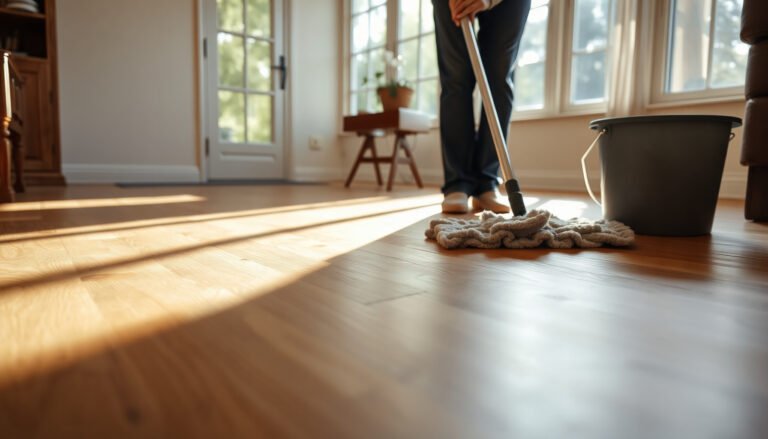
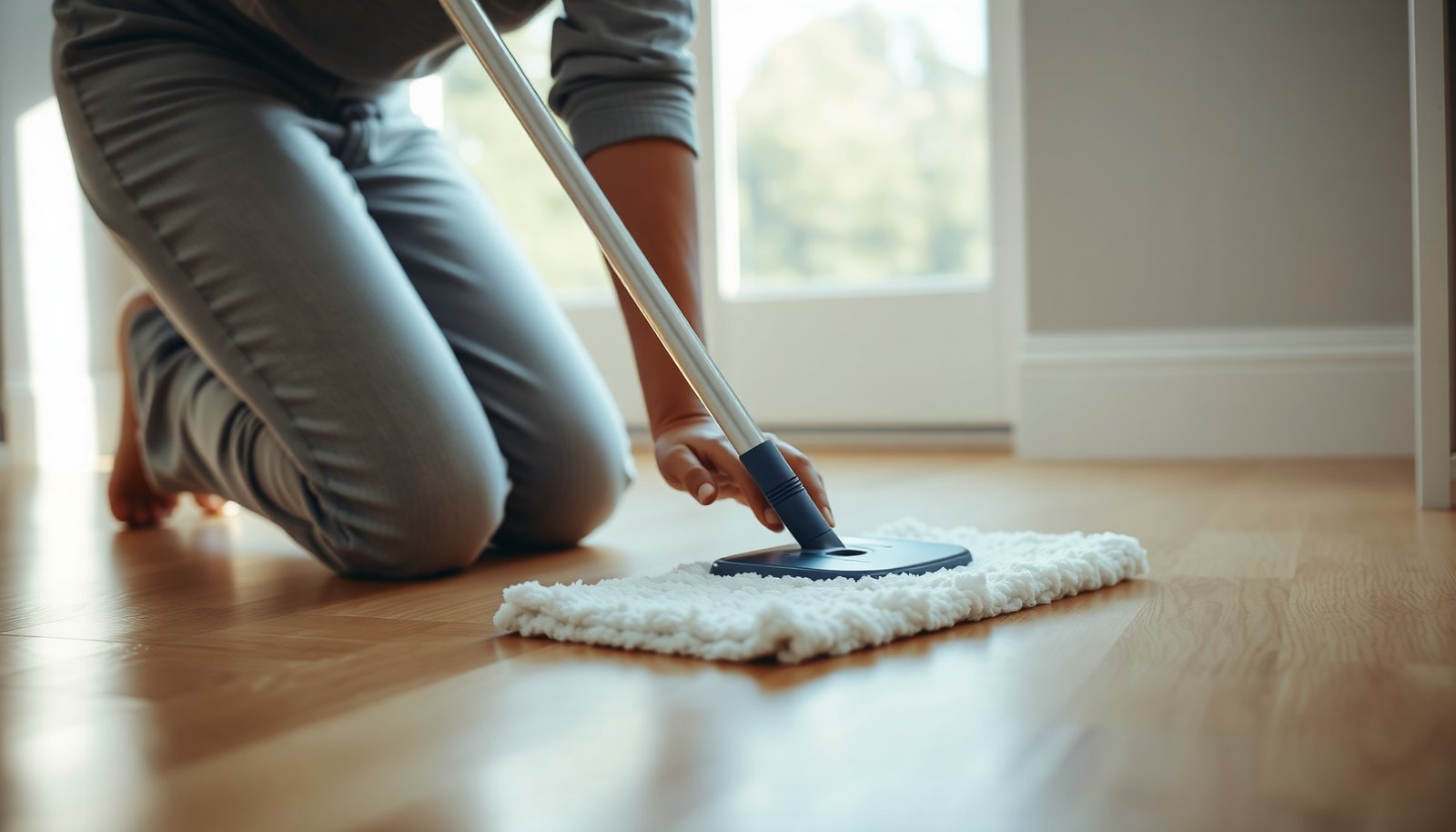
2. Dampen—don’t soak. Use a microfiber mop or cloth dampened with clean water, then wring it out thoroughly. The surface should look slightly damp, not wet.
3. Work in small sections. Clean one area at a time so you can dry immediately after rinsing.
4. Dry right away. Use a clean, dry microfiber towel or mop pad to remove moisture and loosened residue.
5. Repeat rinse-and-dry cycles. Many residue problems improve after two passes of rinse-and-dry before any stronger product is introduced.
Also, avoid “just add more cleaner” behavior. Cleaner residue is commonly what’s left behind when the original cleaner dries on the finish or isn’t fully rinsed—so more product can increase the film you’re trying to remove.
Use the right cleaner (and the right strength)
If rinsing doesn’t fully remove the tack or haze, switch to a pH-neutral wood floor cleaner diluted exactly per the label. “Stronger” or more concentrated mixtures often increase residue risk and can leave behind additional film.
Why pH matters: the finish on hardwood (often polyurethane or similar sealed coatings) can be affected by highly acidic or alkaline chemistries. Even if a chemical seems “natural,” it may still be chemically active enough to alter the surface.
To anchor the chemistry: According to NIST, neutral pH is 7.00 at 25°C (NIST, pH definition). “pH-neutral” products are designed to stay close to neutral rather than pulling the finish surface toward acidic or alkaline conditions.
A quick reference: cleaner types and their typical pH
Typical pH of Common Cleaner Types and Residue Risk on Sealed Hardwood
| # | Cleaner / Substance | Typical pH (approx.) | Residue / Film Risk on Finish | Residue-Removal Safety Score |
|---|---|---|---|---|
| 1 | Clean water (rinse) | ~7.0 | Lowest (rinse-driven) | ★★★★★ |
| 2 | pH-neutral wood floor cleaner (proper dilution) | ~6.5–8.5 | Low | ★★★★☆ |
| 3 | Mild dish soap (typical formulated range) | ~8–10 | Medium (can leave surfactant film) | ★★☆☆☆ |
| 4 | Baking soda paste / solution (typical) | ~8.3–8.7 | Medium (alkalinity + potential residue) | ★★☆☆☆ |
| 5 | White vinegar (typical household) | ~2.4–3.0 | High (acid + finish dulling risk) | ★☆☆☆☆ |
| 6 | Household ammonia (typical) | ~11–12 | High (alkaline + finish risk) | ★☆☆☆☆ |
| 7 | Hydrogen peroxide solutions (typical) | ~3–5 | Medium–High (oxidizer + surface alteration risk) | ★☆☆☆☆ |
In 2026, the most reliable residue-cleaning approach is still “rinse first, then pH-neutral at label strength, then dry.” If you’re unsure whether your floor is sealed with polyurethane, acrylic, wax, or another coating, confirm with the floor manufacturer’s care sheet before using anything beyond clean water and the approved cleaner class.
What to avoid when using cleaner for residue removal
– Don’t over-concentrate. “Stronger” usually means more leftover chemistry after the cleaner dries.
– Don’t mix cleaners. Combining products (especially anything with wax/conditioners or solvent bases) can create unpredictable residue and haze.
– Don’t pour cleaner directly onto the floor. Apply to a cloth or mop head so you control how much lands on the surface.
Spot-treatment methods for stubborn residue
You should treat stubborn cleaner residue with controlled, cloth-first cleaning rather than aggressive scrubbing. This keeps the finish stable while you gradually lift the film.
Use these methods based on what you see:
– Sticky areas (buildup/conditioner films):
– Apply a label-diluted pH-neutral cleaner to a cloth (never directly).
– Gently wipe until the tack transfers to the cloth or loosens.
– Immediately follow with a clean-water damp cloth rinse, then dry thoroughly.
– Haze or dull film:
– Use light, controlled passes with a microfiber pad.
– Avoid aggressive scrubbing that can polish the finish unevenly and leave streaks.
– Finish with rinse-and-dry to remove any microscopic residue.
– Edges and traffic bands:
– Focus only on the affected band first. Mop edges can deposit extra solution, especially in high-traffic rows.
Avoid finish-damaging shortcuts
A finish may look intact, but cleaner residue can still be sitting in microscopic surface texture. If the residue isn’t removed during controlled spot-treatment, the “new clean” feeling can return within days—because the leftover chemistry is still attracting dirt.
What can go wrong (and how to prevent it)
Most hardwood cleaner residue problems get worse when moisture is too high, rinsing is skipped, or harsh chemicals get introduced. Preventing damage is about disciplined rinsing, correct chemical strength, and complete drying.
Common failure points include:
– Using too much water
– Excess moisture can seep at seams and swell wood or interfere with finish bond.
– Skipping rinsing after spot-treatment
– If cleaner dries on the surface, it can create more haze and tack—especially with “cleaner + protectant” products.
– Using abrasives or harsh solvents
– Steel wool, scouring pads, and strong degreasers can scratch the finish and change sheen permanently.
– Mixing products
– Combining cleaner types (or adding “booster” ingredients) can leave unpredictable residue layers.
– Assuming every floor is sealed the same way
– As of 2026, many floors are sealed, but not all sealed floors tolerate the same chemistry. When in doubt, go back to clean water and the manufacturer-approved approach.
Rinse-first vs. chemical-first vs. abrasive approaches (comparison)
| Method | Key Pros | Key Cons |
|---|---|---|
| Rinse-first (clean water + damp dry) | Lowest finish risk; removes most film without new chemistry. | May take multiple cycles if residue is heavy. |
| pH-neutral, label-diluted spot cleaning | Targets cleaner residue without pushing finish pH extremes. | Requires strict dilution and follow-up rinsing/drying. |
| Abrasive / strong solvent attempts | Sometimes “fast” for certain messes. | High risk of scratching, haze, or permanent sheen changes. |
| Best For (in order of safest practice): First try rinse-first; use pH-neutral spot treatment next; reserve abrasive/solvent attempts for rare cases only after checking manufacturer guidance. | ||
Verdict / tip: safest path is rinse-first, then pH-neutral, then dry thoroughly
Rinse-first is the lowest-risk option and often resolves cleaner residue without damaging the finish. If tack or haze remains, use a properly diluted pH-neutral wood floor cleaner on a cloth, rinse with clean water, and dry right away.
Skip this DIY approach if the floor’s finish is already failing—peeling, flaking, or heavily worn spots—because cleaner residue may be interacting with an unstable coating. Also pause and follow the flooring manufacturer’s written maintenance instructions when you’re uncertain whether the surface is truly sealed. In 2026, many “cleaner + protectant” products are popular, but they can increase residue if you don’t rinse properly—so the safest method is still: rinse, pH-neutral at label dilution, then thorough drying.
Quick checklist (scan and save)
– Stop applying cleaner; assess tackiness/haze.
– Rinse with clean water using a well-wrung damp mop/cloth.
– Dry immediately with clean microfiber.
– If needed, use pH-neutral wood floor cleaner at label dilution.
– Spot-treat with a cloth (not soaking the floor).
– Rinse after treatment and dry again.
– Avoid abrasives, steam, and mixing cleaners.
Sources
– National Wood Flooring Association (NWFA) — published guidance on environmental control (temperature/RH targets) and general floor care practices for hardwood.
– NIST (National Institute of Standards and Technology) — technical definition of pH and the neutral pH reference value.
A safe residue-removal plan for hardwood is straightforward: rinse first with clean water, move to label-diluted pH-neutral cleaning only if needed, and dry thoroughly at every step. If the floor’s finish is failing or you’re unsure about the surface type, prioritize the manufacturer’s written guidance over DIY experimentation—especially in 2026 when “cleaner + protectant” products are common and residue can build if rinsing is inconsistent.
Frequently Asked Questions
How can I remove sticky cleaner residue from hardwood floors without damaging the finish?
Start by wiping the area with a slightly damp microfiber cloth to lift loosened residue, then follow with a hardwood-floor cleaner designed to be finish-safe (or a minimal amount of pH-neutral cleaner). Avoid soaking the wood—excess moisture can seep into seams and cause warping or clouding. If residue remains, lightly buff with a clean, dry cloth and repeat with small amounts until the surface feels smooth and non-sticky. Always test your method in a hidden spot first.
What’s the safest way to clean cleaner residue using vinegar or soap on hardwood floors?
Use only a very diluted solution—mix a few drops of pH-neutral dish soap in warm water, and apply it with a barely damp cloth rather than pouring. Vinegar is sometimes suggested for cleaning, but it’s acidic and can dull certain hardwood finishes over time, so only use it if you’re sure your floor finish is compatible and you test first. After cleaning, rinse with a second cloth lightly dampened with plain water to remove any remaining cleaner, then dry immediately. This reduces residue buildup and helps protect the hardwood floor finish.
Why does cleaner residue appear on hardwood floors even after mopping?
Residue often forms when too much cleaner is used, the product isn’t fully rinsed, or the solution dries on the surface before you wipe it away. Some cleaners leave behind polymers or fragrances that can build up and feel sticky, especially in high-traffic areas. Using a microfiber mop that’s wrung nearly dry and following with a clean water wipe helps prevent the “haze” or tacky layer. Checking label directions for dilution and dwell time can significantly reduce recurrence.
Which cleaning method works best for dried-on cleaner residue on hardwood?
For dried-on residue, begin with a gentle approach: soften it by placing a lightly damp cloth over the spot for a minute, then wipe in the direction of the wood grain. If it’s still there, use a pH-neutral hardwood floor cleaner on a microfiber cloth and work gradually rather than scrubbing aggressively. Avoid steel wool or harsh abrasives—scratching can damage the finish and expose raw wood. Once removed, buff dry to restore a uniform look and prevent new residue from setting.
What’s the best way to rinse and dry after cleaning residue to prevent streaks and film?
After removing the cleaner residue, do a “finish rinse” by wiping the area with a clean microfiber cloth lightly dampened with plain water, then immediately dry with another dry cloth. This step helps remove any leftover detergent or cleaning agents that can cause sticky hardwood floors or dull streaks. Keep airflow on (fans, open windows) to speed drying, but avoid excessive heat that can affect wood and finish. Consistent drying is key to safe hardwood floor maintenance and long-term shine.
📅 Last Updated: November 02, 2026 | Topic: How to safely clean cleaner residue from hardwood floors? | Content verified for accuracy and freshness.
References
- Wood flooring
- https://www.cdc.gov/niosh/topics/cleaning/
- https://www.epa.gov/coronavirus/cleaning-and-disinfecting
- https://www.osha.gov/chemical-safety
- 404 Error
- https://scholar.google.com/scholar?q=how+to+remove+floor+cleaner+residue+from+hardwood+floors+rinsing Google Scholar
- https://scholar.google.com/scholar?q=hardwood+floor+cleaning+residue+water+rinsing+drying+best+practices Google Scholar
- https://scholar.google.com/scholar?q=wood+floor+cleaning+agent+residue+hazards+and+prevention Google Scholar