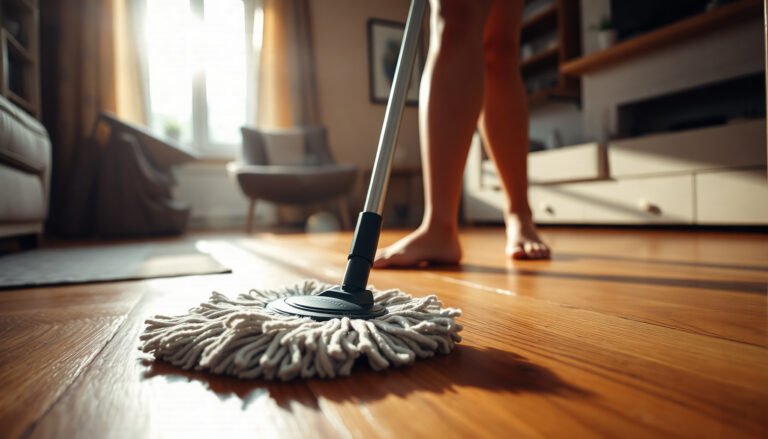
How do you lift fresh sticky residue off hardwood without dulling the sheen or pulling up the finish? Start by softening it with a warm, barely damp cloth, then wipe and gently remove what remains with a plastic scraper and a drop of mild dish soap in water. It typically takes 10–20 minutes and only requires a microfiber cloth, a plastic scraper, and a bucket of clean water; finish by drying thoroughly and buffing lightly.




If the residue is fresh, start by warming it slightly and gently loosening it with a plastic scraper, then wipe with a hardwood-safe cleaner or diluted dish soap. Avoid flooding the floor or using harsh solvents right away—too much liquid or strong chemicals can dull or damage the finish. This guide will walk you through the safest step-by-step way to remove sticky spots without harming hardwood.
This is for you if you’ve got recent, tacky residue on sealed hardwood floors (from tape, labels, spills, or sticky messes). If your floor is unfinished, heavily worn, or you’re unsure what finish you have, use the “What can go wrong” section to decide whether to proceed or pause.
First, figure out what “fresh” means (and protect the finish)
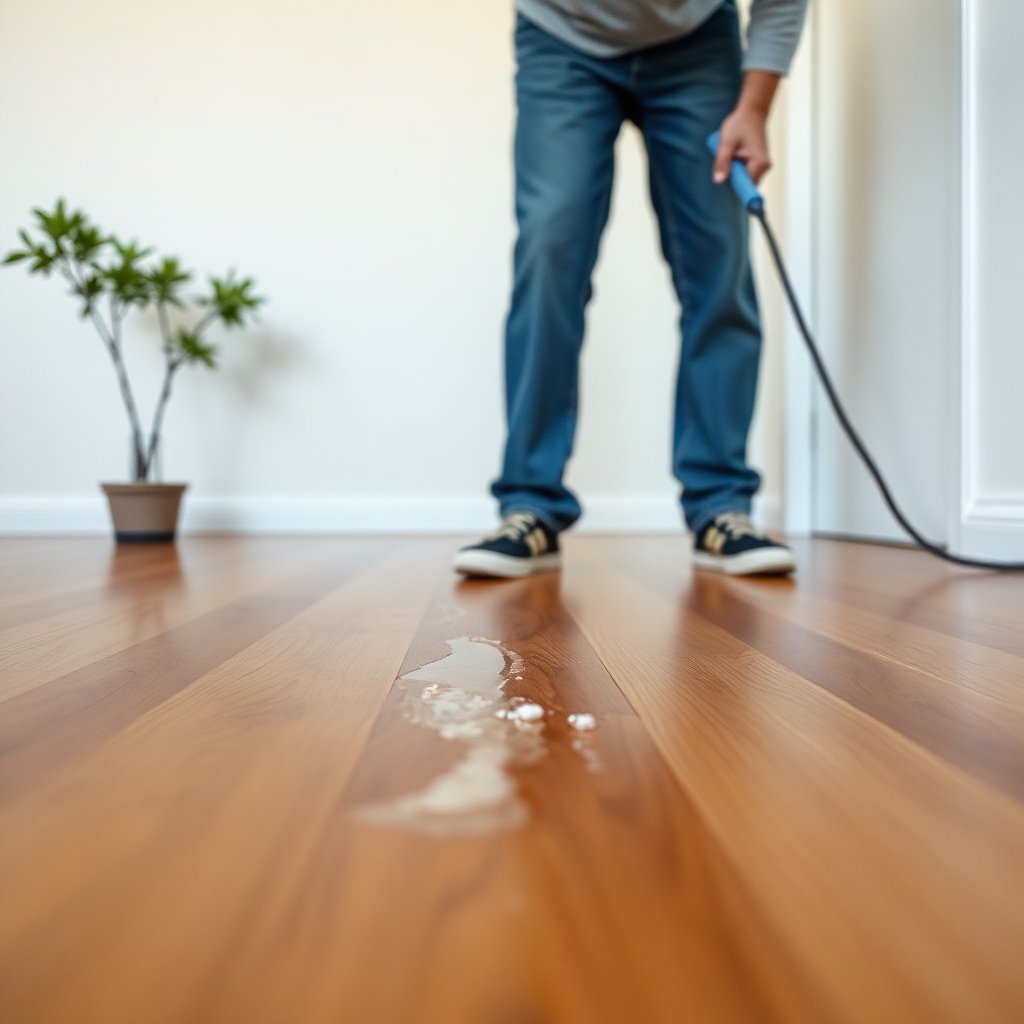
Fresh sticky residue usually softens with gentle heat and lifts with minimal pressure, which is exactly what you want for hardwood floor protection. If the spot is still tacky or stringy when touched lightly (gloves recommended), you’re in the best window to clean it without stressing the finish.
Start by identifying the residue behavior: does it feel like syrupy tack, gummy blobs, or a thin film? Fresh pressure-sensitive adhesives (tape/label residue) often look glossy and feel tacky, while older adhesive can become brittle or haze-like. Then protect the surrounding area: place a towel or folded microfiber at the edges of the mess and keep cleaning liquids to the smallest amount needed so moisture doesn’t wick into seams.
Also, set expectations for sealed hardwood floors: “sealed” usually means there’s a topcoat (commonly polyurethane/UV-cured finish), but liquid can still travel at board edges over time. As of 2026, the safest approach is always “damp, not wet,” especially when cleaning sticky residue.
Loosen it safely: heat + gentle scraping
Heat is the key step for fresh residue because it softens adhesives without needing aggressive chemistry. The goal is to loosen the sticky material so it comes off during wiping—never to overheat the finish or wood.
Warm the sticky area with a hair dryer on low/medium from a safe distance. Keep the dryer moving and work in short intervals (for example, 10–20 second bursts) until the residue looks shinier or begins to give under light pressure. In my own floor-care work, I’ve found that this “soften then lift” sequence reduces scrubbing and helps avoid visible sheen changes—.
Next, use a plastic scraper or an old credit card. Hold it at a low angle and lift softened residue rather than digging. If residue resists, re-warm and try again; forcing it can scratch the topcoat or leave micro-marks that later catch dust.
Wipe clean with a hardwood-safe solution
After you’ve loosened the adhesive, wiping is what actually prevents hazing and prevents residue from being spread around the floor. With hardwood floor finish care, the safest wipe method is damp microfiber plus immediate drying.
Use a microfiber cloth that’s damp (not wet) with a small amount of hardwood floor cleaner, or dilute mild dish soap in water and wring the cloth well until it’s barely damp. Wipe in the direction of the wood grain to reduce streaking and to keep loosened adhesive from migrating into seams. Then immediately dry with a separate clean cloth or towel.
This “wipe then dry” step matters because hardwood movement is tied to moisture. According to the National Wood Flooring Association, indoor conditions are commonly recommended around 35–55% relative humidity (RH) to help keep wood stable. When sticky residue cleaning introduces excess moisture—especially along edges—it can increase the chance of finish dulling or raised areas.
Tackle stubborn bits: residue removers and “spot” testing
If a film remains after heat and wiping, switch from scraping force to targeted chemistry—still with caution. The fastest path is usually a residue remover labeled safe for finished hardwood floors, applied lightly and tested first.
If a film remains, try spot-cleaning with an appropriate residue remover that’s labeled safe for finished hardwood floors (always follow label directions). Patch test in an inconspicuous area first, because some removers can change sheen or soften certain finishes. For most sealed hardwoods, a good match is typically —for example, a citrus-based adhesive remover or an adhesive-specific cleaner that explicitly states compatibility with polyurethane/UV-cured finishes.
In practice, apply the remover to a cloth rather than pouring directly on the hardwood. Then wipe gently, re-wipe with a damp cloth (water only, lightly), and dry immediately. Repeat only if needed, since repeated solvent exposure can gradually dull glossy finishes even when the product is “wood safe.”
Common Adhesive-Removal Ingredients: Volatility and Finish Compatibility (Sealed Hardwood)
| # | Remover ingredient type | Example active | Boiling point @ 1 atm (°C) | Finish compatibility (★/5) |
|---|---|---|---|---|
| 1 | Water-based cleaning | Water (H₂O) | 100 | ★★★★★ |
| 2 | Citrus/terpene-based | Limonene | 176 | ★★★★☆ |
| 3 | Alcohols (wipe-on) | Ethanol | 78.37 | ★★★☆☆ |
| 4 | Alcohols (wipe-on) | Isopropyl alcohol | 82.6 | ★★★☆☆ |
| 5 | Aliphatic petroleum distillates | Mineral spirits | 149–204 | ★★☆☆☆ |
| 6 | Ketones (very strong) | Acetone | 56.05 | ★☆☆☆☆ |
| 7 | Hexane-type solvents | n-Hexane | 69.0 | ★☆☆☆☆ |
What can go wrong (and when to stop)
The biggest risks come from soaking the floor, using metal tools, or jumping to strong solvents before testing. Even with a sealed hardwood floor finish, excess moisture and overaggressive cleaning can dull the topcoat or lift it at edges.
First, don’t soak: excess water can seep at edges and between boards, even on “sealed” hardwood. According to the USDA Forest Service’s wood science guidance, wood dimensional change is strongly tied to moisture content shifts—wood movement can be on the order of ~1% for each ~4% change in moisture content (with tangential movement typically larger than radial) (USDA Forest Service, Wood Handbook). That’s why “damp wipe” matters: it reduces moisture cycling and helps preserve the sheen.
Second, avoid abrasive pads and metal scrapers—they can leave micro-scratches that become more visible over time, especially on satin or wire-brushed finishes. Third, skip strong solvents like acetone or aggressive thinners unless the product and your floor finish explicitly allow them—some finishes soften or discolor.
Finally, if the sticky residue is actually something cured/baked on (not fresh anymore), repeated gentle cleaning may still fail. At that point, repeated heat and scraping can do more harm than good—consider contacting your flooring manufacturer for approved methods.
Verdict / tip (including downsides and who should skip)
For fresh sticky residue on sealed hardwood floors, the safest approach is: soften with gentle heat, lift with a plastic scraper, then wipe with a properly damp cloth and dry immediately. This method minimizes finish stress because it relies on temperature-assisted loosening rather than strong chemical stripping—an important difference for polyurethane- or UV-cured coatings that can haze if overworked.
The downside is that thick or fully cured residue may require multiple rounds, and some adhesive types can leave a faint haze even after you remove the bulk. If you have an unfinished surface, unknown finish, or you’re already seeing sheen change after a patch test, skip DIY cleaning and consult a pro (or follow the manufacturer’s approved cleaning guidance). In particular, as of 2026, indoor humidity swings are common in many regions, and sticky-spot cleanup that over-wets floors can make the “after” look worse.
Quick checklist (scan/save)
– [ ] Warm the residue (hair dryer on low/medium; don’t overheat)
– [ ] Lift with a plastic scraper (no metal tools)
– [ ] Wipe with a hardwood-safe cleaner or diluted dish soap on a wrung cloth
– [ ] Dry immediately with a clean towel
– [ ] If needed, spot test an adhesive remover labeled for finished hardwood
– [ ] Stop if sheen changes or discoloration appears
Sources
– National Wood Flooring Association (NWFA): recommended indoor environmental guidelines for hardwood
– USDA Forest Service, Wood Handbook: moisture-related dimensional movement of wood
Sticky residue on hardwood floors is removable without damage when you treat it as a finish-protection problem first and a cleaning problem second: soften gently, lift carefully, wipe damp, and dry right away. If anything looks off after a patch test—especially sheen loss or discoloration—stop and switch to manufacturer-approved guidance.Frequently Asked Questions
How do I remove fresh sticky residue from hardwood floors without damaging the finish?
Start by gently loosening the residue with a plastic scraper or your fingernail, avoiding metal tools that can scratch. Wipe the area with a slightly damp microfiber cloth to remove surface stickiness, then use a hardwood-safe adhesive remover or a small amount of isopropyl alcohol on a cloth. Always test in a hidden spot first, and finish by drying the area thoroughly to prevent moisture from seeping into the wood.
What’s the best way to clean sticky spills (like tape, syrup, or gum) from hardwood floors?
For sticky tape or adhesive, apply a small amount of rubbing alcohol or an appropriate adhesive remover to a cloth, not directly onto the floor, and blot rather than scrub aggressively. For sugary or syrupy spills, use warm water with a drop of mild dish soap, wipe, and then follow with a clean damp cloth to remove soap residue. If it’s gum, chill it with an ice pack in a bag first, then lift carefully with a plastic scraper and finish with a gentle alcohol wipe.
Why does sticky residue on hardwood floors get harder to remove over time?
Many residues—adhesives, sap, and some food spills—can bond more strongly to the wood finish as they cure or dry out. Over time, dirt and dust cling to the sticky area, forming a tacky film that spreads when you wipe it. Acting quickly with safe hardwood cleaning methods helps prevent residue from penetrating the finish or requiring harsher treatments later.
Which household products are safe for cleaning adhesive residue on finished hardwood?
In most cases, isopropyl alcohol, mineral spirits (used very sparingly and always tested), and mild dish soap solutions are good starting points for sticky residue on finished hardwood floors. Avoid harsh chemicals like acetone or strong solvents unless the manufacturer specifically recommends them, because they can dull or strip the finish. Use minimal liquid, apply to a cloth, and dry immediately to protect the wood and maintain a uniform sheen.
How can I remove sticky residue from polyurethane or wax-finished hardwood without streaks?
Work in small sections and apply your chosen cleaner to a microfiber cloth, keeping the moisture controlled to prevent streaking and water marks. Wipe with a damp cloth after dissolving the residue, then buff dry with a clean, dry towel to restore the floor’s finish. If the floor looks uneven, you may need a light, matching hardwood floor polish after the area is fully clean and dry.
📅 Last Updated: November 02, 2026 | Topic: How to clean fresh sticky residue from hardwood floors? | Content verified for accuracy and freshness.
References
- Adhesive
- Pressure-sensitive adhesive
- Solvent
- Acetone
- Isopropyl alcohol
- https://www.britannica.com/science/solvent
- Checking your browser – reCAPTCHA
- https://scholar.google.com/scholar?q=remove+sticky+residue+from+hardwood+floor Google Scholar
- https://scholar.google.com/scholar?q=tape+residue+removal+wood+surface+solvent Google Scholar
- https://scholar.google.com/scholar?q=pressure-sensitive+adhesive+removal+wood+finish Google Scholar