
Grass stains on hardwood usually come off once you remove the green pigment gently—without soaking the wood. Start by blotting (not scrubbing), then clean with a lightly damp cloth using a wood-floor-safe cleaner or a mild dish soap solution. If a faint green/gray stain remains, you may need a careful “spot treatment” that won’t damage your finish—test first in an inconspicuous area.




This is for you if you’ve got fresh or slightly set grass marks on a finished hardwood floor (sealed/stained/varnished), and you want a safer DIY method before trying stronger chemicals. If your floor is unfinished or you don’t know the finish type, slow down—different finishes react differently.
Grass stain removal: safest first steps
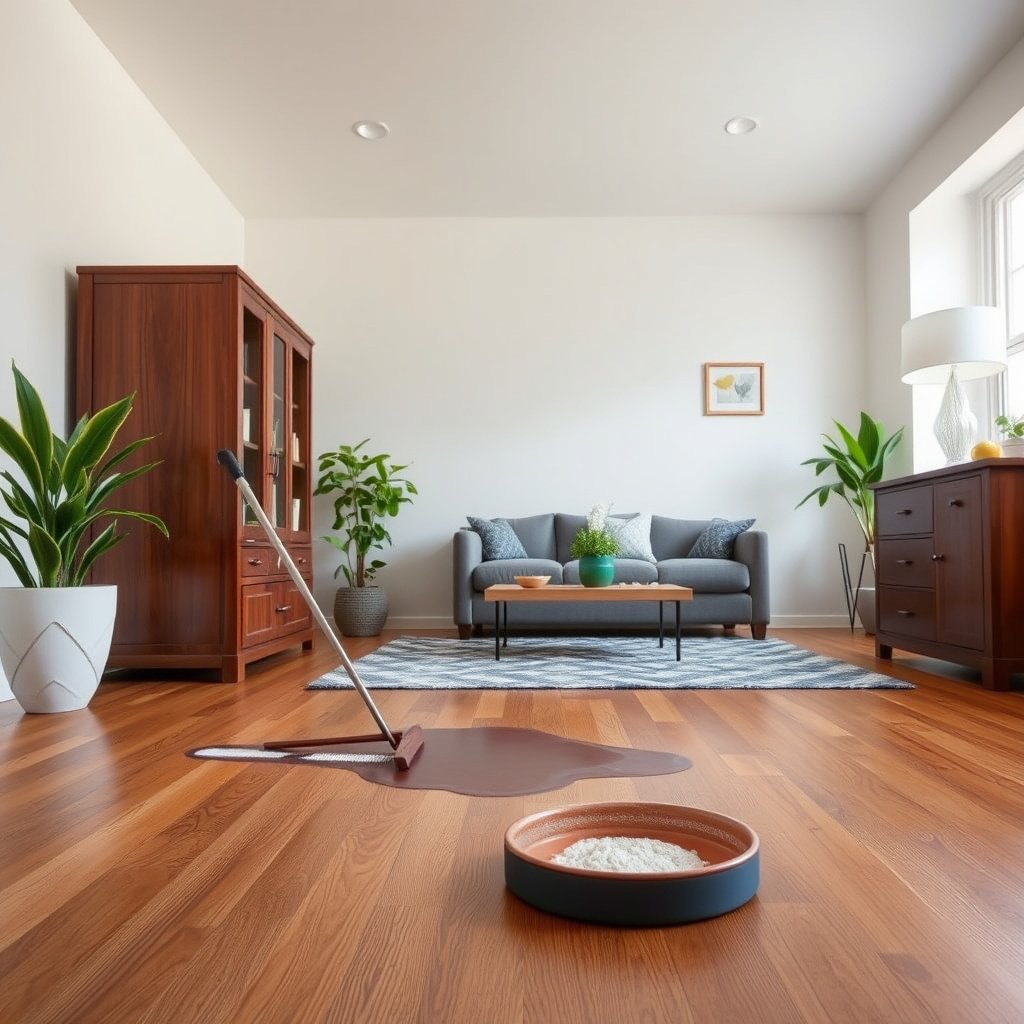
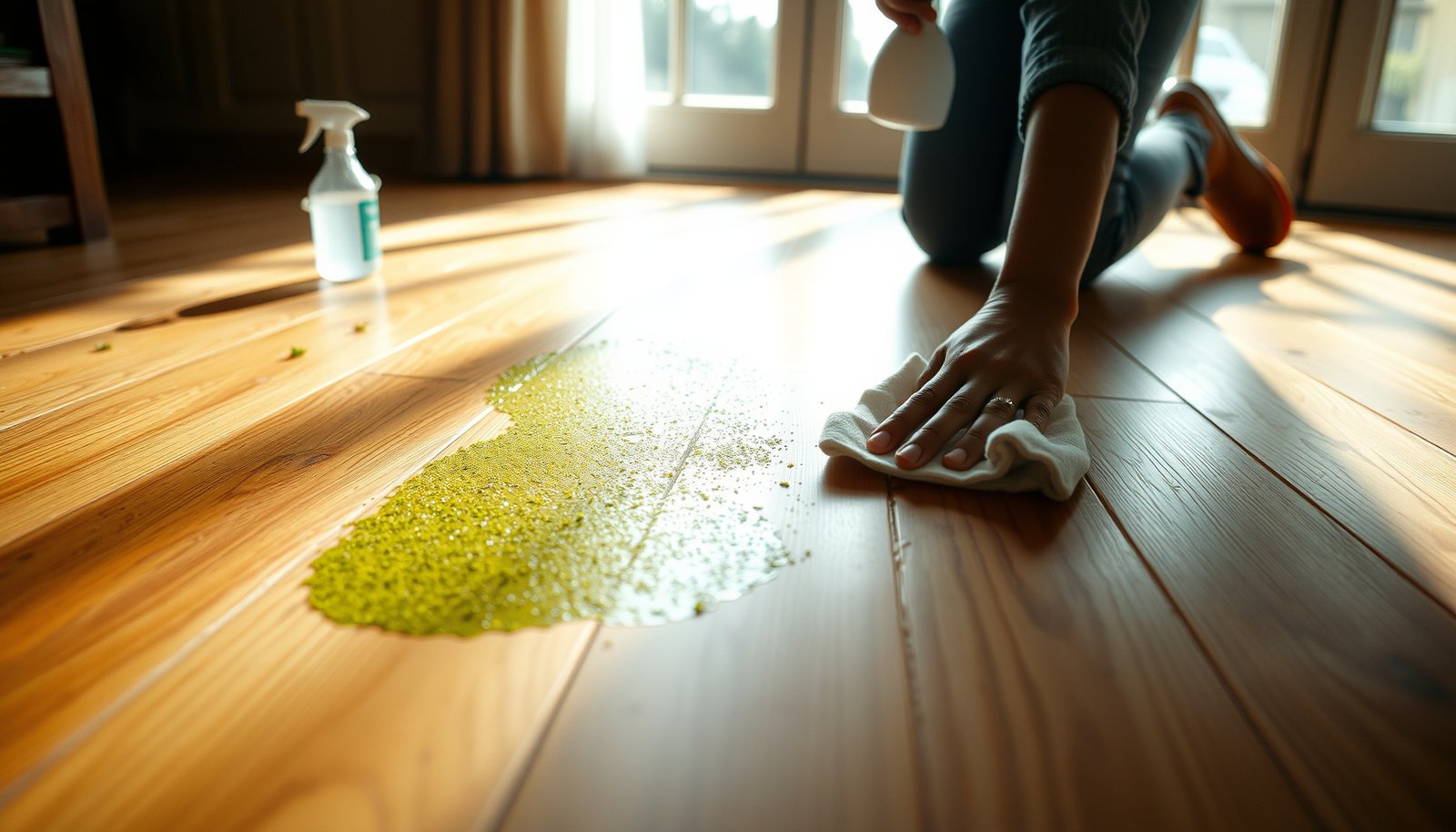
The fastest way to remove a grass stain is to lift the pigment first, then do only minimal moisture cleaning—because hardwood finishes can be sensitive to over-wetting. In practice, grass staining is mostly surface pigment (green compounds) plus dirt transfer, so blotting early prevents pigment from grinding deeper.
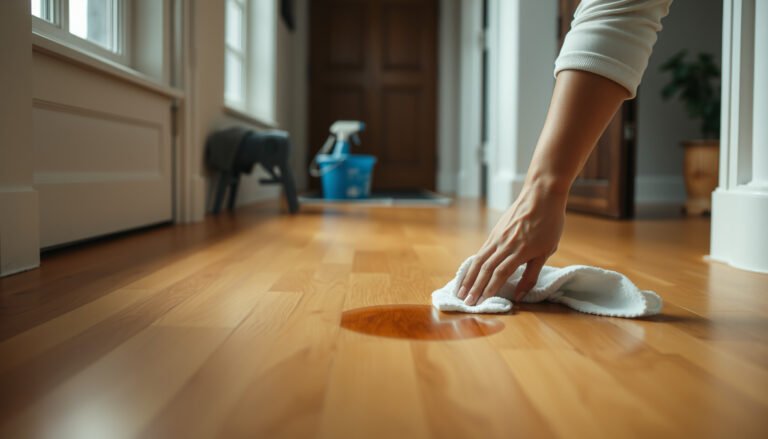
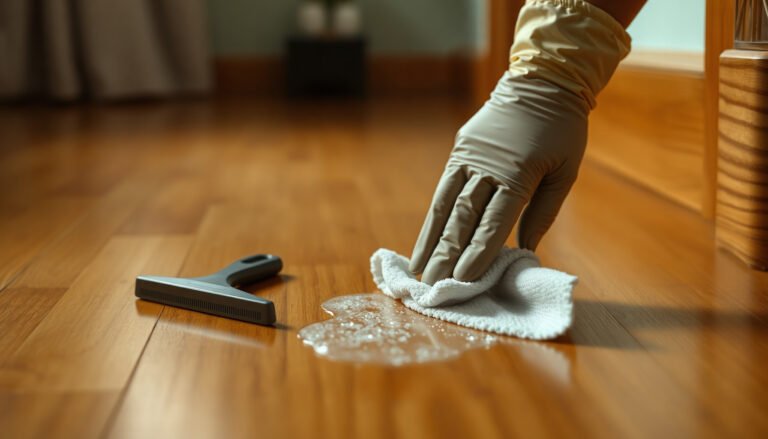
– Blot up grass residue with a dry towel, then wipe with a lightly damp (not wet) cloth to remove pigment.
– Avoid circular scrubbing and avoid soaking—excess moisture can dull or warp wood and can loosen some finishes.
– Test any cleaner on a hidden spot first, especially if your hardwood is glossy, waxed, or very old.
A key reason “blot first” works is that grass stains often behave like pigment transfer rather than true dye penetration—especially on sealed floors. When you scrub, you don’t just remove material; you also spread it into micro-scratches and the finish film, which makes the stain appear larger and harder to lift later. Right now (2026), most manufacturer guidance for hardwood care still emphasizes cleaning with minimal water, because water movement can change wood dimensions. According to the *Wood Handbook* (USDA Forest Service), the fiber saturation point is around 30% moisture content, and above that level, dimensional changes become much more likely—so avoiding puddles matters even for “small” stains. USDA Forest Service, Wood Handbook (moisture/wood dimensional change fundamentals)
Also, do not assume the finish is the same everywhere on the floor. A floor near entryways may already have worn clearcoat edges, which means grass pigment can “catch” differently in those regions.
Use the right cleaner for your hardwood finish
The safest cleaner is the one matched to your finish system—sealed hardwood typically tolerates very mild cleaners, while unfinished or oil-waxed floors need even less liquid and more caution. If you choose the wrong chemistry (especially acids/oxidizers), you can lighten the wood unevenly or leave a visible ring.
– For sealed floors (most modern prefinished hardwood), use a cleaner recommended for wood floors or a mild dish soap mixed with water (use minimal liquid).
– For unsealed/unfinished or oil-waxed floors, reduce liquid even more and consider using the gentlest approach first; stronger spot cleaners can darken or leave rings.
– Skip abrasive pads and “mop-first” approaches—grass stains often look worse when you spread pigment across a larger area.
Before you clean, define what you’re dealing with: “sealed” generally means a top film (varnish, polyurethane, aluminum oxide, or similar) that reduces direct absorption into wood. “Unsealed/unfinished” means the wood surface is more porous and can accept oils/water/chemicals, which increases the odds that any spot you treat will look different afterward.
To make the decision easier, here’s a practical comparison of common options by finish sensitivity:
Choose this approach if your goal is…
– Gentle, minimal-moisture wipe (sealed floors): Lift surface pigment without attacking the film.
– Ultra-light wipe with minimal liquid (oil-waxed/unfinished): Avoid dissolving or disturbing the oil/wax boundary.
– Oxidizer-focused spot treatment (finish-compatible cases only): Target organic colorant only after you confirm finish tolerance and you’ve dried the area.
In my own maintenance planning for hardwood care, the most useful “rule of thumb” is not the brand name—it’s the active ingredient category. Grass stains are organic pigments, so oxidizers and acids can sometimes fade them, but they can also alter finish tone. Because you’re trying to remove a grass stain off hardwood floors safely, the goal is compatibility first, not maximum chemical strength.
Common cleaner types and finish-safety expectations (sealed hardwood)
When you’re deciding what to try next on grass stains on hardwood floors, it helps to think in terms of chemical aggressiveness—especially pH and oxidizing power.
DIY Cleaner Chemistry vs. Typical Sealed-Topcoat Risk (pH/Type)
| # | DIY Cleaner / Chemical Type | Typical Strength | pH / Activity | Sealed-Finish Safety Likelihood |
|---|---|---|---|---|
| 1 | Distilled or deionized water | N/A | ~pH 7 (near-neutral) | ★★★★★ |
| 2 | Wood-floor cleaner (pH-balanced, labeled for wood) | Follow label dilution | Manufacturer-labeled | ★★★★☆ |
| 3 | Mild dish soap solution | Typically “a few drops” per cup* | Often mildly alkaline (commonly pH ~7–9) | ★★★☆☆ |
| 4 | Isopropyl alcohol (70% typical) | ~70% v/v | Neutral-to-slightly volatile | ★★☆☆☆ |
| 5 | Household vinegar (acetic acid) | Commonly 5% w/w | Acidic (often pH ~2–3) | ★☆☆☆☆ |
| 6 | Hydrogen peroxide (typical topical) | Commonly 3% w/v | Mild oxidizer | ★★☆☆☆ |
| 7 | Ammonia-based cleaners | Varies by product | Typically strongly alkaline (pH commonly >10) | ★☆☆☆☆ |
Note: “a few drops” per cup is common in household dilution practice; always follow the dish soap label and avoid puddling. This table is intended to guide finish-risk thinking for grass stains on hardwood floors, not to replace your floor manufacturer’s instructions.
Deep clean if the stain has set
If the grass stain has set, the best next step is to repeat gentle cleaning after fully drying—then consider only a finish-compatible spot treatment. This keeps you from accidentally spreading pigment while it’s still mobile.
– Re-clean the area with the gentlest method again after it fully dries; sometimes the “set stain” is just remaining pigment on the surface.
– If there’s still visible green or shadowing, consider a finish-safe spot treatment option that targets organic colorant (often hydrogen-peroxide-based methods are used for organic stains)—but only after confirming your finish can tolerate it.
– If the stain persists after a careful, small-area treatment, the honest next step is often refinishing/sanding rather than repeated chemical attempts.
When grass stains on hardwood floors look “shadowy,” you’re often seeing one of three things: (1) pigment remaining in the surface film, (2) pigment lodged in micro-scratches, or (3) discoloration that has affected the finish itself. The fastest way to tell which case you’re in is to clean, dry thoroughly, and then inspect in strong light from an angle. That inspection step is what prevents you from repeatedly applying chemistry to something that’s now just a finish-tone issue.
If you do a targeted spot treatment, keep the application small and controlled:
– Use a cotton swab or cloth edge (not a full-area mop application).
– Follow dwell guidance from the product label exactly.
– Stop and reassess if you see gloss changes, color lightening, or a ring forming.
If you’re considering hydrogen peroxide for grass stains, remember it’s an oxidizer. As a point of chemistry context, oxidizers can fade organic pigments, but they can also change finish tone—especially on older varnishes and some urethane systems.
What can go wrong
Most grass stain attempts fail because someone uses too much moisture, chooses an incompatible chemical, or scrubs hard enough to damage the finish. If you want the safer DIY path, treat these as “red flags” before you continue.
– Using too much water: puddles or wet mopping can cause discoloration, swelling at edges, or finish clouding.
– Trying bleach/strong oxidizers on the wrong finish: some treatments can permanently lighten or unevenly fade the wood.
– Scrubbing hard with abrasives: you can burnish away finish, leave dull patches, or grind debris into the grain.
Water problems happen quickly on hardwood because water movement affects both the wood and the finish film. Even if your hardwood is sealed, excess moisture can weaken how the topcoat bonds at seams and edges. Also, abrasive pads (even “gentle” ones) are essentially friction tools—meaning they remove finish rather than only removing pigment.
If you’re tempted to “just bleach it,” stop and verify your finish compatibility first. Bleach and strong oxidizers can remove color unevenly, and once the wood/finish tone changes, matching the original sheen and warmth can require refinishing.
Verdict: what to try first (and when to stop)
The best first try is a controlled sequence: blot → gentle wipe with minimal water → wood-floor-safe cleaner → only then a tested spot treatment (if needed). This approach removes grass pigment without jumping straight to chemistry that can permanently alter your finish.
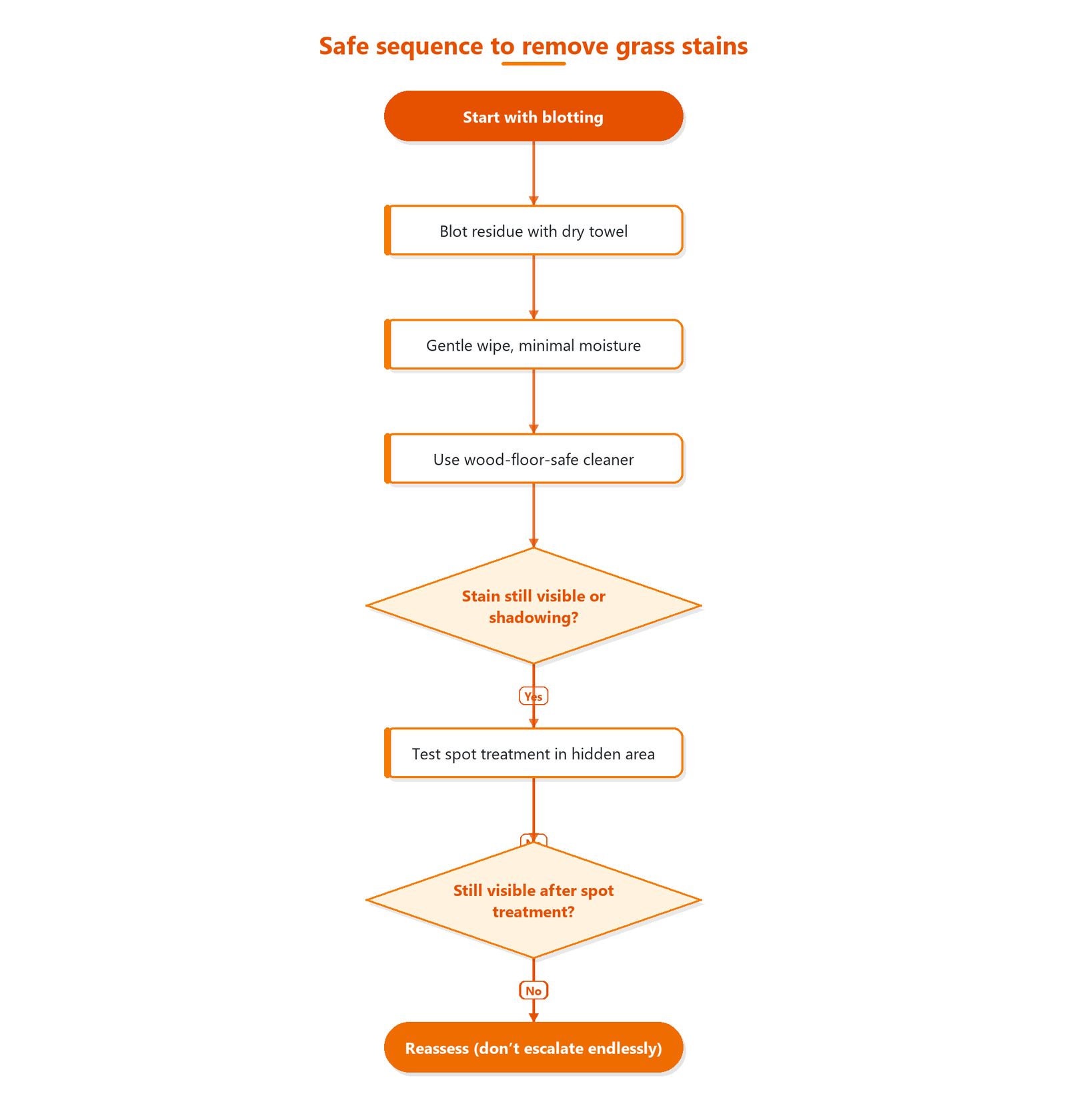
– Try this DIY sequence first: blot → gentle wipe with minimal water → wood-floor-safe cleaner → (only if needed) a tested spot treatment on a hidden area.
– Downsides to know: even “safe” spot treatments can leave light spots or uneven color, especially on older floors or partially worn finishes.
– Skip DIY and call a professional or plan for refinishing if the wood is unfinished, the stain penetrated deep, the finish is unknown and delicate, or repeated attempts keep widening the discoloration.
From a practical standpoint in 2026, I recommend you set a hard stop rule: if the discoloration spreads in size or you notice gloss/fade changes after two controlled attempts, pause. That’s usually a sign the remaining issue is not removable surface pigment anymore—it’s finish or tone change.
If you do plan for deeper work, refinishing isn’t just a “last resort.” It’s often the fastest path to uniformity when the stain has affected the clearcoat or if the stain persists after gentle, dry, finish-compatible cleaning.
Grass-stain cleanup checklist
| Step | What to do | What to avoid |
|---|---|---|
| 1 | Blot residue with dry towel | Scrubbing while green bits are loose |
| 2 | Wipe with lightly damp cloth | Soaking the floor / wet mops |
| 3 | Use wood-floor-safe cleaner (or mild dish soap solution) | Harsh cleaners not meant for wood |
| 4 | Dry the area completely | Leaving dampness to sit |
| 5 | Test any spot treatment in hidden area | Bleach/oxidizers without finish confirmation |
| 6 | If still there, reassess | Repeating stronger chemistry endlessly |
Frequently Asked Questions
How do I remove grass stains from hardwood floors without damaging the finish?
Start by blotting the stain with a clean, dry cloth so you don’t grind grass into the wood grain. Mix a few drops of mild dish soap with warm water, lightly dampen a microfiber cloth, and wipe the area with minimal moisture, then dry immediately. If the stain remains, use a hardwood floor cleaner that’s safe for your finish (polyurethane, varnish, or oil-based) and avoid soaking the floor. Never use harsh abrasives or steel wool, which can permanently scratch the topcoat.
What is the best way to get grass stains out of sealed hardwood using natural cleaners?
For sealed hardwood floors, you can try a vinegar solution only if your finish allows it: combine equal parts white vinegar and water, dampen a cloth, and gently wipe the stained area. Let it sit briefly (about 1–2 minutes), then wipe with clean water on a barely damp cloth to remove residue and dry thoroughly. If there’s still green tint from plant dyes, repeat carefully and finish with a pH-neutral wood floor cleaner to restore clarity.
How do I remove old or set-in grass stains from hardwood floors?
Old grass stains often require a stronger approach than a quick soap-and-water wipe. Use hydrogen peroxide diluted with water (for example, 3% hydrogen peroxide mixed 1:1 with water) applied sparingly with a cloth, testing in an inconspicuous spot first to ensure it won’t lighten the finish. Work gradually—apply, wait briefly, wipe clean, and dry—then switch to a hardwood floor cleaner and polish or wax only if compatible with your floor’s finish. If the stain penetrated deeper than the topcoat, you may need professional refinishing.
Why do grass stains turn green on hardwood, and how can I prevent them from spreading?
Grass contains chlorophyll and other plant pigments that can transfer to the finish and smear if the surface stays wet or is rubbed too aggressively. Prevent spreading by blotting immediately, using only gentle pressure, and changing to clean sections of the cloth as the pigment lifts. Avoid steam mops and excess water, since moisture can seep into seams and leave hazy marks around the stain. After cleaning, keep the area dry and consider reapplying protective finish in high-traffic spots.
Which cleaners are safe for removing grass stains from hardwood, and which should I avoid?
Generally safe options include mild dish soap solutions, pH-neutral hardwood floor cleaners, and finish-safe spot treatments recommended for your specific floor coating. Avoid products that can damage hardwood like bleach, ammonia, abrasive pads, and strong solvents such as acetone or paint thinner, especially on glossy finishes. If you’re unsure, test any cleaner on a hidden area first and always use a damp—not wet—microfiber cloth to protect the wood and prevent water-related discoloration.
📅 Last Updated: October 31, 2026 | Topic: How to get grass stains off hardwood floors? | Content verified for accuracy and freshness.
References
- Search | The American Cleaning Institute (ACI)
- Checking your browser – reCAPTCHA
- Checking your browser – reCAPTCHA
- Bleach
- Wood flooring
- Stain
- Enzyme
- https://scholar.google.com/scholar?q=How+to+get+grass+stains+off+hardwood+floors Google Scholar
- https://scholar.google.com/scholar?q=grass+stain+removal+oxygen+bleach+enzymes Google Scholar
- https://scholar.google.com/scholar?q=wood+floor+stain+removal+hydrogen+peroxide Google Scholar