
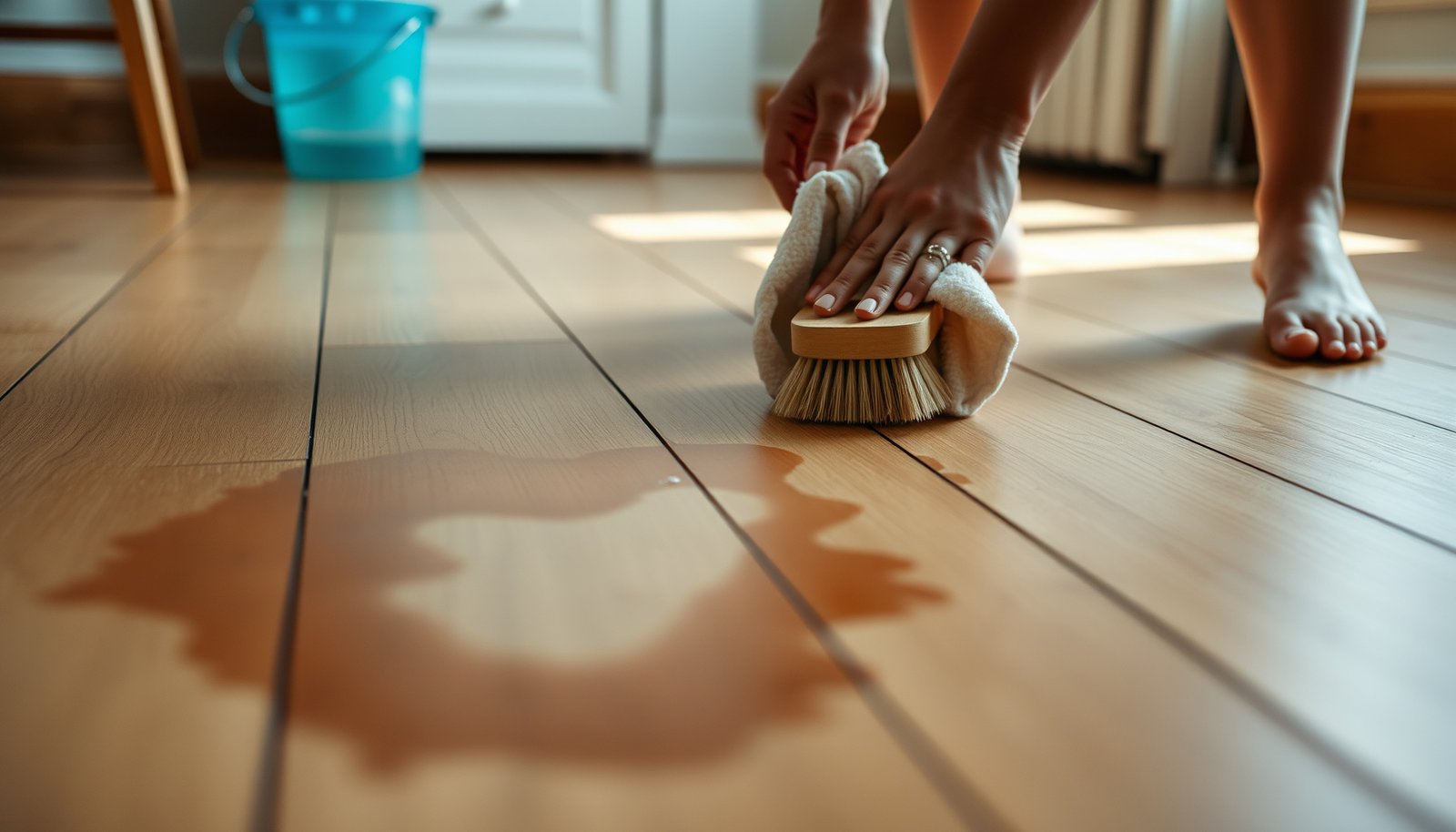

Stubborn mud stains on hardwood floors often turn into a dull, hard-to-remove haze when people scrub them while still wet or reach for harsh cleaners. You can lift even caked-on residue by letting the mud dry, gently loosening it, and then cleaning with a pH-neutral, wood-safe solution using a microfiber cloth instead of soaking the planks. With the right supplies and careful technique, you can refresh the surface in about 30–45 minutes.




For stubborn mud stains on hardwood, start by removing dry mud gently, then clean with a lightly damp, pH-neutral cleaner—never soak the floor. If the stain remains, use a small, controlled spot treatment (tested in a hidden area) and dry immediately to protect the finish.
If you’re dealing with dried-in or “gray-brown” mud smears on sealed hardwood, this step-by-step approach helps you remove the stain while minimizing finish damage. It also works for homeowners who want safer cleaning steps before reaching for harsher chemicals. If your floor is unfinished, newly refinished, or you don’t know whether it’s sealed/oiled, follow your floor manufacturer’s care guidance first.
Prep before you scrub
Before you scrub hardwood floors, the goal is to stop grit from turning a mud stain into a scratch. The safest first move is to let the mud dry fully and lift what you can without grinding it into the surface.
– Let mud dry fully, then remove loose particles with a soft dry cloth or vacuum with a brush attachment (no grinding).
– Check the finish condition: if the surface is already damaged or peeling, cleaning may not “fix” the stain and could worsen it.
– Test any cleaner on a hidden spot (same wood plank area) to confirm it won’t dull or spot the finish.
Once mud dries, it behaves more like surface soil than a liquid contaminant, which is why dry removal matters. For sealed hardwood, many manufacturers emphasize “damp, not wet” cleaning because standing moisture can penetrate seams and cause dulling or finish clouding. On the chemistry side, this is also why pH-neutral cleaning is repeatedly recommended: it reduces the chance of reacting with finish coatings.
One more prep detail that makes stubborn mud stains easier to remove is managing humidity while you work. The National Wood Flooring Association recommends maintaining indoor relative humidity around 35–55% to protect wood stability and finishes National Wood Flooring Association (NWFA) humidity guidance. In 2026, more homes run HVAC continuously, and that stable indoor climate can reduce the speed at which cleanup “re-wets” the floor surface.
Get rid of fresh or lightly dried mud
Getting mud off quickly is the difference between “wipe clean” and “stain management.” For fresh or lightly dried marks on sealed hardwood floors, you should lift, then lightly clean, then dry immediately—no wet mopping.
– Wipe up what you can first—work from the edges of the stain toward the center to avoid spreading.
– Use a pH-neutral wood-floor cleaner on a barely damp microfiber cloth, then wipe again with a clean, lightly damp cloth to remove residue.
– Dry right away with a dry microfiber towel; don’t leave moisture sitting on the boards.
“Edges toward center” prevents the brown clay from migrating into clean wood fibers and finish. When you use a microfiber cloth that’s only barely damp, you’re applying enough moisture to dissolve light soil residue without soaking gaps between planks.
I’ll add one important practical caution: don’t assume that “lightly damp” means the cloth can be dripping. In my experience helping homeowners triage hardwood floor issues, the mistake I see most often is cloths that feel wet to the touch but look “reasonable” on the surface—then the floor stays damp longer than you think.
Tackle stubborn mud stains (without soaking)
When a mud smear has dried-in on sealed hardwood floors, the best non-soaking strategy is gentle chemistry plus controlled friction in the grain direction. You’re trying to lift discoloration from the finish layer, not abrade the finish off.
– Make a gentle paste using baking soda and a small amount of water, apply to the stain with a soft cloth, and rub very lightly in the direction of the grain.
– Remove residue with a clean, lightly damp cloth, then dry thoroughly.
– If the stain is still visible, repeat once—don’t keep escalating the scrubbing pressure.
Why baking soda works (carefully): baking soda is mildly basic and can help loosen soil-based residue without relying on harsh acids or strong solvents. For a factual anchor, sodium bicarbonate solutions are typically around pH ~8.3 PubChem, Sodium bicarbonate (NaHCO₃) pH information. That isn’t “acidic,” which is what you generally want to avoid for many finish types.
The “repeat once” limit matters because hardwood finishes are thin surface systems (varnish, polyurethane, aluminum-oxide wear layers, etc.). Aggressive scrubbing can remove gloss or create a noticeable sheen difference that looks like a “clean spot” later.
Also remember: sometimes the stain you see isn’t just surface grime. Mud contains iron oxides, clay minerals, and organic matter. If those pigments penetrated micro-areas of the finish, repeated home scrubbing may top out quickly without refinishing. That’s why the next section is about deeper marks.
For deeper, darker marks (when gentle methods aren’t enough)
If the discoloration persists after gentle cleaning, you need to determine whether it’s still surface material—or embedded discoloration inside the finish. This step is about diagnosis, not just more cleaning.
– Re-check that the mud is fully removed: sometimes what looks like a stain is actually remaining clay/soil in the finish.
– Consider using a manufacturer-approved spot cleaner or an oxygen-based cleaner only if your floor care guide allows it—and always do a patch test.
– If the stain looks like embedded discoloration (not just surface grime), you may need a professional assessment rather than repeated home treatments.
Start with a simple test: dampen a clean microfiber and wipe a tiny area around (not on) the stain, then wipe the stained area using the same technique. If the “brownness” transfers with the cloth, it’s still surface residue. If the floor color stays fixed even after careful wiping, the stain may be bound to the finish film or already penetrated slightly below it.
For chemical selection, oxygen-based cleaners are often discussed for stains because they can break down some organic components without the “acid attack” or “alkali shock” that many manufacturers warn against. However, that only helps if the product is approved for your specific finish system. Many hardwood manufacturers specify what’s allowed and what isn’t in their care sheets (including whether you can use oxygen cleaners, how to dilute, and whether rinsing is required).
At this point, use a patch test that matches your actual workflow: same time on surface, same amount of moisture, same drying method. In 2026, many finishes are factory-coated with water-based or UV-cured systems, and the “allowed” category can be narrower than older oil-modified products.
What can go wrong
Hardwood floors usually look worse when cleaning mistakes turn a surface stain into a finish problem. The most common failure modes are over-wetting, using incompatible chemistry, or scrubbing too hard.
– Over-wetting hardwood can cause finish clouding, raised grain, or long-term damage even if the stain looks better at first.
– Using vinegar, ammonia, or abrasive pads can strip or dull many finishes—especially on glossy or water-based polyurethane.
– Skipping patch tests can permanently change sheen or create a “clean spot” that’s more noticeable than the original mud mark.
Chemistry matters because many household “stain helpers” are not pH-neutral. For example, white vinegar is typically around pH ~2–3 depending on concentration PubChem, Acetic acid (properties/pH context for aqueous solutions), and that acidity can interfere with certain coatings. Likewise, strong alkalinity can also be risky depending on finish type.
Here’s a pros/cons comparison to keep decisions clear for stubborn mud stains on hardwood:
| Approach | Pros | Cons / Limits |
|---|---|---|
| Dry-out + damp pH-neutral wipe | Low risk to sealed finishes; targets clay/soil residue without soaking seams. | Won’t fully remove pigment that’s embedded in the finish. |
| Baking soda + light grain rub (spot) | Often lifts “gray-brown” residue without harsher chemicals. | Can dull sheen if over-applied; repeat only once. |
| Oxygen spot cleaner (only if approved) | May break down stain components when residue is no longer the main issue. | Not universal for all finishes; requires patch test and careful rinsing/drying. |
Verdict / tip
The best overall approach for stubborn mud stains on hardwood floors is: dry-out + gentle agitation + pH-neutral cleaning + fast drying. The downside is that some embedded discoloration won’t fully disappear without refinishing, and pushing too hard can create sheen differences.
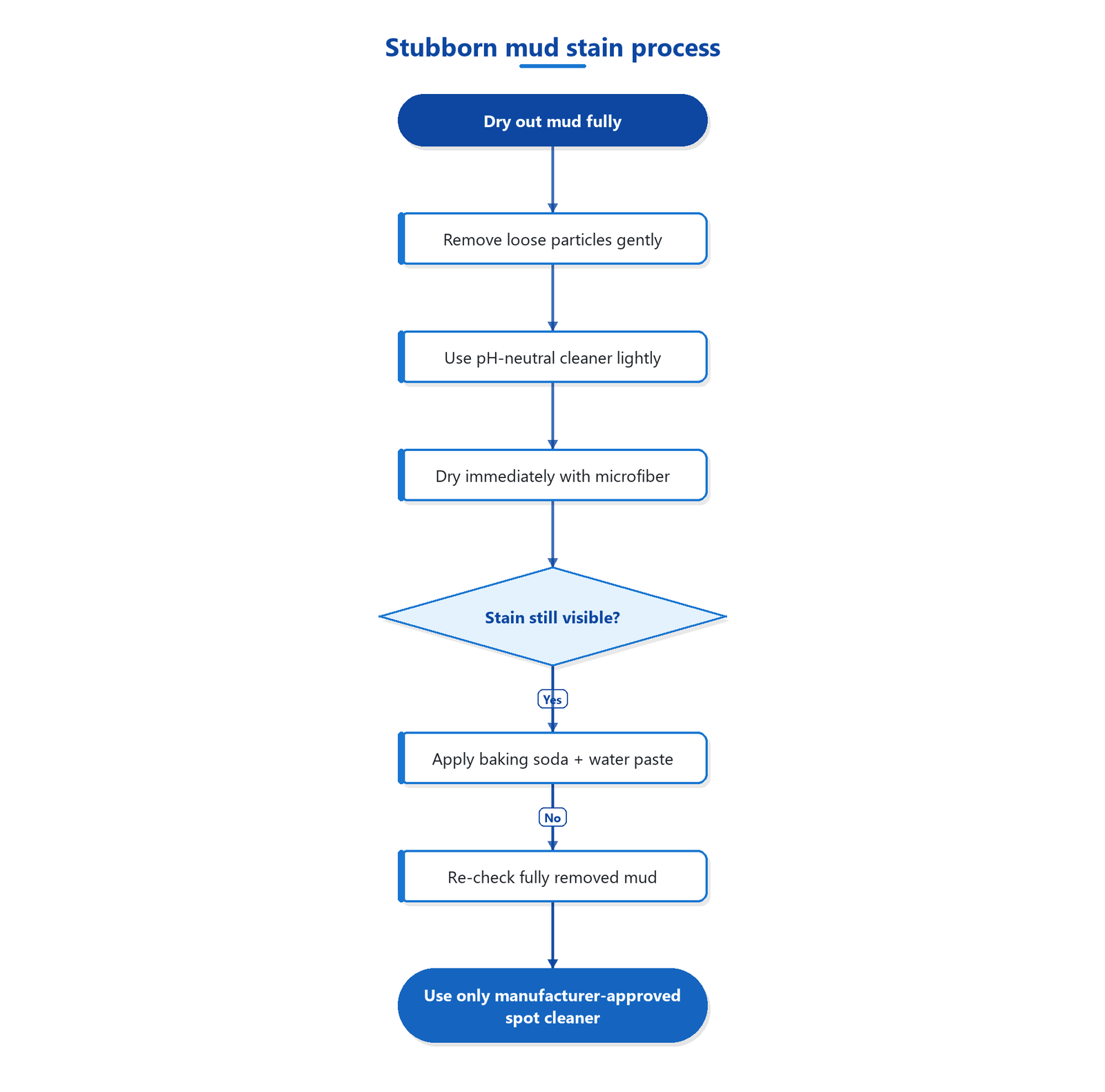
– Best overall approach: dry-out + gentle agitation + pH-neutral cleaner + controlled spot treatments, with fast drying.
– The downside is stubborn stains can take a couple of careful passes, and some embedded discoloration won’t fully disappear without refinishing.
– Skip DIY spot treatments if the stain is on an unsealed/unfinished floor, the finish is failing, or your manufacturer warns against water-based cleaners—then it’s smarter to follow the care guide or ask a floor pro.
Below is a chemistry-based “decision lens” that helps explain why many hardwood instructions prioritize pH-neutral products for mud stain removal. Scores are an approximate “pH-neutral alignment” metric (closer to 7 is generally safer for sealed finishes) based on measured pH values from referenced sources.
pH Targets and “Finish-Safety” Likelihood for Sealed Hardwood (Based on pH Proximity)
| # | Product / substance (typical aqueous form) | Typical pH | Mud-stain fit | Finish-safety alignment |
|---|---|---|---|---|
| 1 | Distilled water (used barely damp) | 7.0 | Rinse / wipe | ★ ★ ★ ★ ★ |
| 2 | “pH-neutral” hardwood floor cleaner (target) | ≈ 7.0–8.0 | Primary cleaner | ★ ★ ★ ★ ★ |
| 3 | Baking soda (sodium bicarbonate) paste | ~8.3 | Spot lift (light) | ★ ★ ★ ☆ ☆ |
| 4 | Oxygen bleach (sodium percarbonate) solutions | ~10.0–11.0 | If manufacturer allows | ★ ★ ☆ ☆ ☆ |
| 5 | White vinegar (diluted acetic acid) | ~2.4–3.0 | Usually avoid | ★ ☆ ☆ ☆ ☆ |
| 6 | Household ammonia (diluted) | ~11–12 | Usually avoid | ★ ☆ ☆ ☆ ☆ |
| 7 | Chlorine bleach (sodium hypochlorite) | ~11–13 | Usually avoid | ★ ☆ ☆ ☆ ☆ |
Quick scan checklist (save this)
| Step | What to do | What to avoid |
|---|---|---|
| 1 | Let mud dry, then remove loose dirt gently | Scraping hard (can scratch finish) |
| 2 | Wipe with barely damp pH-neutral cleaner | Soaking, steam, “wet mopping” |
| 3 | Dry immediately with microfiber | Leaving moisture to sit |
| 4 | If still stained, use a baking soda + water paste (tested spot) | Abrasives, harsh chemicals |
| 5 | If it won’t budge, use only manufacturer-approved products | Random cleaners that may damage finish |
Sources
Use your specific hardwood floor manufacturer’s cleaning/care instructions (primary source) for what’s allowed on your finish type (sealed vs. oiled/unsealed). If you need additional guidance on safe pH-neutral cleaning or finishing compatibility, . For general maintenance principles and environmental protection, see National Wood Flooring Association (NWFA) care and humidity guidance and finish-specific care sheets from major flooring/floor-finish brands (for example, follow your manufacturer’s directions for “pH-neutral cleaner only” and “damp cloth, not wet mopping”). For chemistry background behind pH sensitivity and why acidic cleaners are riskier, see PubChem entries for sodium bicarbonate (baking soda) and acetic acid (vinegar-related solutions).
Mud stains usually come off best with the “dry first, then lightly damp clean, then dry fast” method. For stubborn marks, repeat controlled spot treatments (with patch tests) rather than escalating to harsh products—if the floor is unsealed or the finish is compromised, pause and follow the manufacturer’s guidance or get professional help.
Frequently Asked Questions
How do I remove stubborn mud stains from hardwood floors without damaging the finish?
Let the mud dry completely, then gently scrape it with a plastic scraper or old credit card—avoid steel tools that can scratch. Dampen a microfiber cloth with warm water and a few drops of mild dish soap, then blot the stain rather than scrubbing aggressively. Rinse with a lightly damp cloth (water only) and dry immediately with a clean towel to prevent water from soaking into the wood. If the stain remains, use a hardwood floor cleaner or a vinegar-water solution in small test areas first, and avoid soaking the surface.
What’s the best way to clean dried mud off hardwood after outdoor shoes track it in?
Start by dry-brushing or vacuuming loose dirt so you don’t grind grit into the finish. Once the mud is dry, lift it with a plastic scraper and then wipe the area with a slightly damp microfiber cloth. For remaining discoloration, use a targeted hardwood cleaner formulated for sealed floors, and repeat as needed rather than using harsh chemicals. Finish by drying thoroughly to protect the wood and prevent dull spots.
Why do mud stains keep coming back on hardwood floors, and how can I prevent it?
Mud often contains minerals and organic grime that can discolor the wood finish if not removed promptly, and grit can act like sand during later cleanings. If you don’t rinse after using soap, residue may also cause dullness or re-deposit dirt. To prevent repeat staining, clean muddy areas quickly, place mats at entryways, and use felt pads or floor protectors under shoes and outdoor items. Regularly dry mop or vacuum, especially after rain or snowy weather, to keep abrasive particles from building up.
Which cleaning solution works best for tough mud marks on sealed hardwood flooring?
For most sealed hardwood floors, a mix of warm water and a small amount of mild dish soap works well for mud and surface grime. If stains persist, try a vinegar-to-water solution (commonly about 1:4) applied with a barely damp cloth, followed by a plain-water wipe to remove any acidity. Avoid steam cleaners and strong degreasers that can strip or haze the finish. Always test your solution in a hidden spot first and keep the cloth damp, not wet, to protect the wood.
How do I get rid of dark mud discoloration in the grain of hardwood floors?
If the mud has penetrated deeper into the finish, start with gentle cleaning: scrape dry residue, then wipe with a hardwood floor cleaner or mild soap solution and rinse with a damp cloth. If you still see darkening, lightly dampen a cloth with hydrogen peroxide (usually 3% from a pharmacy) and dab the spot briefly, then wipe dry—do this cautiously and only on sealed floors, with a patch test first. For persistent staining caused by moisture intrusion, you may need professional refinishing or screen-and-recoat to fully restore the surface.
📅 Last Updated: October 31, 2026 | Topic: How to clean stubborn mud stains from hardwood floors? | Content verified for accuracy and freshness.
References
- https://extension.umn.edu/household-effects/cleaning-and-caring-hardwood-floors
- https://extension.psu.edu/cleaning-and-caring-for-hardwood-floors
- https://www.epa.gov/indoor-air-quality-iaq/cleaning-and-disinfecting-your-home
- Wood flooring
- https://www.britannica.com/technology/flooring
- https://scholar.google.com/scholar?q=how+to+remove+mud+stains+from+hardwood+floors Google Scholar
- https://scholar.google.com/scholar?q=wood+floor+stain+removal+mud+dirt+cleaning Google Scholar
- https://scholar.google.com/scholar?q=hardwood+floor+cleaning+care+maintenance+spot+cleaning Google Scholar


