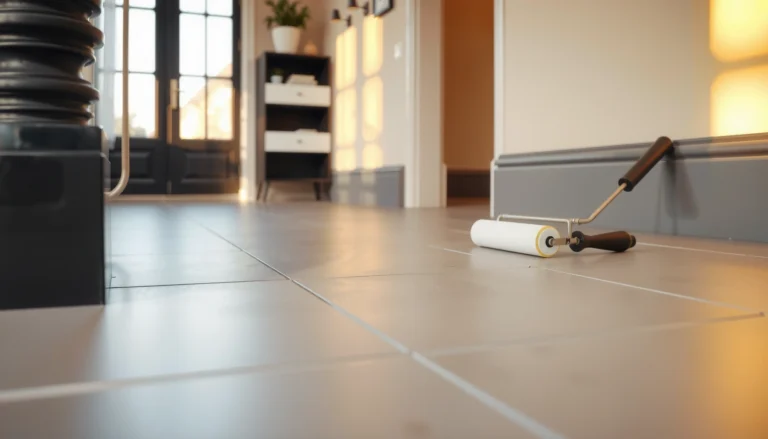
You can clean hardwood floors covered in drywall dust safely and effectively—without scratching—by using a dry microfiber first, then a lightly damp mop with a pH-neutral cleaner. This guide delivers the fastest, lowest-risk method for removing fine construction grit and dust residue from finished wood. Follow the steps in the right order and you’ll get a clean, streak-free surface instead of pushing dust into the finish.


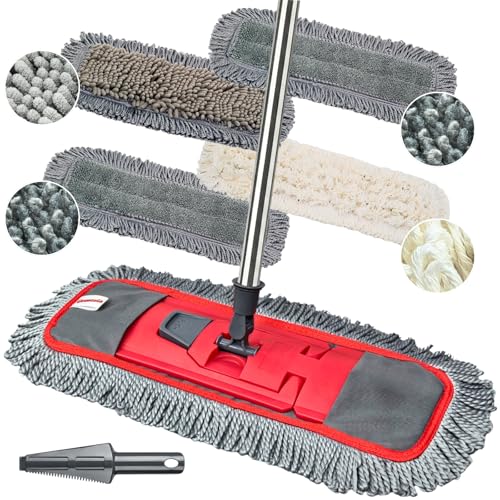

Drywall dust comes off best when you remove it mechanically first (HEPA vacuum + dry microfiber), then lift remaining grit with a lightly damp, pH-neutral cleaner—without soaking the wood. Drywall dust won’t just wipe off—start with HEPA vacuuming and dry microfiber removal first, then use a lightly damp, pH-neutral cleaner to lift the fine grit without soaking the wood. Finish by drying thoroughly and protecting the surface so you don’t grind dust into the finish or leave dull spots. Below are the safest steps to get hardwood looking clean again after a drywall mess.
If you’re dealing with dust from sanding, patching, or hanging drywall, this is for you—especially if dust has settled across the floor and you’re worried about scratching or damaging the finish.
When drywall work is done, the biggest threat to hardwood floors isn’t just “dirt”—it’s abrasive dust. Those particles can act like sandpaper once they get worked into the finish by mops or foot traffic. The safest method is designed around one principle: control dust before it becomes grit. In 2026, the same best practices still apply—HEPA filtration for fine particulates, minimal water exposure on seams, and fast drying to prevent haze on finished wood.
Who this advice fits (and what to watch for)

This approach is best for finished (sealed) hardwood floors where dust has settled after drywall work and you can clean without exposing bare wood. It also needs extra caution if your finish is already compromised, because too much moisture can seep into seams or lift damaged coatings.
– It’s best for sealed or finished hardwood floors where dust has settled after drywall work.
– If your floor is unfinished/raw wood, the “damp wipe” step may need extra caution—consider following your flooring’s specific maintenance guidance.
– If you see pooling water, bubbling, or finish lifting, stop and reassess before continuing.
Hardwood floors differ: a robust factory-applied finish behaves differently than an oil-finished or unfinished surface. Drywall dust is also not uniform—joint compound dust can include different binders and fine mineral particles depending on the product and sanding method. That’s why drywall dust cleanup should focus on containment first, then controlled cleaning.
OSHA’s respirable crystalline silica standard for construction emphasizes controlling dust exposure, including using tools and methods designed to reduce airborne particulates (OSHA 29 CFR 1926.1153).
For HEPA filtration, standards like EN 1822 define minimum particle retention efficiencies at the most penetrating particle size (MPPS) ( EN 1822-1:2019 ).
If you’re not sure whether your hardwood floors are fully sealed, do a quick “finish check” in a small hidden spot: use only a lightly damp microfiber and observe for darkening, tackiness, or any finish smear. If anything looks off, switch to manufacturer-specific guidance for your floor and finish system.
Step 1: Remove drywall dust dry (so you don’t grind it in)
The best way to protect hardwood floors is to remove drywall dust mechanically before any moisture touches the surface. This prevents abrasive grit from being dragged across the finish and turning into micro-scratches.
EN 1822-1:2019 sets minimum HEPA retention targets (for example, H13 at 99.95% and H14 at 99.995% at MPPS), supporting why HEPA vacuums work for fine drywall dust (EN 1822-1:2019).
According to OSHA’s silica rule, reducing dust exposure is central to control methods used during construction cleanup (OSHA 29 CFR 1926.1153).
Use a HEPA vacuum first (not “whatever vacuum”)
Start with a vacuum that’s genuinely HEPA-filtered—because drywall dust contains fine particles that regular filters may recirculate. According to EN 1822-1:2019, HEPA classes target very high retention at MPPS (for example, H13: 99.95% and H14: 99.995%). That matters for hardwood floors because the “last” film of dust is often the most abrasive.
How to vacuum without damaging hardwood floors
– Use the soft brush/nozzle setting that won’t grind or chip the finish.
– Do multiple slower passes rather than one aggressive pass.
– Work from the far side of the room back toward an exit so you don’t re-track drywall dust across cleaned areas.
– Pay attention to edges, floor vents, stair landings, and baseboard lines—drywall dust loves these pockets.
Finish with a dry microfiber to catch what vacuums miss
After vacuuming, use a dry microfiber pad/mop to pull remaining fine particles from corners and along plank edges. This step is not optional if you want to avoid haze: even a well-running HEPA vacuum leaves a thin layer in textured areas and at plank boundaries.
Avoid sweeping
Sweeping can kick up drywall dust and embed it into hardwood’s microtexture. It can also push dust into seams—exactly where you don’t want it before any cleaning.
A practical rule for hardwood floors
If you can see dust “moving” under the vacuum head, you’re close—but keep going. For drywall dust cleanup, you want the floor to look uniformly dull/dry (not speckled) before you switch to any damp cleaning step.
Drywall-Dust Cleanup: Filtration Standards That Affect Fine Particle Removal
| # | Filter / Grade Label | Minimum retention efficiency | Test particle size (MPPS) | What it means for hardwood floors |
|---|---|---|---|---|
| 1 | EN 1822 H13 HEPA | ≥ 99.95% | MPPS ~0.15–0.30 μm | Strong fine-dust capture |
| 2 | EN 1822 H14 HEPA | ≥ 99.995% | MPPS ~0.15–0.30 μm | Very high retention at MPPS |
| 3 | EN 1822 U15 ULPA | ≥ 99.9995% | MPPS ~0.05–0.20 μm | Maximizes capture of ultrafines |
| 4 | EN 1822 U16 ULPA | ≥ 99.99995% | MPPS ~0.03–0.15 μm | Exceptional removal of finest particulates |
| 5 | “HEPA-type” (marketing term) | No single minimum spec | Not standardized | May under-capture fine drywall dust |
| 6 | Standard foam + bag vacuum | Not verified to HEPA/ULPA retention | Varies by filtration design | Higher chance of dust re-release |
| 7 | Wet mopping (for dust-first floors) | Not a filtration method | Spreads particles via water | Can create abrasive haze |
Step 2: Deep-clean without soaking the wood
The safest deep-clean for hardwood floors after drywall dust is a lightly damp microfiber pass using a pH-neutral cleaner. This lifts the remaining fine grit while reducing the chance of water swelling at seams.
Choose the right cleaner chemistry (pH-neutral)
“pH-neutral” means the cleaner is formulated close to neutral so it’s less likely to break down many finishes or leave residue that dulls hardwood floors. If your flooring or finish manufacturer specifies an approved product, follow that—because coatings differ (urethane, aluminum oxide, oil/penetrating finishes, and wax systems all respond differently).
From a control perspective, you’re also reducing risk: According to OSHA’s silica exposure rule for construction (2016), the respirable crystalline silica exposure limit is 50 µg/m³ (0.05 mg/m³) as an 8-hour time-weighted average (OSHA 29 CFR 1926.1153). While you’re cleaning hardwood floors, the same idea applies—dust control and minimizing airborne particles matter.
When cleaning finished hardwood floors, using an appropriately formulated cleaner and avoiding soaking helps prevent moisture-related damage at joints and seams (general maintenance principle from flooring care practices; verify with your manufacturer’s guidance).
Dry microfiber and HEPA capture first are essential because any remaining drywall dust can become abrasive grit when moisture spreads it across hardwood floors.
How to damp-wipe correctly (the “wrung almost dry” method)
– Use a microfiber cloth or mop pad that’s wrung until nearly dry—you should not see active drips.
– Work in small sections (for example, one plank width or one half of the room), so you can keep control of moisture on hardwood floors.
– Change pads often. If the pad begins to look gray or feel gritty, swap it—otherwise you’re smearing drywall dust back into the finish.
Quick comparison: damp microfiber vs wet mopping
| Approach | Best for | Tradeoffs (hardwood floors) |
|---|---|---|
| Lightly damp pH-neutral microfiber | Fine grit removal after drywall | Requires careful wringing + quick drying |
| Wet mopping / soaking | Generally not ideal right after drywall dust | Higher moisture risk at seams; can leave haze if dust mixes with water |
A note on finish realities: hardwood floors can look clean while still feeling slightly “sandpapered” if grit got worked into the topcoat. That’s why this step must be done after Step 1—not before.
Step 3: Rinse (only if your cleaner requires it) and dry fast
The last step is critical: hardwood floors must be dried thoroughly to prevent dull spots, seam swelling, or streaky residue. If your pH-neutral cleaner specifies rinsing, do it—but keep the water minimal and the drying immediate.
Fast drying matters on hardwood floors because standing moisture can migrate into seams and cause finish or dimensional issues, especially if the coating is already worn or compromised.
Airflow supports drying after drywall dust cleanup; the key is preventing dust from being re-distributed onto a freshly cleaned hardwood floor.
Rinse only when the product tells you to
Some pH-neutral hardwood cleaners are formulated so rinsing isn’t required; others specify it for best appearance. Follow the label exactly:
– If rinsing is required, use the least amount of water necessary and avoid flooding seams.
– If rinsing isn’t required, skip it—extra moisture increases risk.
Dry immediately and do a final visual check
– Use clean, dry microfiber towels or pads to pick up remaining moisture.
– Let airflow help (fans, open windows). Avoid blasting air directly into the floor gaps if you notice drywall dust still floating—re-deposition can happen.
What “good” looks like
After drying, the floor should not look:
– Hazy (a sign dust/grit is still present or film remains),
– Streaky (too much product or uneven wipe),
– Duller in patches (likely abrasive dust reworked into the topcoat).
If you see hazing, repeat Step 1 (HEPA vacuum + dry microfiber), then do another gentle damp pass with a fresh pad. Repeating moisture on top of remaining grit can make the effect worse.
What can go wrong (common mistakes and edge cases)
Hardwood floors can show haze or damage when the drywall dust cleanup order or moisture level is wrong. The fixes are mostly about slowing down, keeping water low, and stopping when the finish acts unpredictably.
– Using too much water: hardwood can swell at seams and edges, especially if the finish is compromised.
– Steam cleaning or aggressive chemicals: heat and harsh cleaners can dull or damage many finishes.
– Skipping the dry phase: wiping or mopping before vacuuming can turn dust into abrasive “grit,” causing micro-scratches and a hazy look.
– Unknown finish condition: if the surface is already worn, the finish may grab moisture or show streaking—spot-test first.
Drywall dust cleanup is where “almost correct” becomes visible. One pass that’s slightly too wet, one dirty pad, or one skipped HEPA step can produce the kind of faint dulling that doesn’t wash off easily.
According to OSHA’s 2016 construction silica rule, the respirable exposure limit is 50 µg/m³ (0.05 mg/m³) as an 8-hour TWA, reinforcing why dust control and careful cleanup methods matter during construction activities (OSHA 29 CFR 1926.1153).
EN 1822-1:2019 specifies minimum HEPA retention efficiencies (e.g., H13 ≥99.95% and H14 ≥99.995% at MPPS), which is why “HEPA first” is an evidence-aligned step for fine dust like drywall residue (EN 1822-1:2019).
Edge cases to treat differently
– Unfinished hardwood (raw wood): The damp step may need to be replaced with a manufacturer-approved dry method or a very specific restoration routine. If you see darkening with minimal moisture, pause.
– Damaged finish areas: If you spot lifting, bubbling, or peeling, stop. Continuing can spread the damage.
– Large debris or mud: If drywall work left chunks, remove them carefully first—don’t vacuum/grind them into hardwood floors.
Verdict + quick save-checklist
This method is the safest general workflow for hardwood floors: HEPA vacuum and dry microfiber removal first, then lightly damp pH-neutral cleaning, then immediate drying. Skip or modify the steps for unfinished wood, severely damaged finishes, or any sign of finish lifting.
| Step | Do this | Avoid this |
|---|---|---|
| Dry removal | HEPA vacuum + dry microfiber | Sweeping/dragging dust around |
| Cleaning | Lightly damp microfiber + pH-neutral cleaner | Wet mopping/soaking |
| Drying | Dry microfiber + airflow | Letting water sit |
| Final check | Look for haze/streaks and re-clean gently if needed | Re-wiping with dirty pads |
This approach works because it respects how drywall dust behaves on hardwood floors: it’s fine enough to spread, and abrasive enough to dull finishes if you let it become a slurry. If your floor is unfinished, severely damaged, or you notice finish lifting, follow your specific flooring/finish manufacturer instructions instead of trying to force a “universal” clean.
Sources
– EN 1822-1:2019 (filter classification and minimum retention efficiencies for HEPA/ULPA grades).
– OSHA 29 CFR 1926.1153 (respirable crystalline silica standard for construction; includes limits and dust control expectations).
In short: protect your hardwood floors by removing drywall dust with HEPA vacuuming and dry microfiber first, then clean with a lightly damp pH-neutral microfiber method, and finally dry immediately. Follow that order and you avoid the two most common outcomes—scratched finishes from embedded grit and dull spots from moisture/film.
Frequently Asked Questions
What is the safest way to remove drywall dust from hardwood floors before cleaning?
Start by dry-removing the bulk of drywall dust using a vacuum with a HEPA filter or a microfiber dust mop—avoid aggressive sweeping that can grind dust into the wood finish. Work in small sections and keep suction close to the floor surface without scratching. After dust is removed, follow up with a damp cleaning method using a hardwood floor cleaner to lift remaining fine particles.
How do I clean hardwood floors covered in drywall dust without damaging the finish?
Use a microfiber mop lightly dampened with a hardwood floor cleaner designed for sealed wood, and never flood the floor. Prior to mopping, vacuum again to catch any grit that could cause scratching. If the dust is heavy, repeat the dry vacuuming step and then do a second quick damp-mop pass—light, controlled moisture is key to protecting hardwood.
Why is drywall dust harmful to hardwood floors if you don’t clean it promptly?
Drywall dust is fine and abrasive, so it can act like grit that scratches hardwood when stepped on or when cleaning later. It can also leave a dull haze if the dust is mixed with water and spread across the finish. Cleaning promptly helps preserve the sheen and prevents dust buildup in seams or edges.
Best way to clean drywall dust from hardwood floors—vacuum or damp mop first?
Vacuum or dry-dust mop first, because dry removal prevents scratching and keeps abrasive particles from being smeared into the finish. Once the bulk dust is gone, use a damp microfiber mop with a pH-neutral hardwood floor cleaner for a safe final clean. Finish by using a dry microfiber cloth to gently blot any remaining moisture, especially along baseboards and corners.
Which cleaning products should I use for drywall dust on hardwood floors, and what should I avoid?
Choose a pH-neutral hardwood floor cleaner and microfiber pads that are free of harsh additives, since these are designed to be safe on sealed hardwood. Avoid ammonia, vinegar, abrasive scrubbers, and steam mops because they can damage the finish or drive moisture into the wood. If you’re unsure, test the cleaner in a small hidden area first before cleaning the entire floor.
📅 Last Updated: October 29, 2026 | Topic: How to clean hardwood floors covered in drywall dust? | Content verified for accuracy and freshness.
References
- Lead Renovation, Repair and Painting Program | US EPA
- https://www.epa.gov/lead/lead-safe-work-practices
- https://www.cdc.gov/nceh/lead/prevention/renovation.htm
- Silica, Crystalline – Overview | Occupational Safety and Health Administration
- Construction | CDC
- Wood flooring
- Drywall
- https://scholar.google.com/scholar?q=how+to+clean+hardwood+floors+drywall+dust Google Scholar
- https://scholar.google.com/scholar?q=HEPA+vacuum+construction+dust+cleanup+wet+cleaning Google Scholar
- https://scholar.google.com/scholar?q=gypsum+drywall+dust+cleanup+hard+surface+floors Google Scholar