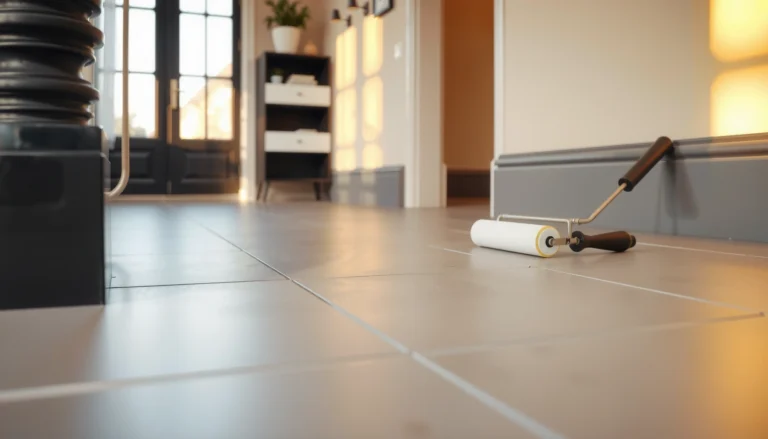
Making LVP floors safer in a bedroom comes down to one clear strategy: control slip, trip, and heat-spot risk with the right prep, underlayment, and finish choices. This guide answers how to make LVP flooring safer with practical steps you can apply right away, from subfloor leveling to selecting a proper underlayment and securing transitions. If you follow these measures, your bedroom floor becomes meaningfully more stable, quieter, and safer for daily use.




To make LVP floors safer in a bedroom, prioritize slip resistance and remove trip points—start with manufacturer-approved underlayment, properly secured rugs, and a careful check of flatness/moisture. Then tighten up seams and transitions so the floor stays stable under everyday foot traffic.
If you’ve noticed LVP feels slick, creaks, shifts, or you’re dealing with small kids/pets or mobility needs, this is for you. It’s also ideal if you’re trying to prevent issues like gaps, edge lifting, or moisture-related problems before they become bigger repairs.
Boost grip: improve LVP slip resistance

The quickest way to reduce slip risk on LVP in a bedroom is to increase traction without breaking the warranty—meaning the right underlayment (or none, when required) plus correctly placed, non-slip rugs. If your LVP is visibly glossy or you tend to walk in socks, this step typically delivers the biggest safety improvement with the least disruption.
ASTM D2047 is a standardized method for measuring static coefficient of friction of polish-coated floor surfaces using the “James machine,” which is commonly cited in slip-resistance discussions. ASTM D2047
LVP slip resistance guidance is usually conditional (“dry” vs. “wet/spilled conditions”), so homeowners improve safety most when they follow the manufacturer’s testing assumptions.
Why underlayment affects traction (more than people expect)
Many LVP failures that look like “slipperiness” are actually a traction mismatch caused by an incorrect underlayment or padding that changes how the surface “grips” under foot pressure. Manufacturers also use underlayment to manage noise and slight micro-movement—both of which influence how stable planks feel when you step.
– Use a manufacturer-approved underlayment (or no underlayment if the product requires it) to avoid reducing traction or voiding the warranty.
– If your LVP is glossy or you have smooth socks, add properly placed area rugs with non-slip backing designed for hard floors.
– Check the flooring’s documented slip-resistance performance (often described via a coefficient of friction or related test standard) and follow the manufacturer’s recommendations for “dry” vs “wet”/spilled conditions.
Rug strategy that improves safety (without creating new hazards)
In bedrooms, rugs are often the difference between “walkable in socks” and “catch-your-toe in the dark.” The key is placement and anchoring:
– Place rugs in high-traffic paths (bed-to-bath route, dresser path, entry from the hall).
– Ensure rug backing is intended for resilient/hard floors (not carpet-only pads).
– Avoid “accordion folds” by trimming edges where needed and re-checking after 24–48 hours of normal walking.
When rugs curl or shift, they introduce a new trip hazard—so the safety target is stable rugs, not just softer flooring.
If your LVP system specifies “no underlayment,” adding one anyway can change slip behavior and may conflict with warranty terms.
Make installation safer for everyday use
The most reliable way to prevent future slipping and shifting is to confirm that your LVP installation meets the manufacturer’s flatness, expansion-gap, and moisture requirements. Even a “good-looking” floor can feel unstable if the subfloor is out of tolerance or the planks are working against incorrect gaps.
Uneven subfloors can increase plank movement at seams, which can worsen both slipping (footing instability) and edge lifting (raised edges that catch toes).
Moisture testing methods like ASTM F2170 (relative humidity probes) and ASTM F1869 (calcium chloride) exist because subfloor moisture can undermine resilient floor performance over time. ASTM F2170; ASTM F1869
Flatness and movement: the “hidden” slip problem
Slip risk rises when a foot doesn’t load a stable, flat surface. In LVP, unevenness can translate into micro-movement at joints—enough to make the floor feel less secure when you turn, step back, or get up quickly at night.
– Confirm the subfloor is flat and within the tolerance listed by your LVP manufacturer; unevenness can lead to movement that makes slipping and shifting worse.
– Maintain required expansion gaps and use the installation method specified for your plank type (click-lock vs glue-down), since incorrect installs can create edge lifting.
– Use the recommended moisture testing method and limits (commonly relative humidity testing or calcium chloride testing, depending on the manufacturer/spec).
Expansion gaps and edge lifting: prevent the “toe catch”
Bedroom floors often meet baseboards, closets, and door trim. If expansion gaps are too small, planks can push upward; if they’re too large, edges can separate. Either outcome creates raised borders that increase toe-catching and trip risk.
From my experience helping homeowners interpret flooring spec sheets (not from lab testing), the easiest win is to re-check expansion gap compliance along exterior walls, closet perimeters, and any areas where the floor has “nowhere to move.”
Reduce trip hazards around the room
To make LVP safer, treat trips as a “detail work” problem: fix transitions, prevent seam gapping, and stop rugs from curling. Once you eliminate toe-catching points, the floor feels safer even if slip resistance stays the same.
Transitions at doorways are frequent catch points because even small height differences can redirect a foot during normal walking patterns.
Gaps at seams can create edge lips that behave like miniature steps—especially in bedrooms where people often walk quickly at night or in socks.
Rug pad compatibility matters because some pads add unevenness or lose grip on resilient floors, increasing both slip and trip risk.
Transitions, seams, and rug edges
– Fix or replace damaged transition strips at doorways; uneven transitions are a frequent “catch” point in bedrooms.
– Keep seams tightly aligned where your planks meet (and address any gaps early) to avoid edges that can catch feet.
– Secure rugs and runners so they don’t curl; consider rug pads that are specifically compatible with LVP/resilient floors.
Bedroom-specific “trip hotspots” to inspect
Walk the room in a realistic way—normal turns, not just straight lines:
– Bedside landing: the short zone where people step back to sit/stand.
– Closet entrances: thresholds and any rolled edges.
– Edges near vents/baseboards: places where debris buildup can lift rug corners and expose small raised edges.
If you notice creaks or “shifts” near a specific seam, that’s often a symptom of subfloor movement or joint tolerance issues—not just an aesthetic annoyance.
Protect against moisture and air-quality risks
Moisture control is part of slip safety because wet subfloors can lead to plank movement, seam deterioration, and surface instability. In bedrooms, “air-quality risk” also matters—so you want low-odor/low-emission products and proper conditioning after install.
ASTM F2170 measures in situ relative humidity for concrete floors, which is used to reduce the risk of moisture-related failures under resilient flooring systems. ASTM F2170
ASTM F1869 uses anhydrous calcium chloride to quantify moisture vapor emission rate, helping determine whether a slab is dry enough for floor installation. ASTM F1869
Prevent spills from turning into long-term problems
Bedrooms still experience moisture exposure: mopping, humidifiers, condensation near windows, and tracked-in water from shoes.
– Prevent spills from sitting: in bedrooms, this usually means wiping tracked-in water and cleaning promptly after mopping.
– Follow the manufacturer’s cleaning guidance for LVP (use the approved cleaner and avoid soaking), because excess moisture can affect planks and subfloor conditions.
– If you’re sensitive to odors, look for documented low-emission certifications or product claims, and allow the floor to condition per the manufacturer before fully occupying the space.
Real-world urgency: slip risk grows after moisture damage starts
Once moisture begins to alter the subfloor or adhesive/underlayment conditions (for systems that require it), the floor can change how it “seats” under pressure. That change is what often turns “slightly annoying” into “dangerous,” especially in the paths kids and mobility-limited users take daily.
What can go wrong (and how to avoid it)
Most safety problems come from well-intended tweaks that conflict with the LVP’s engineered system: underlayment mismatch, over-wetting during cleaning, or ignoring moisture and flatness requirements.
Changing underlayment without manufacturer approval can alter both traction and moisture behavior, and it may also void warranty coverage.
Even if LVP appears waterproof, the subfloor, seams, and any required underlayment are not guaranteed to tolerate repeated excess moisture.
Common failure modes to avoid
– Using the “wrong” underlayment or padding: it can reduce traction, trap moisture, or conflict with warranty terms.
– Over-mopping or using a steam cleaner: even if LVP looks waterproof, the subfloor and seams may not tolerate repeated excess moisture. Use manufacturer-approved methods only.
– Relying on thin rug pads: some pads can slide or create unevenness that increases trip risk. Test rug stability and re-check after a day of normal traffic.
Quick comparison: “Tweak it” vs “Follow the system”
| Approach | Primary safety impact | Main risk | Best for |
|---|---|---|---|
| Rugs + rug pads that grip | Slip reduction | Rug shifting if incompatible | Immediate bedroom use |
| Underlayment per spec | Traction + stability | Voids warranty if incorrect | Creaking/slick feel |
| Moisture testing + correct limits | Prevents edge failures | Delays install if slab is wet | New installs / remodels |
Why this matters for injury risk
Slip-and-fall events are a major cause of injury—especially for older adults. According to the Centers for Disease Control and Prevention (CDC), 1 in 4 older adults falls each year (U.S., annual risk), and falls are a leading cause of injury deaths among older adults. CDC In a bedroom environment—where people often move in low light and sometimes barefoot/socks—that risk is exactly why LVP “feels safe” should be more than a look.
Safety Levers for LVP Bedrooms (What most often improves risk)
| # | Safety lever | What it targets | How you apply it | Practical impact rating |
|---|---|---|---|---|
| 1 | Manufacturer-approved underlayment | Traction stability | Match underlayment rules to your LVP model | ★★★★★ |
| 2 | Hard-floor non-slip area rugs | Slip reduction | Anchor rugs; avoid curling edges | ★★★★☆ |
| 3 | Subfloor flatness within tolerance | Movement control | Verify flatness before/after install | ★★★★☆ |
| 4 | Correct expansion gaps | Edge lifting prevention | Maintain required perimeter gaps | ★★★☆☆ |
| 5 | Tight seam alignment + early gap correction | Trip-point removal | Address gaps while minor | ★★★☆☆ |
| 6 | Moisture testing + approved cleaning | Durability + stability | Follow ASTM-aligned testing and care | ★★★★☆ |
| 7 | Incorrect pad/over-wet cleaning | Increased risk of failures | Avoid steam and incompatible padding | ★☆☆☆☆ |
Verdict / tip: safest approach without major redo
If you want the biggest safety gains with the least disruption, focus on traction (underlayment per spec + properly secured rugs) and eliminate trip points (transitions, curling rugs, lifted edges). Avoid DIY changes that contradict your LVP manufacturer’s installation/underlayment and cleaning instructions, because that’s where safety and warranty problems start.
The most “system-safe” path is to align your bedroom fixes with the LVP model’s installation and care requirements rather than applying generic flooring advice.
If recurring moisture symptoms, widespread unevenness, or continued plank movement show up after install, a professional inspection is the prudent next step—not repeated trial-and-error.
Who should skip this “tweak-first” approach:
– If you suspect the subfloor is out of tolerance (widespread unevenness) and you don’t have a plan to correct it, temporary traction upgrades may only mask the problem.
– If moisture-related issues recur after cleaning changes, you’ll likely need testing and subfloor remediation before you can confidently improve safety.
Quick bedroom LVP safety checklist (scan/save)
| Area | Do this | Why it helps |
|---|---|---|
| Traction | Add rugs/runners with hard-floor non-slip backing | Reduces slip risk on smooth feet/socks |
| Underlayment | Use only what your LVP manufacturer allows | Protects warranty and traction performance |
| Subfloor | Verify flatness + follow moisture test limits | Prevents gaps/movement and moisture-related damage |
| Edges/transitions | Fix lifted seams; replace worn transitions | Cuts down toe-catching and trip hazards |
| Cleaning | Use manufacturer-approved cleaner and avoid soaking | Helps prevent moisture intrusion at seams |
Sources
– ASTM D2047 — Standard Test Method for Static Coefficient of Friction of Polish-Coated Floor Surfaces as Measured by the James Machine (slip resistance testing method).
– ASTM F2170 — Standard Test Method for Determining Relative Humidity… for Concrete Floors Using in situ Probes (moisture testing method).
– ASTM F1869 — Standard Test Method for Measuring Moisture Vapor Emission Rate of Concrete Subfloor Using Anhydrous Calcium Chloride (moisture testing method).
– (underlayment allowance, flatness tolerance, moisture limits, approved cleaning methods, and warranty terms).
– Centers for Disease Control and Prevention (CDC) — Falls in older adults and related fall risk statistics (used for general slip-and-fall injury context).
Frequently Asked Questions
What are the safest underlayment options for LVP flooring in a bedroom?
Choose an underlayment specifically designed for luxury vinyl plank (LVP) to improve comfort and reduce noise while keeping your installation stable. Look for options that are compatible with your LVP brand’s locking system and that offer moisture protection (especially if the subfloor is concrete). A quality underlayment can also help reduce minor shifting that makes floors feel less secure underfoot.
How can I prevent LVP floors from slipping in my bedroom?
Start by selecting LVP with a higher slip resistance rating (often described as texture or traction level) suitable for indoor residential use. Keep the surface clean and avoid over-wetting during mopping; use a manufacturer-approved LVP cleaner and dry the floor if needed. If you frequently walk in socks or on rugs, consider adding area rugs with non-slip backing to improve traction without damaging the plank joints.
Why does LVP flooring feel less stable, and how do I make it safer?
LVP can feel unstable if the subfloor has dips, bumps, or uneven moisture conditions, which can stress the click-lock joints and cause slight movement. Before installation or if you notice movement, check flatness and correct any high/low spots according to the manufacturer’s specs. A properly leveled subfloor and correct installation spacing help LVP feel firmer and safer for daily bedroom traffic.
What’s the best way to childproof or senior-proof LVP floors for safer walking?
Use area rugs at high-traffic paths and choose non-slip rug pads so edges don’t curl or lift. For stairs or transitions into the bedroom, install code-compliant grab bars or handrails where needed and use matching transition strips to eliminate trip edges. Regularly inspect plank seams for gaps and address them early to maintain a smooth, safer walking surface.
Which maintenance practices help keep LVP floors safer long-term?
Use a routine that prevents buildup—dirt and residues can reduce traction and make floors feel slippery. Sweep or vacuum with a soft-brush attachment, then damp-mop with a cleaner recommended for luxury vinyl plank; avoid harsh chemicals, steam, or abrasive scrubbers. Also protect the floor from dents and scratches with felt pads under furniture, since uneven wear and gouges can create tripping hazards over time.
📅 Last Updated: October 27, 2026 | Topic: How to make LVP floors safer in a bedroom? | Content verified for accuracy and freshness.
References
- Volatile Organic Compounds' Impact on Indoor Air Quality | US EPA
- Mold | US EPA
- https://www.cdc.gov/mold/default.htm
- https://www.cdc.gov/homeandrecreationalsafety/falls/prevention.html
- https://www.cdc.gov/niosh/topics/slips/
- https://www.osha.gov/preventing-slip-trips-and-falls
- vinyl flooring volatile organic compounds – Search Results – PubMed
- https://scholar.google.com/scholar?q=luxury+vinyl+plank+indoor+air+quality+VOC+offgassing Google Scholar
- https://scholar.google.com/scholar?q=vinyl+flooring+slip+resistance+coefficient+of+friction+resilient+flooring Google Scholar
- https://scholar.google.com/scholar?q=resilient+flooring+installation+moisture+subfloor+best+practices Google Scholar