
To protect engineered wood floors in a laundry room, your best move is to control water exposure at the source—use a tight-fitting mat, a waterproof underlayment (as allowed), and a quick-dry cleaning routine. If you follow those steps, the floor’s surface stays sealed and damage from spills, moisture, and humidity stays far less likely. This guide answers exactly what to do day one to keep your engineered wood floor looking new.




Protect engineered wood floors in a laundry room by controlling moisture first—before you worry about scuffs or stains. Keep spills and washer leaks from sitting on the floor, use the right protective mats/rugs, and clean using the method your flooring manufacturer recommends. This guide walks through practical protection steps and the common mistakes that cause warping or edge swelling.
If your laundry room sees frequent water exposure (splashes, damp laundry, occasional leaks), engineered wood can still work—but only if you’re consistent with prevention and maintenance. If you can’t reliably prevent standing water, you may want a more moisture-tolerant flooring option instead.
Who this is for / when it applies: This is for homeowners and property managers considering (or already using) engineered wood floors in a laundry room where moisture risk is real—especially around the washer, dryer, and any mud/splash zone at doorways. As of 2026, manufacturers are clear that engineered wood can be moisture-sensitive at seams and edges, so your best results come from disciplined drying, approved cleaning, and fast leak response.
Start with moisture control (the real protection layer)
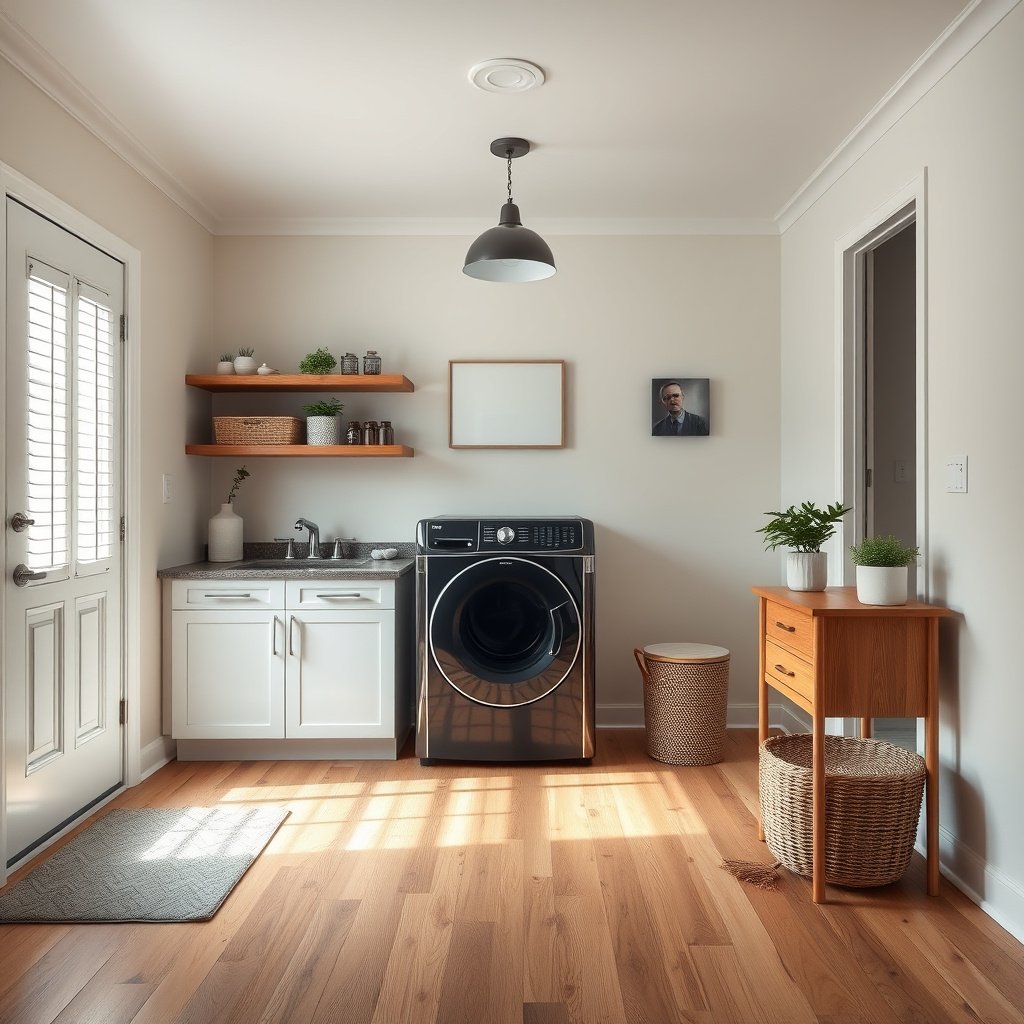
The fastest way to protect engineered wood floors in a laundry room is to eliminate lingering moisture at the source and in the airflow path. Scuffs matter, but repeated damp conditions at seams and edges are what drive swelling, cupping, and finish breakdown in engineered wood.
Standing water is the most direct path to engineered wood floor damage because it saturates wood-based layers and concentrates swelling at panel joints.
Engineered wood is still wood—so moisture control focuses on preventing prolonged dampness at seams, not only avoiding visible puddles.
Why the laundry “micro-leaks” are the real enemy
In a laundry room, the moisture problem rarely looks dramatic. Instead of one big spill, you often get: washer hose drips, slow seepage at connections, damp laundry baskets, and repeated splashes that never fully dry. Over time, that pattern changes the moisture content of the wood core and stresses the finished surface, especially along edges and joints.
A key concept: wood swelling accelerates when moisture content changes significantly. According to the USDA Forest Products Laboratory’s Wood Handbook (2010), wood swelling is strongly tied to how close material is to its fiber saturation point (commonly around 28–30% moisture content). You don’t usually reach that number in real homes, but laundry-room conditions can repeatedly push the floor through damaging “wetting and drying cycles.”
How much moisture risk is “too much”?
Laundry rooms also tend to keep indoor humidity elevated because dryers, wet laundry, and household activity add moisture to air. According to the U.S. EPA’s A Brief Guide to Mold, Moisture, and Your Home (2012), keeping indoor relative humidity in a healthier range of about 30–50% can reduce moisture problems associated with mold growth. And according to the U.S. EPA Mold Remediation in Schools and Commercial Buildings (2008), mold can grow when moisture and relative humidity remain sufficiently high (commonly cited around 60% RH or more).
While those documents focus on mold, the underlying takeaway for engineered wood floors is the same: when the room stays humid and dampness isn’t cleared quickly, wood-based materials pay the price at edges and seams.
7 Moisture Benchmarks That Drive Laundry-Room Damage Risk for Engineered Wood
| # | Moisture benchmark | Typical value used in guidance | What it signals for engineered wood | Protection priority |
|---|---|---|---|---|
| 1 | Wood fiber saturation point | ≈28–30% MC | Swelling can plateau, but repeated wetting pushes material through harmful moisture swings | ★★★★★ |
| 2 | Common indoor RH moisture-risk threshold | ~60% RH+ | Increases chance that damp conditions persist at seams and edges | ★★★★☆ |
| 3 | EPA recommended indoor RH target range | ~30–50% RH | Helps engineered wood recover faster between damp events | ★★★★☆ |
| 4 | Drying urgency after water exposure | ~24–48 hours | Delays increase risk of deeper moisture migration in wood-based floors | ★★★★☆ |
| 5 | Moisture content test approach | Interior tests guide drying decisions | Confirms whether engineered wood has actually dried (not just looked dry) | ★★★☆☆ |
| 6 | Capillary wicking at joints | Localized migration beats surface wiping | The worst damage often starts where seams can hold moisture | ★★★★☆ |
| 7 | Model-based drying target concept | “Dry to spec” prevents relapse | Engineered wood performs best when moisture doesn’t rebound after “partial drying” | ★★★☆☆ |
The three practical moisture habits that work
1) Block the most common threat: standing water from washer hoses, overflows, and “just for a minute” puddles. Engineered wood floors can tolerate everyday humidity, but they shouldn’t be repeatedly soaked.
2) Fix leaks fast: check washer hoses, shutoff valves, and connections regularly (replace anything brittle or seeping).
3) Improve dryness: keep airflow moving and prevent the room from staying damp (use ventilation/exhaust designed for your laundry setup).
Engineered wood floor warranties typically exclude damage from sustained moisture, emphasizing prompt cleanup and prevention of leaks rather than “repair after the fact.”
Good laundry-room ventilation reduces the time engineered wood floors stay in a high-humidity state, improving drying between loads.
Use mats and rugs the right way (not just “anything”)
The right mats and rugs can dramatically reduce how often moisture reaches engineered wood seams. Your goal isn’t decoration—it’s controlling the wet-entry zone and preventing moisture pockets underneath.
A mat is only protective for engineered wood if it captures water and then dries; mats that retain moisture can transfer the problem back to the floor.
Placing protection directly in the washer/dryer splash path reduces how frequently engineered wood experiences edge swelling events.
Place protection where water actually lands
Start with the highest-risk locations:
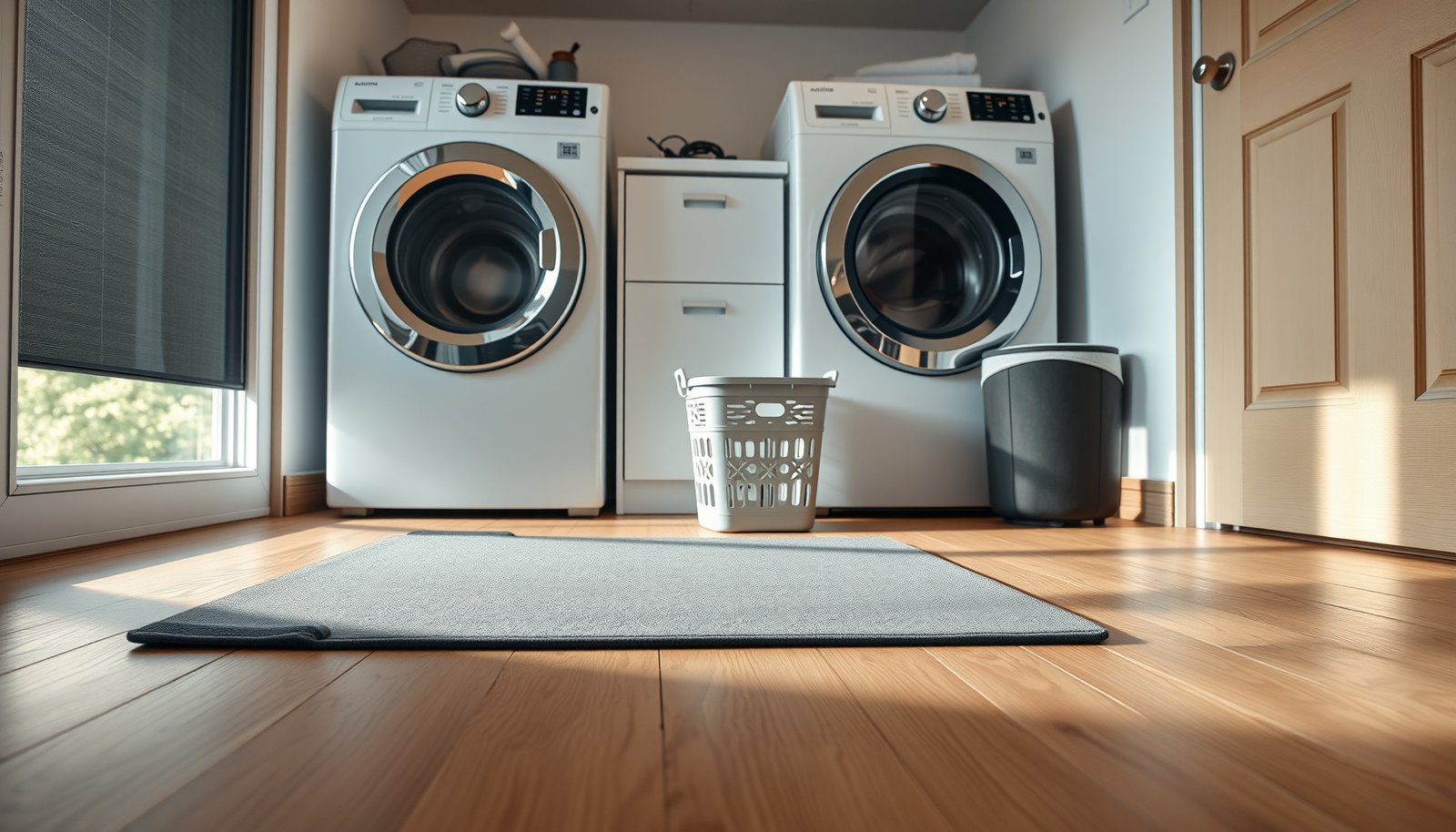
– Water-catch mat at the main wet-entry zone (near the washer area and wherever damp laundry gets handled).
– Under/adjacent to washer and dryer where splashes and drips most often occur.
If your laundry room includes a door to the outdoors or a utility exterior, that’s also a splash-and-mud entry point—engineered wood floors don’t need “flooding” to be stressed; repeated damp grit can do cumulative damage.
Choose materials that don’t trap moisture
When you shop for mats for engineered wood floors, prioritize:
– Non-absorptive or fast-draining construction
– A bottom that doesn’t hold a wet layer against the engineered wood finish
Avoid “cute” rugs with thick padding or backing that can retain humidity. In practice, engineered wood is often damaged underneath what looks like a dry top surface, because damp air and liquid get trapped at panel seams.
Use rugs thoughtfully (and treat them like a moisture source)
If you use area rugs:
– Lift and dry them when they get wet.
– Ensure rug backing won’t create a moisture “pocket.”
– Keep edges from curling, which can concentrate water in a small perimeter.
Under-rug moisture retention can accelerate finish dulling and seam swelling in engineered wood because the floor cannot fully dry.
Protect the surface finish from daily wear
Preventing finish wear is the second layer of protection after moisture control. For engineered wood floors, scuffs and grit are usually manageable—unless they combine with dampness.
Engineered wood finishes wear faster when grit acts like abrasive “sand,” especially during humid or damp periods in laundry rooms.
Surface protection (pads, mats, correct cleaners) preserves the finish barrier that helps engineered wood resist everyday splashes.
Reduce gouges along edges and seams
Laundry rooms often involve moving baskets, carts, and appliances. To protect engineered wood floors:
– Add felt pads on furniture and appliances that contact the floor.
– Move heavy items carefully to avoid dragging across panel edges and seams.
Even minor edge damage matters more on engineered wood because once the finish is compromised, moisture has an easier route to reach wood-based layers.
Keep grit away with a routine mat strategy
Track-in dust is common in laundry rooms (dryer lint, lint from vent cleaning, fabric debris). That debris becomes abrasive when damp. A simple strategy helps:
– Use a dedicated entrance mat (or the same mat used for splash control) and maintain it by shaking out and drying it as needed.
– Replace or deep-clean mats when they stop draining effectively.
Clean using only approved products for your finish
Don’t rely on random “spot cleaners” that may leave residue or soften coatings. Engineered wood manufacturers typically specify approved products and techniques in their care instructions; follow those precisely to avoid finish breakdown.
Using cleaning products not approved for your engineered wood finish can reduce protective chemistry and increase susceptibility to moisture-related dulling.
Clean safely to prevent swelling and dulling
Cleaning is where many well-intentioned homeowners accidentally undo moisture protection. The safest approach for engineered wood floors is controlled, manufacturer-approved cleaning that never saturates the surface.
Engineered wood can swell when cleaning saturates seams and edges, so avoid methods that deliver more water than the floor finish can tolerate.
Fast wiping and full drying after cleaning reduce the chance that water remains trapped where engineered wood panels meet.
Wipe and dry—don’t “wash the floor”
For spills and routine cleanup:
– Wipe spills quickly and fully dry the area after cleaning—the key is preventing moisture from lingering at seams and edges.
– After damp cleaning, make sure the floor surface is dry, not just “less wet.”
Avoid aggressive methods that saturate
Skip:
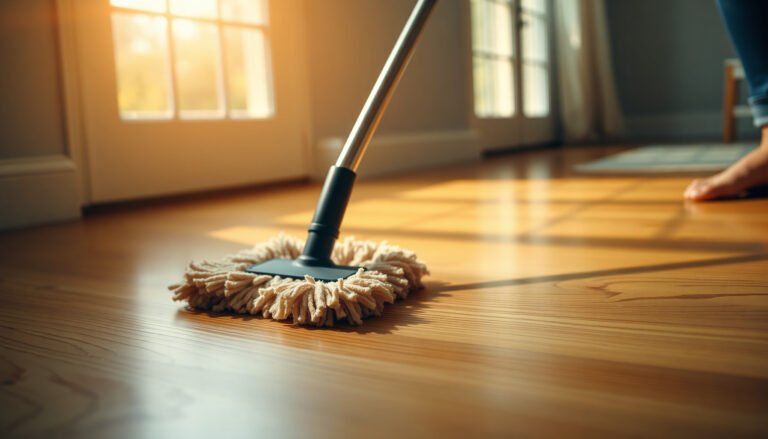
– Soaking mops
– Steam mops
– Any wet-cleaning that saturates the floor
Steam and excessive moisture can break down finishes and increase the risk of cupping at panel edges over time.
Use the right technique for your manufacturer
Use only what your flooring manufacturer allows—typically:
– Damp-clean only if permitted
– Follow exact guidance on dilution, application method, and dwell time
As of 2026, more manufacturers publish explicit do/don’t lists online, but you should always confirm your specific product line and finish type.
If your engineered wood care guide allows damp cleaning, the correct dilution and minimal moisture application protect the engineered wood core from repeated wetting cycles.
Watch for installation and warranty gotchas
Engineered wood can perform well in laundry rooms, but only when installation conditions match the manufacturer’s moisture and underlayment rules. Warranty coverage often hinges on whether the correct barrier and approved maintenance were followed.
Warranties frequently require compliance with specific installation/maintenance specs, including any recommended moisture-barrier or underlayment system for engineered wood.
Engineered wood damage near washer zones is commonly attributed to repeated moisture exposure, which may not be covered if prevention steps were omitted.
Installation specs you should treat as non-negotiable
Follow the manufacturer’s:
– Underlayment/barrier use (if allowed for your specific engineered wood product)
– Acclimation requirements
– Allowable moisture exposure limits
If your laundry room runs humid regularly in 2026, installation guidance becomes even more important—because recovery time between damp events drives long-term stability.
Protect transitions and edges
Moisture migrates where it has the easiest path:
– Near washer locations (splash-back and hose drips)
– Doorways and transitions (airflow and cleaning liquids concentrate here)
Engineered wood floors fail most often when water reaches edge zones repeatedly and isn’t cleared before it penetrates.
Don’t assume “engineered” means “waterproof”
Engineered wood still has wood content, so it can swell, especially with repeated moisture. “Engineered” typically refers to layered construction and dimensional stability—not guaranteed wet-area tolerance.
Even when engineered wood resists minor humidity changes, prolonged dampness can still compromise seams and the finish over time.
What can go wrong (common laundry-room failures)
The most common failures are not “mystery problems”—they’re predictable patterns of moisture retention and overly wet cleaning. If engineered wood in your laundry room starts to warp or swell at the edges, these causes are usually to blame.
Leaving damp laundry or towels on engineered wood floors long enough to wet seams is one of the fastest ways to trigger edge swelling.
Steam cleaning and overly wet mopping are frequent causes of finish breakdown and cupping at panel edges in engineered wood.
Common failure modes to watch
– Leaving wet laundry or damp towels on the floor long enough for moisture to penetrate seams
– Using the wrong mat/rug backing that traps humidity against the floor—even if the top looks dry
– Steam cleaning or soaking mops that saturate the surface layer and encourage moisture migration
– Ignoring manufacturer guidance on humidity levels and cleaning products (often a warranty issue)
– Assuming small leaks don’t matter: slow drips can create localized damage before you notice
Quick reality check: engineered wood vs moisture-tolerant floors
If you consistently get standing water or can’t control leaks, engineered wood may be the wrong fit. Here’s a practical tradeoff view:
| Option for laundry rooms | Pros | Cons |
|---|---|---|
| Engineered wood floors (with strict moisture habits) | Comfortable underfoot; strong look when kept dry; manageable with mats and fast cleanup | Sensitive at seams; standing water and steam can cause swelling; requires consistent maintenance to prevent long-term damage |
| Tile (ceramic/porcelain) | Highly resistant to wet conditions; easier to manage floods and splashes | Harder surface; grout maintenance; can be colder underfoot |
| Water-resistant LVP (rated for wet areas) | More forgiving of splash and occasional dampness; simpler cleaning | Visual variance; may still require proper subfloor prep and seam care |
Verdict: worth it—with strict moisture habits
Engineered wood floors can work in a laundry room if you treat moisture like the main enemy: prevent leaks, dry quickly, and clean lightly using manufacturer-approved methods. The downside is that you’ll need discipline—if the washer area frequently gets wet, you can’t act fast on spills, or the room stays humid, engineered wood may be a poor fit.
If you cannot reliably prevent lingering dampness, engineered wood is a higher-risk choice for laundry rooms than tile or floors rated for wet exposure.
The difference between success and failure with engineered wood in laundry rooms is usually drying time and prevention—not the floor’s thickness.
Who should skip engineered wood here: If your laundry room has known leak history, poor ventilation, or recurring standing water, choose a surface designed for wet areas and prioritize drainage and water management instead.
Quick protection checklist (save this)
| Area | Do this | When | |
|---|---|---|---|
| ✅ | Washer zone | Place a suitable water-catch mat and keep hoses inspected | Ongoing; check hoses periodically |
| ✅ | Spills | Wipe immediately and fully dry the area | Every spill, no exceptions |
| ✅ | Cleaning | Use the approved method/product for your engineered wood finish | As needed; follow care instructions |
| ✅ | Floor protection | Add felt pads; avoid dragging items across seams | Whenever you move furniture/appliances |
| ✅ | Room humidity | Keep ventilation/exhaust working to avoid persistent dampness | Regularly; especially during loads |
Sources
If you want engineered wood floors to survive a laundry room, your plan has to be moisture-first: prevent leaks, capture splashes with well-chosen mats, dry quickly, and clean only the way your manufacturer permits. When moisture is controlled consistently (not occasionally), engineered wood becomes a practical, attractive option—even in a space that regularly tests your flooring’s limits.
Frequently Asked Questions
What’s the best way to protect engineered wood floors in a laundry room from water damage?
Use a waterproof underlayment (or a moisture barrier) and install floor protection mats in high-splash zones near the washer and utility sink. Wipe spills immediately and keep humidity controlled with a dehumidifier or HVAC venting to prevent cupping and gapping. Periodically check seams and edges for lifting or swelling, especially after leaks.
How can I prevent moisture and spills from ruining my engineered wood flooring in the laundry area?
Place absorbent rugs or washable anti-slip mats that can handle wet feet, and choose a mat design that doesn’t trap moisture underneath. Use a drip tray or leak pan under the washer and ensure hoses are properly connected and inspected for wear. If you do get water on engineered wood floors, dry the area quickly with a fan and avoid leaving standing water on the surface.
Why does engineered wood flooring need special care in laundry rooms compared to other rooms?
Laundry rooms typically have higher humidity, more frequent water exposure, and greater risk of accidental leaks than living areas. Even though engineered wood floors are more stable than solid wood, they can still be vulnerable to moisture infiltration at seams, edges, and around appliances. Preventing moisture buildup and acting fast on spills is key to maintaining long-term durability and appearance.
Which cleaning products are safe for engineered wood floors in a laundry room?
Use a manufacturer-recommended engineered wood floor cleaner or a pH-neutral cleaner that won’t leave residue. Avoid soaking the floor with wet mops, steam cleaners, or harsh chemicals that can degrade finishes and promote water penetration. For day-to-day cleaning, a lightly damp microfiber mop and immediate drying help protect the protective coating.
How do I shield engineered wood floors from scratches and scuffs caused by laundry traffic and appliances?
Add felt pads under laundry carts, hamper legs, and any rolling chairs, and consider a protective runner where foot traffic is highest. When moving appliances or cleaning around the washer, lift rather than drag to avoid gouges in the finish layer. For ongoing protection, keep pet nails trimmed and use a floor-safe cleaner to maintain the finish without thinning it prematurely.
📅 Last Updated: October 19, 2026 | Topic: How to protect engineered wood floors in a laundry room? | Content verified for accuracy and freshness.
References
- Engineered wood
- Wood flooring
- https://www.cdc.gov/mold/default.htm
- https://www.who.int/news-room/fact-sheets/detail/dampness-and-mould
- https://www.epa.gov/mold
- https://pubmed.ncbi.nlm.nih.gov/?term=indoor+dampness+humidity+mold+prevention
- https://pubmed.ncbi.nlm.nih.gov/?term=wood+flooring+moisture+water+damage
- https://scholar.google.com/scholar?q=engineered+wood+floor+maintenance+moisture Google Scholar
- https://scholar.google.com/scholar?q=wood+flooring+water+damage+dimensional+stability Google Scholar
- https://scholar.google.com/scholar?q=laundry+room+humidity+wood+flooring+protection Google Scholar