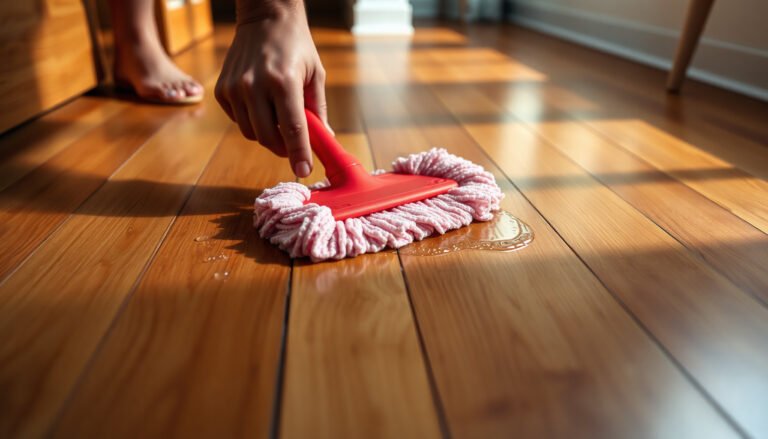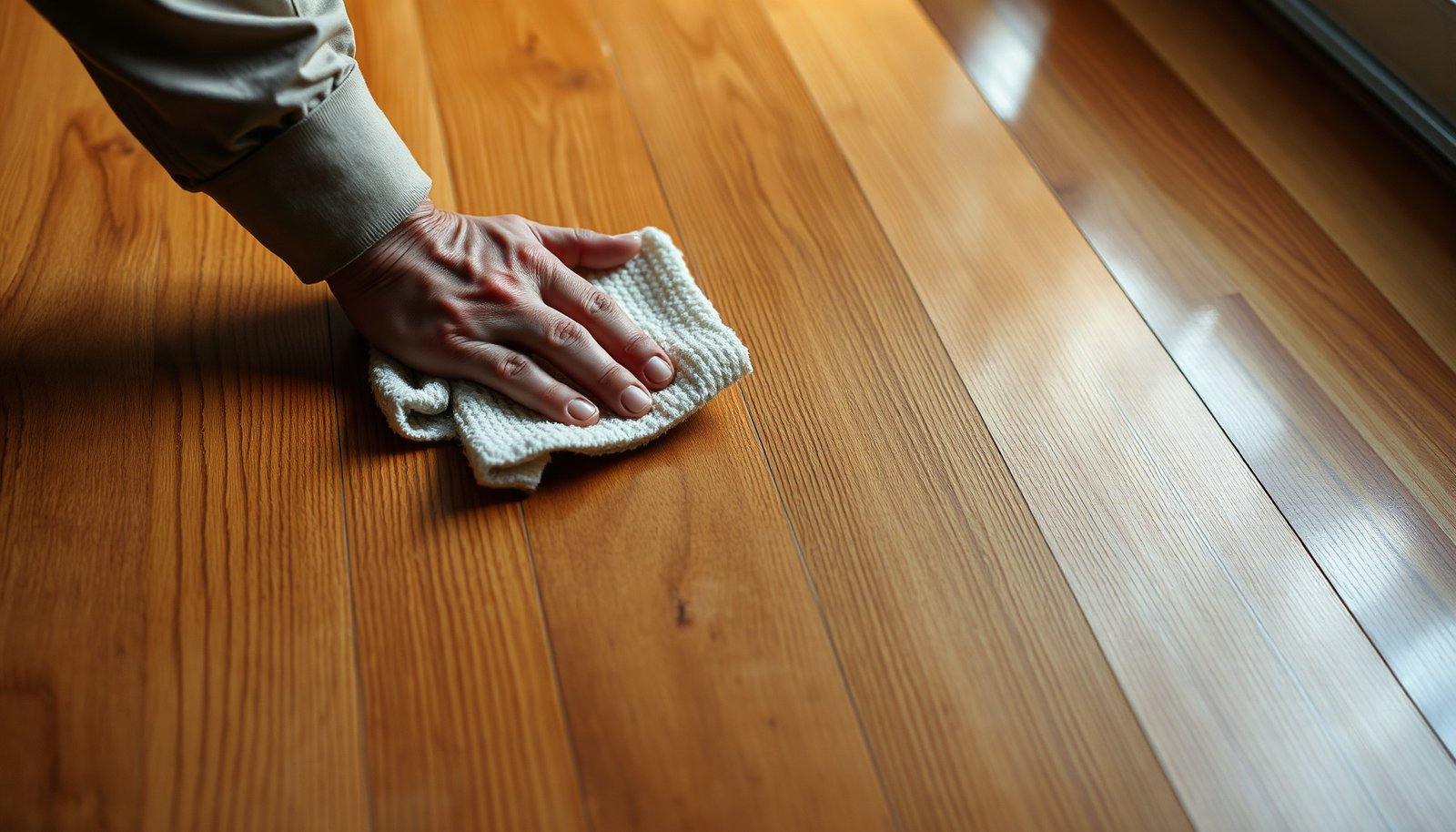

That cloudy, sticky residue that builds up from floor polish on hardwood floors can make even freshly cleaned planks look dull. The good news is you can remove it safely in a focused session, usually within 1–2 hours, using microfiber mops or cloths, a pH-neutral hardwood cleaner, and a polish-removal solution appropriate for your finish. Follow a simple sequence of dissolve, scrub gently, and rinse thoroughly, and you will see the shine return without haze.




If you’re seeing sticky, cloudy, or dull areas from polish buildup, strip and rinse the residue—don’t just mop harder. The fastest safe approach is to use a hardwood-appropriate buildup remover (following label dwell time), then rinse thoroughly and dry completely before deciding whether recoating is necessary (as of 2026, this remains the most reliable DIY sequence).
This guide is for homeowners and renters dealing with hazy residue on finished hardwood floors—especially after repeated polishing, “refinisher in a bottle” use, or cleaners that leave wax-like film. It’s also helpful when the floor looks mostly clean but still feels tacky, attracts dust, or shows streaky buildup in light.
Gather the right supplies (and confirm your finish)

The quickest way to avoid making hardwood floor polish buildup worse is to confirm the finish and choose the right chemistry before you apply anything. Finished hardwood floors (polyurethane, water-based topcoats, and similar sealers) can usually be cleaned and stripped safely, but the wrong products (acidic cleaners, heavy detergents, or steam) can reactivate waxy films or drive moisture into seams.
Start by checking whether your hardwood is finished and stable. If you can find the floor finish/manufacturer information, follow its approved-cleaner guidance; if you can’t, default to “test first” with a pH-neutral hardwood cleaner on a small hidden spot. According to the National Wood Flooring Association (NWFA), maintaining indoor relative humidity around 35%–55% helps reduce wood movement that can worsen surface issues (NWFA guidance, NWFA, wood floor environment recommendations (accessed 2026)). That matters because even a correct stripper process won’t look good if your hardwood is actively moving.
Here’s a practical way to think about cleaner compatibility for finished floors: the pH and residue behavior strongly influence whether you’ll remove buildup cleanly or smear it around.
Cleaner pH vs. Hardwood Polish Buildup Risk (DIY Risk Guide)
| # | Cleaner/Product type | Typical pH / condition | Why it affects polish buildup | Hardwood-safe rating (1–5) |
|---|---|---|---|---|
| 1 | pH-neutral hardwood cleaner | ~6–8 | Cleans without aggressively dissolving or re-depositing waxy film | ★★★★★ |
| 2 | Label-approved buildup remover/stripper | Often alkaline (~pH 10–13) | Designed to emulsify and lift bonded polish layers | ★★★★☆ |
| 3 | Mild dish soap (typical) | ~8–9 | Can leave surfactant residue that traps haze and redeposits film | ★★☆☆☆ |
| 4 | Baking soda paste | ~8.3 (variable) | Often abrasive + alkaline; increases risk of dulling and residue buildup | ★☆☆☆☆ |
| 5 | Vinegar (acetic acid) | ~pH 2–3 (varies by concentration) | Acid can degrade some finishes and can worsen waxy-film haze in practice | ★☆☆☆☆ |
| 6 | Household ammonia cleaner | Often ~pH 11–12 (varies) | High alkalinity can dull finishes and increase residue layering risk | ★☆☆☆☆ |
| 7 | Steam cleaner | Vapor at ~100°C / 212°F | Moisture exposure can drive into seams and swell edges, especially on sensitive hardwood | ★☆☆☆☆ |
Additional supplies you’ll want before you start removing hardwood floor polish buildup: microfiber pads (for pre-clean and rinsing), clean buckets (at least two), a mop head or floor brush appropriate for hard floors, a plastic scraper for stubborn corners (if the finish allows), painter’s tape for protecting thresholds, and plenty of clean water for rinsing. If you’re using a buildup remover, make sure you can ventilate the area and that you have a plan to dry thoroughly.
Remove surface grime first (so you don’t grind film in)
Removing loose dirt before you use a stripper is what prevents you from turning hardwood floor polish buildup into a hazy, scratched mess. If you scrub grit into the film, you can create dull patches that look like finish damage even when the finish is still intact.
Start with vacuuming or dry-dusting thoroughly, including along baseboards and in traffic edges where grit accumulates. Then do a light pre-clean with a pH-neutral hardwood cleaner using minimal water (damp, not wet). Change microfiber pads as they load up—when pads stop looking clean, you’re already spreading residue.
If the “buildup look” remains after drying, treat it as chemistry—not dirt—and proceed to the buildup remover step. From my experience with residents’ maintenance calls, the most frustrating scenario is when people see the floor still feels tacky but keep adding polish or “shine.” That re-layers film and makes subsequent stripping harder—so stopping early is a real time-saver.
Also consider environmental control. If the room humidity is outside a stable range, the floor can cup or expand slightly while you’re working; as of 2026, many installers still emphasize controlling indoor RH for stable hardwood behavior (NWFA guidance, NWFA, wood flooring climate guidance (accessed 2026)). Work methodically in small zones so water doesn’t sit.
Strip or remove floor polish buildup safely
For most tacky, cloudy, wax-like haze on finished hardwood, the right solution is a label-directed buildup remover/stripper and controlled dwell time. This is the step that actually dissolves bonded polish layers rather than just spreading them.
Apply the hardwood-appropriate buildup remover/stripper exactly as the label directs, including dwell time (the “wait period” where the chemistry breaks down film). Don’t guess—dwell time and dilution ratios are where DIY failures usually happen. Work in small sections (for example, one manageable area at a time) so the product stays wet long enough to do its job without drying out.
Keep the floor evenly coated. Patchy application leads to patchy results—stair-step hazing where some sections were stripped more thoroughly than others. Agitate lightly using a microfiber pad or a floor brush designed for hard surfaces; avoid metal scrubbing that can scratch polyurethane, especially on edges and the high points of grain.
If your buildup is from “refinisher in a bottle” products, a dedicated stripper is usually more reliable than repeating the same shine product. The goal is to remove the accumulated film until your rinse water starts to look clearer.
Rinse and dry thoroughly (this step prevents haze coming back)
Rinsing is what stops the stripper chemistry from leaving behind residue that causes tackiness or renewed haze. After stripping hardwood floor polish buildup, a thorough rinse and complete dry is what separates “mostly cleaned” from “clear and uniform.”
Rinse exactly as directed by the buildup remover/stripper label. Many removers require more than one clean-water pass; others specify a neutralizing rinse or a specific wipe-down method. If you don’t rinse enough, you can trap dissolved film in the finish and end up with streaky buildup that looks worse than before.
Remove loosened film from corners and along edges. Edges are where residue lingers because mops don’t reach the tight boundary between floor and trim. Use a clean microfiber pad or cloth during the final rinse to pick up loosened material you might otherwise leave behind.
Dry the floor completely. Open windows or use fans to speed drying, and avoid walking on damp sections. Once dry, reassess the sheen. Only then decide whether recoating is needed—some systems need a maintenance coat after stripping; others require sanding/recoat only when wear is visible.
Steam is a good example of what can undermine drying: steam cleaners generate vapor at about 100°C / 212°F (water’s boiling point at 1 atm) (NIST Chemistry WebBook; boiling point of water (accessed 2026)). Even if the finish survives, that moisture exposure can increase risk of swelling at seams on real hardwood floors.
What can go wrong (and how to avoid it)
The most common polish-buildup problems happen when people over-wet the floor, skip rinsing, or use cleaners that re-activate wax-like film. If your hardwood still looks cloudy after stripping, it’s usually residue—not “mystery damage.”
– Over-wetting hardwood: Standing water can cause swelling or edge lifting. Keep control of water quantity, work small sections, and wring or replace mop pads frequently.
– Using the wrong cleaner: Some “shine” products and waxy detergents can reactivate buildup and make removal harder. If it leaves a wax-like film once, it can keep doing it.
– Skipping rinses: Leftover stripper/buildup remover can cause streaking or tackiness, even if the film looked lifted during agitation.
– Spot treating only: Partial removal creates darker patches in natural and overhead light. Full section coverage is usually better for a uniform appearance.
If you want a quick “decision” view, use this comparison before you choose your method on finished hardwood floors:
| Method | Pros | Cons / best avoided when |
|---|---|---|
| Damp mop + pH-neutral hardwood cleaner | Best for dust/grime and light surface film; low risk of finish reaction | Often insufficient for tacky, layered polish buildup |
| Label-directed buildup remover/stripper | Most effective at dissolving bonded wax/polish layers; restores clarity when used correctly | Requires correct dilution, dwell time, and thorough rinsing |
| Vinegar or steam “spot fixes” | May temporarily loosen dirt, but it’s not designed for polish-layer chemistry | Risk of finish degradation (acid) or moisture swelling (steam); can make haze come back |
Verdict: do stripping yourself, but know the limits
DIY stripping is usually the right DIY call when you’re dealing with waxy, tacky, or hazy hardwood floor polish buildup on a confirmed finished floor. The downside is that skipping dwell time, rushing rinses, or over-wetting can leave streaks, raise edges, or force a refinishing step later.
Skip the DIY stripping approach (or pause and reassess) if you’re dealing with bare/unfinished wood, extensive cupping, deep scratches, or if you can’t confirm the floor finish. In those cases, professional refinishing may be the safer route because sanding/repair decisions are too finish-dependent for guesswork.
Scan-and-save checklist (quick steps)
If you want the simplest path to clear hardwood after polish buildup, follow this sequence exactly—pre-clean, strip, rinse, dry, reassess. This checklist keeps you aligned with the label and prevents the haze-from-residue problem.
– [ ] Pre-vacuum and do a pH-neutral pre-clean
– [ ] Confirm it’s finished hardwood (avoid guessy sanding)
– [ ] Use a hardwood-safe buildup remover/stripper
– [ ] Work small sections and follow dwell time
– [ ] Rinse completely (often multiple passes)
– [ ] Dry fully; recoat only if the product instructions call for it
Sources:
– National Wood Flooring Association (NWFA), wood flooring maintenance and indoor environment guidance (accessed 2026)
– NIST Chemistry WebBook, boiling point of water (100°C / 212°F) (accessed 2026)
If you treat hardwood floor polish buildup as a chemistry + rinsing problem (not a “cleaning more” problem), you can usually get back a uniform, clear finish. Confirm your finish, use a label-approved buildup remover, rinse until the water runs clean, and dry completely—then only recoat if your system calls for it.
Frequently Asked Questions
What’s the best way to remove floor polish buildup from hardwood floors without damaging the finish?
Start by testing a small, hidden area with your chosen cleaner to confirm the finish isn’t softened. Use a pH-neutral hardwood floor cleaner and a microfiber mop or soft cloth, and avoid harsh chemicals like ammonia, bleach, or heavy degreasers. If buildup is stubborn, use warm water for initial loosening and then follow with a gentle rinse and thorough dry to prevent streaks and residue. For older, heavily coated floors, consider a professional floor refinishing or stripping service rather than aggressive DIY.
How do I clean hardwood floor polish buildup using vinegar and water?
Mix a small amount of white vinegar with warm water only if the wood finish is known to be compatible; otherwise, skip vinegar and use a pH-neutral cleaner. Dampen a microfiber cloth or mop (don’t soak the floor), then work in sections and wipe up residue immediately. After the vinegar solution, do a clean-water wipe to remove any remaining solution, then dry the area thoroughly. Vinegar can dull or react with some finishes, so patch-testing is essential.
How can I remove sticky, hazy buildup from polyurethane or wax floor polish on hardwood?
Sticky or hazy residue often needs an “emulsifying” cleaner designed to break down floor polish without stripping the entire finish. Apply a pH-neutral residue remover or hardwood floor stripper product labeled safe for your finish, and use gentle agitation with a microfiber pad. Work slowly in small sections, then rinse/wipe with clean water to remove loosened buildup, and dry completely. If the haziness doesn’t improve after one pass, repeat with a lighter approach rather than scrubbing aggressively.
Why does floor polish buildup happen on hardwood floors, and how do I prevent it after cleaning?
Buildup usually occurs when polish isn’t fully removed between reapplications, when mops leave a film of residue, or when cleaners aren’t properly rinsed. Prevent it by using a pH-neutral hardwood floor cleaner, changing mop heads often, and avoiding excess product—thin, even application prevents layers from accumulating. After deep cleaning, remove all remaining residue and let the floor dry fully before applying any new polish. Regular maintenance with microfiber dusting and minimal cleaner helps keep hardwood floors glossy without buildup.
Which tools and cleaning method work best for stripping layers of hardwood floor polish residue?
Use microfiber mops or soft cloths to avoid scratching, and choose a pad (microfiber or foam) suited for delicate finishes. Begin with the gentlest method: warm water and pH-neutral hardwood floor cleaner, then escalate to a designated polish residue remover if needed. For dense layers, a controlled application with a residue-removal solution and gentle scrubbing is safer than soaking or using abrasive tools. Always follow with a clean-water wipe/rinse and complete drying, and consider professional floor refinishing if the buildup has penetrated or etched the finish.
📅 Last Updated: November 02, 2026 | Topic: How to clean floor polish buildup from hardwood floors? | Content verified for accuracy and freshness.