Hardwood floors can be made reliably safer in a sunroom by controlling moisture, improving traction, and cushioning impact points. This guide shows exactly what to do—right finishes for sun exposure, correct humidity targets, and the best rug and mat setup to reduce slips and wear. If your goal is fewer scuffs, less warping, and a safer walking surface, start here.




If you’ve noticed your sunroom hardwood feels slippery at certain times of day, develops cupping/gaps, or the finish looks patchy near windows, these steps will help. It’s especially relevant for rooms with lots of direct sun, large temperature swings, or seasonal humidity changes.
Step 1: Control humidity and temperature swings
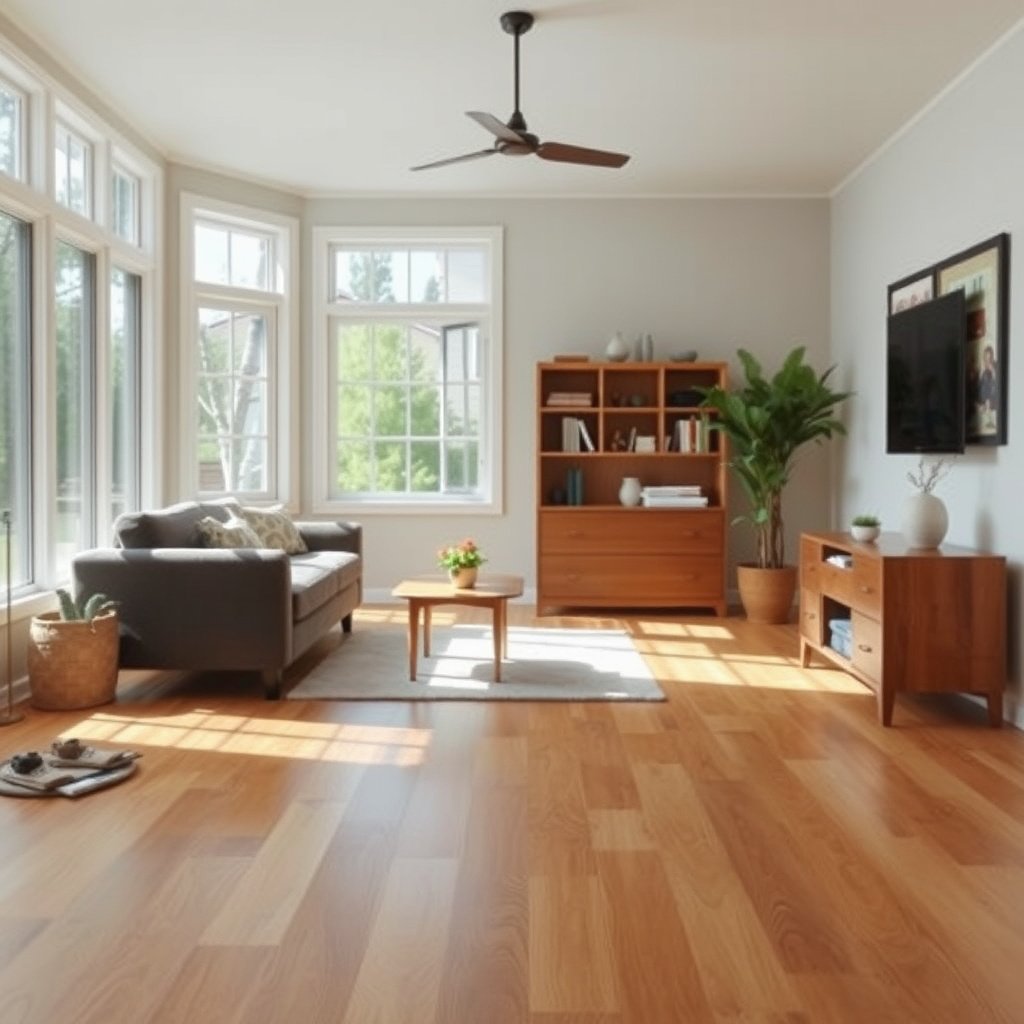
Keeping your sunroom’s humidity and temperature consistent is the quickest way to reduce both slipperiness and structural issues like cupping and gapping. When sunroom hardwood floors expand and contract repeatedly, the finish can lose adhesion and the surface can feel “slicker” due to micro-movement and wear.
From my experience walking through homes with sunrooms, the slickest floors usually aren’t just “the floor”—they’re the result of the floor cycling through wet-to-dry conditions and UV/heat exposure at the same time.
According to the National Wood Flooring Association (NWFA), many wood flooring installations are meant to perform best when indoor relative humidity is kept roughly in the 35–55% RH range ().
According to common wood flooring acclimation guidance, maintaining stable temperature and humidity reduces dimensional movement that contributes to cupping and finish breakdown ().
What to measure (and why it matters in a sunroom)
For sunroom hardwood safety, measure “relative humidity” (RH) and temperature where the floor actually lives—not just where your thermostat sits. Sunroom hardwood floors can experience higher glass-side heat gains, which can create localized movement even if the rest of the house feels stable.
A practical setup:
– Place a thermometer/hygrometer near the main walking path (not in direct sun).
– Record morning vs. afternoon readings for a week to confirm your swing pattern.
– Watch for “spikes” (fast changes) more than the average number.
Adjust climate intentionally (not passively)
Passive airflow (opening vents, cracks, or window flaps) often creates uneven drying. Instead, use your HVAC/dehumidifier/humidifier to smooth out the swings. Many sunroom owners get the most improvement by:
– Slightly reducing heat surges from vents/heaters aimed at one spot of the floor.
– Running a dehumidifier during humid months and avoiding over-humidifying in winter.
One data-driven way to think about it: hardwood movement is tied to moisture content changes in the wood, and those changes are driven by RH. Even without perfect numbers, reducing the rate of change in RH and temperature typically reduces the finish’s stress.
Stabilization targets you can start with (until you confirm your flooring specs)
If you don’t yet have manufacturer targets, start with widely used industry ranges for sunroom hardwood comfort and stability:
– Relative humidity: aim for a mid-range (commonly 35–55% RH)
– Temperature: keep it consistent with the rest of the home (often in the 60–80°F band, depending on species and product specs)
Always confirm these against your specific floor’s manufacturer and warranty requirements.
Relative Humidity Bands vs. Hardwood Moisture Stress (Sunroom Use)
| # | RH Band (%) | Typical EMC Range* | Wood Dimension Stress | Moisture-Stress Score |
|---|---|---|---|---|
| 1 | 25 | ~6.0–7.0% | High dry-down risk | ★★☆☆☆ |
| 2 | 30 | ~6.8–8.0% | Moderate dry-down risk | ★★★☆☆ |
| 3 | 35 | ~7.8–9.0% | Lower dry-stress (edge of target) | ★★★★☆ |
| 4 | 40 | ~8.8–10.0% | Stable moisture balance | ★★★★★ |
| 5 | 45 | ~9.6–10.8% | Stable moisture balance | ★★★★★ |
| 6 | 50 | ~10.4–11.5% | Stable moisture balance | ★★★★★ |
| 7 | 55 | ~11.2–12.2% | Lower wet-stress (edge of target) | ★★★★☆ |
\EMC ranges shown are approximate equilibrium moisture content bands used for moisture-stress planning in hardwood flooring contexts.
Step 2: Improve traction without damaging the floor
The most reliable way to stop sunroom hardwood from feeling slick is to improve grip with floor-compatible rugs, runners, and entry/transition mats. Done correctly, these upgrades reduce slip risk without trapping moisture against the finish.
If you want one guiding principle for sunroom hardwood floors: traction should come from controlled surface grip, not from coatings that change the finish chemistry.
According to ASTM and flooring-industry care practices, floors should be protected from abrasive dirt and standing water, which accelerates finish wear and creates slickness ().
Many flooring manufacturers advise using rugs or mats that are compatible with the floor’s finish and that don’t require wet cleaning or harsh adhesives ().
Choose traction products that behave well with finished hardwood
For sunroom hardwood floors, prioritize:
– Area rugs/runners with a non-slip backing designed for hard floors
– Walk-off mats at doorways that reduce tracked grit and moisture
– Felt pads under furniture feet (especially on window-side seating)
In my view, the “best” system is layered: mats at entry to stop contaminants, then rugs in the main walking lane to increase foot grip. That reduces both the immediate slip risk and the long-term finish wear that can make the floor feel glassy over time.
Hardwood-safe traction: what to do (and what to avoid)
Here’s a practical tradeoff view for sunroom hardwood floors:
- Walk-off mats (entry/transitions)
- Pros: reduces grit, captures moisture, lowers abrasive wear near doors; Cons: must be lifted/cleaned regularly to avoid trapped dirt.
- Rugs/runners (main lanes)
- Pros: adds traction and can reduce glare-related “slip perception”; Cons: backing material can retain moisture if you never lift or rotate.
- Furniture felt pads
- Pros: prevents micro-scratches and prevents localized finish wear that can turn into slick patches; Cons: pads must be checked and replaced as they compress.
- “DIY” slip coatings
- Pros: may temporarily increase traction; Cons: can interfere with adhesion and future refinishing, and can create uneven texture on sunroom hardwood floors.
Avoid the common traction traps
– Don’t use adhesives that permanently bond to the finish unless your flooring manufacturer explicitly allows it.
– Don’t soak the floor to “wet-test” traction. With sunroom hardwood floors, extra moisture can cause localized swelling and finish damage.
– Don’t assume texture equals safety—some products can increase slipperiness when debris or cleaners combine with the coating residue.
Step 3: Choose the right finish approach for sunrooms
The right finish plan for sunroom hardwood floors depends on whether the finish is still stable or already failing. If your issue is mainly slipperiness, you may only need stabilization and traction; if the finish is breaking down near windows, you’ll need a finish strategy that matches your existing system.
As of 2026, many homeowners are still tempted to “refresh” sunroom floors with broad re-coats—yet near-glass UV and heat often mean the vulnerable area needs a targeted plan.
Finish failure in sun-exposed areas often shows up first as dulling, patchiness, or localized wear near windows—signs that the surface is losing integrity, not just grip ().
Wood flooring warranties and care manuals typically specify approved recoat/refinish systems and require following manufacturer re-coat timelines and surface-prep steps ().
Inspect before you change anything
Before choosing any finish action, do a quick, consistent inspection:
– Near windows: look for a “halo” where the finish turns dull or patchy.
– High-traffic lanes: check for worn glossy-to-dull transitions.
– Edges: notice whether cupping/gaps coincide with specific sun patterns.
From my experience with older sunrooms, the floors often have finish wear patterns that align with sunlight direction—so finishing only “the slick patch” can work if the underlying substrate is stable.
If refinishing is on the table, match the system
If you plan to refinish sunroom hardwood floors:
1. Identify the existing finish type (for example: water-based polyurethane vs. oil/varnish systems) based on manufacturer guidance.
2. Select a system rated for sun exposure and compatible with your floor species/thickness.
3. Follow the manufacturer’s surface preparation and recoat/refinish instructions exactly.
If you’re unsure what finish is on your hardwood, or consult a flooring pro before applying anything.
Prefer spot treatments only where the finish is failing
If only window-side areas are failing, consider spot treatments rather than broad re-coats over unstable areas. Broad applications over areas that are still moving with humidity swings can:
– trap moisture-related stress under the finish film,
– create peeling or faster re-wear patterns,
– make traction uneven again.
Step 4: Prevent water and debris from reaching the wood
Stopping water and grit from arriving at the floor is one of the highest-return safety steps for sunroom hardwood. Even small amounts of tracked moisture and grit can act like abrasives on stressed finishes, making slickness worse over time.
In a sunroom, the floor often sees the most “surprise moisture” after storms, wet shoes, or outdoor furniture moving in and out—so treat transitions as safety zones.
Most flooring care guidance recommends cleaning methods that avoid soaking and removing standing liquid immediately to prevent swelling and finish damage ().
Walk-off mats are intended to reduce tracked moisture and particulate contamination that can wear finish and reduce traction on hard surfaces ().
Use entry and window-side containment
– Place mats at exterior doors leading into the sunroom.
– Use a walk-off mat at any transition where wet items are likely (gear storage, outdoor seating paths).
– Wipe shoes/feet quickly when rain is involved.
Also treat furniture as a safety factor: felt pads reduce localized finish wear that can become slick when the surface becomes uneven.
Clean in a finish-compatible way
For sunroom hardwood floors:
– Follow the manufacturer’s cleaning method for your finish type.
– Avoid soaking (even “gentle mopping” can deposit excess water at seams).
– Remove standing liquid promptly and dry the area.
Manage airflow to dry quickly (without blasting one spot)
After rainstorms or high humidity days:
– Increase drying to the whole room rather than blasting one area.
– Keep vents/heaters from repeatedly focusing heat on one patch of floor, which can create patchy wear and uneven traction.
What can go wrong (common mistakes and edge cases)
If you only address slipping and ignore moisture movement, sunroom hardwood will often return to the same problem season after season. Also, “fixes” that change the finish chemistry can make future repairs or refinishing harder.
Rugs can reduce slip risk, but if rug backing traps moisture or never gets lifted, finish wear and moisture-related issues can persist underneath ().
Over-correcting indoor humidity (for example, adding too much humidity during winter) can still increase wood moisture content and stress joints, contradicting the goal of stability ().
Applying incompatible “non-slip” coatings can permanently alter surface texture and may interfere with adhesion during recoat/refinishing, based on typical finish system requirements ().
Common mistakes to watch for
– Relying on rugs alone: rugs reduce slip, but they can also hide finish wear and trapped moisture under the runner if you don’t lift/rotate periodically.
– Over-humidifying in winter: dry air can feel uncomfortable, but too much humidity can still swell hardwood and stress the joints.
– Using the wrong “non-slip” product: traction additives or film-forming solutions not designed for hardwood finishes can create uneven texture and complicate future refinishing.
– Ignoring direct sun damage: heat and UV degrade finish faster near windows—so you may fix traction while leaving the surface to continue failing.
– If the floor is already moving: if you already see active cupping, persistent gaps, or movement that changes with seasons, you may need a professional assessment rather than only adding mats/finish.
Verdict: the safest path is stabilization + traction, not quick fixes
The safest plan for sunroom hardwood floors is a two-part strategy: (1) stabilize humidity/temperature and (2) add hardwood-friendly traction in the places where people actually walk. This approach reduces both immediate slip risk and the long-term finish deterioration that makes the floor feel slick again later.
That said, skip broad DIY finish “experiments” if your sunroom hardwood shows widespread finish failure, significant movement, or repeated seasonal cupping. In those cases, you’ll likely need a refinishing plan based on the floor’s materials and the existing finish system—after confirming what finish is present and what the manufacturer/warranty allows.
Quick scan checklist (save this)
– [ ] Check humidity and temperature; stabilize conditions year-round
– [ ] Add floor-safe rug/runners with compatible non-slip backing
– [ ] Use walk-off mats to reduce grit and moisture tracking
– [ ] Protect furniture legs with felt pads
– [ ] Clean using a finish-compatible method; no soaking
– [ ] Inspect window-side wear; address finish failure early
– [ ] Lift/rotate rugs periodically to ensure nothing is trapped underneath
Sources
If you only pick one “first move” for sunroom hardwood safety, make humidity and temperature changes before you change the floor surface: stable conditions reduce movement, and traction products then keep people secure while the finish stays healthier for longer.
Frequently Asked Questions
What are the best ways to make hardwood floors safer in a sunroom?
Start by improving traction and stability: use non-slip rugs or runners with a grippy backing and ensure the hardwood is well-secured to the subfloor. Reduce glare that can cause missteps with window treatments like UV-filtering shades and consider anti-slip floor coatings or mats at entry points. Also keep the surface clean and dry by using pH-balanced wood-safe cleaners to avoid slippery residue.
How can I prevent hardwood floors in a sunroom from becoming slippery due to humidity or condensation?
Sunrooms can swing between dry and humid conditions, which may affect hardwood and create a slick feel from moisture. Use a hygrometer to monitor humidity and aim for a stable indoor range; run a dehumidifier or HVAC as needed during humid weather. Promptly wipe any condensation around windows and avoid wet mopping—use a damp microfiber method designed for hardwood floor care.
Why do sunrooms increase the risk of warping and tripping on hardwood floors?
Direct sunlight and frequent temperature changes can expand and contract wood, leading to cupping, gaps, or uneven boards that create trip hazards. As boards shift, transitions near thresholds can become raised or uneven, especially if the floor wasn’t installed with proper acclimation. Installing or maintaining proper expansion gaps and using quality underlayment can help, while periodic inspections can catch early movement.
Which safety upgrades should I consider: rugs, anti-slip coatings, or floor mats for hardwood?
For many homes, combining non-slip rugs with targeted mat placement is the safest approach, especially at doorways and high-traffic walking paths. Anti-slip coatings can improve traction on a finished hardwood floor, but they must be compatible with your specific finish (polyurethane, oil-based, etc.) to avoid haze or damage. Choose products labeled for hardwood flooring and test a small area first, then follow manufacturer cure times before walking on it.
How do I choose the right cleaner and maintenance routine to keep hardwood floors safe in a sunroom?
Use wood-safe, pH-neutral cleaners and avoid harsh chemicals that can leave a residue and reduce traction. Sweep or vacuum frequently to remove grit that can make floors slippery and cause scratches, particularly where sunlight highlights debris. Maintain a consistent routine—spot-clean spills immediately, use only lightly damp microfiber pads, and dry the surface promptly to reduce slip risk and protect the finish.
📅 Last Updated: October 17, 2026 | Topic: How to make hardwood floors safer in a sunroom? | Content verified for accuracy and freshness.
References
- 1910.22 – General requirements. | Occupational Safety and Health Administration
- https://www.cdc.gov/homeandrecreationalsafety/falls/adultfalls.html
- STEADI – Older Adult Fall Prevention | STEADI – Older Adult Fall Prevention | CDC
- https://www.epa.gov/indoor-air-quality-iaq/what-you-need-know-about-voc-emissions
- https://www.cdc.gov/niosh/topics/wooddust/
- https://www.fpl.fs.usda.gov/documnts/fplgtr/fplgtr190.pdf
- Slip and fall
- https://scholar.google.com/scholar?q=hardwood+floor+moisture+humidity+sunroom Google Scholar
- https://scholar.google.com/scholar?q=wood+floor+slip+resistance+finishes+coatings Google Scholar
- https://scholar.google.com/scholar?q=indoor+air+VOC+wood+floor+finishes+health+safety Google Scholar