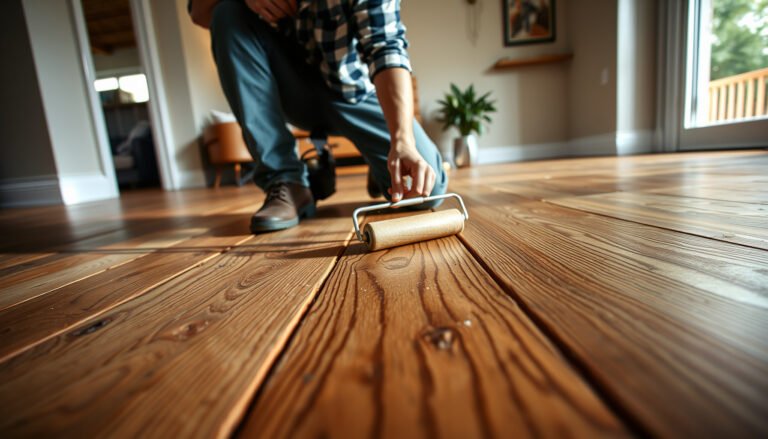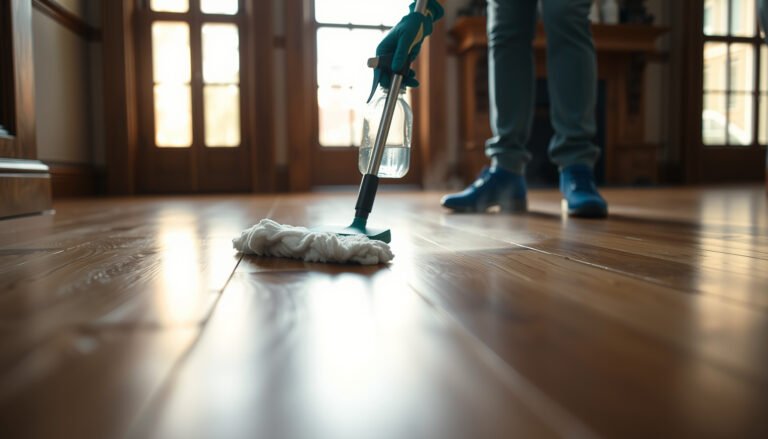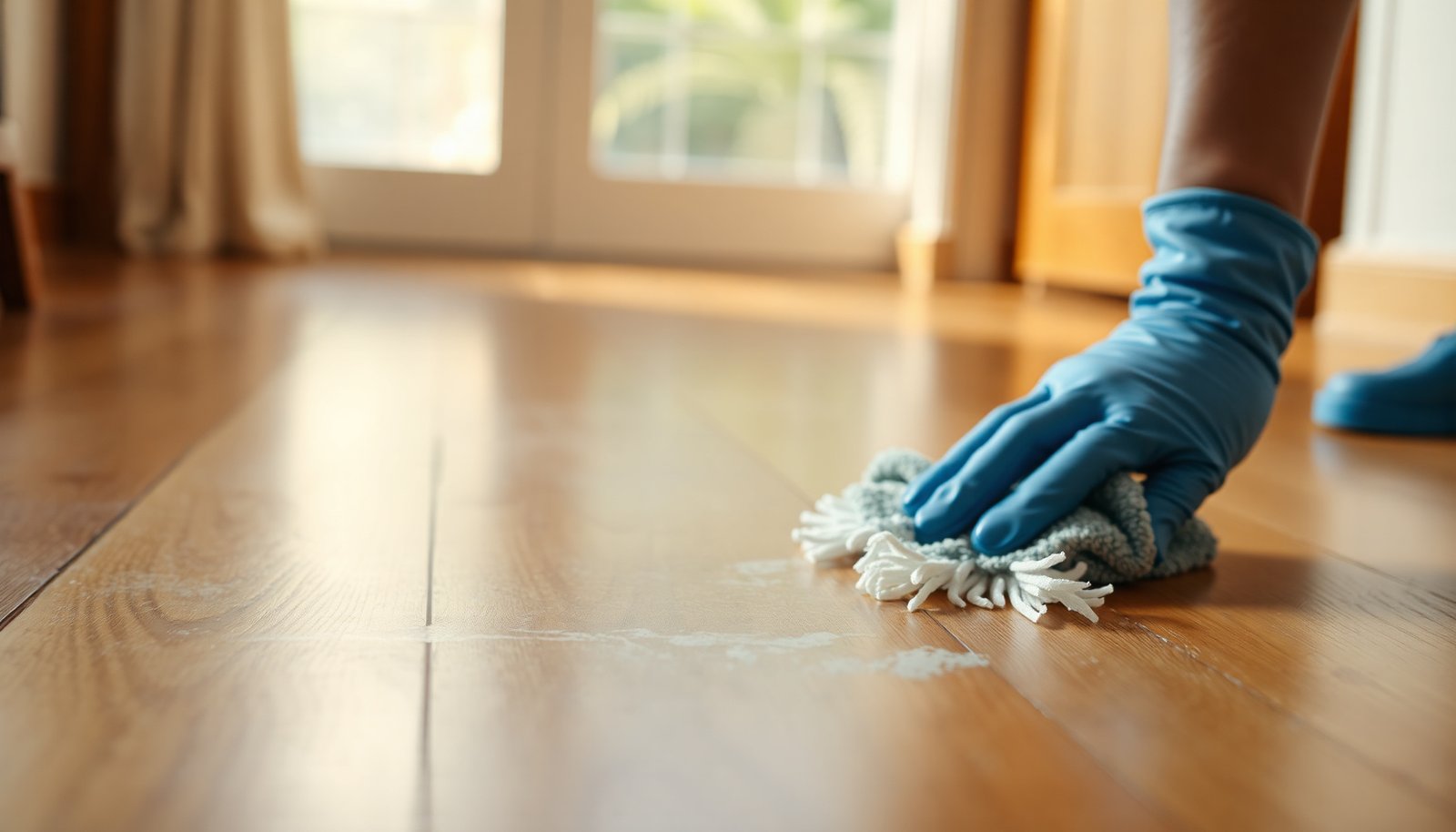

Floor polish buildup can make your hardwood feel tacky and look hazy, and that frustration is completely understandable. You can safely strip the residue without damaging the finish by using a gentle cleaning plan, the right supplies, and careful, low-saturation wiping. Most rooms take about an hour to tackle, and you’ll finish with a clean, even shine you can maintain with simple routine care.




Safely removing floor polish buildup from hardwood means using a neutral‑pH wood floor cleaner, cleaning in small sections, then rinsing thoroughly with clean water and drying fast. Avoid soaking, steam mops, and abrasive pads—those shortcuts are the most common reasons finished hardwood loses gloss or develops haze. This guide walks through what to test, what tools to use, and how to finish so your floor regains a clean, streak-free shine on finished (sealed/varnished/lacquered/polyurethane) hardwood.
This advice is for finished hardwood floors (sealed/varnished, lacquered, or polyurethane) where polish has layered up over time. If your floor is bare/unsealed wood, if you don’t know what finish you have, or if the buildup is actually wax (or a previous stripper), proceed more carefully and prioritize manufacturer guidance.
Identify the buildup and test first
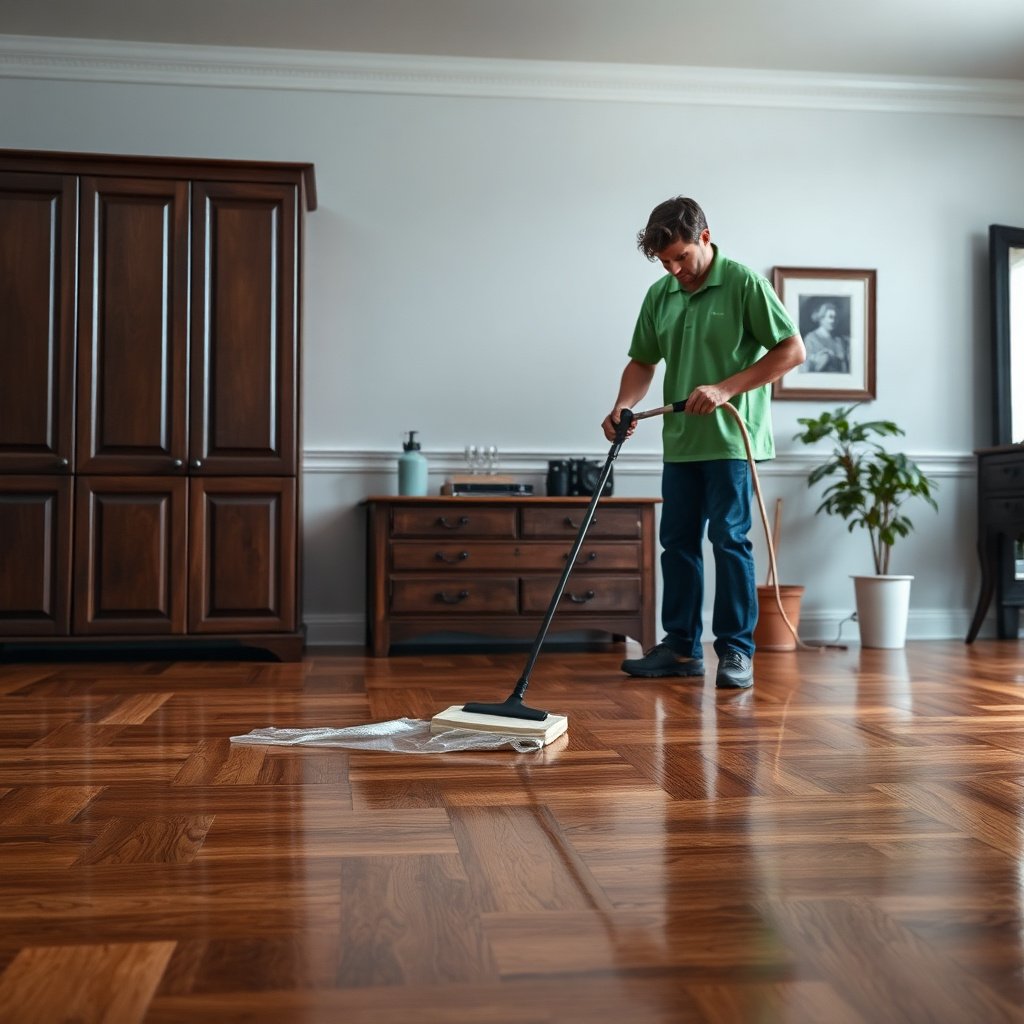
The quickest way to avoid damaging a finished hardwood floor is to confirm what “buildup” actually is, then test your cleaner on a hidden spot before you commit. In 2026, most manufacturers still emphasize neutral-pH, damp (not wet) cleaning for finished floors because stronger chemistry and excess moisture are what commonly drive finish dulling and haze.
– Look for signs of polish layering: sticky spots, hazy film, streaks that don’t wipe away, or dull patches that feel slightly tacky.
– Perform a small-area test with your neutral-pH wood floor cleaner:
– Use a microfiber cloth or microfiber mop pad with the diluted product (per the label).
– Gently wipe/scrub 6–12 inches of floor, then wipe up residue immediately.
– Let it dry fully and inspect under room light at two angles (side light reveals haze better than overhead light).
– If the “film” won’t lift with gentle neutral cleaning:
– Assume you may have a thicker polish layer, or a different residue type (some waxes behave differently than polish).
– Test a finish-safe polish/finish buildup remover separately on another hidden spot—never assume a product is safe just because it’s marketed for “wood.”
Important definitions (so you don’t guess):
– Neutral‑pH: a cleaner designed to sit near pH 7 rather than acidic or alkaline extremes.
– Finish haze: a cloudy look caused by remaining residue/film, not “dirt” you can vacuum away.
Gather safe tools and prep the room
You’ll remove polish buildup more safely when you use the right application tools and prevent grit from turning into micro-scratches. The goal on finished hardwood floors is controlled, minimal moisture plus immediate wipe-up and frequent clean rinse passes—this is how you keep gloss from dulling while you lift residue.
– Tools that work well on finished hardwood floors:
– Microfiber mop or microfiber cloths (for even contact and less streaking)
– A non-abrasive soft scrub pad rated for floors (no scouring/metal)
– Two clean buckets (one for diluted cleaner, one for clean-water rinse)
– Use the correct chemistry:
– Choose a neutral‑pH cleaner specifically for finished hardwood.
– Avoid all-purpose degreasers; they’re often formulated to cut grease and can attack finishes or leave surfactant residue that turns cloudy as it dries.
– Prep before you wet anything:
– Dry sweep or vacuum thoroughly with a hardwood-appropriate head (felt/soft brush style).
– Protect baseboards, wall trim, and nearby rugs with painter’s tape if splash is likely.
– If there’s visible sand/grit along edges or traffic paths, remove it first—scrubbing grit into the finish is one of the fastest ways to create permanent dulling.
Polish buildup chemistry at a glance (why neutral‑pH matters)
Cleaner Chemistry Safety for Finished Hardwood Floors (General Guidance)
| # | Chemistry | Typical pH (25°C) | Finish Impact Trend | Finish-Safety |
|---|---|---|---|---|
| 1 | Neutral‑pH wood floor cleaner | 6.0–8.0 | Low residue risk when used per label + rinsed | ★★★★★ |
| 2 | Distilled/clean water rinse pass | ~7.0 | Removes remaining surfactants/film | ★★★★☆ |
| 3 | Mild alkaline soap (few “oil-free” blends) | 8.1–9.0 | Can leave residue if not rinsed well | ★★★☆☆ |
| 4 | Baking soda solution (varies by concentration) | ~8.3–9.0 | May dull sheen if overused or not rinsed | ★★☆☆☆ |
| 5 | Household vinegar (acetic acid) | ~2.4–3.0 | Acid can haze/soften some finishes over time | ★☆☆☆☆ |
| 6 | Ammonia-based cleaners | ~11–12 | High alkalinity can reduce gloss on coatings | ★☆☆☆☆ |
| 7 | Chlorine bleach solutions | ~11–13 | Can damage/strip protective finish films | ☆☆☆☆☆ |
Note: The “Typical pH” values are chemistry-based general ranges; finish compatibility still depends on your exact polyurethane/varnish/lacquer formulation and the product label you’re following.
Step-by-step: remove polish buildup without damaging finish
For most finished hardwood floors, the safest method is gentle neutral cleaning in small sections, followed by a clean-water rinse pass and fast drying. That sequence removes loosened layers while reducing the most common failure mode: residue redepositing and turning into haze.
– Pre-clean: Sweep/vacuum thoroughly, then wring your mop cloth so the floor stays damp, not wet.
– Dampen is enough to mobilize film; puddles are what push moisture into seams and can weaken finish edges.
– Clean-to-lift: Apply the diluted neutral cleaner (per label directions), scrub gently in small sections, and wipe up loosened residue immediately.
– Work 2–4 feet at a time so you can keep up with residue removal before it dries.
– Use microfiber for wiping because it traps lifted film rather than spreading it.
– Rinse properly: Use a clean-water rinse pass (again, wrung-out mop/cloth) to remove any remaining film that could redeposit and cause haze.
– In my experience maintaining finished hardwood floors for busy households, the rinse pass is what separates “clean but dull” from “clean and glossy.”
– Escalate carefully (only if needed): If buildup remains, use a product specifically labeled for removing polish/finish buildup on hardwood, applied per instructions and limited to the stubborn areas.
– Keep dwell time (the “wait” period) strictly within the label guidance—over-dwell can dull the coating even with “wood-safe” claims.
– Dry fully: Dry with clean microfiber towels or a dry mop pad to prevent water marks and streaking.
Pros/cons: how to escalate without creating new problems
- Neutral‑pH cleaner + rinse
- Pros: lowest risk to finish, good for routine polish layering; predictable results when you rinse and dry.
Cons: may take multiple small sections if layers are thick. - Hardwood-labeled polish/finish buildup remover (spot-use)
- Pros: designed to break through residue; faster for stubborn haze/sticky spots.
Cons: can lighten/dull localized areas if over-applied; always requires label-following and patch testing. - Full stripping/refinishing
- Pros: most complete fix for severe layering, damage, or failing finishes.
Cons: labor-intensive and costly; requires professional-grade preparation.
Prevent streaking, haze, and re-buildup
For a streak-free finish on finished hardwood floors, prevention is mostly about water quality and restraint. The shine comes from removing residue—not from leaving a little chemical film behind and hoping it “buffs out” later.
– Use fresh rinse water often—dirty rinse water is a common cause of gray haze returning after it dries.
– If rinse water turns cloudy, replace it; don’t keep “working the same bucket.”
– Don’t “over-apply” polish afterward; too much coating is what creates the next buildup cycle.
– If you prefer the look of polish, apply thinly and follow the product’s re-coat schedule.
– For routine cleaning, stick to the same safe category of cleaner (neutral wood-floor cleaner) and avoid leaving residue from wipes that dry on the surface.
– Dry immediately after cleaning in high-traffic zones; even with finished hardwood floors, water left in seams can dull the sheen over time.
What can go wrong
Even with careful technique, a few missteps can permanently change the appearance of finished hardwood floors. The most avoidable problems are moisture damage, incorrect chemistry, and skipped rinsing.
– Over-wetting: Soaking hardwood (even with “safe” cleaners) can swell edges, seep into joints, and loosen finish over time.
– Wrong chemistry: Strong cleaners, high-acid vinegar solutions, or degreasers can attack some finishes and make dulling worse.
– Chemistry matters: According to NIST, neutral pH is 7.0 at 25°C (NIST Chemistry WebBook, pH reference data, 2026). That’s why “neutral‑pH” guidance is so common on finished hardwood care sheets.
– Abrasives and steel wool: They can scratch the finish and make polish buildup harder to remove later.
– Skipping rinse: If any cleaner/solvent remains, it can create sticky feel or cloudiness once dry.
– Unknown floor type: If it’s engineered wood with a thin wear layer, or if it’s not actually a sealed finish, the “hardwood” approach may need adjustment.
– Spot removers used broadly: Finish removers can lighten or dull where you apply them, so use them only where necessary and blend only after fully testing.
Verdict: a safe approach that’s worth doing (and who should skip)
For most sealed hardwood floors, the safest path is: gentle neutral cleaner → thorough rinse → dry fast, escalating to a hardwood-appropriate remover only for stubborn spots. The tradeoff is time and discipline: buildup removal typically requires small sections, clean-water rinses, and full drying to prevent haze.
Skip DIY removal (or get professional help) if:
– You have unfinished/bare wood, a specialty finish, or you’re not sure what’s on the floor.
– The buildup is heavy enough that it may require full stripping and refinish (common when layers are thick, edges are raised, or finish is failing).
– You notice peeling, bubbling, or a finish that’s already failing—removers can accelerate deterioration.
If you’re working with a steam mop, reconsider: According to NIST, water boils at 100°C (212°F) at 1 atm, which can push moisture and heat into seams and finish edges (NIST Thermophysical Properties of Matter, boiling point of water, 2026). For polish buildup on finished hardwood, hot steam is usually a high-risk route.
Quick scan checklist (save this):
| Step | Do this | Avoid this |
|---|---|---|
| Before | Dry sweep/vacuum, protect edges | Scrubbing grit into the finish |
| Cleaner | Neutral-pH cleaner for finished hardwood | Vinegar/acidic cleaners, degreasers |
| Technique | Small sections, damp (not wet) cloth/mop | Soaking or leaving puddles |
| After | Rinse with clean water and dry fully | Skipping rinse (causes haze) |
| Stubborn spots | Use only a label-approved hardwood buildup remover (spot test first) | Abrasive pads/steel wool |
Sources
– NIST. Thermophysical Properties of Matter — boiling point of water (100°C at 1 atm). NIST (2026)
– NIST. Chemistry references for pH (neutral pH defined at 25°C). NIST (2026)
If you follow the sequence—neutral cleaner, small sections, clean-water rinse, and full drying—you can remove floor polish buildup from finished hardwood while protecting the coating and restoring a clean, even shine. When the layers are thicker or more stubborn, escalate only with a product labeled for finished hardwood and keep it spot-tested and label-faithful.
Frequently Asked Questions
What’s the safest way to remove floor polish buildup from hardwood floors?
Start by determining whether the “buildup” is old wax/polish versus dirt—dry dust and mild cleaner often solve the grime layer. Use a hardwood-safe solution (or diluted neutral pH cleaner) and a microfiber mop, and avoid soaking the surface because excess moisture can damage wood and finish. For stubborn layers, use a manufacturer-recommended hardwood stripper or a very mild solvent only in small sections, then rinse/neutralize as directed.
How do I clean hardwood floor polish buildup without damaging the finish?
Work with gentle, controlled cleaning: test any product in an inconspicuous spot and let it sit for the shortest time needed. Use microfiber pads and frequent water wringing to prevent puddling, and avoid abrasive scrubbers that can dull or scratch the polyurethane or varnish. If the polish film is thick, remove it gradually with repeat light cleanings instead of aggressive one-pass scrubbing.
Why does polish buildup make hardwood floors look cloudy or sticky?
Floor polish buildup traps dust, grime, and oils, forming a dull residue that reflects light poorly and can turn floors hazy. Over time, the film also becomes tacky, making the surface attract more dirt and feel “gummy” underfoot. This is why periodic deep cleaning with a hardwood-safe polish remover is often necessary even when routine mopping looks clean.
Which cleaning products are best for removing old polish from hardwood floors?
Look for “neutral pH” hardwood cleaners and products specifically labeled for removing wax or polish buildup on finished hardwood. If you need stronger removal, choose a hardwood floor stripper that matches your finish type (polyurethane/varnish vs. oil-based) and follow the label for dwell time and rinsing/neutralizing. Avoid harsh chemicals like ammonia, strong degreasers, or unknown solvents unless the product is explicitly designed for hardwood floor polish removal.
What’s the best method to deep clean hardwood floors with heavy polish buildup?
Deep clean in sections: remove loose debris first, apply the polish remover or diluted stripping solution according to directions, and work with microfiber pads rather than brushes. After lifting the residue, thoroughly rinse/neutralize (as required) and dry completely with clean towels or a dry microfiber pad to prevent moisture damage. Once the floor is dry, you can apply a compatible hardwood floor finish or polish only after the buildup is fully gone.
📅 Last Updated: November 02, 2026 | Topic: How to safely clean floor polish buildup from hardwood floors? | Content verified for accuracy and freshness.
References
- https://en.wikipedia.org/wiki/Floor_polish
- https://en.wikipedia.org/wiki/Floor_wax
- https://en.wikipedia.org/wiki/Floor_stripping
- Wood flooring
- https://www.cdc.gov/coronavirus/2019-ncov/community/disinfecting-building-facility.html
- Hazard Communication – Overview | Occupational Safety and Health Administration
- 404 Error
- https://scholar.google.com/scholar?q=safely+remove+floor+wax+buildup+from+hardwood+floors Google Scholar
- https://scholar.google.com/scholar?q=hardwood+floor+finish+buildup+removal+stripper+residue Google Scholar
- https://scholar.google.com/scholar?q=wood+floor+cleaning+pH+neutral+cleaner+wax+removal Google Scholar