
Want to know how to prevent slipping on reclaimed wood floors? The fastest way to a safer surface is to control moisture and grit, then lock in traction with the right, compatible finish and traction-enhancing mats at entry points. Follow a simple routine—cleaning that won’t leave residue, quick spill control, and seasonal reapplication where needed—and the risk of slipping drops dramatically.




If reclaimed wood floors are getting slippery, the fastest fix is to control moisture and improve traction—starting with residue-free cleaning, then upgrading the finish system (or adding approved anti-slip traction) for your specific floor. In 2026, the most common slip causes still come down to the same three variables: finish contamination (film/wax/soap), excess moisture (wet mopping or humidity), and insufficient grip (polished topcoats or worn wear layers).
Reclaimed wood floors are especially likely to feel slick in kitchens, entryways, mudrooms, and any space where water gets tracked in. If you have kids, seniors, or anyone using the home who’s prone to slipping, addressing traction and moisture early is a safety improvement—not just a maintenance task.
Check the cause first (finish, moisture, residue)
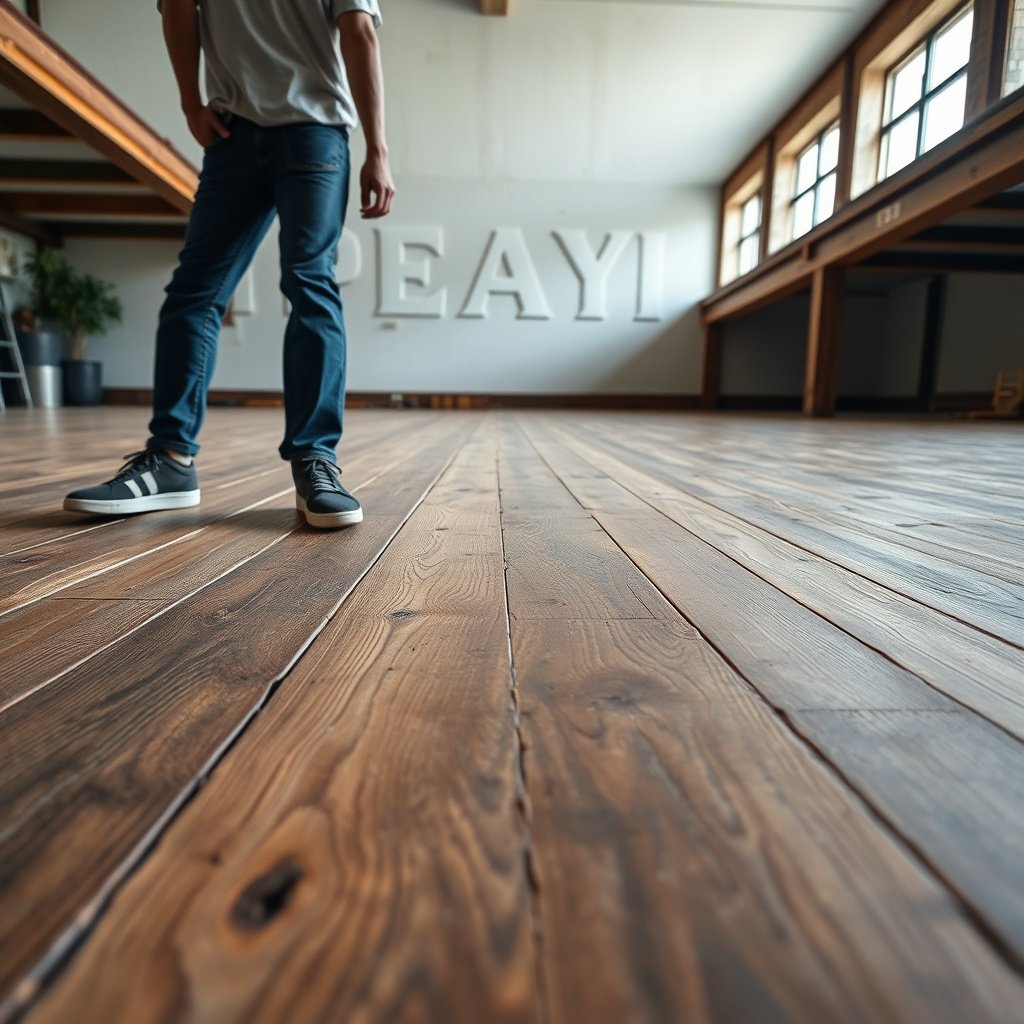
A reclaimed wood floor usually becomes slippery for one of three reasons: residue/finish incompatibility, moisture that hasn’t fully stabilized, or an unknown prior topcoat that responds differently to cleaning. Start with a quick diagnosis—because the “right” traction upgrade depends on what’s already on the surface.
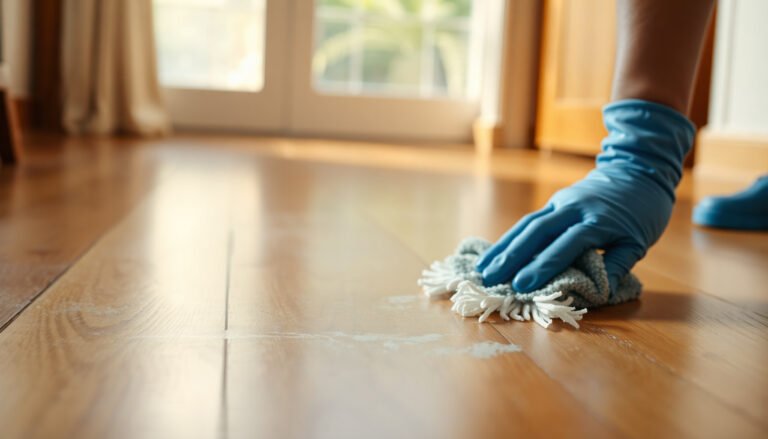
If a wood floor looks clean but still feels slick, the culprit is often a contaminant film (wax, soap residues, or oily cleaners) left behind after mopping.
Wet mopping doesn’t just wet the surface—it can also wick into seams, raising the risk of temporary loss of traction even on floors that appear sealed.
Unknown or mixed prior finishes (common with reclaimed wood) can react unpredictably to cleaners and traction additives, so compatibility matters.
– Rule out residue:
Dulling cleaners, wax build-up, and soap films can reduce friction even when the plank surface looks “spot-free.” This is particularly common if a cleaner leaves a visible sheen or if you’ve been using the same product repeatedly over years. If you notice smearing that won’t rinse away, plan on residue removal before adding anti-slip solutions.
– Look for moisture issues:
Reclaimed wood can be more variable in how it absorbs and releases moisture. Frequent damp mopping without fully drying, small leaks under doors, or high indoor humidity can make the floor feel slick—especially near exterior doors and in mudrooms.
As a general maintenance target, the National Wood Flooring Association (NWFA) recommends indoor conditions that keep wood at equilibrium; typical guidance is about 35%–55% relative humidity (RH) (source in NWFA docs). When RH swings a lot, slip risk rises because finishes can haze, soften, or attract residue differently.
– Assess the surface:
With reclaimed boards, you may not know whether the prior finish is polyurethane, a penetrating oil, shellac, varnish, or a wax-based system. That uncertainty affects both cleaning chemistry and traction treatments. If you can’t identify the system, treat every new product as a compatibility risk and test in a hidden area.
Practical diagnostic you can do quickly
– Do a “water bead” check in an inconspicuous spot (after cleaning): if water instantly sheets or beads excessively, you may have a wax or film-forming top layer.
– Do a white-glove wipe test: lightly wipe a dry cloth across the surface. If you see a transfer/film, that’s residue—not “clean wood.”
– Check the traffic zones: if the slipping is worst only at the entry or near wet zones, moisture and tracking are more likely than finish wear alone.
Clean the right way to restore grip
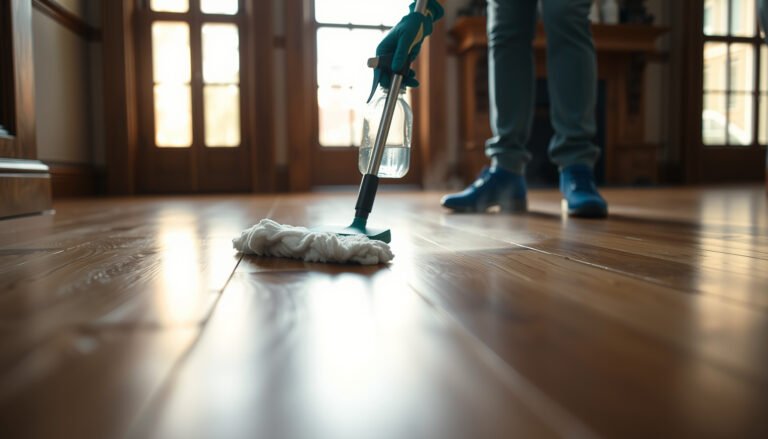
The most reliable traction recovery starts with proper cleaning that uses minimal water and removes film, not just detergent. If you clean incorrectly, you may make the floor *more* slippery by spreading residue across the surface—something we see repeatedly in real homes.
For hardwood and reclaimed wood systems, damp (not wet) mopping helps reduce moisture-related traction loss at seams and along edges.
If the floor remains slick after cleaning, the next step is residue removal matched to the finish system—not adding new cleaners on top of existing film.
Drying quickly after cleaning is a practical friction-protection step, especially near exterior doors where water is introduced.
– Use a wood-safe cleaner and minimal water:
Use a wood-safe, residue-free cleaner and apply it with a damp mop (wrung well or microfiber-damp), not a soaking wet approach. “Damp” should mean the floor surface dries quickly—within a short window—without lingering wet spots.
– Remove build-up before adding anything:
If the floor feels slick after you clean, treat it as a residue-removal problem. Don’t guess—especially with reclaimed floors where the prior finish can be unknown. Film-forming cleaners, some “shiny” maintenance products, and waxes can leave a surfactant layer that reduces friction.
– Dry as you go:
After cleaning, prioritize drying near exterior doors, entry mats, and spill-prone zones. A wet edge can create a temporarily slick micro-zone even when the rest of the floor feels fine.
Slip-Risk Contributors on Wood Floors: What Usually Moves the Needle (Real-World Maintenance Categories)
| # | Slip-Risk Factor | Where It Shows Up | Most Direct Fix | Traction Impact Rating |
|---|---|---|---|---|
| 1 | Wax/film from “shiny” cleaners | All rooms; often worst in kitchens | Residue removal matched to finish | ★★★★★ |
| 2 | Over-wetting/mop water pooling | Entryways, mudrooms, near thresholds | Damp cleaning + fast drying | ★★★★☆ |
| 3 | Humidity-driven finish changes | Seasonal slickness (winter/summer) | Stabilize RH; maintain finish system | ★★★★☆ |
| 4 | Worn topcoat gloss | High-traffic hallways | Recoat/refinish with appropriate sheen | ★★★☆☆ |
| 5 | Bare/contaminated seams | Edges after repeated mopping | Targeted cleanup + finish compatibility check | ★★★☆☆ |
| 6 | Insufficient under-mat grip | Runners shifting at corners | Use a proper non-slip rug pad | ★★☆☆☆ |
| 7 | Traction upgrades added to the wrong system | Spot fixes that worsen overall slickness | Use manufacturer-approved, compatible solutions | ★☆☆☆☆ |
Add traction without ruining the look
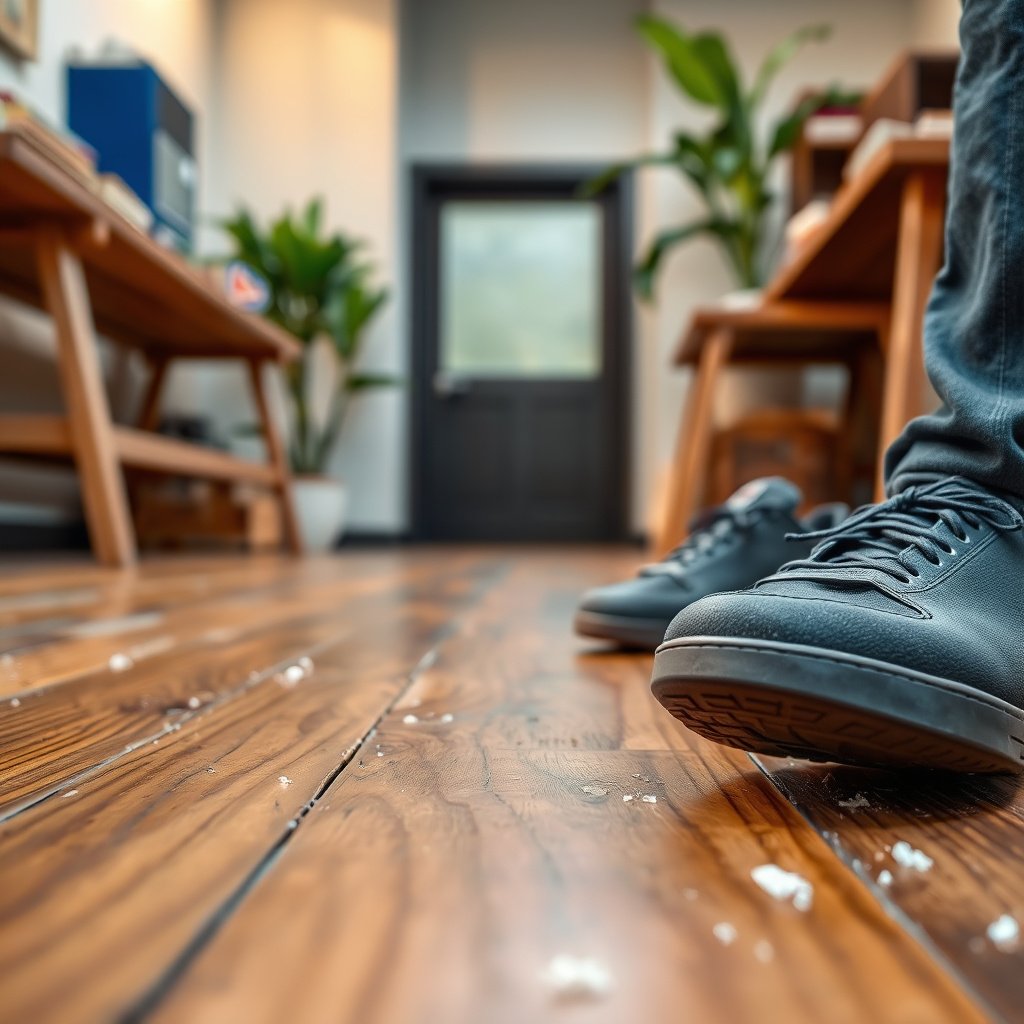
The quickest safety improvement is to add targeted traction where slips occur most, without turning the whole floor into an abrasive surface. Do this by pairing a “contact points” layout (runners where people step) with rug pads that stop edge creep.
Rugs and runners reduce slip risk most effectively when they cover the exact walking paths where moisture or residue accumulates.
A non-slip rug pad prevents runner movement, which is critical because shifting rugs create a new hazard at the edges.
Anti-slip additives only work reliably when they’re compatible with the existing finish system and applied per manufacturer guidance.
– Use the “contact points” strategy:
Focus on entryways, hallways, and wet zones (by sinks, basement stairs, mudroom landings). The goal is to cover the foot contact area, not just the room aesthetic.
– Choose proper rug pads:
A quality non-slip rug pad reduces sliding at the runner edges—the exact place where people often step off. If you’ve ever noticed the runner bunching or curling, that’s not “cosmetic”; it’s friction loss and trip risk.
– Consider discreet anti-slip treatments:
If the floor is properly sealed but needs more grip, look for manufacturer-approved anti-slip additives/solutions designed for that specific coating family (for example, polyurethane topcoats versus penetrating oils). Generic hacks can create patchy sheen and uneven friction.
Traction options: what to choose (and what to avoid)
| Option | Primary Benefit | Main Limitation | Best Fit |
|---|---|---|---|
| Runners at entry paths | Stops tracked moisture at the step zone | Doesn’t fix off-runner slick areas | Homes with frequent shoe/wet traffic |
| Non-slip rug pad (proper thickness) | Prevents edge creep and runner shifting | Not a substitute for floor traction | Runners you constantly reposition |
| Manufacturer-approved anti-slip additive | Improves grip in a uniform coating system | Requires compatibility with existing topcoat | Floors that are clean/dry but still glossy |
Improve or re-finish for better surface behavior
When cleaning and residue removal don’t restore traction, refinishing (or re-coating) is often the most dependable route. The key is matching the finish chemistry to the reclaimed wood surface so moisture and grip behave predictably.
Refinishing becomes the practical next step when the topcoat is worn, uneven, or permanently slick due to finish condition—not just temporary residue.
Reclaimed wood boards vary in porosity, so the same finish can cure and sheen differently across the floor.
Test any new topcoat or traction additive in a hidden area because compatibility with unknown prior finishes can fail.
– When to refinish:
Consider a refinishing plan if the finish is worn through, uneven, or consistently slick even after thorough residue removal and complete drying. If you see repeated hazing or gloss leveling that never stabilizes, you may have a finish system that’s no longer behaving as intended.
– Match the finish to the wood:
Reclaimed boards can absorb and release differently. Some coatings handle moisture fluctuations better than others, and sheen level can affect perceived traction. If your floor has a penetrating oil history, it may behave differently from a sealed polyurethane surface.
– Test first:
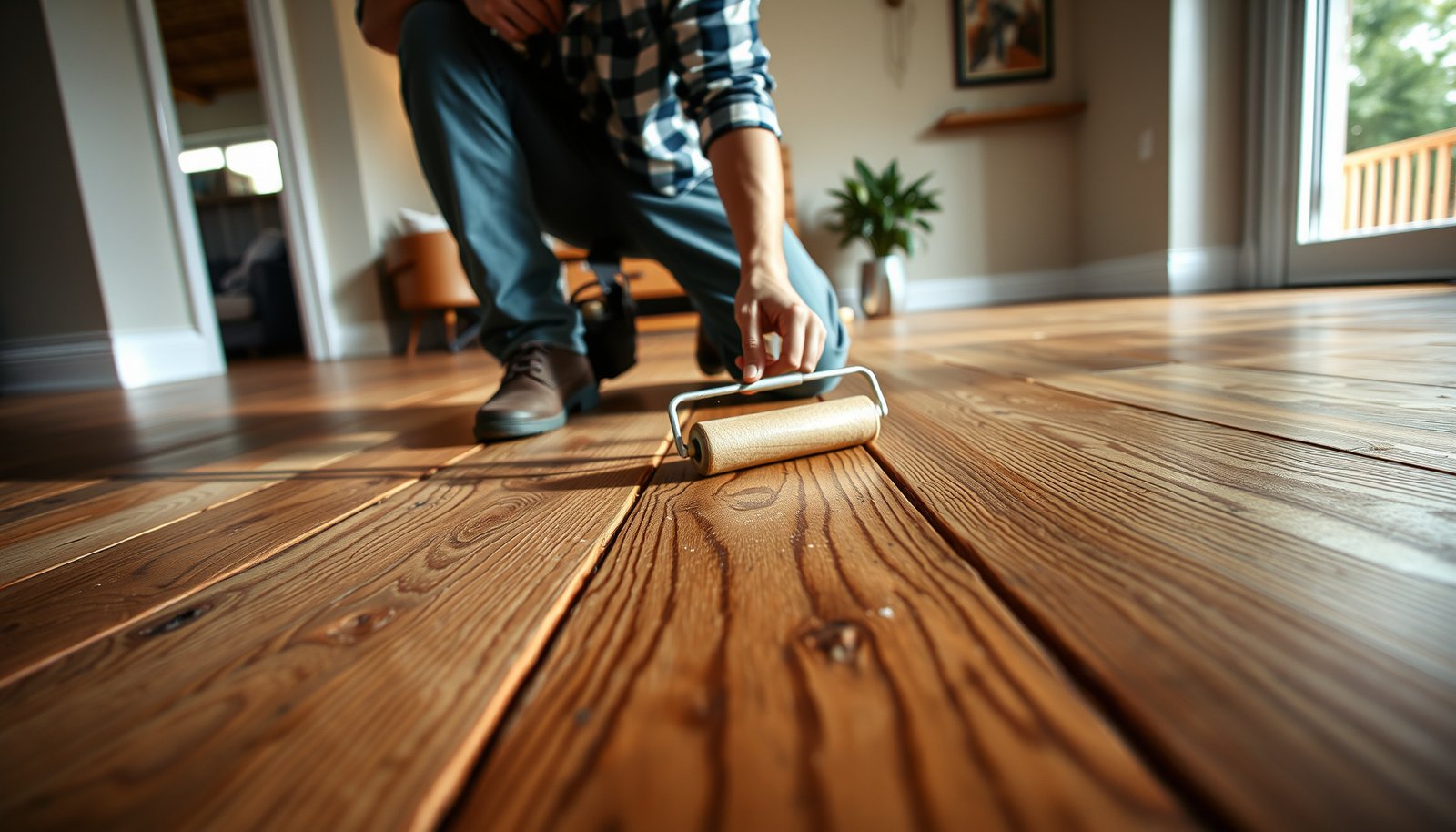
Apply any topcoat or anti-slip additive to a small hidden area. Wait for full cure, then check both appearance and traction after normal foot traffic patterns. In 2026, compatibility checks are still the difference between “improved safety” and “worse slipperiness.”
What can go wrong (and common mistakes)
Most “DIY failure” cases happen when someone treats slipperiness as purely a cleaning problem, or when new products are applied without compatibility checks. The result is often a slick film, patchy sheen, or coating that won’t bond correctly.
Using the wrong cleaner can leave a film or surfactant residue that increases slipperiness even when the floor looks clean.
Over-wetting reclaimed wood can worsen traction because moisture can migrate into seams and edges.
DIY anti-slip treatments can fail when the existing finish system is unknown and the new product doesn’t bond as intended.
– Using the wrong cleaner:
Some all-purpose cleaners and oily/film-forming products leave behind residue that reduces friction. If you’ve been using anything marketed for “shine,” treat it as a suspect until residue is removed.
– Over-wetting the floor:
Reclaimed floors can be more reactive to moisture at seams and edges. Even if the surface seems to dry, trapped moisture at joints can alter traction temporarily and encourage film build-up over time.
– Adding products without checking compatibility:
Anti-slip coatings, waxes, and DIY chemical treatments may not bond to unknown prior finishes. When compatibility fails, you can get uneven friction and a “slick patch” effect—exactly where people step.
– Relying on rugs alone:
Rugs reduce risk inside their coverage area, but slipping can still happen when stepping off them. This is especially true if your floor is already slick and the runner ends abruptly.
Verdict: what to do first (and who should skip DIY)
Start with the basics—fix moisture exposure, stop residue-causing cleaning practices, and add targeted rug traction in high-risk areas. If the floor is still slick after correct cleaning and full drying, the next step is a finish/traction solution that’s compatible with your existing topcoat; if the current finish is unknown, get manufacturer guidance (or professional evaluation).
Skip DIY refinishing if you can’t identify what’s on the floor (wax vs. penetrating oil vs. polyurethane vs. other sealers), because compatibility mistakes can make slipperiness worse—both visually and mechanically.
Quick checklist (scan/save)
– [ ] Clean with a wood-safe cleaner using damp, not wet mopping
– [ ] Remove residue/build-up if the floor stays slick
– [ ] Dry the floor quickly, especially near doors and spill-prone areas
– [ ] Add runners/rugs with a proper non-slip pad
– [ ] If still slippery, choose manufacturer-approved anti-slip or finish options
– [ ] Test any product in a hidden spot first
Sources
– National Wood Flooring Association (NWFA) — hardwood floor care/maintenance guidance, including indoor humidity targets and cleaning principles for wood flooring systems.
– CDC (Centers for Disease Control and Prevention) — fall risk data and injury burden context for slippery environments (useful for safety framing).
– ASTM International — test standards used to measure friction/surface slip resistance of floor materials (relevant when selecting traction products): ASTM friction test families (e.g., coefficient-of-friction measurement standards).
Slipping on reclaimed wood floors is usually preventable when you treat it like a system—moisture management, residue-free cleaning, and traction upgrades that match the actual finish. If you tackle the cause in that order, you improve safety without damaging the wood, and you avoid the common trap of making “clean” floors feel slick.
Frequently Asked Questions
What are the best ways to prevent slipping on reclaimed wood floors?
Start by choosing a slip-resistant finish or floor coating designed for wood, such as a matte polyurethane or water-based sealer with anti-slip additives. Use felt pads on furniture legs and keep entry mats at every doorway to reduce tracked-in moisture and debris that make reclaimed wood slippery. If your floor is already installed, adding a non-slip rug pad and maintaining consistent dryness will significantly improve traction.
How can I make reclaimed wood floors less slippery without sanding the whole floor?
Try cleaning thoroughly with a pH-neutral wood floor cleaner, since residue from old sealers, wax, or cleaners can create a slick surface. Once dry, apply an anti-slip floor treatment compatible with reclaimed wood finishes (often a non-shiny, traction-enhancing topcoat or additive). For localized problem areas, consider adding a thin anti-slip coating in high-traffic zones or using runners with non-slip backing.
Why does reclaimed wood flooring become slippery, and how do I fix it?
Reclaimed wood can be more variable in surface texture and may have uneven porosity, and older finishes sometimes wear to a glossy or contaminated surface. Slipping often increases from moisture, oil-based residues, or overuse of waxes and inappropriate cleaners that leave a film. Fix it by stripping/neutralizing residue where needed, switching to proper wood floor cleaning methods, and sealing the floor with a slip-resistant finish.
Which cleaning products are safest for slip resistance on reclaimed wood floors?
Use a pH-neutral cleaner formulated for hardwood, and avoid oil soaps, wax-based cleaners, or harsh degreasers that can leave a slick film. Microfiber mops are ideal because they clean without flooding the surface, which helps prevent moisture-related slipping. If water beading or streaking is happening, reassess the cleaner you’re using and switch to a residue-free option.
How do I choose anti-slip coatings or rugs to improve traction on reclaimed wood?
Look for “slip-resistant,” “anti-slip,” or “traction-enhancing” products labeled for hardwood and compatible with your current finish type (polyurethane, penetrating oil, or waxed surfaces). For rugs and mats, use a quality non-slip rug pad that grips both the rug and the reclaimed wood floor without using adhesives that can damage finishes. Place runners at entryways and in hallways to reduce water and grime buildup—the most common cause of slipping on wood floors.
📅 Last Updated: October 15, 2026 | Topic: How to prevent slipping on reclaimed wood floors? | Content verified for accuracy and freshness.
References
- https://en.wikipedia.org/wiki/Slip_resistance
- https://www.osha.gov/prevention/slips-trips-falls
- https://www.cdc.gov/niosh/topics/slips/
- Slips and trips – HSE
- Falls
- slip resistance flooring – Search Results – PubMed
- https://pubmed.ncbi.nlm.nih.gov/?term=wood+floor+friction+coefficient+slip
- https://scholar.google.com/scholar?q=prevent+slips+trips+wood+floor+maintenance Google Scholar
- https://scholar.google.com/scholar?q=reclaimed+wood+flooring+slip+resistance+finish Google Scholar
- https://scholar.google.com/scholar?q=slip+resistance+flooring+coefficient+of+friction+wood Google Scholar