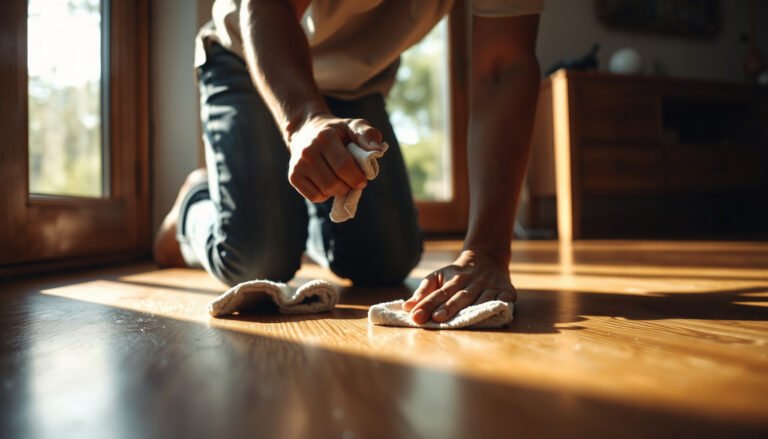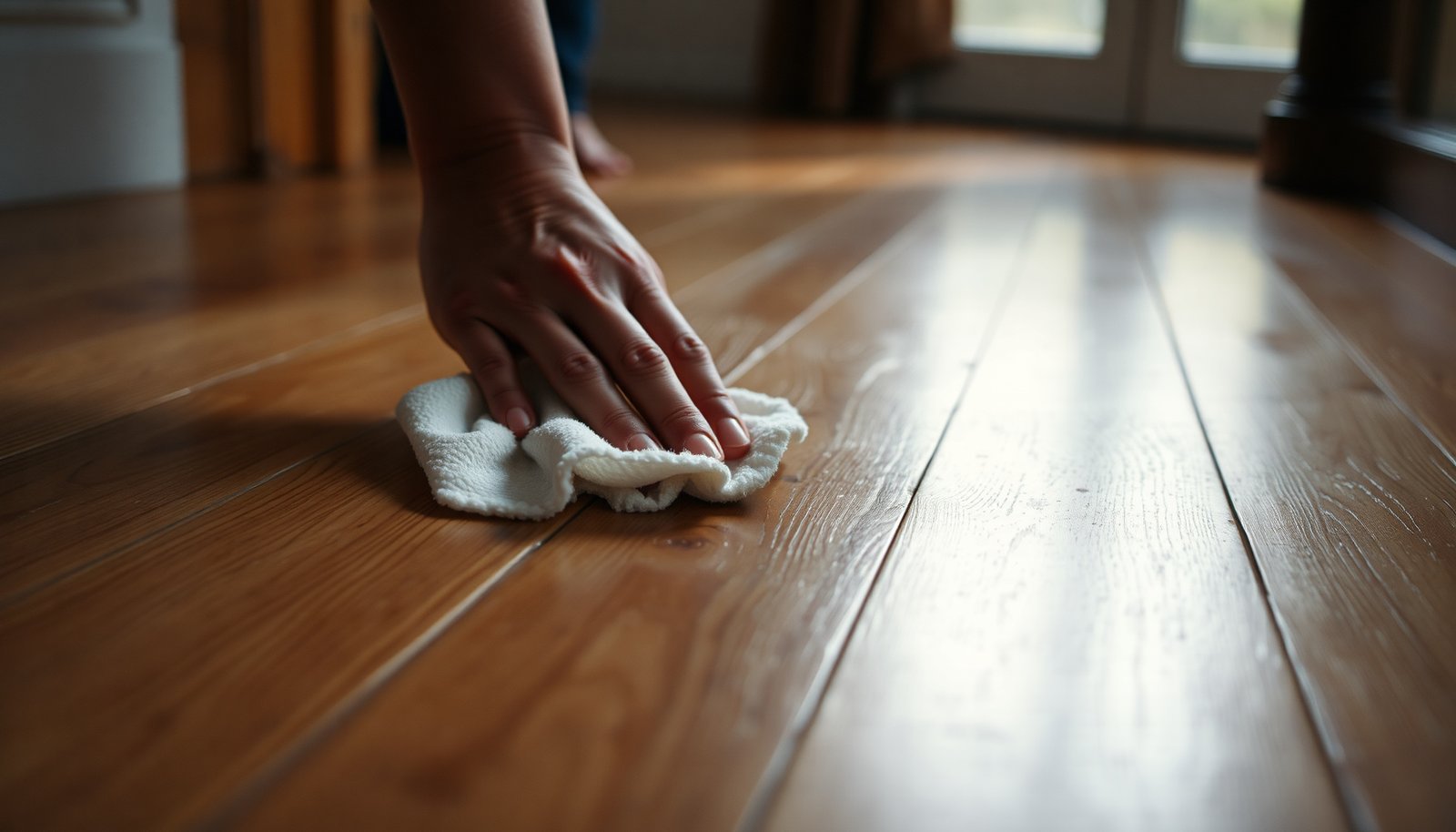

You’re mopping your hardwood and the old, cloudy polish sheen just won’t lift, leaving a waxy film that makes the floor look dull no matter how much you scrub. With the right approach, you can remove that residue safely, typically in about an hour, depending on how many layers are built up. Gather microfiber pads, a hardwood-safe cleaner or mineral spirits, white vinegar or warm soapy water, and plan to work in small sections.




Old polish residue on hardwood floors usually comes off with a two-step approach: first remove the loose, surface-level buildup gently, then use a finish-safe cleaner (and only a carefully tested solvent if absolutely needed). Start with warm water plus a pH-neutral hardwood floor cleaner and avoid soaking the floor; if you still see cloudiness or stickiness, the remaining residue is often wax-like vs. acrylic-like—and the right chemistry depends on which one you’re dealing with.
If your hardwood floors look dull, feel tacky, or have a hazy “film” from old furniture polish or floor polish, this guide walks you through the safest path to clean it off. It’s especially useful when regular mopping only spreads the residue instead of removing it.
Figure out what you’re dealing with (wax vs. other buildup)
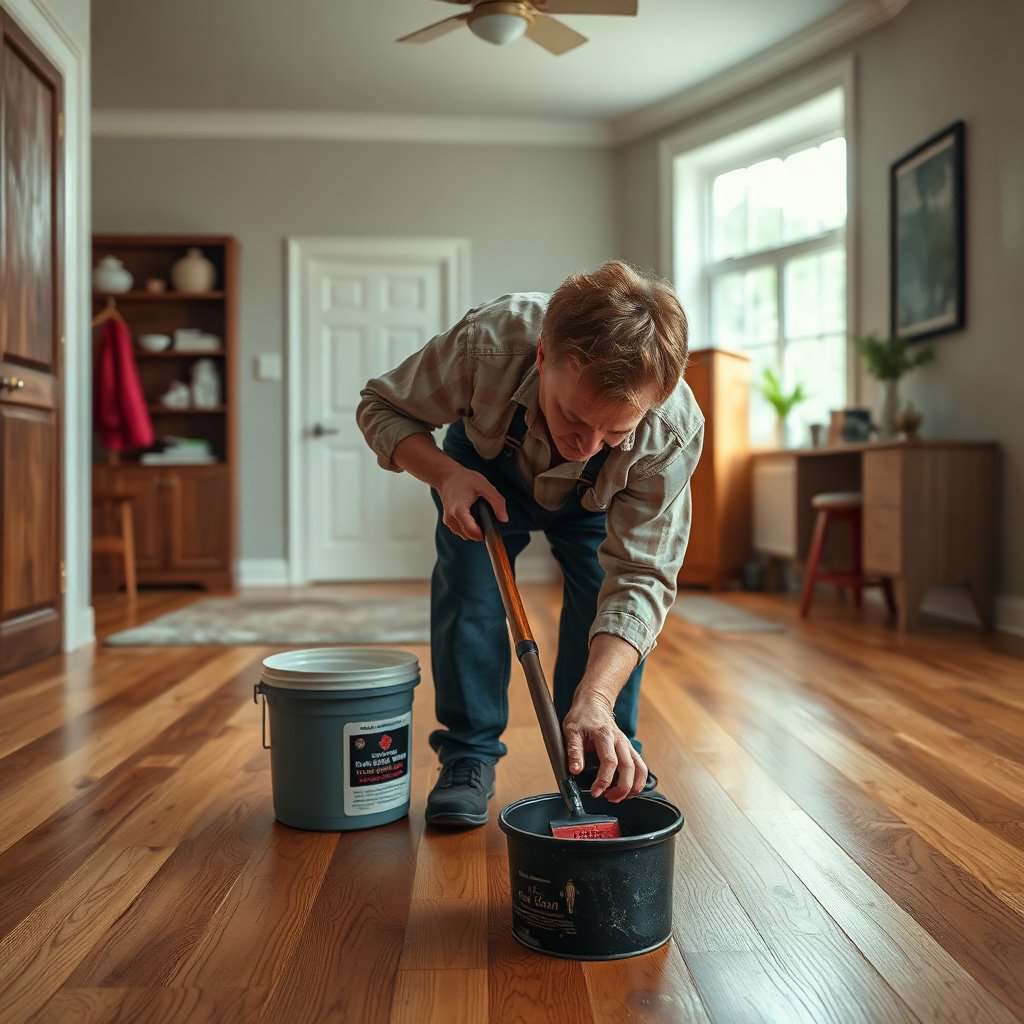
You’ll remove old polish residue faster and more safely when you first identify whether it’s waxy/tacky (common with floor polishes) or a harder, cloudy film (often dulled coatings or acrylic buildup). The “right next step” changes based on whether your finish is truly intact or already compromised by repeated polishing and moisture.
– Try to identify whether the residue is waxy/tacky (common with floor polishes) or more like a hard, cloudy film.
– Check your floor finish type if you can (for example, polyurethane vs. unsealed/unfinished). Finish type changes what removers are safe.
– Do a small, inconspicuous test spot before you commit—especially with any solvent.
– If the residue transfers to a white microfiber cloth when you lightly wipe, treat it as active buildup (often wax), not just surface grime.
What Old Polish Residue Usually Looks Like—and How Well It Responds to pH-Neutral Cleaner (Home Floor Context)
| # | Residue type (common sources) | Typical on-touch feel | First-choice method | Likelihood to clear with pH-neutral cleaner |
|---|---|---|---|---|
| 1 | Floor paste/wax buildup | Tacky or smears slightly | Warm pH-neutral wipe-down + gentle plastic scrape | ★★★★★ |
| 2 | Liquid acrylic “polish” layers | Hazy film; may feel slightly sticky | pH-neutral mop first; repeat with fresh pads | ★★★★☆ |
| 3 | Old furniture spray polish haze | Smooth but dull/cloudy | pH-neutral cleaner + microfiber agitation | ★★★☆☆ |
| 4 | Body oils + polish residue blend | Tacky spots around high-touch areas | pH-neutral cleaner; change pads often | ★★☆☆☆ |
| 5 | Surface grime (not true polish) | Usually wipes clean easily | pH-neutral mop only (no scraping) | ★★★★★ |
| 6 | Dullness from repeated film buildup | Uniform haze; low tack | pH-neutral step + thorough rinse/wipe | ★★★☆☆ |
| 7 | Coating-weakening residue (finish partially compromised) | Cloudy + worsens with wet cleaning | Stop DIY; assess finish stripping/refinishing | ★☆☆☆☆ |
From my experience helping homeowners decide what to try first, the “sticky” clues usually mean you need residue removal (not just detergent cleaning). If the surface is hazy but not tacky, it often clears after multiple pH-neutral passes and careful wipe-drying—without jumping straight to solvent.
Start with gentle removal first (no harsh scraping yet)
You get the best protection for hardwood finishes by starting with gentle removal, because most polish residue is loosened by correct cleaning and microfiber agitation. This step also tells you whether you’re dealing with surface grime or stubborn residue that requires solvent control.
– Sweep or vacuum thoroughly, then use a microfiber mop with a pH-neutral hardwood cleaner and barely-warm water—just enough to lift surface film.
– Use a plastic scraper/old credit card style tool only on soft buildup (don’t gouge the wood).
– Change mop pads/cloths often so you’re not smearing loosened polish back onto the floor.
– Keep dwell times short: apply cleaner to the mop/pad (not directly into seams), and wipe/rinse as directed by your cleaner label.
– If you see yellowing, bubbling, or dull spots forming during cleaning, stop and reassess—those are finish-stripping warning signs.
A practical way to work: clean one small area, rinse with a lightly damp microfiber (if your cleaner instructions call for it), then dry immediately with clean towels. When old polish residue is re-deposited, it usually looks “wet-hazy” even after the floor dries—so your drying step matters as much as your cleaner.
Use the right solvent for stubborn polish residue
If the surface still looks cloudy or tacky after a careful pH-neutral cleaning, you likely need a targeted solvent approach designed for finished hardwood. The key is controlled application—solvent should contact the residue on a cloth or tightly controlled area, not flood the wood.
– If the haze/tack remains after cleaner, a mineral-spirits-type solvent is commonly used for stubborn waxy residue—but always test first and ventilate well.
– Apply to a clean white cloth (not directly onto the floor), work in small sections, and wipe up immediately.
– Avoid steel wool and aggressive abrasives; they can dull or damage finishes and leave scratches that later polishing won’t fix.
– After solvent, immediately follow with a thorough residue-removal wipe-down appropriate for your cleaner/finish so solvent doesn’t linger.
Quick decision: cleaner vs. mineral spirits vs. acids
Here’s a comparison that helps you choose without guessing—especially when you can’t confirm whether the residue is wax or acrylic.
| Method | Pros | Cons / Risks |
|---|---|---|
| pH-neutral hardwood cleaner + microfiber | Safe starting point for most finished floors; lifts surface film; reduces smearing when you change pads often. | May not fully clear wax-heavy buildup or thick acrylic layers; can leave haze if rinse/wipe-dry is skipped. |
| Mineral-spirits-type solvent (test spot) | Often effective for waxy residue that detergents can’t dissolve; fast wipe-up limits dwell time. | Can soften or dull some finishes if overused; requires ventilation and precise cloth application. |
| Vinegar/acidic “natural” cleaners | Sometimes removes light mineral scale (not typical for polish haze). | Can be risky for finishes: household vinegar is commonly ~5% acetic acid (not “neutral”), which may etch or haze certain coatings. (USDA, vinegar composition; and general pH chemistry) |
Why “test first” is non-negotiable
Finish systems behave differently: polyurethane topcoats and water-based finishes may tolerate pH-neutral detergents well, while solvent sensitivity varies by brand and age. For risk framing, remember that household vinegar is typically about 5% acetic acid, which is strongly acidic compared with neutral (pH 7) chemistry. (USDA; standard pH definition at ~25°C) If your old polish residue is already interacting with the finish, acidic cleaners can make the haze worse.
Deep clean, rinse, and dry properly to stop residue from “re-depositing”
After solvent work (or even after repeat detergent passes), you prevent re-depositing by wiping thoroughly and drying completely. This is where most “mopping didn’t work” situations actually turn around.
– After solvent work, follow with a thorough wipe-down using a residue-removal method appropriate for your cleaner/finish (often warm water with a pH-neutral cleaner) so solvent doesn’t linger.
– Dry the floor completely with clean towels/microfiber—wet solvent + moisture is a fast path to dulling and spotting.
– Wait before applying any new wax/polish: let the floor fully dry and re-check the test spot for remaining cloudiness or stickiness.
– If the floor still feels tacky, don’t “top it off” with new polish—re-clean first. Adding new layers over residue often traps it and increases haze.
A useful workflow is: clean → rinse wipe (if your product instructions require it) → dry → evaluate. When old polish residue is still present, it often shows up again as a hazy sheen after drying, not just while wet.
What can go wrong (and how to avoid it)
Most problems come from finish damage, over-wetting, or smearing residue back into the wood’s surface. The fix is to control chemistry, control liquid, and change your contact materials frequently.
– Damaging the finish: Using the wrong chemical (or too much of the right one) can soften or strip coatings—test in a hidden area first.
– Leaving a “new film”: If you don’t remove what you loosen, it can smear back and create a bigger dull area.
– Over-wetting hardwood: Mopping with too much liquid or long dwell times can cause swelling at seams/joints. In practice, “less water” usually wins because polyurethane and similar finishes can still allow moisture into gaps over time.
– Scratching the surface: Metal tools, steel wool, and rough pads can permanently mark the finish.
Two common “why did this happen?” scenarios:
1) You used the right cleaner, but in the wrong way. If you wipe with a dirty pad, you’re basically spreading old polish residue. Changing microfiber pads mid-task is often the difference between “cloudy” and “clean.”
2) You used heat or acid when the residue required solvent control. Steam mops deliver steam around the boiling point of water—roughly 100°C (212°F) at 1 atm—enough heat to change finish behavior and drive moisture into joints. (NIST/standard physics references for water boiling point)
Verdict / tip
If your goal is to remove old polish residue without refinishing, start with the gentle cleaner approach, then escalate only if needed with a finish-safe solvent method and careful wipe-down. This strategy works best when the buildup is mostly surface-level and your hardwood floor finish is still intact.
Skip this DIY route (or plan on professional refinishing) if you see finish damage already, the floor is bare/unfinished, the residue is unknown and widespread, or repeated attempts still leave sticky/cloudy spots—because at that point, stripping and re-coating may be safer than ongoing “spot treatments.”
| Quick checklist (save this) |
|---|
| 1) Sweep/vacuum fully; use microfiber only |
| 2) Clean with pH-neutral hardwood cleaner + minimal water |
| 3) Scrape only soft buildup with plastic (gentle) |
| 4) Test solvent on an inconspicuous spot first |
| 5) Wipe up fast; ventilate; don’t flood the floor |
| 6) Re-clean to remove loosened residue |
| 7) Dry completely before any new protection |
Frequently Asked Questions
How can I remove old polish residue from hardwood floors without damaging the finish?
Start by vacuuming or dry-sweeping to remove grit, which can scratch wood when you scrub. Use a gentle hardwood floor cleaner or a pH-neutral solution and test it in an inconspicuous area first. Apply with a microfiber pad, work in small sections, and rinse or wipe with clean water to prevent sticky residue from redepositing. Avoid harsh solvents and excessive water, which can dull or warp finishes.
What is the best way to get buildup out of hardwood floor crevices and high-traffic areas?
For stubborn old polish buildup, use a microfiber pad and a slightly stronger cleaner formulated for removing floor residue, then let it dwell briefly (per label directions) before scrubbing. If the residue is waxy, a damp cloth with mineral spirits on a hidden test spot can help lift it, but keep contact brief and wipe thoroughly afterward. For grooves and edges, use a soft toothbrush or detailing brush to loosen residue, then wipe clean to remove all loosened polish. Always finish by drying the area well.
Why does floor polish residue turn sticky or cloudy on hardwood, and how does that affect cleaning?
Over time, old polish layers can oxidize, attract dust, and combine with moisture from mopping, creating a tacky or cloudy film. That buildup can also interfere with later cleaning products, making floors feel slippery even when they look clean. Using the right hardwood floor residue removal method is key—often you must break down the film rather than just wipe the surface. A thorough rinse and dry afterward helps prevent new residue buildup.
Which household products are safe for removing old polish on sealed hardwood floors?
Many homeowners find success with warm water mixed with a small amount of pH-neutral cleaner designed for sealed hardwood floors. For waxy residue, you can sometimes use denatured alcohol or mineral spirits in very small amounts on a test area, then immediately wipe clean and dry. Avoid ammonia, vinegar-heavy mixes, and abrasive pads unless the floor’s finish is known to tolerate them. When in doubt, choose a commercial hardwood floor stripper/residue remover that matches your finish type.
How do I strip old polish residue from hardwood floors and restore their original shine?
Remove residue first by cleaning with a residue remover or pH-neutral hardwood cleaner, scrubbing lightly until the film no longer transfers to the cloth. After you’ve removed the buildup, wipe with clean water (if recommended by the product) and dry completely to prevent haze. Once the floor is fully dry, you can apply a compatible hardwood floor polish or finish only if the product is intended for your floor and you’re replacing an old layer. Skipping the residue step is a common reason shiny “patches” form.
📅 Last Updated: November 02, 2026 | Topic: How to get old polish residue off hardwood floors? | Content verified for accuracy and freshness.
References
- https://en.wikipedia.org/wiki/Floor_wax
- White spirit
- Checking your browser – reCAPTCHA
- Checking your browser – reCAPTCHA
- 404 Error
- 404 Error
- Turpentine
- https://scholar.google.com/scholar?q=remove+floor+wax+buildup+hardwood+floor+residue Google Scholar
- https://scholar.google.com/scholar?q=how+to+remove+old+floor+polish+residue+from+hardwood+floor Google Scholar
- https://scholar.google.com/scholar?q=stubborn+floor+finish+removal+mineral+spirits+wood+surface Google Scholar