
Hardwood floors can look dull or slightly sticky when old polish layers start building up, and most people only do quick mopping that leaves the residue behind. A thorough deep clean removes that haze without damaging the finish, restoring a more even shine. You’ll need a gentle hardwood cleaner (or the right pH-neutral solution), microfiber pads, and a methodical step-by-step approach that typically takes about an hour for a small room.




To remove floor polish buildup, you’ll usually need to strip/clean it with a hardwood-safe cleaner (matched to your finish), then rinse thoroughly and dry fast so residue doesn’t keep attracting grime. Start with a small spot test, work section-by-section with a microfiber method, and avoid harsh acids or abrasive pads that can damage the finish.
If you’re seeing cloudy spots, sticky feel, streaks, or a dull “film” on top of otherwise clean hardwood, this guide will walk you through a safer deep-clean process without accidentally stripping more than you meant to. The right approach depends on whether you’re dealing with a wax/polish layer or a surface finish like polyurethane.
This is for homeowners and facility managers dealing with stubborn haze on sealed hardwood who want a practical, low-risk process as of 2026—especially if the floor has been “cleaned around” for months and polish buildup is now behaving like a second coating.
Assess your hardwood finish (so you use the right remover)
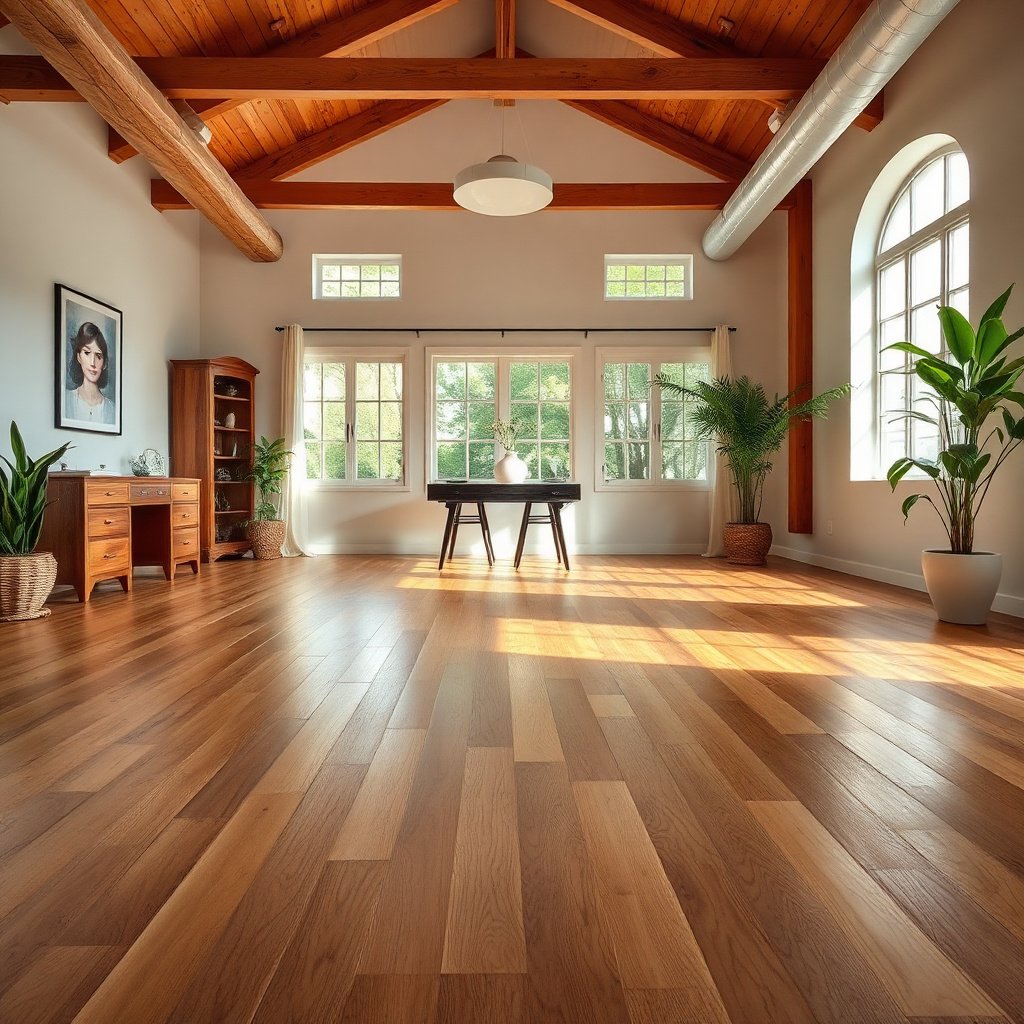
You’ll get the best results—and the least risk of damage—by identifying whether you’re removing wax/polish film or cleaning a sealed topcoat. Once you know the finish category, you can choose the correct cleaner chemistry and avoid products that soften, haze, or thin the finish.
– Check what’s on the floor: wax/polish film vs. a finished surface (polyurethane, water-based finish, penetrating oil, etc.).
– Do a hidden-area test with a manufacturer-recommended cleaner or a small amount of your planned product to see if it turns cloudy, softens, or wipes off residue.
– If you can’t identify the finish, plan to use the mildest “hardwood-safe” approach first and escalate only if buildup remains.
📊 What residue type usually calls for (and how “aggressive” it tends to be)
Hardwood Polish Buildup: Typical Removal Approach by “Residue Behavior” (2024–2026)
| # | Residue behavior on contact | Most likely layer | Preferred cleaner category | Finish safety vs. neutral |
|---|---|---|---|---|
| 1 | Wipes off “smeary” with a damp microfiber | A thin acrylic polish film | Hardwood-safe neutral cleaner | +2 steps safer |
| 2 | Feels slick, especially near entrances | Wax/polish build-up + soil trap | Dedicated polish/wax remover (label-approved) | +1 step safer |
| 3 | Cloudy haze that doesn’t “wipe clean” immediately | Cross-linked residue/film | Cleaner + light agitation; rinse-heavy | Neutral baseline |
| 4 | Streaks appear after drying | Reseeded residue from incomplete rinse | Re-clean with fresh solution + full rinse | +1 step safer |
| 5 | Brown/amber tint after “brightening” attempts | Wax yellowing + soil load | Wax/polish stripper (per label) + rinse | -1 step vs. neutral |
| 6 | Residue softens when warmed slightly | Thermally softened wax layer | Polish remover with dwell time (label) | -1 step vs. neutral |
| 7 | Only the sheen changes; texture still looks sealed | Finish film (not just polish) | Minimal cleaner; avoid stripping | -2 steps vs. neutral |
> Note: This table summarizes practical “residue behavior” patterns and the general cleaner category you’d choose. Always confirm compatibility with your floor’s specific finish and the product label.
Prep the floor for deep cleaning
You’ll prevent scratches and reduce how much chemistry you need by removing grit first and controlling moisture. If you start scrubbing over embedded sand, you can permanently dull the finish even after you “remove polish buildup.”
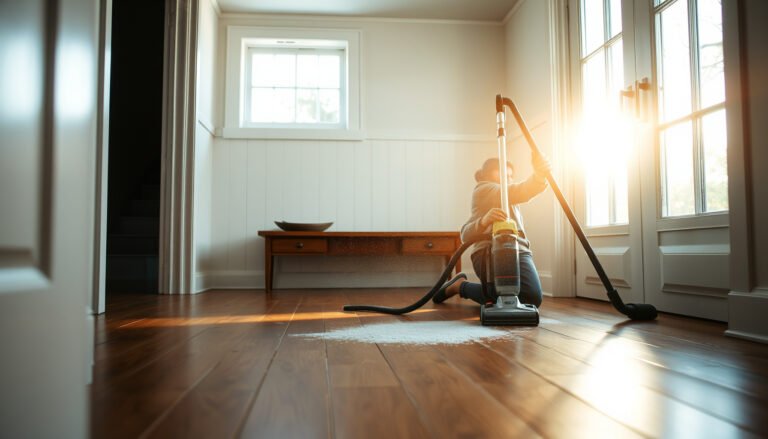
– Remove grit first: sweep and then vacuum with a soft brush to prevent scratching during scrubbing.
– Protect walls/trim and keep the floor as dry as possible before you start (use minimal liquid and change water/solution if it gets dirty).
– Gather tools: microfiber mop/pads, clean buckets, and soft white pads (avoid scouring pads unless your finish instructions specifically allow them).
Hands-on workflow note: when residue is present, dirty pads can redeposit emulsified polish.
What “scrub light” really means (so you don’t damage the finish)
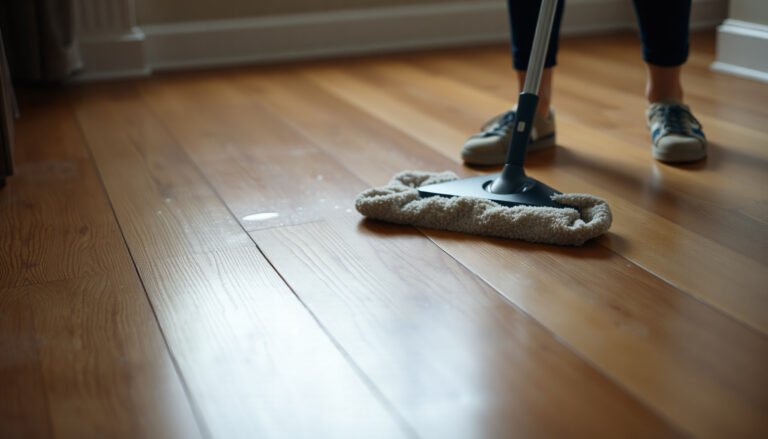
Microfiber is your agitation tool—not pressure. Use gentle, overlapping passes and let the cleaner’s chemistry do the work. If you need to lean into the mop to “make it work,” you’re usually overloading either the chemistry strength or the dwell time (the time a remover sits before wiping), both of which raise risk.
Deep-clean steps to remove floor polish buildup
You’ll remove polish buildup most safely by matching the cleaner to the layer and then lifting residue with microfiber agitation—section by section. Avoid “pour and spread” cleaning; instead, work like you’re doing controlled surface stripping, even when you’re using a mild cleaner.
– Clean by “power washing” the residue gently: apply a hardwood-safe cleaner/remover matched to the finish, then agitate lightly with a microfiber pad (work in small sections).
– If the buildup is clearly polish/wax, use a hardwood floor polish stripper/wax remover that’s explicitly labeled for finished hardwood—follow its dwell time exactly.
– Wipe up and repeat as needed: don’t just spread cleaner over the problem—keep changing pads/water so you’re lifting buildup, not re-depositing it.
Which approach is actually safer? (Comparison: mild cleaner vs. dedicated remover)
| Feature | Hardwood-safe neutral cleaner + microfiber | Dedicated polish/wax remover (label-approved) |
|---|---|---|
| Primary target | Light to moderate film haze | True polish/wax layer buildup |
| Typical residue risk if rinsing is rushed | Medium (less chemical strength, but still can leave film) | Higher (removers must be rinsed thoroughly) |
| Finish damage likelihood | Lower when used as directed | Moderate if used too often or too long |
| Dwell time requirement | Usually minimal | Critical—follow label dwell time |
| Best tool synergy | Microfiber pad + frequent pad changes | Microfiber pad + solution control + rinse |
| Effort level | Higher iterations for heavy buildup | Usually fewer cycles when the layer is wax/polish |
| Chance of uneven sheen | Lower if rinsed consistently | Moderate—requires even application and full rinse |
| Reset time before re-coating | Often minimal if only cleaned | May require waiting for complete dryness/cure per label |
| Suitable for unknown finish | Yes—start here when unsure | Only if label explicitly supports your finish type |
| Overall safety profile (as a first attempt) | Best first move | Best when buildup behavior matches polish/wax |
| Best For | Cloudy haze that still feels “sealed” and lifts with gentle cleaning | Sticky/slick floors, visible film, or residue that doesn’t lift after a neutral-cleaning attempt |
Step-by-step “microfiber lift” method (practical pacing)
1. Work a small area first (for example, a section sized so you can finish before the cleaner dries).
2. Apply cleaner according to label directions (don’t guess).
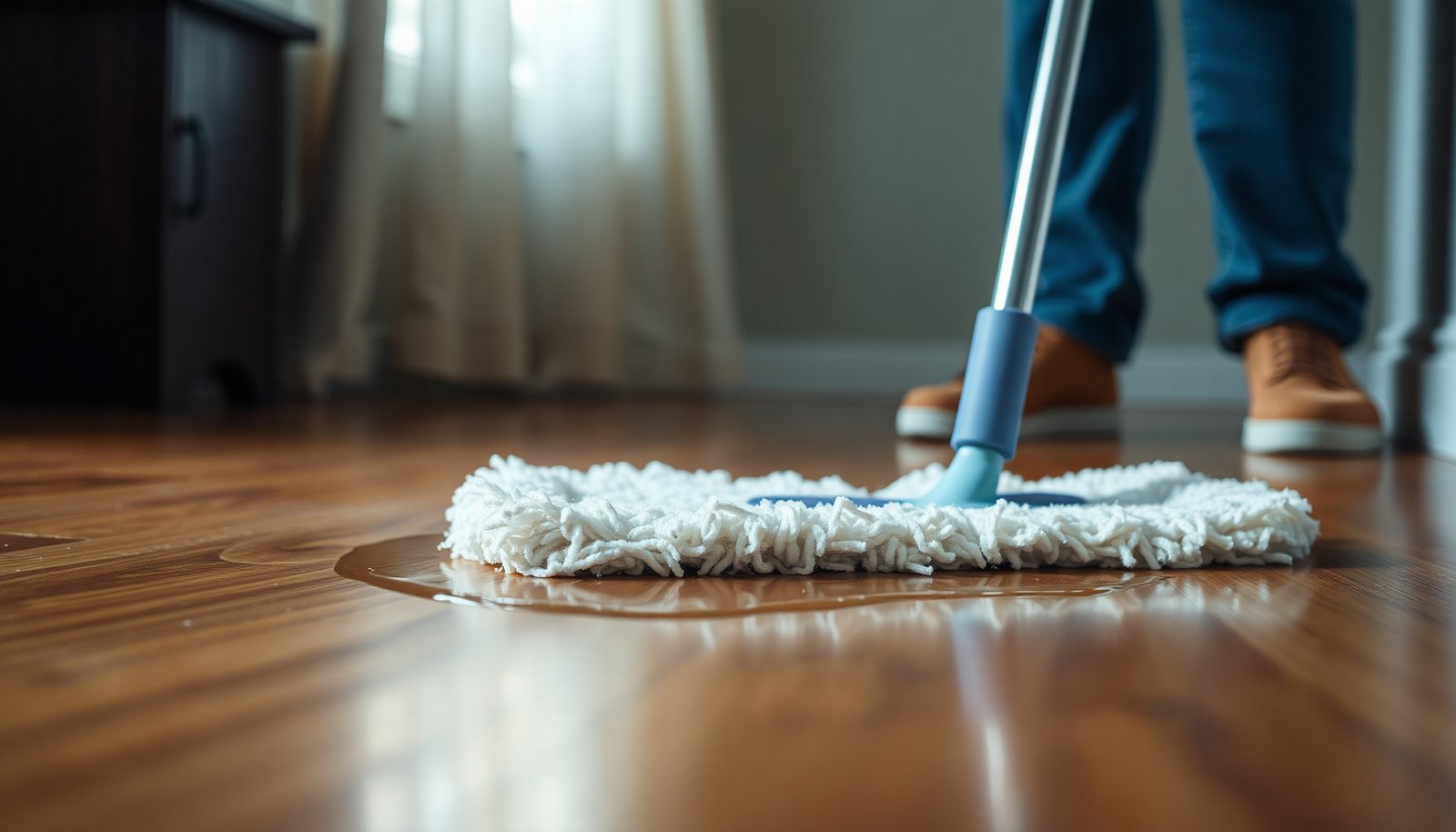
3. Agitate with microfiber using overlapping passes.
4. Wipe up loosened residue immediately; don’t let it dry into the film again.
5. Swap pads frequently and repeat only where haze persists.
Rinse and dry correctly (this is where many people fail)
You remove polish buildup for good only when you eliminate residue—then dry quickly enough that the finish doesn’t turn cloudy again. This step is the difference between “cleaned today” and “filmy again in two days.”
– Remove all remaining cleaner/residue by rinsing with clean water or following the product’s specific rinse instructions.
– Dry quickly with dry microfiber towels or a properly used floor dryer/fan setup—standing moisture can cloud or warp finishes.
– Let the floor fully cure/dry before walking on it or applying any new product.
Why steam and excess heat can make things worse
Steam mops deliver boiling water. At standard atmospheric pressure, water boils at 100°C / 212°F (NIST: boiling point of water at 1 atm). That thermal and moisture load can wick into seams and accelerate finish damage on some floors—especially older, poorly sealed edges.
As of 2026, most manufacturer care guides still emphasize “no standing water” and “avoid steam” unless explicitly approved. If you’re dealing with polish buildup, the goal is controlled chemical lift and rinse—not adding more moisture.
What can go wrong (and how to prevent it)
You’ll usually see new haze or permanent dullness when you use the wrong chemistry, scrub too hard, or skip thorough rinsing. The safe prevention strategy is to escalate gradually: mild → targeted → (only if needed) label-approved stripping.
– Using the wrong chemicals (like vinegar/strong degreasers) can dull or damage some finishes—always confirm compatibility with your floor’s finish type. Acetic acid (vinegar’s main acid) has a pKa of ~4.76, which means it can be reactive enough to change finishes depending on formulation (NIST Chemistry WebBook: acetic acid pKa).
– Over-scrubbing or using abrasive pads can create permanent dull patches or scratches, especially on high-traffic areas.
– Not rinsing (or leaving residue behind) can cause faster re-buildup and a sticky/filmy look within days.
– If you strip too aggressively, you may thin or remove the top finish layer—then the floor can look uneven and may require re-coating/refinishing.
Vinegar vs. hardwood-safe cleaner (quick safety comparison)
| Criteria | Vinegar / acidic cleaners | Hardwood-safe neutral cleaner |
|---|---|---|
| Typical finish compatibility | Often unclear; may dull/attack some topcoats | Designed for sealed hardwood care |
| Risk of dull film | Higher (acid exposure) | Lower when used as directed |
| Residue/deposit behavior | Can leave reacting residues if not rinsed properly | Lower deposit risk when rinsed per label |
| Scratch prevention | No inherent protection—pad choice still matters | Microfiber method works well with these cleaners |
| When it “works” | May reduce some surface grime, but not reliably wax/polish haze | Better match for polish buildup and film removal cycles |
| Escalation path | Hard to control—can react unpredictably | Clear: mild cleaner → targeted remover if needed |
| Label adherence | Not typically approved for finished hardwood | Typically label-approved for hardwood care |
| Best first attempt | No | Yes |
| Suitability for unknown finish | Not recommended | Recommended (start mild) |
| Overall risk | Higher | Lower |
| Verdict | Skip DIY acid cleaners for polish buildup on sealed hardwood. | Choose hardwood-safe neutral cleaners and only escalate to polish removers if needed. |
Verdict / tip (best practice, plus who should skip)
If your hardwood is only dull/filmy from polish buildup, start with a mild, hardwood-safe cleaner and only move to a dedicated “stripper/remover” if the buildup doesn’t lift. The downside is that stronger stripping products can remove or unevenly affect the finish—so if you have an older, delicate finish or you can’t confirm what’s on the floor, it’s safer to contact your flooring manufacturer or a qualified refinishing pro.
Skip DIY stripping if you don’t know the finish type, the floor is already wearing thin, or you suspect large areas need refinishing rather than just cleaning.
Quick checklist (save this before you start)
| Step | Quick action | Goal |
|---|---|---|
| 1 | Sweep + soft vacuum | Prevent grit scratches |
| 2 | Spot test cleaner/remover | Confirm finish compatibility |
| 3 | Work in small sections with microfiber | Lift polish film without over-scrubbing |
| 4 | Use dedicated remover only if needed | Break down true buildup layer |
| 5 | Thorough rinse per product directions | Prevent sticky residue |
| 6 | Dry completely | Avoid clouding/warping |
| 7 | Assess finish—recoat/refinish only if required | Keep the floor uniform |
Frequently Asked Questions
How do I deep clean hardwood floors to remove floor polish buildup?
Start by vacuuming or sweeping thoroughly, then mop with a hardwood-floor cleaner that’s safe for finished wood. For heavy floor polish buildup, use a hardwood-safe stripper/deglosser or a diluted mixture recommended for your finish, scrubbing in small sections with a microfiber pad. Rinse with clean water or a neutralizer if the product label requires it, then let the floors dry completely before applying a new coat if needed.
What’s the best way to strip old polish haze off sealed hardwood floors without damaging the finish?
Use the gentlest method first: repeated mopping with a pH-neutral cleaner and warm water can remove light residue. If there’s still dullness or tacky buildup, apply a small amount of a product specifically designed to break down polish on sealed hardwood, working with the wood grain and avoiding soaking. After removing the residue, rinse properly (or neutralize) and dry thoroughly so the finish isn’t left contaminated.
Why does floor polish buildup happen on hardwood, and how can I prevent it after deep cleaning?
Polish buildup often occurs when cleaning products leave waxy residues or when mops don’t fully rinse away cleaner, causing layers to accumulate. To prevent it, use a pH-neutral hardwood cleaner and avoid “hot water + lots of cleaner,” which can spread residue across the floor. After deep cleaning, switch to maintenance that removes grime without leaving excess film—microfiber mops and minimal product usage help a lot.
How do I remove stubborn floor polish buildup from hardwood floors in high-traffic areas?
Focus on small sections and use targeted scrubbing with a soft nylon brush or microfiber pad so you lift the residue without scratching. If the buildup is thick, a deglosser or polish-remover formulated for hardwood can work better than standard cleaners, but apply only as directed and keep it off baseboards and gaps. Once the residue is gone, rinse/neutralize, dry fully, and consider a light refinishing or re-coating only after the floor is completely clean.
Which cleaner or method should I use to deep clean hardwood floors—vinegar, steam, or a commercial stripper?
Vinegar and steam are often risky: vinegar can be too harsh for some finishes, and steam can force moisture into seams and damage wood. The safer approach for polish buildup is a commercial hardwood floor stripper/deglosser or a product specifically labeled for removing wax/polish film on finished hardwood, followed by proper rinsing or neutralization. Always spot-test in an inconspicuous area and follow the finish-specific directions to avoid dulling or stripping more than intended.
📅 Last Updated: November 02, 2026 | Topic: How to deep clean hardwood floors to remove floor polish buildup? | Content verified for accuracy and freshness.
References
- https://scholar.google.com/scholar?q=hardwood+floor+polish+buildup+removal+deep+cleaning Google Scholar
- https://scholar.google.com/scholar?q=how+to+strip+floor+finish+build-up+from+hardwood+floors Google Scholar
- https://scholar.google.com/scholar?q=wax+buildup+removal+from+wood+floor+finish+best+practice Google Scholar
- https://scholar.google.com/scholar?q=wood+floor+deep+clean+residue+removal+non+abrasive+methods Google Scholar
- https://scholar.google.com/scholar?q=hardwood+floor+care+chemicals+for+removing+floor+finish+buildup Google Scholar
- https://scholar.google.com/scholar?q=neutral+pH+cleaner+hardwood+floor+finish+residue+study Google Scholar
- https://scholar.google.com/scholar?q=professional+hardwood+floor+cleaning+methods+finish+buildup Google Scholar
- https://scholar.google.com/scholar?q=floor+stripping+techniques+for+wooden+surfaces+research Google Scholar
- https://scholar.google.com/scholar?q=detergent+versus+solvent+residue+removal+varnished+wood+surfaces Google Scholar
- https://scholar.google.com/scholar?q=cleaning+agents+for+removing+polish+and+wax+film+on+wood+floors Google Scholar