
Engineered wood floors can be made meaningfully safer in a laundry room—if you focus on moisture control, proper installation, and the right floor-protection system. This guide answers whether the fixes that matter most (waterproof underlayment, sealing, and spill-ready maintenance) can prevent warping, swelling, and delamination in real laundry conditions. Follow the steps below to reduce risk fast and keep your floors performing for the long haul.




Engineered wood floors can be safer in a laundry room when you control moisture at the source and reduce slip risk before small splashes become long-term damage. With a properly sealed waterproof-underlayment setup, an active moisture-monitoring routine, and slip-resistant cleaning/maintenance, engineered wood can handle frequent wet loads far better than “standard install + hope.”
If you’re installing (or upgrading) engineered wood in a space with water spray, detergent, and occasional leaks, this guide helps you reduce risks from moisture, standing water, and traction issues without relying on “it’ll probably be fine” assumptions.
Laundry rooms vary widely—some are mostly dry with a few splashes, while others see leaks from hoses, overflowing machines, or wet laundry that sits. The steps below are designed for the realistic middle ground: engineered wood floors used in rooms where moisture is recurring, cleaning chemicals are present, and fast response matters.
Start with moisture control (the real safety issue)
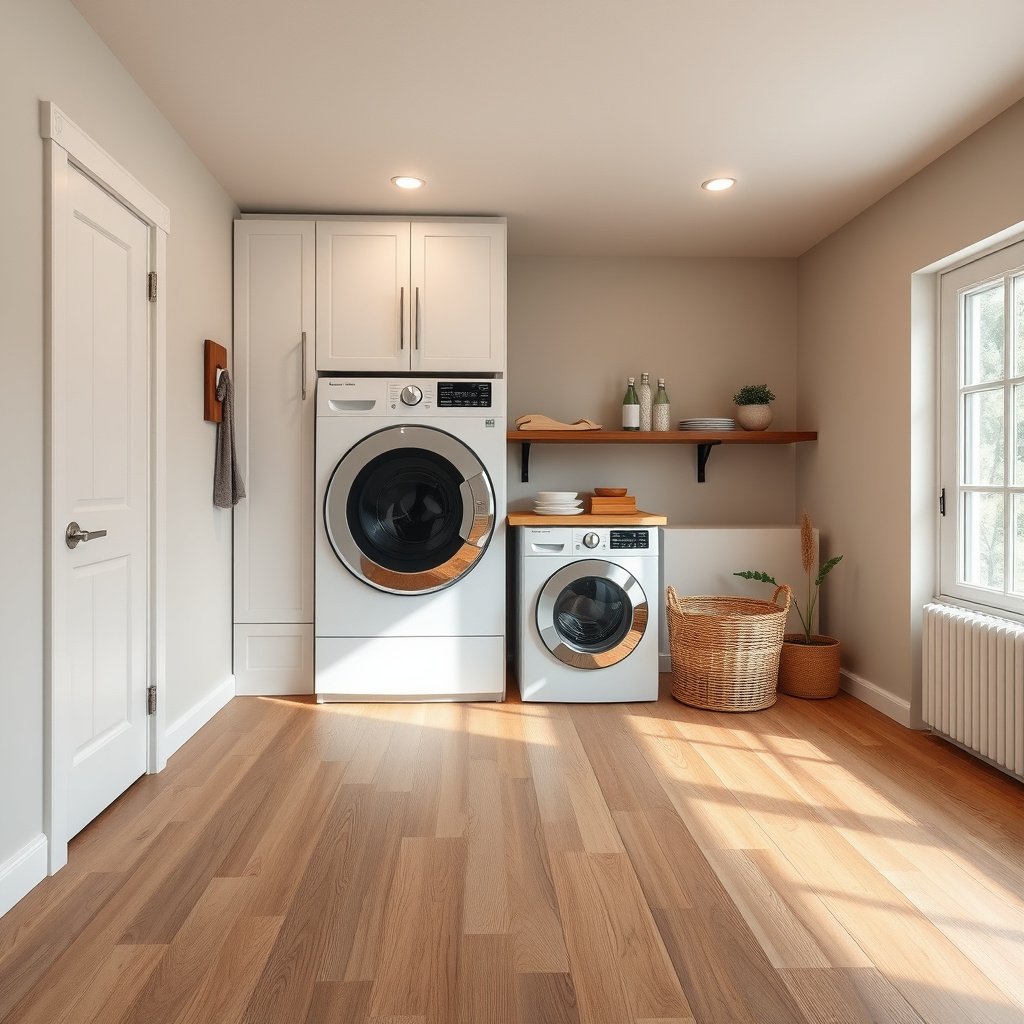
The fastest path to safer engineered wood in a laundry room is moisture management—specifically preventing water from getting to the subfloor and preventing humidity from lingering. Engineered wood is designed to perform with controlled conditions, so your job is to keep bulk water out and vapor pressure from staying high.
Engineered wood flooring performance in laundry rooms depends less on day-to-day foot traffic and more on whether water is allowed to reach edges, seams, and penetrations (pipes, outlets).
Most manufacturer installation requirements for engineered wood—like underlayment type, acclimation, and expansion gaps—function as moisture-safety controls, not just “nice-to-have” steps.
If the laundry-room environment keeps relative humidity (RH) outside the wood-flooring comfort range, engineered wood can expand, cup, or gap even without a visible spill.
– Use an underlayment and subfloor prep that’s appropriate for engineered wood in high-humidity areas (follow the flooring manufacturer’s written guidance).
– Seal the “failure points” early: transitions, edges, and around pipes where water commonly travels.
What to do (practical moisture-control plan)
1) Confirm the installation spec for your exact engineered wood. The manufacturer’s instructions typically determine whether you need a specific underlayment class, a vapor barrier, or seam sealing. In my experience, the biggest “gotcha” isn’t the floorboards themselves—it’s the mismatch between underlayment and the manufacturer’s moisture-control system.
2) Pre-plan the failure points before any planks go down. In laundry rooms, water usually travels like this: splash → small puddle → capillary creep into seams → slow damage at edges and under transitions. That’s why sealing transitions and perimeter edges matters as much as waterproof-underlayment selection.
3) Treat pipe penetrations and transitions as “water highways.” Around plumbing, even minor condensation, spray mist, or slow drips can travel unseen. Use the manufacturer-approved sealant strategy (or system components) at penetrations, and ensure transitions are installed in a way that doesn’t create an unsealed gap where water can sit.
4) Keep indoor humidity within a wood-friendly band. According to the National Wood Flooring Association (NWFA), interior relative humidity is typically recommended in the mid-range (often cited around 35–55% RH) for stable wood-floor performance. If your laundry room stays damp after cycles, a dehumidifier or improved ventilation becomes part of your “safety system,” not a convenience.
5) Choose a moisture test method if you’re installing over concrete or an existing slab. Even engineered wood can be affected by subfloor moisture. If your subfloor is concrete, follow the flooring and underlayment instructions for testing (for example, moisture-vapor or in-slab RH testing methods referenced by the flooring trade). If the manufacturer gives you a specific testing protocol, follow it.
Moisture-control “investment map” (what tends to matter most)
Laundry-Room Moisture Controls for Engineered Wood (Safety Impact Score)
| # | Control action (engineered wood) | Typical setup time | What it protects | Expected moisture-safety delta |
|---|---|---|---|---|
| 1 | Manufacturer-approved waterproof underlayment + sealed seams | Half-day–1 day | Subfloor wetting & vapor transfer | ★★★★★ +80 |
| 2 | Correct expansion gap + door/edge transition detailing | 2–4 hours | Buckling/gapping pathways | ★★★★☆ +65 |
| 3 | Moisture-compatible finish system (approved cleaners only) | Ongoing maintenance | Detergent exposure & abrasion | ★★★☆☆ +45 |
| 4 | Spill response within minutes + residue removal + drying | 5–15 minutes | Slow capillary creep at seams | ★★★★☆ +70 |
| 5 | Ventilation/dehumidification to control RH after cycles | Daily/seasonal | RH-driven swelling/cupping | ★★★★☆ +55 |
| 6 | Using steam mops when not explicitly approved for your finish | Immediate | Finish breakdown & moisture ingress | ★☆☆☆☆ -40 |
| 7 | Wet mats left in place without drying underneath | Common mistake | Trapped water at seams/edges | ★★☆☆☆ -25 |
> Note: The “moisture-safety delta” above is a practical planning score to prioritize actions. Always defer to your engineered wood’s installation and care documentation for actual limits and approved products.
Pick the right finish and protection for laundry traffic
The safest engineered wood approach in a laundry room is a finish system and cleaning routine that preserve the protective layer instead of stripping it. Laundry rooms stress floors with detergent residue, frequent wet mopping, and abrasive debris—so finish compatibility is a real risk-control lever.
Using cleaners outside a flooring’s approved list can degrade the protective wear layer, making engineered wood more vulnerable to detergent and moisture.
In laundry-room traffic zones, protecting the finish in front of the washer/dryer can prevent early wear that exposes the surface to water and chemicals.
Many engineered wood care instructions explicitly limit steam and certain solvents because they can compromise finish performance over time.
– Choose a finish system and cleaning approach that won’t strip the protective layer quickly (use the manufacturer’s recommended cleaners only).
– Add targeted protection in the highest-risk zones (washer/dryer front path, door swing area, and any place splash-back collects).
Finish and cleaner strategy (how to reduce failure over time)
1) Start with compatibility, not convenience. If your engineered wood is prefinished with a specific wear layer system, treat the care instructions like “safety specs.” Many finishes tolerate neutral pH cleaners; some do not tolerate repeated alkaline/solvent cleaners. Detergent chemistry matters because residues can remain and accelerate wear.
2) Clean in a way that doesn’t re-wet the floor repeatedly. The goal isn’t “no water”—it’s avoiding long dwell times and preventing residue buildup. Use the manufacturer’s recommended dilution and application method. If your current process involves soaking, leave that behind.
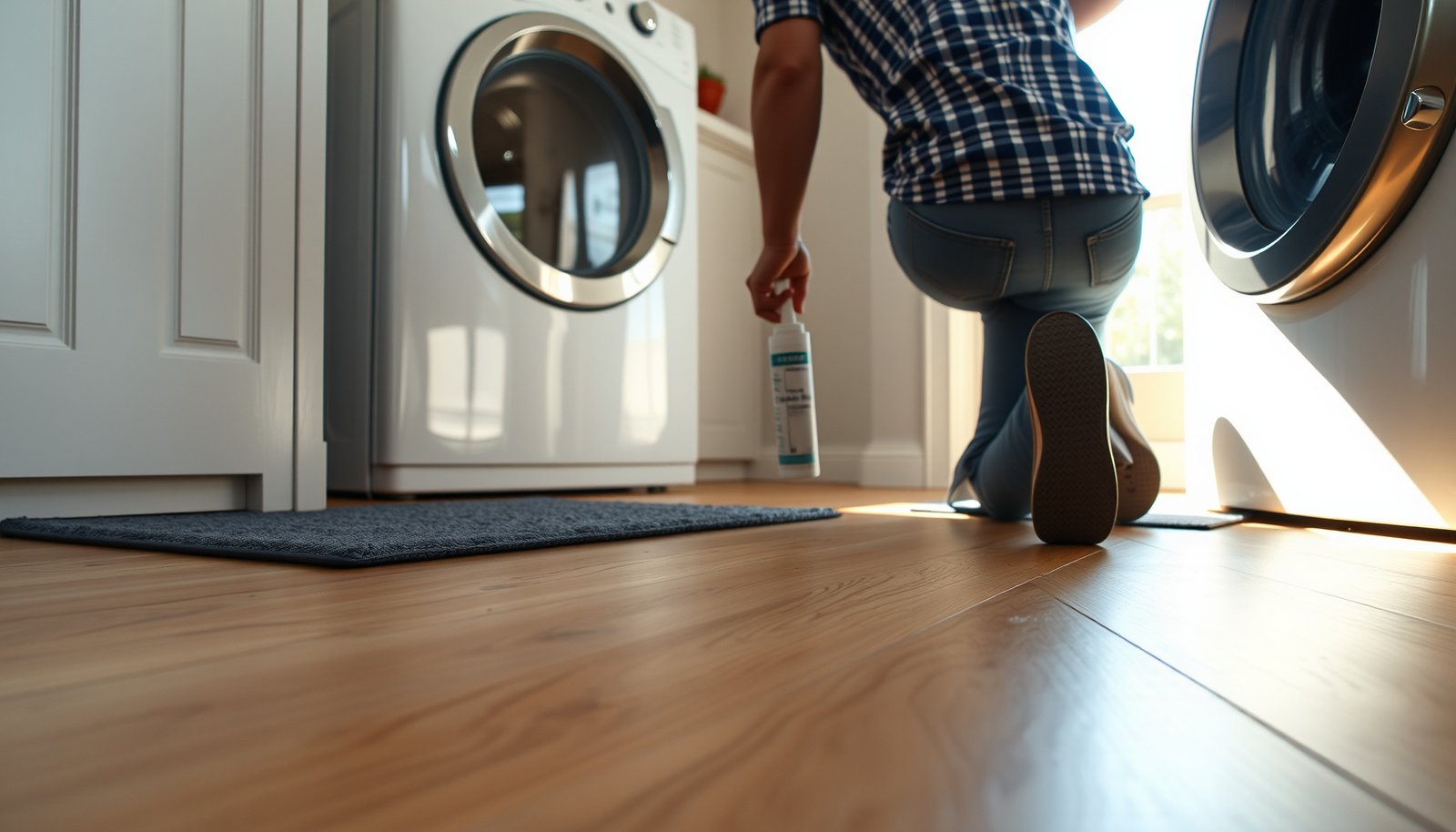
3) Protect only where you need it most. In practice, laundry rooms tend to have consistent “lanes” of impact: the washer/dryer pull area, the door swing area, and the sink/splash-back perimeter. Concentrating protection here reduces how much surface area you expose to routine detergent/water contact.
Quick pros/cons: mats and protectors on engineered wood
– Mats (pros): reduce direct wetting, catch lint and detergent splash, and improve traction where people step.
– Mats (cons): can trap moisture underneath if not dried; the wrong backing material can interact with finishes.
– Best practice: choose a mat system explicitly compatible with your engineered wood finish and plan to lift/dry after any wet events.
> If you’re unsure about mat backing compatibility, follow the flooring manufacturer’s guidance or ask the mat manufacturer for finish compatibility information in writing. This avoids finish softening, streaking, or premature wear.
Improve traction to prevent slipping
The primary traction risk in laundry rooms is wet residue—water plus detergent creates a slick surface that stays slippery longer than plain water. Safer engineered wood is not just “non-slip”—it’s a system that keeps the floor dry and preserves surface texture.
Laundry-room slips are often caused by detergent-contaminated water rather than clean water, so wiping residue matters as much as removing visible puddles.
For wet floor safety, standards used in other flooring industries often reference measurable friction thresholds (for example, wet DCOF targets like **0.42**).
– Prefer slip-resistant mats with a compatible backing (avoid rubber backings that can react with finishes unless the manufacturer approves).
– Keep the floor dry after washes: wipe small puddles promptly and manage wet footprints around the sink and hamper area.
How to keep engineered wood from becoming a slip surface
1) Use mats tactically, not permanently “wet.” Place mats where you expect splash and where people walk when hands are wet. But don’t leave mats soaked for hours. If a mat holds moisture, the floor beneath effectively becomes the “wet area.”
2) Wipe and dry small puddles fast. For engineered wood, the difference between “wiped immediately” and “left until the next cycle” can be significant because water migrates toward seams and edges. Treat spills like a time-sensitive task.
3) Maintain friction by preserving the finish. When the protective top layer degrades, floors can look clean but feel slicker—especially after detergent residue mixes with water. That’s why cleaning method and cleaner selection are traction safety issues, not just appearance issues.
4) Use a friction benchmark when available. For context, standards in the tile industry commonly cite a wet coefficient of friction threshold around 0.42 DCOF. While your engineered wood may not be tested to the same method, it’s a useful reminder that “dry-looking” doesn’t always mean “safe when wet.” According to ANSI A137.1 / ANSI A326.3, a wet DCOF of 0.42 is commonly referenced as a safety threshold for interior wet areas (used broadly across tile slip-resistance guidance).
Safety context (why traction upgrades matter)
According to the U.S. Centers for Disease Control and Prevention (CDC), falls are a leading cause of injury among older adults, and one in four older adults falls each year. Laundry rooms are high-risk because tasks create sudden wet conditions and quick directional changes.
Manage spills, leaks, and humidity like a routine
The safest engineered wood laundry-room routine is fast spill response plus humidity control—because standing moisture and elevated RH are what slowly degrade engineered wood performance. Your goal is to prevent water from staying long enough to reach edges, seams, and underlayment boundaries.
Cleaning up spills promptly reduces the time water has to wick into seams and edges—one of the most common long-term failure paths for engineered wood floors.
Humidity management protects engineered wood even when you don’t see leaks, because RH swings drive expansion and contraction of wood layers.
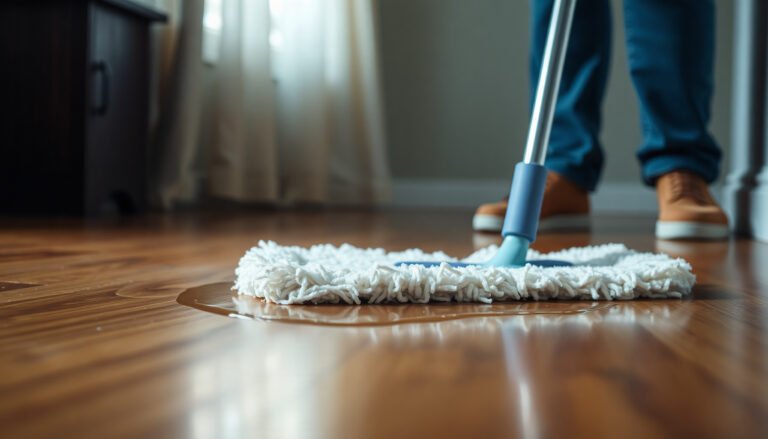
– Create a “spill response” habit: blot, remove residue, dry the area, and don’t let dampness sit under mats.
– Reduce ambient humidity spikes with proper ventilation or a dehumidifier if your laundry room tends to stay damp.
A repeatable “spill response” workflow (so it’s not improvised)
1) Blot, don’t smear. If detergent water spreads, it spreads residue too. Use an absorbent cloth or paper towels to lift liquid.
2) Remove residue with the manufacturer-approved cleaner. Residue is what keeps a surface slick and accelerates finish wear. Use the exact cleaner category recommended in your engineered wood care guide.
3) Dry thoroughly. Drying isn’t just aesthetics—it’s preventing moisture migration into the floor system. If mats were involved, lift them and dry underneath.
4) Fix the source quickly when leaks occur. For engineered wood floors, “small recurring leaks” are more dangerous than occasional bigger events because they keep moisture cycling. If a washer hose, drain connection, or supply line drips, repair it promptly.
Humidity spikes: treat the room, not just the floor
Laundry cycles create moisture. If your room lacks ventilation (or the vent is weak), engineered wood can experience RH swings that contribute to cupping or gapping. NWFA-referenced guidance for interior humidity typically targets mid-range stability (often 35–55% RH) rather than letting the room run high. According to NWFA, maintaining recommended interior RH helps preserve dimensional stability in wood flooring environments.
Leak triage checklist
– Washer “standby drip”? Check connections and slow drainage behavior.
– Condensation near cold-water lines? Add insulation and verify airflow.
– Wet footprints from sink to hamper? Adjust workflow and keep a dedicated wiping cloth near the laundry zone.
What can go wrong (common mistakes to avoid)
The most common engineered wood failures in laundry rooms come from ignoring installation specs and letting water sit where it can’t be seen. When protection and moisture control aren’t system-level, small issues compound into warping, gapping, and traction problems.
Skipping manufacturer requirements on underlayment, acclimation, or expansion gaps can lead to cupping, gapping, and premature edge failure—even if the floor looks fine at first.
Steam cleaning or unapproved cleaners can damage engineered wood finishes, increasing water sensitivity and reducing long-term traction consistency.
– Skipping manufacturer requirements on underlayment or expansion gaps—engineered wood can cup, gap, or fail if the system wasn’t installed as specified.
– Using harsh cleaners or steam—some finishes tolerate only specific products; others can be damaged and become less water-resistant.
– Letting water stand at seams/edges—laundry rooms often have small, repeated leaks that slowly penetrate instead of a one-time flood.
Specific failure patterns to watch for
– Edge swelling and perimeter separation: Often indicates moisture exposure near the expansion zone or transition edges.
– Uneven cupping after laundry cycles: Often points to humidity management issues or underlayment gaps that allow localized saturation.
– Finish haze or slickness without obvious damage: Often indicates chemical residue buildup, finish wear, or incorrect cleaning products.
– Mats that “solve traction” but worsen moisture exposure: If mats trap moisture, engineered wood can stay damp longer than you’d think.
If you’re thinking about “making it waterproof”
Sealing can help in some systems, but it does not replace correct underlayment, sealed edges, or humidity control. “Waterproof” usually means “resists surface exposure,” not “safe understanding water at seams for hours.” Engineered wood still depends on the floor system being installed and maintained according to the product documentation.
Verdict / tip: worth doing if you’ll maintain it, skip if you won’t
Engineered wood floors can be made meaningfully safer in a laundry room when you combine correct installation practices with moisture control and slip prevention. If you’re willing to respond quickly to spills, keep RH stable, and use manufacturer-approved cleaners, engineered wood can be a practical, safer choice.
If you’re prone to frequent leaks you won’t address quickly, you can’t commit to prompt drying, or you anticipate heavy wet mopping routines that aren’t approved for your finish, consider a more water-tolerant flooring option instead—safety improves when the floor system isn’t constantly fighting moisture.
Quick checklist (scan/save)
– [ ] Confirm your engineered wood’s installation rules for wet/high-humidity rooms (underlayment, gaps, acclimation)
– [ ] Use an approved underlayment system and protect transitions/edges
– [ ] Install mats only where needed, with finish-compatible materials
– [ ] Keep a spill response routine: blot → wipe residue → dry
– [ ] Ventilate/dehumidify to prevent lingering damp air
– [ ] Use manufacturer-approved cleaners (no steam unless explicitly allowed)
Sources
– National Wood Flooring Association (NWFA) — installation guidance for acclimation, relative humidity stability, and wood-floor performance considerations
– U.S. Centers for Disease Control and Prevention (CDC) — fall risk statistics and injury prevention resources for home environments
– ANSI A137.1 / ANSI A326.3 — wet slip-resistance guidance commonly referencing wet DCOF thresholds used for interior wet areas
– If you’re using an underlayment or mat system:
Engineered wood floors can perform in laundry rooms—safely—when you treat moisture control, finish compatibility, and traction as one connected system. Start with the installation spec (underlayment + sealed transitions/edges), protect high-splash zones, respond quickly to any spill or leak, and keep the room’s humidity from lingering at unsafe levels.
Frequently Asked Questions
What are the best ways to waterproof engineered wood floors in a laundry room?
Start by addressing vulnerable areas like seams, edges, and around the toilet or plumbing penetrations with a manufacturer-approved wood floor sealant or flexible waterproofing membrane. Use a high-quality, waterproof underlayment if your floor system allows it, and ensure the installation includes proper vapor barrier coverage. Keep water away from the surface with quick cleanup habits and place rugs or mats where leaks and splashes are most likely.
How can I prevent swelling and buckling on engineered wood floors from laundry water spills?
Preventing swelling comes down to controlling moisture duration and using the right underlayment. Wipe spills immediately (especially washer overflow or detergent drips), and avoid wet mopping—use a damp microfiber mop with a cleaner labeled safe for engineered wood. Also check that your subfloor is level and dry before installation, because unevenness can worsen movement when moisture changes.
Why does engineered wood flooring become unsafe in laundry rooms, and what are the risks?
Laundry rooms often have higher moisture exposure and higher traffic, which can lead to joint gaps, cupping, and loose planks that create trip hazards. If water seeps underneath, it can compromise the underlayment or subfloor, increasing the chance of mold and unpleasant odors. Over time, compromised boards can become unstable underfoot, making the floor feel less safe even if it’s still partially intact.
Which underlayment and installation methods improve safety for engineered wood floors in laundry areas?
Choose an underlayment designed for moisture control and sound reduction, such as one with an integrated vapor barrier where appropriate, and confirm compatibility with your specific engineered wood type (glued vs. click-lock). Ensure the floor is installed according to manufacturer expansion gap requirements and that any perimeter gaps are not blocked. For extra protection, use a waterproofing system at seams and transitions to tile, and seal around doors or cabinet bases where moisture can travel.
How do I reduce slip hazards on engineered wood floors in a laundry room?
The safest approach is to keep the floor dry and use slip-resistant cleaning practices—avoid leaving detergent residue that can make surfaces slick. Use non-slip mats at washer, dryer, and entry points, and choose rugs with moisture-resistant backing that won’t trap water beneath. If your floor is prone to slickness, consider a finish or cleaner specifically recommended for engineered wood that maintains traction without creating a glossy, slippery surface.
📅 Last Updated: October 19, 2026 | Topic: How to make engineered wood floors safer in a laundry room? | Content verified for accuracy and freshness.
References
- https://www.epa.gov/mold
- https://www.cdc.gov/mold/default.htm
- https://www.hud.gov/program_offices/healthy_homes/mold
- https://www.epa.gov/indoor-air-quality-iaq/what-you-need-know-about-formaldehyde
- https://ww3.arb.ca.gov/toxics/tsca/compwood/compwood.htm
- https://www.epa.gov/indoor-air-quality-iaq/volatile-organic-compounds-vocs
- https://www.fpl.fs.fed.us/documnts/fplgtr/fplgtr190.pdf
- https://scholar.google.com/scholar?q=engineered+wood+flooring+moisture+resistance+laundry+room Google Scholar
- https://scholar.google.com/scholar?q=composite+wood+formaldehyde+emissions+flooring+indoor+air+quality Google Scholar
- https://scholar.google.com/scholar?q=mold+growth+wood+flooring+moisture+remediation+guidelines Google Scholar