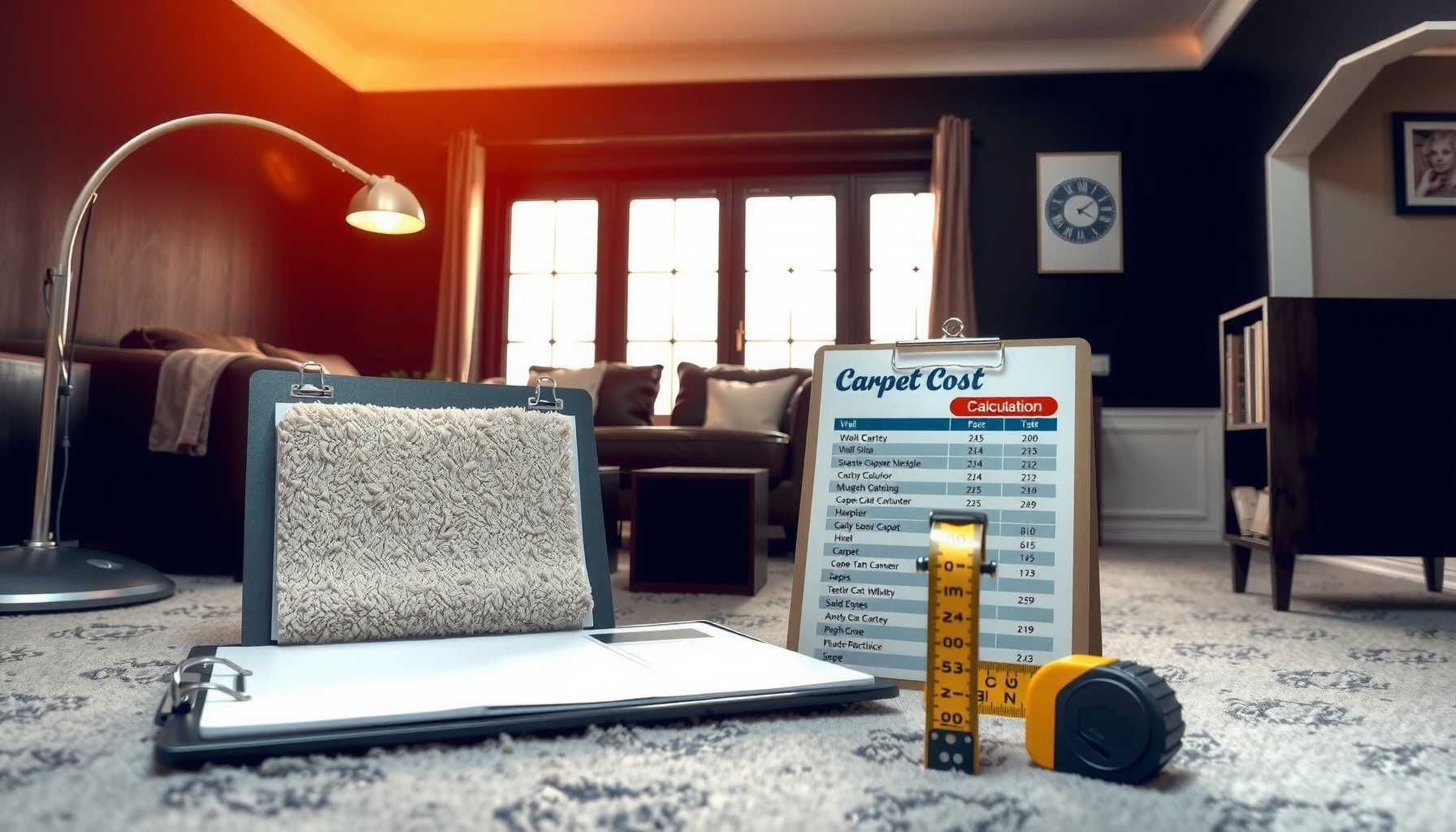

Estimating the cost of carpet floors is straightforward once you know exactly which line items control the total: carpet price per square foot, padding, installation labor, and necessary prep. This full breakdown shows you how to calculate a realistic budget for any room size—so you can compare quotes with confidence instead of guessing. If you want the fastest path to a number you can trust, you’ll get it here.
Estimating carpet flooring cost is mostly a math exercise: carpet price per square foot + padding/underlayment + installation (labor and extras). Once you calculate your room’s square footage, confirm what’s included in the quote (especially removal and subfloor prep), you can build a budget range that’s realistic and reduces surprise charges.
If you’re remodeling, comparing installer bids, or trying to budget before you shop, this guide helps you estimate wall-to-wall carpet and common variations like upgraded padding, stair coverage, and transitions. It’s written so you can plan for the whole project scope—not just the material sticker price.
Measure your space and calculate square footage

You can usually estimate carpet cost accurately by starting with square footage and then adding the “hard-to-count” areas. The fastest path is to measure each area separately so closets, hallways, landings, and irregular shapes don’t quietly blow up your total.
Carpet and padding quotes are almost always based on total installed square footage, so precise room measurement is the foundation of every estimate.
For irregular layouts, breaking a room into rectangles reduces measurement error compared with trying to estimate one “average” shape.
If stairs are included, tread/riser coverage is often priced differently than the same square footage on floors, so treat stairs as a separate quantity when requesting bids.
H3: How to calculate square footage (the L × W method)
– Measure each room length and width in feet, then multiply (L × W) to get square footage.
– Round consistently (for example, to the nearest 0.1 sq ft) rather than mixing rounding rules across rooms.
H3: Add-ons for closets, hallways, and irregular areas
– Add closets and enclosed hallways by measuring them as their own rectangles.
– For bumps, corners, and “missing chunks,” split the space into smaller rectangles and add the results.
– If an area will be carpeted but is underestimating in your plan (like a small landing or closet nook), include it now—quotes that assume “carpet only in the main room footprint” can diverge fast.
H3: If you’re including stairs
Stairs are where many estimates get misleading. In many bids, stairs are priced by a stair-specific method (binding/cutting labor, edge work, and fitting), not purely by square feet.
– Estimate tread coverage and riser coverage separately (how your installer prices them matters—ask in writing).
– Confirm whether the quote includes carpet binding and stair trim/disposal details.
Practical note: As of 2025, many installers still quote stairs using a “per stair” or “per tread + riser” approach because it’s labor-intensive to cut and fit, especially with patterns or thicker carpet. Use your quote sheet to match their pricing model.
Estimate material costs: carpet + padding/underlayment
Once you know square footage, you can build a defensible materials estimate with two inputs: carpet $/sq ft and padding/underlayment $/sq ft. Then you add the “small stuff” if it isn’t included in labor.
Carpet and padding are both commonly priced per square foot, so their costs scale linearly with your measured area.
Manufacturers specify minimum padding characteristics (thickness/density/support) for warranty compliance, which can change both material selection and total cost.
If seam tape, adhesives, or tack strips aren’t included in the labor line item, they become add-on material costs that should be requested up front.
H3: Carpet cost per square foot → total carpet cost
– Use the carpet listing/spec sheet price per square foot and multiply by your total square footage.
– Add waste allowance if your source or installer recommends it. The template you’re working from uses: [ADD: waste factor, e.g., 10%]—follow that guidance if you have it, or ask your installer what they apply for your layout and pattern type.
Example structure (plug your numbers):
Total Carpet Cost = (Room sq ft + closet/hall sq ft + landing sq ft) × Carpet $/sq ft × (1 + Waste %)
H3: Padding/underlayment cost per square foot
– Add padding/underlayment using the padding price per square foot.
– Thicker and higher-density padding usually increases cost, but it can also influence comfort and carpet performance.
– Confirm your carpet manufacturer’s installation requirements. “Compatible padding” isn’t the same as “any soft pad”—warranty terms can depend on specs.
H3: Accessories installers sometimes treat as add-ons
Even if carpet installation is quoted as labor, these items may be separate:
– tack strips (or equivalent perimeter anchoring materials)
– seam tape and seam sealing/adhesive (especially for some carpet styles)
– adhesives for certain installation methods
– any required moisture barrier/underlayment system beyond standard padding (site-dependent)
If your quote groups these into labor, great—still request a line-item breakdown so you can compare bids apples-to-apples.
Typical Carpet + Padding + Install Cost by Budget Tier (U.S., installed)*
| # | Tier | Carpet (avg $/sq ft) | Padding (avg $/sq ft) | Install labor (avg $/sq ft) | Installed total (avg $/sq ft) |
|---|---|---|---|---|---|
| 1 | Value / Basic | $2.75 | $0.55 | $3.25 | $6.55 |
| 2 | Mid-range | $4.25 | $0.85 | $3.75 | $8.85 |
| 3 | Comfort Upgrade | $5.50 | $1.10 | $4.10 | $10.70 |
| 4 | Premium Dense Build | $6.25 | $1.30 | $4.50 | $12.05 |
| 5 | Pattern / Upgrade Seams | $6.75 | $1.20 | $5.10 | $13.05 |
| 6 | Moisture-Sensitive / Barrier Add | $5.50 | $1.35 | $4.40 | $11.25 |
| 7 | Heavily Irregular Layout | $4.75 | $0.95 | $5.00 | $10.70 |
For budgeting only: installed totals vary by region, carpet fiber/type, and whether removal/subfloor repair are included.
[ADD: source for regional installed price ranges you want to match for your market.]
Add installation labor and common add-ons
Installation labor is typically the third major variable after carpet and padding, and it can swing based on project complexity. Your best move is to ask how labor is priced (per sq ft vs. minimum charge) and which tasks are included.
Labor quotes can differ dramatically because “installation” may or may not include moving furniture, removal, and subfloor leveling.
Many contractors use a minimum labor charge for smaller rooms, so comparing only per-square-foot pricing can mislead.
Subfloor prep (repairing damage, flattening uneven areas) is often the difference between a smooth install and a callback.
H3: How installers price carpet work
– Per square foot: common for typical wall-to-wall installs, but still check whether minimums apply.
– Minimum charge: small rooms can end up paying a higher effective rate.
H3: Confirm quote inclusions line-by-line
Ask whether your quote includes:
– moving furniture inside the work area (and how far—same room vs. another room)
– carpet removal of existing flooring
– tack strip removal (if applicable)
– haul-away and disposal fees
H3: Budget for subfloor prep and specialty areas
Carpet installation quality depends heavily on the base. Common prep items include:
– repairing damaged subfloor sections
– smoothing uneven areas (to reduce wear and wrinkles)
– addressing squeaks or localized movement
– transitions (doorways, hall transitions, thresholds)
If you’re doing stairs and transitions, those may be priced separately from wall-to-wall flooring.
Account for flooring complexity and extras that change pricing
Complexity is what turns a simple square-foot estimate into a real budget. The fastest way to avoid cost drift is to list every “exception area” (transitions, patterns, stairs, moisture concerns) before you request final pricing.
Doorways, transitions, and custom seam planning increase labor time even when carpet is sold by the square foot.
If your layout requires additional seams or careful pattern matching, waste and installation labor both increase.
Moisture or climate considerations can require additional underlayment layers beyond basic padding, affecting both material and labor.
H3: Layout features that increase labor
– doorways and hall-to-room transitions
– custom cuts around columns or built-ins
– pattern matching requirements (some carpet styles require extra time and may change waste)
H3: Furniture and access constraints
Some estimates assume the installer can access the whole work area without barriers.
– If you can clear furniture and lift small items, you may reduce labor.
– If you want the installer to move everything, require that scope in writing.
H3: Climate/moisture considerations
If your project area has moisture sensitivity (basement slabs, exterior-facing rooms, or historically damp spaces), installers may recommend additional underlayment or barrier systems. Always confirm compatibility with your carpet manufacturer’s guidance.
What can go wrong (and how to avoid bad estimates)
Most estimate failures come from comparing different scopes or missing compatibility requirements. Use a scope checklist and verify specs, not just the headline price.
The most common bid problem is scope mismatch—two quotes can look similar per square foot while including different prep, removal, and disposal work.
Using padding that doesn’t meet carpet warranty requirements can jeopardize coverage even if the room “looks fine” at install time.
For uneven subfloors, the cost of leveling/repair is not optional if you want to avoid early carpet wear and visible ripples.
H3: Bid-comparison pitfalls
– One quote includes removal/haul-away; another doesn’t.
– One quote assumes “clean, flat subfloor,” while another includes leveling or repairs.
– Different waste assumptions for closets, seams, and pattern matching.
H3: Padding mismatch risk (warranty/compliance)
Carpet warranties often reference padding specifications. Terms vary by manufacturer, but the underlying principle is consistent: padding thickness and density must be compatible with the carpet’s construction.
H3: Forgetting add-on costs
Even when the math is correct, these can move your final total:
– taxes and local fees
– permits (if required in your area for certain work)
– subfloor repair beyond “minor patching”
– specialty transitions or stair add-ons
Verdict: build your budget range, not one exact number
Use this method to create a realistic cost range you can discuss with installers, then tighten it after you collect at least [ADD: number of bids, e.g., 2–3] comparable quotes. The downside is that square-foot estimates don’t fully capture hidden subfloor conditions, so you should treat the first numbers as planning targets—not final invoices.
If your project is heavily custom (complex stairs, major subfloor damage, multiple carpet types, or hard-to-access areas), consider an on-site assessment sooner. As a practical matter, I’ve seen many homeowners get “sticker-shocked” when the bid scope assumed flat subfloors and complete access—so I recommend insisting on a written scope summary before work starts.
Quick carpet cost checklist (scan/save)
– [ ] Total square footage for each room (L × W)
– [ ] Add any closets/irregular areas
– [ ] Carpet cost per sq ft from spec/listing
– [ ] Padding/underlayment cost per sq ft
– [ ] Waste allowance (follow installer/manufacturer guidance) [ADD: exact factor]
– [ ] Installation labor scope (includes removal/haul-away?) [ADD: confirm list]
– [ ] Subfloor prep needs (repairs/flattening?)
– [ ] Stairs + transitions priced separately? [ADD: confirm]
– [ ] Taxes/fees included or add separately?
FAQ
How much does carpet padding affect the total cost?
Padding can be a meaningful portion of the budget because it’s priced per square foot and varies by thickness and density. Also, padding often needs to meet your carpet manufacturer’s installation requirements.
Should I include carpet removal and disposal in my estimate?
Yes—removal/haul-away costs are commonly excluded unless they’re explicitly stated. Ask installers whether old carpet, tack strips, and debris disposal are included.
Do I need to add extra for waste?
Often, yes. Use the guidance from your installer or carpet manufacturer; if you don’t have it, [ADD: exact waste percentage from a reliable source] rather than guessing.
What if my subfloor is uneven?
Uneven or damaged subfloors may require leveling or repairs, which can add labor and materials. Budget for subfloor prep or request an on-site evaluation.
Are stair costs different from room costs?
They usually are. Many quotes price stairs by a different method because cutting, binding, and fitting are more labor-intensive—confirm the pricing structure.
Sources
– [ADD: Manufacturer installation/spec documentation for carpet—especially requirements for padding/underlayment.]
– [ADD: Carpet installation guidelines referenced by the manufacturer (e.g., seam/binding/waste guidance) or the relevant industry association documentation.]
– [ADD: Manufacturer or industry guidance on carpet padding selection and installation compatibility.]
Frequently Asked Questions
How much does it cost to install carpet flooring per square foot?
Carpet installation cost is usually estimated by adding the carpet price per square foot to labor charges per square foot. Many projects also include extra expenses like padding, tack strips, removal of old flooring, and any subfloor repairs. To estimate accurately, measure your total room square footage and multiply by a realistic all-in per-square-foot range that includes materials plus carpet installation.
What factors affect carpet floor installation cost estimates?
The biggest cost drivers are carpet type (residential vs. commercial), carpet thickness and fiber quality, and whether you need premium carpet padding. Labor cost can increase if the area has stairs, complex transitions, lots of seams, or difficult access, and removal and disposal of existing flooring can add to the total. Room conditions also matter—subfloor leveling, patching, and moisture mitigation can raise the estimate.
How do you calculate the total cost of carpet flooring including padding and labor?
Start by calculating square footage (length × width) and add 10–15% extra for waste, pattern matching, and seams. Then estimate carpet cost by multiplying your adjusted square footage by the carpet price per square foot, and add padding cost using its own per-square-foot rate. Finally, add installation labor (often priced per square foot) plus any additional line items like stretch-in installation materials, transitions, and moving furniture.
Why does carpet padding change the overall cost and long-term value?
Padding is not only a comfort upgrade—it also affects carpet performance, lifespan, and appearance retention, which can influence total lifetime cost. Better-density carpet padding typically costs more upfront, but it can reduce matting and improve durability, especially in high-traffic carpet flooring areas. When estimating carpet floor costs, include padding so you’re not underestimating the full “carpet + underlayment” budget.
Which carpet flooring estimate method is best for getting an accurate quote?
The best approach is a room-by-room estimate that breaks out carpet, carpet padding, installation labor, and add-ons like demolition, stairs, and transitions. Use measurements from floor plans when available, then confirm onsite measurements for irregular rooms and cutouts. Request quotes from contractors that itemize each line, because comparing only the carpet cost per square foot can hide fees that affect your final carpet flooring installation price.
📅 Last Updated: October 11, 2026 | Topic: How to estimate the cost of carpet floors? | Content verified for accuracy and freshness.
References
- Google Scholar Google Scholar
https://scholar.google.com/scholar?q=how+to+estimate+carpet+flooring+cost+per+square+foot - Google Scholar Google Scholar
https://scholar.google.com/scholar?q=carpet+installation+cost+estimation+factors+labor+materials - Google Scholar Google Scholar
https://scholar.google.com/scholar?q=construction+cost+estimating+floor+coverings+carpet+life+cycle+cost - WBDG
https://wbdg.org/resources/cost-estimating - Cost estimate
https://en.wikipedia.org/wiki/Cost_estimation - Carpet
https://en.wikipedia.org/wiki/Carpet - Flooring
https://en.wikipedia.org/wiki/Flooring - https://www.britannica.com/topic/carpet
- https://www.britannica.com/technology/flooring
- https://www.epa.gov/greenerproducts/carpet-and-rugs