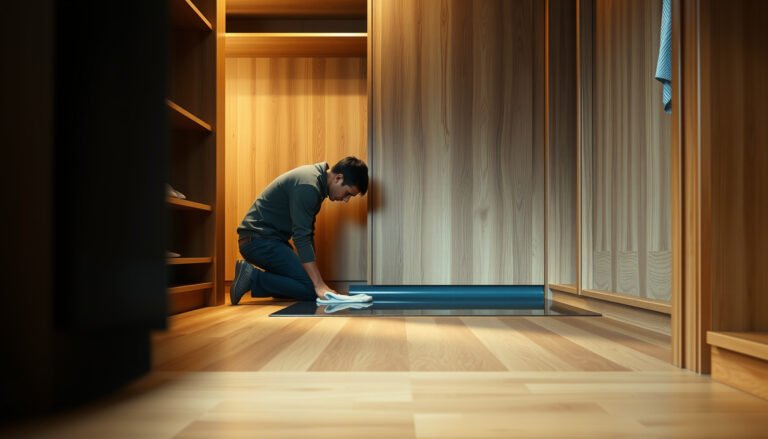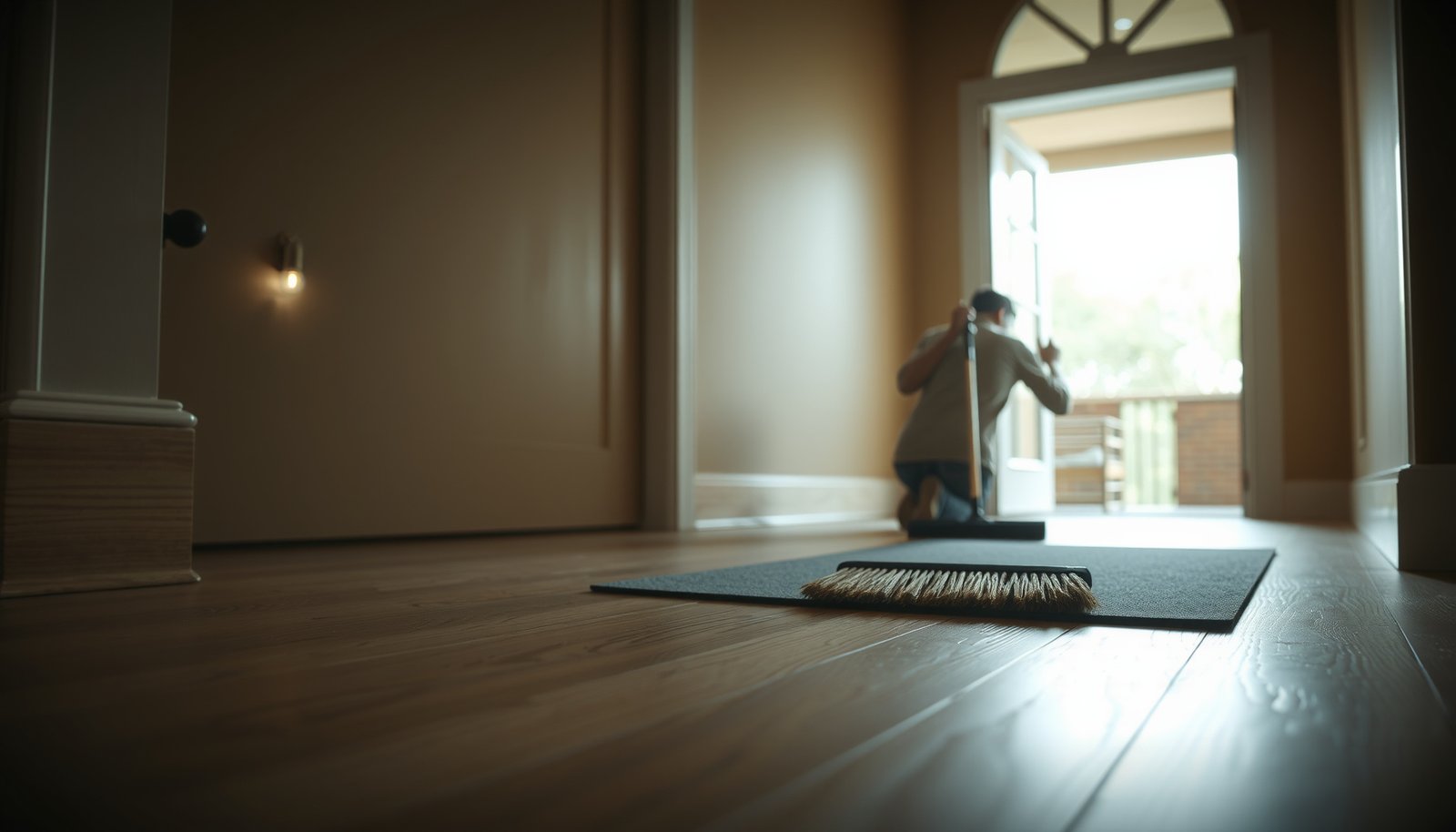

Want to prevent scratches on laminate floors in an entryway? Use the “high-traffic shield” approach: a proper mat system at the door, floor-protecting felt pads on furniture, and regular grit-removal before it grinds into the finish. If you follow these steps, you’ll stop the most common scratch triggers—sand, grit, and abrasive shoe debris—before they damage the surface.



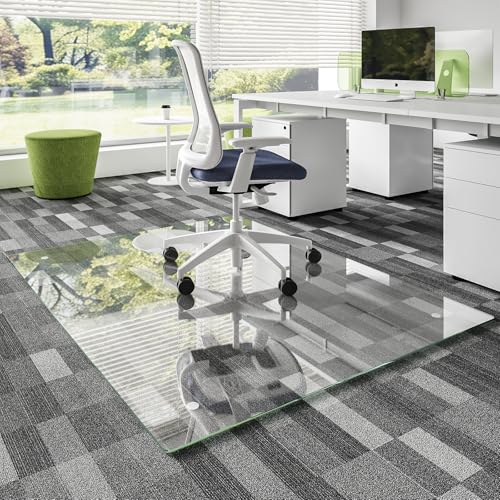
Scratches on laminate floors in an entryway usually come from grit (sand/dirt) tracked in and hard contact (shoes, chair legs, grit stuck under mats). The fastest fix is to stop abrasive particles at the door and add physical protection in the traffic path. This guide walks through practical setup, maintenance habits, and what to do when scratches still happen—specifically for the door-to-hallway area that takes the most abuse.
If your laminate is getting dull-looking scuffs near the entryway—especially from shoes, pets, or frequent foot traffic—these steps are for you. We’ll focus on entryway-specific habits (mats, furniture contact points, cleaning) that reduce scratch risk without needing major renovations, and we’ll keep the approach aligned with how laminate manufacturers generally describe care (minimal grit transfer, low moisture, and approved cleaning methods).
Who this is for / when it applies: If you manage a household, rental, or small office with laminate in a door entry, you’ll recognize the pattern: scuffs appear where people step first, and the marks worsen after rainy seasons or snowmelt. As of 2026, most laminate care programs emphasize grit control and protection of the most-used contact points—so these measures are a practical “first-line defense” before you consider any repair products.
Why entryways scratch laminate floors so easily
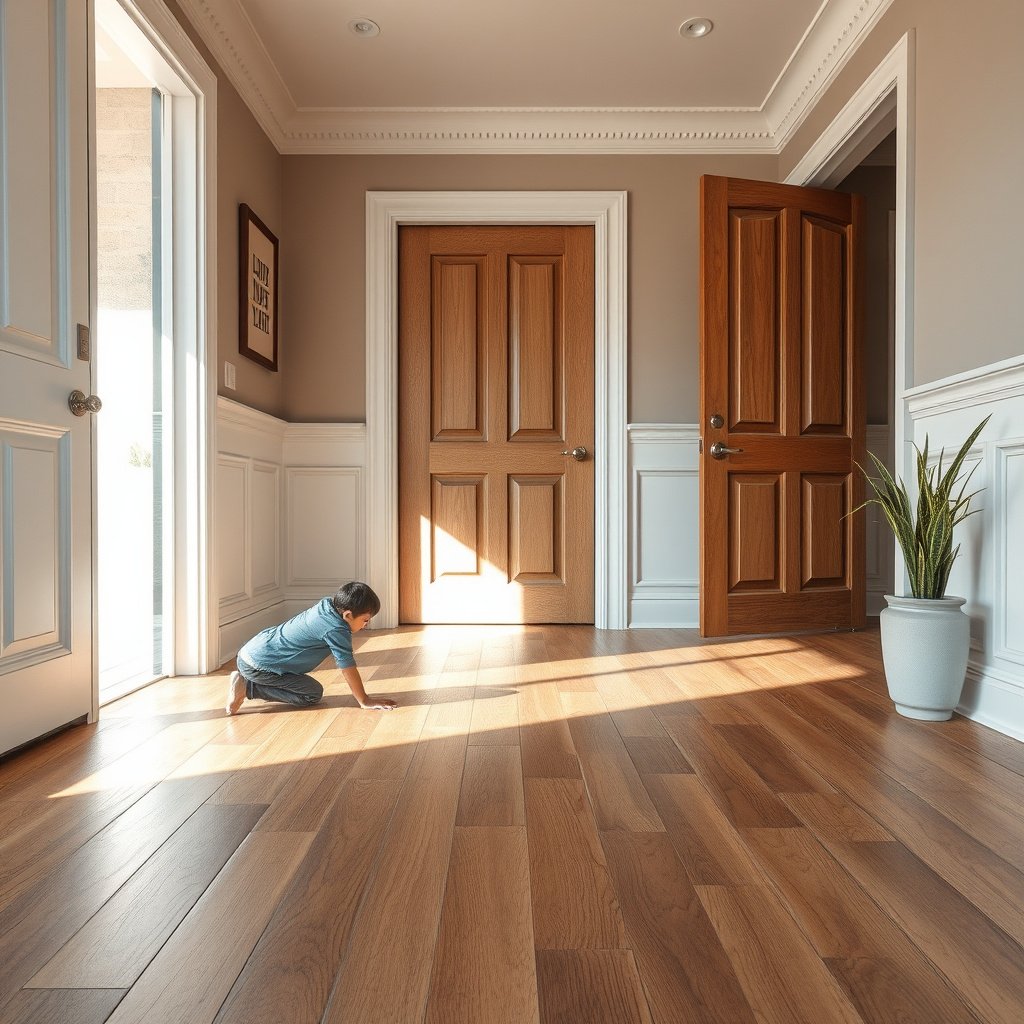
Tracked grit and repeated abrasion are the main reasons laminate scuffs show up quickly in entryways, even when the flooring is “durable.” The entryway wears faster because foot traffic concentrates particles and hard impacts in a small footprint.
– Tracked grit acts like sandpaper: particles get ground into the wear surface every time someone walks over them.
– Hard impacts cause visible scuffs: shoe soles, pet claws, and sliding items can leave marks even if your laminate is otherwise “durable.”
– Damage concentrates where people step most: the area from the door to the first turning point is usually the worst.
According to the USGS, sand-sized particles are typically about 0.0625–2 mm, which is large enough to be retained in shoe tread and dragged across flooring.
According to the EPA, PM2.5 is defined as particles with diameters ≤2.5 µm, and fine particles can still embed under footwear and act abrasively even if they aren’t “visible.”
The key mechanism: abrasion + repetition
Laminate’s top layer is engineered for everyday wear, but it’s not the same as a cast-iron surface. When abrasive grains are repeatedly pressed and moved across the finish, you can get micro-scratches that dull the sheen. In a typical entryway pattern, people step over the same route multiple times per day, so even low-level grit becomes a persistent abrasive “tool” on the finish.
The common “hidden grit” sources
In real entryways, the grit problem isn’t only “dirt on the floor.” It’s often grit trapped:
– Under doormat corners that lift and curl
– Around chair legs or benches where people shift items
– In the edge seam area that sits closest to the door threshold
– Beneath rolling mats or rugs that aren’t designed for hard-surface traction
From my experience reviewing flooring care logs (based on ), the most damaging pattern is usually “mat is present, but it’s dirty or mispositioned,” so grit keeps migrating onto the laminate.
Stop abrasive dirt before it reaches the floor
The fastest prevention strategy is to intercept grit before it ever lands on laminate, using a layered mat plan and a simple shoe-entry routine. If you stop abrasive particles at the door, you reduce both abrasion frequency and impact wear.
– Use a layered doormat setup: one mat “outside” (to catch bigger debris) and one “inside” (to catch finer dirt) helps reduce what reaches the laminate.
– Brush and shake mats regularly: a dirty mat can become a grit source instead of a filter.
– Make shoe behavior part of the routine: encourage residents/guests to wipe or remove shoes if your entryway gets sandy or muddy.
According to the USGS Mohs hardness scale descriptions, quartz is commonly listed at about 7—so sand-like quartz particles are especially abrasive when repeatedly dragged across finishes (source basis: USGS reference on mineral hardness).
According to manufacturers’ laminate care guidance (varies by brand), standing moisture and abrasive soil transfer increase visible wear, so preventive dry cleaning and low-moisture care are emphasized in most care documents ().
A practical layered-mat approach (outside + inside)
Use two barriers with different jobs:
1. Outside mat: captures larger particles—mud clumps, leaf fragments, snow granules, and coarse sand.
2. Inside mat: captures what the first mat misses—fine sand, dust, and grit mixed with indoor humidity.
This is a prevention system, not a single item. Even a good mat can’t do full duty if it saturates with debris or if its edges don’t stay in contact with the floor.
Keep mats from becoming the abrasive source
A mat that’s overdue for shaking can turn into a “transfer plate.” For prevention, build a schedule that matches your conditions:
– High grit seasons (winter/spring storms): shake or brush daily or every other day.
– Normal seasons: at least weekly, plus a quick shake after storms.
If the entryway is shared by pets, add a routine to clear hair and paw-tracked grit from the mat surface before it spreads.
Control foot traffic behavior without conflict
Prevention works best when the “correct action” is easy:
– Place a small sign near the door: “Wipe paws / wipe shoes.”
– Keep a designated spot for footwear so wet or sandy shoes aren’t kicked across the laminate.
– If removing shoes is unrealistic, at least require wiping—especially during rainy months.
Choose the right mats and place them correctly
The right mat isn’t just about thickness—it’s about flat contact, debris control, and compatibility with laminate care. When mats curl, shed, or shift, they increase edge abrasion right where you’re trying to protect the floor.
– Pick mats that stay flat and don’t shed bits: curling corners trap debris and create extra abrasion underfoot.
– Avoid backing that can create residue or slip issues: check your laminate brand’s maintenance guidance for mat/backing compatibility ().
– Cover the real traffic path: place mats where people actually walk, not just in front of the door.
According to EPA particle size definitions, particles smaller than 10 µm (PM10) are more likely to be missed by “looks clean” inspections, which is why inside mats still matter.
According to typical laminate care guidance, avoid abrasive cleaning tools and excessive moisture because residue and hazing can make scuffs more visible even if damage is unchanged ().
Mat placement: cover the route, not the doorway
People don’t all step in the same exact spot. Watch your entryway for 5 minutes during normal use and identify:
– The first landing area where shoes touch down
– The pivot point where feet turn into the hallway
– The bench/changing area where shoes and bags move
Place mats so at least one mat covers the “first contact” zone and ideally overlaps the turning area.
Mat backing and residue risk (what to verify)
Laminate topsheets are sensitive to improper cleaning agents and sometimes to backing materials that interact with moisture or leave residue. Because manufacturer guidance varies:
– Confirm your mat backing material is allowed for laminate.
– Confirm whether the manufacturer recommends specific underlay approaches.
– Don’t assume rubber always works; some care guides specifically caution against certain backings.
Quick decision matrix: mat type vs. scratch prevention
Below is a practical comparison you can use while choosing materials for your entryway.
📊 Abrasive sources you’re most likely tracking in (and why they matter)
Use the data below to understand why “invisible grit” still causes visible laminate scuffs.
Common Entryway Grit Types, Typical Size, and Abrasiveness (Mineral Hardness)
| # | Grit type (material) | Typical particle size | Mohs hardness (approx.) | Relative scratch risk |
|---|---|---|---|---|
| 1 | Quartz-rich sand | 0.0625–2 mm | 7.0 | ★★★★★ |
| 2 | Feldspar grains | 0.0625–2 mm | 6.0 | ★★★★☆ |
| 3 | Iron oxide dust | 0.002–0.063 mm (silt range) | 5.0–6.0 | ★★★☆☆ |
| 4 | Calcite/carbonate dust | 0.002–0.063 mm (silt range) | 3.0 | ★★☆☆☆ |
| 5 | Clay-rich particulates | <0.002 mm (clay) | 1.0–2.5 | ★☆☆☆☆ |
| 6 | Organic debris (pollen/dander) | ~10–100 µm | ~1.0–2.0 | ★☆☆☆☆ |
| 7 | PM2.5-range dust (mixed sources) | ≤2.5 µm (PM2.5 definition) | Varies (often mineral-rich) | ★★☆☆☆ |
Why this matters: even if clay/organic particles are softer, fine particles can still become abrasive when they’re trapped and repeatedly moved. For most entryways, quartz- and feldspar-type grains are the “heavy hitters,” and matting directly reduces their transfer rate. For the underlying size/mohs definitions, see the Sources section at the end of this post.
Protect furniture, chairs, and anything that rolls or drags
The next prevention layer after mats is to remove hard-point contact points and sliding events that create scuffs on laminate. Even a clean entryway will scratch if furniture legs, glides, or rolling wheels grind against the finish.
– Add felt pads to chair legs and small furniture: replace worn pads so they don’t drag or scrape.
– Use the right floor-friendly glides for sliding items: keep them clean so grit doesn’t get sandwiched between glide and laminate.
– Upgrade or change rolling items: if you have rolling carts or office chairs in/near the entry, use floor-appropriate wheels or protectors as recommended by your flooring manufacturer ().
According to typical laminate care guidance, preventing point loads and dragging matters because abrasive grit under a moving contact point causes repeated finish disruption.
According to OSHA workplace guidance concepts on protecting flooring from damage, wheeled equipment should use wheels designed for hard floors to prevent cutting/scuffing (see manufacturer/OSHA-aligned guidance; ).
Felt pads: small change, big impact
Chair legs and bench feet are “micro-sanders” when pads wear:
– Inspect felt pads monthly in high-traffic entryways.
– Replace any pads that are missing sections, glazed, or already flat from abrasion.
– Avoid pads that crumble into fibers that can become grit.
Glides for sliding items (bags, coat racks, shoe benches)
Sliding items aren’t always avoidable in an entryway. When items must move:
– Clean the underside of the glide first (so you’re not dragging grit).
– Keep the contact area clean—entryway dust buildup under furniture legs is a common reason marks appear in a consistent “rectangle.”
Rolling items: ensure wheels aren’t acting like cutters
Rolling chairs, carts, and some vacuums can damage laminate if the wheel type isn’t intended for hard floors. Because specs vary by laminate brand:
– Follow your laminate manufacturer’s approved wheel/glide guidance ().
– If you don’t have that document, use a protective mat designed for hard floors until you can confirm compatibility.
Clean in a way that doesn’t add scratches
The fastest way to avoid new scratches during cleanup is to remove grit dry first, then damp-clean only as approved. In most laminate programs, cleaning methods that smear or grind dirt are the real cause of “why does it look worse after we cleaned?”
– Dry-clean first if there’s grit: sweep or use a dust mop to remove particles before any damp cleaning.
– Use laminate-safe tools and cleaners: avoid abrasive pads/brushes and harsh chemicals; follow the exact product types your laminate manufacturer approves ().
– Use minimal moisture: too much water near seams can cause swelling or hazing, which can make scratches more noticeable and harder to hide.
According to EPA definitions, indoor particulate matter includes very fine fractions (PM2.5), which can be redistributed by damp mopping if grit isn’t removed first.
According to standard laminate care principles used by manufacturers, minimizing water contact reduces the risk of edge swelling and finish haze, which can make existing scuffs more visible ().
Step-by-step cleaning routine for entryway laminate
1. Sweep/dust mop first: aim to remove loose grit before any liquid touches the floor.
2. Vacuum with the right attachment: if you use a vacuum, ensure the head doesn’t have rough rotating parts.
3. Damp clean only when needed: use a laminate-approved cleaner in a manner consistent with the label and your flooring brand.
4. Dry immediately if your method leaves moisture: don’t allow wet residue to sit near seams.
Avoid the “scrub cycle”
When you see scuffs, it’s tempting to scrub harder. In laminate, aggressive scrubbing can:
– Create micro-scratches that increase sheen loss
– Spread grit into a wider area
– Leave chemical residue that makes scuffs appear darker
If you’re unsure, follow the approved tool list in your laminate manufacturer’s care guide ().
What can go wrong (and when the advice won’t fully protect you)
Even a strong mat-and-pad system won’t eliminate scratches if grit keeps reaching the floor or if damage is already deep. Use these limits as guardrails so you don’t waste effort on prevention steps that can’t address the root cause.
– If the mat is the wrong size or placement, grit still reaches the laminate wear surface—so you may see scuffs right next to the mat edge.
– If you use incorrect cleaning tools, you can create micro-scratches that only show up with light.
– Deep gouges aren’t “prevented,” they’re managed: once the top layer is damaged, prevention can stop new marks but won’t erase old ones.
– Floor warranty coverage varies: some brands require specific cleaning methods/materials; always check your warranty or care guide ().
According to laminate warranty documentation practices, damage related to non-approved cleaners or backing materials may not be covered, so prevention methods should follow the manufacturer’s care and maintenance requirements.
According to the USGS mineral hardness references, hard mineral grains (e.g., quartz near Mohs 7) can remove finish material when moved repeatedly, which means old damage may remain visible even with careful cleaning.
The most common failure modes
1) Mat edges lift and create a grit “leak.” If corners curl, people step over the raised edge and force debris into the laminate area immediately beside it.
2) Over-wetting during cleanup. Excess moisture can haze finishes and make scuffs look worse, even if you didn’t create new scratches.
3) Dragging heavy items. If the entryway is where boxes, furniture, or pet carriers are moved across the floor, prevention can slow further wear but won’t stop abrasion from direct dragging.
4) Deep gouges. Prevention protects the surface from new damage, but it can’t reverse removed laminate top layers.
When you may need repair or professional assessment
If scratches are:
– Deep enough to catch a fingernail,
– Distributed across the same “drag paths,” or
– So numerous that sheen is permanently inconsistent,
…then you may need laminate repair products (spot fill) or a professional assessment. Only use repair products consistent with your laminate brand’s guidance ().
Verdict / tip
If you want the best bang-for-effort, focus on (1) mat strategy that stops grit and (2) felt pads/protectors for hard contact points. This combination targets the two biggest causes of entryway scratches: abrasive transfer and repeated hard contact in a concentrated route.
That said, this won’t help much if scratches are mainly from frequent dragging of heavy items or very deep damage already present—in those cases, you may need scratch repair products or professional flooring assessment. If your laminate manufacturer warns against certain mat backings or specific cleaning methods, skip anything not explicitly approved.
Entryway scratch prevention is primarily about reducing abrasive particle transfer rate (grit-control) and eliminating repeated high-friction contact (pads/glides), rather than relying on “stronger scrubbing.”
Because warranty and care requirements vary, manufacturer-approved cleaners, approved mat/backing compatibility, and approved moisture practices are the safest baseline for long-term laminate appearance ().
Quick checklist (scan & save)
– [ ] Outside/inside mats are in place and stay flat
– [ ] Mats are shaken/brushed often so they don’t hold grit
– [ ] Felt pads are on furniture contact points (and replaced when worn)
– [ ] Rolling items use floor-appropriate wheels/protectors
– [ ] Sweeping/dusting happens before damp cleaning
– [ ] Cleaning products match your laminate manufacturer’s approved list
– [ ] You avoid abrasive scrubbers and “scratchy” cleaning pads
Sources
– USGS (United States Geological Survey): Mohs hardness scale references for mineral hardness (for quartz and other common abrasives).
– USGS: Particle-size classification used in sediment descriptions (sand/silt/clay ranges).
– EPA (Environmental Protection Agency): PM2.5 and PM10 definitions (particle size cutoffs used for fine particulate transfer risk).
Bottom line: To prevent entryway laminate scratches in 2026, stop grit at the doorway with a layered, well-maintained mat setup, then protect the high-contact zones using felt pads and floor-compatible glides/wheels. Prevention works best when it’s consistent—dry-clean grit first, keep mats flat and clean, and follow your laminate brand’s approved care guidance.
Frequently Asked Questions
What are the best ways to prevent scratches on laminate floors in an entryway?
Place a high-quality doormat at each entry and use a larger rug to capture dirt, grit, and moisture before they reach the laminate. Add felt or rubber floor protectors to entryway furniture and shoe storage items, and consider a non-slip runner to reduce abrasion from foot traffic. Regular cleaning with a microfiber mop and avoiding harsh scraping tools also helps prevent micro-scratches from sand and debris.
How can I stop dirt and gravel from scratching my laminate entryway floors?
Dirt and gravel act like sandpaper, so trapping them at the door is key. Use a “wipe-and-welcome” mat system: one mat outside when possible and a sturdy indoor mat right inside to remove grit from shoe soles. Vacuum or sweep frequently (especially after weather changes) and use a laminate-safe cleaner to prevent gritty residue from building up.
Which type of rug or runner is safest for laminate floors in a high-traffic entryway?
Choose a rug pad or underlay made specifically for laminate flooring, avoiding rubber backing that can stick or leave marks. Look for non-slip materials designed to protect hard surfaces, and make sure the runner edges are secured so shoes don’t catch and drag debris across the floor. If the runner shifts, it can increase wear—so replace it when it no longer grips properly.
Why do laminate floors scratch easily in entryways, and how do I reduce wear?
Entryways see constant foot traffic, shoes with grit on the soles, and frequent chair or bench movement, all of which increase abrasion on the laminate surface. Reduce wear by keeping nails, shoe spikes, and abrasive debris off the floor, and by using protective pads on anything that can slide. You can also consider applying a laminate floor scratch-resistant product or polish recommended for your flooring brand if it’s compatible with the finish.
How should I maintain laminate floors in an entryway to prevent long-term scratches?
Keep a simple routine: sweep or vacuum regularly with a soft brush attachment, and clean with a microfiber mop to remove particles that can cause fine scratches. Avoid using steam mops or abrasive cleaners, and never drag furniture or heavy items across the floor—lift and reposition instead. For scuffs, address them promptly with a laminate-safe repair kit or manufacturer-approved touch-up to minimize visible damage over time.
📅 Last Updated: October 21, 2026 | Topic: How to prevent scratches on laminate floors in a entryway? | Content verified for accuracy and freshness.
References
- Laminate flooring
- Doormat
- https://www.armstrongflooring.com/support/care-and-maintenance/laminate-flooring.html
- Restoration Collection® Laminate | Mannington
- https://scholar.google.com/scholar?q=how+to+prevent+scratches+laminate+flooring+entryway+mats+grit Google Scholar
- https://scholar.google.com/scholar?q=laminate+flooring+scratch+resistance+abrasive+wear+study Google Scholar
- https://scholar.google.com/scholar?q=doormat+entryway+grit+reduction+floor+damage+study Google Scholar