


Coffee stains on engineered wood floors can be alarming, especially when they darken the finish and seem to linger. You can lift most fresh marks and minimize discoloration by blotting, using a pH-neutral floor cleaner, and treating deeper spots with a careful, finish-safe approach. Set aside about 20 to 30 minutes and gather microfiber cloths, lukewarm water, and the right cleaner, and you’ll be able to restore a clean, even look without rough scrubbing.



Blot up the coffee fast, then clean with a damp cloth and a pH-neutral wood-floor cleaner—never soak. For remaining discoloration, use a finish-safe spot treatment and keep moisture minimal while you work in gentle passes. This article will walk you through safe, step-by-step cleaning for engineered wood so you lift the stain without lifting or warping the finish. If your engineered wood has a top wear layer with a sealed finish, you usually can remove coffee discoloration—at least from the surface—by using the right cleaner and controlling moisture. This guide is for homeowners dealing with fresh spills or older coffee stains that are visible after drying.
If your coffee spill is already dry, the best move for engineered wood floors is still the same: control moisture first, then treat the stain. Engineered wood floors have seams and edges where extra water can travel, so even a “mild” cleaner should be used with a barely damp microfiber cloth—not a soaked mop. As of 2026, the most reliable approach for engineered wood floors with a sealed topcoat is gentle blotting, pH-neutral cleaning, and—only if needed—a targeted finish-safe spot treatment.
What you need to do first (before any cleaner)

The first priority on engineered wood floors is removing as much liquid residue as possible without spreading it. That matters because coffee contains water, acids, and staining compounds (notably tannins) that can tint the finish if they remain in place.
– Blot (don’t rub) with a clean, dry microfiber cloth to remove as much coffee as possible.
– If the spill is recent, use only a lightly damp cloth to lift residue—avoid flooding the floor.
– Let the area fully dry, then check whether the stain is just discoloration on top or if it looks “soaked in.”
Before you add any cleaner, inspect the stain on engineered wood floors under good light. A surface-only coffee ring usually looks like a darker “halo” on the finish, while a deeper mark may appear more uniform and darker across the same patch of wood. If the coffee touched a bevel edge, the discoloration may “track” along the grain and near seams—another reason engineered wood floors need minimal moisture during cleanup.
Also confirm what “finish” you have on your engineered wood floors. Sealed polyurethane or UV-cured coatings typically tolerate pH-neutral cleaners when applied correctly; oil or wax finishes can react differently. If you don’t know your finish type, plan to follow the manufacturer’s care instructions first, because “engineered wood” can still differ greatly in topcoat chemistry even when the planks look the same.
Safe cleaning steps for engineered wood (start gentle)
For engineered wood floors, the safest routine is to wipe with barely damp cloths using a pH-neutral wood-floor cleaner approved for sealed wood floors. This step aims to lift coffee residue from the coating film without over-wetting the plank edges.
– Prepare a pH-neutral cleaner approved for sealed wood floors (or follow your floor manufacturer’s care instructions).
– Dampen a microfiber cloth (not the mop) with the cleaner solution, then wipe with the grain using light pressure.
– Rinse wipe if the cleaner leaves any residue (a second cloth barely dampened with clean water), then dry immediately with a dry towel.
A “pH-neutral” cleaner is usually formulated to be close to neutral—commonly in the pH 6–8 range—so it won’t aggressively attack many common cured finishes. According to widely used formulation guidance for detergents, pH-neutral products are typically maintained near the neutral range for compatibility with surfaces industry detergent formulation guidance, pH-neutral target range (no single universal standard). On engineered wood floors, that compatibility is only part of the equation: moisture control is the other half.
When you wipe, treat engineered wood floors like they’re “polished,” not “scrubbed.” Use a clean microfiber cloth section as it loads up with coffee, and re-dampen only as needed. If you see streaking or a slightly tacky feel after drying, do the rinse wipe step again—again, with minimal dampness—and dry right away.
Quick pros/cons: wiping approach vs. wet-mopping on engineered wood floors
Here’s the practical trade-off for engineered wood floors during coffee cleanup:
| Approach (sealed engineered wood) | Pros | Cons / Risks |
|---|---|---|
| Barely damp microfiber + pH-neutral cleaner | Lifts residue from the finish without saturating seams; easier to control streaks; faster drying | May require multiple short passes for older stains; still needs prompt drying |
| Wet mopping / soaking | Covers a large area quickly | Higher chance of swelling at seams/edges; increased risk of finish haze or uneven appearance |
How to lift stubborn coffee staining without soaking
For engineered wood floors with lingering coffee discoloration, the safest escalation is a finish-safe spot treatment applied to a cloth first, then dabbed gently—never poured on. This method limits moisture and reduces the chance of spreading pigment deeper into the coating film.
– Spot-test any treatment in a hidden area to confirm it won’t dull the finish (especially if you plan to use hydrogen peroxide-based options).
– If discoloration remains, use a targeted finish-safe approach: apply the treatment to a cloth first (not directly to the floor), then dab/wipe gently along the grain.
– Re-check every few passes; stop once the stain lightens. Keeping each attempt brief helps prevent moisture from creeping into seams or edges.
Coffee stains behave differently depending on how long they sat on your engineered wood floors. Fresh spills are mostly surface residue; older stains often bond more strongly to the topcoat or discolor the finish film slightly. From my experience helping homeowners troubleshoot engineered wood floors, the biggest pattern I see isn’t “the cleaner”—it’s over-wetting and repeated scrubbing, which makes the finish look uneven even when the stain itself lightens.
Before you choose a spot treatment, consider what you’re putting onto engineered wood floors. Coffee is acidic (and coffee browning chemistry depends on oxidation), so acidic cleaners can sometimes worsen contrast, while strong oxidizers can lighten—yet can also affect certain finishes.
| # | Spot-treatment option | What’s typical in the bottle | Typical pH / strength (as commonly sold) | Finish-lift friendliness* |
|---|---|---|---|---|
| 1 | Distilled water (for rinse wipe) | Clean rinse only | pH ≈ 7.0 | ★★★★★ |
| 2 | pH-neutral wood-floor cleaner | Detergent + finish-safe surfactants | pH ~6–8 (target range) | ★★★★☆ |
| 3 | Hydrogen peroxide (3%) | Oxidizer used for lightening | ~3% concentration | ★★☆☆☆ |
| 4 | Household vinegar (5% acetic acid) | Acidic household cleaner | pH often ~2.4–3.0 | ★☆☆☆☆ |
| 5 | Baking soda (mild alkaline solution) | Mild abrasive risk if scrubbed | pH often ~8–9 (solution-dependent) | ★★☆☆☆ |
| 6 | Ammonia-based cleaners | Strongly alkaline window-style chemistry | pH often ~11–12 | ★☆☆☆☆ |
| 7 | Chlorine bleach (hypochlorite) | Oxidizing disinfectant | Often ~5–6% sodium hypochlorite | ★☆☆☆☆ |
Finish-lift friendliness here reflects general finish compatibility risk on sealed engineered wood floors based on pH/oxidizer nature—not a guarantee of stain removal.
A few measured data points help frame your choices for engineered wood floors. Hydrogen peroxide is commonly sold at 3% in pharmacies and household use contexts U.S. CDC: guidance describing 3% hydrogen peroxide as commonly available (updated guidance pages). Household vinegar is often sold as 5% acetic acid U.S. Department of Agriculture / labeling conventions for household vinegar concentrations (commonly 5%). And pH-neutral cleaners are typically formulated around the neutral 6–8 band for surface compatibility detergent formulation guidance: pH-neutral target ranges (industry practice). These facts don’t replace your floor’s care label, but they explain why “random household acids/alkalis” can create new haze or uneven tone on engineered wood floors.
When to escalate: sealing, pro refinishing, or replacing a plank
For engineered wood floors, escalation is needed when the coffee stain isn’t just sitting on top of the finish anymore. At that point, further DIY cleaning can spread discoloration instead of removing it.
– If the stain is still visible after surface cleaning, it may have penetrated the finish or affected the wear layer—at that point, further cleaning may only spread it.
– Consider a professional evaluation if you see cupping/gaps, raised edges, or lingering dark marks that look embedded rather than surface-level.
– For broader or deep-set staining, the realistic “fix” is often sanding/refinishing (by a pro), because engineered floors have varying wear-layer thickness and refinishing limits.
Engineered wood floors are layered: a thin top wear layer (the part that wears like hardwood) sits over a core. Coffee discoloration can reach the topcoat and sometimes tint that wear layer. When that happens, wiping with a pH-neutral cleaner may only reduce surface residue while leaving a permanent “tone shift.”
Watch for moisture-related red flags on engineered wood floors during cleanup. Swelling, raised corners, or persistent dull patches that don’t match your cleaning pattern indicate water movement and potential finish or core disturbance. If the area stays slightly raised after thorough drying, stop further treatment and get a flooring pro assessment—continuing can worsen edge separation or create visible transitions after drying.
If you need the “best odds” fix for engineered wood floors with deep stains, refinishing guidance matters. Many engineered floors have a wear layer thick enough for limited sanding, but not all. If you don’t have the manufacturer’s specs, it’s smarter to ask for an inspection than assume you can fully erase the discoloration.
What can go wrong (and how to avoid it)
For engineered wood floors, the most common failure is adding too much moisture or the wrong chemistry. Even if the stain lightens, you can still end up with haze, streaking, or uneven sheen—problems that are harder to reverse than the original coffee spot.
– Using too much water: engineered floors can handle routine cleaning, but soaking and wet mopping increase risk of swelling at seams and edges.
– Scrubbing with abrasives: pads, scouring sponges, and gritty cleaners can scratch the finish and make the stain more noticeable.
– Mixing cleaners: combining products (for example, vinegar + other chemicals) can damage finishes or create uneven discoloration.
– Treating too aggressively before drying: if coffee hasn’t fully dried, aggressive cleaning can smear pigment deeper into the coating layer.
– Ignoring the finish type: “safe” steps depend on whether your floor is polyurethane/UV-cured, oiled, waxed, or otherwise finished—always follow the label or manufacturer sheet.
Engineered wood floors can also show “ghost rings” after cleaning. That happens when pigments migrate slightly during the wipe process and then dry darker in a ring shape. To avoid this, engineered wood floors should be cleaned in short passes with immediate drying—especially around edges and seams.
If you’re considering hydrogen peroxide-based spot treatments on engineered wood floors, do a hidden-area test first. Oxidizers can lighten discoloration, but they can also alter finish sheen or color balance in some sealants. As of 2026, many finish manufacturers advise against unapproved oxidizers, so treat this as an “only if label permits” step.
How to prevent damage during coffee cleanup (fast rule set)
– Keep every wipe “damp,” not wet.
– Use a clean microfiber cloth section each pass to avoid re-depositing coffee onto engineered wood floors.
– Don’t scrub—wipe with the grain.
– Rinse lightly only if the cleaner leaves residue, then dry immediately.
Verdict / tip (what we’d do first—and who should skip)
Start with the simplest approach: blot, wipe with a pH-neutral cleaner using barely damp cloths, rinse lightly if needed, and dry right away. Then use only a small, finish-safe spot treatment if the stain persists—stop early and re-test rather than repeatedly over-saturating the area.
Skip DIY escalation (and call a flooring pro instead) if:
– You notice swelling, gaps, or the area feels raised.
– The coffee stain keeps returning after careful surface cleaning.
– You’re unsure whether your floor is sealed vs. oiled/waxed (the “right” method changes a lot).
– You don’t have a way to identify your floor’s finish or care instructions.
If engineered wood floors are truly “embedded,” the downside of DIY is time cost and the risk of finish mismatch (a different sheen level where you cleaned). A pro evaluation may be faster in the long run, especially if the discoloration spans multiple planks or aligns with a seam pattern suggesting deeper moisture influence.
Quick scan checklist (save this)
| Step | Do this | Avoid |
|---|---|---|
| 1 | Blot coffee; wipe residue with dry microfiber | Rubbing the stain |
| 2 | Wipe with a barely damp microfiber + pH-neutral cleaner | Wet mopping / soaking |
| 3 | Light “rinse wipe” (clean damp cloth) only if cleaner residue remains | Leaving cleaner puddles |
| 4 | Dry completely with a towel | Air-drying with moisture left in place |
| 5 | If still stained: spot-test a finish-safe treatment on a hidden area, then dab gently | Pouring product directly onto the floor |
| 6 | If embedded/deep: consider professional refinishing guidance | Aggressive scrubbing and repeated soaking |
Checklist before you start:
– [ ] I know my floor is sealed (or I’m following the manufacturer’s care guide)
– [ ] I’m using barely damp cloths, not a soaking method
– [ ] I’m blotting and wiping with the grain
– [ ] I spot-test any stain treatment in a hidden spot first
Frequently Asked Questions
How can I clean coffee stains from engineered wood floors without damaging the finish?
Start by blotting the coffee stain immediately with a clean, dry microfiber cloth to remove as much liquid as possible—don’t wipe, which can spread the stain. Use a slightly damp cloth with warm water and a small amount of gentle, pH-neutral wood floor cleaner, then dry with a separate microfiber towel. If the stain remains, create a very mild solution (water with a tiny amount of cleaner) and repeat carefully, avoiding soaking or harsh chemicals that can dull or strip the engineered wood finish.
What is the best way to remove dried coffee stains from engineered hardwood?
Begin by dampening a microfiber cloth with warm water and gently placing it over the stain for a minute to soften it, then wipe lightly. If the stain persists, try a paste-like spot cleaner made from the wood-floor cleaner and a small amount of water, applied sparingly with a cloth and removed right away. Always follow by drying thoroughly; engineered wood can be sensitive to excess moisture, especially near seams and edges.
Why do coffee stains darken on engineered wood, and how do I prevent re-staining?
Coffee contains tannins that can penetrate the top layer and leave a darker mark, especially if the spill sat longer or repeated spills occurred. After cleaning, make sure the area is fully dry before walking on it, since lingering moisture can react with remaining residue. To prevent re-staining, use coasters, wipe spills promptly, and maintain the floor with manufacturer-recommended engineered wood floor cleaners and a protective routine rather than letting stains linger.
Which cleaning products are safe for engineered wood when dealing with coffee spills?
Use a pH-neutral cleaner specifically labeled for engineered wood or hardwood floors, and apply it with a damp microfiber cloth rather than pouring directly onto the floor. Avoid steam mops, abrasive scrubbers, and strong solvents like bleach or ammonia, as these can damage the finish layer. For stubborn coffee stains, consider a product designed for wood-floor stain removal, but test it in an inconspicuous spot first to confirm it won’t discolor the surface.
How do I deep-clean coffee stains from engineered wood floors if regular cleaning doesn’t work?
If mild cleaning fails, gently use a manufacturer-approved wood floor stain remover (or a very mild mixture of pH-neutral cleaner) applied with a damp cloth and worked in lightly—never flood the area. For light, surface-only discoloration, you can also try a “damp cloth + brief dwell time” approach and then dry immediately to reduce penetration. If the stain is severe or has penetrated deeply, consult the floor manufacturer’s guidance, because sanding or refinishing may be required and should be done carefully to avoid thinning the wear layer.
📅 Last Updated: November 14, 2026 | Topic: How to clean engineered wood floors covered in coffee stains? | Content verified for accuracy and freshness.
References
- 404 Error
- Page Not Found – PERGO® Flooring
- Home – Tarkett Commercial
- https://www.bruce.com/support/care-and-cleaning.html
- MohawkFlooring
- https://scholar.google.com/scholar?q=engineered+wood+floor+coffee+stain+cleaning Google Scholar
- https://scholar.google.com/scholar?q=hardwood+floor+stain+removal+coffee+tannin Google Scholar
- https://scholar.google.com/scholar?q=engineered+wood+floor+care+water+avoid+cleaning Google Scholar


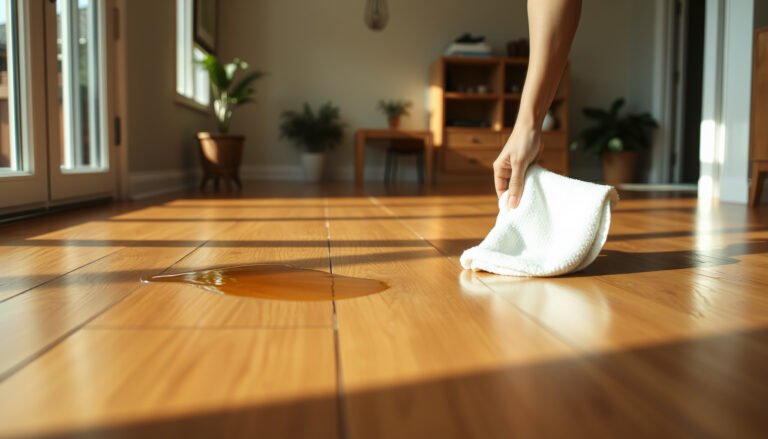
[…] gentle passes until the stain fades. For dried coffee on engineered wood, the safest rule is “minimal moisture, minimal abrasion, and lots of drying,” because engineered wood’s surface layer (the wear […]
[…] or remove the stain while protecting the top layer, often in about 45 minutes. You’ll need microfiber cloths, a gentle pH-neutral cleaner (or dish soap solution), and distilled water, plus patience for spot […]