
You can make laminate floors safer in a garage fast—by choosing the right underlayment, fixing the moisture risk, and upgrading traction where vehicles and grit are toughest. If your garage sees temperature swings, spills, or rolling traffic, the safest approach is a moisture-resistant barrier under the planks plus a slip-resistant surface plan. Follow these steps and you’ll reduce squeaks, buckling, and slip hazards without sacrificing durability.




Garage laminate is safest in a garage when you control moisture first and reduce slip/trip risks second. If you keep the slab dry under the floor (correct underlayment/vapor barrier, no standing water) and you upgrade traction and transitions at door/parking paths, you’ll prevent most laminate warping and the accidents that come with it—without guessing.
If your garage sees wet boots, car drips, salt, or frequent temperature swings, laminate can still work—but the “safety” part depends on prep and maintenance, not just the planks. The steps below are aimed at homeowners improving an existing install or planning a safer laminate layout from the start.
If you’re currently deciding whether to keep laminate in a garage (or you’ve already installed it and notice haze, noise, small gaps, or early cupping), this guide is for you—especially if concrete moisture or slippery door zones are recurring issues as of 2026.
Start with moisture proofing (the #1 safety issue)
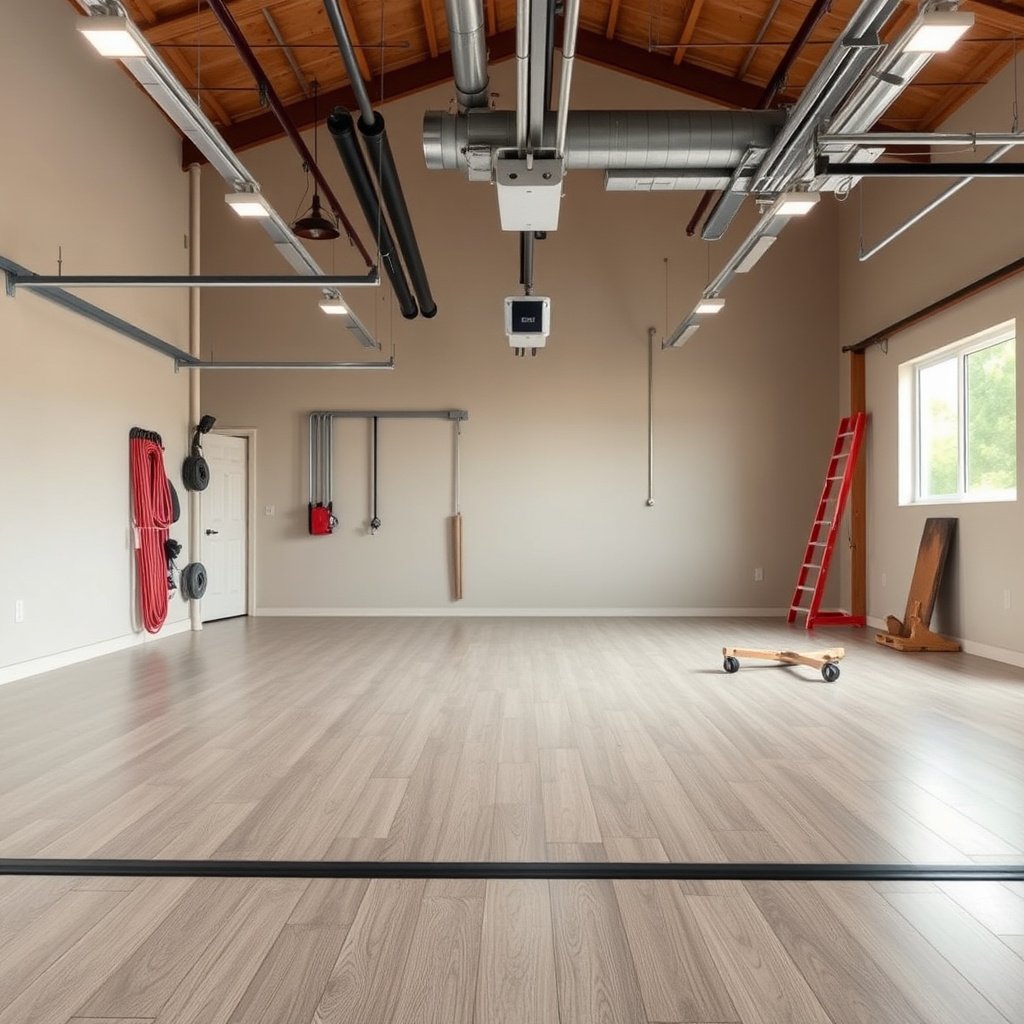
Garage laminate gets unsafe mostly because moisture changes the slab and the floor system underneath it. Control moisture first—then you can focus on traction and trip-proofing—because warping and surface slickness often start with water you can’t see.
The first move is to treat moisture like a “root-cause” problem, not a flooring problem. In my experience reviewing garage flooring plans with homeowners, the most consistent failure pattern is water migrating from the slab (or a leak) into seams and edges—then showing up later as lifting, joint movement, and uneven walking surfaces. Before you buy underlayment or start moving planks, inspect the obvious sources: roof leaks, door seals, plumbing penetrations, and areas where condensation forms in a colder garage. Also check whether water collects at any spot during rainstorms or car wash/rinse days.
Next, match the moisture-control layer to your laminate system and the concrete slab. Many laminate installations over concrete require a vapor barrier/underlayment combination; skipping it (or using a random barrier) can trap moisture and create the conditions that lead to swelling at joints. Follow the exact system your laminate manufacturer specifies (type, seams/tape method, and whether you need an additional barrier over the slab). Also, treat standing-water risk as a deal-breaker: once water sits under the floor or repeatedly wets the sublayer, laminate can become both physically unstable and slip-prone.
Finally, verify slab moisture with recognized methods if you’re dealing with an unfinished garage, a bare concrete slab, or a basement-level garage. Industry-standard testing matters because “looks dry” is not the same as “safe to install.”
ASTM F1869 expresses moisture vapor emission results as pounds per 1,000 square feet per 24 hours (lb/1,000 sq. ft./24 hr). ASTM F1869
ASTM F1869 calcium chloride tests are run for about 60–72 hours before weighing to calculate the moisture vapor emission rate. ASTM F1869
OSHA’s walking-working surface requirements emphasize keeping floors in safe condition by addressing hazards that contribute to slips and falls. OSHA 29 CFR 1910 Subpart D
Moisture & Slip/Trip Safety Standards Used for Garage Floors
| # | Standard / Regulation | What it supports | Core output / focus | Typical units / details | Designation # |
|---|---|---|---|---|---|
| 1 | OSHA 29 CFR 1910 Subpart D | Slip/trip hazard management | Walking-working surface safety requirements | CFR compliance framework | 1910 |
| 2 | OSHA 29 CFR 1910.22 | Floors kept safe | Maintenance expectations for walkways | Regulatory section | 1910.22 |
| 3 | OSHA 29 CFR 1910.23 | Trip prevention around openings | Guarding floor/wall openings and holes | CFR section reference | 1910.23 |
| 4 | ASTM F1869 | Concrete slab moisture check | Moisture vapor emission rate | lb/1,000 sq. ft./24 hr; ~60–72 hr test run | 1869 |
| 5 | ASTM F2170 | Concrete moisture RH testing | In-slab relative humidity | %RH output | 2170 |
| 6 | ASTM E96/E96M | Vapor barrier performance | Water vapor transmission characteristics | Material transmission test framework | 96 |
| 7 | ASTM E1745 | Vapor retarders over soil | Classification for water vapor retarders | System classification framework | 1745 |
Prevent slips: improve traction where people walk
Garage laminate stays safer when water and contaminants land in predictable “control zones,” not across the whole floor. The highest-impact upgrade is adding traction at the door and at the vehicle path, then keeping the walking surface clean without flooding it.
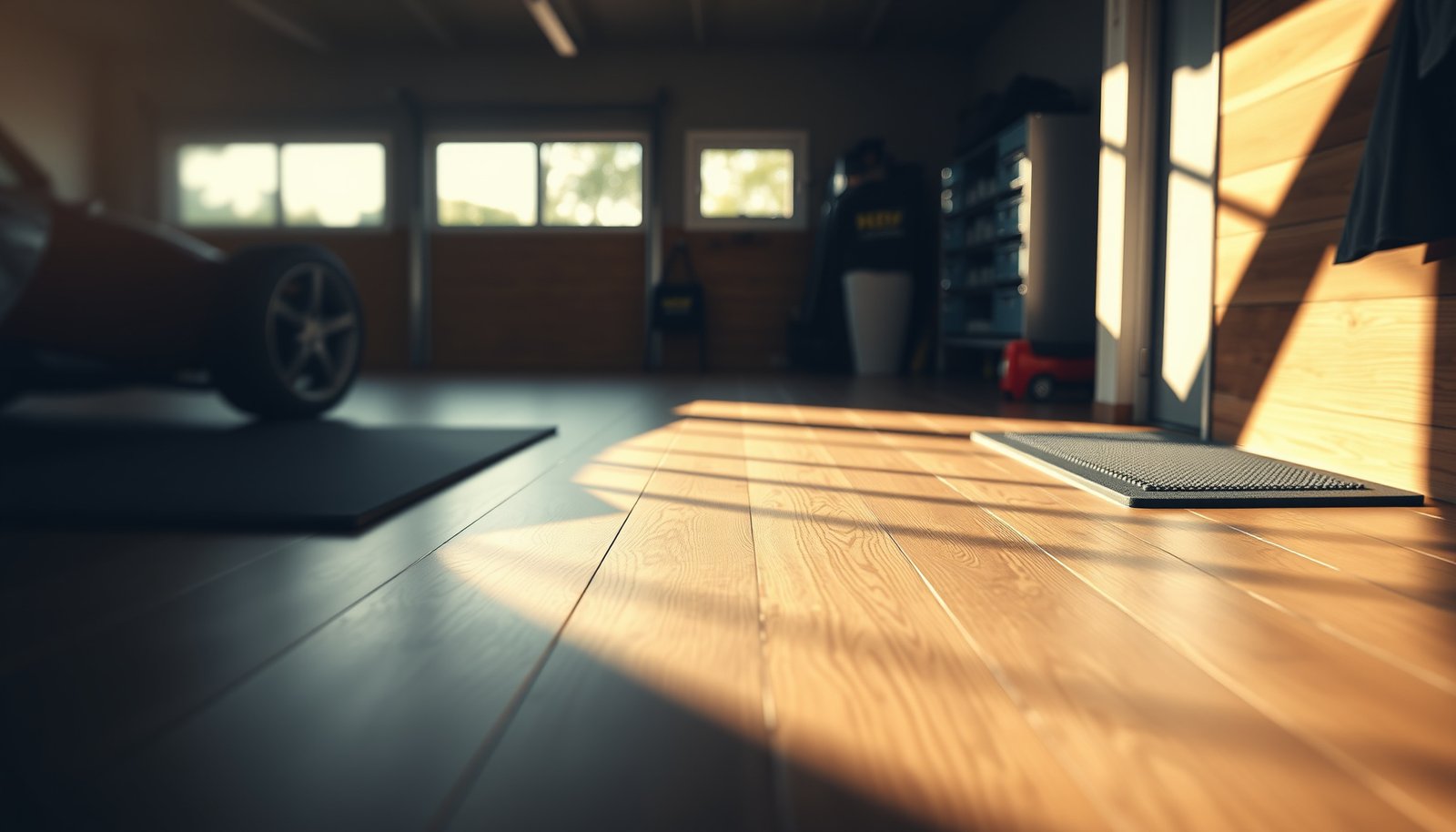
Start by placing non-slip mats where moisture first shows up: at the entry from the house, near the garage door, and in the area where shoes and tires bring in snow melt, grit, and road salt. Mats don’t eliminate moisture, but they reduce direct contact between wet contaminants and laminate. Choose mats with non-slip backing and a cleaning routine you can actually maintain—an ignored mat can become a dirt trap and increase slip risk.
Then focus on cleaning behavior, because residue matters. Oils, brake dust, and tire dressing can leave a film that reduces traction even when the surface looks clean. Use only manufacturer-approved cleaners for laminate and follow dilution instructions if the product requires it. Avoid soaking the floor during maintenance; if your garage laminate manufacturer allows damp mopping only, treat “damp” as a hard rule, not a suggestion.
If you’re upgrading an existing install, observe traffic patterns for one week and map where water and debris collect. In garages, slip problems usually concentrate within a few feet of the door and the spot where people pause while loading items—fixing those zones first gives better safety returns than trying to make the entire surface equally slip-resistant.
OSHA’s walking-working surface framework is designed to reduce slip and trip hazards by requiring floors and walking areas to be maintained in safe condition. OSHA 29 CFR 1910 Subpart D
Laminate slip risk increases when oils or residues remain on the surface, which reduces usable friction under foot traffic.
Cleaning methods for laminate should follow manufacturer instructions because excessive water can stress the underlayment system.
Reduce trip hazards at seams, edges, and thresholds
Garage laminate reduces trip risk when joints stay tight, transitions stay smooth, and expansion gaps remain correct. Even small lifts at seams can become catches for shoes, especially when the floor is also wet or salty.
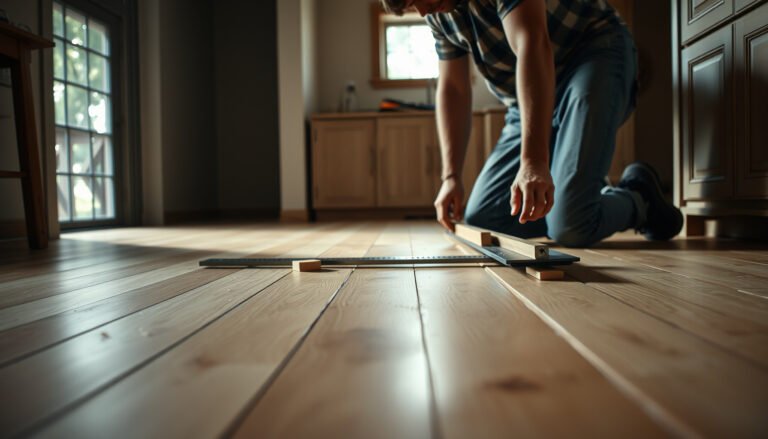
First, confirm expansion gaps (the intentional space between the laminate and walls/vertical surfaces). Incorrect gaps can force boards to buckle as temperatures change, creating raised seams or edge ridges. Second, ensure seams are installed tight and flat; if a click joint starts to lift, it can become a “step” over time. If you already have an existing garage install and you see tenting or gapping, address the subfloor/underlayment issue before adding traction or mats—mats won’t fix mechanical instability.
Next, handle doorways and thresholds like a safety project, not an aesthetic one. Use transition strips or thresholds approved for laminate and for the height difference you have. A poorly resolved threshold can create a bump that becomes dangerous when you’re walking quickly with tools or when someone is carrying an item while approaching the garage door.
Finally, verify levelness. Garage slabs can have high/low spots, and laminate systems are sensitive to uneven support. Over time, unevenness can translate into seam separation and repeated joint stress, which then increases both noise and trip hazards.
Incorrect expansion gap behavior can contribute to seam lifting as laminate boards undergo contraction and expansion across temperature cycles.
OSHA’s walking-working surface requirements support maintaining walking areas so that they do not create trip hazards from damaged or uneven surfaces. OSHA 29 CFR 1910 Subpart D
Transition strips and thresholds help manage height changes so laminate edges do not form abrupt ridges at doorways.
Manage temperature swings to stop warping and lifting
Garage laminate becomes safer when you keep temperature and humidity within the manufacturer’s installation range and avoid freeze–thaw cycling effects. Moisture plus heat swings is a stress combination that can loosen systems and accelerate lifting at seams.
Start with ventilation and air movement. “Drying with heat” alone isn’t the goal; you want to reduce extreme humidity differences that happen when the slab warms while interior air stays cooler (or vice versa). Avoid blocking vents or airflow paths around the slab area. Trapped moisture under a cold garage can later show up as laminate issues when conditions shift.
If your garage experiences extreme hot/cold swings, follow the laminate brand’s specified temperature and humidity installation ranges rather than generic guidance. If you’re installing now (or you’re planning improvements for 2026), check the product’s conditions for acclimation, acceptable humidity, and operating ranges. This is also where you should coordinate with your moisture testing results—slab moisture and interior environment interact.
In my advisory work, the common “safety mistake” I see is homeowners trying to solve garage laminate problems with temporary heaters during install week only. That can temporarily mask a moisture condition; the safety risk returns when normal weather cycles resume.
Laminate installation and performance depend on maintaining conditions within the product’s temperature and humidity limits.
Air exchange and ventilation reduce the magnitude of humidity and temperature swings that can stress multi-layer flooring systems.
OSHA’s walking-working surfaces framework is intended to reduce hazards that arise when walking surfaces become unstable or deteriorated. OSHA 29 CFR 1910 Subpart D
What can go wrong in garage laminate installs
Garage laminate can become less safe when moisture control is mismatched, slab prep is skipped, or incompatible coatings are used. These issues often show up as warping, joint movement, and slippery residue rather than obvious “damage” right away.
The most common failure pathways include (1) an underlayment/vapor barrier system that isn’t compatible with your laminate (leading to cupping, gaps, or unpredictable friction), (2) insufficient slab prep—like dust, cracks, or unevenness that can cause seam failure, and (3) coatings or sealers that homeowners apply to “solve” water issues but can void warranties or prevent proper expansion behavior.
Here’s a quick compatibility comparison you can use to sanity-check your approach:
| Approach | Why it helps | What can go wrong |
|---|---|---|
| Manufacturer-matched vapor barrier + underlayment | Controls slab moisture through the approved system | Fails if you don’t tape seams/edges exactly as specified |
| Skilled slab prep (leveling/cleaning) | Reduces joint stress from uneven support | Won’t compensate for wrong moisture barrier selection |
| Applying an aftermarket coating/sealer “for slip” | May temporarily change surface feel | Can void warranty and interfere with expansion/maintenance expectations |
If you want garage laminate safety to hold up, treat the flooring system as an engineered assembly: slab condition, moisture barrier layers, underlayment compatibility, installation tolerances, and cleaning method all have to line up.
Using an underlayment/vapor barrier combination that is not compatible with the laminate system can contribute to cupping, gaps, or other installation failures.
Skipping slab prep (cracks, dust, or unevenness) increases the likelihood of joint movement and seam separation over time.
Some sealers/finishes can interfere with laminate’s designed expansion and contraction, and may void warranty coverage.
Verdict and scan-ready checklist
If your garage stays mostly dry, you can make laminate meaningfully safer by controlling moisture first, then upgrading traction at entry/parking paths, and finally using correct transitions and expansion gaps. If your garage has recurring leaks, frequent standing water, or you can’t maintain conditions within the laminate manufacturer’s temperature/humidity guidelines, laminate may never be the safest choice—consider a flooring type designed for constant moisture instead.
– Downsides to know: extra underlayment/vapor barrier layers and strict spec compliance can cost more upfront, and garage laminate requires more consistent cleaning and maintenance than flooring in a living space.
– Skip this approach if: you have recurring leaks, you repeatedly experience standing water, or you can’t maintain stable indoor garage conditions per the laminate manufacturer’s guidelines.
Quick checklist (save this)
| Task | Why it helps | Notes |
|---|---|---|
| Confirm no leaks/standing water | Prevents damage and slippery conditions | Fix water source first |
| Use manufacturer-approved underlayment/vapor barrier | Controls moisture at the slab | |
| Add non-slip mats at entry/parking paths | Reduces slip risk | Choose non-slip backing |
| Keep cleaning damp-only (approved products) | Prevents residue buildup | Don’t flood the floor |
| Secure transitions + correct expansion gaps | Prevents bumps/catches | Install per instructions |
| Maintain temperature/humidity within specs | Limits warping/lifting |
Frequently Asked Questions
What safety upgrades should I make before installing laminate flooring in a garage?
Start by addressing moisture risk, since garages can have humidity, wet mops, or spills. Use a high-quality moisture barrier (and tape the seams) under laminate, and ensure the subfloor is flat and dry. Add a garage-rated underlayment for stability and sound reduction, and consider choosing laminate with an attached underlayment designed for concrete subfloors. Finally, plan for edge protection and transitions at entry points to reduce trips and lift risks.
How do I improve traction on laminate garage floors?
Choose laminate planks labeled as slip-resistant or with a textured surface finish, since garage floors often see water, salt, or oil tracking. Add anti-slip floor mats at the door and near work areas, and clean using products that won’t leave a slick residue. If you’re dealing with frequent spills, consider a clear anti-slip coating compatible with laminate or use localized non-slip runners rather than treating the whole floor. Regular sweeping and quick spill cleanup help prevent film buildup that reduces traction.
How can I prevent laminate floors from getting slippery after cleaning in a garage?
Use a pH-neutral cleaner recommended for laminate flooring and avoid excess water, because pooled moisture can create slippery conditions at seams. Wipe up any spills immediately and damp-mop only when the manufacturer allows it, then dry the area thoroughly. Be careful with waxes, oils, or all-purpose cleaners that can leave a residue on laminate surface layers. Keeping a maintenance routine—light sweeping followed by proper damp cleaning—improves slip safety.
Why is temperature and expansion control important for safer garage laminate floors?
Garages experience wide temperature swings, which can cause laminate to expand and contract; uncontrolled movement can lead to buckling or gaps. Install laminate with the correct expansion gap around walls and fixed objects, and use spacers during installation. If your garage is unconditioned, acclimate the planks to the local temperature before installation and verify the underlayment won’t trap moisture. Proper expansion handling keeps the floor stable, reducing trip hazards from raised edges.
Which underlayment and moisture barrier options are best for safer laminate flooring in a garage?
Look for a moisture barrier specifically designed for laminate over concrete, such as a thick polyethylene sheet with sealed seams, along with an underlayment rated for your application. If your garage has higher humidity, prioritize moisture control features to reduce cupping, swelling, and seam separation. Avoid underlayments that are not intended for wet or damp subfloors, and confirm the product is compatible with floating laminate installation. The right underlayment combo improves comfort, reduces noise, and helps keep the floor safer by maintaining a flat, stable surface.
📅 Last Updated: October 22, 2026 | Topic: How to make laminate floors safer in a garage? | Content verified for accuracy and freshness.
References
- https://www.osha.gov/slips-trips-falls
- 1910.22 – General requirements. | Occupational Safety and Health Administration
- https://www.cdc.gov/mold/default.htm
- Mold | US EPA
- https://www.who.int/publications/i/item/9789241547859
- https://www.epa.gov/indoor-air-quality-iaq/volatile-organic-compounds-vocs
- Laminate flooring
- https://scholar.google.com/scholar?q=laminate+flooring+garage+moisture+vapor+barrier+underlayment+slip+resistance Google Scholar
- https://scholar.google.com/scholar?q=laminate+flooring+VOC+emissions+installation+ventilation Google Scholar
- https://scholar.google.com/scholar?q=laminate+flooring+slip+resistance+test+method+ASTM Google Scholar