You spot a dried coffee ring on your engineered wood floor, and it has set into the finish rather than wiping away. With a few careful steps and the right household supplies, you can lift the stain safely and keep the surface from warping or dulling. Plan on about 20–30 minutes of gentle cleaning, starting with the least aggressive method and moving up only if the mark persists.



Blot and remove any loose coffee first, then clean with damp (not wet) dish-soap and water, and finally dry thoroughly—repeat gentle passes until the stain fades. For dried coffee on engineered wood, the safest rule is “minimal moisture, minimal abrasion, and lots of drying,” because engineered wood’s surface layer (the wear layer/coating) can discolor or lift if you soak or scrub hard.
If your coffee stain has already dried on engineered wood (often from spills that sat overnight), this applies to you—especially if the spot looks dark, slightly raised, or uneven. The steps below focus on stain removal while minimizing the risk of discoloration, finish damage, or water intrusion, which is especially important as of 2026 because many engineered wood finishes remain sensitive to prolonged water exposure and aggressive pads.
Start with Safe Prep (Before Any Cleaner)

You should prep engineered wood before you apply any cleaner by removing grit, testing in a hidden area, and controlling moisture. This is how you prevent tiny particles from turning a coffee stain into a permanent dull patch on the finish.
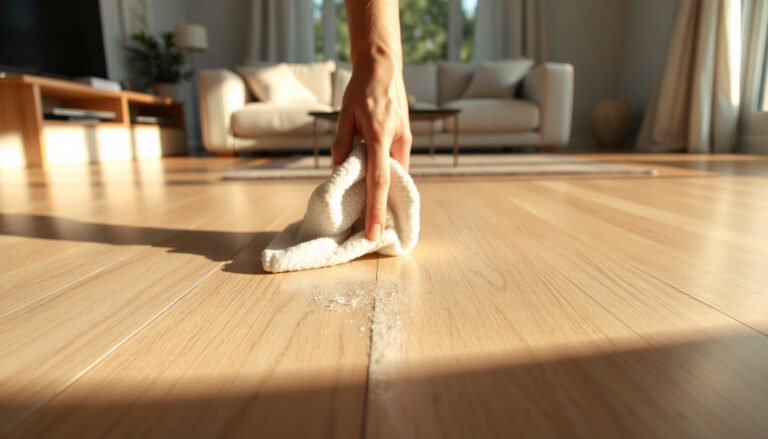
– Remove grit first: gently scrape with a plastic card or your fingernail (no metal tools) so you don’t grind particles into the finish.
– Tip: If the dried coffee has a crust, lift it like you’re “skimming” rather than sanding. Even one pass with grit trapped under a cloth can leave a visible scratch pattern on engineered wood.
– Test in an out-of-sight area: apply your chosen cleaner to a hidden spot to confirm it won’t cloud or lighten the finish.
– Because engineered wood coatings vary (some are UV-cured polyurethane, some are aluminum-oxide enhanced, some are laminate-like finishes), testing is more reliable than guessing.
– Control moisture: use damp (not wet) cloths and keep liquid from pooling around the stain.
– Practical rule: you want the cloth to be damp enough to wipe, but not so wet that water runs along the seams. Engineered wood can tolerate light, quick wiping; it’s the dwell time (how long liquid sits) that creates problems.
Before you start the engineered wood cleaning process, I recommend using a simple PDCA loop (Plan–Do–Check–Act): plan your first gentle method, do one careful pass, check the color/shine after drying, then decide whether you repeat or move to a spot treatment.
Clean Dried Coffee Stains Using Gentle Soapy Water
You should try gentle soapy water first because coffee residue typically lifts with mild surfactants (soap’s cleaning agents) without attacking most engineered wood finishes. For dried stains, this usually requires multiple light wipes rather than a single scrub.
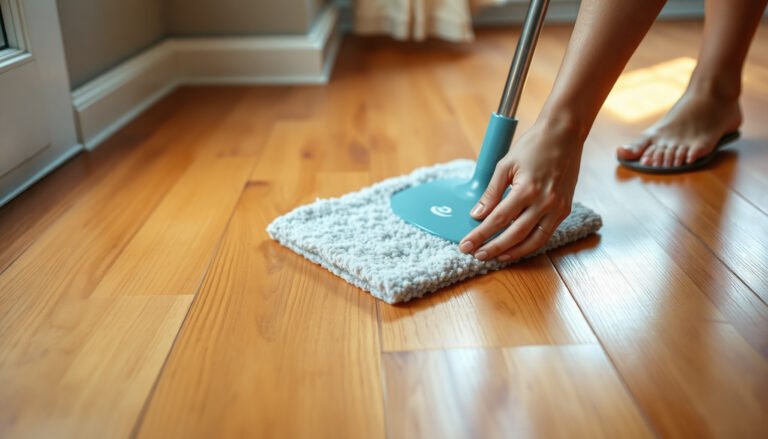
– Mix a mild solution: warm water + a small amount of dish soap on a soft cloth (or sponge).
– Keep it light: “a little soap” matters. Over-soaping can leave a film that later attracts dirt and makes engineered wood look streaky.
– Work from edges inward: wipe lightly in the direction of the grain, then blot dry immediately.
– Wipe friction matters. Gentle, grain-following motions reduce the risk of dulling the coating while you lift browned coffee compounds.
– Repeat as needed: dried coffee often comes up only after multiple gentle passes rather than one aggressive scrub.
– If the spot is still obvious after drying, don’t automatically escalate. With engineered wood, repeated controlled steps beat one high-force effort.
At this stage, you’re not “rinsing” in the wet-mop sense—you’re transferring stain from the surface into the cloth, then removing moisture fast. Engineered wood responds better to cycle-based cleaning (wipe → blot → dry) than to soaking, because soaking can push moisture toward seams and edges.
If you want a quick decision guide, here’s a parseable comparison of what’s usually safe on engineered wood:
Try a Finish-Safe “Spot Paste” for Stubborn Spots
You should use a baking-soda spot paste only when gentle soapy water no longer lightens the engineered wood stain. This method adds controlled, mild abrasion and can lift browned residue without turning the whole area wet.
– Make a mild paste using baking soda (optional): combine baking soda with just enough water to form a thin paste.
– Thin is critical. Thick paste can trap moisture and expand the cleaned area on engineered wood.
– Use minimal abrasion: apply with a soft cloth using very light pressure, then remove and blot dry right away.
– Think “polish,” not “scrub.” If you press hard, you may dull the protective coating even when the color improves.
– Stop if the stain spreads: if the color bleeds or the top layer looks affected, switch back to gentler steps.
– Bleeding can mean pigments in the stain are moving into the finish layer. Engineered wood often looks worse when you keep forcing the stain around instead of letting controlled cleaning bring it out.
If the engineered wood has a slightly raised or uneven spot, consider that the coffee may have dried with particulates. In that case, paste work should be limited to tiny areas, with quick blotting and drying after each pass.
Use Vinegar Carefully for Residue (Only When Needed)
You should use diluted vinegar only as a last step if you see lingering stickiness or faint discoloration after soapy water and drying. Vinegar can help with residue, but it also adds acidity and moisture—both of which deserve tight control on engineered wood.
– Vinegar can help with lingering residue: dampen a cloth with a diluted solution (weaker than typical household cleaning strength) and wipe briefly.
– Vinegar typically contains about 4–5% acetic acid in common household products (U.S. eCFR (food vinegar/acetic acid standards and definitions)). Stronger solutions increase finish risk, so “weaker than typical” matters.
– Don’t soak the floor: keep the contact time short and wipe immediately with clean water on a barely damp cloth afterward.
– Wood and coatings are sensitive to moisture exposure. Wood’s moisture behavior also has thresholds: according to the U.S. Forest Service’s Wood Handbook, wood movement becomes significant as moisture varies above the fiber saturation region (often cited around ~25–30% moisture content) (U.S. Forest Service, Wood Handbook—wood moisture and dimensional stability). While you’re not reaching those moisture levels with spot cleaning, the principle is the same: more liquid exposure increases the chance of swelling or finish disruption.
– Dry thoroughly: finish with a dry microfiber cloth so no moisture stays in the seam lines.
– Drying isn’t optional on engineered wood. Microfiber helps wick residual moisture from the cleaned area.
To avoid finish damage, keep vinegar wipes short and targeted—engineered wood doesn’t need “coverage,” it needs “residue removal.” As a practical boundary: if you can see liquid sitting along the seam, you’re already beyond what this approach is meant to do.
What Can Go Wrong (And How to Avoid It)
You should avoid over-wetting, harsh scrubbing, and aggressive chemicals, because these are the most common reasons an engineered wood coffee spot turns into a permanent discoloration ring. If anything starts looking worse during the process, stop and revert to the gentlest method.
– Over-wetting the floor: engineered wood can be damaged if water seeps into seams or edges—stick to damp, controlled wiping.
– Extra caution: steam is especially risky. Water vapor is delivered at high temperature; at standard pressure water boils at 100°C (212°F) (NIST—water boiling point). Even brief steam can stress finishes and drive moisture where it doesn’t belong.
– Scrubbing too hard: aggressive rubbing can dull or scratch the coating, making the stain area look worse even after cleaning.
– Many engineered wood coatings are designed to resist everyday abrasion, but they’re not designed for repeated high-friction scrubbing with a dry pad or rough brush—especially on stain-treated spots.
– Using harsh chemicals or “steam everything”: avoid bleach, ammonia, strong solvents, and prolonged heat/steam unless your floor manufacturer explicitly approves them.
– Coffee is mostly water-soluble compounds plus tannin-like pigments. If you strip the coating with chemicals, the engineered wood may “hold” discoloration more than before.
– Ignoring the grain: wiping against the grain can leave visible streaks on certain finishes.
– Grain direction isn’t just aesthetic—on some engineered wood finishes, it influences how the coating reflects light, which makes streaks more obvious.
Pros/Cons: Gentle staged cleaning vs. “quick chemical fix”
Here’s the tradeoff you’ll feel on engineered wood in 2026—slow down to win.
If you see swelling at seams, finish clouding, or persistent sticky residue after cleaning, that’s a sign engineered wood is reacting. Stop and follow the manufacturer’s care guidance for your specific floor model.
Verdict: Stick to Gentle Cleaners First—Skip If You’re Unsure
This approach is usually the safest way to lift dried coffee stains from engineered wood: gentle soapy water first, then cautious spot treatment (like a light baking-soda paste), and only careful vinegar use if needed. If you’re trying to remove a dark stain on engineered wood in 2026 and you want the lowest risk of finish damage, staged cleaning is the most consistent path.
That said, there are limits. Skip aggressive spot treatments (or stop immediately) if the stain has penetrated deeply into a stain-prone finish, if you notice finish clouding, or if you see moisture-related changes such as raised edges or seam distortion. Engineered wood can sometimes show a “ghost stain” even after surface cleaning when the colorant bonds to the coating.
If you’re unsure about your exact wear layer/coating type, the most defensible move is to pause and check the floor manufacturer’s care instructions before continuing. For unusual finishes (matte oils, specialty coatings, or older laminates), an incorrect cleaner can cause permanent sheen variation.
Quick Checklist (Scan & Save)
– [ ] Scrape/loosen grit with a plastic card
– [ ] Test cleaner in an out-of-sight spot
– [ ] Wipe with mild dish-soap water (damp cloth only), blot dry
– [ ] Repeat light passes until the stain fades
– [ ] If stubborn: try a very light baking soda paste, minimal pressure
– [ ] Only if residue remains: careful diluted vinegar wipe, then wipe clean water, dry
– [ ] Dry fully after every step
Cleaner Safety Signals for Engineered Wood Coffee Stain Cleanup
| # | Cleaner/Method | Typical Chemistry | Moisture/Abuse Profile | Finish-Safety Rating |
|---|---|---|---|---|
| 1 | Mild dish soap + water | Surfactants; often near-neutral to slightly alkaline (pH varies by brand) | Low liquid; wipe-dry cycle | ★★★★★ |
| 2 | Baking soda spot paste | Sodium bicarbonate; basic (pH commonly ~8.3) | Very localized; light pressure only | ★★★★☆ |
| 3 | Diluted vinegar wipe | Acetic acid; household distilled vinegar commonly ~5% acetic acid | Brief contact; blot + follow-up damp wipe | ★★★☆☆ |
| 4 | Alcohol-based wipes | Solvent action (e.g., isopropyl/ethanol); can affect some coatings | Risk varies by finish; can haze | ★☆☆☆☆ |
| 5 | Household bleach (diluted) | Sodium hypochlorite; strongly alkaline | High chemical risk; coating discoloration possible | ☆☆☆☆☆ |
| 6 | Ammonia cleaners | Ammonium-based solutions; strongly basic | High finish-risk; can dull sheen | ☆☆☆☆☆ |
| 7 | Steam cleaning | Water vapor at ~100°C (212°F at boiling) | High heat + moisture exposure | ☆☆☆☆☆ |
Frequently Asked Questions
How do I remove dried coffee stains from engineered wood floors without damaging the finish?
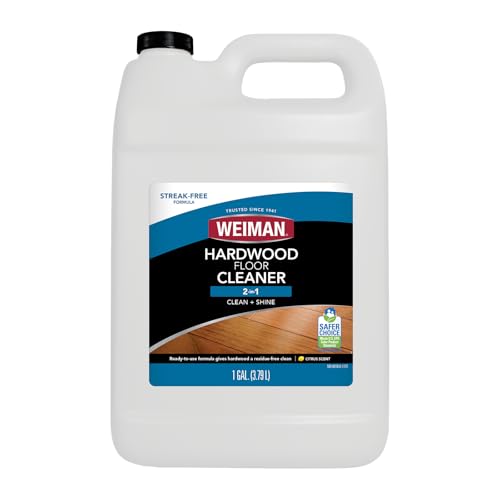
Start by softening the dried coffee with a damp microfiber cloth and a little warm water, then gently blot—don’t scrub aggressively. If the stain remains, use a cleaner made for engineered wood or a mild pH-neutral wood floor cleaner on a cloth (never soak the floor). Dry the area immediately with a clean towel to prevent moisture from seeping into seams or edges.
What’s the safest way to clean dried coffee stains from engineered hardwood using household supplies?
Mix a small amount of mild dish soap into warm water and apply it to the stain using a lightly damp cloth, working from the outside of the spot inward. For stubborn spots, you can use a small amount of white vinegar diluted with water (about 1:4) on a cloth, then wipe again with plain water to remove residue. Always follow up by drying thoroughly and checking that the finish stays uniform.
Why does coffee staining happen on engineered wood floors, and how can I prevent it from setting?
Coffee contains tannins and acids that can penetrate the surface over time, especially if the spill dries and the floor’s protective coating is worn. To prevent permanent marks, blot spills quickly, then wipe with a damp cloth and dry right away. Using a recommended floor-safe cleaner and avoiding harsh chemicals helps maintain the protective top layer so stains are less likely to set.
Which cleaners are best for dried coffee stains on engineered wood flooring?
Look for an engineered wood floor cleaner labeled safe for sealed or finished wood, and apply it to a cloth rather than directly onto the floor. If you need spot treatment, choose a gentle, pH-neutral cleaner over abrasive powders or alcohol-based products that can dull the finish. Avoid steam cleaners and harsh degreasers, since excess heat and solvents can damage the top veneer or protective coating.
How do I treat stubborn dried coffee stains that won’t come out after basic cleaning?
First, try repeating gentle steps—warm water, then a pH-neutral wood floor cleaner on a cloth—allowing time for the solution to loosen the stain. If the stain is still visible, lightly use a product designed for finished wood spot removal (or follow your floor manufacturer’s stain-repair instructions) and test in an inconspicuous area. For deep or persistent discoloration, you may need professional refinishing or a buffing-and-recoating service to restore the engineered wood’s appearance.
📅 Last Updated: November 14, 2026 | Topic: How to clean dried coffee stains from engineered wood floors? | Content verified for accuracy and freshness.
References
- Wood flooring
- Wood stain
- NWFA | National Wood Flooring Association
- Armstrong Flooring®
- https://www.brucefloor.com/
- MohawkFlooring
- Beautiful, Durable Flooring for Every Room | Shaw Floors
- https://scholar.google.com/scholar?q=remove+dried+coffee+stains+from+wood+floors Google Scholar
- https://scholar.google.com/scholar?q=engineered+wood+floor+coffee+stain+removal Google Scholar
- https://scholar.google.com/scholar?q=wood+flooring+care+stain+removal+methods+avoid+water Google Scholar