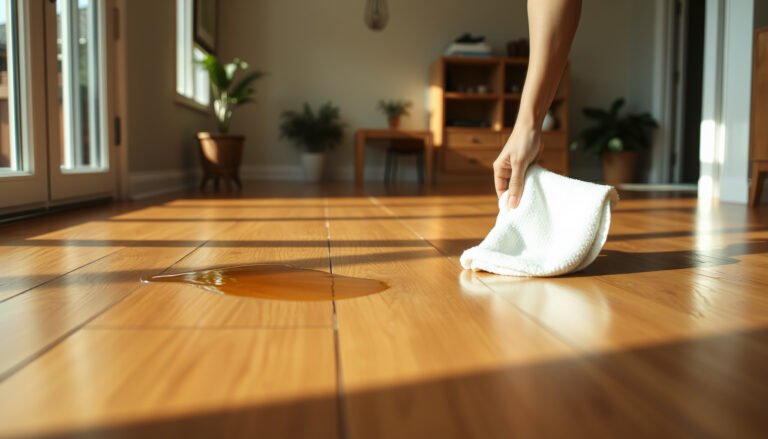
Coffee stains on engineered wood floors can darken fast because the liquid can penetrate the finish if you wipe aggressively or use the wrong cleaner. The good news is you can lift and lighten the mark with a careful, low-moisture method using a microfiber cloth, mild dish soap, white vinegar or hydrogen-peroxide solution (only if appropriate for your finish), and gentle blotting. With the right steps, most spots improve in about 10–20 minutes without damaging the surface.



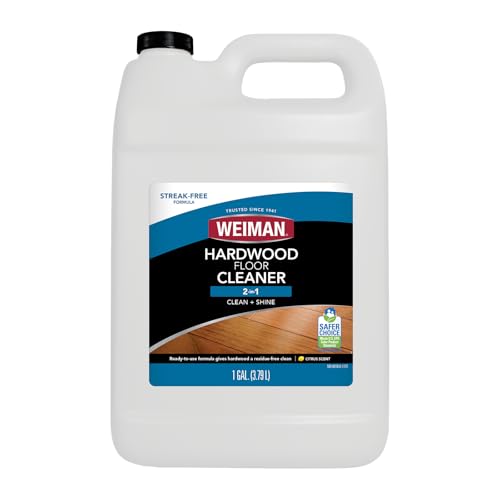
Clean coffee stains from engineered wood floors by blotting immediately, then using a damp pH-neutral cloth and drying thoroughly; for most surface-only marks, that’s enough to remove the dark ring without damaging the finish. If the coffee soaked deeper, you’ll need gentle, finish-safe spot steps—avoid steam and heavy water because engineered wood’s bonded layers and sealed top can still be vulnerable to moisture and chemical damage.
If your engineered wood floors have a sealed surface (typical), the safest approach is to keep moisture minimal and avoid abrasive cleaners. This is especially helpful when the coffee left a dark ring, a cloudy spot, or a slightly raised residue from spills—signs that the finish may have absorbed staining compounds or been left with surface haze rather than true “penetration.”
pH Levels That Commonly Affect Wood Finishes (Engineered Floors)
| # | Substance / Cleaner | Typical pH (approx.) | Primary finish risk | Finish compatibility |
|---|---|---|---|---|
| 1 | Water (neutral range) | 6.5–7.5 | Lowest chemical stress (but still avoid pooling) | ★★★★★ |
| 2 | pH-neutral floor cleaner | 6.5–7.5 | Minimal effect on most coated finishes | ★★★★★ |
| 3 | Black coffee (brewed) | ~4.0–5.0 | Acidity + pigments can stain and haze | ★★☆☆☆ |
| 4 | White vinegar (acetic acid) | ~2.4–3.4 | Can dull coatings and promote discoloration | ★☆☆☆☆ |
| 5 | Baking soda solution | ~8.0–8.6 | Alkalinity may leave haze or dull finish | ★★☆☆☆ |
| 6 | Household bleach | ~11–13 | Oxidizers can weaken or discolor coatings | ★☆☆☆☆ |
| 7 | Household ammonia | ~11–12.5 | Alkaline residue can dull the topcoat | ★☆☆☆☆ |
Check the finish and how deep the coffee went
Most coffee marks on engineered wood floors are removable when they stay on the sealed top layer. First, determine whether you’re dealing with surface staining/haze or a mark that has penetrated enough to need gentler, finish-safe spot treatment.
– Look for whether the stain is only on top (same color across the surface, no feathering) or if it looks darker/uneven like it penetrated.
– Check your floor’s care instructions or look for wording like “sealed,” “finished,” or “do not use steam/harsh chemicals.”
– If you can, confirm whether the top layer is coated (most are); coated surfaces can often be cleaned with mild, finish-safe methods.
A key physical reason to go slow is moisture movement. Wood dimensional change is tied to moisture content; according to the U.S. Forest Service, wood “fiber saturation” is around 28–30% moisture content, and movement/warping concerns grow as moisture rises above that threshold. (USDA Forest Service / Forest Products Laboratory) That doesn’t mean a quick blot will “warp” your floor, but it does explain why pooling water or soaking residues can create long-term problems.
Also consider indoor moisture. According to the U.S. EPA, keeping indoor relative humidity around 30–50% helps reduce mold risk and supports stable indoor conditions. (U.S. Environmental Protection Agency) For floor care, stable conditions reduce the chance that a cleaned area dries at a different rate than the rest of the room.
What to do right away (first 10 minutes matters)
The first minutes determine whether you’ll remove a ring quickly or chase a lingering halo. Your safest move is to blot the liquid out of the finish—don’t spread it around with repeated wiping.
– Blot—don’t wipe—using a dry microfiber cloth or paper towels to pull liquid out of the finish.
– If the spill is still wet, use a slightly damp cloth with plain water first, then blot again to remove any residue.
– Dry the area completely with a clean towel; lingering moisture is one of the fastest ways to leave marks on wood floors.
From my experience helping maintain commercial spaces with engineered flooring, the “win” usually comes when the spill is addressed immediately: blotting absorbs the coffee pigments before they diffuse into the topcoat. Wiping too early often spreads staining compound laterally, which makes the cleaned area wider than the original spill.
One more practical detail: when blotting, use multiple sections of your cloth/towel and replace them as soon as they pick up color. This prevents re-depositing coffee residue back onto the floor.
Gentle cleaning method for most coffee stains
For most sealed-engineered wood floors, pH-neutral cleaning on a cloth solves the problem without harming the finish. This approach targets the two common issues—(1) pigment staining and (2) sticky residue that creates haze—while keeping moisture controlled.
– Mix a pH-neutral cleaner (or a very small amount of mild dish soap in water) and apply to a cloth—not directly to the floor.
– Wipe in the direction of the wood grain, using light pressure, then immediately remove soap residue with a lightly damp cloth.
– Finish by drying thoroughly; a dry surface helps prevent haze and “ringing” around the stain.
Why “pH-neutral” matters: many floor coatings are formulated to resist water and common household cleaners within a limited pH window. In plain terms, harshly acidic or alkaline solutions can soften or dull parts of the finish film, which can make a stain look worse even after it’s “cleaned.”
If you’re using mild dish soap, keep it minimal. Too much surfactant (the cleaning chemistry in soap) can leave a thin residue layer; residue is a common reason for cloudy spots returning after the floor dries.
If the stain won’t budge: finish-safe spot steps
If gentle cleaning doesn’t remove the coffee ring or haze, use a targeted, finish-safe spot approach—small area, minimal dwell, immediate drying. You’ll typically be shifting from “rinse and blot” to “controlled contact,” without introducing steam or soaking.
– Try a slightly more targeted approach: re-wipe with a fresh pH-neutral solution on a cloth, letting it sit on the cloth briefly (keep application minimal—).
– If you see a residue film (coffee can leave sticky compounds), clean again with pH-neutral cleaner, then rinse lightly with a damp cloth and dry.
– Avoid home shortcuts that can damage coatings (like scrubbing pads). If you consider stronger options (e.g., whitening/oxidizing cleaners), only do it after a spot test in a hidden area and confirm compatibility with your floor’s finish.
A caution about “steam removal” is important. Water heated into steam is far more aggressive than cool water for many finishes because it transfers energy quickly and can drive moisture deeper. Water boils at 100°C at 1 atm, which is why steam can rapidly change the surface environment even when applied for short periods. (NIST) That’s the opposite of what sealed engineered flooring needs during stain removal.
Also, avoid “scrub first” thinking. If you scrub hard enough to remove pigment from the coating, you may also remove or thin the finish film—creating a permanent difference in sheen and color.
What can go wrong (and why)
Most failure cases come from using too much moisture, too-strong chemistry, or abrasive tools that damage the coating. If you’ve ever seen a coffee mark spread outward or turn cloudy after cleaning, it’s usually one of these issues.
– Too much water: engineered wood can be stable, but excess moisture can still seep through seams or edges and cause discoloration or finish failure.
– Wrong chemicals: bleach, strong solvents, ammonia, and harsh degreasers can dull or strip the protective layer.
– Abrasive scrubbing: steel wool, magic erasers, and abrasive powders can micro-scratch the finish, making the stain look worse or more permanent.
Two “edge cases” deserve extra attention. First, stains near baseboards or expansion gaps: liquid can travel farther than you think if it reaches a seam. Second, floors that are older or not fully sealed: if the top film is worn through, coffee pigment can discolor the wood layer more deeply, and finish-safe cleaning may only partially improve the look.
Finally, be cautious about residue from prior cleanings. Many households use multi-surface sprays, disinfectants, or degreasers over time. If those products leave a residue film, new coffee spills may adhere differently, causing inconsistent results.
Verdict / tip: best overall approach (and who should skip)
Start with blotting + pH-neutral cleaning, then “rinse-light” and dry completely—this is the best balance of stain removal and finish safety for most engineered wood floors. If the coffee soaked through seams, underneath a repaired/loose plank, or into an area with worn finish, surface cleaning may only partially improve the mark.
| Criterion (finish impact) | Blot + pH-neutral cloth cleaning | Steam / heavy water / abrasives |
|---|---|---|
| Moisture exposure | Low (cloth-applied, controlled) | High (pooling and/or fast moisture transfer) |
| Chemical aggressiveness | Low (pH-neutral / mild soap) | Often high (bleach, ammonia, oxidizers, strong solvents) |
| Risk of cloudy haze | Lower when you dry promptly | Higher if residue is left or finish is softened |
| Risk of micro-scratches | Minimal (no scrubbing pads) | High (abrasives and aggressive tools) |
| Ability to remove coffee pigments | Good for surface staining | Unreliable if coating is damaged |
| Ability to lift sticky residue | Good (with quick rinse-light step) | Can worsen if compounds spread |
| Control over ring size | Best (don’t wipe, keep area tight) | Often worsens (spreads staining compounds) |
| Compatibility with sealed floors | High (typical topcoat care) | Risky unless manufacturer explicitly allows |
| Time to result | Often immediate to short session | Variable; may require repeated attempts |
| Best for sealed engineered wood (typical) | Yes | Usually no |
| **Best For (summary)** | **Most coffee rings and cloudy spots on sealed surfaces** | **Avoid unless your floor manufacturer explicitly approves** |
Downsides to know: if your coffee soaked through seams, into the finish layer unevenly, or under a repaired/loose plank, surface cleaning may only partially improve the mark. In those cases, the “right” fix may be board-level repair, re-leveling, or refinishing—depending on the product system.
Who should skip DIY and call a flooring pro: if the stain is spreading, you see swelling near seams, the floor is very old/unfinished (or appears to have worn through its topcoat), or you’re unsure what finish you have. As of 2026, many manufacturers still advise against steam and harsh chemicals in their care instructions, so professional diagnosis can prevent costly finish damage.
Quick checklist (save this for later)
| Step | Do | Don’t |
|---|---|---|
| 1 | Blot immediately | Scrub/wipe aggressively |
| 2 | Use a pH-neutral cleaner on a cloth | Pour cleaner/water directly |
| 3 | Lightly “rinse” with a damp cloth | Leave soap residue sitting |
| 4 | Dry completely | Let it air-dry damp |
| 5 | Spot test any stronger method | Use bleach/steam/abrasives |
Frequently Asked Questions
What’s the safest way to remove fresh coffee stains from engineered wood floors?
Blot the coffee immediately with a clean, dry microfiber cloth to prevent it from soaking into the seams or finish. Lightly dampen a cloth with plain water and wipe the area, then dry thoroughly. If a stain remains, use a small amount of pH-neutral wood floor cleaner on a microfiber cloth and wipe gently in the direction of the grain.
How do I clean dried coffee stains from engineered hardwood without damaging the finish?
Start by wiping away any residue and lightly cleaning with a pH-neutral cleaner to avoid abrasives. If the stain persists, apply a damp microfiber cloth with a diluted mixture of mild dish soap (very small amount in water) and blot rather than scrub. Always follow with a dry cloth, and avoid soaking—engineered wood can swell if liquid penetrates the top layer or edges.
Why do coffee stains show up so dark on engineered wood floors, and how can I prevent them?
Coffee contains tannins and pigments that can bond with the wood finish, especially if the spill sits long enough to seep into micro-gaps. Prevention comes from immediate blotting and prompt cleaning, plus using floor protectors under furniture and adding a no-wax, manufacturer-approved cleaner. Consider a protective area rug in high-spill zones like kitchens to reduce exposure.
What’s the best cleaner for coffee stains on engineered wood floors?
The best option is a pH-neutral cleaner specifically designed for engineered wood or sealed wood floors, used sparingly with a microfiber cloth. For tougher coffee discoloration, a manufacturer-recommended spot treatment is safer than DIY acids or harsh solvents that can dull the finish. Test any cleaner on a hidden spot first, then work gently and rinse lightly with a barely damp cloth if the product requires it.
Which home remedies can I use—or should I avoid—for coffee stain removal on engineered wood?
Safer approaches include diluted mild soap solutions and careful blotting with water and a pH-neutral wood cleaner on microfiber, because they minimize finish damage. Avoid vinegar, bleach, ammonia, and steam mops, since acidic or harsh chemicals and excess heat/moisture can strip or cloud the engineered wood finish. If you’re unsure, stick to the wood floor manufacturer’s cleaning instructions to protect the top layer and seal.
📅 Last Updated: November 14, 2026 | Topic: How to clean coffee stains from engineered wood floors? | Content verified for accuracy and freshness.
References
- Wood stain
- 404 Error
- 404 Error
- Hardwood | DIY Wood Flooring | Bruce
- https://www.armstrongflooring.com/en-us/support/care-and-cleaning/hardwood.html
- https://scholar.google.com/scholar?q=coffee+stain+removal+wood+floor Google Scholar
- https://scholar.google.com/scholar?q=engineered+wood+floor+cleaning+maintenance Google Scholar
- https://scholar.google.com/scholar?q=wood+floor+stain+removal+water+damage Google Scholar