
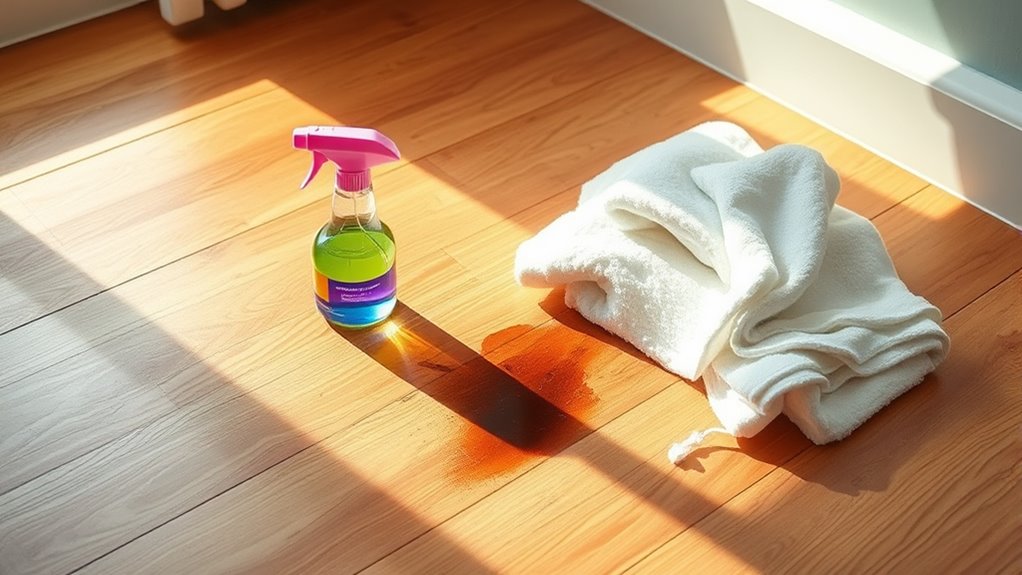

If your cat has peed on wood floors, act fast by blotting the spot without rubbing, then clean gently with water and mild soap. Use an enzymatic cleaner designed for pet stains to break down urine proteins and odors deeply. For quick neutralization, sprinkle baking soda or apply a vinegar solution, but always test first to avoid damage. If the smell lingers despite your efforts, professional help may be needed. Keep going to find out how to fully restore your floors.




Identifying the Extent of the Cat Urine Stain
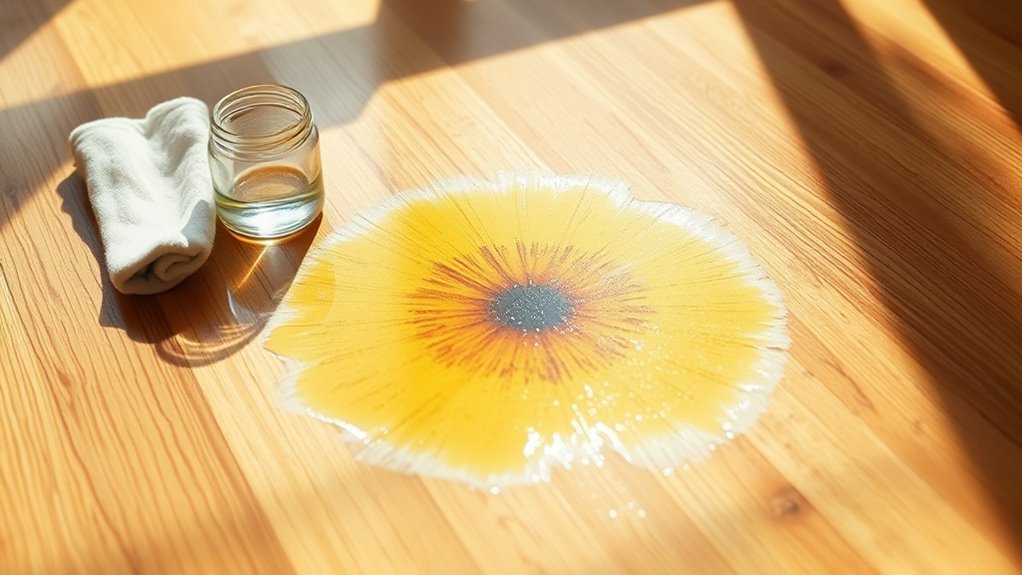
Before you can effectively remove cat urine from your wood floors, you need to identify how far the stain has spread. Start with thorough stain detection by examining the affected area under natural light, looking for discoloration or darkened spots. Since urine can seep deep into wood, surface inspection won’t be enough. Use a moisture assessment tool or a simple moisture meter to detect hidden dampness, which reveals the true extent of urine penetration. This step is essential because untreated moisture can cause lingering odors and damage. Taking the time to precisely pinpoint all affected areas empowers you to target the problem efficiently, freeing you from uncertainty and ensuring your cleaning efforts fully restore your floors’ condition and your peace of mind.
Immediate Cleanup Steps for Fresh Urine
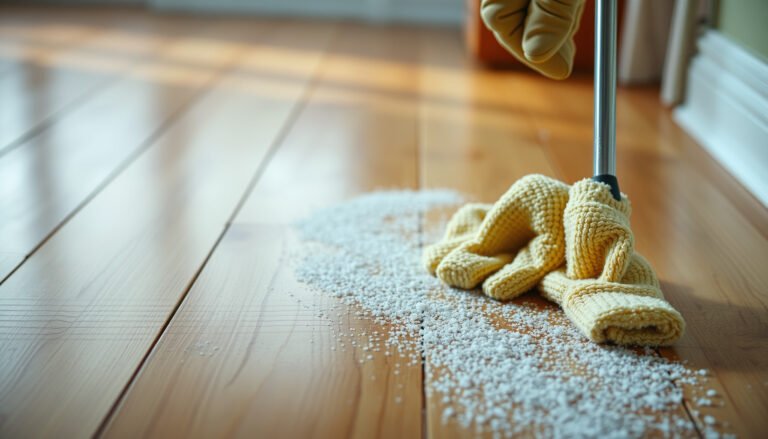
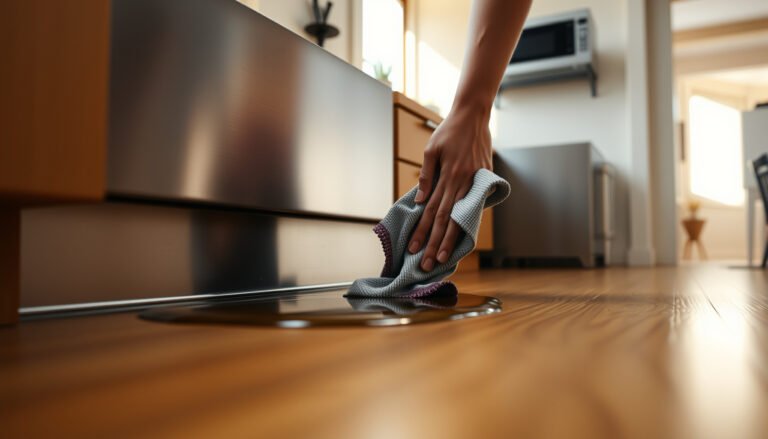
Once you’ve determined where the urine has spread, tackling fresh stains promptly can prevent deeper absorption and lingering odors. Your quick response to fresh urine is key. Start by blotting the area with paper towels or a clean cloth—avoid rubbing, which pushes urine deeper into the wood. Next, gently wipe the spot with a damp cloth using plain water to dilute any residue. If you have mild dish soap, mix a few drops with water for a gentle clean, then rinse with a damp cloth. Finally, dry the area thoroughly to stop moisture from seeping in and causing damage. Acting fast gives you control and freedom from stubborn smells, protecting your wood floor’s beauty and your home’s fresh environment.
Using Enzymatic Cleaners to Break Down Odor
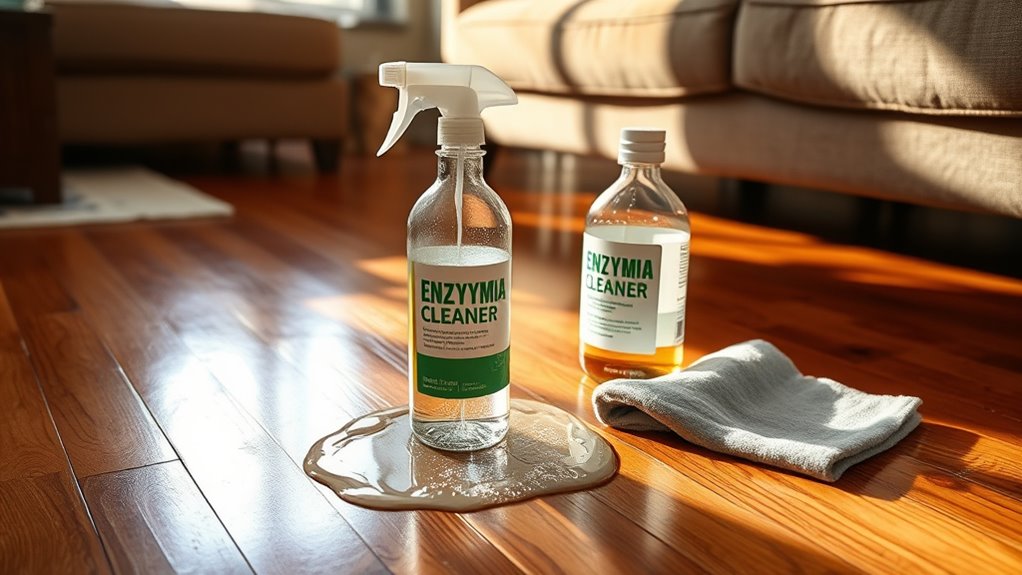
Enzymatic cleaners work by breaking down the proteins in cat urine that cause lingering odors, making them highly effective for wood floors. You’ll want to choose a cleaner specifically designed for pet stains to guarantee it targets the source properly. Applying it thoroughly and allowing enough time for the enzymes to work will give you the best chance at completely eliminating the smell.
How Enzymatic Cleaners Work
Although it might seem tricky to eliminate cat urine odor from wood floors, using enzymatic cleaners can make the process much more effective. These cleaners rely on enzyme action to break down the molecules causing the smell. Unlike regular cleaners that mask odors, enzymatic cleaners target the source by digesting the proteins and uric acid crystals in the urine. This odor breakdown prevents the smell from returning, giving you lasting freshness. When you apply the cleaner, enzymes catalyze a natural reaction that decomposes the urine components into harmless substances like water and carbon dioxide. This means you’re not just covering up the problem—you’re removing it at its core, helping you reclaim your space and enjoy freedom from persistent cat urine smells on your wood floors.
Choosing the Right Enzymatic Cleaner
When you’re selecting an enzymatic cleaner, it’s important to choose one specifically formulated for pet urine and safe for wood floors. Not all enzyme types work equally well on the proteins and uric acid in cat urine, so look for products that list protease and urease enzymes—these break down the odor-causing compounds effectively. Also, check the cleaner ingredients to verify they’re non-toxic and won’t damage your wood’s finish. Avoid harsh chemicals like bleach or ammonia, which can worsen odors and harm your flooring. Choosing a cleaner with natural, plant-based ingredients can provide powerful results while keeping your space safe and fresh. By picking the right enzymatic cleaner tailored for pet urine and wood surfaces, you’ll regain control over your home’s comfort and freedom from lingering smells.
Application Tips for Best Results
Selecting the right cleaner is just the first step; how you apply it can make all the difference in eliminating cat urine odors from your wood floors. To maximize product effectiveness, start by blotting the area to remove excess moisture without rubbing, which can spread the urine. Use application techniques that guarantee thorough coverage—spray or pour the enzymatic cleaner generously over the stained spot, allowing it to penetrate deeply into the wood grain. Avoid wiping it away immediately; let the cleaner sit for the recommended time, usually 10-15 minutes or longer for stubborn odors. Reapply if necessary and keep the area damp to give enzymes time to break down odor-causing molecules fully. Proper application guarantees the cleaner works at its full potential, freeing your home from unwanted smells efficiently.
Natural Remedies to Neutralize Cat Urine Smell
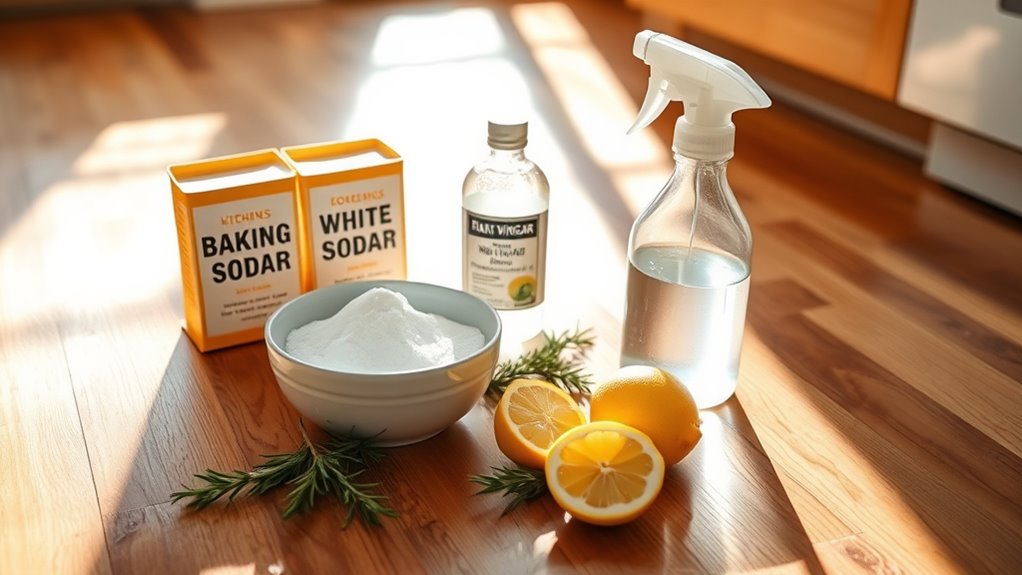
Because cat urine can deeply penetrate wood floors, tackling the odor with natural remedies is often the safest and most effective approach. Start by sprinkling baking soda over the affected area to absorb moisture and neutralize smells. Next, apply a vinegar solution—mix equal parts white vinegar and water—to break down the urine’s alkaline compounds. Let it sit for a few minutes before blotting. For stubborn odors, gently dab a mixture of hydrogen peroxide and a few drops of essential oils like lavender or tea tree; these oils add a fresh scent while offering antibacterial properties. Always test these remedies on a small, hidden spot first to avoid discoloration. Using these natural solutions helps you restore your wood floors without harsh chemicals, giving you peace and freedom in your home.
Preventing Future Accidents on Wood Floors
Although accidents can happen, taking proactive steps can greatly reduce the chances of your cat urinating on wood floors again. Understanding cat behavior is key—stress, health issues, or litter box problems often trigger accidents. You can also protect your floors by using mats or sealants designed for floor protection.
| Step | Action | Benefit |
|---|---|---|
| Monitor cat behavior | Observe changes in habits | Early problem detection |
| Improve litter setup | Keep box clean, accessible | Encourages proper use |
| Use floor protection | Apply mats or sealants | Prevents urine damage |
When to Call a Professional for Deep Cleaning
If you’ve tried cleaning but the cat urine smell still lingers, it might be time to call a professional. Persistent odors often mean the urine has soaked deep into the wood, making DIY methods less effective. Experts have specialized tools and treatments that can thoroughly eliminate the smell and protect your floors long-term.
Signs of Persistent Odor
You’ve likely tried multiple cleaning methods, yet the cat urine smell still lingers in your wood floors. This persistent odor causes frustration because it signals that urine has deeply penetrated the wood or sealed layers. Detecting urine stains isn’t always easy since some can be invisible to the naked eye, hiding beneath the surface or within cracks. If you notice a strong, stubborn smell despite thorough cleaning, it’s a clear sign that the odor source remains embedded. At this point, tackling the issue alone might not be enough. Recognizing these signs early helps you decide when to call a professional for deep cleaning. Experts have specialized tools and treatments designed to reach and neutralize hidden urine residues, freeing your home from the persistent odor.
When DIY Fails
When your efforts to remove cat urine smell from wood floors don’t work, it’s time to contemplate professional help. DIY failures can be frustrating, especially when stubborn odors linger despite your best attempts. If you’ve tried multiple home remedies, enzymatic cleaners, or vinegar solutions without success, it’s a clear sign to seek alternative solutions. Professionals have access to specialized equipment and deep-cleaning agents that can penetrate wood pores and eliminate odors at the source. Calling an expert is not a defeat but a smart choice to reclaim your space’s freshness and your peace of mind. Don’t let lingering smells restrict your freedom at home—acknowledge when it’s time to move beyond DIY and restore comfort effectively.
Benefits of Expert Treatment
Recognizing that DIY methods aren’t enough is a step toward truly resolving the issue. When the cat urine smell persists despite your best efforts, it’s time to ponder expert services. Professionals have specialized tools and cleaning agents designed for deep odor elimination that go beyond surface cleaning. They can access and treat hidden layers in your wood floors where urine might have soaked in, preventing recurring smells. Calling in experts not only saves you time and frustration but also protects your floors from damage caused by harsh DIY chemicals. With their experience, you’ll regain a fresh, odor-free home environment quickly, giving you the freedom to enjoy your space without worry. Knowing when to seek professional help guarantees lasting results and peace of mind.
[…] Cleaner – 64 oz. ZULVCP64 Safe for Grout, Pro Formula In Stock View on Amazon › Deep cleaning sheet vinyl floors comes down to three things: a vinyl-safe cleaner, gentle agitation that lifts […]
[…] – Mildew/musty pockets: If the smell reads “earthy,” “damp,” or “basement-like,” prioritize moisture removal and deep cleaning. […]
[…] ceramic tile—you must create a bond-ready surface for thinset to grab. That typically means deep cleaning, abrasion/scuffing of glossy tile, and flattening any problem […]
[…] a high-gloss shine without streaks, pitting, or cloudy haze. You’ll follow a clear sequence from deep cleaning and stain prep to diamond polishing and final sealing. By the end, you’ll know exactly what to […]
[…] mopping rather than abrasive pads. If dullness is already starting, the right steps for safe deep cleaning and spot treatment can restore clarity without damaging the […]
[…] granite floors usually means deep cleaning, stripping the old finish (if present), repairing damage, then polishing/sealing so the stone looks […]
[…] or missing sealant, and look for signs of dampness or bubbling below/near baseboards or edges. Persistent odors can require moisture remediation. [ADD: what you’ve observed around the odor […]
[…] Concentrate, pH Neutral, Gallon Only 11 left in stock – order soon. View on Amazon › Deep cleaning terracotta floors is mostly about loosening grime without saturating the tile, then using a […]
[…] get the finish you want only if the mosaic tile floors are truly residue-free. Deep cleaning comes first, and stripping comes next only if wax or an old topical coating is […]
[…] Deep cleaning usually improves appearance immediately—because it removes the “mask” layer that makes true damage hard to diagnose. After the floor is visually clean, you can reliably judge whether grout needs replacement, joints need re-grouting, or the tile surface itself has etching or residue. “You can’t accurately match grout color or determine grout depth while residue film remains on the tile face.” “Avoid acids until you confirm compatibility with your tile and grout type; etching is often permanent.” “Thorough rinsing and full drying prevent new grout from bonding to contaminants.” […]
[…] bond in a tile-over-tile install is won or lost during prep. You need deep cleaning, mechanical abrasion of the glossy surface, and leveling of dips/high spots so your new thinset can […]
[…] it by: deep cleaning and using the manufacturer-approved wipe/cleaner. Also keep floors dust-free—tracked dust can act […]
[…] floors over existing tile only when the tile is stable and you do the prep work correctly—deep cleaning, mechanical profiling (grinding/sanding as required), thorough vacuuming, and the correct primer […]
[…] Cleaner Brush with Long Handle, V-Shaped Floor Scrub Brush In Stock View on Amazon › Deep cleaning rubber floors usually comes down to using the right cleaner, agitating with a brush or floor […]
[…] for professional input) if you find widespread water damage, lifting edges, soft/crumbly cork, persistent odors, or suspected mold issues. Also skip if you can’t identify the coating type and you’re not […]
[…] Deep cleaning parquet floors doesn’t have to risk dulling the finish—if you use a pH-neutral cleaner, controlled moisture, and a soft-bristle technique, it’s the safest way to restore the wood’s look. This guide shows the exact steps and products to lift embedded grime without swelling or clouding. Follow it, and you’ll get a genuinely deep clean while protecting parquet’s seal and grain. […]
[…] for cleaning, tile scrub brush with stiff bristles In Stock View on Amazon › Deep cleaning slate floors usually means stripping embedded grime without dulling or etching the stone: start […]