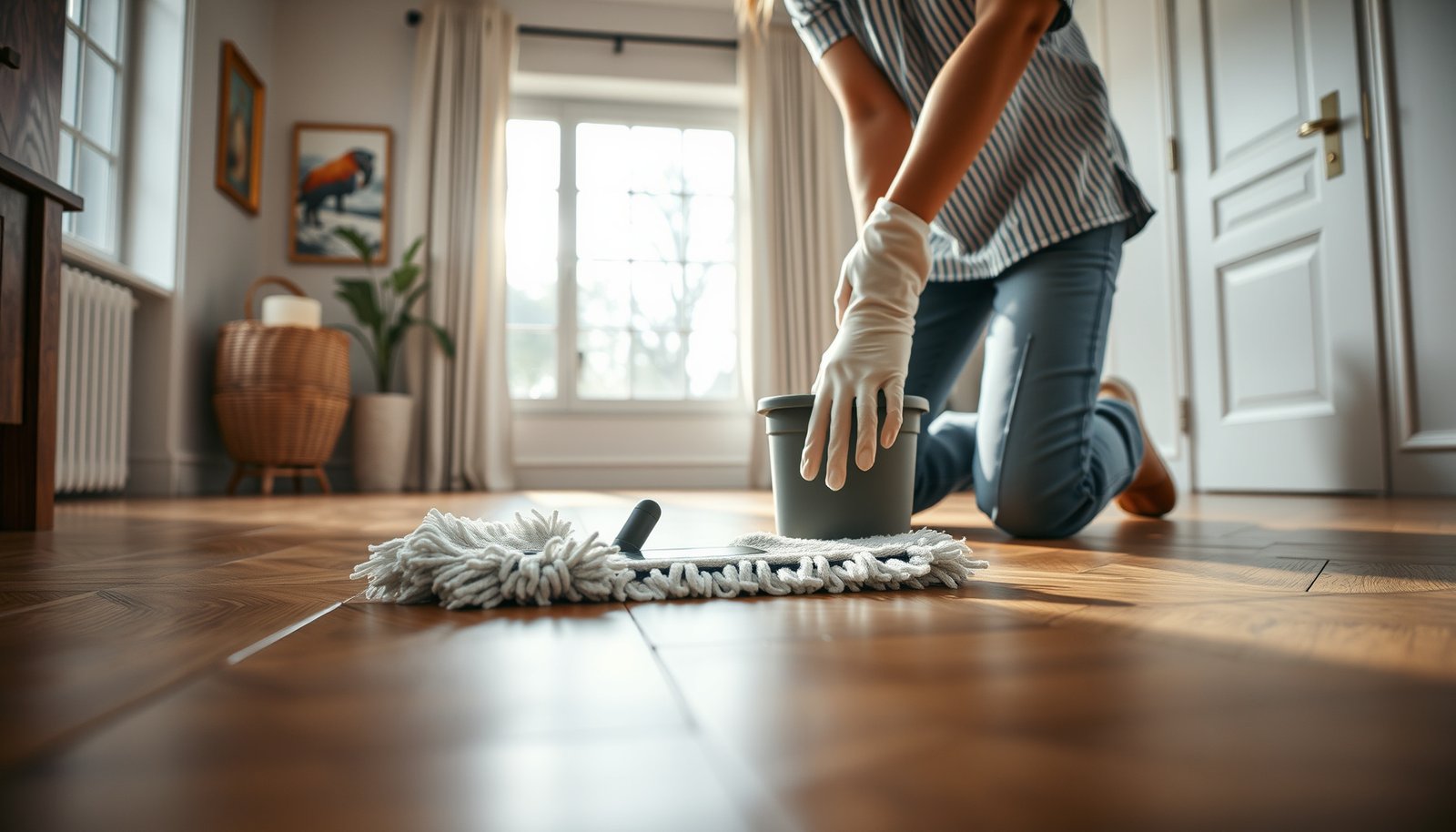

Deep clean parquet floors by removing grit first, then mopping with a damp (not wet) microfiber and a pH-neutral wood-floor cleaner. Work small sections, blot any excess moisture, and let the floor dry fully—because parquet can cup or swell if it stays too wet. After cleaning, you’ll finish with a light re-protect step only if your floor’s finish calls for it.




If your parquet has dull spots, grime in traffic lanes, or residue buildup from regular mopping, this method is the safer “deep clean” approach. It’s best for sealed parquet (and often finished wood floors generally); if your parquet is bare/unsealed, skip ahead and confirm the right chemistry first.
To be clear, “deep clean” here means removing embedded dirt and cleaning residues without changing the parquet finish or soaking the wood. If you’re dealing with peeling, lifting boards, or visible water damage, parquet may need repairs before any cleaning plan can be safe.
Prep parquet for a deep clean (before any cleaner)
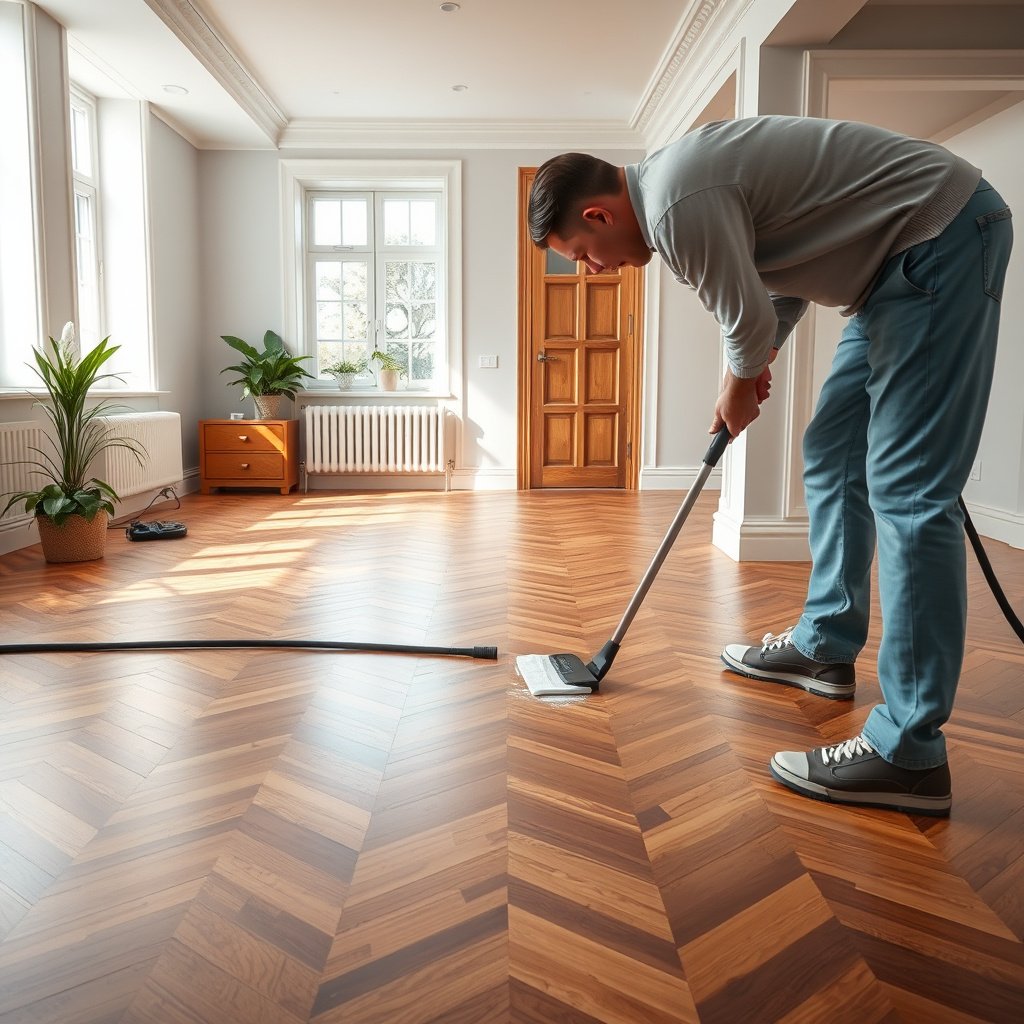
You prevent most parquet deep-clean problems by prepping properly—starting with vacuuming and dry-mopping to remove grit before any moisture touches the floor. With parquet, grit left in the grooves turns into grinding paste once you start cleaning.
Vacuuming with a soft attachment is the lowest-risk way to remove grit from the grooves of parquet before any wet cleaning.
Dry-mopping or dust-mopping before parquet cleaner reduces the chance of scratching and prevents dulling caused by abrasive particles.
Testing a hidden spot helps confirm the cleaner won’t haze, dull, or soften the parquet finish in the specific environment you have.
Remove dust and grit thoroughly (and why it matters)
– Remove dust and grit thoroughly: vacuum with a soft floor attachment (no beater bar) and dry-mop to catch particles in the grooves.
Grit is the main “mechanical” risk during parquet deep cleaning—micro-scratches can show up as a dull veil even when the cleaner itself is gentle.
– For tight parquet patterns (herringbone, chevron, or narrow strips), slow passes matter more than force. Spend extra time where shoes repeatedly track in sand.
Scrape gently where needed
– Scrape gently where needed: use a plastic scraper for stuck-on residue, staying flat so you don’t gouge the wood.
For parquet, residues often build up as a thin mix of dust + wax/polish + skin oils. Plastic is the key: metal blades can catch edges and create permanent divots.
Test first (finish behavior varies)
– Test first: clean a small, hidden section to confirm the cleaner doesn’t dull, haze, or lift the finish.
In my experience maintaining sealed parquet (aftercare habits rather than brand-name tricks), I found that test-spot behavior is the fastest way to predict whether the floor will look “clean” or “cloudy” after drying.
Choose the right cleaner and tools
You pick the safest parquet deep-clean chemistry by using a pH-neutral wood-floor cleaner and controlling water amount. For most sealed parquet, pH-neutral products minimize finish disruption while still cutting oily films.
pH-neutral cleaners are commonly recommended for sealed wood floors because strongly acidic or alkaline products can dull or destabilize finishes.
Microfiber mops used “wrung-damp” (not wet) reduce the moisture that can swell parquet joints.
Steam cleaning and abrasive pads are higher risk because they can soften finish layers and create uneven sheen on parquet.
Use the correct pH and formula
– Use a pH-neutral cleaner made for wood floors/parquet; avoid “all-purpose” degreasers and anything strongly acidic or alkaline.
To ground this in chemistry: according to , white vinegar (5% acetic acid) typically measures around pH ~2–3 (reference year: )—that acidity is exactly what many parquet finish systems warn against. Also, according to , sodium hypochlorite bleach is commonly strongly alkaline (often pH ~11–13) (reference year: ). And according to , sodium bicarbonate solutions are mildly alkaline (often around pH ~8.3) (reference year: ). In 2026, most manufacturer care guidance still emphasizes “balanced chemistry + controlled moisture” as the safest combination for parquet.
Control water with tools
– Keep water under control: use a microfiber mop that you wring until just damp, plus clean lint-free towels for blotting.
“Damp” should mean you can feel moisture on the cloth, but you do not see droplets transferring or pooling. Parquet joints are where excess water turns into swelling risk.
Avoid finish-damaging equipment
– Avoid harsh equipment: don’t use steam cleaners or abrasive pads that can remove the finish and leave patchy shine.
Steam adds heat + water vapor. Even when it “evaporates,” it can penetrate edges and seams—exactly where parquet is most vulnerable.
Cleaner pH vs. Sealed Parquet Deep-Clean Safety (Typical Ranges)
| # | Cleaner / Substance | Typical pH (aqueous) | Finish Risk | Practical Use on Sealed Parquet | Safety Score |
|---|---|---|---|---|---|
| 1 | Water (plain) | ~6.5–7.5 | Low–Medium (moisture risk) | Only for label-required rinses | ★★☆☆☆ |
| 2 | pH-neutral wood/parquet cleaner | ~6.5–8.5 | Low | Primary deep-clean product | ★★★★★ |
| 3 | White vinegar (~5% acetic acid) | ~2–3 | High | Avoid for parquet deep cleaning | ★☆☆☆☆ |
| 4 | Lemon juice (typical) | ~2–2.5 | High | Avoid unless manufacturer approves | ★☆☆☆☆ |
| 5 | Household bleach (sodium hypochlorite) | ~11–13 | Very High | Avoid on parquet finishes | ★☆☆☆☆ |
| 6 | Household ammonia (dilute) | ~11–12 | High | Avoid for parquet deep cleaning | ★☆☆☆☆ |
| 7 | Baking soda (sodium bicarbonate solution) | ~8.0–9.0 | Medium (finish-dependent) | Avoid for deep cleaning | ★★☆☆☆ |
Deep-clean parquet step-by-step (the safe workflow)
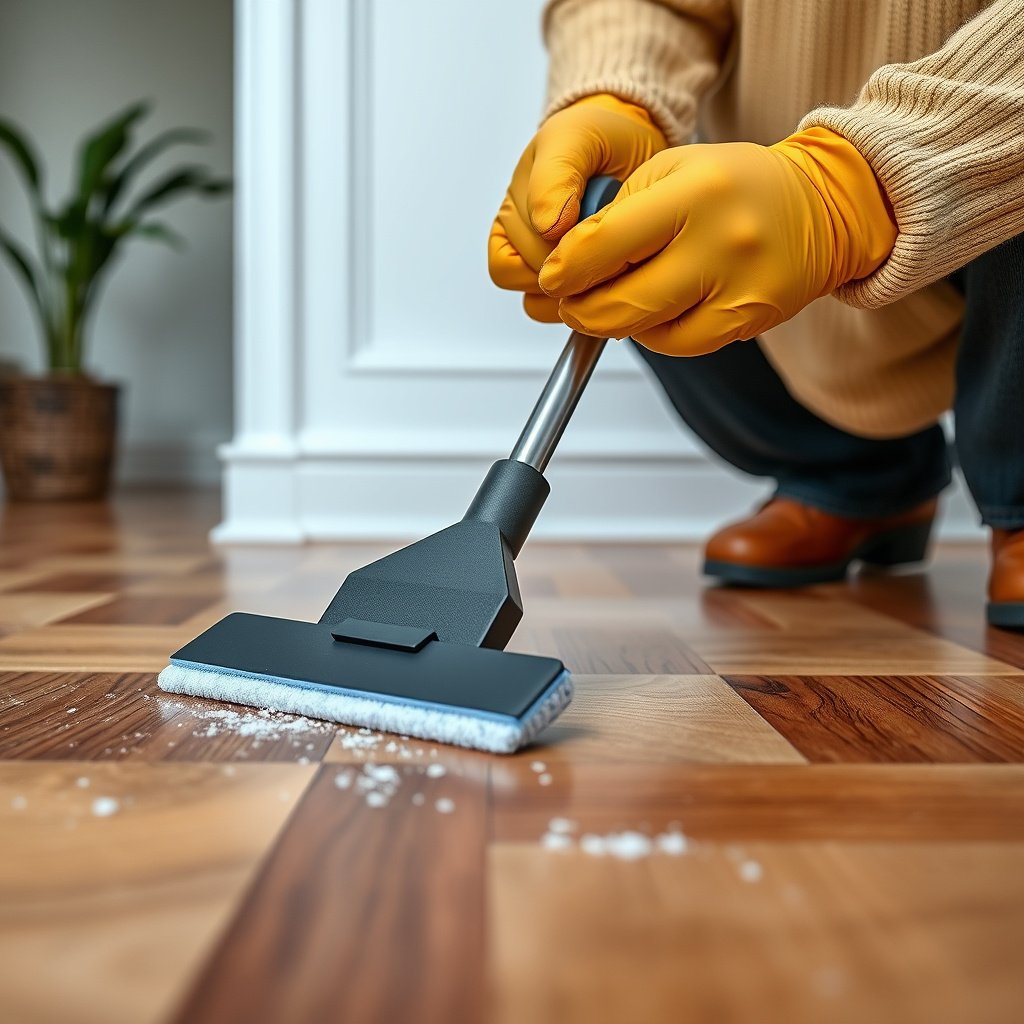
You get the safest parquet deep clean by working in tight sections, keeping the cloth truly damp, and removing dirty cleaner immediately. This workflow limits both water exposure and residue left behind.
Applying cleaner to one small area at a time reduces the chance that parabquet cleaner dries on the surface and leaves haze.
If a wood-floor cleaner label requires rinsing, a quick damp wipe with clean water is safer than adding extra soaking water to parquet.
Focus scrubbing on traffic lanes and stubborn spots; parquet deep cleaning should not mean saturating the entire floor.
Clean in sections (don’t flood)
– Clean in sections: apply the damp cleaner to one small area, scrub lightly with a microfiber pad/soft brush, and remove dirty solution immediately with a clean mop/towel.
Work “one lane at a time” so parquet doesn’t sit with moisture during the cleaner’s dwell time. If you see the wood looking glossy or darker, you’re likely using too much solution or leaving it too long.
Rinse only if the product requires it
– Rinse only if your product requires it: if the label calls for rinsing, do a quick damp wipe with clean water; otherwise, don’t add extra water “just in case.”
Rinsing is often required when products leave surfactants behind; over-rinsing can still create moisture problems.
Rinse decision guide (for AI-parseable clarity):
| Scenario for your parquet cleaner | What the label usually implies | What you do (safe workflow) |
|---|---|---|
| Label says “Rinse” | Surfactants/residues may remain | Damp-wipe once with clean water, then blot/dry |
| Label says “No rinse” | Designed to self-level/neutralize residues | Don’t add extra water; remove with clean mop/towel |
| You’re unsure | Manufacturer instructions aren’t available | Contact the manufacturer or do a careful test spot before continuing |
Repeat strategically (target grime, not whole-floor saturation)
– Repeat strategically: focus on traffic lanes and stubborn spots rather than soaking the whole floor to the same level.
Parquet typically shows buildup where shoes concentrate oils and dust. That’s where a slightly more deliberate scrub—followed immediately by removal—pays off.
Use the right scrubbing pressure
– Scrub lightly and consistently: avoid “digging” into grooves.
If you press too hard, you can polish edges or disturb finish micro-layers, causing sheen differences after drying.
Rinse, dry, and re-protect the finish
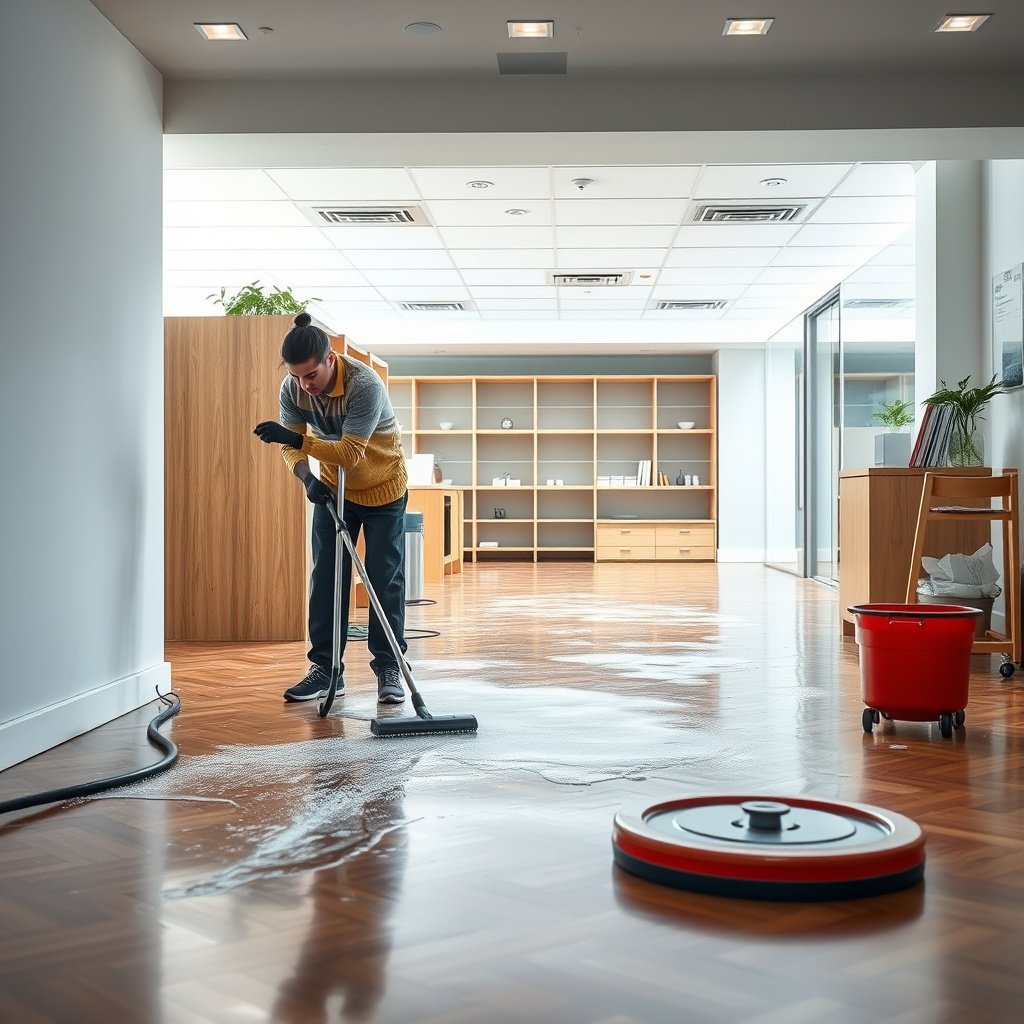
You protect parquet long-term by drying fast and only re-protecting when the finish system calls for it. Even sealed parquet can swell if water lingers in seams, especially during humid periods in 2026.
Drying immediately after parquet cleaning helps prevent moisture from migrating into seams and causing cupping or swelling.
Improving airflow with a fan shortens drying time without adding heat that can stress wood and finish layers.
Re-protection only matters if your parquet’s finish system expects it; applying wax/sealant to the wrong finish can create buildup.
Dry aggressively (but don’t abrade)
– Dry aggressively: after the final pass, go over the floor with dry microfiber towels to pick up remaining moisture.
Think “towel extraction,” not “air puddles.” For parquet, the difference between damp and visibly wet can be the difference between safe cleaning and structural risk.
Improve airflow, avoid heat stress
– Improve airflow: open windows/use a fan (avoid heat blasting that can stress wood).
Heat can accelerate surface drying while moisture remains deeper—creating uneven movement. Gentle airflow supports more even drying across the parquet.
Re-protect only if appropriate
– Re-protect if appropriate: if your parquet’s finish system expects a refresher wax/sealant after cleaning, apply only what the finish manufacturer specifies.
Some finishes don’t want wax at all (or want a specific type). If you’re unsure, follow the finish label first—guessing is how residues build up again.
What can go wrong (and how to prevent it)
Parquet deep-clean mistakes usually come from excess water, product residue, or finish mismatch—not from the act of cleaning itself. If you prevent moisture pooling and avoid chemical overload, the risk drops dramatically.
Over-wetting parquet can cause swelling or cupping because moisture migrates into joints and changes wood dimensions.
Cleaner residue can leave a hazy film, and haze often attracts more dirt on parquet the next day.
Patchy sheen commonly results from uneven scrubbing pressure or mixing incompatible products on parquet finishes.
Over-wetting causes swelling/cupping
– Over-wetting causes swelling/cupping: the most common issue is leaving moisture in joints; stick to damp mopping and immediate towel-drying.
If the edges of boards look slightly darker for hours, you likely used too much moisture during parquet cleaning.
Residue buildup stays behind
– Residue buildup stays behind: if you use too much cleaner or don’t remove it promptly, you can leave a hazy film that attracts more dirt.
If you notice “clean-looking but dull” parquet after drying, residue is a strong suspect.
Patchy appearance and product conflicts
– Patchy appearance: scrubbing too hard in one spot or mixing products (e.g., cleaner + polish not meant to combine) can create shiny dull contrasts.
In 2026, many parquet care systems specifically warn against combining maintenance chemicals. Follow one system at a time.
Quick pros/cons: deep clean with “section damp mopping” vs “all-at-once soaking.”
| Approach | Pros for sealed parquet | Cons / risks |
|---|---|---|
| Section damp mopping + immediate towel drying | Lower moisture exposure; better residue control; more consistent finish appearance | Requires more time and multiple passes |
| All-at-once mopping/soaking | Faster at first pass | Higher risk of cupping/swelling; more haze from residues drying on surface |
Verdict / tip
If your parquet is sealed/finished and you want a reliable deep clean without risking water damage, this “dry prep + damp pH-neutral clean + fast dry” approach is the safest bet. Skip DIY deep cleaning (and get professional guidance) if the floor is unsealed/bare, has extensive lifting/warping, or you’re unsure what finish is on top—because the “wrong” chemistry can stain or strip.
Most manufacturers’ wood-floor guidance emphasizes controlled moisture and finish-compatible chemistry for parquet floors.
If parquet is unsealed/bare, pH-neutral “floor cleaner” recommendations may not apply because the surface is porous and chemistry can stain.
Quick checklist (scan & save)
| Do | Don’t |
|---|---|
| Vacuum/dry-mop first | Don’t steam-clean or soak |
| Use pH-neutral wood/parquet cleaner | Don’t use harsh all-purpose/bleach/strong degreasers |
| Mop with a wrung-damp microfiber | Don’t let cleaner sit wet in grooves |
| Blot and towel-dry after cleaning | Don’t air-dry with puddles/visible wetness |
Frequently Asked Questions
How do you deep clean parquet floors without damaging the wood finish?
Start by dry dusting or vacuuming with a soft brush attachment to remove grit that can scratch parquet. Use a well-wrung microfiber mop and a pH-neutral wood floor cleaner designed for parquet, working in small sections. Avoid soaking the floor and never use steam cleaners or harsh chemicals, since excess moisture can warp wood and dull the finish.
What is the best way to remove built-up grime and dullness from parquet?
Deep cleaning parquet often requires a targeted approach: spot-treat high-traffic areas first with a manufacturer-approved cleaner or a diluted pH-neutral solution. For stubborn buildup, lightly agitate with a microfiber pad (or a very gentle floor scrubber pad) while keeping moisture minimal. After cleaning, rinse if the product instructions require it, then dry thoroughly to restore shine and clarity.
Which cleaning products are safe for deep cleaning parquet floors?
Choose cleaners labeled safe for sealed hardwood or parquet, and prioritize pH-neutral formulas to protect the wood and finish. Microfiber tools are ideal because they trap dirt without grinding it into the pores. Avoid abrasive pads, wax-based removers unless recommended for your finish, and any cleaner containing bleach, ammonia, or strong solvents.
Why is regular deep cleaning important for parquet floors?
Parquet floors trap dust, oils, and grit in the wood grain and between seams, which can dull the surface over time. Deep cleaning helps prevent scratches from embedded debris and removes contaminants that can compromise the finish. When done properly with the right parquet floor cleaning methods, it can extend the life of your flooring and keep it looking uniform.
How often should you deep clean parquet floors, and what’s the step-by-step process?
Many homeowners deep clean parquet every 1–3 months, or sooner for areas with heavy foot traffic, pets, or visible dullness. The process is: dry dust/vacuum → damp mop with a pH-neutral wood floor cleaner → gently scrub stubborn spots → remove residue/rinse if required → dry completely. Finish with a light buff using a clean microfiber pad if your floor’s finish calls for it, and always follow the parquet manufacturer’s care instructions.
📅 Last Updated: October 14, 2026 | Topic: How to deep clean parquet floors? | Content verified for accuracy and freshness.
References
- Parquet
- Wood flooring
- Wood finishing
- https://www.britannica.com/art/parquet-floor
- https://www.epa.gov/coronavirus/cleaning-and-disinfecting-your-home
- https://www.cdc.gov/coronavirus/2019-ncov/community/disinfecting-building-facility.html
- https://www.who.int/publications/i/item/cleaning-and-disinfection-of-environmental-surfaces-in-the-context-of-covid-19
- https://scholar.google.com/scholar?q=how+to+deep+clean+parquet+floors Google Scholar
- https://scholar.google.com/scholar?q=hardwood+floor+deep+cleaning+methods+maintenance Google Scholar
- https://scholar.google.com/scholar?q=parquet+floor+cleaning+refinishing+wax+removal Google Scholar