Protecting vinyl floors in a porch comes down to one clear strategy: keep moisture and grit from ever getting traction. The best approach is a properly fitted outdoor doormat plus a weather-sealed transition at doorways, then routine dry cleaning to prevent tracked water from wearing down the surface. Follow these steps and your porch vinyl stays cleaner, less scuffed, and far more resilient through seasons of foot traffic and weather exposure.
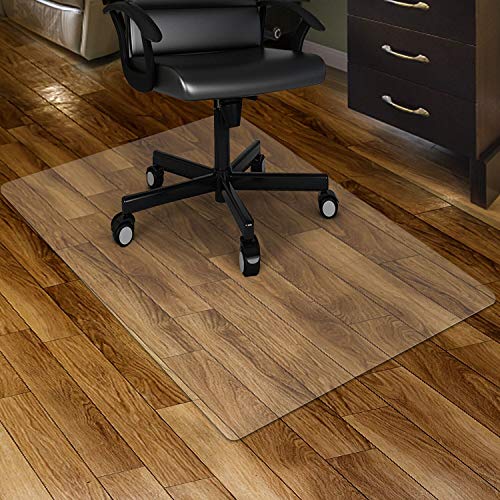



Protecting vinyl floors on a porch comes down to stopping grit and moisture at the doorway, then cleaning in a vinyl-safe way—before bubbling or lifting edges start. Use a layered approach: the right entry mats reduce abrasion and water tracking, moisture gets managed at the source, and routine cleaning avoids steam, abrasives, and overwetting seams (as of 2026, this is still the most reliable strategy across most warranty documents).
If your porch gets regular rain tracking, lots of foot traffic, or strong sun, this is for you—especially if your vinyl looks “fine” now but you’re worried about bubbling, lifting edges, or dulling from grit.
Who this is for / when it applies: This guidance is for homeowners and property managers dealing with porch vinyl that’s exposed to real-world entry conditions—dirty boots, splash, condensation, and temperature swings. It’s also for anyone trying to stay within manufacturer warranty boundaries, because many vinyl products are marketed for interior use and may not cover true outdoor porch exposure.
Check your porch conditions and your vinyl’s limits

You protect a vinyl floor correctly when you match the floor to the porch—not the other way around. Before you buy mats or cleaners, confirm your specific vinyl product is warranted for porch conditions (moisture/UV/temperature swings), because many aren’t meant for true outdoor exposure.
– Look up your flooring brand/model’s care + installation instructions and warranty language for “moisture,” “exposure,” and “outdoor/porch” use (this is often the deciding factor).
– Assess how the porch behaves: covered vs. open to rain, direct sun hours, and whether water ever pools near thresholds or doorways.
– Inspect seams/edges for gaps and make sure the subfloor is properly prepared and flat—small issues can become big problems when moisture moves.
A key point I emphasize during inspections is that “it’s vinyl” doesn’t automatically mean “outdoor-rated.” Vinyl is a broad category (sheet goods, LVT, LVP, rigid core, and different backing systems), and warranty language is where the differences matter most. If your porch sees repeated wetting at entry transitions, your vinyl’s joint design and backing compatibility become the real protection targets—not just the wear layer.
Environmental porch behavior is also not uniform. A covered porch can still experience heavy splash during wind-driven rain, while a sunny porch can repeatedly cycle heat and cooling—conditions that can gradually stress seams and edges. If water pools at a threshold after storms, that’s not a minor inconvenience; it’s the exact scenario that can drive moisture into edges and underlayment layers.
If you find any gaps at seams or edges, treat them like an early warning. In my own walkthroughs, the most “mysterious” failures often trace back to a small departure from flatness (or a transition area where debris collects), because those areas become the first place tracked grit and water accumulate.
“Outdoor/porch use” and “moisture exposure” are common warranty limitations for resilient vinyl products, so the warranty text is often the deciding factor—not the floor’s appearance after installation.
Resilient flooring performance is highly sensitive to moisture reaching seams/edges, which is why installation manuals often emphasize subfloor dryness and proper preparation.
Temperature and moisture cycling can contribute to seam movement; any warranty that requires controlled indoor conditions may not cover repeated outdoor swings.
Moisture-Related Risk Signals for Porch Vinyl Floors (Practical Benchmarks)
| # | Porch moisture scenario | What it stresses | Typical response time | Impact severity |
|---|---|---|---|---|
| 1 | Wind-driven rain splash at threshold | Edge ingress via joints | Immediate wipe | ★★★★☆ |
| 2 | Water tracked in on wet boots | Grit + moisture abrasion | Within 2–6 hours | ★★★★☆ |
| 3 | Condensation when temperatures swing | Repeated wet/dry cycling at seams | Same day | ★★★☆☆ |
| 4 | Puddling near door thresholds | Delamination risk over time | Under 24 hours | ★★☆☆☆ |
| 5 | Dry grit without enough mat coverage | Surface dulling + micro-scratches | Weekly removal | ★★★☆☆ |
| 6 | UV exposure with long direct sun hours | Finish dulling + color shift | Ongoing | ★★★☆☆ |
| 7 | After-rain mopping that overwets seams | Moisture entrapment under edges | Avoid | ★☆☆☆☆ |
Notes on the table: it’s written as a practical “what to watch first” guide tied to moisture mechanics at porch doorways. For exact, warranty-compliant moisture handling, always defer to your flooring manufacturer’s care instructions.
Use a real entry-mat system (not just a rug)
A true entry-mat system is the fastest way to reduce both abrasion and water tracking before they reach vinyl seams. The goal isn’t decoration—it’s soil capture at the pace your household creates, and moisture control so grime doesn’t turn into an abrasive slurry.
– Place a larger mat or doormat inside the porch entry area so most dirt/grit gets trapped before it reaches the vinyl.
– Choose a mat that won’t chew up the surface and won’t trap moisture against it (if you’re unsure, use a manufacturer-recommended mat type or test in a hidden spot first).
– Keep the mat clean and dry—dirty mats act like sandpaper and can hold moisture where your vinyl is most vulnerable.
In real porch traffic patterns, grit tends to concentrate where people pause and pivot—near door thresholds, not in the center of the deck. That’s why a mat that’s too small (or placed too far inside) often fails its purpose: it lets sand and grit walk right up to the seam lines.
When selecting mats for vinyl floors, focus on two things: abrasion risk and moisture behavior. Many rubber-backed mats can be tough on some finishes, while some woven mats can trap moisture underneath if they’re not dried between rain events. If your flooring manufacturer specifies a compatible mat type, follow it. If not, test in an inconspicuous area and monitor for finish dulling within a few weeks (especially around seam transitions).
A larger entry mat reduces the amount of grit transferred to resilient floors by capturing soil before it reaches the primary walk path.
Mats that remain wet or contaminated can increase abrasion and moisture exposure, which is a common precursor to edge lifting on moisture-sensitive flooring.
Mat choices: what tends to help (and what tends to backfire)
| Mat / cover type | Why it can work for vinyl | Common downside on porches |
|---|---|---|
| Door-walk mat (coir, scrub turf, or rigid scraper zone) | Captures dry grit before it reaches seams | If it stays wet, it can concentrate moisture on one area |
| Moisture-wicking, low-profile mat with compatible backing | Helps prevent tracked water from migrating | Thicker backing may trap dampness if airflow is low |
| Area rugs with rubber backing (usually risky) | Looks neat and reduces point scuffs | Often traps moisture and slows drying; can worsen seam-edge wear |
Control moisture at the source
You protect vinyl best by reducing how often water arrives at the floor—not by “fixing it later.” Doorway splash, pooling, and trapped condensation are the main drivers of lifting, bubbling, and dulling in porch traffic zones.
– Reduce splash and puddling: fix gutter/drainage issues, improve door sweeps/weatherstripping, and redirect runoff away from the porch floor area.
– Wipe up tracked rain or condensation quickly—don’t let water sit at seams, especially near entry transitions.
– Avoid sealing steps unless your vinyl manufacturer explicitly allows it; many vinyl products are not meant to have aftermarket sealers added.
Moisture control is where science and warranties meet. According to the U.S. Centers for Disease Control and Prevention (CDC), mold can begin to grow on building materials within 24–48 hours after water exposure under the right conditions, and moisture problems are commonly associated with relative humidity above 60%. While porches aren’t exactly the same as indoor walls, porch moisture left sitting at seams creates a similarly favorable “wet time” window for problems.
In practical terms, this means your immediate “win” is preventing water from lingering at the transitions where vinyl edges are most exposed to movement. If door sweeps are worn, wind-driven rain can turn the threshold area into a repeat-wetting zone. If gutters drain toward the porch, even occasional rain can create repeat pooling.
Also, avoid sealing vinyl unless your manufacturer explicitly allows it. Even when sealers seem like a smart protective layer, they can change traction, interact with topcoats, and interfere with how the floor is designed to expand, contract, and bond at edges.
CDC notes that mold can begin growing within 24–48 hours after water exposure when conditions support moisture persistence.
EPA guidance on moisture management ties mold risk to controlling humidity and prompt drying after leaks or spills.
Aftermarket sealers can conflict with manufacturer finish systems and are often excluded by warranty documentation for resilient flooring.
Clean and maintain without damaging the surface
Vinyl-friendly cleaning protects the surface and—just as importantly—keeps water away from seams. You can maintain porch vinyl safely with a dry-first routine and damp cleaning that’s quick-drying and compatible with your floor’s documentation.
– Dry-sweep or vacuum regularly using a soft brush/no-aggressive-beater tool to remove sand and grit that can dull or scratch vinyl.
– For damp cleaning, use vinyl-appropriate methods/cleaners and dry the area promptly; skip anything that can leave residues or overwet seams.
– Avoid steam mops, abrasive pads, and harsh chemicals unless your floor’s documentation explicitly approves them.
Grit is the enemy because it behaves like micro-abrasive paper. On a porch, the grit source is consistent: soil and sand tracked in on shoes and pets, plus occasional construction debris. Dry-sweeping and vacuuming are your first line because they prevent grit from turning into a “grinding paste” when it meets humidity.
For damp cleaning, the safest method is controlled moisture: light mopping with a wrung-out mop (or manufacturer-approved cleaner application) followed by prompt drying. If you notice that water migrates toward seams, you’re likely using too much liquid or the wrong tool. That’s when you switch to smaller sections, more frequent wringing, and faster drying—because your real target is seam safety, not just visual cleanliness.
Steam mops deserve special caution. Many resilient flooring care instructions warn against steam due to heat and water vapor. Unless your exact vinyl product documentation explicitly approves steam, treat it as a risk to edges and joints.
Resilient flooring maintenance guidance commonly prioritizes dry removal of grit first to prevent surface dulling and micro-scratches.
Steam cleaning uses heat and moisture that can drive water into seams; many vinyl care instructions caution against steam unless explicitly approved.
Vinyl care instructions typically warn against harsh chemicals and residue-forming products because residues can haze the surface and interfere with finish.
What can go wrong (common porch vinyl failure points)
Vinyl porch problems usually show up where moisture and abrasion concentrate. If you see bubbling, edge curl, seam gaps, or persistent dulling, the cause is often mechanical grit movement, repeated wetting, or a mismatch between the floor’s warranty and actual exposure.
– Standing water or repeated wetting at thresholds and seams can lead to lifting, edge curl, or bubbling.
– Direct sun and heat swings can cause expansion/contraction issues—sometimes showing up first as seam gaps or surface dulling.
– “Protective” mats with the wrong backing, or rugs that trap moisture underneath, can actually worsen wear.
– Skipping regular grit removal: sand/gravel becomes an abrasive layer, especially in high-traffic porch zones.
The “silent” failure point is often the transition area. Even if the main vinyl surface looks okay, seams near doorways can be absorbing moisture you can’t see. Another common issue is mat-induced damage: a mat that looks safe may hold moisture against the floor or transfer abrasive particulates back into the seam area.
Heat swings can also matter. When the porch repeatedly warms and cools, the vinyl and its backing layers move at different rates. Over time, that movement can magnify tiny subfloor irregularities—especially if the subfloor wasn’t fully flat or properly prepared at install time.
From a practical perspective, I recommend doing a quick “post-rain check” after storms: look at seam edges near the door, not just the center of the floor. Catching early lifting at the edge is far easier than dealing with advanced delamination later.
Repeated wetting at edges and seams is a known pathway to lifting and bubbling in resilient flooring systems.
Temperature and moisture cycling can contribute to seam movement, which may appear first as gaps near traffic-heavy transitions.
Verdict / tip: protect it—but know when vinyl isn’t the right choice
A good mat + fast moisture control + vinyl-safe cleaning can dramatically lower the risk of porch damage—but it can’t override warranty limits or persistent pooling. If your porch regularly gets wet from the outside (or you can’t reliably prevent puddles), consider removable floor protection or flooring specifically designed and warrantied for exterior porch exposure (as of 2026, this remains the most honest long-term strategy).
If your vinyl is currently “fine,” that’s a strong sign your layered approach would likely extend its life. The downside is that you can’t fully outsmart real outdoor conditions when water exposure is frequent, sun is intense, and the manufacturer didn’t intend the product for porch installation.
Who should skip this approach: If your vinyl warranty explicitly excludes outdoor/porch exposure, or if you have recurring pooling near the door where water can’t be removed quickly, relying on mats and cleaning alone may not be enough—and may put you outside warranty coverage.
Warranty exclusions for outdoor/porch exposure can mean damage from moisture/UV/temperature swings won’t be covered even if the floor looks intact initially.
If you can’t prevent water from reaching seams (e.g., recurring threshold puddles), switching to exterior-warrantied flooring or removable protection is usually the safer path.
Quick scan checklist (save this)
| What to do | Why it matters | Frequency |
|---|---|---|
| Use a proper entry mat system | Stops grit + reduces scratch/abrasion | As soon as it looks dirty; otherwise regularly |
| Fix/redirect water at door + drainage | Prevents seam/edge moisture buildup | Ongoing checks after storms |
| Dry-wipe spills + tracked rain fast | Lowers risk of lifting/bubbling | Immediately |
| Dry sweep/vacuum with a soft setup | Removes sand before it grinds in | Regularly (weekly or more) |
| Damp clean with vinyl-safe products and dry | Avoids residue and overwetting | When needed per traffic |
| Don’t use steam/abrasives/unknown cleaners | Prevents finish/surface damage | Always avoid unless approved |
Frequently Asked Questions
What’s the best way to protect vinyl floors in a porch from water and moisture?
Start by using a high-quality outdoor floor mat or doormat to reduce water, slush, and tracked-in debris before it reaches the vinyl. Ensure the porch has proper drainage and that downspouts and gutters direct water away from the floor area. For added protection, use a manufacturer-approved vinyl floor cleaner and avoid soaking the surface, since standing water can seep into seams and edges.
How can I prevent scratches and scuffs on porch vinyl flooring?
Place entry mats at each door and use furniture pads or plastic glides on any outdoor furniture that sits directly on the vinyl. Keep grit and sand off the porch by sweeping regularly and using a dry or lightly damp mop designed for vinyl. If the vinyl is in a high-traffic area, consider a clear protective wear layer or routine maintenance polish recommended by the flooring brand.
Why do vinyl floors curl or separate on porches, and how do I stop it?
Vinyl can lift, buckle, or separate when it’s exposed to large temperature swings or moisture getting under the planks or sheets. Maintain proper expansion gaps during installation and confirm the vinyl is installed according to the porch’s climate conditions. Use a protective barrier where appropriate, and regularly check seams for gaps so you can address issues early.
Which protective products are safe for porch vinyl floors?
Use only products specifically labeled safe for vinyl flooring, such as pH-neutral cleaners and vinyl-friendly protectants. Avoid harsh chemicals, abrasive scrubbers, and wax-based coatings unless the manufacturer explicitly approves them, because they can damage the surface or make future cleaning difficult. If you want extra defense, choose an outdoor-rated, non-slip mat system that won’t trap water against the vinyl.
Best practices for cleaning vinyl porch floors without damaging them?
Sweep or vacuum with a soft brush attachment to remove sand and grit that can scratch vinyl over time. Clean with a pH-neutral vinyl floor cleaner and use minimal water—mopping should be damp, not wet. After cleaning, allow the floor to dry fully and promptly remove puddles to prevent moisture from reaching seams and edges.
📅 Last Updated: October 27, 2026 | Topic: How to protect vinyl floors in a porch? | Content verified for accuracy and freshness.
References
- Vinyl flooring
- Vapor barrier
- Mold
- https://www.cdc.gov/mold/default.htm
- Mold | US EPA
- Ultraviolet
- Floor cleaning
- https://scholar.google.com/scholar?q=vinyl+flooring+porch+protection+moisture Google Scholar
- https://scholar.google.com/scholar?q=resilient+flooring+moisture+vapor+barrier+ASTM+F710 Google Scholar
- https://scholar.google.com/scholar?q=vinyl+flooring+UV+sunlight+damage+outdoor Google Scholar