
Prevent scratches on vinyl floors in a porch by focusing on the few causes that do the most damage: grit, abrasive footwear, and dragged furniture. Use walk-off mats, keep sand off with a consistent cleaning routine, and protect high-traffic areas with felt pads and furniture glides. Follow these steps and you’ll keep your porch vinyl looking new instead of marred by scuffs and deep scratches.




Prevent porch vinyl scratches by trapping sand and grit at the entry (inside/outside mats), protecting anything that slides with felt or vinyl-safe glides, and cleaning in a way that removes debris first. If you do those three things consistently, most visible scuffing on vinyl plank or sheet vinyl comes under control—even in 2026 with higher outdoor foot traffic and more tracked-in debris.
Prevent scratches by stopping grit at the door and using the right floor-protection habits—then clean using methods that won’t grind particles into the vinyl. Start with a good entry mat system (inside/outside) and felt or rubber floor glides under anything that moves. For existing scuffs, choose a vinyl-safe cleaning routine rather than abrasive scrubbing.
If your porch has vinyl plank or sheet vinyl, scratches usually come from dirt dragged in (sand/grit), sharp edges on furniture, or cleaning tools that act like sandpaper. This plan fits especially well when the porch gets foot traffic, pet traffic, or outdoor debris.
If you have a porch vinyl floor, the guidance below is for you—especially if you notice the common pattern: scuffs appear near doorways, along chair legs, and after windy or rainy days. The goal is to protect the vinyl’s surface finish by preventing abrasive particles from moving across it.
Block grit before it hits your vinyl
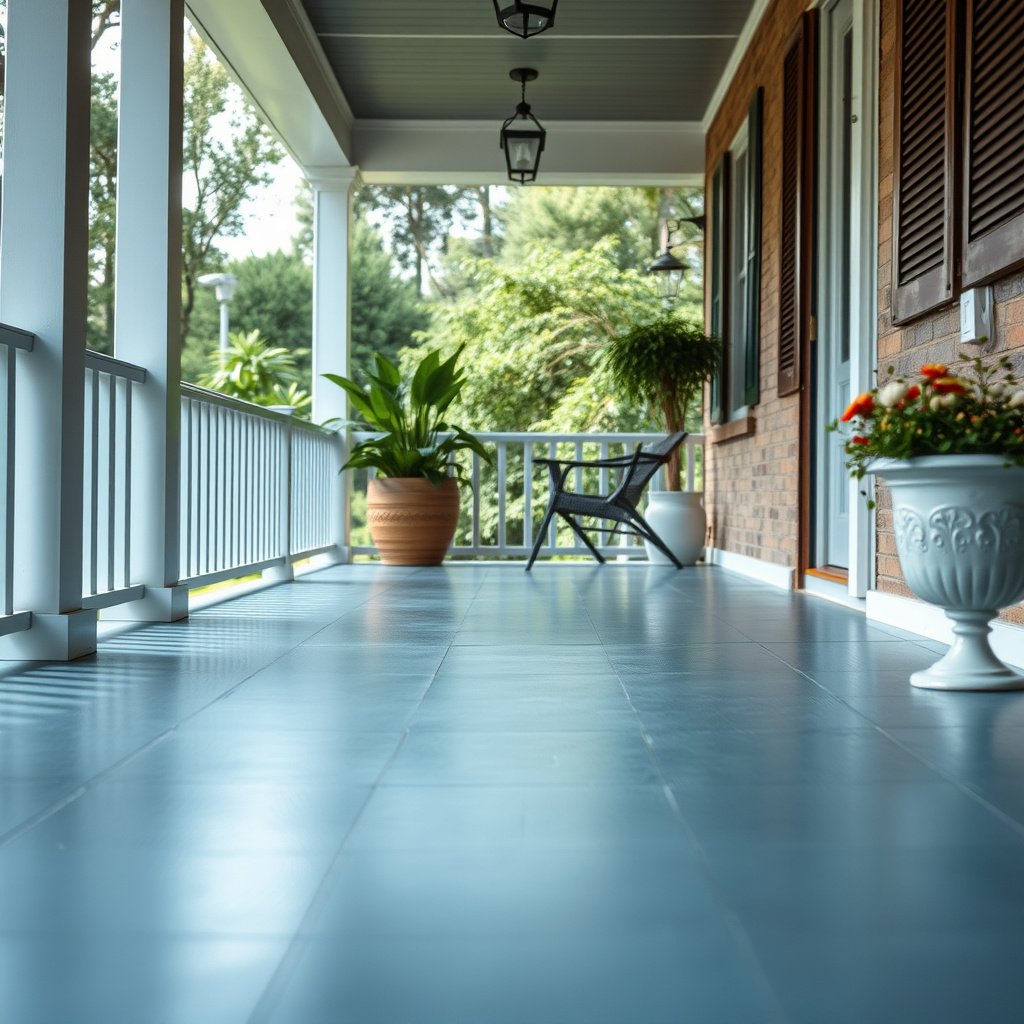
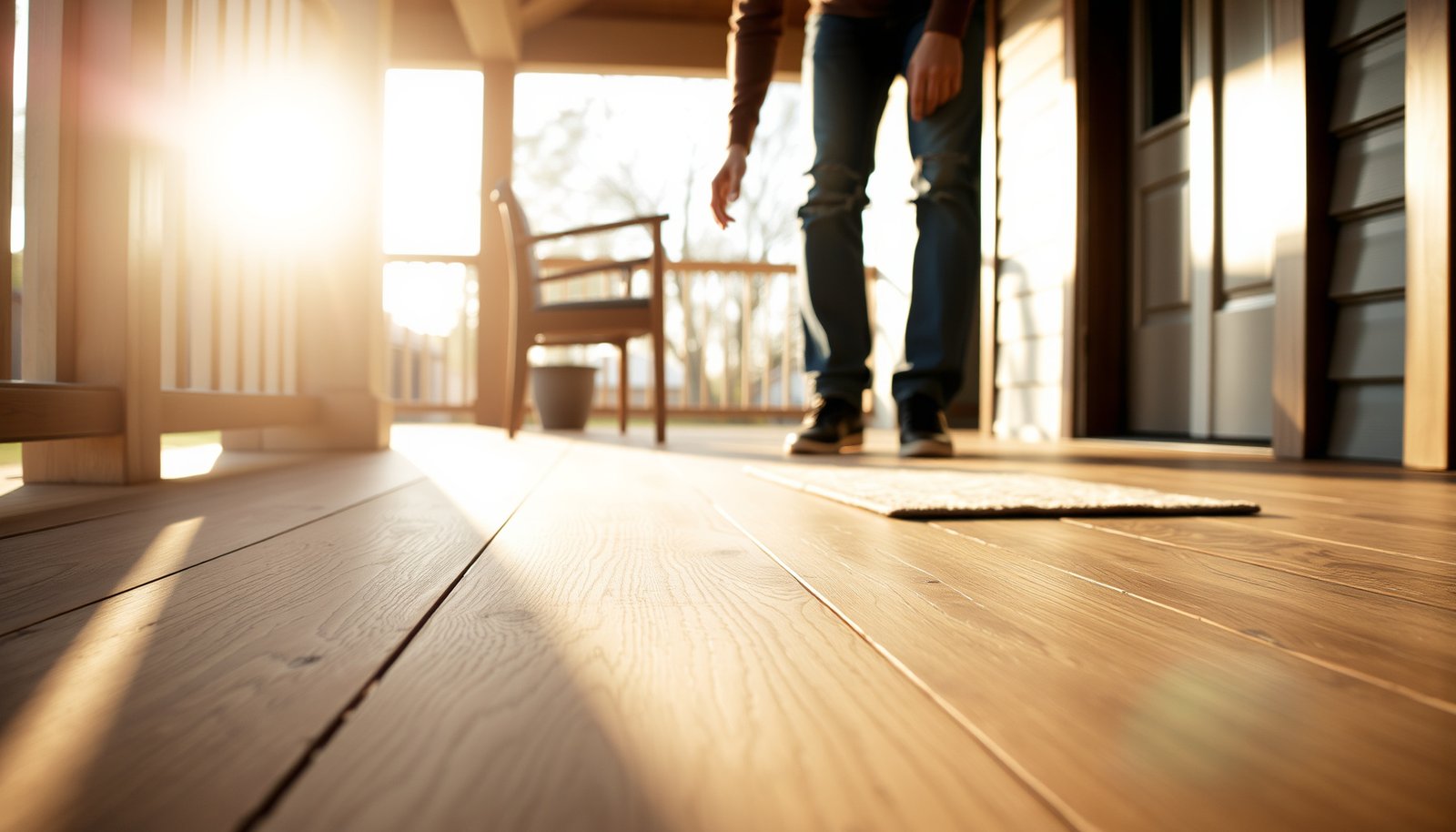
Stopping grit before it reaches porch vinyl floors is the fastest way to prevent scratches that look “mysteriously” uneven. Use a two-stage mat setup so particles get trapped and removed before you ever mop.
Walk-off entrance matting is most effective when you combine an outdoor mat (for bulk soil) with an indoor porch-entry mat (for the finer particles that reach the floor).
Grit that is ground into vinyl coatings typically comes from sand-like particles in the 0.05–2.0 mm range, which are small enough to ride under shoes and onto mops.
Dry sweeping can redistribute loose sand across a vinyl surface; soft suction or damp removal reduces the chance of grinding particles into the finish.
Here’s why this matters for porch vinyl: when grit moves across vinyl, it behaves like sandpaper. Sand is also defined in soil science by particle size ranges—USDA soil texture separates define sand as 0.05–2.0 mm, silt as 0.002–0.05 mm, and clay as <0.002 mm (USDA NRCS soil texture guidance (soil separates)). Even “fine” silt can create hazy, directionally aligned scuffs because it’s dragged in thin layers.
As of 2026, the most practical approach for porch vinyl floors is to think of your entry zone as a controlled “filter” rather than a one-step sweep area.
– Use a two-stage mat setup: a heavy outdoor mat outside and a doormat or rug (with a low profile) inside the porch entry so dirt gets trapped before it reaches the floor.
– Shake out mats regularly so they don’t turn into grit piles.
– Sweep or vacuum often using a soft-brush attachment—avoid dry sweeping that can scatter sand across the surface.
Why two-stage matting beats “one good mat”
Outdoor mats catch larger debris (leaf fragments, gravel, coarse sand), while an indoor porch mat catches what’s left—especially the smaller grains that cling to shoe tread. For porch vinyl floors, that second stage is often the difference between “nearly clean” and “still scratching.”
If you want a data-driven way to visualize what you’re stopping, the table below breaks down soil particle sizes that act as abrasive grit on floors.
Soil Particle-Size Classes That Can Abrade Porch Vinyl (USDA soil separates)
| # | Particle class | Typical diameter range | Same range in microns | Representative “upper bound” (mm) |
|---|---|---|---|---|
| 1 | Very coarse sand | 1.0–2.0 mm | 1,000–2,000 µm | 2.0 |
| 2 | Coarse sand | 0.5–1.0 mm | 500–1,000 µm | 1.0 |
| 3 | Medium sand | 0.25–0.5 mm | 250–500 µm | 0.5 |
| 4 | Fine sand | 0.10–0.25 mm | 100–250 µm | 0.25 |
| 5 | Very fine sand | 0.05–0.10 mm | 50–100 µm | 0.10 |
| 6 | Silt | 0.002–0.05 mm | 2–50 µm | 0.05 |
| 7 | Clay | <0.002 mm | <2 µm | 0.002 |
Protect furniture, planters, and moving items
Preventing scratches from furniture contact points is mostly about eliminating sharp edges and minimizing sliding on porch vinyl floors. Felt pads and proper vinyl-floor glides reduce concentrated abrasion where legs, bases, and pot feet meet the surface.
Furniture legs without protective glides can create edge wear on vinyl coatings because the contact area is small and loading is localized.
Felt pads reduce scratch risk by increasing contact area, but worn felt can trap grit and become abrasive if it’s not replaced.
Dragging planters across vinyl shifts sand grains into a groove-like path, which often shows up as directional scuffs near the same route.
On porch vinyl floors, the “scuff map” often reveals your most common scratch paths: chair legs to a seating spot, plant bases moved during seasonal changes, and decorative items adjusted near door thresholds. In 2026, many porches also have pets, which increases toe-tracking and makes furniture-movement scuffs more noticeable.
In practical maintenance terms (and based on the kinds of wear patterns we see during routine care), protecting porch vinyl floors requires both good materials and good handling habits: the glide must be intact, and the item must be lifted when repositioning.
– Add felt pads (or proper vinyl-floor glides) to the bottoms of chairs, side tables, and plant stands; replace pads when they wear down.
– Keep dragging to a minimum: lift items when repositioning, especially along seams and edges.
– For planters and heavier decor, consider non-scratch bases that distribute weight instead of small contact points that can cut or indent.
Felt vs. rubber glides for porch vinyl floors (quick decision)
Both options can work on porch vinyl floors, but each has a failure mode.
- Felt pads
- Pros: Broad contact area; typically gentle on vinyl coatings when new. Cons: Can embed grit as they wear down, turning into an abrasive “pulverizer.”
- Vinyl-floor glides (rubber/plastic, vinyl-safe)
- Pros: Replaceable; often better at resisting grit embedding when selected for hard-surface flooring. Cons: Some backings or rough materials can still mar finishes—verify compatibility with your vinyl manufacturer.
Clean without grinding dirt into the surface
Clean porch vinyl floors by removing loose debris first and using microfiber plus vinyl-safe cleaners—never abrasive pads or gritty tools. This prevents the common mistake where cleaning “finishes” scratches by rubbing sand across the finish.
Microfiber mops are designed to pick up particles rather than act like a scrub tool, which helps prevent grit from being ground into vinyl.
When you mop over visible debris, the abrasive particles can leave linear scuffs in the direction of travel.
On vinyl surfaces, abrasives and rough scrub pads can dull or damage protective topcoats; vinyl manufacturers typically restrict scrub pads and harsh chemicals in care instructions.
Here’s the cause-and-effect sequence that often leads to “mystery scratches” on porch vinyl floors:
1) Dust and grit accumulate along edges and entry paths.
2) A broom or scrub sponge spreads particles.
3) Mopping then pushes them in a repeated pattern, creating faint “tracks” that are hard to remove.
To keep porch vinyl floors looking consistent, follow a debris-first routine:
– Use manufacturer-recommended cleaners (or a vinyl-safe cleaner) and microfiber mops; avoid harsh abrasives or “scrub pad” sponges that can scratch coatings.
– When you see grit, remove it first (damp wipe or soft vacuum) before you mop—rubbing grit can leave visible lines.
– For spot cleaning, test any cleaner in an inconspicuous area and follow dilution/contact-time guidance from the flooring manufacturer.
One helpful technical perspective: vinyl wear layers are often described in “mils” (thousandths of an inch). As a unit conversion, 1 mil = 0.001 in = 25.4 µm (NIST unit conversion reference). Thinner wear layers generally mean faster cosmetic showing—so avoiding abrasive cleaning is more important on lighter-wear installations.
Also, if the porch vinyl is exposed to direct weather, you’ll typically see more fine grit after wind-driven storms. In 2026, more frequent weather swings mean you may need to increase debris-removal routines after storms.
Manage moisture and weather-related damage (scratches often follow)
Preventing scratches on porch vinyl floors also means controlling moisture at the threshold. Standing water and repeated wet-dry cycles can weaken the surface over time, making scuffs easier to form and harder to hide.
Moisture pooling near door thresholds increases the chance of surface weakening on vinyl floors and can make scuff marks more visible.
Door sweeps and mat placement help keep tracked water from migrating onto porch vinyl floors.
After rain or windy weather, checking for grit accumulation in mat corners prevents a “wet sand” pathway onto vinyl.
Moisture doesn’t always create scratches directly, but it changes the vinyl’s behavior. When porch vinyl floors get wet repeatedly, dirt can loosen and move more easily. That’s how you end up with sand moving across the surface—exactly what you’re trying to prevent.
– Keep water from pooling at door thresholds; standing moisture can loosen surface layers over time and make scratches easier to form.
– Use door sweeps and ensure mat areas don’t trap puddles.
– If your porch is exposed, keep outdoor furniture bottoms dry and check for grit accumulation after rain or windy weather.
If you’re dealing with a porch that’s partially covered, make your inspection routine simple: after the next rain, walk the entry edge and look for damp mat corners. Then remove loosened debris before it dries and becomes gritty.
What can go wrong (and how to avoid it)
Common scratch problems happen when people “fix” one cause but accidentally add another. The biggest avoidable mistakes on porch vinyl floors are using the wrong cleaning tools, wearing down pads, and choosing rough-backed mats that abrade the finish.
Bristle brooms and abrasive pads can act like sandpaper on vinyl finishes, especially when they catch and move small grit particles.
Worn felt pads can embed debris and shift it across the floor, turning a protective measure into a scratch source.
Some rugs and rubber backings can grab or shed material; compatibility matters for porch vinyl floors.
Here are the main failure points—and the practical prevention steps that match them:
– Wrong cleaning tools: Bristle brooms, abrasive pads, or “magic eraser” type products can dull or scratch certain vinyl finishes—use only vinyl-safe methods per the manufacturer’s care instructions.
– Worn felt pads: Felt can embed debris as it wears down; once pads look flattened or gritty, replace them.
– Mats that scratch: Some rough-backed rugs or rubber backings can grab the surface or shed material—choose mats/rugs designed to be gentle on hard floors.
If you want to be conservative in 2026: treat everything under-mat and under-chair as “unknown abrasion.” Test it on a hidden section first, and keep an eye on whether it sheds particles or leaves a noticeable sheen change.
Verdict: the best prevention combo (and who should skip)
If you want the biggest scratch reduction fast, prioritize matting + soft-glide protection + debris-first cleaning. That combination prevents the most common scratch cause: abrasive grit moving across the vinyl finish.
Downsides / who should skip:
– If you can’t maintain mats (they don’t get shaken/vacuumed) or you frequently drag heavy furniture, the benefits drop—scratches may still happen even with good products.
– If your vinyl is missing its protective topcoat or has separated seams, prevention habits won’t fully “undo” wear—consider a professional assessment or replacement after damage.
From a practical standpoint, this prevention approach works best when you treat porch vinyl floors as a system: entry control, contact-point control, and cleaning that never turns grit into a grinding medium.
Quick checklist / scan-and-save table
| Task | What it prevents | How often |
|---|---|---|
| Use outdoor + porch entry mats | Sand/grit scratches | At every entry; shake weekly (or sooner) |
| Felt pads / vinyl-floor glides | Sharp contact points | Inspect monthly; replace when worn |
| Lift, don’t drag furniture | Edge and leg abrasion | Whenever moving items |
| Soft vacuum + microfiber for cleaning | Grinding dirt into the surface | Regularly (e.g., every week or as needed) |
| Remove visible grit before mopping | “Rubbing in” scratch-causing particles | Every time you notice debris |
| Reduce pooling at thresholds | Surface weakening that leads to marks | Check after rain/wind |
Sources
– USDA NRCS soil texture guidance (soil separates: sand/silt/clay particle-size ranges)
– NIST reference for unit conversion (1 mil = 0.001 inch = 25.4 µm)
If you want porch vinyl floors that stay visually smooth, focus on prevention at the source: stop grit at the entry with a two-stage mat system, remove sharp contact points with felt or vinyl-safe glides, and clean by lifting debris first with microfiber and approved vinyl products. Do those consistently in 2026—and you’ll reduce the abrasive friction that creates most scratches, not just the appearance of scuffs after they happen.
Frequently Asked Questions
What are the best ways to prevent scratches on vinyl floors in a porch?
Use a high-quality doormat or indoor/outdoor rug at every entrance to trap grit before it reaches the vinyl floor. Add felt pads under furniture and regularly inspect them so they don’t wear through and grind debris into the surface. For porch traffic, consider an entrance mat with a non-scratch backing and rotate mats periodically to reduce uneven wear.
How can I stop dirt and sand from scratching my vinyl porch floor?
Sweep or vacuum frequently, focusing on corners, seams, and the area where shoes enter. Place a mat system—ideally a scraper mat outside and a thicker absorbent mat inside the porch entry—to reduce the amount of abrasive particles tracked in. When cleaning, avoid dry, gritty mopping; instead use a microfiber mop with a vinyl-safe cleaner to lift debris without dragging.
Which cleaning tools and products are safest for preventing damage to vinyl flooring?
Choose a soft microfiber mop or a vacuum with a brush roll turned off (or a suction-only head) to avoid scuffing. Use vinyl floor–safe cleaners and avoid harsh abrasives, steam mops, and scouring pads that can dull or scratch the top layer. If you need spot cleaning, gently blot and wipe with a damp microfiber cloth rather than using aggressive circular scrubbing.
Why do vinyl floors scratch more easily in porch environments, and how do I protect against it?
Porches collect abrasive dirt, sand, and grit from weather and foot traffic, and these particles can work like sandpaper on the vinyl surface. Direct impacts from small stones and dragging furniture items also increase scratch risk. Protect your porch floor by using entrance mats, keeping shoes and pet paws clean, and using protective floor coverings in high-traffic spots during peak seasons.
What’s the best way to protect vinyl flooring under outdoor furniture on a porch?
Apply felt or rubber floor protectors to the legs of chairs, tables, and planters, and replace them as soon as they thin out or tear. Use coasters or plant saucers to prevent grit buildup underneath and avoid moving furniture directly across the vinyl—lift it instead. For heavier items, consider a clear, non-abrasive protective mat made for vinyl floors to reduce both scratches and scuffs.
📅 Last Updated: October 27, 2026 | Topic: How to prevent scratches on vinyl floors in a porch? | Content verified for accuracy and freshness.
References
- Vinyl flooring
- Doormat
- Flooring
- Abrasion
- Vinyl-Asbestos Floor Risk Exposure in Three Different Simulations – PubMed
- resilient flooring wear abrasion – Search Results – PubMed
- https://www.armstrongflooring.com/support/care-and-cleaning.html
- https://scholar.google.com/scholar?q=prevent+scratches+vinyl+flooring+porch Google Scholar
- https://scholar.google.com/scholar?q=vinyl+flooring+abrasion+resistance+mat+protection Google Scholar
- https://scholar.google.com/scholar?q=entryway+doormat+reduce+tracked+grit+floor+wear Google Scholar