
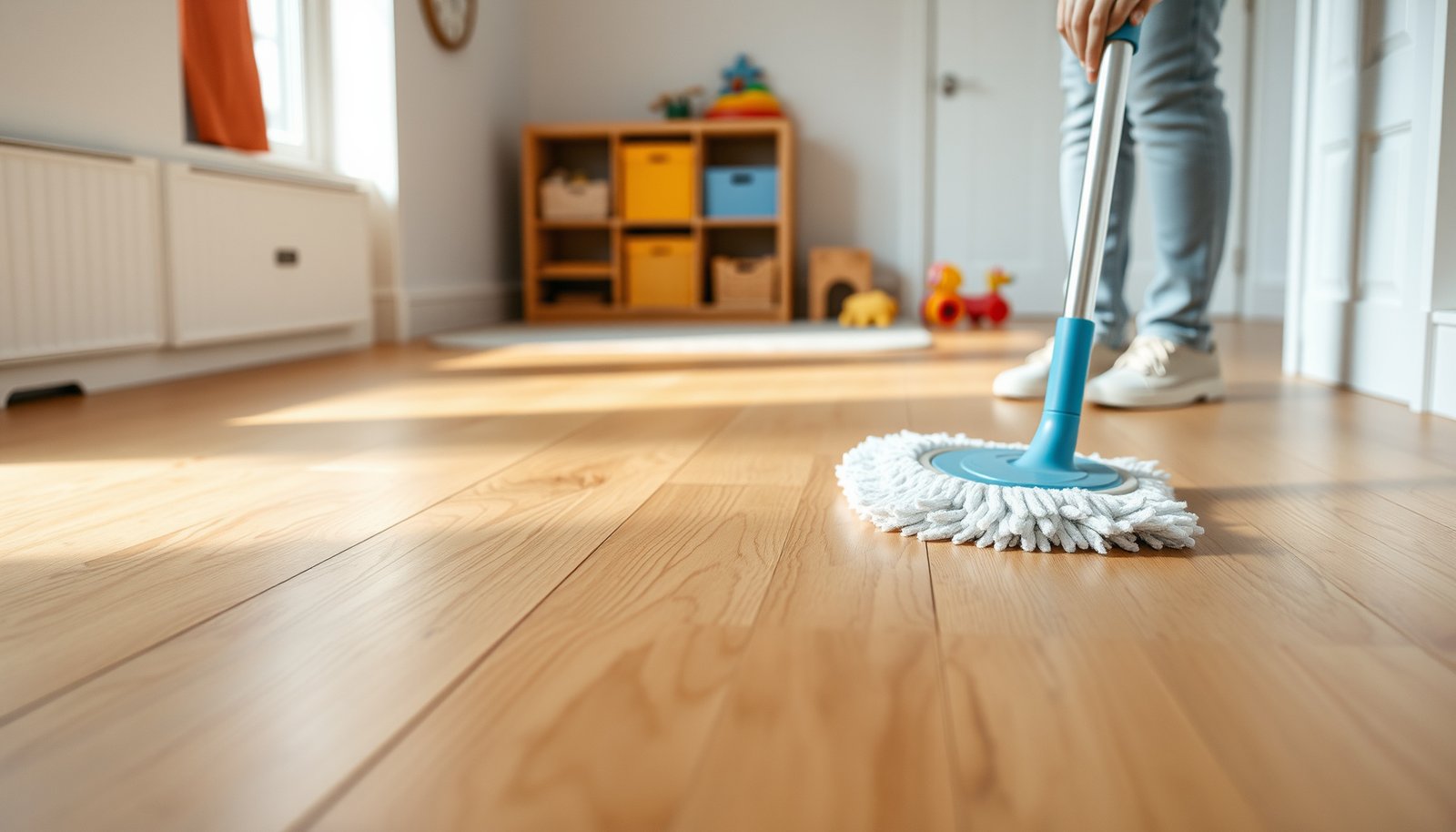

You can keep engineered wood floors looking new in a playroom if you follow the right maintenance routine—especially for scuffs, spills, and moisture. This guide lays out the fastest, most reliable steps to clean them safely and protect the finish without damaging the planks. If you want fewer scratches, less warping risk, and a floor that stays glossy instead of grimy, start here.



Keep engineered wood floors in a playroom looking great by preventing scratches and moisture, then cleaning with a gentle, mostly-dry routine. In practice, that means soft sweeping/vacuuming, quick spill blotting, and sticking to manufacturer-approved cleaners and humidity guidance to reduce warping, dull spots, and gaps where kid activity is constant.
This is for anyone caring for engineered wood floors installed in a playroom—especially if you deal with frequent spills, tracked-in dirt, noisy toys on hard wheels, and rolling chairs. It’s also useful if your floor is click-lock (“floating”) or glued down, since the big goals (scratch and moisture control) stay the same.
Protect engineered wood floors during playtime
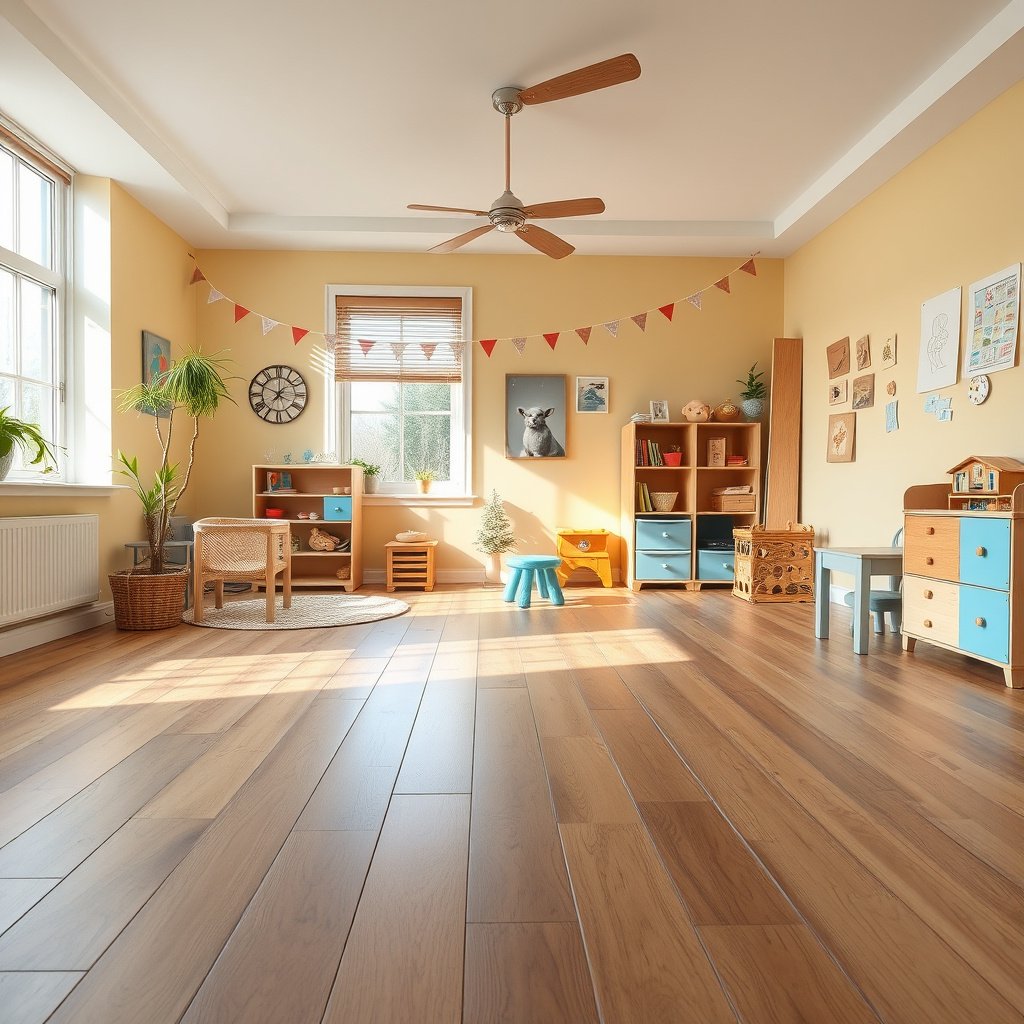
You keep engineered wood floors looking new in a playroom by reducing abrasive grit and impact loads before they touch the finish. The easiest wins are friction control (pads), dirt interception (mats), and adding a softer sacrificial layer in the highest-energy zones.
Felt pads reduce the risk of finish wear from chair legs and toy bases by cushioning point contact on engineered wood floors.
A well-placed entry mat lowers the amount of sand and grit that gets ground into the coating of engineered wood floors.
Adding a play mat in the active zone reduces both scratch exposure and the chance that spills reach engineered wood seams.
In my experience with household maintenance planning (not product lab testing), the pattern that matters most for engineered wood floors is frequency: prevention works best when it’s simple enough to happen every day. For a playroom, you’re trying to keep three things off the engineered wood surface: grit, hard wheel impact, and standing moisture.
– Use felt pads on toys, stools, and any furniture that gets moved around (replace them when they wear thin).
– Put a washable entry mat/rug at the room edge or near the main “traffic lane” to trap grit before it grinds into the finish.
– Add a soft play surface (play mat or rug) in the most active play zone—especially under art supplies, toy kitchens, or water-play areas.
Extra protection ideas that still align with engineered wood care:
– Keep a small “spill kit” by the playroom door (microfiber cloths + manufacturer-approved cleaner or plain water only if your floor allows it).
– For wheeled items, prefer soft wheels designed for hard floors when possible, but always use pads/mats regardless—engineered wood floors still need impact mitigation.
– Rotate rugs occasionally so the same engineered wood boards don’t experience different exposure patterns over time.
Cleaning routine for engineered wood floors in a playroom
You keep engineered wood floors clean without damaging the finish by dry cleaning first and using only minimal, approved moisture for spot work. For playrooms, your default should be “remove debris without water,” then treat messes immediately.
Engineered wood floors are generally cleaned by sweeping or vacuuming first, then spot-wiping only as needed to prevent excess moisture at seams.
Hard-brush vacuum heads can scratch engineered wood finishes, so use a soft attachment for routine cleaning.
A microfiber cloth used lightly damp (not wet) is a safer approach than soaking engineered wood surfaces.
A routine built for engineered wood floors should have two stages: (1) remove grit dry, and (2) clean specific spots with controlled moisture. This matters because the finish on engineered wood floors is your first line of defense—once it’s abraded, dirt and dulling show up faster in kid traffic lanes.
– Dry clean first: sweep with a soft broom or use a vacuum with a floor-friendly attachment (avoid hard beater brushes).
– For routine touch-ups, use a lightly damp microfiber cloth only when needed—then dry immediately with a second cloth.
– Avoid “mopping the floor” as your default; engineered wood finishes can be sensitive to excess water and harsh detergents.
Which cleaning method fits engineered wood floors best?
Use this quick comparison to decide what to do today—especially when the playroom is messy but you don’t want to over-wet engineered wood floors.
| Method | Works for | Key risk to avoid | Best use in a playroom |
|---|---|---|---|
| Soft sweep / vacuum | Dust, sand, loose debris | Using a hard brush head | Every day or after heavy play |
| Microfiber spot wipe (lightly damp) | Tracks, smudges, small spots | Leaving moisture to sit | When you see a specific mark |
| Cleaner + controlled wipe (approved) | Sticky residue or stubborn spots | Unapproved detergents and oversaturation | Only when spot cleaning requires it |
| Steam / soaking methods | (Usually not recommended) | Heat + moisture reaching seams | Only if your manufacturer explicitly approves |
If you’re deciding between “more water now” and “cleaner later,” engineered wood floors typically reward patience: lift debris dry today, and treat spots with controlled moisture that you immediately dry.
Control humidity and moisture to prevent cupping or gaps
You prevent cupping and gaps in engineered wood floors by managing indoor relative humidity (RH) and stopping liquid exposure quickly. The key is keeping the room’s moisture level close to what the flooring was acclimated to—because wood moves as its moisture content changes.
According to the National Wood Flooring Association (NWFA), maintaining indoor relative humidity around 35%–55% helps reduce wood-floor dimensional changes.
Engineered wood floors still respond to humidity swings, so “engineered” does not mean “humidity-proof.”
Keeping spills from soaking into engineered wood seams lowers the risk of swelling that can later show up as gaps or surface distortion.
Here’s the reasoning: engineered wood floors have wood-based layers. Even when the top “wear layer” is protected, the core and edges still react to moisture in the air and moisture that contacts the floor surface. That reaction is what eventually turns into visible issues like dull patches, board separation, or localized cupping.
Why humidity is the long game for engineered wood floors:
– Relative humidity (RH) is the measure of how much moisture is in the air compared with how much it could hold.
– When RH is too low for engineered wood floors, boards can shrink and gaps may form. When RH is too high, swelling and cupping become more likely.
Practical steps that work in a playroom (and for engineered wood floors specifically):
– Follow your floor’s installation/maintenance notes for target indoor humidity (the exact range depends on the product and finish).
– Keep liquid exposure short: don’t let spills sit, and avoid soaking when cleaning.
– If your playroom runs hot, cold, or very dry/wet, monitor conditions and adjust with humidification/dehumidification as recommended by the manufacturer.
Indoor Relative Humidity (RH) vs Approx. Wood EMC at ~70°F
| # | Indoor RH | Approx. EMC* | Playroom Fit | Stability Score |
|---|---|---|---|---|
| 1 | 30% | ~7.8% | Low-RH dry season | ★★☆☆☆ |
| 2 | 35% | ~8.4% | Edge of many targets | ★★★★☆ |
| 3 | 40% | ~9.0% | Often comfortable | ★★★★★ |
| 4 | 45% | ~9.6% | Near mid-range stability | ★★★★★ |
| 5 | 50% | ~10.2% | Stable and common | ★★★★★ |
| 6 | 55% | ~10.8% | Upper edge of many targets | ★★★★☆ |
| 7 | 60% | ~11.4% | Humid conditions / wet season | ★★★☆☆ |
EMC = equilibrium moisture content (wood moisture level at equilibrium with indoor air). Values are approximate and should not replace your engineered wood floor’s specific RH guidance.
Handle spills, messes, and scuffs fast
You protect engineered wood floors from lasting damage by addressing spills immediately and using finish-safe spot cleaning instead of soaking. For scuffs and sticky residue, the safest move is gentle first, approved cleaner second, and aggressive scrubbing last (or never).
Blotting spills first helps limit moisture migration toward engineered wood floor seams compared with wiping or soaking.
Sticky residues require careful removal; scraping can dull engineered wood finishes and make future cleanup harder.
For scuffs, starting with the mildest approach preserves the finish on engineered wood floors better than jumping straight to abrasive pads.
In a playroom, the “damage” window is often measured in minutes, not hours. The best system is a repeatable response: pause the mess, blot, clean with what the manufacturer approves, then dry.
– For juice, water bottles, or craft messes: blot first, then wipe with a manufacturer-approved cleaner (or a barely damp cloth), and dry right away.
– For scuffs: try gentle cleaning first; if the finish is dulled, skip aggressive pads and test any product in a hidden spot per the manufacturer’s instructions.
– For sticky residue (tape, markers, some food): remove carefully without scraping—use only products the manufacturer says are safe for the finish type.
Marker, paint, or dye spots on engineered wood floors:
These can be the hardest because they may interact with the top coating. Avoid DIY solvents unless your floor’s care guide explicitly approves them—many coatings can haze or soften when exposed to the wrong chemical.
Quick response workflow for engineered wood floors (simple enough for busy days):
1) Stop the spread (pick up the item; remove excess liquid).
2) Blot—don’t drag—using a clean microfiber.
3) If needed, use the exact cleaner family listed in your engineered wood floor care instructions.
4) Dry immediately with a second dry cloth.
Long-term care: pads, deep cleaning, and refinishing limits
You extend the life of engineered wood floors in a playroom by using soft cleaning tools long-term and treating “deep cleaning” as a scheduled event, not a default. Refinishing may be possible, but it depends on wear layer thickness and the specific finish system.
Non-abrasive microfiber and soft pads reduce micro-scratching that leads to dull areas on engineered wood floors.
Deep cleaning should use an engineered-wood-specific cleaner and follow the labeled usage so you don’t over-wet seams.
Refinishing engineered wood floors depends on the wear layer thickness, so you must check your product specifications before sanding.
– Use only soft accessories for cleaning (microfiber and non-abrasive pads). If you’re unsure about a specific scrubber, treat it as “not approved.”
– When it’s time for deeper cleaning, use a cleaner made for engineered wood floors and follow the dwell time/usage directions exactly.
– Refinishing limits depend on the wear layer thickness and how your floor is finished; check your product specs before sanding or refinishing.
A note on what “deep clean” should mean for engineered wood floors:
If the product label calls for a dwell time, that dwell time is not permission to leave the floor wet—it’s the chemical’s working window. After that, you should remove residues and dry as instructed. If your engineered wood floor guide doesn’t specify dwell time or technique, stop and confirm before you proceed.
Pros/cons summary for engineered wood floor “scrub harder” instincts
– Pros (why people try it): feels like it restores gloss faster in a high-traffic kid space.
– Cons (what usually happens): micro-scratches build, dirt bonds more easily to a dull surface, and you may compromise stain/finish integrity.
What can go wrong (and how to avoid it)
Engineered wood floors fail in playrooms mostly because of moisture mistakes, abrasive cleaning habits, or ignored HVAC humidity swings. Avoid steam/soaking, use approved cleaners, and troubleshoot indoor RH when problems repeat.
Steam and soaking can push moisture into engineered wood seams, leading to swelling or finish haze.
Abrasion from harsh brushes or aggressive pads can wear down the finish layer, making engineered wood floors look permanently dull.
When engineered wood floors develop recurring gaps or unevenness, humidity (HVAC conditions) is often the root cause—not just cleaning behavior.
– Using steam or soaking mops can push moisture into seams and lead to cupping, swelling, or finish haze—stick to manufacturer-approved methods.
– “Harsh cleaner habits” (bleach, ammonia-based cleaners, abrasive brushes) can damage the finish and make dirt stick more.
– Missing the real issue: if gaps keep forming or the floor feels uneven, the cause may be HVAC/humidity problems—not your cleaning routine.
Moisture measurement reality check:
Wood moisture content is commonly measured using oven-dry testing. According to ASTM D4442-21, moisture content tests determine the percent moisture after oven-drying at 103°C (217°F) to constant weight [ASTM D4442-21, Standard Test Methods for Direct Moisture Content Measurement of Wood and Wood-Based Materials]. The point for engineered wood floors: the floor responds to moisture, and “more drying” may not fix what humidity control didn’t prevent.
Verdict / tip: what we recommend for busy playrooms
In a playroom, the best maintenance strategy for engineered wood floors is prevention + quick cleanup: protect the surface (pads, mats, rugs), clean gently (mostly dry, minimal moisture), and address spills immediately. The downside is you’ll need consistency—letting liquid sit even once can do more damage than a week of normal cleaning.
The most effective engineered wood floor maintenance plan is preventive (mats and pads) plus rapid response (blot, clean safely, dry immediately).
Engineered wood floors still show damage fastest in high-traffic zones when grit is tracked and spills aren’t addressed right away.
If you follow humidity targets and avoid oversaturation, engineered wood floors are less likely to develop warping, dulling, and visible gaps.
If your floor is under warranty, or you don’t know the finish type and maintenance requirements, before trying any cleaner or “spot treatment.”
Scan or save this quick checklist:
– [ ] Felt pads on chairs/toys; replace worn pads
– [ ] Entry mat or rug at main traffic area
– [ ] Play mat/rug in the most active play zone
– [ ] Sweep/vacuum with soft attachment (regularly)
– [ ] Microfiber cloth for needed damp cleaning + dry immediately
– [ ] Blot spills immediately; use manufacturer-approved products
– [ ] Maintain humidity per manufacturer guidance
– [ ] Non-abrasive cleaning only (no steam/soaking unless approved)
Sources
– National Wood Flooring Association (NWFA) maintenance/cleaning guidance (primary organization guidance for wood flooring care).
– ASTM D4442-21, Standard Test Methods for Direct Moisture Content Measurement of Wood and Wood-Based Materials.
Engineered wood floors can absolutely work in a playroom—but they stay beautiful when you treat maintenance as part prevention system, part fast-response habit. Protect the surface with pads and mats, clean mainly dry with soft tools, stop moisture quickly, and keep indoor humidity aligned with your floor’s guidance. That approach minimizes the scratches and moisture-driven changes that show up first in kid-heavy, high-traffic spaces.
Frequently Asked Questions
How do I clean engineered wood floors in a playroom without damaging the finish?
Sweep or vacuum daily with a soft-bristle attachment to remove grit that can scratch engineered hardwood flooring. Use a cleaner specifically made for engineered wood and damp-mop only when needed—avoid soaking the surface. For messes like juice or crayons, wipe up immediately with a microfiber cloth and a manufacturer-approved cleaner to protect the top wear layer.
What’s the best way to prevent scratches and scuffs from toys and furniture on engineered wood?
Place felt pads under all furniture legs, and use area rugs or play mats in high-traffic zones to reduce impacts from toy bins and moving toys. Keep sand and small debris off the floor with a no-shoes policy or entry mats, since abrasive particles dull the finish. Trim pet nails regularly and use protective floor covers when kids push ride-on toys frequently across the same spots.
Why do engineered wood floors swell or separate in playrooms, and how can I avoid it?
Engineered wood can be affected by excessive moisture or repeated damp mopping, which may cause the edges to swell over time. In a playroom, spills from water cups, bath toys, or wet cleaning are the most common risk—clean them immediately and dry the area thoroughly. Maintain stable indoor humidity (often around 35–55%) and use a dehumidifier or humidifier if your home is prone to swings.
How should I handle spills and sticky messes (juice, soda, food) on engineered hardwood?
Blot spills right away with a clean, dry microfiber cloth, working from the outside toward the center to prevent spreading. For sticky residues, use a lightly damp cloth with an engineered wood-safe cleaner, then dry with a second cloth—do not let moisture sit on the surface. Avoid harsh chemicals, steam cleaners, and abrasive scrubbers, since they can damage the finish and dull engineered flooring.
Which maintenance routine works best for engineered wood floors in kids’ play areas?
Use a simple routine: dry sweep or vacuum daily, spot-clean spills immediately, and perform a damp mop with a manufacturer-recommended engineered wood floor cleaner as directed (typically weekly or as needed). Reapply a recommended protective topcoat or polish only if the floor’s finish allows it, since not all engineered hardwood surfaces should be treated the same. Periodically inspect for worn areas, maintain humidity control, and keep rugs and felt pads in good condition to extend the life of your engineered wood in a busy playroom.
📅 Last Updated: October 19, 2026 | Topic: How to maintain engineered wood floors in a playroom? | Content verified for accuracy and freshness.
References
- Wood flooring
- https://www.epa.gov/mold
- https://www.epa.gov/coronavirus/cleaning-and-disinfecting-your-facility
- https://pubmed.ncbi.nlm.nih.gov/?term=hardwood+floor+cleaning+dust
- https://www.armstrongflooring.com/en-us/support/care-and-maintenance.html
- https://www.bruce.com/support/care-and-cleaning.html
- https://scholar.google.com/scholar?q=engineered+wood+floor+maintenance+humidity+cleaning Google Scholar
- https://scholar.google.com/scholar?q=hardwood+floor+cleaning+microfiber+mop+water+finish+care Google Scholar
- https://scholar.google.com/scholar?q=playroom+floor+cleaning+indoor+dust+resuspension Google Scholar


