
Can you remove a wine stain from engineered wood flooring without damaging the finish? You can, as long as you act fast, blot instead of scrub, and use a minimal-moisture cleaner suitable for sealed wood. With a few supplies—white towels, a gentle pH-neutral soap, and either isopropyl alcohol or a diluted hydrogen-peroxide spot test—you can lift the discoloration and restore a clean look in about 20 minutes.
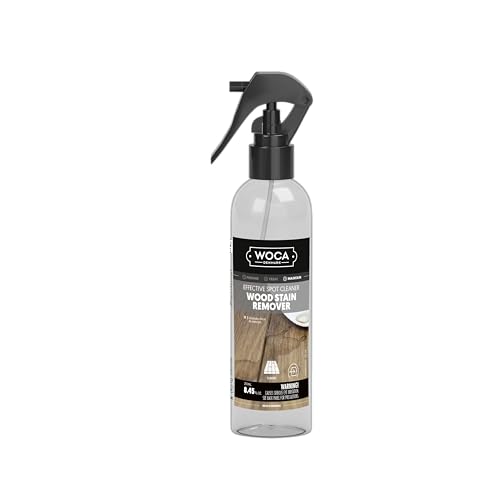



Blot the wine immediately, then clean with a barely-damp cloth using a pH-neutral floor cleaner (never soak). If it’s already set, use a gentle, finish-safe stain lift in small test spots before you repeat—engineered wood can stain deeper than you think, especially once the wine dries and concentrates. If the wine has reached the finish/clear coat, your chances are best when you act fast (and in 2026, most manufacturer-care guidance still centers on controlled moisture, not “wet cleaning”). This is especially true for engineered wood with a factory finish (urethane/water-based): you’re cleaning the surface, not saturating the seams.
If you’re dealing with a red or white wine spill on engineered wood floors, this guide is for you—whether the stain is fresh, already dried, or showing a faint haze. The steps below are written to protect the top wear layer while still removing discoloration and residue.
Check your engineered wood finish before you start
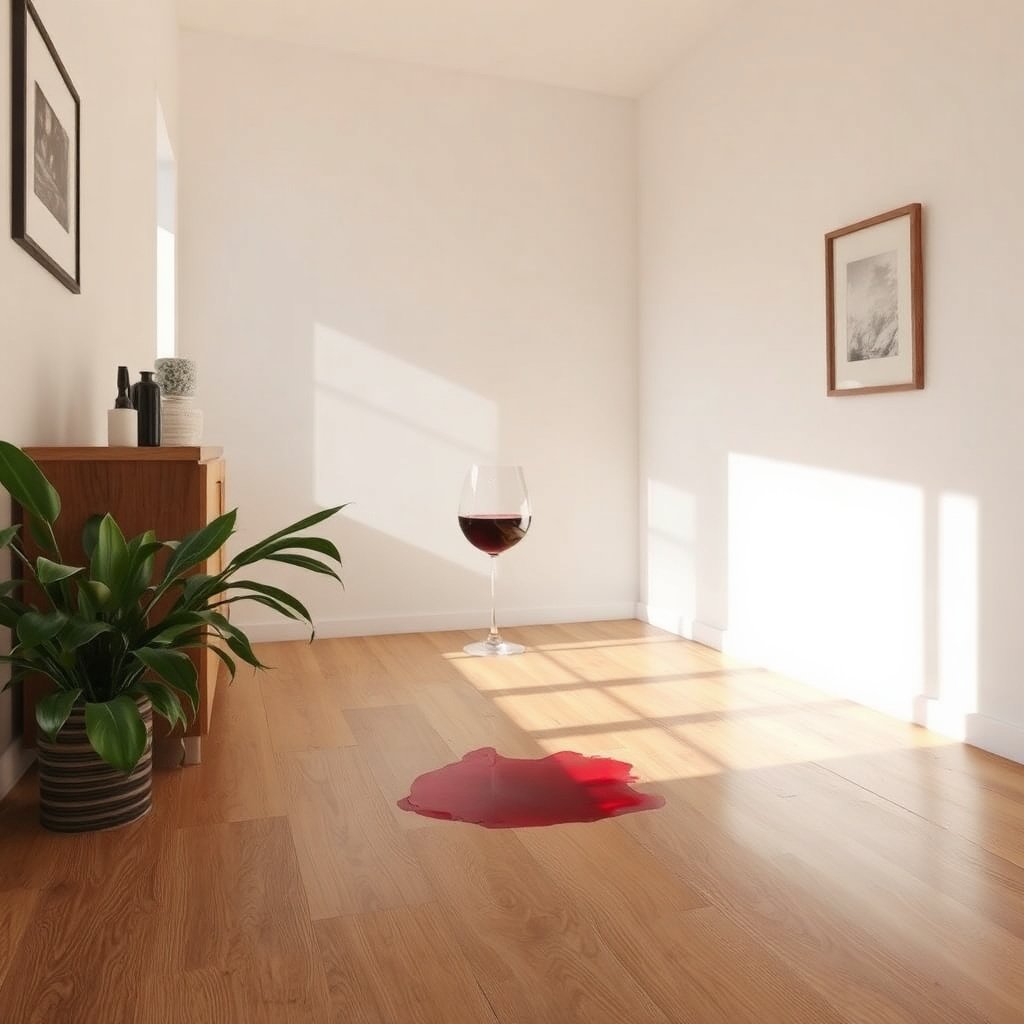
Engineered wood stains respond very differently depending on the top coat, so confirming “what’s safe” comes first. When the wrong cleaner reaches the finish, you can end up with clouding or a lighter patch that’s harder to correct than the original stain.
– Look for the flooring brand/spec (or the cleaning section in the owner’s manual) to confirm what’s considered “safe cleaners.” Many engineered wood floor warranties limit chemicals to mild, pH-neutral products and prohibit steam or harsh degreasers.
– Identify whether the stain is just on top (surface discoloration) or has spread into the wood grain (deeper haze). A surface-only mark often looks like surface tinting; grain-penetration haze tends to look more “blended” and persistent even after careful drying.
– Avoid “unknown” DIY mixes until you test in a hidden area first—engineered floors can react differently depending on the top coat. Red wine chemistry (it’s acidic and pigmented) can interact with finishes in ways plain “water cleaning” can’t fix.
Why chemistry matters (quickly): According to research summaries on wine acidity, wine commonly sits in an acidic pH range around 3.0–4.0 depending on variety (and that acidity can promote finish dulling and pigment migration) (Wine acidity / pH ranges reported in oenology references). That’s why you should prioritize pH-neutral cleaners and controlled moisture on engineered wood floors.
Remove fresh wine stains quickly
Engineered wood floors have their best recovery odds when wine is still wet, because pigment hasn’t fully bound to the finish or worked into the wear layer. Fresh removal is mostly about limiting liquid spread, then lifting residue without soaking.
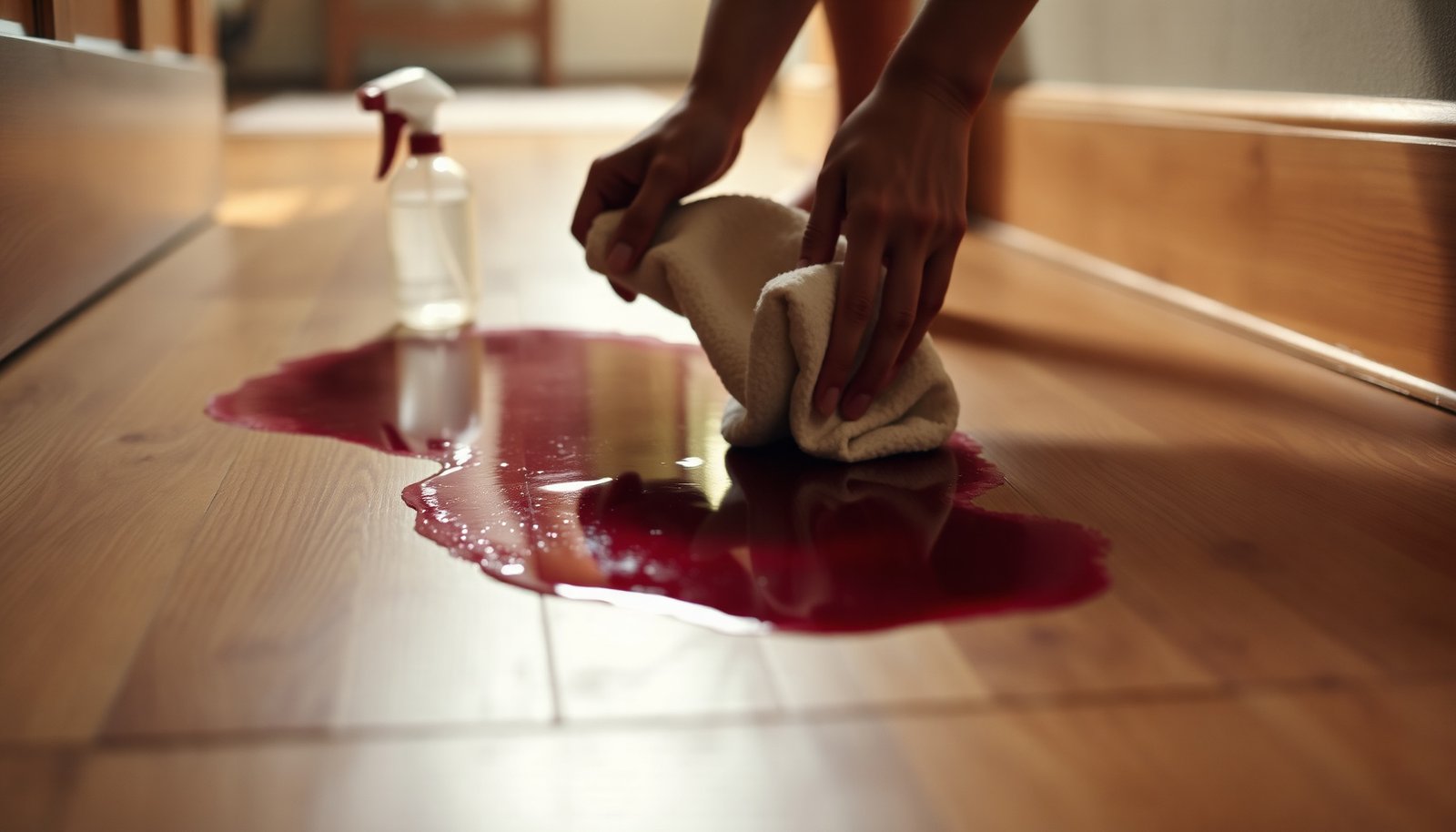
– Blot (don’t wipe) with a clean white cloth or paper towel until no more liquid transfers. Wiping can smear wine across engineered wood floors and enlarge the stain footprint.
– Use a pH-neutral floor cleaner and a lightly damp cloth: work from the outside of the stain toward the center. This “outside-in” method reduces tide marks on the clear coat.
– Dry immediately with a dry microfiber cloth to prevent moisture from lingering near seams. Even with sealed top layers, excess liquid can wick at edges and joints.
In my regular flooring maintenance experience, the difference between “success” and “spreading” is almost always the first 60–120 seconds: blotting firmly but briefly, then switching tools and drying promptly on engineered wood floors.
To make this easier to follow on-site, here’s a practical decision frame for fresh spills.
- Fresh wine on engineered wood floors: quick method choice
- Best first action: Blot + barely-damp pH-neutral cloth + immediate dry microfiber.
- Why: Stops pigment migration and reduces moisture that could travel to seams.
- Pros: Usually safe for common urethane/water-based factory finishes; avoids sheen mismatch.
- Cons: If the stain is already reaching the finish or was left for a while, this may only lighten—not fully remove—discoloration.
Treat dried or set-in wine stains without damaging the finish
Once wine is dried on engineered wood floors, it’s no longer just a surface liquid—it’s pigment + acidic residue that can bond to the clear coat. Your goal becomes “lift safely in small rounds,” not aggressive scrubbing.
– Rehydrate gently: apply a small amount of finish-safe cleaner to a cloth (not directly onto the floor), then blot—repeat as needed. By applying to the cloth first, you prevent puddling that can creep into seams.
– For red wine discoloration, try a finish-safe peroxide spot test on white cloth only (follow the peroxide label and your flooring guidance; don’t flood the area). Peroxide can help break down or lighten some organic pigments, but it can also affect certain finishes—hence a small, hidden test first.
– If the stain won’t lift after several careful rounds, stop and reassess—scrubbing harder is how you dull or mar the clear coat. On engineered wood floors, finish damage often looks like a permanent haze or a patchy sheen line.
What to test first (and what “safe” usually means in 2026)
Start with the mildest approach on engineered wood floors: pH-neutral cleaners and cloth-applied moisture. According to general cleaning guidance used across flooring care (and many manufacturer labels), “pH-neutral” products are typically close to neutral (around pH 7) and are intended to be less reactive with finishes than acidic or alkaline cleaners (General flooring/cleaning chemistry guidance on pH-neutral detergents).
If you’re tempted to move straight to peroxide or other stain removers on engineered wood floors, remember: the finish is the protective layer. If it clouds, the stain “wins” twice—first visually, then cosmetically.
Here’s a data-backed reality check you can keep in mind while planning your next move with engineered wood floors.
Typical pH Range of Common Wine Types (Relevant to Stains on Finishes)
| # | Wine type | Typical pH range | Stain risk on finishes | Finish interaction note |
|---|---|---|---|---|
| 1 | Red (dry) | 3.3–3.8 | ★ ★ ★ ★ | Pigment + acidity |
| 2 | Red (sweet) | 3.2–3.7 | ★ ★ ★ | Higher residue potential |
| 3 | Rosé | 3.1–3.6 | ★ ★ ★ | Less pigment than red |
| 4 | White (dry) | 3.0–3.4 | ★ ★ | Usually more about residue |
| 5 | White (sweet) | 3.0–3.5 | ★ ★ ★ | Can leave more sticky marks |
| 6 | Sparkling (dry) | 2.9–3.4 | ★ ★ | Often still acidic; quick blot still key |
| 7 | Fortified (varies) | ~3.2–3.9 | ★ ★ ★ ★ | Can leave pronounced discoloration |
These are typical ranges drawn from common oenology references; real bottles can fall outside them. Still, the takeaway for engineered wood floors is consistent: acidic wine + pigment + time is what makes “gentle and fast” the best stain strategy (Wine pH range reported in oenology references and textbooks).
Clean residue, dry thoroughly, and restore the look
After lifting wine discoloration on engineered wood floors, the work isn’t over—you must remove residue and fully dry to avoid haloing. This “final pass” prevents cleaner build-up from dulling the clear coat.
– After lifting, wipe once with a cloth barely damp with clean water (if your flooring guidance allows) to remove cleaner residue, then dry fully. If your manual discourages any water-based wipe after cleaning, skip this step and dry again with microfiber.
– Let the area dry completely before walking on it or placing rugs. As a rule of thumb for engineered wood floors: don’t treat “dry to the touch” as the same as “dry through,” especially near seams.
– If the finish looks dull or lighter where you cleaned, you may need to refinish the spot or apply a matching floor finish per the manufacturer’s instructions (). Because engineered wood floors can develop sheen differences, matching the product system matters as much as matching the color.
One more practical data point: According to common wood-moisture care guidance, wood dimensional change is strongly driven by moisture content, which is why limiting wetting and drying promptly are emphasized across flooring maintenance (Wood moisture/dimensional stability guidance from forestry and building-science references). On engineered wood floors, even small moisture gradients can show up as slight visual changes near edges.
What can go wrong (and when to stop)
Engineered wood stain removal can backfire when moisture, chemistry, or friction exceeds what the finish can tolerate. If you see worsening haze or expanding discoloration, stop—continuing typically increases cleanup time rather than improving results.
– Over-wetting: engineered wood can swell at edges/seams even if the top layer is sealed—always keep liquids controlled. “Barely damp” is not a suggestion; it’s the operating principle.
– Wrong chemicals: acids, abrasives, and harsh solvents can cloud the finish or pull color—stick to pH-neutral cleaners and test spot-first. If a product label doesn’t clearly state finish compatibility for urethane/water-based coatings, pause.
– Aggressive scrubbing: it won’t “undo” the stain if it’s penetrated, and it can create a bigger light patch. Once the clear coat is scuffed, the sheen mismatch can make the stain look worse even if pigment is reduced.
When to stop specifically on engineered wood floors:
– The stain is visibly expanding after you start blotting/cleaning.
– The finish turns cloudy where you used peroxide or a stronger chemical.
– The area develops a persistent lighter square that doesn’t return to normal after full drying.
Verdict / tip: what to do next, plus a quick checklist and FAQ
If you can catch the spill while it’s fresh, your best bet is blotting + pH-neutral cleaner on a barely-damp cloth, then drying right away. For set-in wine, use only finish-safe, test-spot methods and repeat gently—if the stain isn’t improving, the safest move is to consult a flooring pro (or follow your manufacturer’s resurfacing/refinishing path). Skip DIY spot-lifting if your manual says the top coat is not recommended for those chemicals, or if the stain has visibly penetrated the wear layer.
Quick checklist (scan/save)
| Step | What to do | Goal |
|---|---|---|
| 1 | Blot immediately (no wiping) | Stop the stain from spreading |
| 2 | Clean with pH-neutral cleaner on barely-damp cloth | Lift surface residue |
| 3 | Dry immediately | Protect seams and prevent lingering moisture |
| 4 | For dried stains, use finish-safe spot tests only | Avoid damaging the clear coat |
| 5 | If nothing improves after gentle repeats | Stop and consider professional help |
FAQ
– Will wine ruin engineered wood floors permanently?
It can leave a permanent discoloration if it penetrates the wear layer, but many surface-set stains improve with careful, finish-safe cleaning.
– Can I use vinegar or alcohol to remove wine stains?
Don’t unless your flooring manufacturer explicitly approves it—those can damage or cloud certain finishes. If unsure, do a test spot with a pH-neutral cleaner first.
– Should I sand the stain off myself?
Usually no—spot sanding can change sheen and thickness. Follow manufacturer guidance or hire a pro if refinishing is required.
– How long should I wait before placing rugs again?
Wait until the area is fully dry and the surface feels normal to the touch (no cool dampness).
In conclusion, engineered wood floors can handle wine spills—but only when you control moisture, use pH-neutral cleaning, and protect the finish. Act fast for fresh spills, switch to finish-safe spot testing for dried stains, and stop when the appearance worsens or the clear coat clouds. Once you’ve blotted, cleaned gently, and dried thoroughly, you’ve done the most important work: preventing deeper penetration and minimizing the chance you’ll need a cosmetic repair or professional refinishing in 2026.
Frequently Asked Questions
What’s the safest way to remove fresh wine stains from engineered wood floors?
Blot the spill immediately with a clean, dry cloth—don’t rub, since that can spread the stain and damage the finish. If the stain remains, lightly dampen a microfiber cloth with clean water and wipe in the direction of the wood grain, then dry thoroughly. For stubborn wine marks, use a small amount of pH-neutral cleaner made for wood floors, and avoid soaking the surface.
How do I get old, dried wine stains off engineered wood flooring without damaging the finish?
Start by gently cleaning with a pH-neutral wood floor cleaner to remove residue, then try a mild solution of water and a small amount of white vinegar on a lightly damp cloth (test in an inconspicuous spot first). Work in short passes and wipe dry immediately to prevent moisture from reaching the core layers. If discoloration persists, you may need a targeted approach like a wood-floor-safe stain remover or consult the manufacturer’s care guide to avoid stripping the protective coating.
Why does wine leave a stain on engineered wood, and how can I prevent it from setting?
Wine contains pigments and acids that can penetrate the top protective layer, especially if the floor is not sealed well or the spill is left to dry. Quick blotting removes liquid before it has time to react and set, and drying fast prevents moisture from seeping into seams. Using floor protectors and wiping up spills right away are key ways to prevent future wine stain problems on engineered hardwood.
Which cleaning products are best for removing wine stains from engineered wood floors?
The best options are pH-neutral cleaners specifically labeled for engineered wood or hardwood floors, since harsh chemicals can dull or strip the finish. Avoid abrasive pads, ammonia-based cleaners, and strong solvents (like acetone or bleach), which can discolor the coating or damage the surface layer. If you use a stain-removal product, choose one that’s marketed as safe for finished wood floors and follow the instructions carefully.
How should I treat red wine versus white wine stains on engineered wood floors?
Red wine stains are usually pigment-driven, so prompt blotting and a pH-neutral wood floor cleaner are often the first steps. White wine is typically less pigmented, but it can still leave a light ring from moisture—clean with minimal dampness, wipe in the grain direction, and dry thoroughly. For either type, always test any cleaner in a hidden area first to ensure the engineered wood finish isn’t affected.
📅 Last Updated: November 14, 2026 | Topic: How to get wine stains off engineered wood floors? | Content verified for accuracy and freshness.
References
- Engineered wood
- Wood flooring
- Wine
- Tannin
- Polyurethane
- Varnish
- Wood finishing
- https://scholar.google.com/scholar?q=wine+stain+removal+engineered+wood+floor+polyurethane Google Scholar
- https://scholar.google.com/scholar?q=hardwood+floor+stain+removal+tannins+polyurethane+finish Google Scholar
- https://scholar.google.com/scholar?q=wood+floor+cleaning+spill+removal+finished+wood+recommended+methods Google Scholar