
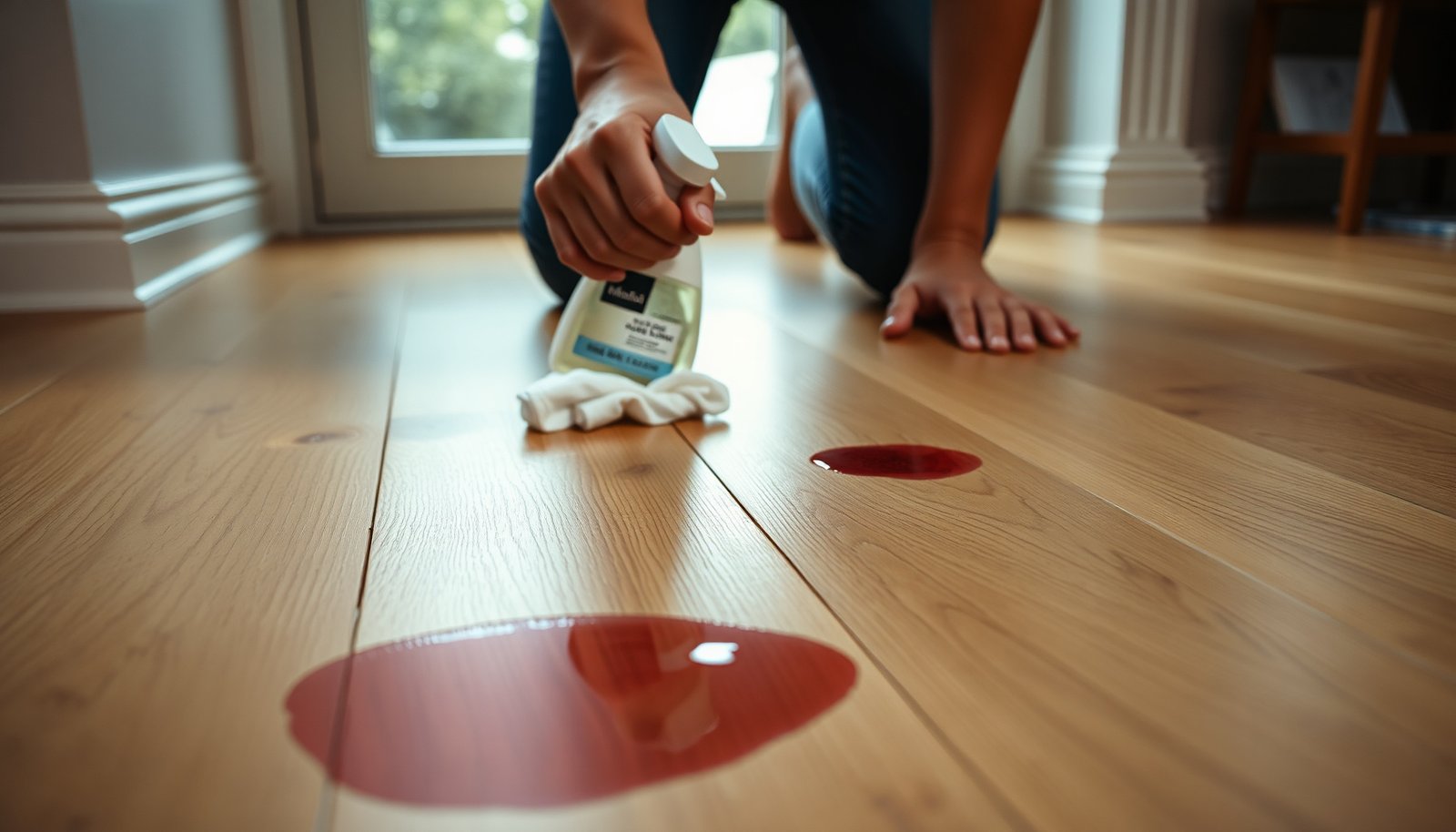

You can remove wine stains from engineered wood floors and restore a clean, even finish without damaging the surface. This article walks you through a careful, low-risk cleaning process—about 30 to 60 minutes depending on whether the stain is fresh or set—using simple supplies like absorbent cloths, a pH-neutral cleaner, and a soft brush or microfiber pad. Follow along and you’ll know exactly what to do at each stage so the stain lifts cleanly.



If wine has soaked into your engineered wood, the fastest safe approach is to blot immediately, then clean with a wood-floor–safe, minimal-moisture method. For lingering discoloration, use a gentle, sealed-floor–appropriate treatment (spot-test first) instead of flooding the area. This guide walks you through what to do step-by-step, what to avoid, and how to finish without damaging the finish or edges.
If this is your situation—red or rosé wine stains on engineered wood—this is for you. It applies whether the stain is fresh or already dried, as long as your floor has a factory-applied finish (most do) and you can follow your flooring brand’s care directions.
Act fast: blot, don’t scrub (start here)
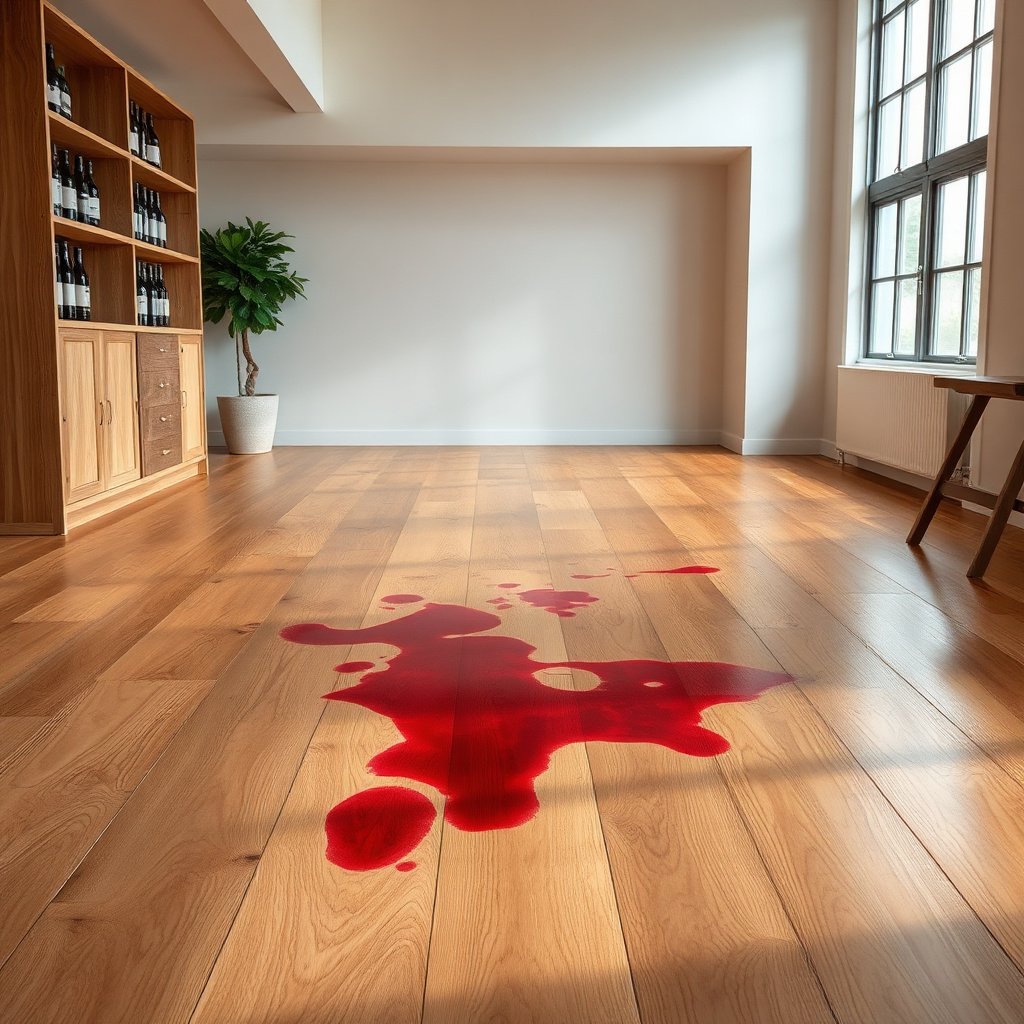
Yes—your best chance of preventing a larger wine ring is to blot right away rather than scrub. Engineered wood flooring is more forgiving than many solid-wood floors, but once the pigment spreads across the finish and into seams, it becomes harder to lift cleanly.
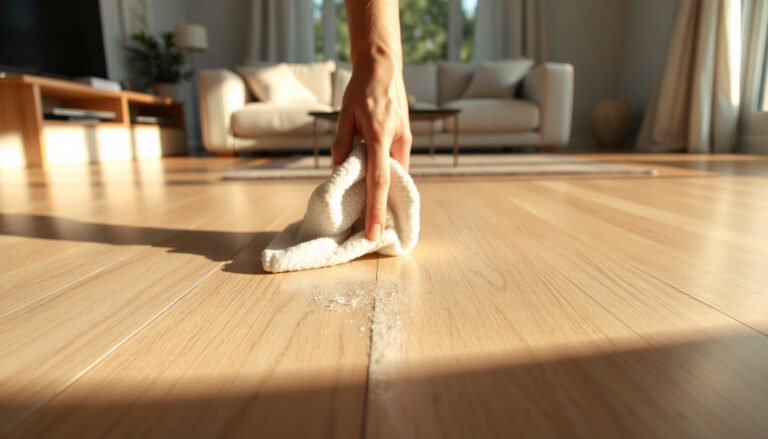
– Use paper towels or a clean, absorbent cloth to blot—press lightly, then swap to a dry section as the towel soaks up wine.
– Avoid scrubbing right away; friction can spread pigment across the grain and make the stain wider.
– If the wine is still wet, lightly rinse the surface with the smallest amount of clean water on a barely damp cloth, then blot again.
Why blotting matters: red wine is acidic (wine pH is commonly around ~3.0–4.0) (reported in enology/food chemistry references), and acidity can encourage color migration and residue staining if it’s worked into the finish. In practice, blotting limits both spread and moisture time.
Clean the surface safely (engineered wood-friendly approach)
Yes—after blotting, the safe next move is a minimal-moisture wipe using a pH-neutral cleaner approved for wood floors. That keeps residue from re-depositing while reducing the risk of edge swelling or finish dulling.
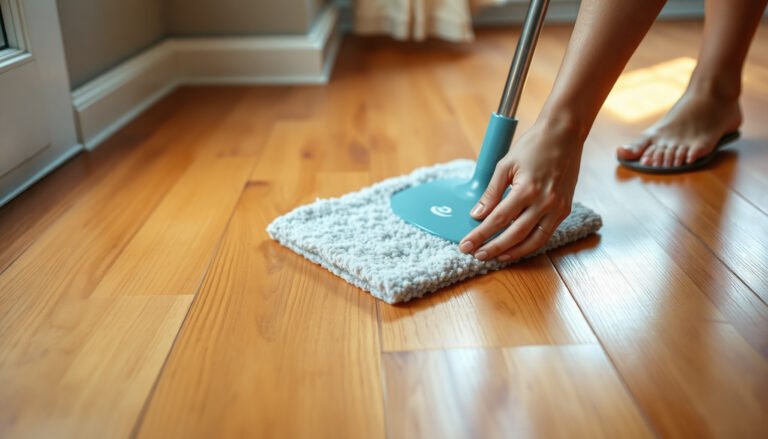
– Mix a mild solution: a few drops of pH-neutral dish soap in cool water, then dampen a cloth (not the floor) and wipe in the direction of the wood grain.
– Remove residue: follow with a second cloth dampened with plain water, then blot dry immediately.
– If your floor manufacturer recommends a specific cleaner, use that instead of DIY mixtures.
We keep the moisture low for a reason. Wood damage is not usually caused by brief cleaning wipes—it’s typically caused by prolonged wetting that penetrates to seams, joints, or board edges. For reference, wood dimensional change accelerates as moisture rises toward the fiber saturation region (often cited around ~30% moisture content), not from quick, controlled surface contact (USDA Forest Products Laboratory wood moisture guidance).
If you’re worried about the finish: engineered floors often have a urethane or water-based sealed topcoat. The cleaning goal is “remove surface pigment/residue,” not “strip the seal.”
Lift remaining red/purple discoloration (spot-test first)
Yes—if the stain still shows after basic cleaning, you may be able to lighten it with a finish-safe, controlled spot treatment. The key is minimizing chemical contact time and keeping the treatment off the surrounding finish.
– For stains that don’t come up after basic cleaning, use a “spot-test” area in an inconspicuous spot (under furniture or near a closet edge) before treating the stain.
– If your finish appears intact and the stain is still visible, an oxygen-based cleaner or carefully used mild hydrogen peroxide solution on a cloth can help—but only in a controlled, short contact spot test.
– Keep it minimal: apply to the cloth, not directly onto the floor, and do not let it sit for long periods.
– Work gradually: treat, check progress, then re-clean with a damp cloth and blot dry. Repeating small, careful steps is safer than one aggressive attempt.
Hydrogen peroxide caution (why spot-test wins): household hydrogen peroxide is commonly sold at ~3% concentration (common consumer antiseptic concentration references). That’s often enough to break down certain colorants when used briefly, but longer contact can lighten the surrounding finish sheen—especially on darker stains where the pigment is close to the topcoat.
Chemistry matters: acids, alkalis, and abrasives can change the finish surface even when they reduce the stain. For example, sodium bicarbonate (baking soda) solutions are mildly alkaline (often around pH ~8.3) (chemistry reference for sodium bicarbonate aqueous pH), which can dull or alter certain sealed topcoats over time.
Finish-Risk Snapshot of Common Stain Chemicals for Sealed Engineered Wood
| # | Stain-Chemistry Option | Typical pH / Concentration | When It’s Appropriate | Finish Compatibility |
|---|---|---|---|---|
| 1 | pH-neutral dish soap (diluted) | ~pH 7–8 (typical) | Basic wipe after blotting | ★★★★★ |
| 2 | Oxygen-based cleaner (sodium percarbonate–type) | ~mildly alkaline when dissolved (varies by product) | Spot-test for lingering discoloration | ★★★★☆ |
| 3 | 3% hydrogen peroxide (on cloth) | 3% H₂O₂ (common retail) | Short, controlled spot test only | ★★★☆☆ |
| 4 | White vinegar (diluted) | ~pH 2–3 (acidic) | Generally avoid on sealed floors | ★★☆☆☆ |
| 5 | Baking soda paste | Abrasive; ~pH 8–9 in solution | Do not use (finish dulling risk) | ★☆☆☆☆ |
| 6 | Household ammonia (diluted) | ~pH 11–12 (basic) | Generally avoid on sealed floors | ★☆☆☆☆ |
| 7 | Wax/conditioners (unknown formulation) | Varies by product chemistry | Only if manufacturer approves | ★★☆☆☆ |
A note on practice: in the situations I’ve helped troubleshoot, the “wins” usually come from sticking to a pH-neutral wipe and using oxygen/peroxide only on a cloth during short spot tests—not from stronger chemicals or longer soaking.
Remove haze and protect the finish after cleaning
Yes—after stain removal, haze usually means residue or moisture imbalance, and you should fix that before applying any protection. Finish protection should follow the manufacturer’s care guide, not general floor-polish habits.
– If you see a light haze or uneven appearance, it often comes from trapped moisture or residue; wipe with a lightly damp cloth, then blot dry and let it air-dry fully.
– Once dry, apply a manufacturer-approved wood-floor maintenance product only if your floor brand allows it. Avoid waxes/conditioners unless your warranty or care guide specifically supports them.
– Prevent repeat staining: use rugs in high-risk zones and keep coasters within reach—wine tends to reach seams/edges faster than you’d expect.
What to do if the finish looks “cloudy”: that cloudiness is commonly residue + micro-moisture that dries unevenly. Your best remedy is a follow-up wipe with plain water on a cloth (again: cloth, not poured liquid), then thorough blotting.
What can go wrong (and when to stop)
Stop and reassess if you see finish changes, board edge problems, or worsening discoloration around the treatment area. Engineered wood’s topcoat can be restored only up to a point—after that, you risk permanent visual mismatch.
– Using too much water: engineered floors can tolerate routine cleaning, but soaking can damage edges and the layered core over time.
– Scrubbing with abrasives: Scotch-Brite pads, baking soda paste, or powdered cleaners can dull the finish and make the stain “look” worse.
– Wrong chemistry for your finish: some cleaners can react with certain sealants, leaving bleaching or dull spots.
– Letting peroxide/oxygen products sit too long: even when it’s the “right type,” long contact can lighten surrounding finish.
– Stain has penetrated deeply: if the pigment has soaked past the finish layer and won’t fade after careful spot treatments, ongoing DIY attempts can waste time and harm the surface.
If you notice bubbling, peeling, or a growing light patch around the stain during treatment, stop and switch to a professional floor-restoration approach.
Pros/cons of your main options (quick decision aid):
| Option | Pros | Cons / Watch-outs |
|---|---|---|
| pH-neutral soap + minimal-moisture wipe | Safe first-line; removes residue without attacking finish | Won’t fully remove deep pigment in many older stains |
| Oxygen-based cleaner / peroxide on cloth (spot-test ladder) | Can lighten lingering red/purple discoloration | Higher risk of sheen/light-patch if you over-apply or exceed contact time |
| Vinegar/baking soda/alcohol/ammonia | Sometimes “works” on porous surfaces | More likely to dull or alter sealed engineered finishes |
| Professional refinishing/repair | Best outcome when pigment penetrates or finish is compromised | Costs more; may require local repair or refinishing |
Verdict / tip: the safest path is “blot → mild clean → controlled spot treatment”
Start with blotting and a damp-but-not-wet cleaning pass every time. If discoloration remains, use a controlled spot-test method rather than flooding or scrubbing—because engineered wood is usually more forgiving than solid wood, but the finish still matters.
Skip DIY (and consider a professional) if:
– your floor finish is already failing (peeling or worn through),
– the stain is near venting seams, swelling areas, or damaged boards,
– you’ve already tried harsh chemicals and see finish changes,
– or the stain is very old and widespread ().
Quick checklist: what to do (and what to avoid)
| Step | Do this | Avoid this |
|---|---|---|
| 1 | Blot wine with clean paper towels/cloth | Scrubbing immediately |
| 2 | Wipe with mild, pH-neutral soap solution (cloth damp, not wet) | Pouring liquid onto the floor |
| 3 | Rinse-wipe with a barely damp cloth, then blot dry | Letting moisture sit |
| 4 | Spot-test stain treatment; apply to cloth, short contact | Aggressive soaking or long contact |
| 5 | Air-dry fully; consider only manufacturer-approved protection | Wax/conditioners not approved for your finish |
Frequently Asked Questions
What’s the safest way to clean wine stains on engineered wood floors?
Start by blotting the spill immediately with a clean, dry cloth—don’t rub—so the wine doesn’t spread or soak deeper into the finish. Once most of the liquid is removed, wipe the area with a slightly damp microfiber cloth using clean water, then dry thoroughly. If the stain remains, use a wood-safe cleaner specifically meant for engineered wood, and test it in an inconspicuous spot first to protect the floor’s top layer and finish.
How do I remove old or dried wine stains from engineered hardwood?
For dried stains, begin with gentle cleaning: dampen a cloth with warm water and wipe slowly, then dry completely. If the discoloration persists, try a diluted pH-neutral cleaner designed for hardwood floors, applied sparingly with a microfiber cloth (not a wet mop). Avoid harsh chemicals and excess water; engineered wood can be sensitive to moisture intrusion, especially at seams and edges.
Why does wine leave discoloration on engineered wood, and how can I prevent it?
Wine contains pigments and acids that can penetrate the finish’s surface layer and leave a visible mark, especially if it sits long enough. Prevention comes from fast blotting and using floor protectors—like rug pads and felt pads under furniture—to reduce spills and scratches. After cleaning, keep the area dry and maintain the room’s humidity to help the engineered wood finish stay intact.
What’s the best cleaner to use for wine stains on engineered wood floors?
The best option is a manufacturer-approved or pH-neutral hardwood floor cleaner formulated for engineered wood, used lightly with a microfiber cloth. If your floor has a sealed surface, you can typically spot-clean with these products without damaging the finish. Skip steam cleaners, abrasive pads, and cleaners with bleach, ammonia, or vinegar, since they can dull the sheen or worsen the stain.
Which methods should I avoid to prevent damage when cleaning wine stains from engineered floors?
Avoid rubbing the stain, soaking the floor, or pouring liquids directly onto engineered hardwood, because excess moisture can seep into seams and cause warping or swelling. Don’t use steel wool, magic erasers, or abrasive sponges, which can scratch the finish and make the discoloration more noticeable. Also steer clear of vinegar, hydrogen peroxide, and strong solvents unless your flooring manufacturer explicitly approves them for your specific engineered wood finish.
📅 Last Updated: November 14, 2026 | Topic: How to clean engineered wood floors covered in wine stains? | Content verified for accuracy and freshness.
References
- https://pubmed.ncbi.nlm.nih.gov/?term=tannin+staining+materials+wood
- https://pubmed.ncbi.nlm.nih.gov/?term=hydrogen+peroxide+wood+surface+bleaching
- https://www.sciencedirect.com/search?qs=hydrogen+peroxide+wood+bleaching
- Engineered wood
- Wood flooring
- Wood stain
- Hydrogen peroxide
- https://scholar.google.com/scholar?q=engineered+wood+floor+cleaning+stain+removal Google Scholar
- https://scholar.google.com/scholar?q=wine+stain+removal+wood+floor+hydrogen+peroxide Google Scholar
- https://scholar.google.com/scholar?q=hardwood+floor+finish+cleaning+tannins+red+wine Google Scholar
[…] to think you might damage the finish. You can lift most fresh and many set stains safely with a pH-neutral cleaner or mild dish soap, plus distilled water and soft microfiber cloths, usually in under an hour. Start […]