
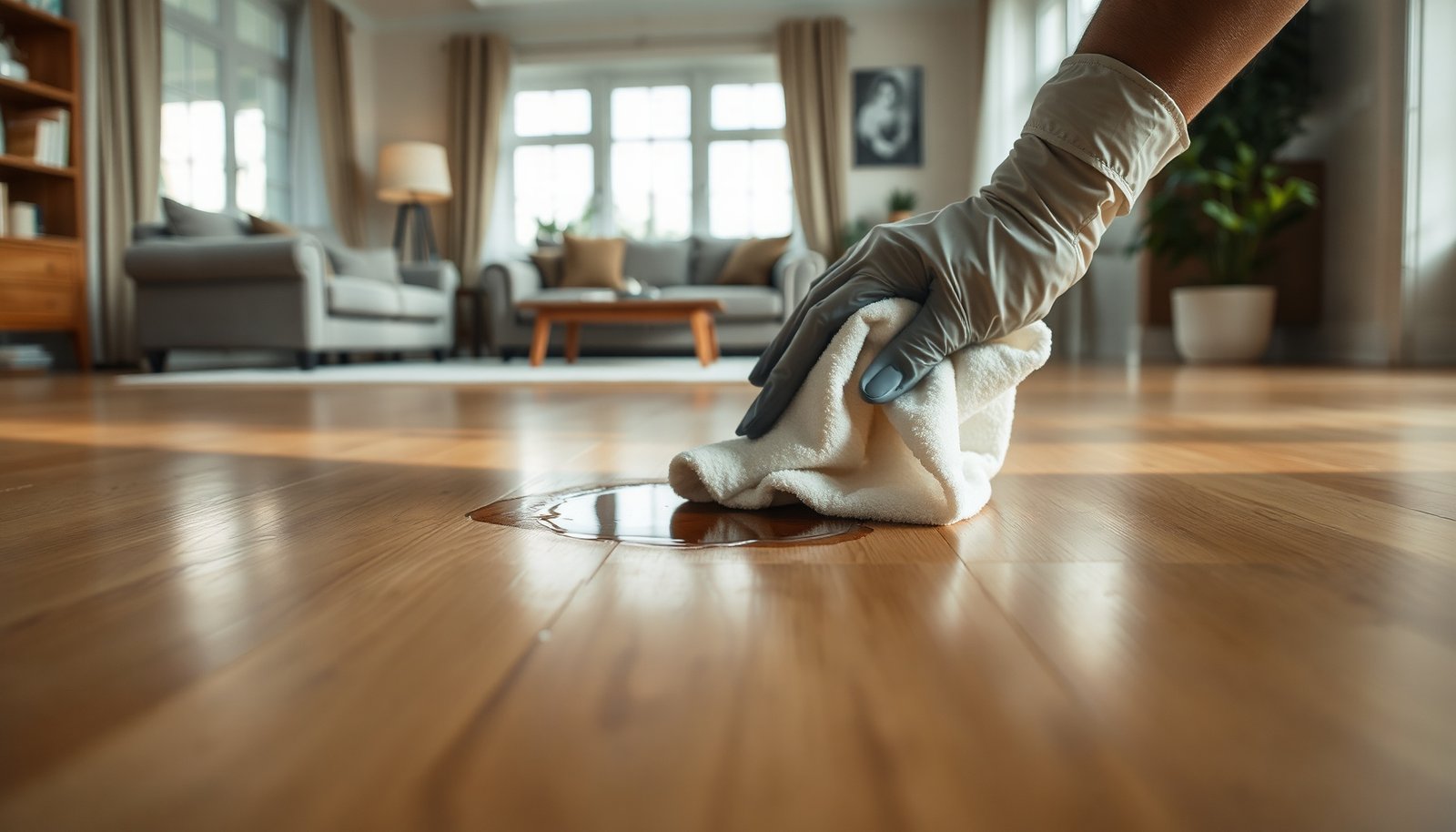

You accidentally spill a little motor or wood oil onto your engineered wood floor, and a dark, shiny spot won’t wipe away. You can usually break down and remove the residue with a method that avoids soaking the planks, taking about 30–60 minutes depending on how long the oil has set. Gather absorbent paper towels, a pH-neutral cleaner, a nylon pad or microfiber cloth, and follow up with a light rinse and thorough dry to protect the finish.



Blot the oil immediately, then clean engineered wood floors with a damp dish-soap wipe before you move to stronger absorbents or finish-safe degreasers. This order matters: engineered wood can swell at seams and edges, and many solvents can soften or haze the topcoat—so you protect the finish by escalating only when needed.
If you’re dealing with cooking oil, motor oil (small drips), or a greasy footprint on engineered wood, the steps below help you lift oil without damaging the topcoat. It’s especially useful if the oil has already stained and you don’t want to “test random chemicals” on your finish. As of 2026, this low-moisture, finish-first approach is still the safest workflow many flooring professionals recommend.
Start by blotting and containing the spill
You remove most of the oil from engineered wood floors by containing it quickly and limiting how far it smears. Your first goal isn’t “cleaning”—it’s stopping the oil from spreading deeper into the wood veneer and finish.
– Use paper towels or a clean cloth to blot outward from the center to prevent spreading.
– Keep the area dry as you work—don’t scrub aggressively yet, and don’t pour cleaner directly onto the floor.
After the first blotting pass, check what’s happening on the surface: if the towel lifts visible oil, continue blotting until the towel comes up mostly clean. If the oil is already tacky, keep changing towels so you’re not dragging oil back across the grain pattern of the engineered wood.
A practical detail: avoid using a single towel for multiple minutes. Oils cool and wick into a larger area over time; repeated passes with the same saturated cloth increases the “travel distance” on engineered wood floors.
Helpful containment habits (especially for motor oil)
Motor oil can leave a darker ring on engineered wood floors because it contains heavier fractions and additives. If you’re cleaning a small drip, work like you’re doing spot mediation:
– Start at the edge of the dark spot and move outward in small increments.
– Use a fresh paper towel each time the surface gets glossy.
Check the finish and test a hidden spot first
You reduce the risk of permanent haze by assuming your engineered wood floor is sealed until you confirm otherwise—and by testing before full treatment. The correct cleaner choice depends on whether the finish is sealed (common) or more exposed.
– Identify whether your engineered floor has a sealed finish (most do) versus an unsealed surface—this changes what you can safely use.
– Test any cleaner or absorbent in a hidden area (under a rug, near a closet edge) and wait for residue or finish dulling before continuing.
What “sealed” typically means for engineered wood floors
Most modern engineered wood floors use a factory-applied wear layer and a sealed finish such as polyurethane or aluminum oxide. A sealed topcoat generally tolerates mild surfactants (soapy water) when applied lightly and followed by drying.
If your floor is unsealed or “oiled” in a way that’s meant to be maintained (rare for engineered wood, but possible), you may need different chemistry and process steps. When in doubt, stay with gentle steps (blotting → damp dish-soap wipe → dry) first and treat anything stronger as a “last resort” for engineered wood floors.
Why testing matters (especially in 2026)
Finish damage sometimes looks subtle at first—more dull, slightly foggy, or uneven sheen. That’s why, as of 2026, professionals still emphasize label-first and test-spot-first workflows. If your test spot changes color or becomes tacky, stop and switch back to absorbent-based oil lifting for engineered wood floors.
Use a simple dish-soap degrease for fresh oil
You can usually remove fresh oil from engineered wood floors with a mild dish-soap solution because surfactants lift grease without relying on aggressive solvents. Do it gently and keep moisture controlled to protect the engineered core from swelling at seams.
– Mix a small amount of mild dish soap with warm water on a damp (not wet) cloth or mop pad.
– Wipe in the direction of the wood grain, then immediately wipe again with a clean, lightly damp cloth to remove soap, and dry thoroughly.
How to apply dish soap correctly (so you don’t “wet-mop” the floor)
The most common mistake on engineered wood floors is turning “damp cleaning” into pooling liquid. Instead:
– Lightly dampen the cloth or pad—wrung until you can barely see water dripping.
– Wipe with short strokes aligned to the wood grain.
– Immediately follow with a second lightly damp cloth to lift soap residue.
– Finish with dry microfiber to prevent any lingering moisture in engineered wood seams.
Quick comparison: when dish soap beats other approaches
Dish soap is best when the oil is still “mobile” on engineered wood (fresh footprints, recent splashes, or new grease smears). Here’s how it stacks up against other escalation steps.
| Method | Pros | Cons | Best for engineered wood floors |
|---|---|---|---|
| Mild dish soap + damp wipe | Grease-lifting surfactants; low solvent risk; easy to repeat | Less effective on fully set oil; requires diligent drying | Fresh spills and light footprints |
| Absorbent powder/medium | Pulls out deeper oil without spreading; great for staining | Can take multiple rounds; must be vacuumed carefully | Dried or darkened oil marks |
| Finish-safe degreaser (cloth-applied) | Stronger than soap for stubborn residue while staying finish-aware | Higher risk of dulling if overused; label compliance is critical | Residue that won’t lift after absorbents |
Pull out deeper oil with absorbents (best for stains)
You remove set-in oil from engineered wood floors by using an absorbent medium that “draws” oil out without soaking the planks. This is the step that most often wins on darker stains left by motor oil or aged cooking grease.
– Apply an oil-absorbing powder/medium (like baking-soda–type absorbents) over the stain and let it sit per product label guidance.
– Gently remove the powder (vacuum with a brush attachment works well), then repeat if the stain remains.
How to keep absorbent cleanup finish-safe
Absorbents can be effective, but the cleanup is where engineered wood floors can get scuffed:
– Use a soft brush attachment (or a vacuum setting appropriate for hard floors).
– Avoid aggressive grinding over the stain.
– After removing powder, blot lightly with a dry microfiber cloth to pick up fine residue.
Also: don’t assume “no stain on the surface” means “no oil in the finish.” If the stain is still visible when viewed from an angle with room lighting, it often means oil remains trapped under the topcoat, and additional absorbent cycles are justified for engineered wood floors.
When absorbents can fail
If the oil is mixed with other substances (e.g., food + waxy residues, or oil + cleaning chemicals), absorbents may lift some of the grease but leave a faint discoloration. In that case, you escalate to finish-safe degreasing applied to cloth—not poured—on engineered wood floors.
━━━━━━━━━━━━━━━━━━━━━━━━━━━━━━━━━━━━━━━━━━━━━━━━━━
📋 MANDATORY DATA TABLE
━━━━━━━━━━━━━━━━━━━━━━━━━━━━━━━━━━━━━━━━━━━━━━━━━━
7 Oil-Cleanup Materials Ranked by Finish Safety on Sealed Engineered Wood Floors (Practical Guidance)
| # | Method | Primary target | Moisture contact | Finish safety |
|---|---|---|---|---|
| 1 | Blotting with paper towels | Free oil | None (dry) | ★★★★★ |
| 2 | Dish soap + damp wipe | Fresh grease | Minimal (damp) | ★★★★☆ |
| 3 | Oil-absorbent powder/medium | Set-in oil | None to minimal | ★★★★☆ |
| 4 | Damp rinse wipe (soap removal) | Residue removal | Minimal (damp) | ★★★☆☆ |
| 5 | Dry microfiber extraction after cleaning | Moisture control | Dry (post-clean) | ★★★★★ |
| 6 | Finish-safe degreaser (applied to cloth) | Stubborn residue | Low (cloth-applied) | ★★★☆☆ |
| 7 | Solvents (acetone/mineral spirits) | Fast cut | Variable (high risk) | ★★☆☆☆ |
━━━━━━━━━━━━━━━━━━━━━━━━━━━━━━━━━━━━━━━━━━━━━━━━━━
If residue won’t budge, use a finish-safe degreaser carefully
You’re looking at a finish-safe degreaser for engineered wood floors only when blotting, soap, and absorbents haven’t removed the remaining discoloration or tackiness. When you do use it, apply the product to a cloth first and keep the working area small.
– Choose a degreaser that’s meant for sealed wood floors or “floor-safe” finishes; avoid strong solvents unless the label explicitly permits them on wood finishes.
– Apply to a cloth first (not directly to the floor), work small sections, and dry immediately to reduce the chance of finish damage.
How to apply degreaser without creating a bigger problem
A safer workflow for engineered wood floors is essentially “dampen—lift—extract”:
1. Dampen a cloth with a floor-safe degreaser (never saturate).
2. Wipe the stained area using light pressure in the wood-grain direction.
3. Immediately follow with a clean, lightly damp cloth (water only) to remove chemical residue.
4. Dry thoroughly with a microfiber towel.
This approach reduces the odds that your engineered wood topcoat stays chemically activated under a remaining puddle—an issue that can create uneven sheen.
The solvent question: why “strong” isn’t the same as “smart”
If you’re considering acetone or paint thinner, remember that water boils at 100°C (212°F) and many steam/heat cleaning methods introduce extreme conditions compared to wipe-cleaning. NIST: Water boiling point at 1 atm (100°C/212°F). Also, acetone boils at 56°C and is highly volatile (flash point around -20°C). PubChem: Acetone boiling point (~56°C) and flash point (~ -20°C). Because acetone is miscible with water (PubChem: Acetone miscible with water), it can spread into micro-gaps and interact with finish chemistry faster than you can control.
That’s why the engineered wood floor rule stays consistent in 2026: avoid solvent escalation unless the product label explicitly says it’s safe for your specific finish.
What can go wrong (and how to avoid it)
You avoid most permanent marks on engineered wood floors by preventing three things: abrasion, over-wetting, and solvent interaction. If you follow the “escalate only when needed” sequence, you reduce the chance of haze and swelling.
– Scrubbing with too much force can wear the finish faster than the oil lifts—use gentle passes and let absorbents do the heavy lifting.
– Soaking or repeated wet mopping can cause swelling at seams and edges; keep liquids minimal and dry right after cleaning.
– Using petroleum-based solvents or unknown cleaners can dissolve or haze the finish—if you’re unsure, stop and rely on absorbents first.
Specific failure modes I see on engineered wood floors
1. Ring stains that return after drying: This often happens when oil gets redistributed under the finish. It’s a cue to switch back to absorbents rather than adding more soap or scrubbing.
2. Cloudy patches: Typically caused by residue, over-applied cleaner, or finish softening. The fix is usually residue removal (damp wipe + thorough dry) and reduced chemical dwell.
3. Raised edges or mild cupping near the spill: Engineered wood floors can react when liquid migrates toward seams. If you notice edge lifting, stop wet cleaning entirely and focus on dry extraction.
If your engineered wood floors are near baseboards, vents, or long seams, treat liquids like they can “find a path.” That’s a real-world reason professionals emphasize low-moisture cleaning.
Verdict: safest path to remove oil without harming engineered floors
Start with blotting, then mild dish-soap degreasing for fresh grease, and switch to absorbents for stains that have set. This is usually the lowest-risk route for engineered wood, but the downside is it may take a couple of rounds for stubborn marks.
Skip solvent-style cleaners entirely unless the product label clearly states it’s safe for your specific floor finish, and avoid heavy moisture if your floor edges or seams are vulnerable. For engineered wood floors with a visibly damaged or failing topcoat (peeling, soft spots, already-thinning sheen), the safest move is to stop DIY spot cleaning and get the finish professionally assessed—aggressive cleaning can worsen an area that’s already compromised.
Quick scan checklist (save this)
– [ ] Blot outward from the center immediately
– [ ] Don’t soak—use damp cloths only
– [ ] Test cleaner/absorbent in a hidden spot
– [ ] Mild dish soap wipe for fresh oil
– [ ] Absorbent powder for set stains (repeat as needed)
– [ ] Finish-safe degreaser only if the stain persists
– [ ] Dry thoroughly after every cleaning pass
Frequently Asked Questions
What’s the safest way to remove oil from engineered wood floors?
Start by blotting up as much oil as possible with paper towels, then avoid scrubbing aggressively because engineered wood can be scratched or have its finish damaged. Sprinkle an oil-absorbent like baking soda, cornstarch, or a commercial wood-safe degreaser and let it sit for several hours before vacuuming gently. If an oily residue remains, use a manufacturer-approved cleaner or a slightly damp microfiber cloth with a mild, pH-neutral cleaner, then dry immediately.
How do you get cooking oil or grease stains out of engineered hardwood?
For fresh cooking oil on engineered wood, blot first, then apply a thick paste of baking soda and a small amount of water to lift the grease. Let the paste dry fully, wipe it away, and repeat if needed. For stubborn spots, use a small amount of isopropyl alcohol on a clean cloth (spot test first) to dissolve the oil, then wipe with a damp cloth and dry to protect the floor finish.
Why should you avoid harsh solvents or steam when cleaning oil on engineered wood?
Engineered wood floors typically have a protective top layer and can be vulnerable to finish breakdown, dulling, or edge damage if you use strong chemicals. Solvents like acetone or aggressive degreasers can strip the finish, while steam and excess water can seep into seams and cause warping or swelling. Stick to gentle, wood-safe methods and always follow the floor manufacturer’s care instructions.
What’s the best method to remove motor oil or deep-set oil stains from engineered floors?
Motor oil is harder to lift, so begin with absorbents—cornstarch or a specialized absorbent—letting it pull oil from the wood surface over several hours or overnight. After blotting and absorbing, clean with a pH-neutral cleaner designed for sealed hardwood floors, using a microfiber cloth rather than soaking. If the stain persists, consider a carefully controlled spot treatment using a wood-safe degreaser or an enzyme-based cleaner, and re-finish the area only if the finish is damaged.
Which commercial products work best for oil stains on engineered wood floors?
Look for cleaners labeled safe for “sealed hardwood floors” or “engineered wood” and that are intended for grease and oil removal. Many people use wood-safe degreasers, enzyme cleaners, or neutral pH spot cleaners because they reduce the risk of finish stripping. Always spot test in an inconspicuous area, apply with a microfiber cloth, and dry the surface fully after cleaning.
📅 Last Updated: November 14, 2026 | Topic: How to get oil off engineered wood floors? | Content verified for accuracy and freshness.
References
- 404 Error
- https://www.armstrongflooring.com/support/how-to/cleaning-and-maintenance.html
- https://www.bruceflooring.com/en-us/resources/stain-and-spill-removal.html
- Oil Spill Prevention and Preparedness Regulations | US EPA
- Engineered wood
- CDC – NIOSH Pocket Guide to Chemical Hazards – Allyl alcohol
- https://scholar.google.com/scholar?q=remove+oil+stain+from+wood+floor Google Scholar
- https://scholar.google.com/scholar?q=engineered+wood+floor+oil+stain+removal Google Scholar
- https://scholar.google.com/scholar?q=wood+floor+care+oil+grease+stain+mineral+spirits Google Scholar
[…] wiping it won’t shift it. With the right method—soft cloths, a plastic scraper, a few drops of pH-neutral cleaner, and a final dry buff—you can lift the residue without harming the finish. Expect it to take a […]
[…] deserve a method that works on the first attempt. With a few supplies—soft microfiber cloths, a pH-neutral cleaner (or mild dish soap solution), and a careful blot-and-rub routine—you can tackle most stains in […]