You can remove cooked-on grease from engineered wood floors without damaging the finish, restoring a clean, even look that feels as good as it did before dinner. In the next few minutes, you’ll learn exactly what to do step by step, including the safest cleaners, how to spot-test them, and the techniques that lift oil without flooding or scratching the surface. Start gathering a soft microfiber cloth, a pH-neutral floor cleaner, and a gentle degreasing option so you can act fast and avoid permanent staining.



Blot up the grease first, then clean it with a pH-neutral, lightly damp microfiber and wipe dry right away. That sequence matters because engineered wood’s finish (the sealed top layer) can haze, dull, or even lift if you oversaturate it with water or use strong degreasers.
This is for homeowners dealing with fresh (and usually small-to-medium) grease spots on finished engineered wood floors. If the grease has sat for days, or you’re seeing finish damage already, you’ll want the “what can go wrong” section before you start.
Start immediately: blot, cool, and remove loose grease

Cold (or cooled) grease is easier to capture without spreading; warm grease smears and can drive farther into seams. Your first goal is to stop migration across the finish surface, not to “deep clean” yet.
– Let the grease cool completely, then use a dry paper towel to blot (don’t smear it outward).
– If there’s any solidified grease, gently lift it with a plastic scraper or an old credit card edge.
Once the visible layer is removed, switch from “absorb” to “lift.” Grease that’s already tacky will often leave an oily film even after blotting, so you’ll rely on surfactants (soap ingredients that loosen and suspend oils) in the next step. If you wait until it’s fully set and then aggressively scrub, you increase the odds of finish abrasion and a persistent sheen difference around the spill.
Use a safe cleaner: mild dish soap diluted + microfiber
The safest way to cut cooking grease on engineered wood is a pH-neutral, lightly diluted soap applied with a nearly dry microfiber. Mild dish soap works because it helps emulsify (break up oil into tiny suspended droplets), while microfiber reduces the need for scrubbing pressure that can dull coatings.
– Mix a small amount of mild dish soap into warm water until it’s lightly sudsy (you want minimal liquid, not puddles).
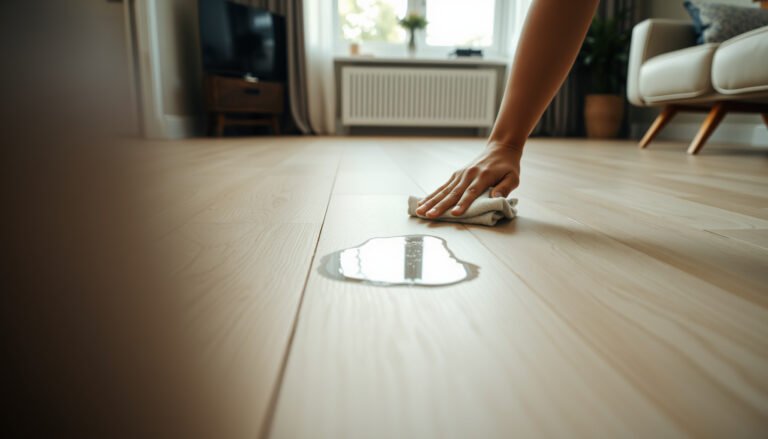
– Dampen a microfiber cloth (wrung nearly dry), wipe the spot, then immediately follow with a clean, dampened cloth to remove soap residue.
Why “pH-neutral” matters: pH measures acidity/alkalinity on a logarithmic scale. NIST notes that each pH unit represents a 10× change in hydrogen ion concentration, and NIST defines pH 7.0 as neutral. Strongly acidic or alkaline cleaners can react with certain finish components or push oils deeper into micro-scratches, which is a common path to haze.
pH and finish-safety realities for grease cleanup on sealed engineered wood
| # | Cleaner type | Typical pH / behavior | What it risks | Finish safety |
|---|---|---|---|---|
| 1 | Plain water (for wipe + residue removal) | pH ~7 (neutral) | Main risk is over-wetting, not pH | ★★★★★ |
| 2 | Mild dish soap diluted | Often ~pH 7–9 (brand-dependent) | Risk is leaving residue if not wiped/dried | ★★★★☆ |
| 3 | Baking soda paste (not recommended for floors) | Mildly alkaline (~pH 8–9+) | Can be too alkaline and slightly abrasive | ★★☆☆☆ |
| 4 | Ammonia-based cleaners | Often alkaline (~pH 11–12) | Sheen/finish dulling over time | ★☆☆☆☆ |
| 5 | Chlorine bleach products | Typically alkaline (often ≥pH 11) | Can damage sheen and top-coat chemistry | ☆☆☆☆☆ |
| 6 | Vinegar (typical 5% acetic acid) | Often acidic (~pH 2.4) | Acid can dull or cloud some finishes | ★☆☆☆☆ |
| 7 | Steam cleaning (heat + moisture) | Steam at ~100°C (212°F) at 1 atm | Heat + water can stress seams/finish | ☆☆☆☆☆ |
Note: engineered wood boards vary by finish system (urethane, UV-cured acrylic, oil-modified coatings, etc.). The table is a practical safety guide, not a substitute for your floor manufacturer’s cleaning instructions. As of 2026, most “water-based” recommendations still hinge on avoiding puddles and applying the least moisture possible.
Rinse-free wipe (important for reducing water exposure)
After the soap-wipe, you’ll reduce residue and haze by following with a plain-water wipe and then drying immediately. This second wipe is where many people either succeed—by using a fresh, lightly damp microfiber—or accidentally create a dull halo by leaving soap film.
– After the soap-wipe, wipe again with a fresh microfiber lightly dampened with plain water.
– Dry the area thoroughly with a dry towel, then let it air-dry with good airflow (fan if you have one).
Think of this as a residue management step. Soap and loosened grease don’t just disappear; they need to be physically removed from the surface. In my routine for careful floor care, I treat “lightly damp” as “cloth leaves no visible wet streaks,” and I always do the dry step right after the final wipe to minimize dwell time (how long the floor stays exposed to moisture).
If the spot is still slick after the rinse-free wipe, don’t keep adding water. Re-blot, repeat the diluted-soap wipe with a wrung microfiber, and then repeat the plain-water wipe + immediate drying. One controlled pass often protects the finish better than repeated scrubbing.
Drying and protecting engineered wood after grease removal
Complete drying prevents the finish from dulling and helps avoid spotting that can look like a stain even when grease is gone. Engineered wood can be dimensionally stable, but prolonged surface moisture can still affect the top veneer, edges, or seam areas over time.
– Keep foot traffic off until the surface is fully dry; trapped moisture can cause dulling or spotting.
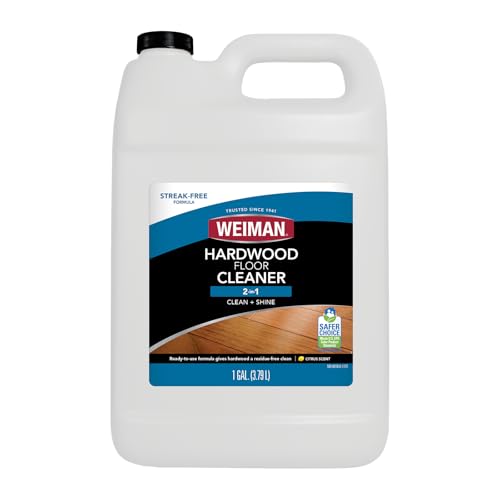
– Once clean and dry, consider using your floor’s recommended cleaner/maintenance product for engineered wood (follow the label and manufacturer guidance—).
Practical protection also includes what you don’t do next. Avoid placing mats with rubber backing directly over the area while it’s still drying, since rubber can trap moisture or transfer tackiness. If your home uses humidifiers or HVAC vents that blow directly on floors, redirect airflow so the spot dries evenly.
What can go wrong (and how to avoid it)
Most engineered wood finish problems after grease cleanup come from water exposure, chemistry mistakes, or incomplete residue removal. If you’ve got an older spot or visible sheen damage, the safest move is to stop early and switch to manufacturer-approved refinishing/repair guidance.
– Soaking the floor: pooled liquid can seep through seams and edges, even with “water-resistant” finishes.
– Using harsh degreasers: products with strong solvents, heavy alkaline cleaners, or bleach can damage the sheen or top coat.
– Skipping dry wiping: soap left behind can attract grime and leave a hazy film.
– Steam or steam mops: heat + moisture is a common way finishes warp or separate—avoid them unless your floor manual explicitly allows it.
Also watch for heat-related spread. Grease that’s been hot can polymerize (chemically “set”) on contact, making it harder to lift later and more likely to leave a slightly different surface reflectivity. If you see bubbling, peeling, or bare-wood exposure, don’t keep cleaning—those are finish-failure signs.
Quick risk comparison (so you can decide how far to go):
– Do this: blot → mild diluted soap wipe → plain-water wipe → dry fully (best balance of grease removal vs finish safety)
– Avoid this: soaking, bleach/ammonia degreasing, steam cleaning, or aggressive scrubbing (higher risk of haze or top-coat damage)
Verdict / tip: when this method works—and when to stop
This “blot → mild soap microfiber → rinse wipe → dry thoroughly” method is usually the safest route for fresh cooking grease on finished engineered wood floors. It works because it uses controlled moisture and gentle chemistry, while removing both oil and soap residue quickly.
The downside is it may not fully remove old, baked-on grease or existing finish damage—in those cases, repeated cleaning can make the area look different from the rest of the floor.
Skip DIY and consider a professional or refinishing plan if:
– the grease has been there for a while and won’t lift,
– you see bubbling, peeling, or bare-wood exposure,
– your floor is not the sealed/finished type (or you’re unsure of its finish).
If you’re unsure about the exact finish system, use your floor’s manual as the authority. As of 2026, many manufacturers still specify pH-neutral or “wood-floor-safe” cleaners and explicitly prohibit steam, harsh solvents, and soaking—so your cleanup should mirror those constraints.
Grease-cleaning checklist (quick scan)
Use this as a fast “do next” guide when you notice grease near a stove, air fryer, or wok station.
| Step | Do this | Avoid |
|---|---|---|
| 1 | Let grease cool, blot with paper towel | Rubbing/smearing while warm |
| 2 | Lift solids gently with plastic | Metal tools/abrasives |
| 3 | Lightly damp microfiber with diluted mild dish soap | Soaking/puddles |
| 4 | Wipe to remove soap residue | Leaving soap film |
| 5 | Dry fully; add airflow | Walking on damp spots |
| 6 | Maintain with manufacturer-recommended cleaner | Harsh chemicals not approved for your finish |
Frequently Asked Questions
What’s the best way to clean engineered wood floors after cooking grease spills?
First, remove any solids with a dry cloth or paper towel—don’t smear the grease. Then blot the area with a clean microfiber cloth and a small amount of dish soap diluted in warm water, wiping gently to avoid soaking the engineered wood. Rinse with a lightly damp cloth (no puddles), then dry immediately with a dry towel to protect the wood core and finish.
How do I remove oily kitchen grease from engineered hardwood without damaging the finish?
Use a grease-fighting method that stays controlled: mix a few drops of dishwashing liquid into warm water and apply it with a damp microfiber cloth rather than pouring. Work from the outer edge of the stain toward the center, blotting and repeating as needed. If the grease smell or residue remains, use a small amount of isopropyl alcohol on a cloth (not directly on the floor) and spot test first, then wipe clean with a water-damp cloth and dry.
Why should I avoid soaking engineered wood floors when cleaning up grease?
Engineered wood can tolerate normal cleaning, but excess moisture can seep into seams and edges, dulling the finish and potentially causing warping or separation. Grease also holds heat and can spread into the finish if you wipe aggressively or over-wet the surface. Keeping the cloth damp (not wet) and drying promptly helps preserve the laminate top layer and overall floor stability.
How can I clean grease buildup from engineered wood floors if the stain has set in?
Start with a thorough blotting and gentle detergent wipe to lift surface oils, then try a targeted degreasing step using a 50/50 solution of white vinegar and water on a lightly damp cloth (spot test first). For stubborn spots, you can apply a small amount of degreaser-safe cleaner made for hardwood floors to the cloth, not the floor, and work in small sections. After treatment, wipe with a water-damp cloth to remove residue and dry completely to prevent streaking.
Which cleaners are safe for engineered wood floors when removing cooking grease?
In most cases, mild dish soap in warm water and hardwood-floor-specific cleaners are the safest choices because they cut grease without harming the protective finish. Avoid harsh chemicals like ammonia, bleach, or strong solvents unless the manufacturer explicitly approves them, since they can strip or cloud the top coating. Always spot test any cleaner in a hidden area, use microfiber cloths, and maintain a “damp not wet” approach for engineered hardwood maintenance.
📅 Last Updated: November 14, 2026 | Topic: How to clean engineered wood floors after cooking grease gets on it? | Content verified for accuracy and freshness.
References
- Engineered wood
- Wood flooring
- Wood flooring
- https://en.wikipedia.org/wiki/Oil_stain
- Grease
- Cleaning
- Wood stain
- https://scholar.google.com/scholar?q=cleaning+engineered+wood+floor+grease Google Scholar
- https://scholar.google.com/scholar?q=remove+oil+grease+stains+from+wood+flooring Google Scholar
- https://scholar.google.com/scholar?q=engineered+wood+floor+cleaning+instructions+water+avoid Google Scholar