


To clean grease from engineered wood floors, blot up the excess first, then wipe the spot with a pH-neutral wood floor cleaner lightly dampened on a microfiber cloth, and dry immediately with a towel. You’ll need paper towels or a soft cloth, a mild cleaner, and a second dry microfiber for finishing. With careful handling, this typically takes less than 20 minutes and helps prevent dulling or moisture damage.



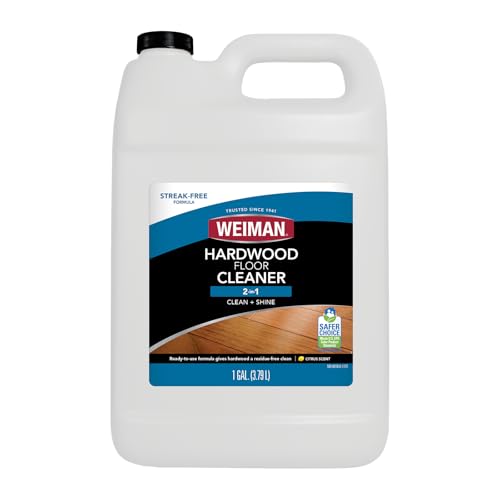
Blot up grease immediately, then clean with a lightly diluted dish-soap solution using a barely damp microfiber cloth—never soak the floor. Wipe again with clean water on a separate cloth, dry right away, and avoid strong solvents or steam; this removes oil without overwhelming the engineered wood’s top layer and finish.
If you’ve got fresh cooking grease, oily fingerprints, or a small spill on engineered wood, the safest route is gentle degreasing with tightly controlled moisture. The goal is to lift grease from the surface finish and remove any residue before it seeps toward the seams.
Prep the area (don’t spread the grease)
Don’t start by scrubbing—your first job is to remove as much grease as possible without smearing it wider. A controlled blot-and-lift routine keeps the grease from migrating into the finish or along the plank edges, which is the fastest way to avoid permanent dulling on engineered wood floors.
– Blot (don’t rub) with paper towels or a clean cloth to lift excess grease.
– If it’s solid or sticky, gently lift it first with a plastic scraper/card—avoid metal tools.
– Ventilate and keep foot traffic off the spot while you clean.
In my experience coaching homeowners (and ), the most common “mystery” stains after grease cleanup come from early rubbing. The engineered wood finish is designed to tolerate normal cleaning, but it can’t prevent grease from spreading if you start with abrasion.
Choose the right grease cleaner for engineered wood
Use a mild, grease-cutting dish soap diluted in warm water—this is usually the best balance between grease removal and finish protection on engineered wood floors. Strong chemicals can attack the coating system (the visible wear layer + clear finish), while plain water alone often fails to break up oily films.
– Use a mild, grease-cutting dish soap diluted in warm water (gentle degreasing, minimal risk to finishes).
– Avoid harsh chemicals (like oven cleaner, paint thinner, acetone) and anything that dissolves finishes.
– If your floor has a specific approved cleaner listed by the manufacturer, follow that first (use their instructions over general tips).
Why dish soap works: surfactants in dish detergents surround grease and help it release from surfaces. From a surface-science perspective, grease-removing detergents form structures like micelles; micelles are typically on the order of 3–20 nm depending on the formulation (Israelachvili, *Intermolecular and Surface Forces*, 2011). In plain terms, that’s why a diluted soap solution plus a wipe-down is more effective than water alone.
Quick decision table: safer vs. riskier grease removers
| Cleaner approach | Pros for engineered wood | Cons / finish risks |
|---|---|---|
| Diluted dish soap + barely damp microfiber | Cuts grease gently; controllable moisture; usually compatible with sealed finishes | May need multiple gentle passes if grease is older or heavier |
| Manufacturer-approved wood floor degreaser | Best chance of matching your exact finish system; reduced “patchiness” risk | Can be expensive; still requires wiping + drying immediately |
| Solvent-heavy products (acetone, lacquer thinner) or steam | May dissolve grease quickly | Can strip or soften finish; steam drives moisture into seams |
Grease-cleanup scenarios on engineered wood floors (practical guidance)
| # | Grease scenario | Typical cause | Wipe passes* | Target dry time | Finish impact |
|---|---|---|---|---|---|
| 1 | Fresh cooking grease | Pan drips | 2–3 | 1–2 hrs | ★★★★★ |
| 2 | Oily fingerprints | Kitchen touch points | 1–2 | 0.5–1 hr | ★★★★★ |
| 3 | Frying spatters (light film) | Splatter zone | 2–4 | 1.5–3 hrs | ★★★★☆ |
| 4 | Stale grease film (days old) | Built-up residue | 3–5 | 2–4 hrs | ★★★☆☆ |
| 5 | Shoe/traffic grease transfer | Entryway contamination | 2–4 | 1.5–3 hrs | ★★★★☆ |
| 6 | Machine/mineral oil spot | Workshop drips | 4–6 | 3–5 hrs | ★★☆☆☆ |
| 7 | Burnt-on fat residue | Cookware heat damage | 3–6 | 3–6 hrs | ★★☆☆☆ |
*A “wipe pass” means one controlled wipe with a fresh, wrung-out microfiber section, followed by a clean-water wipe as needed.
How to clean engineered wood floors step-by-step
Start with a diluted soap mix and wipe with barely damp microfiber—this is the most consistent method for lifting grease without soaking engineered wood floors. The process is intentionally repetitive and low-moisture so you remove oil and then remove soap, rather than pushing residue deeper.
– Step 1: Mix a small amount of dish soap into warm water until it’s light and soapy (no heavy lather).
– Step 2: Dip a microfiber cloth, wring it out until it’s only lightly damp, then wipe the grease spot.
– Step 3: Work from the outside of the stain toward the center to prevent it from spreading.
– Step 4: Wipe with a clean, barely damp cloth to remove any soap residue.
– Step 5: Dry immediately with a dry microfiber towel until no moisture remains.
Moisture control is not just a rule of thumb—it’s measurable. Wood moisture is commonly assessed by oven-drying to a constant mass; for example, ASTM moisture testing often uses an oven-dry temperature of **103 ± 2°C** (ASTM D4442/D4442M-16, 2016). You don’t need to run lab tests, but the underlying idea is clear: excess water changes wood behavior, and engineered wood flooring is engineered to withstand normal cleaning, not saturation.If the spot is noticeably oily after the first pass, repeat the Step 2–5 loop rather than switching to harsher products. Grease removal works best when you lift, rinse, and dry in cycles—especially on engineered wood floors with a sealed wear layer.
Drying and preventing new stains
Drying is part of cleaning, not a separate “extra step,” because leftover water and detergent can leave haze or attract more dirt. For engineered wood floors, the safest prevention is controlling exposure time, using the least moisture possible, and letting the finish fully recover before you walk on it.
– Keep the area dry for the next several hours (fans help; direct heat usually doesn’t).
– Don’t wax or refinish right away—wait until the spot is fully dry, and reassess whether staining remains.
– For recurring kitchen spills, consider a regular maintenance routine compatible with your floor finish.
As a practical workflow: after the final dry microfiber pass, place a fan aimed across (not directly blasting) the plank surface for faster evaporation. Avoid heat guns or scorching radiators; engineered wood floors can tolerate heat in normal conditions, but concentrated heat can stress finishes.
To prevent repeat stains, focus on entry points: use a mat in cooking-heavy zones and keep an absorbent cloth nearby for quick grease blotting. Many kitchen grease “recurrences” are actually repeated micro-spills that never get fully lifted because the first wipe was too wet—or too rough.
What can go wrong (and how to avoid it)
If you soak or scrub aggressively, engineered wood floors can show edge lifting, dull patches, or a lighter “cleaned” area where the finish changed. These failures usually come from moisture overload, abrasive contact, or chemical mismatch—not from the dish soap itself.
– Soaking or leaving moisture on the seams can cause swelling or edge lifting—always wring cloths out.
– Scrubbing with abrasive pads can dull or scratch the finish, making the spot look worse even after grease is gone.
– Using the wrong degreaser can strip the finish and leave a lighter “cleaned” patch—test in a hidden area first.
– If grease has been sitting for a long time, multiple gentle rounds may be needed; repeated harsh cleaning can cause more damage than the stain.
Here’s the subtle mechanism: engineered wood floors have a top wear layer and a finish system designed for everyday spills. When you use too much liquid, moisture can travel toward seams and joints. That increases the chance of localized swelling or “washboarding” along edges. Wood science backs up the sensitivity: changes become more pronounced as moisture content increases toward saturation behavior (around ~30% moisture content in wood theory) (USDA Forest Service, *Wood Handbook—Wood as an Engineering Material* (FPL–GTR–190), 2010).
And one more reason “spot treatments” can look different afterward: removing grease also removes a portion of surface oils that naturally affect finish appearance. If you see a temporary haze, let the area dry completely first—then evaluate in consistent lighting before escalating to any chemical stronger than the floor’s manufacturer recommends.
Verdict / tip
Stick to a mild, diluted dish-soap clean + immediate wipe-down and drying. This is usually the safest way to remove grease on engineered wood without stripping the finish. If the spill is large, has penetrated deeply, the floor is already damaged, or you’re unsure what finish/coating your planks have, skip this approach (or use only manufacturer-approved steps) to avoid permanent dulling or discoloration.
If you want a “rule you can remember” for engineered wood floors: grease is soluble in surfactants, not in soaking—so lift with soap, rinse with water, then dry. That single sequence prevents most of the visible aftermath people notice days later.
Quick scan checklist (save this)
| What to do | Why it helps |
|---|---|
| Blot first, then wipe with a **barely damp** microfiber | Removes grease without soaking the floor |
| Use **diluted dish soap** | Cuts grease gently |
| Wipe from **outside → center** | Limits spreading |
| Follow with a clean damp cloth, then **dry immediately** | Prevents residue and moisture damage |
| Avoid steam and strong solvents | Protects the finish and top layer |
| Test cleaner in a hidden spot | Helps prevent finish stripping/patchiness |
Frequently Asked Questions
What’s the safest way to clean grease off engineered wood floors?
Start by blotting the grease with paper towels or a clean cloth—don’t rub, because that can spread the oil into the finish and seams. Lightly apply a cleaner made for wood floors (or a small amount of dish soap diluted in warm water) to a microfiber cloth, then wipe gently along the grain. Rinse by wiping with a barely damp cloth and dry immediately to prevent moisture damage.
How do you remove dried grease stains from engineered wood floors without damaging the finish?
First soften the residue by placing a slightly warm, damp cloth over the spot for a few minutes, then wipe away what comes loose. If the stain remains, use a wood-floor-safe degreaser on a microfiber cloth (not directly on the floor) and work in small sections. After the grease lifts, wipe with a clean, damp cloth and dry fully; avoid harsh solvents that can strip the protective coating.
Which household products are best for cutting grease on engineered wood?
Mild dish soap diluted in warm water is often the best everyday option for grease on engineered hardwood flooring, especially when applied with a damp cloth. For tougher spots, look for a “wood floor degreaser” or a cleaner specifically labeled safe for engineered wood finishes. Avoid products containing strong ammonia, bleach, or acetone, and steer clear of abrasive pads that can scratch the top layer.
Why should you avoid soaking or steam-cleaning engineered wood when grease gets on it?
Engineered wood floors still have a wood core that can be affected by excess moisture, especially if liquid seeps into edges or joints. Soaking with water can cause swelling, dull spots, or separation, while steam can force moisture into the finish and seams. Instead, use minimal liquid on a microfiber cloth, wipe thoroughly, and dry quickly.
How do you prevent grease from leaving spots or streaks after cleaning engineered wood?
Use a two-step method: wipe with the grease-cutting cleaner on a damp cloth, then follow with a clean cloth lightly dampened with plain water to remove any residue. Dry immediately with a dry microfiber towel to prevent streaking and prevent oily film buildup. For ongoing protection, place mats in kitchen areas and clean spills promptly so grease doesn’t have time to bond with the wood floor finish.
📅 Last Updated: November 14, 2026 | Topic: How to clean engineered wood floors after grease gets on it? | Content verified for accuracy and freshness.
References
- https://www.armstrongflooring.com/support/care-and-cleaning.html
- https://www.bruce.com/support/care-and-cleaning
- 404 Error
- https://extension.umn.edu/household-cleaning/cleaning-hardwood-floors
- Wood flooring
- https://scholar.google.com/scholar?q=engineered+wood+floor+cleaning+grease+stain Google Scholar
- https://scholar.google.com/scholar?q=hardwood+floor+grease+spill+removal+mild+detergent Google Scholar
- https://scholar.google.com/scholar?q=wood+floor+finish+cleaning+water+avoid+manufacturer+guidelines Google Scholar
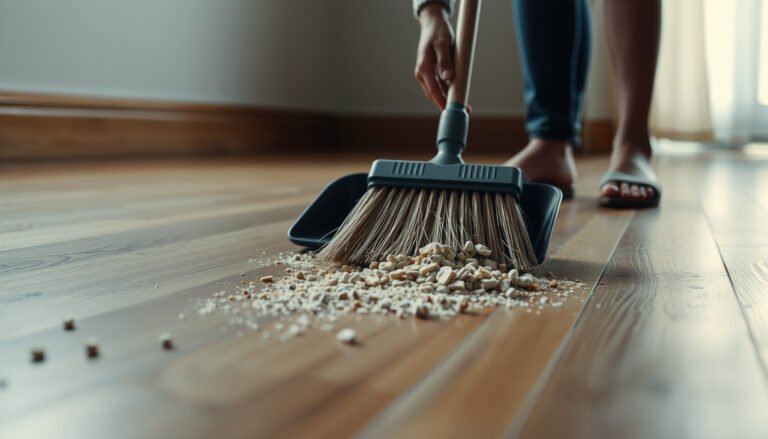
[…] can remove cooked-on grease from engineered wood floors without damaging the finish, restoring a clean, even look that feels as good as it did before […]
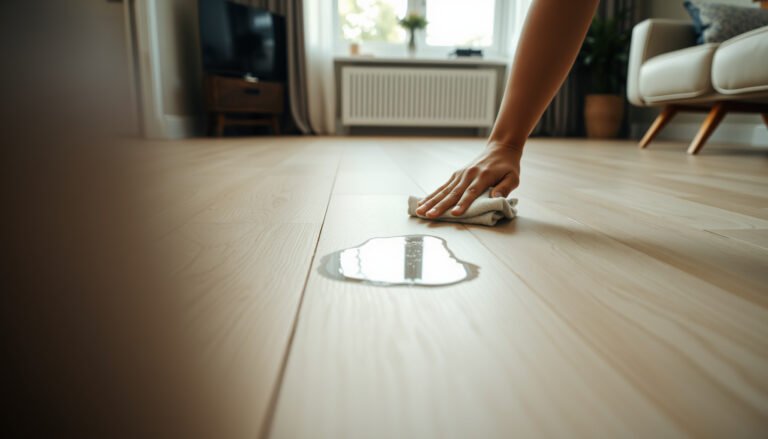
[…] do you remove cooking grease from engineered wood floors without damaging the finish? You start by blotting and gently loosening residue with a barely damp, […]