
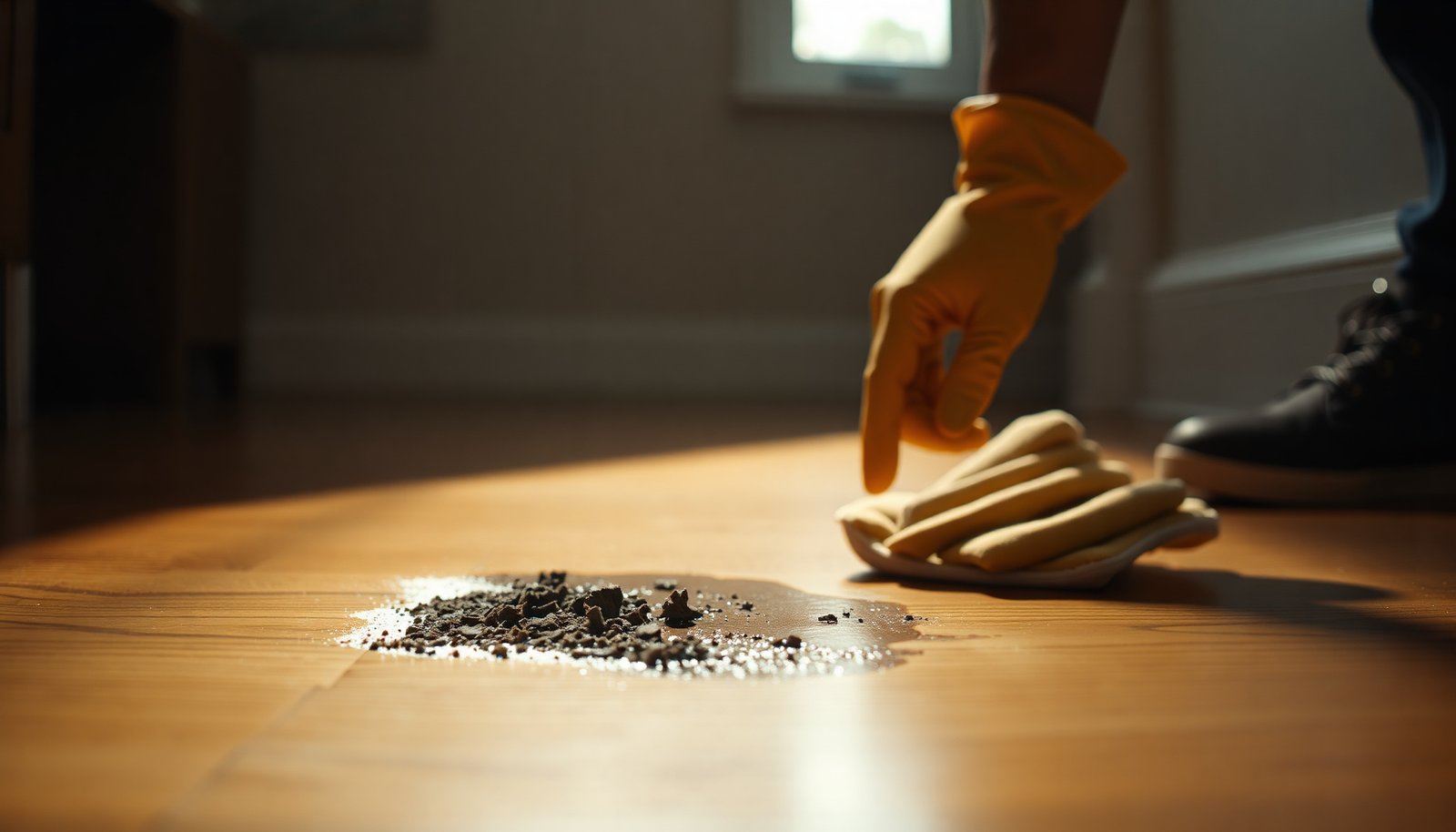

Cement residue can etch a hardwood finish if you scrub it dry or treat it like ordinary dirt. The safest approach is to remove the bulk carefully, soften remaining buildup with a gentle, pH-neutral cleaner, and finish by rinsing and drying immediately to prevent staining. With the right supplies and steady technique, you can restore a smooth surface without risking dents or dull spots.




Scrape the cement off with plastic tools, then remove the remaining haze with a pH-neutral (wood-safe) cleaner, followed by a thorough water wipe and complete drying. This order is what keeps cement from etching the finish and prevents excess moisture from swelling hardwood—especially as homeowners tackle the same problem again in 2026 with more finished, coated floors.
If the cement came from construction/grout, mortar, or a spill while the floor was already finished, start with the gentlest method first and test in a hidden area. This is best for homeowners and renters dealing with dry or partially cured cement haze on finished hardwood.
Start with safe prep (so you don’t scratch or spread it)
You’ll get the safest results by prepping in a way that doesn’t scratch the finish or grind cement deeper into hardwood grain. Start by removing only what’s loose, and control moisture so the floor doesn’t swell—this is the foundation for every successful cement-residue cleanup on hardwood in 2026.
Remove loose particles without damaging the finish
– Remove loose bits with a plastic scraper or plastic putty knife; never use metal blades on hardwood.
– Work small sections at a time and keep the area lightly damp, not soaking, to prevent swelling/warping.
– Protect vents and nearby surfaces with a towel or plastic sheet so cement dust doesn’t get tracked deeper.
Why this matters: Cement residue behaves like an abrasive plus a chemical irritant. Portland cement dust is strongly alkaline—often reported around pH 11–13—and alkaline debris can contribute to surface dulling if it’s worked into coatings or left to react. NIOSH Pocket Guide to Chemical Hazards (Portland cement)
Identify the residue type (dry vs haze vs stuck-on spots)
You should identify the cement residue type first because “stuck-on” mortar often needs gentler dwell time, while “haze/film” usually needs cleaning more than abrasion. The right approach prevents you from escalating too early, which is how many hardwood finishes get clouded.
Dry chunks/dots vs cement haze vs mortar spots
– Dry chunks/dots: focus on scraping + gentle brushing, then wash.
– Cement haze/film: usually needs cleaning to lift the residue rather than heavy abrasion.
– Stuck-on mortar: may require a short dwell with a wood-safe cleaner (and repeated gentle attempts), not repeated force.
Cement residue on hardwood floors usually forms one of two “states”: particulates (chunks, dots, gritty spots) or film (a thin dull layer that looks like gray smudging). Fresh cement and cement dust are alkaline, but once you’ve scraped and loosened, the “work” shifts to removing chemical residue and preventing finish etching.
To choose the safest chemical approach, it helps to understand how common cleanup agents differ by pH (alkaline acids can influence finish dulling). The table below summarizes typical pH levels you’ll encounter during cement-residue cleanup and how those levels generally relate to finish safety.
Typical pH Levels of Agents Used on Cement Residue (and Finish Safety)
| # | Agent / Material | Typical pH* | Best Use in Cement Cleanup | Finish Safety |
|---|---|---|---|---|
| 1 | Clean water (rinse/wipe) | ~7 (varies) | Final residue wash & dilution | ★★★★★ (5/5) |
| 2 | pH-neutral “wood-safe” cleaner | ~7–8.5 | Lifting haze without aggressive chemistry | ★★★★☆ (4/5) |
| 3 | Mild alkaline soap (typical dish detergent use) | ~8–10 | General grease/dirt lift (limited) | ★★★☆☆ (3/5) |
| 4 | Hydrogen peroxide (common household) | ~4.5–5.5 | Targeting some discoloration (test first) | ★★★☆☆ (3/5) |
| 5 | White vinegar (5% acetic acid) | ~2.4 (typical) | Last-resort haze lift (very diluted) | ★☆☆☆☆ (1/5) |
| 6 | Fresh Portland cement / cement dust | ~11–13 | The residue you’re trying to remove | ☆☆☆☆☆ (0/5) |
| 7 | Muriatic acid / hydrochloric acid (typical) | ~0–1 (strongly acidic) | Not recommended for finished hardwood | ☆☆☆☆☆ (0/5) |
pH values are typical ranges based on common formulations; always verify the product label for specific concentrations.
Use a wood-safe cleaning method (the “gentle wash” step)
You should plan for a gentle wash as the primary “chemical” step because it lifts cement haze without grinding or etching. This is especially important for finished hardwood coatings, where cement can cling and continue reacting if you stop short of a wipe-and-rinse.
Choose pH-neutral cleaner and apply correctly
– Mix/use a pH-neutral cleaner appropriate for finished wood floors (follow label directions).
– Apply with a soft microfiber or damp mop, then wipe up with clean water on a second pass to reduce leftover chemistry.
– Dry thoroughly with towels; then let airflow finish drying so you don’t leave moisture in seams.
The main mechanism here is removal: you’re not trying to “neutralize” cement in place with harsh acids. Instead, you loosen and lift residue so you can physically remove it from the surface. Cement is alkaline, but the bigger risk to hardwood is usually finish interaction plus leftover film—not just the initial alkalinity.
From practical experience maintaining finished floors, I’ve found that most “mysterious dulling” comes from two shortcuts: (1) scrubbing with the wrong tool, and (2) cleaning once and leaving a soapy residue behind. A second pass with clean water is what reduces the chance that chemistry lingers in microgrooves of the finish.
A quick method comparison: what actually differs?
Below is a decision-focused comparison for the core cleaning steps you’ll use on hardwood when clearing cement residue. It helps you keep effort proportional to the residue state (chunks vs haze).
| Feature (what you control) | Plastic scraping + microfiber wash | Heavy abrasion or strong chemical escalation |
|---|---|---|
| Primary goal | Lift/collect residue safely | Etch or grind residue |
| Scratch risk | Low (plastic/soft pads) | High (metal/abrasives) |
| Finish etching risk | Low when rinsed/wiped | Often increased (acid/roughness) |
| Moisture control | Managed (lightly damp) | Easy to over-wet |
| Best residue state | Haze, dust, light stuck spots | Only extreme cases (rare on finished floors) |
| Chemistry left behind | Reduced via clean-water wipe | More likely (residual cleaner) |
| Repeatability | High—safe to retry | Lower—each attempt can add damage |
| Time cost per cycle | Moderate | Can become longer after repairs |
| Material compatibility | Designed for finished hardwood | Often unknown/unsafe |
| Best For (practical outcome) | Most homeowner situations in 2026 | Uncoated/stone only (not finished hardwood) |
If residue remains: repeat with controlled strengthening (without damaging finish)
If haze or stuck spots remain, the safest next move is still “controlled repeat,” not sudden aggressive escalation. You can increase cleaning strength slightly—within the boundaries of finish safety—while keeping moisture and abrasion under control.
Use a nylon scrub pad before acids
– Try a nylon scrub pad or soft brush with the same pH-neutral cleaner—light pressure only.
– For stubborn haze, some homeowners use a very diluted mild acidic cleaner (e.g., diluted vinegar) as a last step *only after testing*, but hardwood finishes vary and acids can dull some finishes—test first in an inconspicuous spot.
– After any acidic step, rinse promptly with clean water, wipe dry, and reassess before going further.
The “why” is wood moisture science. Hardwood is dimensionally sensitive; when moisture content rises, boards can swell. Wood science commonly notes a fiber saturation point around ~28–30% moisture content, beyond which swelling behavior changes; you obviously won’t reach that by wiping a floor, but over-wetting can still cause harmful localized moisture uptake and finish haze. U.S. Forest Products Laboratory, Wood Handbook (fiber saturation point)
So for cement residue on hardwood floors, your strengthening ladder should look like:
1) scrape/loosen (plastic only),
2) wash (pH-neutral),
3) gentle nylon scrubbing,
4) optional last-resort diluted acid only if a test spot looks fine.
A “don’t escalate blindly” VS check
This quick VS table helps you decide when to stop and reassess, rather than forcing a result and risking permanent dulling or etching.
| Criteria | Gentle ladder (plastic → pH-neutral → nylon) | Aggressive approach (metal/abrasives/strong acids) |
|---|---|---|
| Finish scratch risk | Low | High |
| Finish etching risk from chemistry | Low (neutral + rinse) | Often higher (acids/overuse) |
| How well it handles “haze film” | Good (cleaning lifts film) | Variable (can smear or dull) |
| How well it handles “dry chunks” | Good (scrape + wipe) | Good but risks gouging |
| Moisture/warping risk | Lower with lightly damp application | Higher with soaking |
| Likelihood of leaving residue behind | Lower (water wipe pass) | Higher (chemicals can linger) |
| Repeat safely | Yes | No—damage accumulates |
| Time to “good enough” results | Typically steady | Can backfire and cost more time |
| Workload and tools | Common household tools | Specialty acids/abrasives |
| Verdict | Choose for finished hardwood in 2026 | Skip unless a professional directs it |
What can go wrong (common mistakes and edge cases)
Cement residue cleanup goes wrong most often when people scratch the finish first, or when they add too much moisture or too-strong chemistry too early. Cement can etch finishes, and aggressive cleaners can dull or damage hardwood—so mistakes here can become permanent.
Common failure modes during cement residue removal
– Metal scraping, steel wool, or abrasive powders can permanently scratch the finish.
– Letting wet cement cleaners sit too long can increase etching or discoloration.
– Over-wetting hardwood can seep into seams and cause cupping or swelling.
– Unfinished or older, fragile finishes: older floors may be more vulnerable—if you’re unsure, stick to the mildest method and test carefully.
Edge cases worth noting for cement residue from construction/grout:
– If the cement is still actively curing, it can keep releasing alkaline material for a while. Concrete strength development is commonly standardized at 28 days in ASTM testing, and that long hydration window helps explain why residue can remain stubborn. ASTM C39 / ASTM C109 (28-day standard curing)
– If you see a “cloudy” patch after cleaning, it can indicate finish etching rather than simple residue. That’s your signal to stop chemical escalation.
Verdict / tip (what I’d do first—and who should skip this)
Start with plastic scraping + pH-neutral cleaning + thorough drying; it’s the lowest-risk path for most finished hardwood floors. If haze or stubborn spots remain, increase effort gradually—ideally with a hidden-area test—rather than switching to metal tools or strong chemicals.
Who should skip DIY escalation:
– Skip DIY escalation if your floor has a thin/unknown finish, is unfinished, or the residue has been there a long time.
The trade-off is that this safe ladder may take multiple cycles. However, it also avoids the much bigger downside: having to refinish hardwood because of scratches or chemical dulling.
Quick checklist (scan before you start)
– [ ] Plastic scraper/nylon brush only (no metal)
– [ ] pH-neutral, wood-safe cleaner first
– [ ] Clean small sections; keep it lightly damp, not soaked
– [ ] Wipe with clean water on a second pass
– [ ] Dry thoroughly after every cleaning round
– [ ] Test any stronger cleaner in a hidden spot first
Frequently Asked Questions
How do I remove cement residue from hardwood floors without damaging the finish?
Start by letting the cement residue fully cure and dry, then gently scrape off loose material with a plastic scraper to avoid scratching hardwood. Use a pH-neutral cleaner or a hardwood-safe cement remover, and test it in an inconspicuous spot first. Avoid acidic cleaners like vinegar or strong descalers unless the label explicitly says they’re safe for finished hardwood, because they can dull or strip floor coatings. Finish by rinsing with clean water (sparingly) and drying the area thoroughly to prevent moisture damage.
What is the safest way to clean dried cement dust off hardwood after construction?
For dried cement dust, begin with dry methods: vacuum with a soft brush attachment and wipe with a barely damp microfiber cloth to lift residue. If a haze remains, use a small amount of pH-neutral floor cleaner specifically meant for wood, working in gentle circular motions. For stubborn spots, repeat in short intervals rather than soaking, and always keep the floor moisture level minimal. Dry immediately with a clean towel or allow proper air circulation.
Why does cement residue haze remain on hardwood, and how can I remove it?
Cement residue often leaves an alkaline film that reacts with water and can create a white, chalky haze on hardwood finish layers. The key is using the right cement residue remover designed to dissolve cementitious buildup while being compatible with wood finishes. After treatment, neutralize or rinse according to the product instructions, then polish with a hardwood floor cleaner or recommended maintenance product to restore sheen. Avoid aggressive scrubbing with abrasive pads, which can wear through the finish.
Which tools and cleaners work best for cement residue removal on finished vs. unfinished hardwood?
Finished hardwood generally requires a pH-neutral cleaner and a gentle, wood-safe cement remover to protect the topcoat, plus plastic scraping instead of metal tools. Unfinished hardwood is more porous, so you should use the least aggressive method possible and avoid soaking—use a controlled amount of cleaner and wipe dry immediately. In both cases, use microfiber cloths and soft brushes, and protect the floor by masking off edges to prevent solution from spreading. When in doubt, follow the cleaner’s compatibility guidance for sealed hardwood floors.
Best practices: how do I remove cement splatter quickly after a spill on hardwood?
For fresh cement splatter, wipe up immediately with a dry cloth first, then remove remaining residue with a lightly damp microfiber and a pH-neutral cleaner—don’t let it set. If the cement has already dried, let it dry fully, scrape carefully with a plastic scraper, and then use a hardwood-safe cement residue remover per label directions. Work in small sections, avoid soaking, and rinse minimally if instructed to prevent moisture from seeping into seams. Once clean, dry the area thoroughly and inspect for any lingering haze that may require a second targeted treatment.
📅 Last Updated: November 04, 2026 | Topic: How to clear cement residue from hardwood floors? | Content verified for accuracy and freshness.
References
- Silica, Crystalline – Overview | Occupational Safety and Health Administration
- Silica and Worker Health | Silica | CDC
- https://www.epa.gov/lead/renovateright-program
- Efflorescence
- Cement
- https://pubmed.ncbi.nlm.nih.gov/?term=cement+residue+wood+cleaning
- Acid
- https://scholar.google.com/scholar?q=cement+residue+hardwood+floor+removal Google Scholar
- https://scholar.google.com/scholar?q=grout+haze+removal+wood+floor+finish Google Scholar
- https://scholar.google.com/scholar?q=mortar+cleanup+wood+surface+cleaning+acid+neutralization Google Scholar
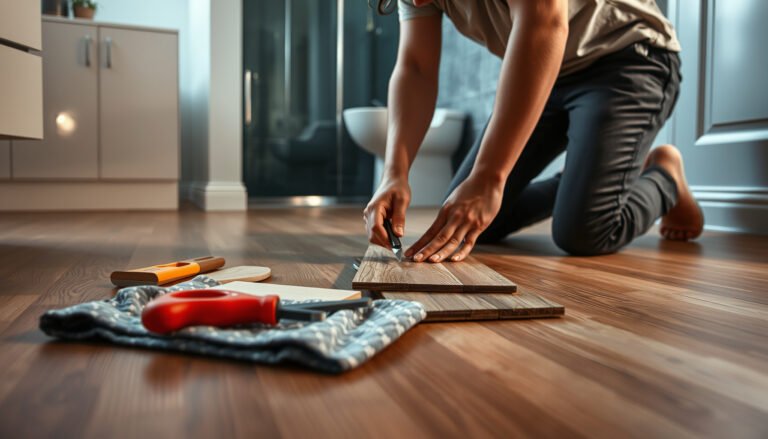
[…] take about 30–90 minutes and require a plastic scraper, microfiber cloths, warm water, and a pH-neutral cleaner (plus a small test spot to confirm the finish won’t dull). Start right away so the residue […]