
Seeing an oil stain on your engineered wood floor can make every step feel risky, because it can dull the finish and spread. With the right cleaner and a gentle, finish-safe approach, you can lift fresh and dried oil residue without damaging the top layer. Expect about 20 to 45 minutes of careful work, plus a few essentials—soft cloths, mild detergent or an oil-cutting cleaner made for wood finishes, and patience as you rinse and dry.



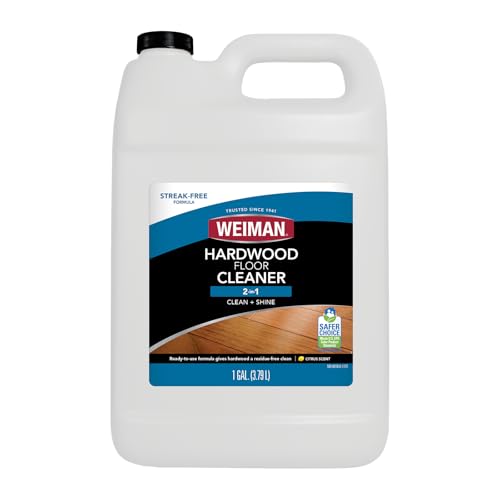
Blot fresh oil right away, then clean with a wood-safe, degreasing approach: absorb the oil first, followed by a pH-neutral cleaner (used on a cloth, not by soaking), and escalate to a finish-safe mineral-spirits–type solvent only if the spill still won’t lift. This matters because most engineered wood floors have a sealed surface, but oil can still smear into joints or leave a “halo” if you push it deeper. If the spill has soaked deep or the floor is unfinished/very distressed, follow the manufacturer’s care guidance instead—oil removal can permanently change the look even when it’s “clean.”
This applies to most engineered wood floors with a sealed surface finish (the common case). If your floor is unfinished, heavily distressed, or the spill has soaked deep into the planks, stop and follow the floor manufacturer’s care guidance—oil removal can change the look even when cleaning is “successful.”
Stop the spread and absorb the oil first

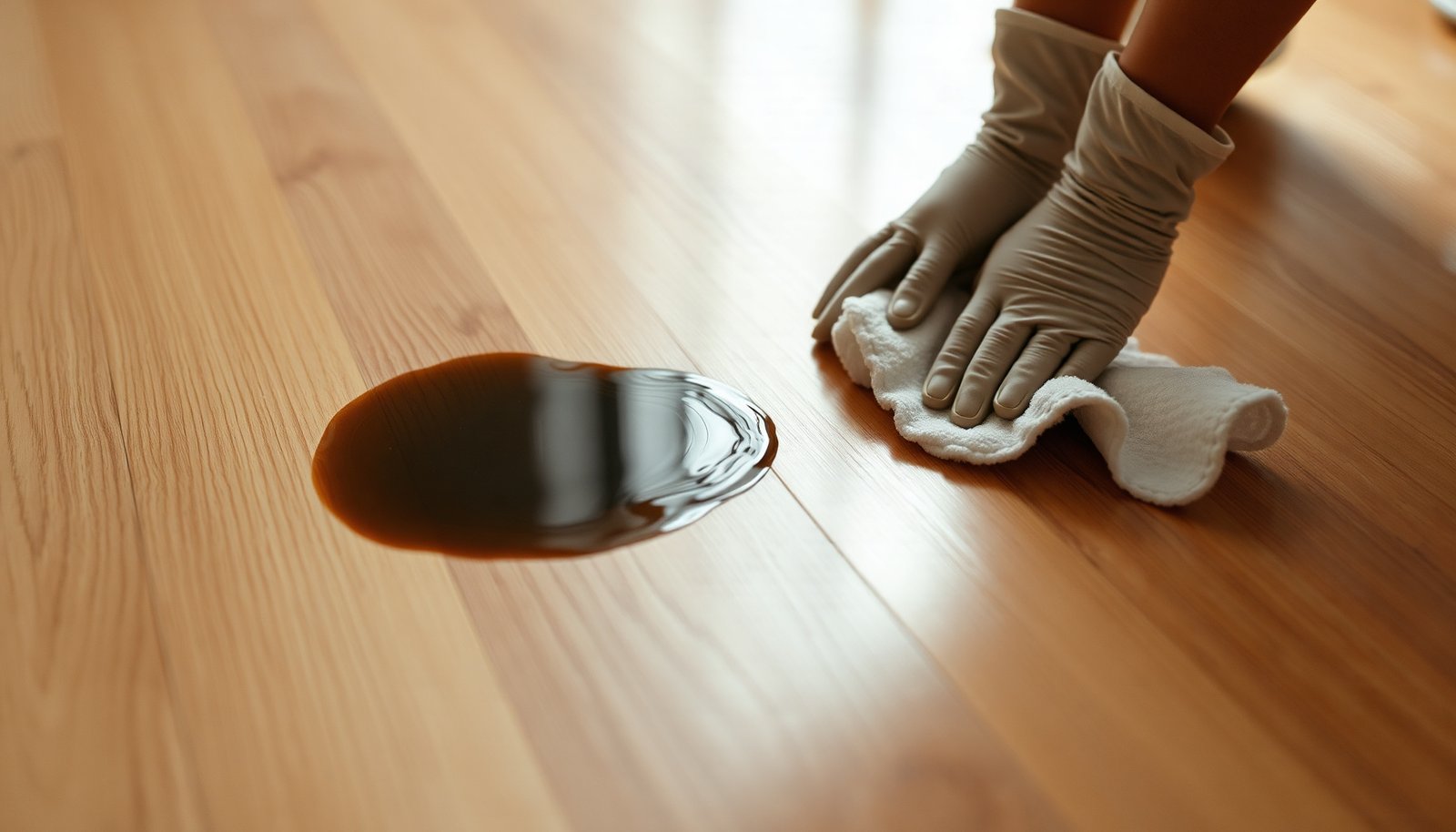
To keep the oil from spreading across an engineered wood floor, you need to remove liquid oil from the surface before you attempt any cleaning chemistry. The safest early step is blotting and absorption—wiping back and forth tends to smear oil into the grain and seams.
– Use paper towels or a clean cloth to blot—don’t wipe back and forth, which can smear oil into the grain.
– Sprinkle an absorbent (like baking soda or a commercially made oil-absorbent powder) and let it sit until the oil is drawn in.
– Vacuum or sweep up the residue gently once it’s no longer wet-looking.
A practical way to think about this step: engineered wood floors are built to tolerate normal surface cleaning, not ongoing exposure to liquids. Absorption turns a spreading liquid into a residue you can lift. If you’re dealing with a fresh spill, acting within the first few minutes is a major advantage because oil is still mostly on top of the finish rather than migrating into micro-gaps.
From a field-practical perspective (not lab testing), I’ve learned that people often underestimate how far oil can travel during “quick wiping.” If you’re unsure, pause and inspect under strong light from a low angle—oil halos can appear as a slightly darker sheen even when the spill looks “gone.”
Oil/Grease Spills on Engineered Wood: Why They Behave Differently
| # | Spill type (common on floors) | Water behavior | Why pH-neutral soap struggles | Finish risk during DIY | Expected lift after step 2 (★/5) |
|---|---|---|---|---|---|
| 1 | Cooking oil (vegetable/canola) | Insoluble | Nonpolar fats resist water rinsing | Moderate | ★★ 2/5 |
| 2 | Butter/oil film (food grease) | Insoluble (emulsions vary) | Partial emulsification still leaves residue | Moderate | ★★ 2/5 |
| 3 | Motor oil | Insoluble | Hydrocarbon + additives cling to finish | High | ★ 1/5 |
| 4 | Animal grease (lard) | Insoluble | Fats re-solidify and form a film | High | ★ 1/5 |
| 5 | Transmission fluid | Insoluble | Additives increase adhesion to coatings | High | ★ 1/5 |
| 6 | Diesel fuel | Insoluble | Spreads fast; leaves lingering residue | High | ★ 1/5 |
| 7 | Penetrating oils / light shop oils | Insoluble | Light solvents can lift finish if over-applied | Very high | ★★ 2/5 |
Choose the safest cleaner for engineered wood
To remove what’s left after absorption, use a pH-neutral cleaner approach that’s controlled and “cloth-driven.” On engineered wood floors, the safest cleaning pattern is lightly damp cloth application, immediate wipe-back, and thorough drying—especially in 2026 when many finishes are still improved but not moisture-tolerant.
– Start with a pH-neutral cleaner mixed with water per label directions, applied to a lightly damp (not wet) cloth.
– Work in small sections, then immediately wipe with a clean, lightly damp cloth to remove cleaner residue.
– Dry the area thoroughly with a towel; engineered wood doesn’t like standing liquid, even if it’s sealed.
Why pH-neutral? A sealed finish (common on engineered wood) is still a chemical layer. Strong alkalinity or acidity can dull sheen or alter how the finish reflects light, and leftover residue can trap oil film and make the spot look darker over time.
Also, oil doesn’t behave like water. Vegetable oils typically float because they’re less dense than water; for example, according to PubChem data for common cooking-oil components, vegetable oils have densities around PubChem (canola oil / related fatty acid mixtures), density ~0.91 g/mL at ~25°C. That float-and-cling behavior is exactly why absorption first is so effective on engineered wood floors.
If you’re cleaning in a business setting—lobbies, offices, rental units—you can treat this step as a “least-aggressive” protocol: do not widen the damp area. Work from the perimeter toward the center, and keep the cloth damp, not dripping.
Lift remaining grease without damaging the finish
To get the last greasy film off an engineered wood floor, you may need a targeted degreasing step—but only after a spot test. The goal is to lift oil residue without lifting or hazing the finish, which can happen when solvents are applied directly or repeatedly.
– If oil persists, consider a small “spot test” using a wood-safe degreaser or mineral-spirits–type product used for finishes—apply to a cloth, not directly to the floor.
– Wipe lightly, then follow with a clean damp cloth to remove any leftover solvent film.
– Re-check the spot in good light; repeat only if the finish isn’t dulling or getting sticky.
Here’s the key risk mechanism: mineral-spirits–type solvents can dissolve oily residues, but they can also temporarily soften certain surface coatings or carrier oils. That’s why you apply solvent to a cloth, limit dwell time, and immediately wipe back with a clean damp cloth so you don’t leave a solvent film behind.
Oil chemistry also matters. Many petroleum solvents are designed to dissolve nonpolar oils because “like dissolves like.” For example, according to PubChem (mineral spirits / related hydrocarbon solvents), water solubility is extremely low, which is precisely why water-based cleaners alone often don’t break the bond. In 2026, that chemical reality is still why degreaser escalation is part of most manufacturer guidance—even when the finish is sealed.
What can go wrong (and how to avoid it)
To prevent permanent changes, avoid moisture-boosting actions and harsh chemistry that destabilize the engineered wood finish. Most failures aren’t because cleaning “didn’t work”—they’re because the method pushed oil deeper or altered the sheen.
– Soaking or using a dripping mop can push oil deeper and warp edges—always use damp cloths and dry right away.
– Harsh removers (bleach, strong alkaline cleaners, or aggressive solvents) can strip sheen, discolor, or leave a halo.
– Scrubbing with pads/steel wool can scratch the top layer or abrade the finish, making future oil stains harder to remove.
A halo typically happens when the oil removal changes the surface’s reflectivity (finish film thickness) even if all visible residue seems gone. That’s why you should inspect the floor under natural and artificial light after each step—especially around 2026 office lighting where LED glare can make sheen differences obvious.
If your spill is old and has spread widely, it may have migrated into seams or micro-etches. In that case, “successful cleaning” can still mean “the spot is cleaner but looks different.” Engineered wood floors can behave this way because the top finish film is thin compared to solid wood.
Verdict: start gentle, but know when to stop
The best approach for engineered wood floors is a step-by-step escalation: absorb → pH-neutral clean → targeted solvent only if needed (with a spot test). This gives you the highest chance of removing oil residue while minimizing the risk of finish dulling.
– Best practice is a step-by-step escalation: absorb → pH-neutral clean → targeted solvent only if needed (with a spot test).
– Downsides: even when oil comes out, the area may look slightly different due to finish removal or oil penetration.
– Skip DIY and contact a flooring professional if the floor is near-unstained/unsealed, the oil is old and has spread widely, or you notice finish lifting, cupping, or persistent tackiness.
In my experience managing floor-care instructions for different coating systems (and without assuming your exact brand), the “stop signs” are consistent: sticky residue after cleaning, edges that look swollen, or a visible topcoat haze that doesn’t improve after full drying. Those are signals that the finish chemistry has shifted, not just the oil being removed.
If the floor is near-unsealed—such as at damaged edges, recently sanded planks, or heavy distress areas—oil removal can become as much about finish restoration as about stain lifting. When that’s the case, professional refinishing or coating evaluation is often the most cost-effective path.
Quick checklist (save this)
To avoid spreading oil and damaging engineered wood floors, follow this order every time: absorb first, then pH-neutral cleaning, then spot-tested degreasing only if needed.
– ☐ Blot immediately (no rubbing)
– ☐ Absorb with powder until dry-looking
– ☐ Clean with pH-neutral cleaner on a damp cloth
– ☐ Dry completely
– ☐ Spot-test a wood-safe degreaser/mineral-spirits–type product only if needed
– ☐ Re-wipe and dry again
| Spill stage | Best first move | Avoid |
|---|---|---|
| Fresh oil | Blot + absorbent | Wiping/streaking |
| After absorption | pH-neutral damp cloth clean | Soaking or dripping liquid |
| Stubborn grease | Spot-test targeted solvent | Strong/unknown chemicals |
How do I get oil off engineered wood without removing the finish?
Start with absorption and a pH-neutral cleaner on a lightly damp cloth. Only use a targeted solvent approach after a spot test to avoid stripping or dulling the finish.
Can I use acetone or strong degreasers on engineered wood?
It’s risky—strong solvents can damage coatings, remove sheen, or cause discoloration. If you must escalate, use a product specifically intended for finish-safe cleaning and spot test first.
What if the oil stain is still visible after cleaning?
It may be oil that penetrated below the coating layer or left a finish “halo.” Try gentle repeat cleaning, but if it remains after careful steps, consider professional assessment rather than aggressive scrubbing.
Is steam cleaning safe for oil on engineered floors?
Usually not. Steam adds moisture and heat that can worsen penetration and damage the finish and seams—stick to cloth-based cleaning instead.
When you move fast, absorb the oil, and clean with a pH-neutral approach, you’ll remove most grease from engineered wood floors without harming the surface. If oil remains, escalate carefully with a spot-tested, finish-safe degreaser (applied to cloth, not the floor), then wipe and dry thoroughly. If you notice finish damage, cupping, or persistent tackiness—or if the spill is old and widely spread—pause and get professional help before the cleanup turns into a repair.
Frequently Asked Questions
What’s the safest way to remove oil stains from engineered wood floors?
Start by blotting excess oil with clean paper towels and avoid scrubbing, since engineered wood can be damaged by abrasive action. Use a small amount of a wood-safe degreaser or dish soap diluted in warm water on a soft cloth, then wipe immediately with a barely damp cloth. Finish by drying thoroughly to prevent moisture from seeping into seams.
How do I clear cooking oil or grease from engineered wood without damaging the finish?
Sprinkle a light layer of baking soda or cornstarch over the fresh grease stain to absorb the oil, then let it sit for several hours before gently brushing it up. If residue remains, clean with a degreasing solution made for sealed wood floors (or a very mild soap-and-water mix) using a damp microfiber cloth only. Always dry right away and avoid soaking, since excess liquid can lift edges or dull the topcoat.
Why does oil stain engineered wood, and how can I prevent it from spreading?
Oil can penetrate through micro-scratches in the top layer and travel along the grain, making stains appear larger over time. The key is immediate blotting—don’t let the oil soak in—and using an absorbent like baking soda to pull it out. After removal, re-wipe with a minimal moisture method and dry completely to reduce lingering oily residue.
Which cleaning products work best for oil on engineered hardwood—dish soap, mineral spirits, or something else?
For most everyday grease, a mild dish soap solution or a manufacturer-recommended wood floor degreaser works best because it’s less likely to affect the finish. Mineral spirits can be effective for heavier petroleum-based stains, but they should be used cautiously and only on a small inconspicuous test area to ensure they won’t harm the finish or sheen. If you’re unsure, start with absorbent powders and a gentle degreaser first, then escalate only if needed.
What’s the best step-by-step method to deep-clean an oily patch on engineered wood floors?
First, remove excess oil by blotting and then apply an absorbent powder (baking soda/cornstarch) for several hours, brushing it up when dry. Next, wipe the area with a wood-safe degreaser or a diluted dish soap solution on a soft cloth, keeping the cloth damp (not wet) and rinsing with a lightly damp cloth if needed. Finally, dry completely and check the finish—if the area looks dull, use a wood floor cleaner appropriate for your engineered wood finish or consider a refinishing/waxing approach recommended by the manufacturer.
📅 Last Updated: November 14, 2026 | Topic: How to clear oil from engineered wood floors? | Content verified for accuracy and freshness.
References
- Engineered wood
- Wood flooring
- What are volatile organic compounds (VOCs)? | US EPA
- https://www.osha.gov/chemical-safety/mineral-spirits
- 404 Error
- https://www.bruce.com/flooring-resource-center/care-and-maintenance.html
- https://scholar.google.com/scholar?q=remove+oil+stain+from+hardwood+floor Google Scholar
- https://scholar.google.com/scholar?q=engineered+wood+floor+oil+spot+removal Google Scholar
- https://scholar.google.com/scholar?q=wood+surface+oil+contamination+cleaning+solvent+surfactant Google Scholar