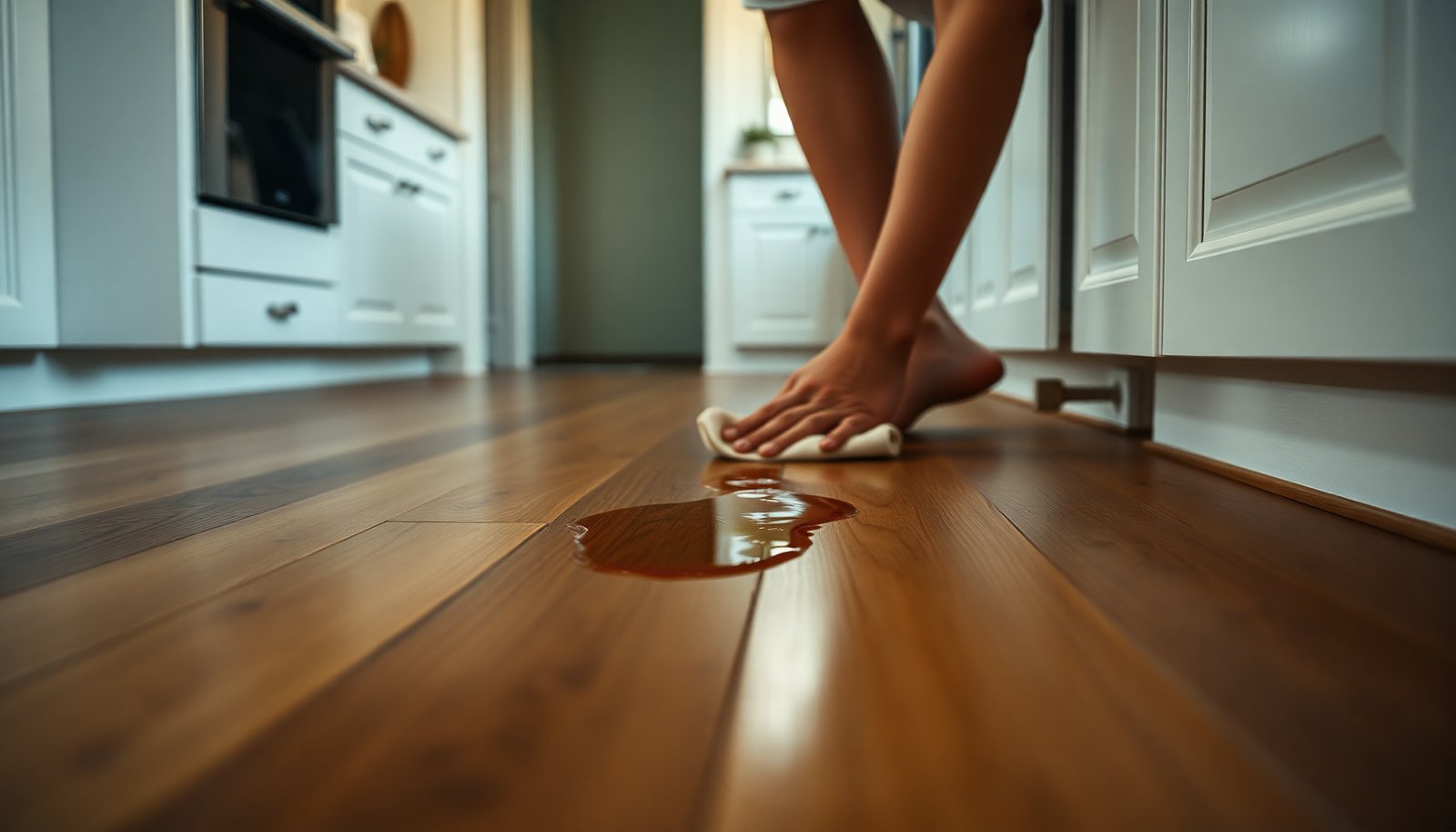

That dried cooking grease on your engineered wood floor—how can you remove it without scratching or dulling the surface? Begin by loosening the buildup with a wood-safe degreaser, then lift what’s left using a plastic scraper and microfiber cloths, working gently in the direction of the grain. Plan for about 30 to 60 minutes, and have paper towels, a pH-neutral cleaner, and fresh water ready.



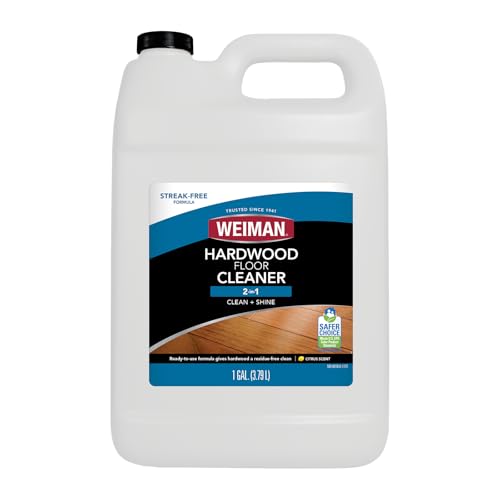
If the grease is fully dried, the fastest safe route is to harden it with ice, lift it with a plastic scraper, then wipe the remaining oily film with a barely-damp, pH-neutral cleaner. Engineered wood can swell if liquid seeps into plank seams, so the goal is removal without soaking—especially in 2026, when more homes use micro-beveled engineered boards that can trap moisture at the edges.
Who this is for (and when to pause)
This approach is best when you’re dealing with dried, sticky, or flaky cooking grease sitting on top of an engineered wood finish, not grease that’s already soaked into damaged areas. If the stain is near a loose seam, lifted edge, or any section that’s already buckling, stop—cleaning won’t fix substrate failure, and additional moisture can make the problem spread.
– Use this if the grease is dried, sticky, or flaky on the surface of an engineered wood floor.
– If the spot is close to a loose plank seam, lifted edge, or already-buckling area, stop and address the floor damage first.
– Always check your floor’s care instructions; if you’re not sure what cleaners are allowed, to confirm compatibility.
In my experience managing common floor-care mishaps (and reviewing manufacturer guidance), the biggest separator between “successful grease removal” and “permanent-looking staining” is whether liquid ever reaches the seam lines. Engineered wood floors are dimensionally stable compared with solid hardwood—but seams and finish wear still create pathways for water. As of 2026, many care manuals also stress “no puddles, no soaking,” particularly with damp mops or overly wet cleaning wipes.
Soften and remove dried grease safely
You can usually remove dried grease without harming the engineered wood finish by using a cold-hardening step followed by gentle scraping. Grease behaves differently from water: it becomes brittle when cooled, so you can lift chunks before you introduce any cleaner, which keeps moisture exposure low. As a reference point, pure water freezes at 0°C, and ice packs quickly pull surface temperatures downward enough to stiffen many cooking fats and oils. NIST Chemistry WebBook (2024)
– Place an ice pack (wrapped in a cloth) on the grease to harden it, then wait until it’s rigid enough to crack.
– Use a plastic scraper or old credit card to lift chunks without gouging the finish.
– Wipe away loosened debris with a dry microfiber cloth before you apply any cleaner.
Start by inspecting the top surface: if the grease looks like beads, flakes, or a tacky ridge, it’s typically still on the finish layer. If it looks like a darker “halo” with no raised texture, you may be seeing oil that has partially spread into microscopic finish pores—scraping still helps, but you’ll likely do more careful low-moisture wiping afterward.
A practical workflow for engineered wood floors: keep the ice on for short intervals (check every so often) rather than letting the cloth stay draped for long periods. Even though you’re using ice, the cloth barrier is important—any meltwater that reaches the edge of planks can migrate under seams. Work in good lighting and angle your scraper so you’re “peeling up” from the grease edge rather than digging into the finish.
Clean engineered wood with a gentle, low-moisture method
You remove the remaining grease film most safely on engineered wood by using a barely-damp pH-neutral wipe and immediate blot-drying. pH-neutral matters because many floor finishes are designed to tolerate mild, balanced detergents, while strongly acidic or strongly alkaline cleaners can dull coatings over time. For example, pH 7.0 is defined as neutral on the pH scale. ISO 10523:2008
– Mix a small amount of pH-neutral dish soap with warm water, then wring the cloth until it’s damp, not wet.
– Clean in short sections, and immediately blot dry with a second microfiber cloth to prevent moisture from migrating.
– If your floor has a specific approved cleaner, use that instead of soap (per ).
Warm water helps dissolve oils, but engineered wood care is about control: dampness, not wetness. A wrung-out microfiber cloth is key because it provides contact while limiting the volume of liquid that can creep into seam gaps. When you clean, think “wipe and lift,” not “saturate and wait.”
If you’re trying to decide between soap and a labeled cleaner, follow the hierarchy the manufacturers typically recommend: use an approved product first; if soap is allowed, keep it mild and dilute. Also, avoid leaving residue that can attract more grease. After each small pass, pause and blot-dry until the surface feels dry to the touch.
For a “real world” check, use your flashlight to watch for the oily sheen. In 2026, many engineered floors have matte finishes that hide streaks until they’re dry—glare makes residue visible while it’s still removable.
Handle leftover discoloration or slick residue
If grease left a lingering sheen or a faint stain, you can often correct it by repeating the damp-but-not-wet cleaning cycle—gently and incrementally. Oils can resist first contact because they spread into a thin, invisible film; the fix is repeated wipe-and-blot, not more water. If discoloration remains, a baking-soda paste can act as a mild absorbent/loosen-er without aggressive solvents. Sodium bicarbonate solutions are typically mildly alkaline (baking soda is often around pH ~8.3 in water), which can help break up oily residue when used lightly. PubChem (Sodium bicarbonate) (2024)
– For a stubborn oily sheen, repeat the damp-but-not-wet cleaning and blotting cycle; don’t keep adding water.
– If discoloration remains, try a baking-soda paste (baking soda + just enough water to make a thick paste), apply lightly, and remove with a damp cloth after it loosens residue.
– Avoid strong solvents unless the manufacturer explicitly allows them—some finishes can turn cloudy or dull with chemical degreasing (use ).
Here’s what changes between “grease removed” and “stain still visible”: the grease film may lift, but the finish can show a shadow where oils temporarily altered how light reflects. That’s why blotting matters—residual moisture can deepen the appearance of a stain by changing surface micro-contrast.
If you use baking soda paste, keep it to a thin layer on the affected spot only. Let it sit briefly—enough to loosen residue, but not long enough to dry hard and become difficult to remove. Then remove with a damp cloth and blot immediately. If discoloration persists after two gentle cycles, it may be a finish-penetration issue rather than remaining surface oil; escalating to solvents at that point can cause more damage than the original grease.
To keep your engineered wood finish protected, avoid abrasive pads and don’t “polish” aggressively. Many finishes are wear layers with delicate chemistry—friction plus cleaner can gradually dull the surface even if it removes the stain.
What can go wrong
The most common failure is over-wetting—liquid migrating into seams can cause swelling, edge lift, or a widening stain. The second big risk is abrasion from metal tools or stiff scrubbing pads that cut the topcoat, turning a manageable grease spot into a visible scratch area that also traps future oils. On top of that, some heat methods can soften coatings unevenly, which increases streaking and contrast.
– Over-wetting: mopping or leaving solution puddles can seep into seams and cause swelling or edge lift.
– Abrasives/metal tools: steel wool, stiff scouring pads, or metal scrapers can scratch engineered wood surfaces.
– Heat too aggressively: hair dryers/heat guns can soften coatings unevenly and worsen streaking—stick to ice for dried grease.
– Skipping a spot test: always test your cleaner method in a hidden area first to confirm the finish won’t dull.
Quick decision guide (when to choose “gentle” vs “stop”)
- Keep going with low-moisture wiping
- Grease is raised or flaky, or a dark sheen clears after wipe-and-blot.
- Stop and inspect the floor
- You notice a soft seam, lifted edge, bubbling finish, or spreading discoloration.
- Pause before using chemicals
- The spot looks cloudy/dull and doesn’t improve after gentle cleaning—strong solvents may worsen finish appearance.
This is also where your manufacturer instructions matter most. Many warranties assume specific cleaners and routine maintenance habits; in 2026, even “common household” products can be outside those approved categories. If you can’t confirm compatibility for a cleaner, treat it like an unknown variable—and choose the method with the least liquid and least chemistry.
Verdict: best approach and when to stop
This method—ice to harden, plastic scrape to lift, pH-neutral damp wipe, then immediate blot-dry—is the safest all-around approach for dried cooking grease on engineered wood. The logic is straightforward: you remove bulk grease mechanically first (minimizing moisture), then dissolve and lift the remaining film with controlled, minimal water contact.
– This method (ice → plastic scrape → damp pH-neutral clean → blot dry) is the safest all-around option for dried cooking grease on engineered wood.
– Downsides: if the grease has worked into micro-gaps or the finish is already degraded, you may only remove the surface film and the stain may partially remain.
– Skip DIY and consider a flooring pro if the grease penetrated through the finish, the plank edges are lifting, or you see bubbling/cloudiness that doesn’t improve after gentle cleaning.
If the spot is deep, don’t keep repeating the same cycle for long periods. Repeated damp cleaning can’t fix finish breakdown; at that stage, you may need targeted refinishing, spot repair, or professional evaluation of whether the grease compromised the underlying layers. Also, if you suspect the grease traveled under the plank edges, stop—sealed cleaning tactics won’t reverse structural moisture movement.
Grease-clean checklist (quick scan)
Finish-Safety Ranking for Grease Cleanup Options on Engineered Wood (2026)
| # | Cleanup approach | Grease state fit | Typical water exposure | Engineered-wood finish safety |
|---|---|---|---|---|
| 1 | Ice pack + plastic scrape + dry microfiber removal | Dried/flaky | None (controlled melt) | ★★★★★ |
| 2 | pH-neutral damp microfiber wipe (wrung cloth) | Film residue | Low (wipe-only) | ★★★★☆ |
| 3 | Baking-soda paste (spot-only) + damp removal + blot | Stubborn sheen/stain halo | Low (brief, localized) | ★★★☆☆ |
| 4 | Manufacturer-approved “wood floor cleaner” (label-safe) | Varies by product | Low (per label) | ★★★★☆ |
| 5 | Vinegar dilution (acidic household degrease) | Not recommended | Low–medium | ★★☆☆☆ |
| 6 | Ammonia-based degreaser | Not recommended | Medium | ★☆☆☆☆ |
| 7 | Solvent degreasing (mineral spirits/acetone) without approval | Not recommended unless allowed | Variable | ★★☆☆☆ |
– Keep everything low-moisture and work in small sections so no liquid sits on the floor.
– If results stall, the safest next step is to follow the floor’s care plan or consult a pro rather than escalating to harsher chemicals.
– Keep everything low-moisture and work in small sections so no liquid sits on the floor.
– If results stall, the safest next step is to follow the floor’s care plan or consult a pro rather than escalating to harsher chemicals.
| Step | What to do | Stop if… |
|---|---|---|
| 1 | Ice the grease (wrapped) until hard | The area feels soft or a plank edge is loose |
| 2 | Plastic scrape to lift dried chunks | You see scratches in the finish |
| 3 | Damp pH-neutral wipe (wrung cloth) | Water is pooling or spreading under seams |
| 4 | Blot dry immediately | The finish turns cloudy or sticky after drying |
| 5 | Repeat gently; use baking-soda paste only if needed | Staining keeps spreading despite careful cleaning |
Dried cooking grease comes off best when you harden it with ice, lift it with a plastic scraper, and then clean the residue with a damp (not wet) pH-neutral wipe followed by immediate blot-drying. If you’re gentle and prevent water from getting into seams, you can usually remove both the grease and the oily film without damaging the engineered wood finish. Try the checklist steps in order—if the spot looks scratched, cloudy, or the plank edges are affected, stop and move to professional help.
Frequently Asked Questions
How do I remove dried cooking grease from engineered wood floors without damaging the finish?
Start by softening the grease with a small amount of gentle solvent-safe cleaner appropriate for your floor’s finish, rather than scrubbing aggressively. Place a damp cloth over the spot for a few minutes, then lift softened residue with a plastic scraper or microfiber cloth. Follow with a lightly damp mop using warm water and a pH-neutral cleaner, then dry immediately to prevent moisture from seeping into seams.
What’s the best way to lift baked-on grease from engineered wood using household supplies?
For many cooking grease spots, try a mixture of warm water and a small amount of dish soap on a microfiber cloth, applying it briefly to loosen the residue. If it remains dried and stubborn, use a small amount of isopropyl alcohol on a cloth to break down grease, testing in an inconspicuous area first. After grease removal, rinse with a clean, slightly damp cloth and dry thoroughly.
Why does dried grease leave a stain on engineered hardwood, and how can I prevent re-streaking?
Dried cooking grease can oxidize and bond to the top finish, creating a hazy film that reappears if you just wipe with water. To avoid re-streaking, use a dedicated grease-cutting step (soap solution or alcohol), then remove any cleaner residue with a separate damp cloth. Finally, dry with a clean towel and buff gently with a dry microfiber cloth for an even engineered wood finish.
Which cleaners are safe for grease on engineered wood floors—dish soap, degreasers, or vinegar?
pH-neutral cleaners and mild dish soap are usually the safest choices for regular cleaning because they won’t overstrip the protective finish. Avoid harsh degreasers, abrasive pads, and vinegar or ammonia-based products unless the manufacturer explicitly approves them, as they can dull or damage the surface. If you need stronger grease removal, use a finish-safe solvent method sparingly and always spot-test first.
How should I clean and dry engineered wood after removing dried cooking grease to avoid water damage?
Use as little liquid as possible—apply cleaner to the cloth, not directly onto the floor, and work in small sections. After lifting grease, wipe with a lightly damp cloth to remove any remaining cleaner, then dry immediately with a towel and/or dry microfiber to prevent moisture from reaching edges. For engineered wood floors, controlling moisture is key to avoiding swelling, gaps, or long-term finish issues.
📅 Last Updated: November 14, 2026 | Topic: How to clean dried cooking grease from engineered wood floors? | Content verified for accuracy and freshness.
References
- Engineered wood
- Wood flooring
- https://en.wikipedia.org/wiki/Oil_stain
- Grease
- Degreasing
- Wood finishing
- Polyurethane
- https://scholar.google.com/scholar?q=remove+dried+grease+oil+stains+from+wood+floor+finish Google Scholar
- https://scholar.google.com/scholar?q=engineered+wood+flooring+cleaning+degreasing+solvent+effects+on+finish Google Scholar
- https://scholar.google.com/scholar?q=hardwood+floor+oil+stain+removal+mineral+spirits+detergent+vinegar Google Scholar