
Want to know how to clean engineered wood floors in a playroom without ruining the finish? Use the simplest playroom-safe routine: dry-sweep or vacuum with a soft brush, then mop with a barely-damp, pH-neutral cleaner—never soaking the floor. Follow with quick spot-drying to prevent moisture damage and streaks, and you’ll keep the surface looking fresh fast.



Keeping engineered wood floors clean in a playroom is straightforward: remove grit first (vacuum or dust mop), then use only a lightly damp, pH-neutral cleaner. Avoid soaking, steam, and harsh disinfectants—those are the most common causes of dulling and edge damage, especially where kids’ shoes and sticky snacks collide. This guide walks you through what to do weekly, how to handle spills and sticky messes, and what to skip so the finish stays protected.
If your floor sees muddy footprints, juice spills, toy debris, or frequent pet/child traffic, you’re in the right place. These steps focus on safe everyday cleaning plus “when it gets gross” spot care for engineered wood.
Pre-Clean: Remove grit before you wipe
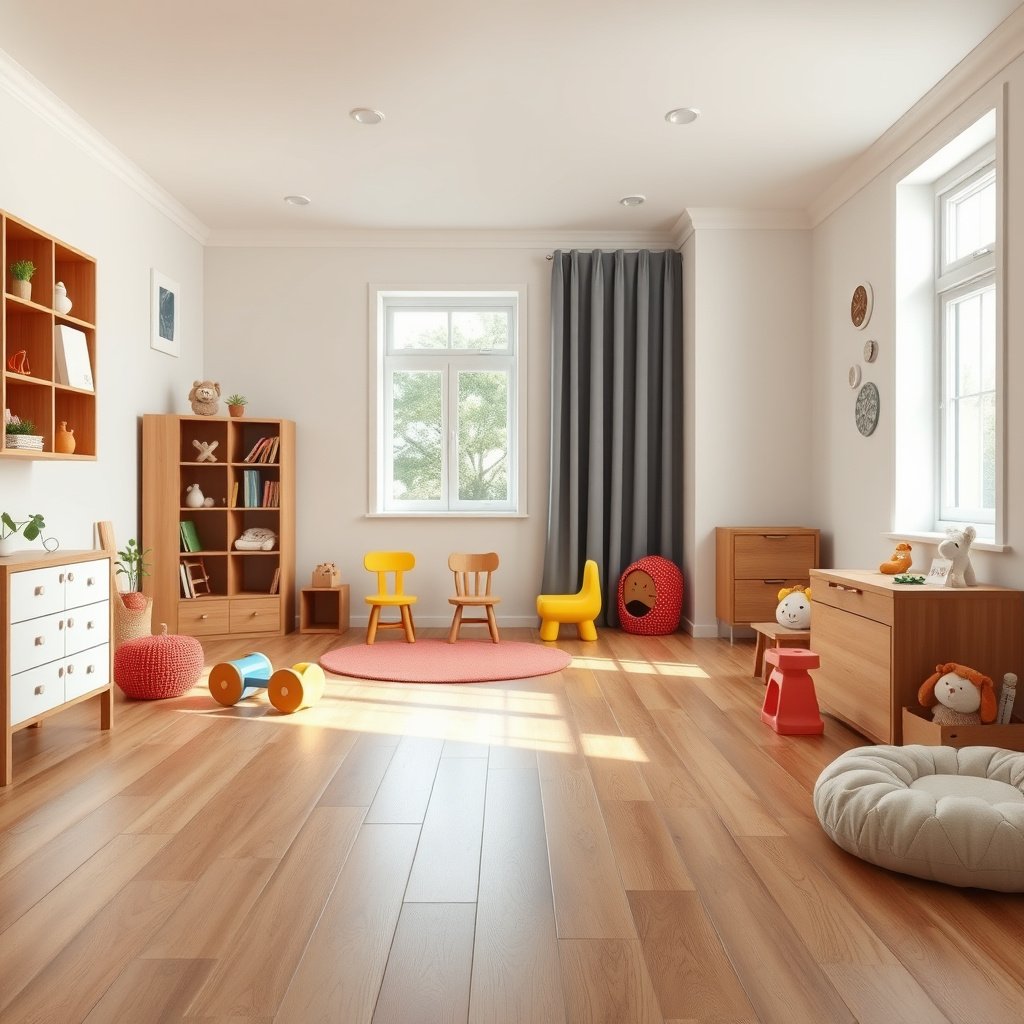
The quickest way to protect engineered wood floors in a playroom is to get sand and crumbs off first, before any damp cleaning starts. That one habit prevents the “grit grinding” effect that dulls finishes over time.
“Micro-scratches from grit are a leading cause of dull-looking floor finishes over time—dry removal before mopping reduces this risk.”
“Avoiding rough contact (like beater bars on wood finishes) helps prevent surface wear on prefinished wood layers.”
– Sweep or dust-mop first to pick up sand, crumbs, and toy dust that can scratch the surface.
– For playrooms, pay extra attention to corners where dust gathers behind furniture and along baseboards.
– If you have carpeted play mats, check their edges—seams often shed small particles onto engineered wood floors.
– Vacuum using a soft brush attachment (or a setting for hard floors) and avoid rough beater bars.
– Use a vacuum head that doesn’t have exposed, stiff bristles; hard plastic wheels are usually fine, but test gently if you’re unsure.
– Check for small debris at seams/edges so it doesn’t grind into the finish during mopping.
– Engineered wood floors can still show micro-gaps where liquid can wick—dry grit removal helps keep wipe-downs controlled and safer.
Choose the right cleaning products and tools
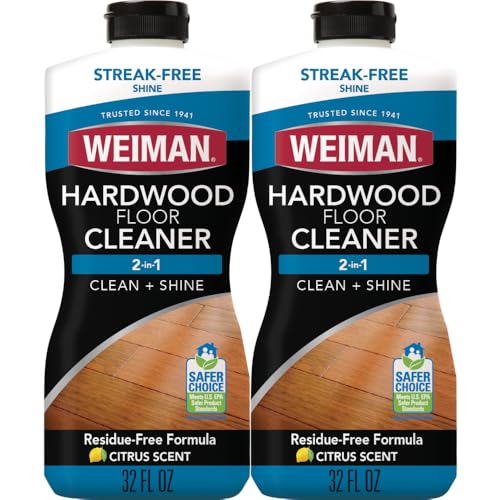
The best product setup for engineered wood floors in a playroom is a pH-neutral cleaner labeled for wood floors plus microfiber tools that you keep lightly damp—not wet. As of 2026, manufacturer care guidance still matters because engineered wood floors can vary by top-coat and finish type.
“Using a pH-neutral wood-floor cleaner (and applying it to the mop/cloth rather than flooding the floor) is a common manufacturer-safe approach for finished wood.”
“Microfiber is effective for capturing soil while using less water; a well-wrung microfiber pad helps avoid excess moisture on engineered wood.”
– Use a cleaner labeled safe for engineered wood / wood floors, ideally pH-neutral; apply to the mop, not directly to the floor.
– Apply by misting or following the label dilution, then wring/adjust your mop so the surface ends up “damp,” not glossy or puddled.
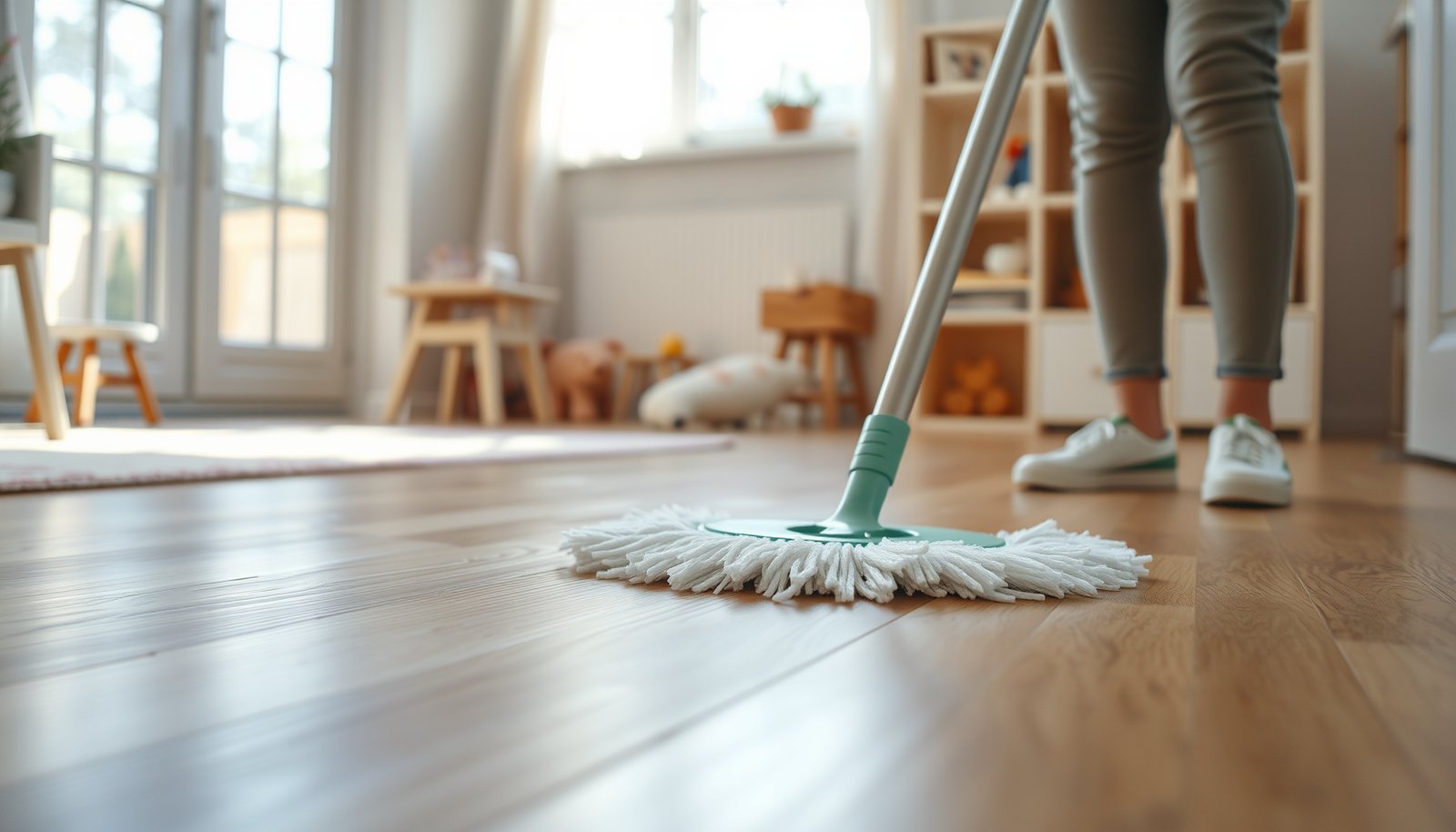
– Use a microfiber mop (well-wrung) or microfiber cloth for spot cleaning—avoid string mops that can leave excess water.
– String mops can trap more water and are harder to control; microfiber spreads less liquid and releases soil more consistently.
– Keep water usage minimal: damp is the goal, not wet.
– This matters because water exposure can dull finishes and can also creep toward edges. “Damp, then dry” is typically safer for engineered wood floors than repeated wet mopping.
Cleaner pH and Typical Safety for Finished Wood Floors (25°C)
| # | Common cleaner/solution | Typical pH range | Playroom use pattern | Finish safety rating |
|---|---|---|---|---|
| 1 | Distilled/clean water | 6.5–7.5 | Rinsing/damp wipe | ★★★★★ |
| 2 | pH-neutral wood-floor cleaner (formulated) | ≈6–8 | Weekly damp-mop | ★★★★★ |
| 3 | Mild dish soap solution (diluted) | ≈7–9 | Occasional spot wipe | ★★★★☆ |
| 4 | Baking soda solution | ≈8–9 | Sticky residue “scrub” impulse | ★★☆☆☆ |
| 5 | White vinegar (5% acetic acid) | ≈2.4–3.0 | “Natural” spot cleaner | ★☆☆☆☆ |
| 6 | Household bleach (typical use) | ≈11–12 | Disinfecting overreach | ★☆☆☆☆ |
| 7 | Household ammonia | ≈11–12 | Glass-style cleaner use | ★☆☆☆☆ |
Note: Exact pH depends on concentration and dilution. Always follow your engineered wood floors’ finish manufacturer instructions first. The safest “rule of thumb” for engineered wood floors in a playroom remains: pH-neutral, minimal moisture, microfiber only.
Step-by-step: Daily and weekly cleaning in a playroom
The easiest playroom routine for engineered wood floors is “dry first, damp second” with quick spot-wipes. That pattern keeps residue from turning into a sticky film that attracts more dirt.
“Dry soil removal before mopping helps prevent abrasive transfer from sand and grit onto finished wood.”
“For finished wood, mopping should be damp-controlled; excess standing moisture increases risk of edge swelling and finish hazing.”
“Microfiber pads reduce water use compared with many string-mop setups because they distribute a smaller amount of liquid evenly.”
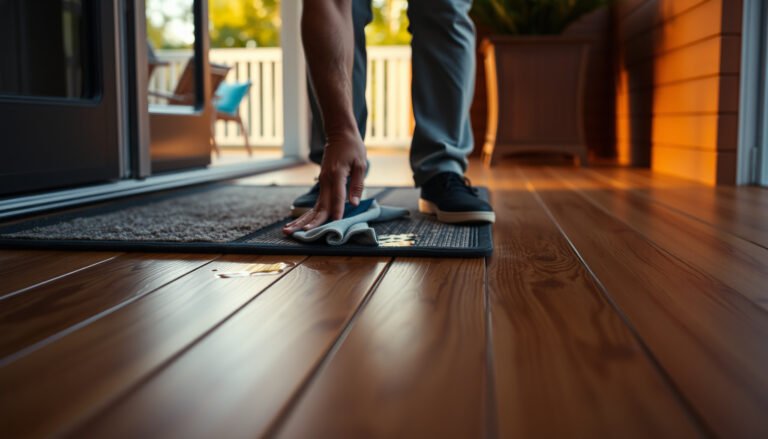
– Daily/quick clean: dry vacuum or sweep + spot-wipe sticky spots right away with a damp microfiber cloth.
– Keep a microfiber cloth slightly damp and store it where you can grab it immediately after snack time.
– If you’re wiping juice or soda, blot first, then wipe—don’t scrub.
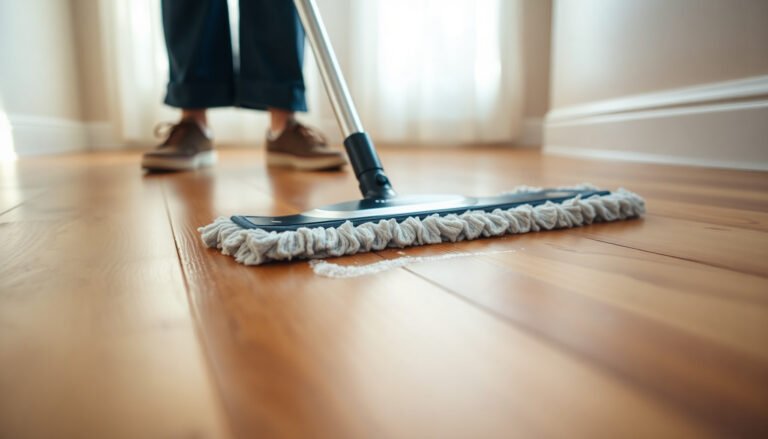
– Weekly clean: damp-mop with your wood-floor cleaner (in small sections) and immediately follow with a dry microfiber pass if your process leaves any moisture.
– Work in manageable areas (for example, one hallway section at a time) so engineered wood floors don’t sit damp.
– Change mop pads when they start turning gray with playroom soil—dirty water spreads residue.
– Let the floor air-dry fully; don’t place rugs back down until you’re sure it’s not damp underneath.
– Trapped moisture under rugs can create dull patches or discoloration on engineered wood floors over time.
Spot-clean spills and sticky messes (without damaging the finish)
The fastest way to handle spills on engineered wood floors in a playroom is blot first, then use a lightly damp microfiber wipe—only turning to pH-neutral cleaner if residue remains. This approach prevents liquid from migrating into edges and keeps the finish from losing clarity.
“Blotting spills reduces liquid spread and helps protect finished wood edges from extended moisture exposure.”
“Gentle repeated wiping is safer than aggressive scrubbing because it limits abrasion on the topcoat.”
– For spills (juice, water, milk): blot first, then wipe with a lightly damp cloth and a tiny amount of pH-neutral cleaner if needed.
– Use a clean side of the cloth each pass to avoid re-depositing sugars or proteins.
– If you see a faint haze afterward, do not keep adding more cleaner—dry the area and reassess.
– For sticky areas (spills + kid snacks): gently wipe; if residue remains, repeat with a fresh, damp cloth rather than scrubbing hard.
– Sticky residue usually requires patience: sugars need dissolving and lifting, not grinding.
– If residue persists even after pH-neutral wiping, it’s a sign to check your engineered wood floors’ specific finish-compatibility guidance.
– For scuffs: use the mildest approach first (damp cloth). If still visible, follow your manufacturer’s recommended spot method—.
– Some finishes respond to manufacturer-approved touch-up options; others should never be spot-treated with DIY “restorers.”
What can go wrong (and how to prevent it)
The most common failures with engineered wood floors in a playroom are over-wetting, using the wrong chemistry, and creating scratches through grit. When you avoid those three categories, cleaning becomes safer and the floor stays visually consistent.
“Excess moisture is a predictable risk factor for swelling and finish clouding on many wood flooring systems, so controlled damp cleaning is emphasized in care guidance.”
“Steam cleaners introduce both heat and moisture; if a manufacturer discourages steam, using one can void or reduce warranty coverage.”
– Over-wetting: mopping too frequently or leaving standing moisture can cause swelling, edge lifting, or cloudiness.
– As of 2026, most manufacturer care pages still treat damp mopping as “occasional and controlled,” not wet soaking.
– Wrong cleaners: bleach, ammonia, wax build-up removers, and abrasive “scrub” products can strip or haze the finish.
– If the label doesn’t explicitly say it’s safe for wood floors, treat it as a high-risk experiment.
– Scratching: sand and gritty debris left during wiping will dull the surface over time.
– Even if engineered wood floors look clean, trapped grit can accumulate invisibly and later show as dull patches.
– Heat/steam damage: steam cleaners are often discouraged for engineered wood finishes—.
– Steam is typically near boiling; water boils at 100°C (212°F) at standard atmospheric pressure (NIST, ). That combination of heat + moisture is exactly what manufacturers try to limit for engineered wood floors.
Quick comparison: what’s safer for engineered wood floors?
- Damp microfiber wiping (recommended)
- Controlled liquid, minimal abrasion, easier “dry after” follow-up—generally aligned with wood-floor care guidance for finished surfaces.
- Steam cleaning (often discouraged)
- High heat + added moisture increases risk of finish haze and edge problems if your engineered wood floors’ warranty restricts steam.
- Harsh disinfectants/bleach (avoid)
- Can chemically alter topcoats and leave dullness or residue, especially when used frequently in playrooms.
Verdict: A practical routine that keeps playroom messes under control
If you want the safest, lowest-effort routine, stick to dry removal first, then a microfiber mop lightly dampened with pH-neutral wood-floor cleaner. The downside is that sticky spills require immediate spot-wiping and some repeat wipes—rather than relying on deep “soaks” or aggressive scrubbing.
From a risk-management perspective, the approach above protects engineered wood floors by (1) preventing grit abrasion, (2) limiting moisture exposure, and (3) avoiding finish-unsafe chemistry. If your engineered wood warranty specifically restricts certain cleaners or wet-mopping frequency, follow that over these general steps—or skip the “damp-mop every week” habit until you confirm the guidance with your manufacturer (especially in 2026, when product lines and finish systems can vary).
Quick checklist: How to clean engineered wood in a playroom
– [ ] Dry remove grit (vacuum/dust mop) before any wiping
– [ ] Use pH-neutral cleaner labeled for wood floors
– [ ] Microfiber mop/cloth only—damp, not wet
– [ ] Blot spills immediately; wipe residue gently
– [ ] No steam, no soaking, no harsh chemicals
– [ ] Dry the area if any moisture remains
“A ‘damp, then dry’ workflow is safer than leaving a finished wood floor wet for long periods.”
“Dry soil removal before wet cleaning reduces abrasion that dulls engineered wood floors.”
Sources:
Keeping engineered wood floors clean in a playroom ultimately comes down to disciplined, finish-friendly cleaning: remove grit first, keep moisture controlled, and use pH-neutral products that your floor’s warranty supports. If you treat spills as “blot and wipe immediately” events—and avoid steam and harsh chemicals—you’ll prevent dulling and edge damage while keeping the room healthier and easier to maintain.
Frequently Asked Questions
What’s the best way to clean engineered wood floors in a playroom?
Start by sweeping or vacuuming with a soft brush attachment to remove grit, crumbs, and small debris that can scratch engineered wood. Use a manufacturer-approved cleaner or a damp microfiber mop with a gentle wood-safe solution—avoid soaking the floor. For daily playroom messes, spot-clean with a lightly damp cloth and dry immediately to protect the finish.
How do I remove sticky spills and fingerprints from engineered wood floors?
Blot spills right away with a clean, absorbent cloth, then wipe the area with a slightly damp microfiber cloth. If there’s residue (like juice, syrup, or sticky toys), use a wood floor cleaner recommended for engineered wood and apply it to the cloth rather than directly to the floor. Always follow with a dry wipe to prevent moisture from getting into the seams or edges.
Why is regular cleaning important for engineered wood floors in high-traffic areas?
Playrooms tend to create constant foot traffic, which grinds dirt and sand into the surface and can dull or scratch the finish over time. Regular cleaning also prevents sticky buildup that attracts more grime and makes floors harder to maintain. Keeping engineered wood free of debris helps preserve its protective top layer and keeps it looking better longer.
Which cleaning products should I avoid on engineered wood floors?
Avoid steam mops, harsh degreasers, abrasive scrub pads, and vinegar or ammonia-based cleaners unless the flooring manufacturer specifically approves them. These can damage the finish, cause discoloration, or leave streaky residue that dulls engineered wood. Also skip waxes or oil-based products unless your installer recommends them, since they can interfere with future cleaning and refinishing.
How often should I mop and what’s the safest method for engineered wood floors?
In a playroom, dry cleaning (sweeping or vacuuming) should be frequent, ideally several times a week or as messes accumulate. Mop with a damp microfiber mop about once a week, or only when needed, using a wood floor cleaner designed for engineered wood and minimizing water exposure. Make sure the mop is well-wrung, clean it section-by-section, and dry any remaining moisture with a microfiber towel.
📅 Last Updated: October 19, 2026 | Topic: How to clean engineered wood floors in a playroom? | Content verified for accuracy and freshness.
References
- Wood flooring
- Engineered wood
- https://www.cdc.gov/coronavirus/2019-ncov/community/disinfecting-building-facility.html
- https://www.who.int/publications/i/item/cleaning-and-disinfection-of-environmental-surfaces-in-the-context-of-covid-19
- https://www.epa.gov/coronavirus/how-clean-and-disinfect-your-facility-home
- https://pubmed.ncbi.nlm.nih.gov/?term=hardwood+floor+cleaning+maintenance
- https://pubmed.ncbi.nlm.nih.gov/?term=disinfectant+effect+wood+surfaces
- https://scholar.google.com/scholar?q=engineered+wood+floor+cleaning+playroom Google Scholar
- https://scholar.google.com/scholar?q=hardwood+floor+cleaning+methods+microfiber+wet+mopping Google Scholar
- https://scholar.google.com/scholar?q=environmental+surface+disinfection+child+care+guidelines Google Scholar